
Colour Breakdown Copy Complete Main Wall Colours Floor
Colour Breakdown Copy & Complete Main Wall Colour(s) Floor Colour(s) Wall Accent Colour Main Accent Colour Furniture Colour(s) Soft Furnishing Colour(s)
Line and Shape Breakdown Main Wall Line and Shape(s) Floor Line and Shape(s) Wall Accent Line and Shape(s) Main Accent Line and Shape(s) Furniture Line and Shape(s) Soft Furnishing Line and Shape(s)
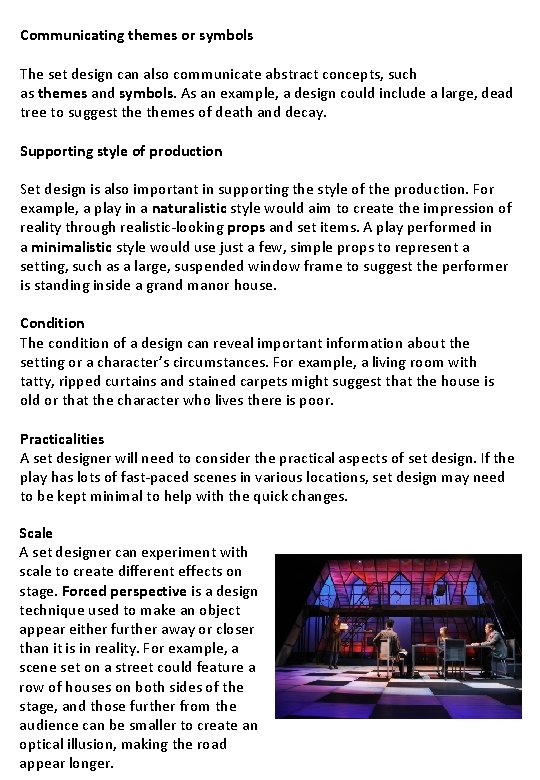
Communicating themes or symbols The set design can also communicate abstract concepts, such as themes and symbols. As an example, a design could include a large, dead tree to suggest themes of death and decay. Supporting style of production Set design is also important in supporting the style of the production. For example, a play in a naturalistic style would aim to create the impression of reality through realistic-looking props and set items. A play performed in a minimalistic style would use just a few, simple props to represent a setting, such as a large, suspended window frame to suggest the performer is standing inside a grand manor house. Condition The condition of a design can reveal important information about the setting or a character’s circumstances. For example, a living room with tatty, ripped curtains and stained carpets might suggest that the house is old or that the character who lives there is poor. Practicalities A set designer will need to consider the practical aspects of set design. If the play has lots of fast-paced scenes in various locations, set design may need to be kept minimal to help with the quick changes. Scale A set designer can experiment with scale to create different effects on stage. Forced perspective is a design technique used to make an object appear either further away or closer than it is in reality. For example, a scene set on a street could feature a row of houses on both sides of the stage, and those further from the audience can be smaller to create an optical illusion, making the road appear longer.
Other set considerations Designers will also consider: • • • shape staging configuration texture transition health and safety Shape The use of shape within set design can also convey ideas to the audience. For example, a forest set with lots of bare trees forming sharp and jagged shapes could help to create a more eerie atmosphere. Staging configuration The staging configuration, eg end-on or in the round, impacts how the audience relates to the action on stage. A set designer will need to consider theatre space they are designing for and how to create a set that is effective for that space. Texture The materials used within set design provide different textures that help to create the feel of a set. For example, a room with rustic, wooden-plank floorboards and flat blinds will feel very different to a room with soft, thick carpets and velvet curtains. Transitions are the moments between scenes, and often during these transitions the scenery will move to suggest a new location. If several locations or time periods are to be represented on stage at the same time, a composite set will be required. You will be expected to explain transitions to the examiner. Health and safety Set designers need to consider the health and safety of stagehands, performers and the audience, to protect them from injury. They will need to ensure that all items of scenery are properly secured, and that their movement can be conducted safely.
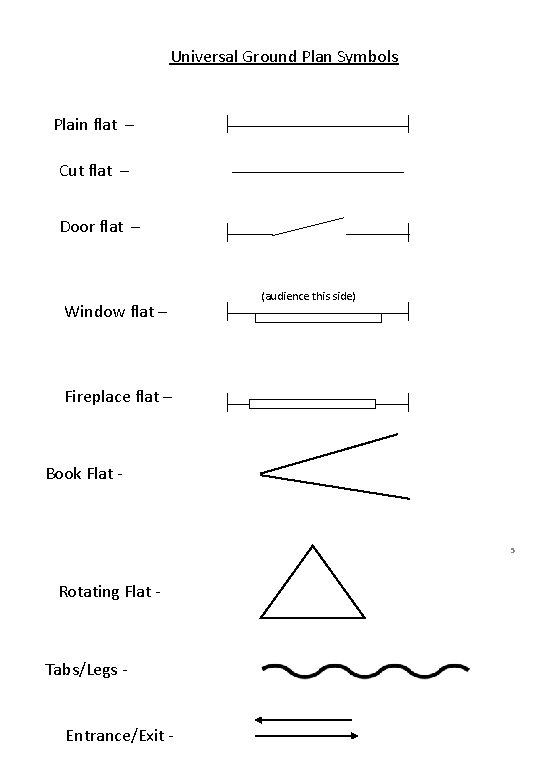
Universal Ground Plan Symbols Plain flat – Cut flat – Door flat – Window flat – (audience this side) Fireplace flat – Book Flat - 5 Rotating Flat - Tabs/Legs Entrance/Exit -
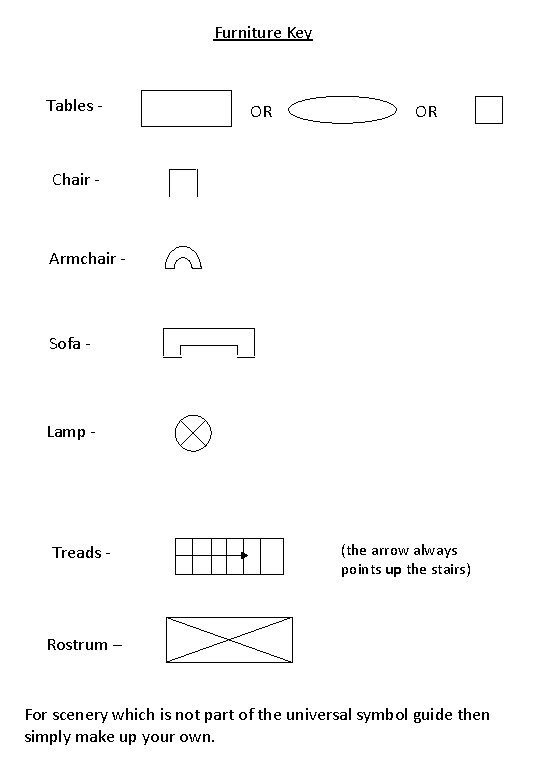
Furniture Key Tables - OR OR Chair - Armchair - Sofa - Lamp - Treads - (the arrow always points up the stairs) Rostrum – For scenery which is not part of the universal symbol guide then simply make up your own.
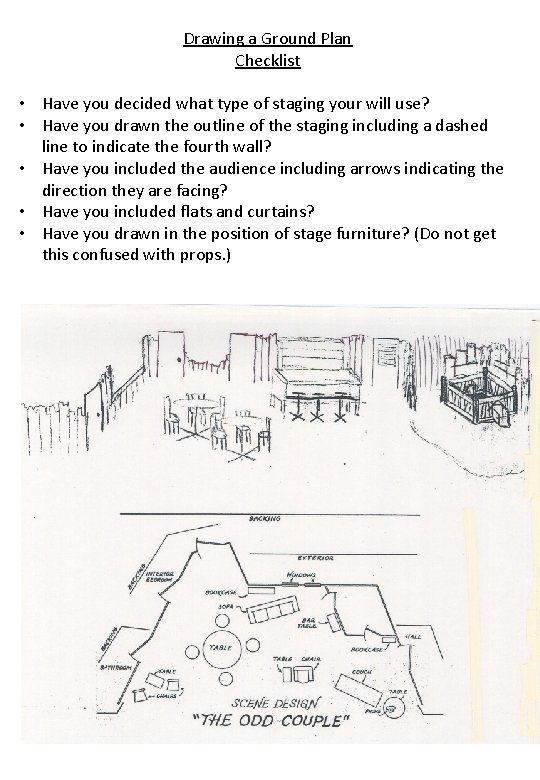
Drawing a Ground Plan Checklist • Have you decided what type of staging your will use? • Have you drawn the outline of the staging including a dashed line to indicate the fourth wall? • Have you included the audience including arrows indicating the direction they are facing? • Have you included flats and curtains? • Have you drawn in the position of stage furniture? (Do not get this confused with props. )

Plan to Elevation Examples
- Slides: 8