
Colorectal Cancer Screening Implementation of a public health
Colorectal Cancer Screening Implementation of a public health programme An Expert Group on Colorectal Cancer Screening Cancer Society of Finland, Finnish Cancer Registry, Mass Screening Registry
Aims of colorectal cancer screening • The main aim is to reduce mortality from colorectal cancer • Reduction about 15 -20 % is expected based on randomised screening trials • Means: detecting cancer at an early stage – survival of patients – quality of life of patients – savings in treatment • Collecting data of missing information (feasibility, compliance, test results)
What is the current situation in Finland? • A population based screening programme was launched in September 2004 – – testing feasibility in Finland gradual implementation in the target population gradual expansion over regions colonoscopy possible using existing resources evaluation of the programme • The programme is running for the third year – expansion over regions succesful so far – colonoscopy resources have been found – population attitudes positive and encouraging
Target population • • Age 60 -69 -years Men and women Gradual start among 50% of target population Randomisation into screening or control arms at individual level • Eventually, implementation to all 60 -69 -year olds • Repeated screening every second year
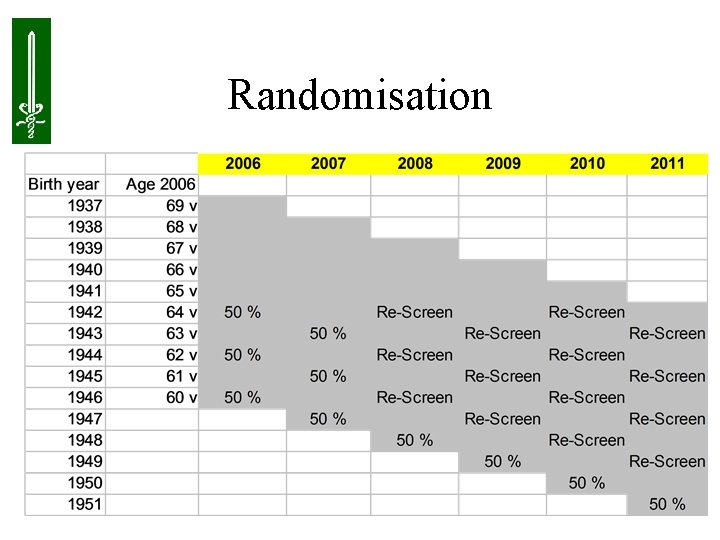
Randomisation
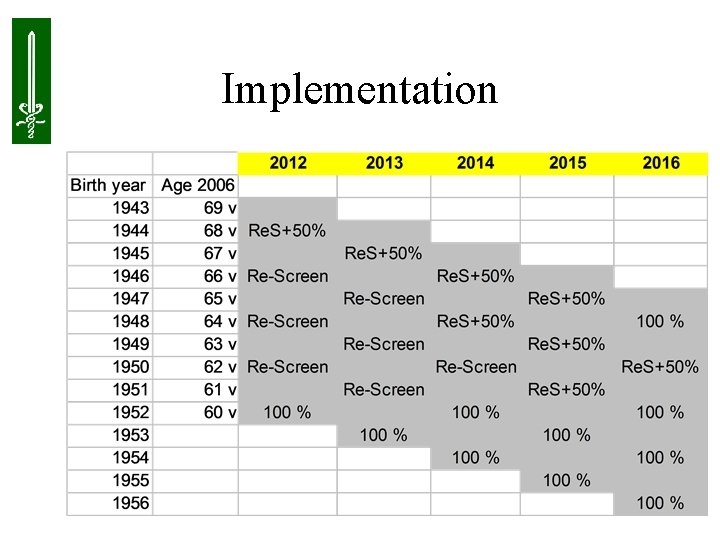
Implementation
Evaluation • Randomised design allows unbiased comparison between the screening and control arms • Cancers and deaths followed through national registries • Both screened and the control population can be followed through register linkage • Colonoscopy use: those screened (active data collection); controls (hospital discharge registry) • First years: performance, compliance, positivity rate, colonoscopies • After six years randomisation will gradually cease
Procedure of screening • • Mail invitation Three day specimen collection (faecal cards) Guaiac based test, no rehydration Any positive test window is regarded as a positive test result • Those being positive are sent to their local contact person (nurses) for colonoscopy referral • Further surveillance and treatment according to usual care
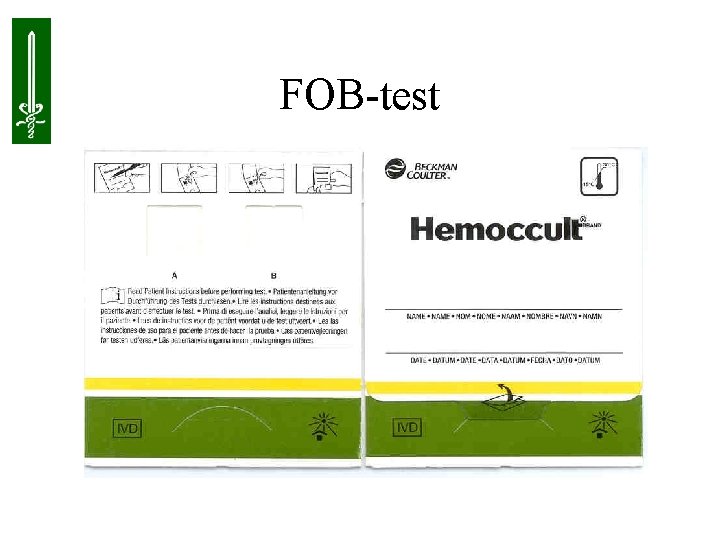
FOB-test
Launch in September 2004 • In 22 municipalities (out of 444) • Only one screening centre for the entire country (5, 3 million people) • Totally 4539 invited in 2004 • Compliance 75, 3% (no reminder so far) • Positivity rate 1, 8% • Renewals 3. 9% (missing specimens, too old, wrong side)
Colonoscopies in 2004 • 63 test positive persons in 2004 – 54 colonoscopies done – no finding in 5 people • No colonoscopy for 9 people because: – 4 did not want to, 3 had been colonoscopied recently and 2 were in surveillance • No sedatives were used, no in-hospital treatments for primary colonoscopy – one was admitted to surgery directly after second (immediate) colonoscopy and big polyp removal • Primary colonoscopy completed in 2 months for most (50/54)
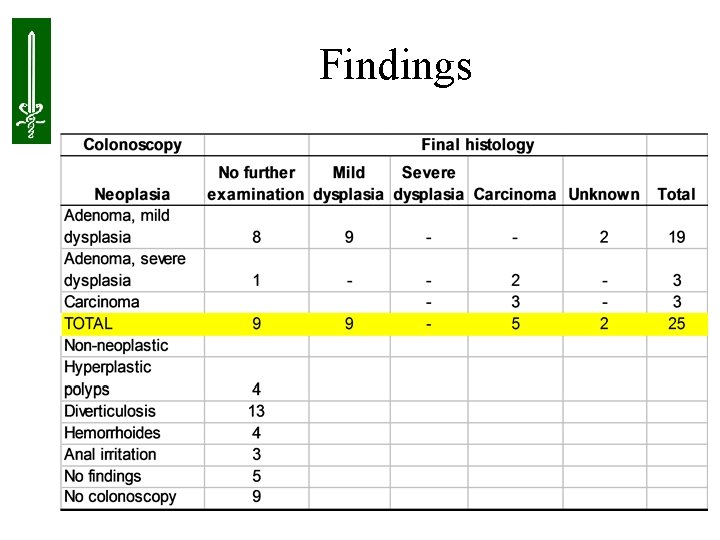
Findings
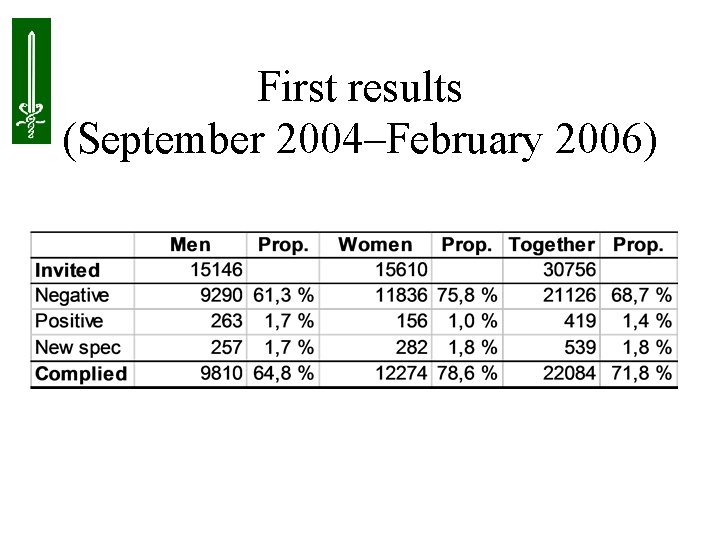
First results (September 2004–February 2006)
Test results • Overall compliance good, 72%, in males 65% and in women 79% • Positive tests among those who were screened: 1. 9% total; males 2. 7%, females 1. 3% • Compliance to colonoscopy has been high, 90% – 4% decline, 6% have been in surveillance – in colonoscopy, 10% cancers, 30% adenomas (data collected from 268 colonoscopies so far) • New test kits to 2. 3%, males 2. 6% and females 2. 4% of those screened
How do we proceed in Finland • By January 2006 up to 160 municipalities, still recruiting more • Total number of invitations around 35 000 in 2006 • First preliminary ”evaluation” in 2007 – first participants with re-invitation to screening • Data collection of primary screening online, colonoscopy results have to be asked for from hospitals and introduces some delay in reporting • Publication draft to be sent for review in fall
- Slides: 15