
Colorado Heat Project Idea Use thermal energy made
- Slides: 1
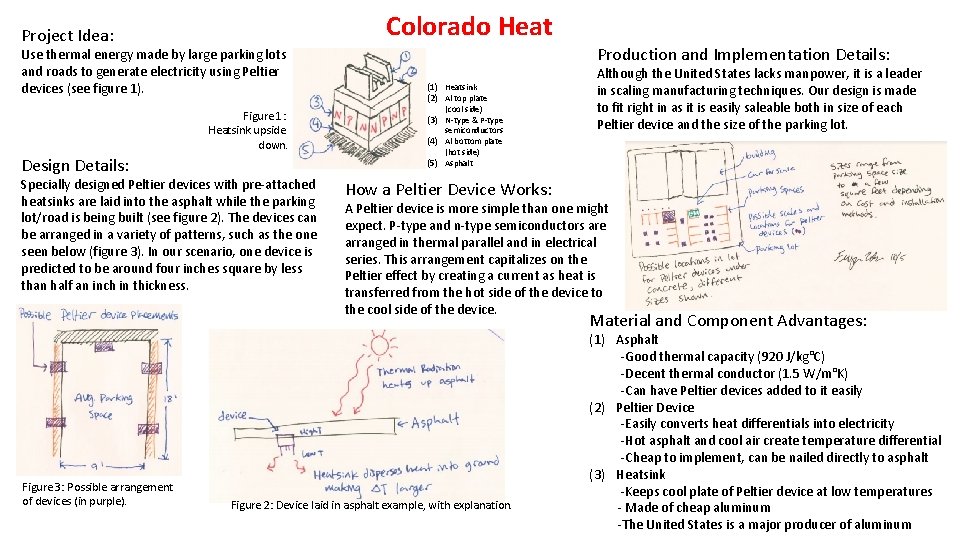
Colorado Heat Project Idea: Use thermal energy made by large parking lots and roads to generate electricity using Peltier devices (see figure 1). Figure 1: Heatsink upside down. Design Details: Production and Implementation Details: (1) Heatsink (2) Al top plate (cool side) (3) N-type & P-type semiconductors Although the United States lacks manpower, it is a leader in scaling manufacturing techniques. Our design is made to fit right in as it is easily saleable both in size of each Peltier device and the size of the parking lot. (4) Al bottom plate (hot side) (5) Asphalt Specially designed Peltier devices with pre-attached heatsinks are laid into the asphalt while the parking lot/road is being built (see figure 2). The devices can be arranged in a variety of patterns, such as the one seen below (figure 3). In our scenario, one device is predicted to be around four inches square by less than half an inch in thickness. How a Peltier Device Works: A Peltier device is more simple than one might expect. P-type and n-type semiconductors are arranged in thermal parallel and in electrical series. This arrangement capitalizes on the Peltier effect by creating a current as heat is transferred from the hot side of the device to the cool side of the device. Material and Component Advantages: Figure 3: Possible arrangement of devices (in purple). Figure 2: Device laid in asphalt example, with explanation. (1) Asphalt -Good thermal capacity (920 J/kg°C) -Decent thermal conductor (1. 5 W/m°K) -Can have Peltier devices added to it easily (2) Peltier Device -Easily converts heat differentials into electricity -Hot asphalt and cool air create temperature differential -Cheap to implement, can be nailed directly to asphalt (3) Heatsink -Keeps cool plate of Peltier device at low temperatures - Made of cheap aluminum -The United States is a major producer of aluminum