
Colorado Counselor Corps Professional Development Webinar 2014 2015
Colorado Counselor Corps Professional Development Webinar 2014 - 2015 September 2, 2014 7: 30 – 8: 30 AM
Overview of Webinar q Welcome and Introductions q. Misti Ruthven – Director, Post Secondary Readiness CDE q. Eve Pugh – Coordinator, Counselor Corps Grant Program CDE q. Pamela Decker – Senior Consultant q. John Happs – Senior Consultant q Logistics of Webinars q Housekeeping q Resources – where to find information qhttp: //www. cde. state. co. us/postsecondary/scc_training q Purpose of Webinars q. Ground Rules 2
Counselor Corps Grant Pre Test Results
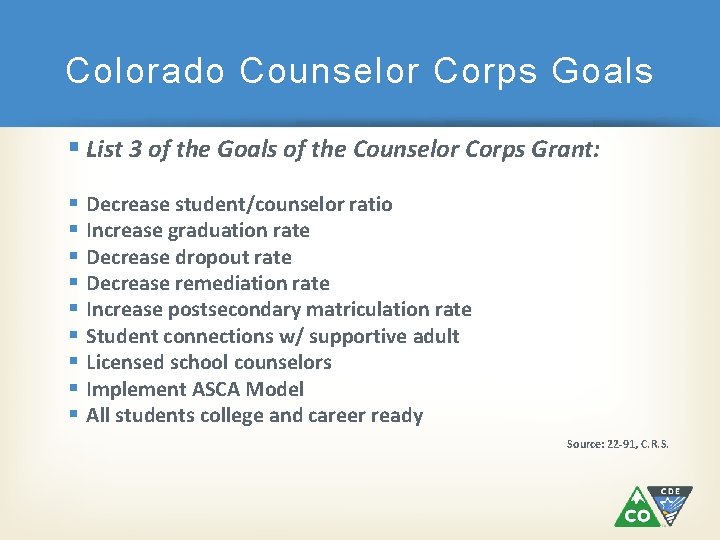
Colorado Counselor Corps Goals § List 3 of the Goals of the Counselor Corps Grant: § Decrease student/counselor ratio § Increase graduation rate § Decrease dropout rate § Decrease remediation rate § Increase postsecondary matriculation rate § Student connections w/ supportive adult § Licensed school counselors § Implement ASCA Model § All students college and career ready Source: 22 -91, C. R. S.
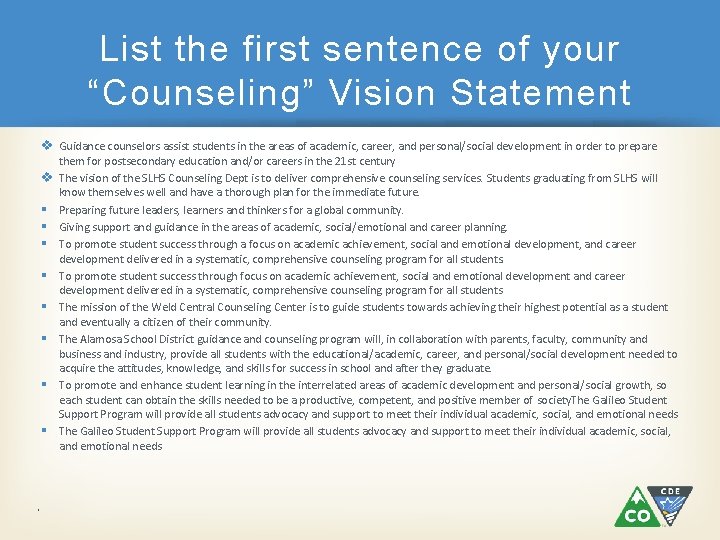
List the first sentence of your “Counseling” Vision Statement v Guidance counselors assist students in the areas of academic, career, and personal/social development in order to prepare v § § § § . them for postsecondary education and/or careers in the 21 st century The vision of the SLHS Counseling Dept is to deliver comprehensive counseling services. Students graduating from SLHS will know themselves well and have a thorough plan for the immediate future. Preparing future leaders, learners and thinkers for a global community. Giving support and guidance in the areas of academic, social/emotional and career planning. To promote student success through a focus on academic achievement, social and emotional development, and career development delivered in a systematic, comprehensive counseling program for all students. To promote student success through focus on academic achievement, social and emotional development and career development delivered in a systematic, comprehensive counseling program for all students The mission of the Weld Central Counseling Center is to guide students towards achieving their highest potential as a student and eventually a citizen of their community. The Alamosa School District guidance and counseling program will, in collaboration with parents, faculty, community and business and industry, provide all students with the educational/academic, career, and personal/social development needed to acquire the attitudes, knowledge, and skills for success in school and after they graduate. To promote and enhance student learning in the interrelated areas of academic development and personal/social growth, so each student can obtain the skills needed to be a productive, competent, and positive member of society. The Galileo Student Support Program will provide all students advocacy and support to meet their individual academic, social, and emotional needs
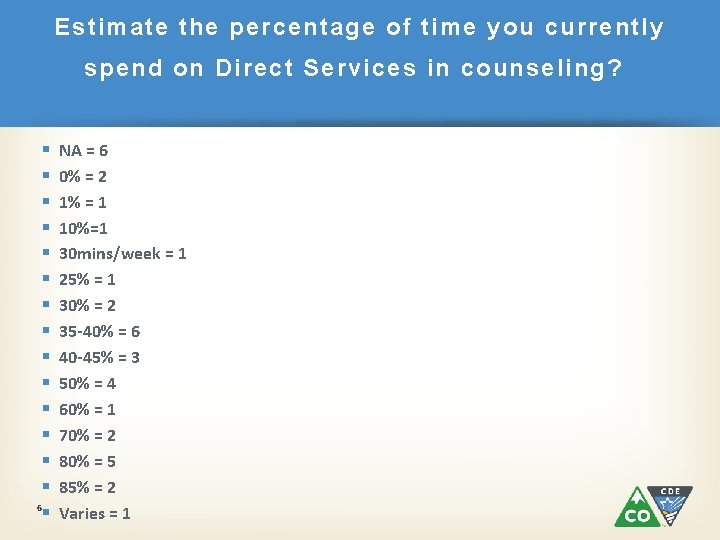
Estimate the percentage of time you currently spend on Direct Services in counseling? § § § § 6 § NA = 6 0% = 2 1% = 1 10%=1 30 mins/week = 1 25% = 1 30% = 2 35 -40% = 6 40 -45% = 3 50% = 4 60% = 1 70% = 2 80% = 5 85% = 2 Varies = 1
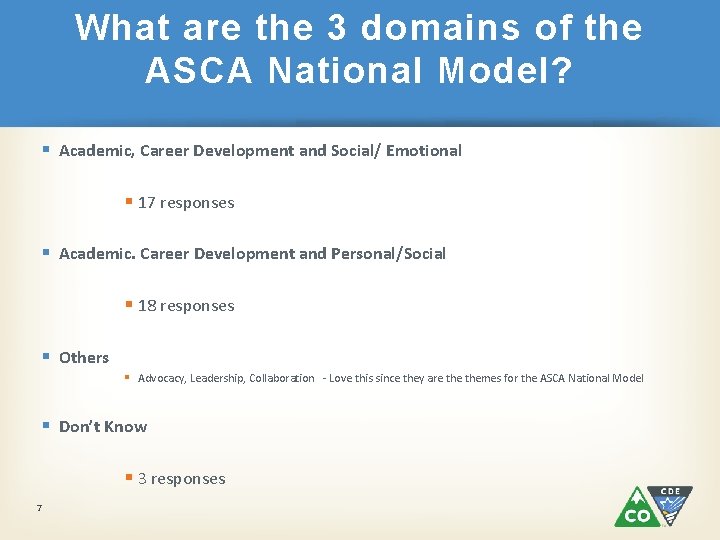
What are the 3 domains of the ASCA National Model? § Academic, Career Development and Social/ Emotional § 17 responses § Academic. Career Development and Personal/Social § 18 responses § Others § Advocacy, Leadership, Collaboration - Love this since they are themes for the ASCA National Model § Don’t Know § 3 responses 7
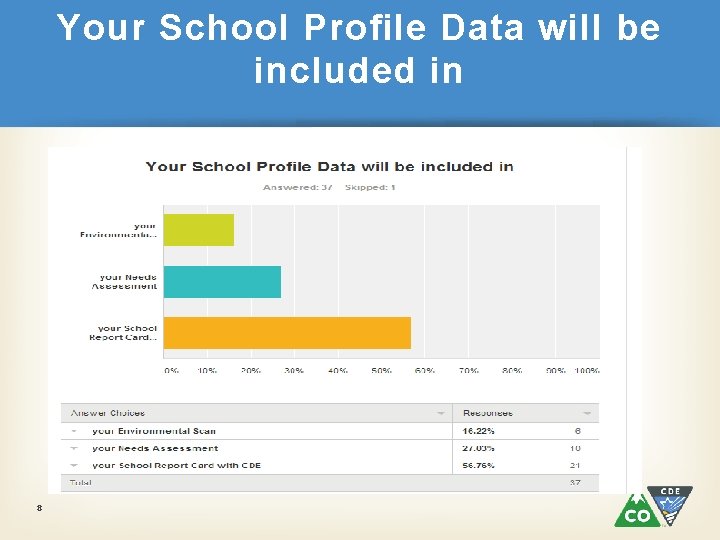
Your School Profile Data will be included in 8
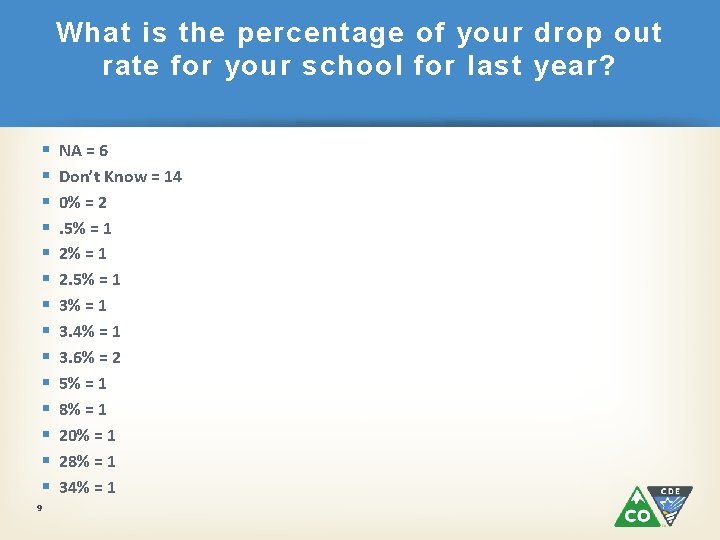
What is the percentage of your drop out rate for your school for last year? § § § § 9 NA = 6 Don’t Know = 14 0% = 2. 5% = 1 3. 4% = 1 3. 6% = 2 5% = 1 8% = 1 20% = 1 28% = 1 34% = 1
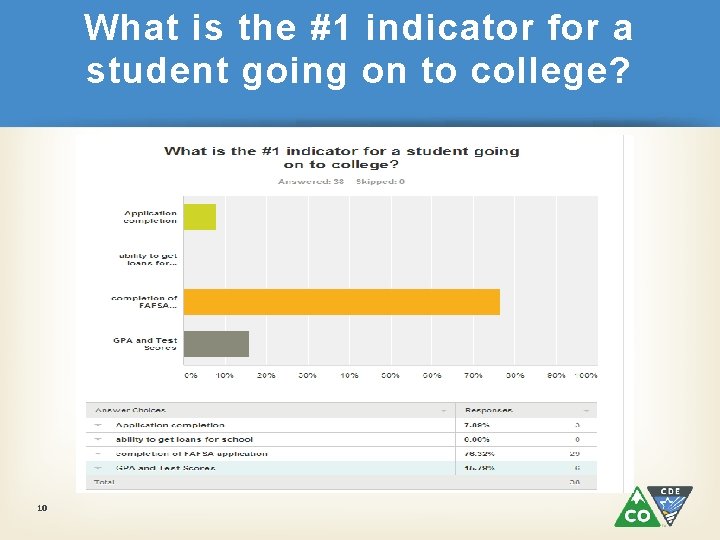
What is the #1 indicator for a student going on to college? 10
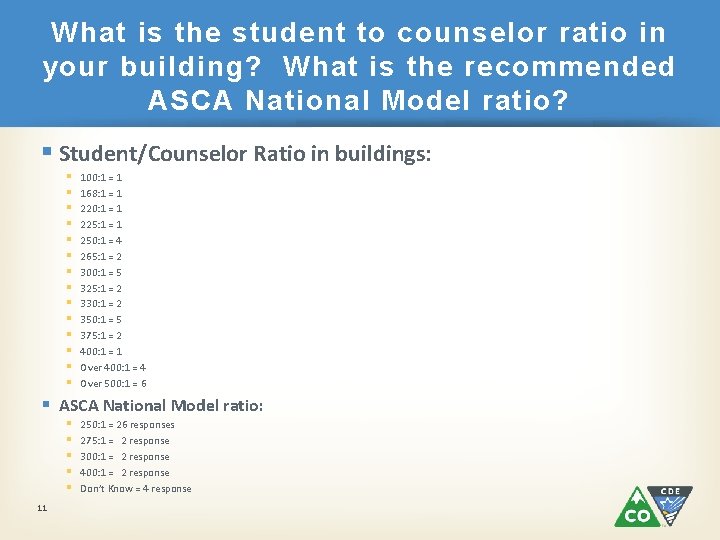
What is the student to counselor ratio in your building? What is the recommended ASCA National Model ratio? § Student/Counselor Ratio in buildings: § § § § 100: 1 = 1 168: 1 = 1 220: 1 = 1 225: 1 = 1 250: 1 = 4 265: 1 = 2 300: 1 = 5 325: 1 = 2 330: 1 = 2 350: 1 = 5 375: 1 = 2 400: 1 = 1 Over 400: 1 = 4 Over 500: 1 = 6 § ASCA National Model ratio: § § § 11 250: 1 = 26 responses 275: 1 = 2 response 300: 1 = 2 response 400: 1 = 2 response Don’t Know = 4 response
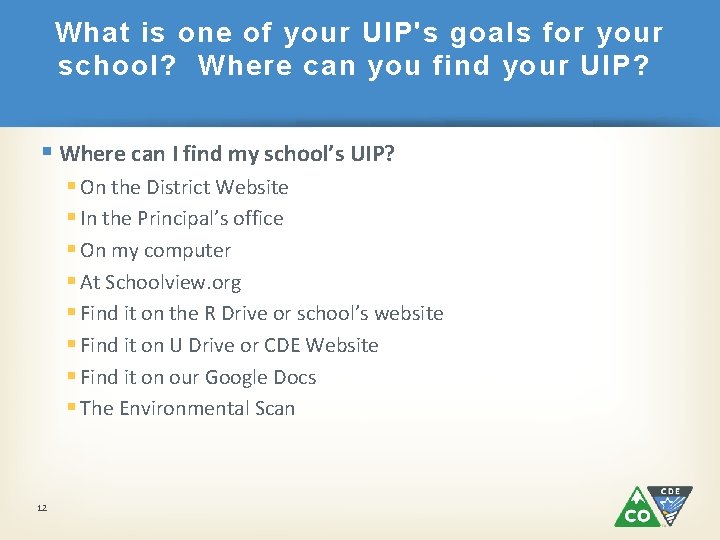
What is one of your UIP's goals for your school? Where can you find your UIP? § Where can I find my school’s UIP? § On the District Website § In the Principal’s office § On my computer § At Schoolview. org § Find it on the R Drive or school’s website § Find it on U Drive or CDE Website § Find it on our Google Docs § The Environmental Scan 12
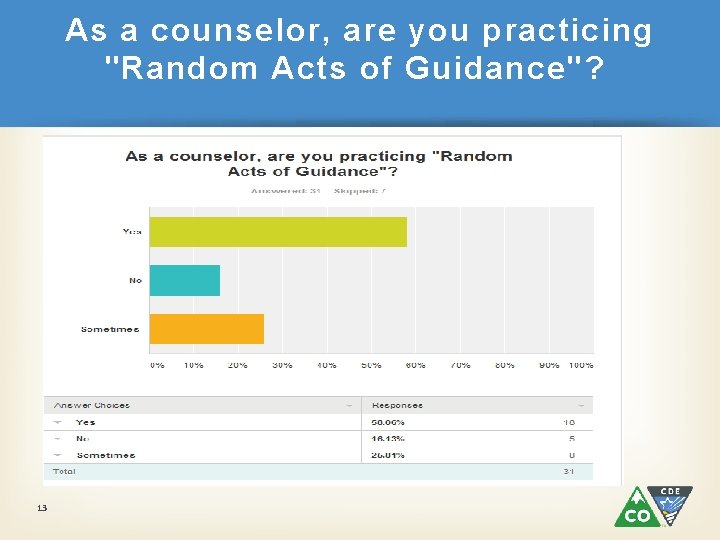
As a counselor, are you practicing "Random Acts of Guidance"? § 13
Please f eel free to add any comments, que st ions or topics yo u would like to see addressed at the Counse lor Corps Webinar s and Tr ainings . q More information regarding who will be assisting Middle Schools with developing the needs assessment? q Building quality needs assessments (more info and support) q What topics should be included in a needs assessment? We always get too overwhelmed with too many questions and need help with this. How do you report data to stakeholders who already have so much on their own plates that they don't have time for a long presentation and we are only given 10 mins tops to do so. How do we role out ICAP to staff effectively, create an accountability system, and keep records of ICAP for each student with limited computer use? When your whole school is an achievement gap. . . where do you start q To new to know q Data Collection 14
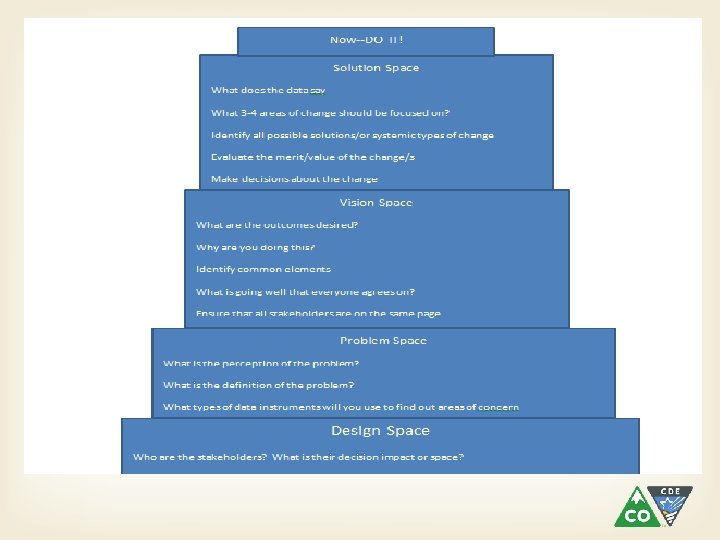
Pathway for change 5 Spaces
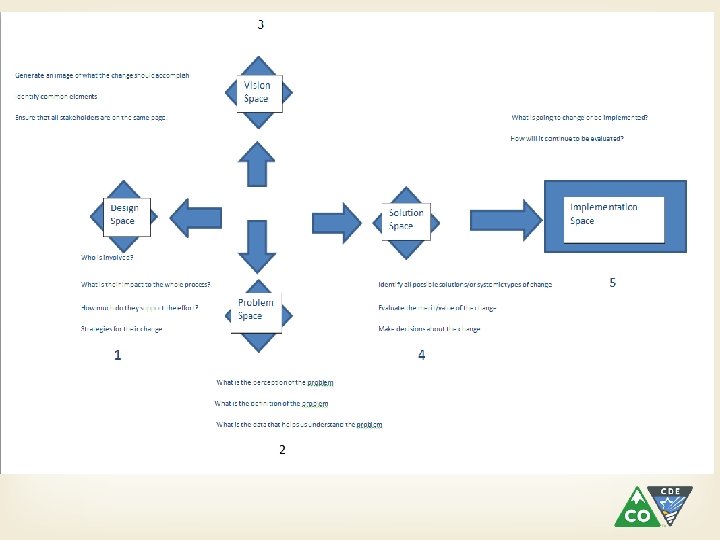
Your roadmap for change § Take the Design road for approximately 10 miles. You will go through a § § neighborhood of stakeholders. Be careful as some of these residences are not going to be helpful on your road to success. Others will go out of their way to make sure you get to your destination. Take a left onto Problem Highway. As you drive you will run into potholes, ditches, and road kill. How will you get through this highway? How will you know that the pot hole is really an issue? After about 15 miles you will come to a fork in the road. Take the right turn onto Vision Lane. Here “if your windshield is clean” you should start to see for miles. But what you see and how you see it, is now very important. Can you see where you want to go--maybe it’s the mountains. Do you know why you are trying to get to the mountains? Are the road reports favorable or do you need snow chains? Does everyone in the car want to take the chance of getting snowed in? So you know that you have 4 wheel drive and you know that everyone is in agreement. You turn up Solution Pass with the knowledge that you can handle the changes it will take to get through the snow and your drive. You are now on top of Implementation Mountain. Great job. § Now it is time to ENJOY your Action Plans!
Data Collection §Data you can use: §UIP Data §School Profile Data §Community Surveys §Needs Assessment §Environmental Scan
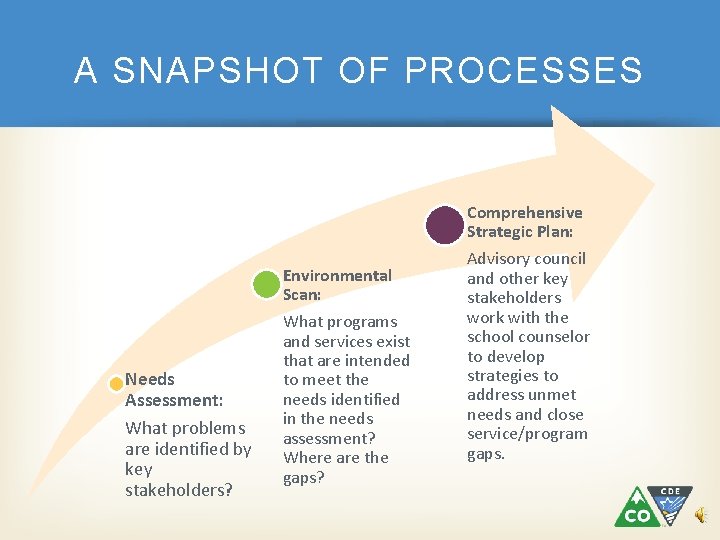
A SNAPSHOT OF PROCESSES Needs Assessment: What problems are identified by key stakeholders? Environmental Scan: What programs and services exist that are intended to meet the needs identified in the needs assessment? Where are the gaps? Comprehensive Strategic Plan: Advisory council and other key stakeholders work with the school counselor to develop strategies to address unmet needs and close service/program gaps.
WHAT IS A NEED ANYWAY? § Needs are gaps between “what is” and “what is desired” or “what should be. ” § All identified needs are value laden. § Too often, needs assessments consider a lack of what is without considering the desirability. § There is danger in jumping to conclusions about the nature of needs too soon into the process. Click on the picture to the right to hear a story about just this.
WHAT IS AN ENVIRONMENTAL SCAN ANYWAY? § “Is more concerned with anticipating the future than describing the present. ” § “Is wider in scope than traditional data collection sources because it is based on the assumption that major impacts on the school system can come from unsuspected sources. ” § “Is focused on the interaction of events and trends. ” § “Is an integral part of the planning process. ” Poole, 1991, pp. 40 & 41
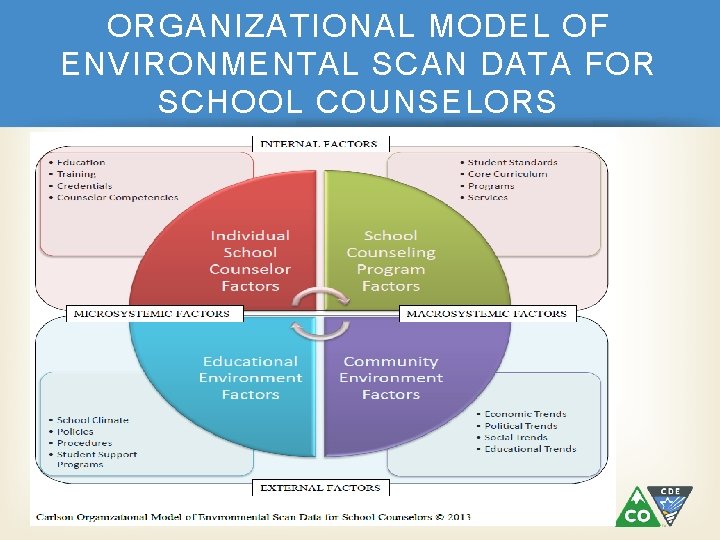
ORGANIZATIONAL MODEL OF ENVIRONMENTAL SCAN DATA FOR SCHOOL COUNSELORS
Homework - Due Sept. 30 th § Read your grant or Review if you have read § Develop a Mission and Vision Statement for your counseling office or revise if you have one § Read your UIP for your school § Complete the Time Analysis Worksheet for 2 weeks § Set time to discuss Counselor and Administrator Goals together § Write 5 parallel questions for your Needs Assessment covering your different stakeholders § List one item of data from each of the Environmental Scan four quadrants
Homework Send all Home work to : § Eve Pugh CDE § Pugh_E@cde. state. co. us
Questions and Comments FEEDBACK
THANK YOU SO MUCH! HAVE A GREAT SEPTEMBER AND WE WILL SEE YOU VIRTUALLY IN OCTOBER! PAM AND JOHN AND EVE
28
29
- Slides: 29