
Color Vision Sensing a Colorful World Psychological experience

- Slides: 16
Color Vision: Sensing a Colorful World Psychological experience of vision Trichromatic Theory Opponent-Process Theory
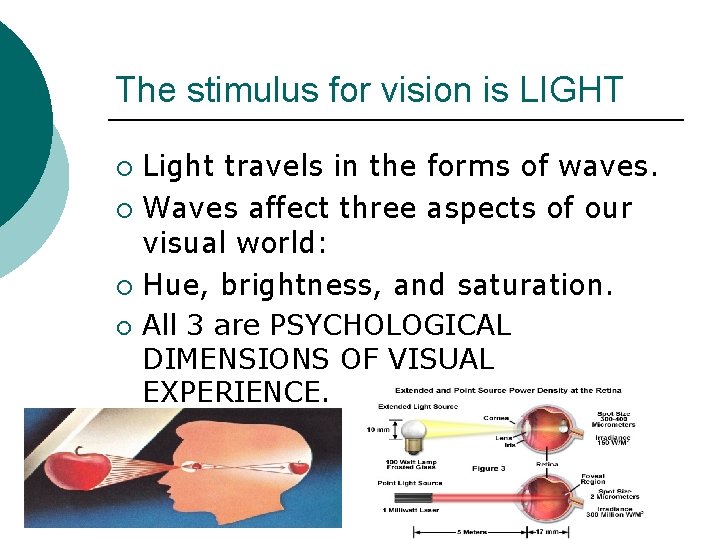
The stimulus for vision is LIGHT Light travels in the forms of waves. ¡ Waves affect three aspects of our visual world: ¡ Hue, brightness, and saturation. ¡ All 3 are PSYCHOLOGICAL DIMENSIONS OF VISUAL EXPERIENCE. ¡
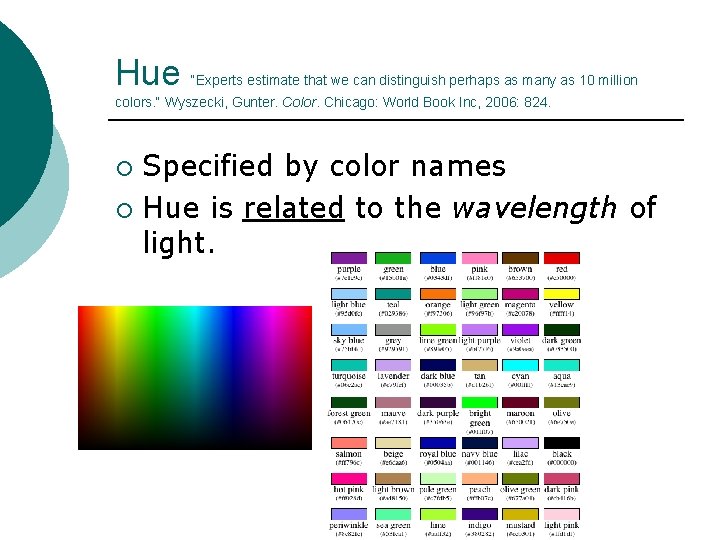
Hue “Experts estimate that we can distinguish perhaps as many as 10 million colors. “ Wyszecki, Gunter. Color. Chicago: World Book Inc, 2006: 824. Specified by color names ¡ Hue is related to the wavelength of light. ¡
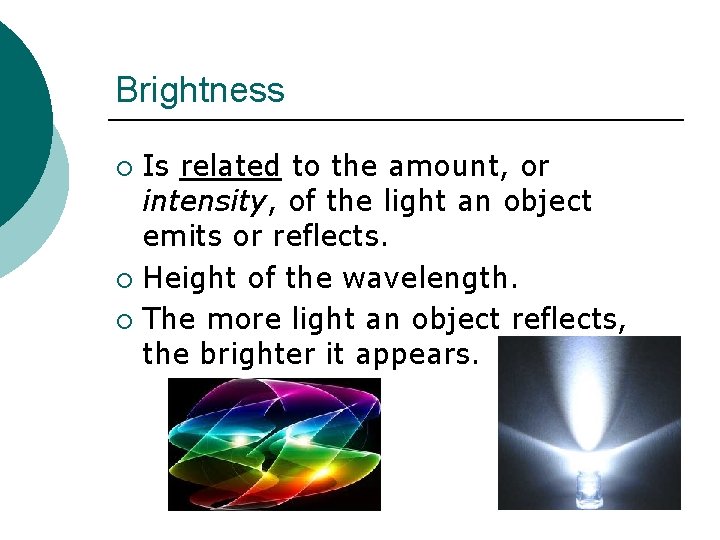
Brightness Is related to the amount, or intensity, of the light an object emits or reflects. ¡ Height of the wavelength. ¡ The more light an object reflects, the brighter it appears. ¡
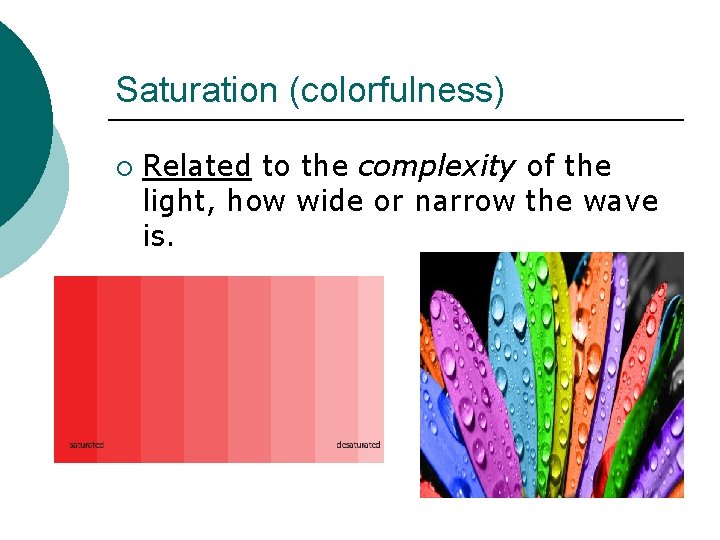
Saturation (colorfulness) ¡ Related to the complexity of the light, how wide or narrow the wave is.
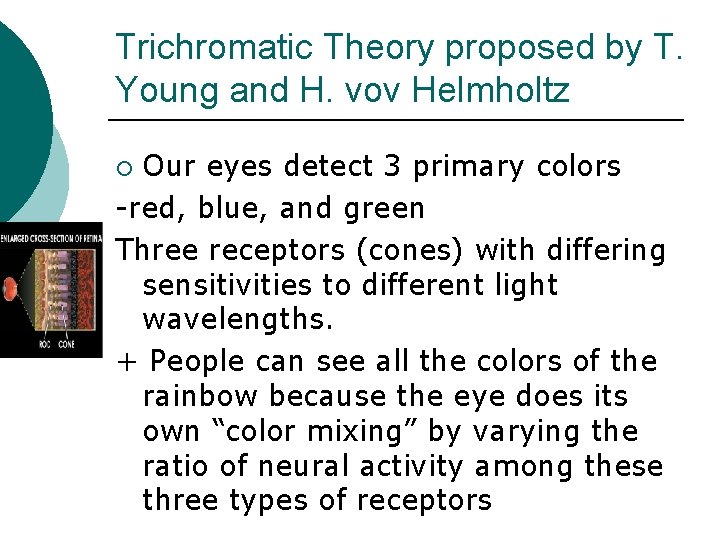
Trichromatic Theory proposed by T. Young and H. vov Helmholtz Our eyes detect 3 primary colors -red, blue, and green Three receptors (cones) with differing sensitivities to different light wavelengths. + People can see all the colors of the rainbow because the eye does its own “color mixing” by varying the ratio of neural activity among these three types of receptors ¡
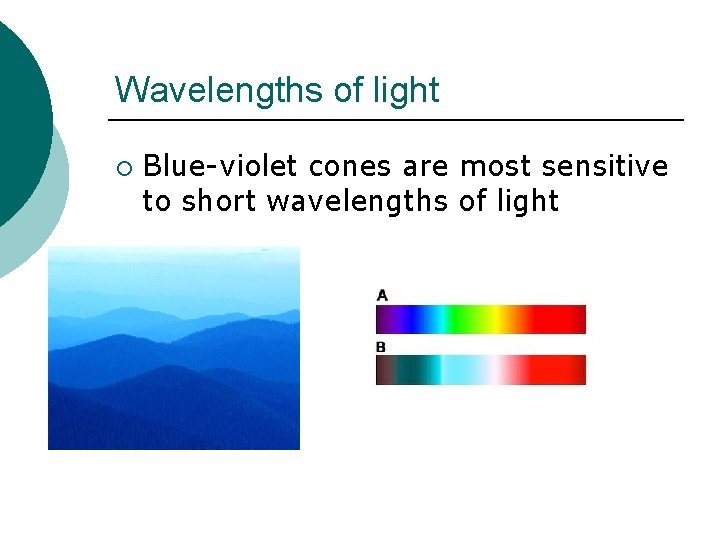
Wavelengths of light ¡ Blue-violet cones are most sensitive to short wavelengths of light
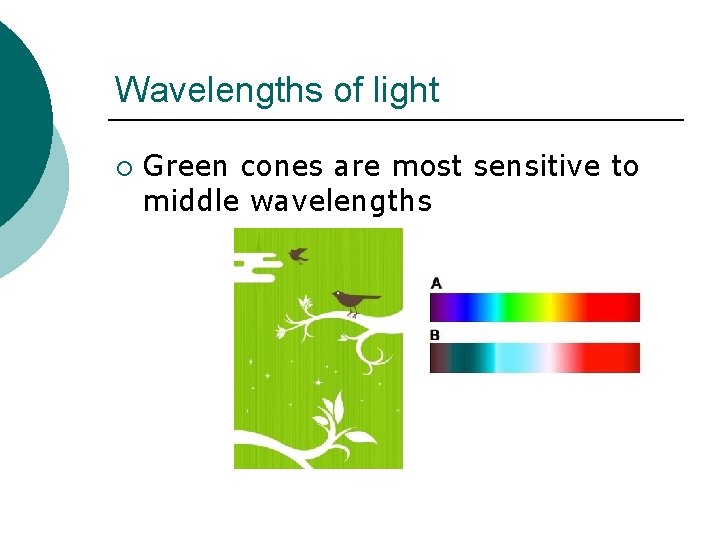
Wavelengths of light ¡ Green cones are most sensitive to middle wavelengths
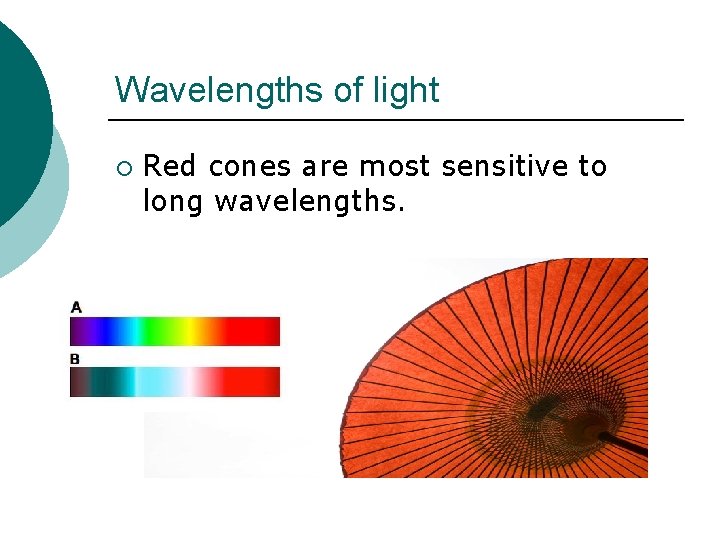
Wavelengths of light ¡ Red cones are most sensitive to long wavelengths.
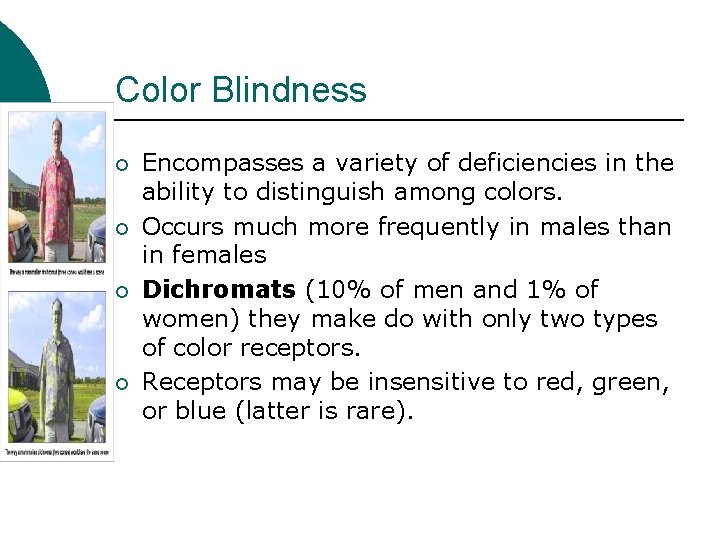
Color Blindness ¡ ¡ Encompasses a variety of deficiencies in the ability to distinguish among colors. Occurs much more frequently in males than in females Dichromats (10% of men and 1% of women) they make do with only two types of color receptors. Receptors may be insensitive to red, green, or blue (latter is rare).
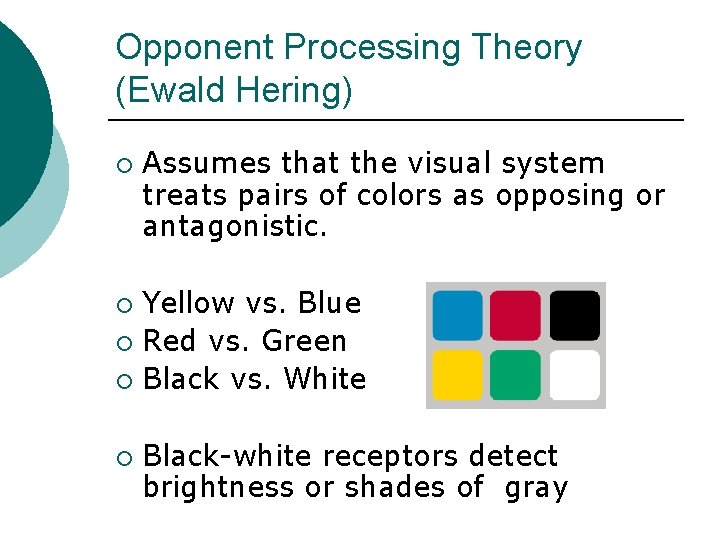
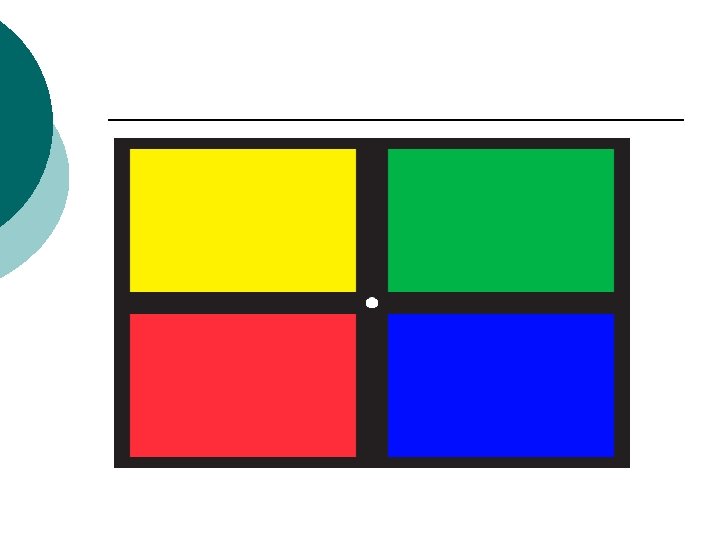
Opponent Processing Theory (Ewald Hering) ¡ Assumes that the visual system treats pairs of colors as opposing or antagonistic. Yellow vs. Blue ¡ Red vs. Green ¡ Black vs. White ¡ ¡ Black-white receptors detect brightness or shades of gray
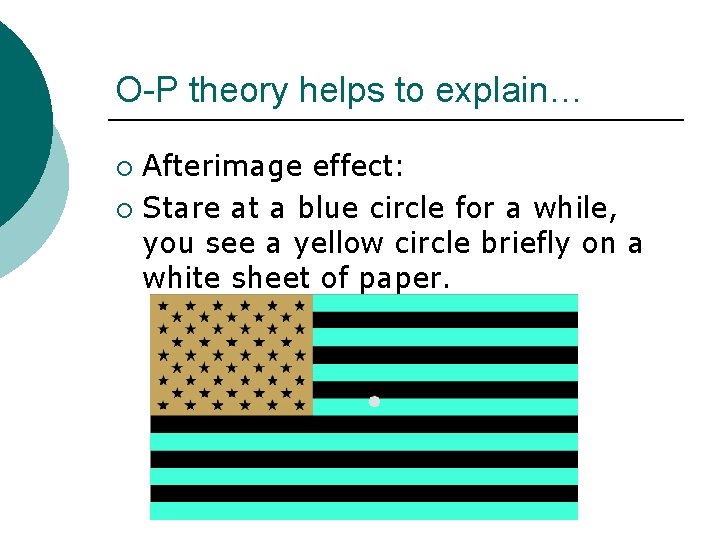
O-P theory helps to explain… Afterimage effect: ¡ Stare at a blue circle for a while, you see a yellow circle briefly on a white sheet of paper. ¡
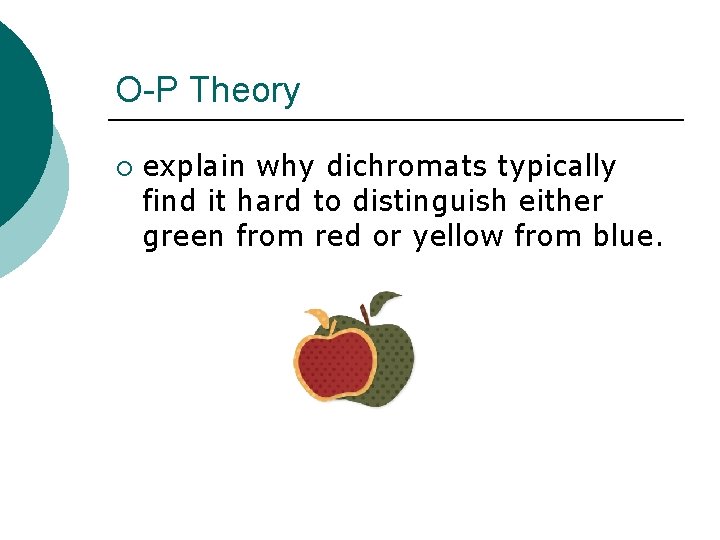
O-P Theory ¡ explain why dichromats typically find it hard to distinguish either green from red or yellow from blue.
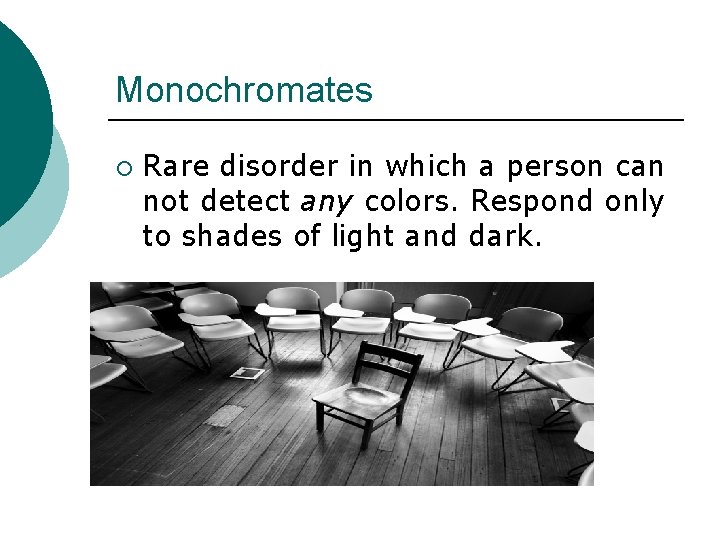
Monochromates ¡ Rare disorder in which a person can not detect any colors. Respond only to shades of light and dark.