
Color Theory Color Theory Color theory will help
- Slides: 28
Color Theory
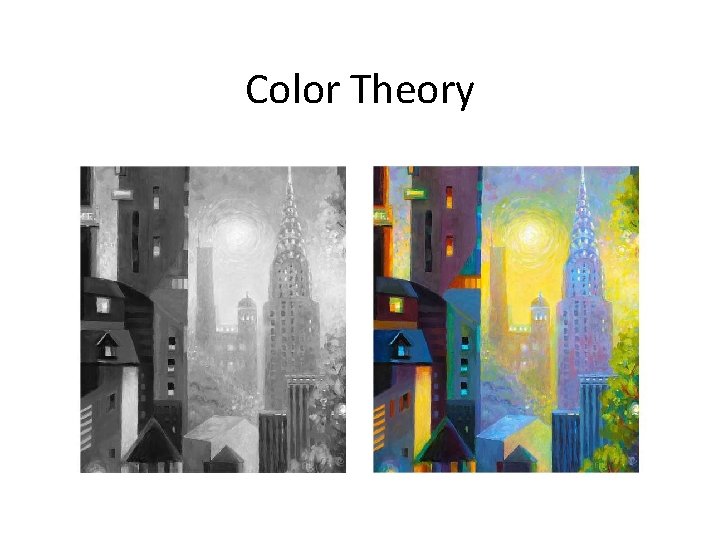
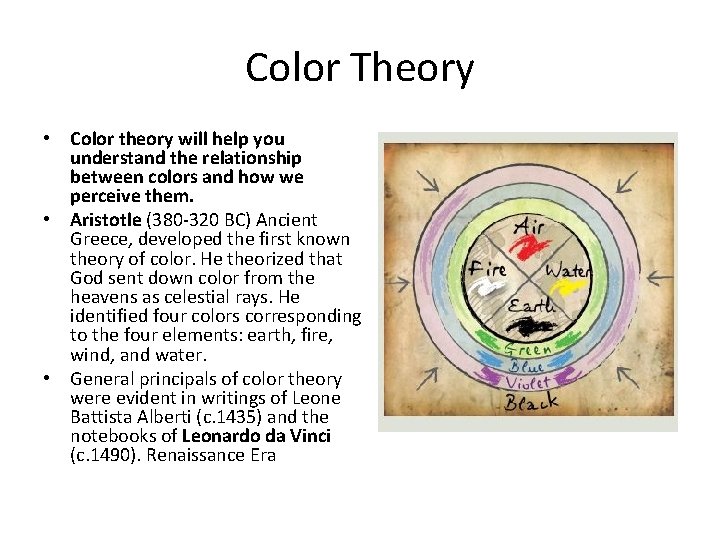
Color Theory • Color theory will help you understand the relationship between colors and how we perceive them. • Aristotle (380 -320 BC) Ancient Greece, developed the first known theory of color. He theorized that God sent down color from the heavens as celestial rays. He identified four colors corresponding to the four elements: earth, fire, wind, and water. • General principals of color theory were evident in writings of Leone Battista Alberti (c. 1435) and the notebooks of Leonardo da Vinci (c. 1490). Renaissance Era
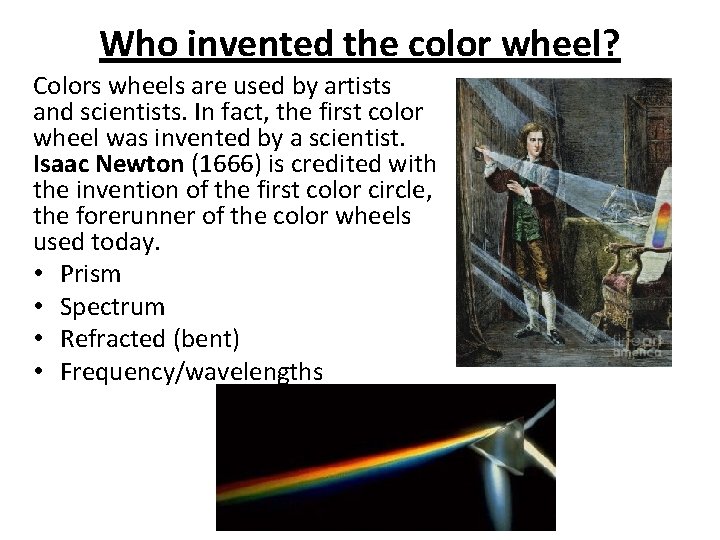
Who invented the color wheel? Colors wheels are used by artists and scientists. In fact, the first color wheel was invented by a scientist. Isaac Newton (1666) is credited with the invention of the first color circle, the forerunner of the color wheels used today. • Prism • Spectrum • Refracted (bent) • Frequency/wavelengths
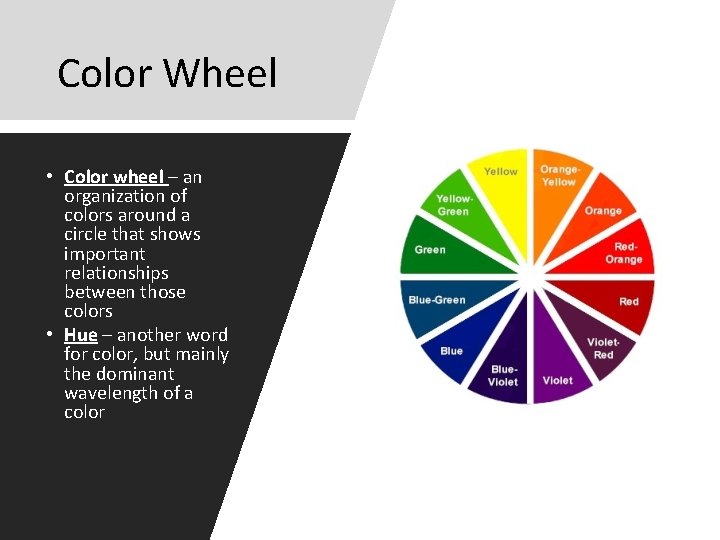
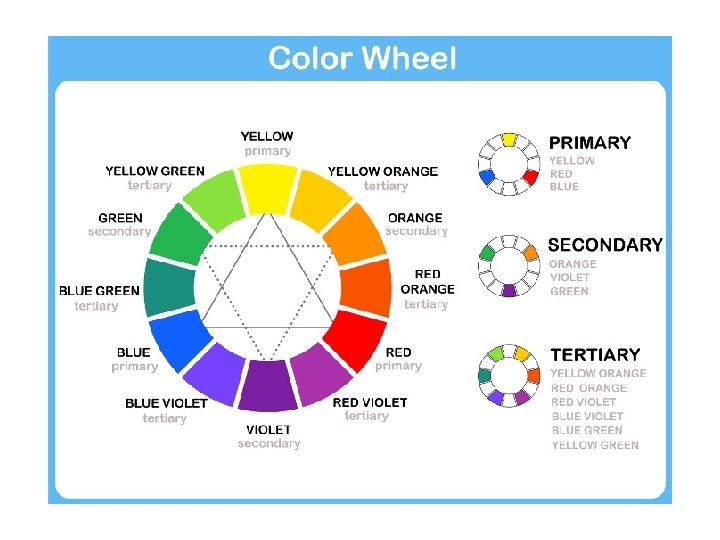
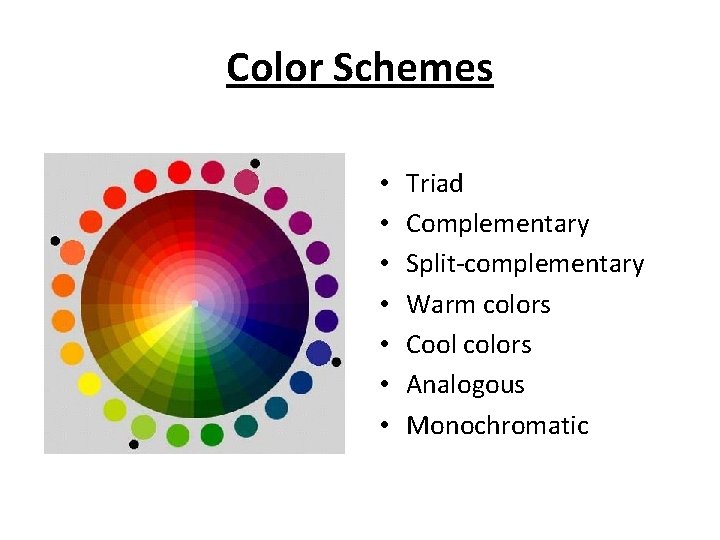
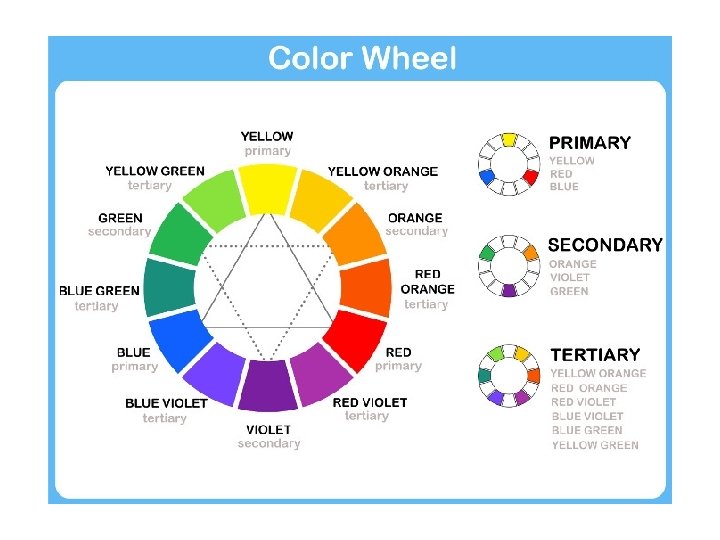
Color Wheel • Color wheel – an organization of colors around a circle that shows important relationships between those colors • Hue – another word for color, but mainly the dominant wavelength of a color
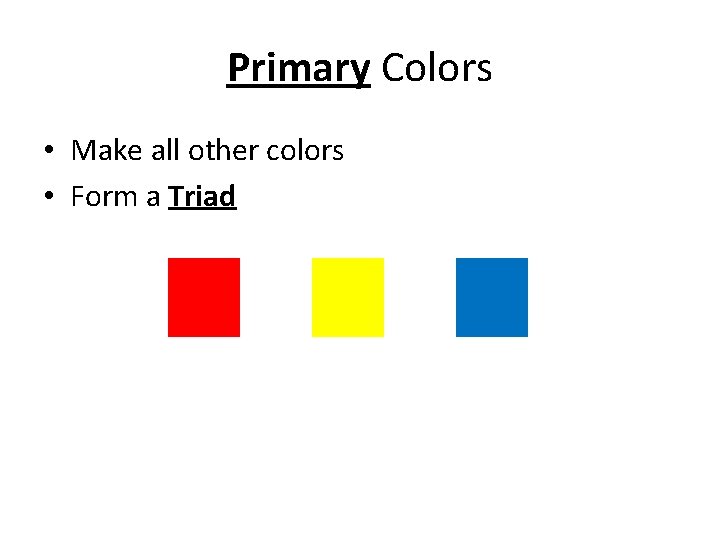
Primary Colors • Make all other colors • Form a Triad
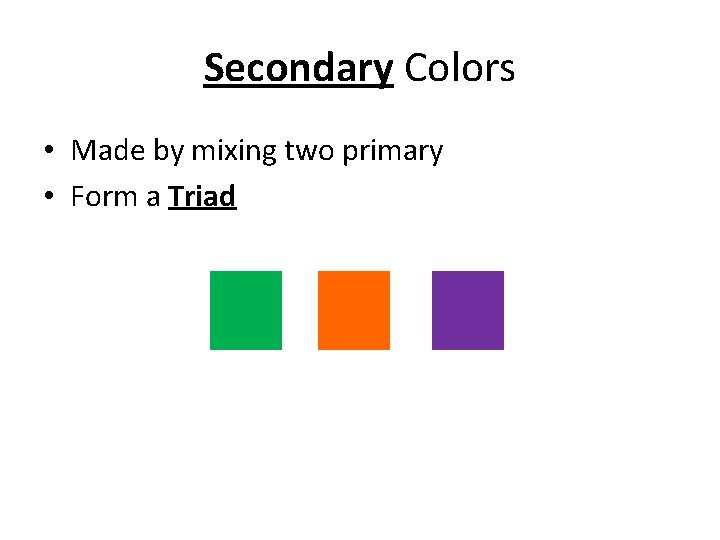
Secondary Colors • Made by mixing two primary • Form a Triad
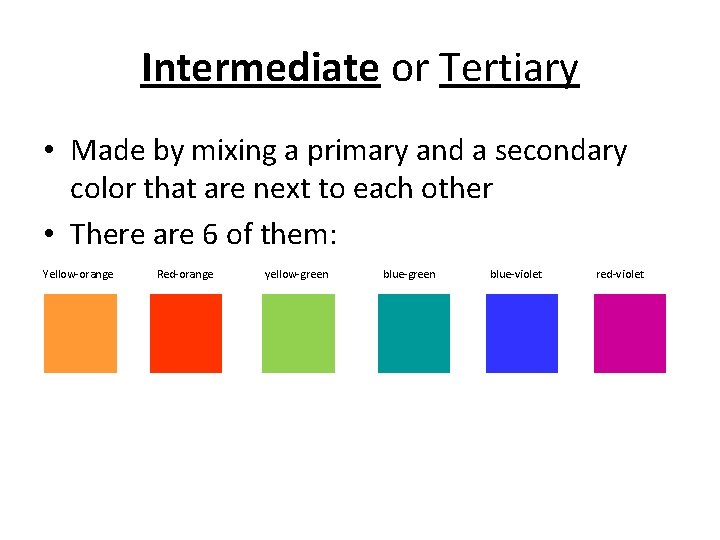
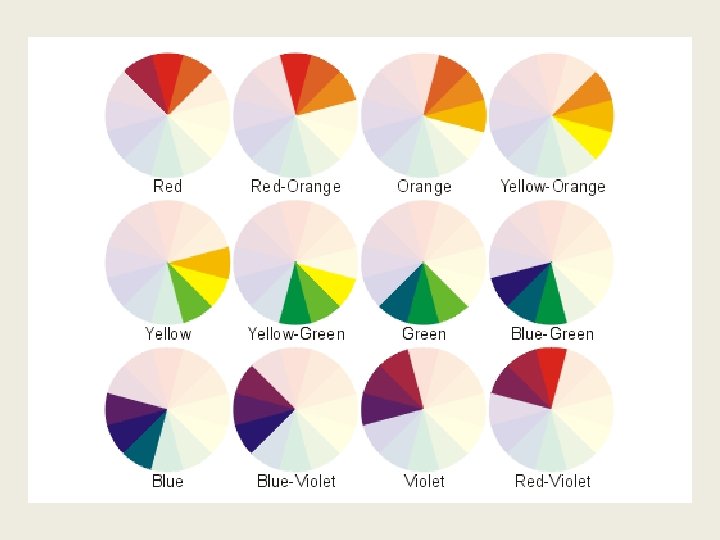
Intermediate or Tertiary • Made by mixing a primary and a secondary color that are next to each other • There are 6 of them: Yellow-orange Red-orange yellow-green blue-violet red-violet
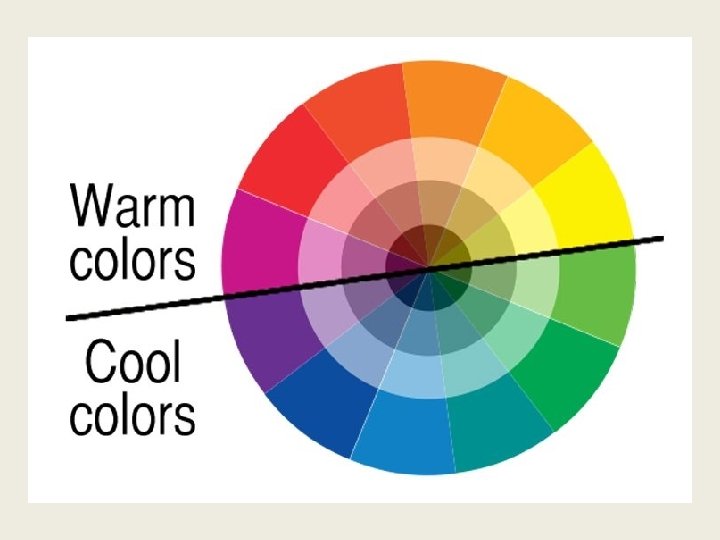
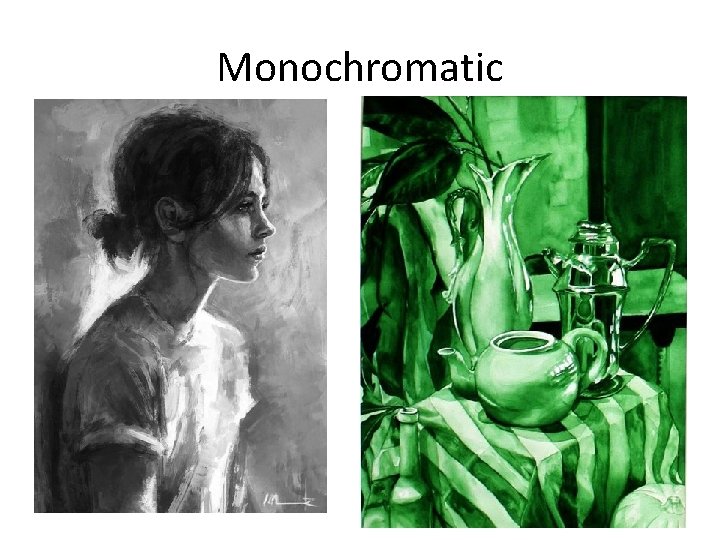
Color Schemes • • Triad Complementary Split-complementary Warm colors Cool colors Analogous Monochromatic
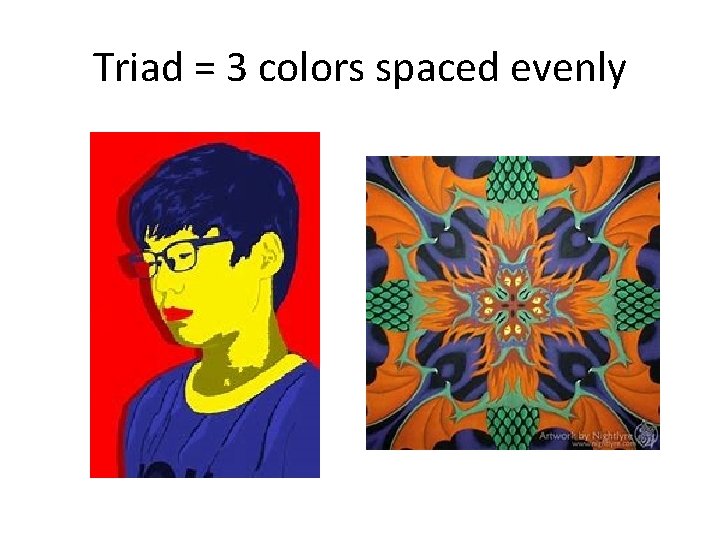
Triad = 3 colors spaced evenly
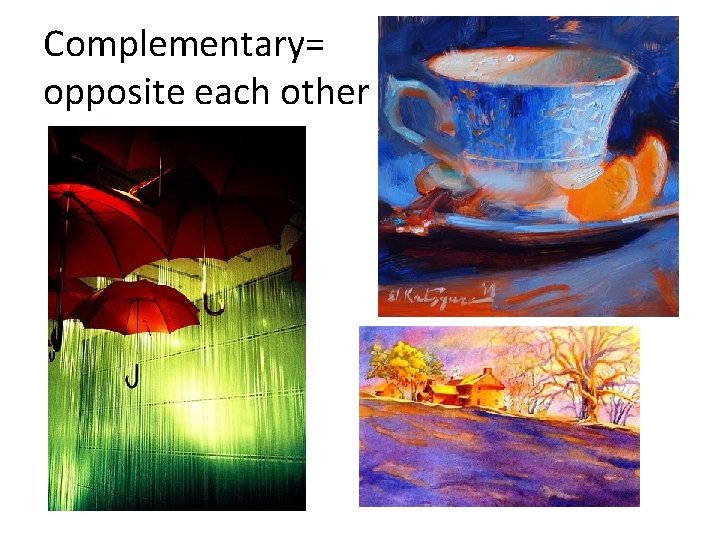
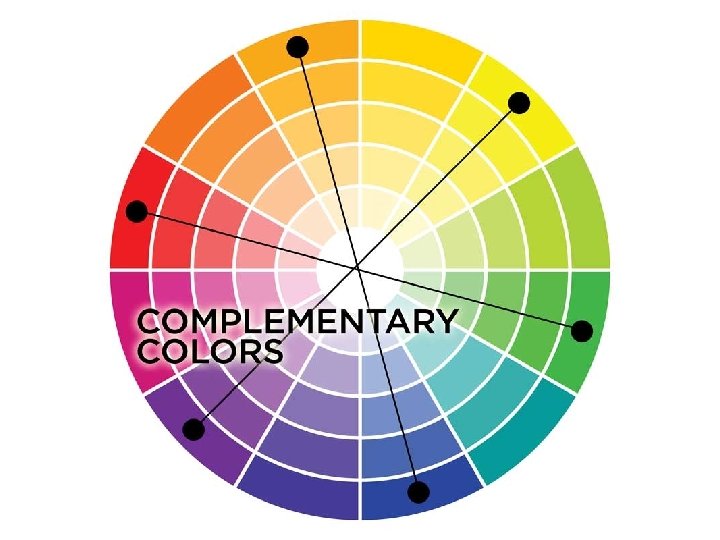
Complementary= opposite each other
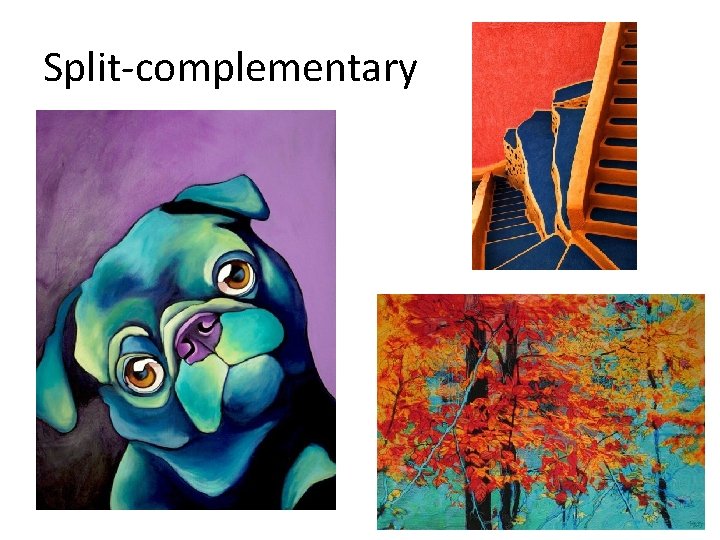
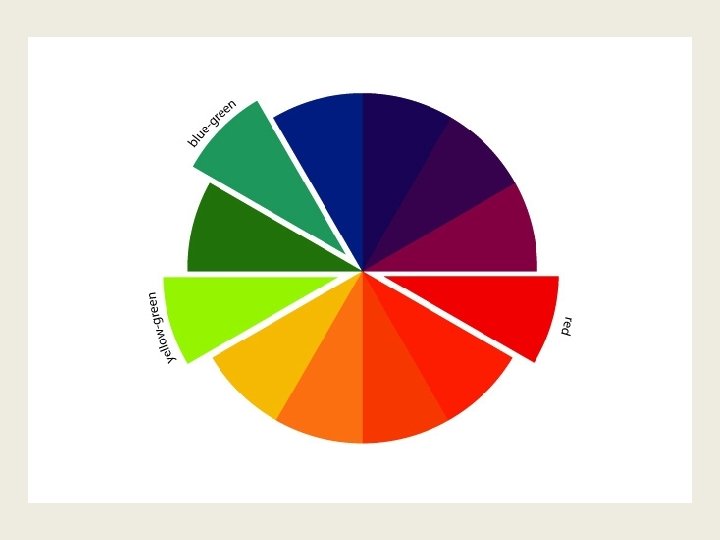
Split-complementary
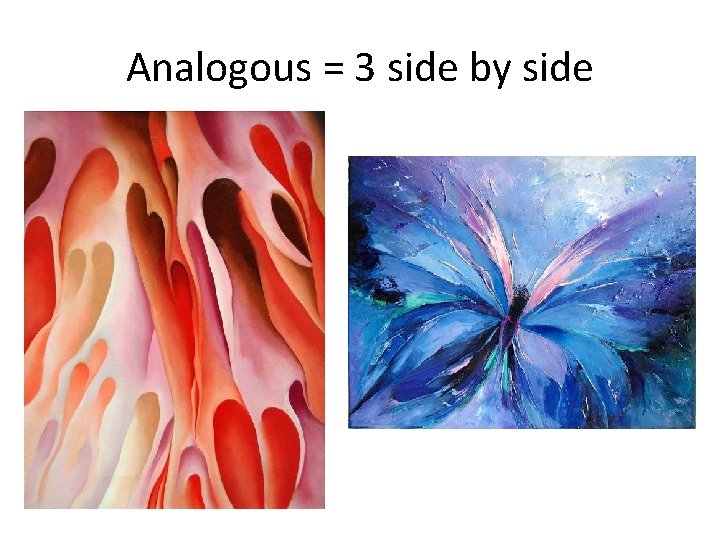
Analogous = 3 side by side
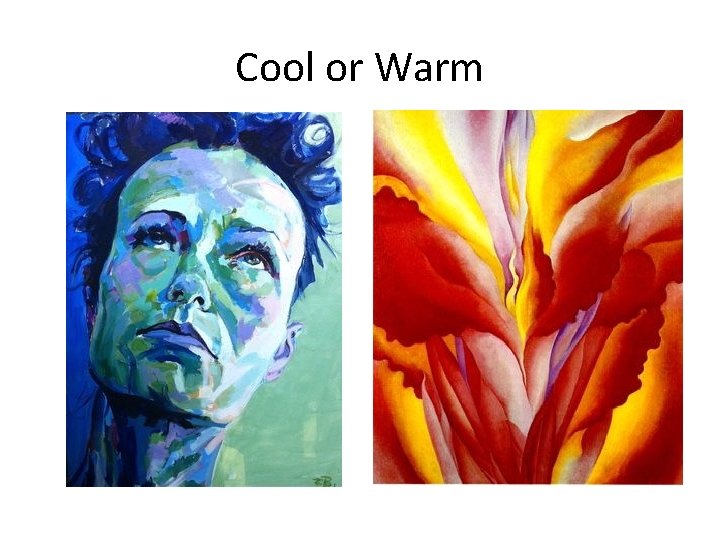
Cool or Warm
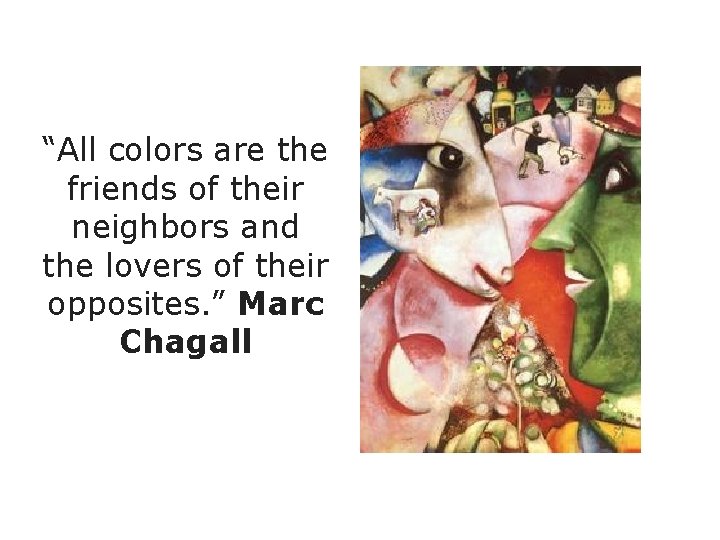
“All colors are the friends of their neighbors and the lovers of their opposites. ” Marc Chagall
Monochromatic
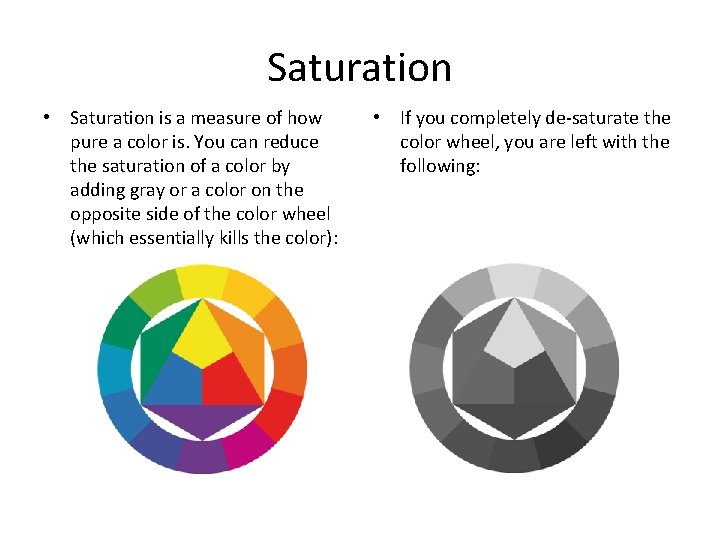
Saturation • Saturation is a measure of how pure a color is. You can reduce the saturation of a color by adding gray or a color on the opposite side of the color wheel (which essentially kills the color): • If you completely de-saturate the color wheel, you are left with the following:
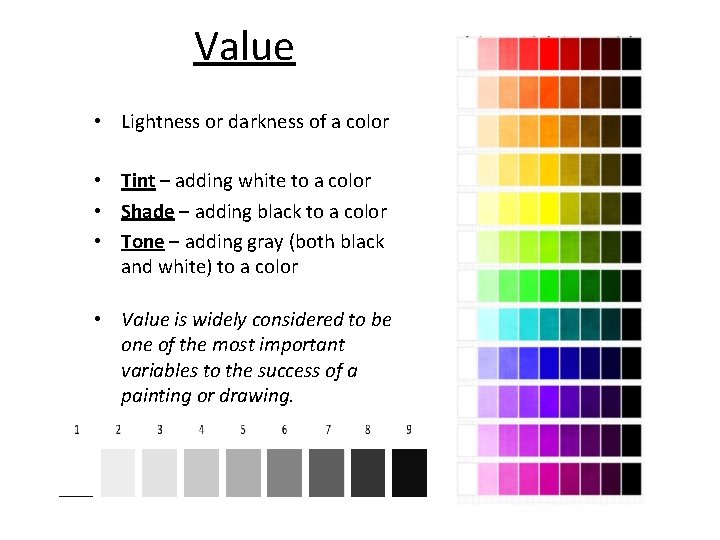
Value • Lightness or darkness of a color • Tint – adding white to a color • Shade – adding black to a color • Tone – adding gray (both black and white) to a color • Value is widely considered to be one of the most important variables to the success of a painting or drawing.
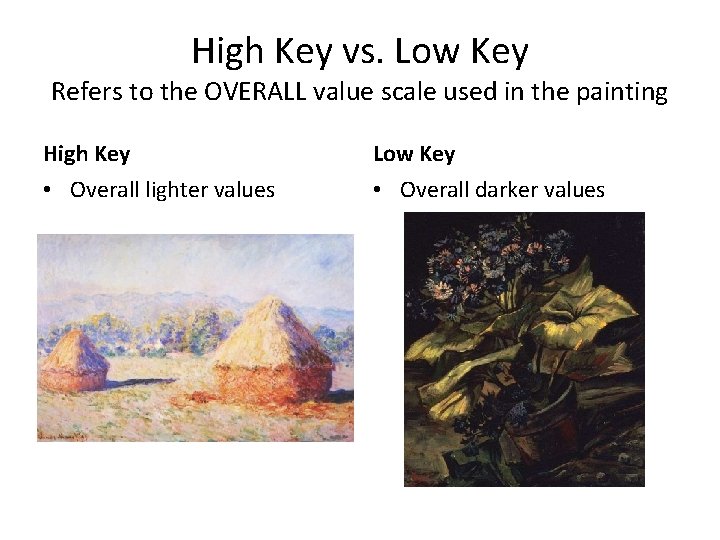
High Key vs. Low Key Refers to the OVERALL value scale used in the painting High Key Low Key • Overall lighter values • Overall darker values
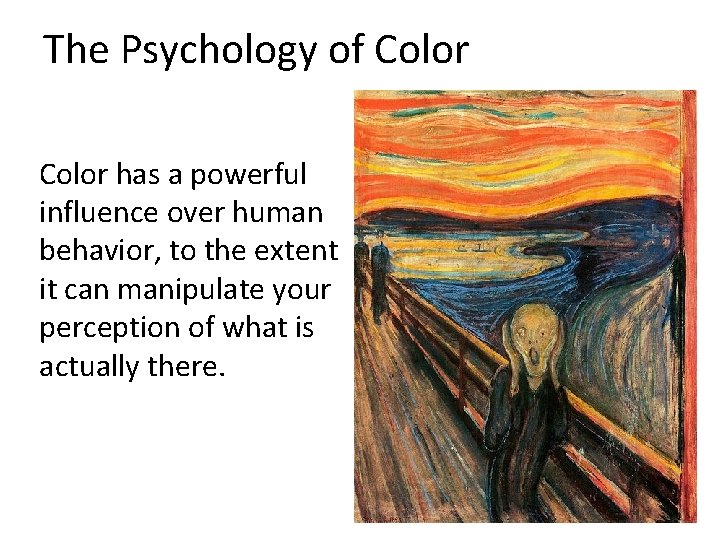
The Psychology of Color has a powerful influence over human behavior, to the extent it can manipulate your perception of what is actually there.
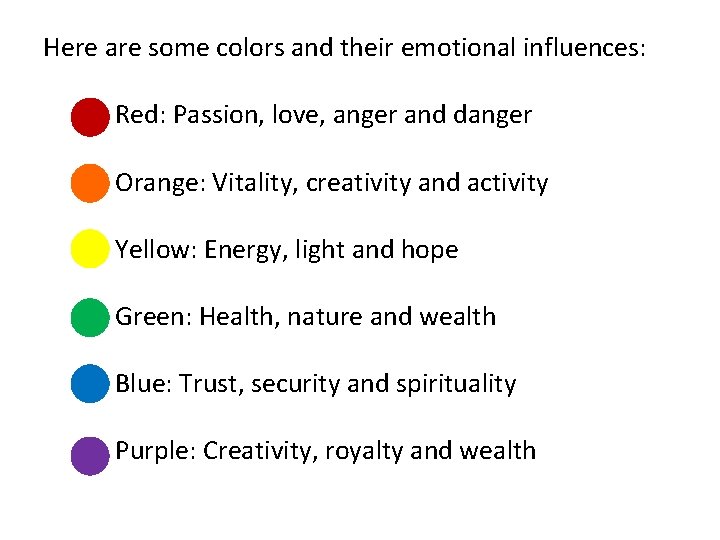
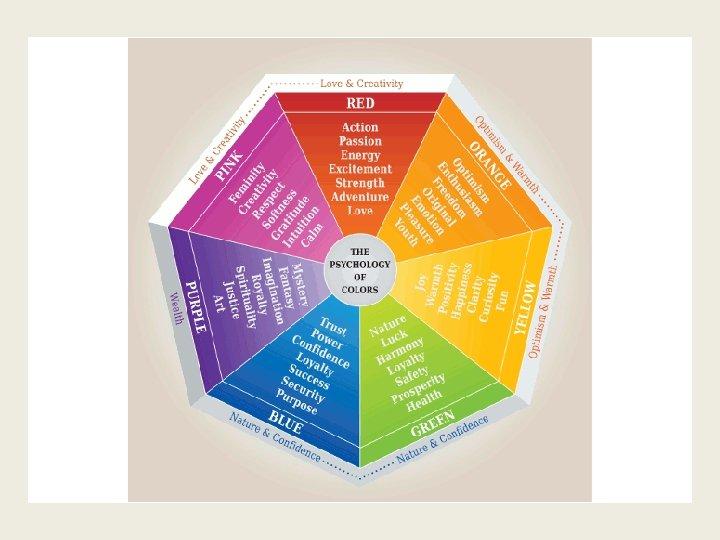
Here are some colors and their emotional influences: Red: Passion, love, anger and danger Orange: Vitality, creativity and activity Yellow: Energy, light and hope Green: Health, nature and wealth Blue: Trust, security and spirituality Purple: Creativity, royalty and wealth
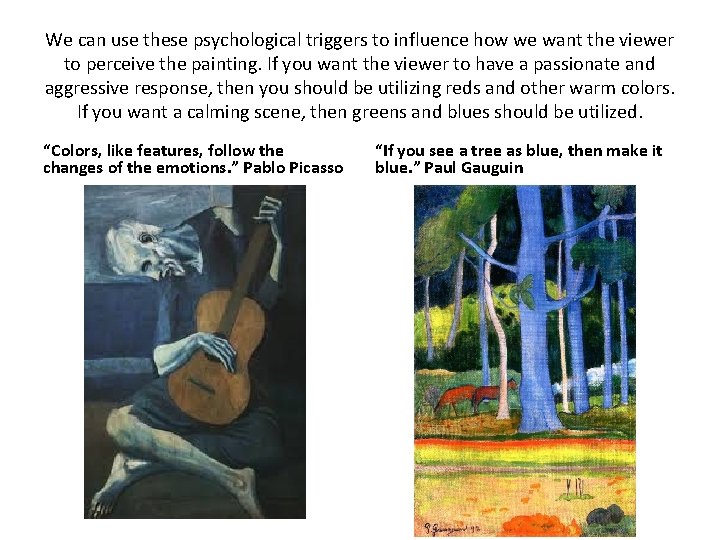
We can use these psychological triggers to influence how we want the viewer to perceive the painting. If you want the viewer to have a passionate and aggressive response, then you should be utilizing reds and other warm colors. If you want a calming scene, then greens and blues should be utilized. “Colors, like features, follow the changes of the emotions. ” Pablo Picasso “If you see a tree as blue, then make it blue. ” Paul Gauguin