
Color Segmentation Color Spaces and Illumination Mohan Sridharan
- Slides: 30
Color Segmentation: Color Spaces and Illumination Mohan Sridharan University of Birmingham mzs@cs. bham. ac. uk 1
Talk Outline ¡ Color segmentation: a simple outline. ¡ Color Spaces: l l ¡ RGB family (RGB, CMY). YCb. Cr. HSV. LAB. Illumination: l l l The effect on segmentation. Representation. Adapting to change. 2
Talk Outline ¡ Color segmentation: a simple outline. ¡ Color Spaces: l l ¡ RGB family (RGB, CMY). YCb. Cr. HSV. LAB. Illumination: l l l The effect on segmentation. Representation. Adapting to change. 3
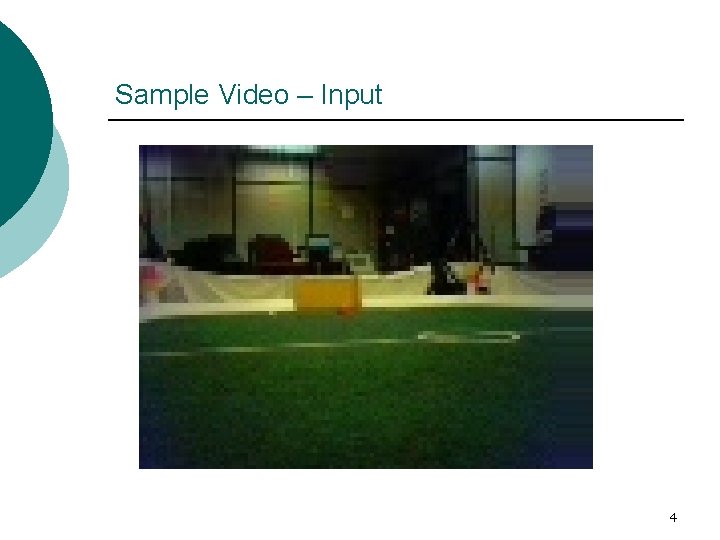
Sample Video – Input 4
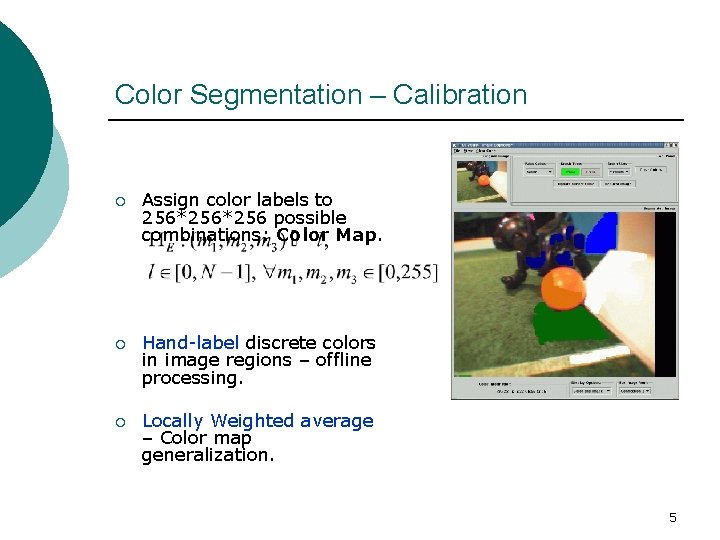
Color Segmentation – Calibration ¡ Assign color labels to 256*256 possible combinations: Color Map. ¡ Hand-label discrete colors in image regions – offline processing. ¡ Locally Weighted average – Color map generalization. 5
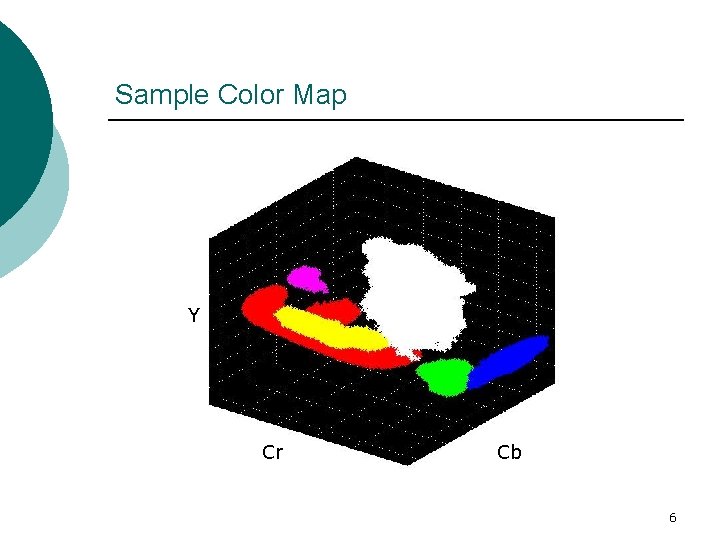
Sample Color Map Y Cr Cb 6
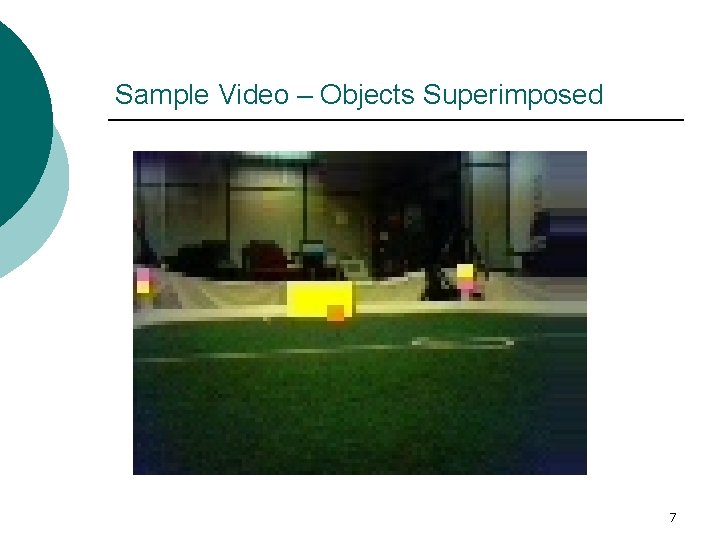
Sample Video – Objects Superimposed 7
Talk Outline ¡ Color segmentation: a simple outline. ¡ Color Spaces: l l ¡ RGB family (RGB, CMY). YCb. Cr. HSV. LAB. Illumination: l l l The effect on segmentation. Representation. Adapting to change. 8
Color Spaces – What and Why? ¡ Means of representing colors. ¡ Means of distinguishing between colors. ¡ Different color spaces for different applications. ¡ Visually appealing 9
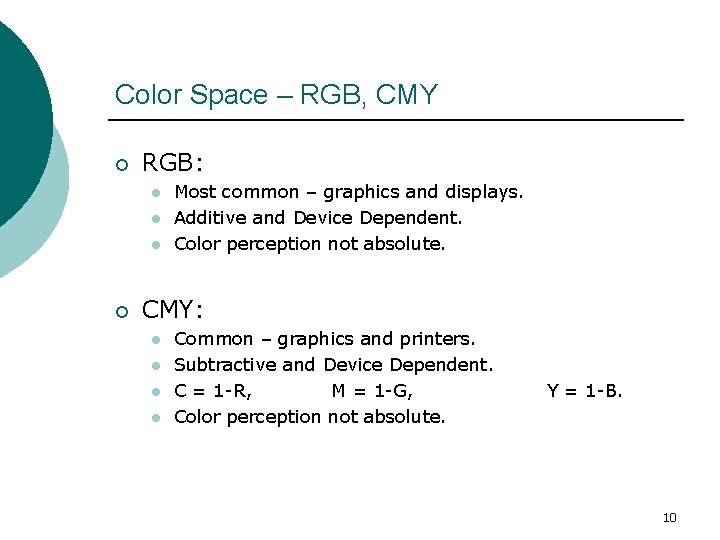
Color Space – RGB, CMY ¡ RGB: l l l ¡ Most common – graphics and displays. Additive and Device Dependent. Color perception not absolute. CMY: l l Common – graphics and printers. Subtractive and Device Dependent. C = 1 -R, M = 1 -G, Color perception not absolute. Y = 1 -B. 10
Color Space – RGB, CMY 11
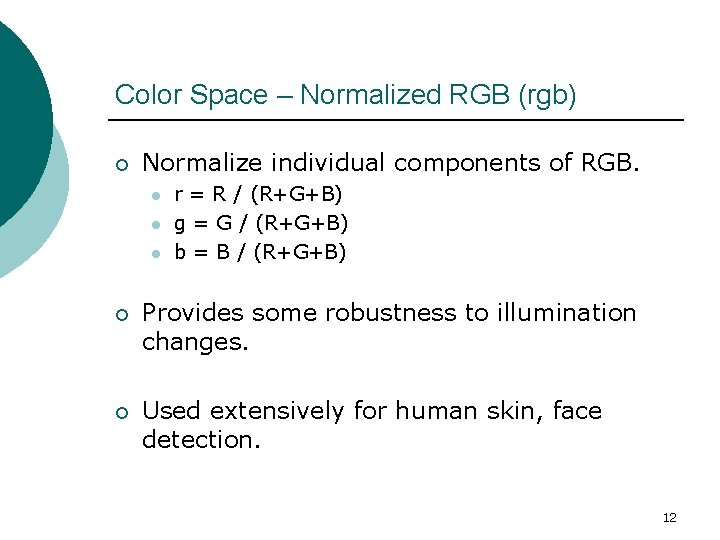
Color Space – Normalized RGB (rgb) ¡ Normalize individual components of RGB. l l l r = R / (R+G+B) g = G / (R+G+B) b = B / (R+G+B) ¡ Provides some robustness to illumination changes. ¡ Used extensively for human skin, face detection. 12
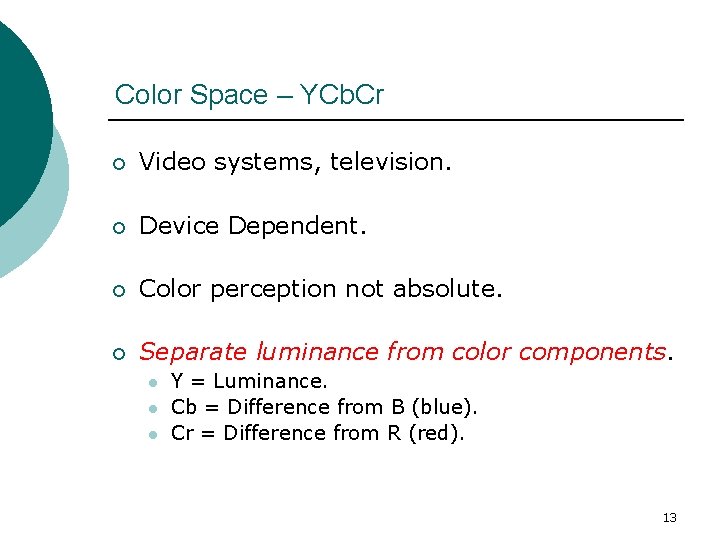
Color Space – YCb. Cr ¡ Video systems, television. ¡ Device Dependent. ¡ Color perception not absolute. ¡ Separate luminance from color components. l l l Y = Luminance. Cb = Difference from B (blue). Cr = Difference from R (red). 13
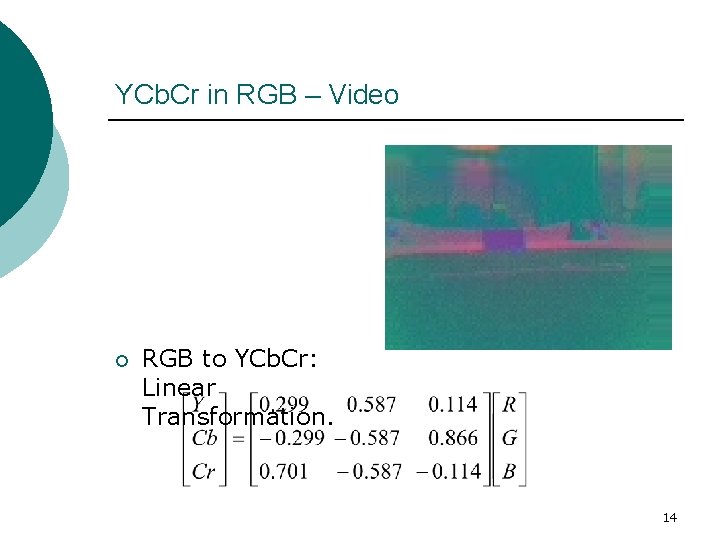
YCb. Cr in RGB – Video ¡ RGB to YCb. Cr: Linear Transformation. 14
Color Space – HSV ¡ Common among artists. ¡ Based on artistic perception. ¡ Hue, Saturation and Value. l l l ¡ Hue = tint of color. Value = brightness of color. Saturation = strength of color. Easy to visualize colors. 15
Color Space – HSV 16
Color Space – LAB ¡ Perceptually motivated. ¡ Absolute color space: l Colors are abstract and unambiguous. ¡ Geometric distance proportional to perceptual distance. ¡ Darker colors clustered together, brighter ones well separated. ¡ More robust to illumination changes. 17
Color Space – LAB 18
Color Space – a slice of LAB 19
Color Spaces – Summary ¡ Several Color spaces available. ¡ Each has advantages and disadvantages. ¡ Select color space based on requirements and application. 20
Talk Outline ¡ Color segmentation: a simple outline. ¡ Color Spaces: l l ¡ RGB family (RGB, CMY). YCb. Cr. HSV. LAB. Illumination: l l l The effect on segmentation. Representation. Adapting to change. 21
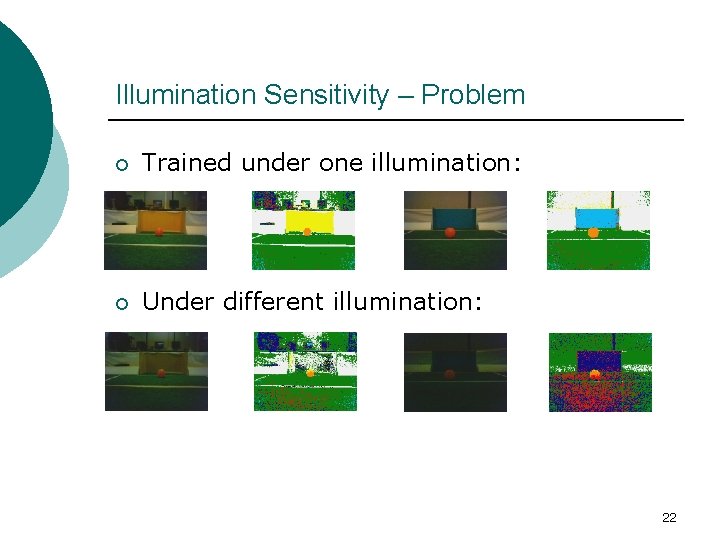
Illumination Sensitivity – Problem ¡ Trained under one illumination: ¡ Under different illumination: 22
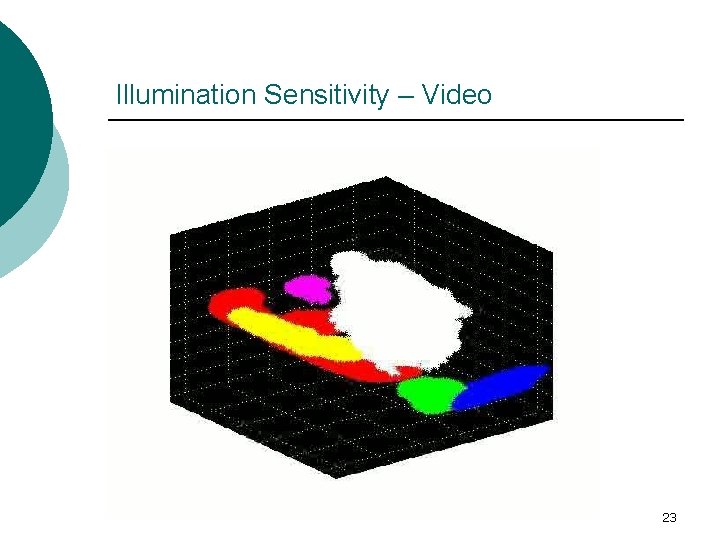
Illumination Sensitivity – Video 23
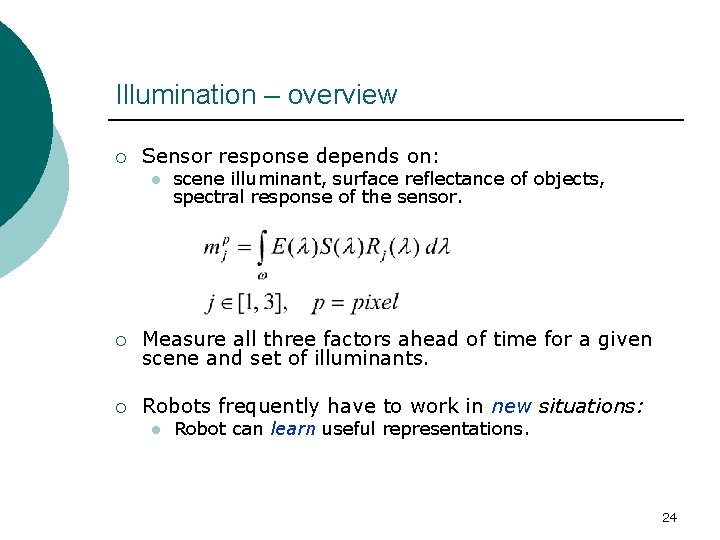
Illumination – overview ¡ Sensor response depends on: l scene illuminant, surface reflectance of objects, spectral response of the sensor. ¡ Measure all three factors ahead of time for a given scene and set of illuminants. ¡ Robots frequently have to work in new situations: l Robot can learn useful representations. 24
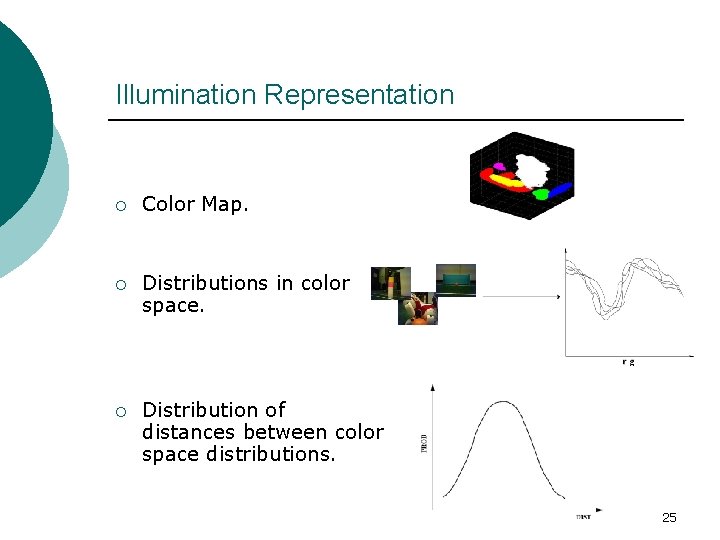
Illumination Representation ¡ Color Map. ¡ Distributions in color space. ¡ Distribution of distances between color space distributions. 25
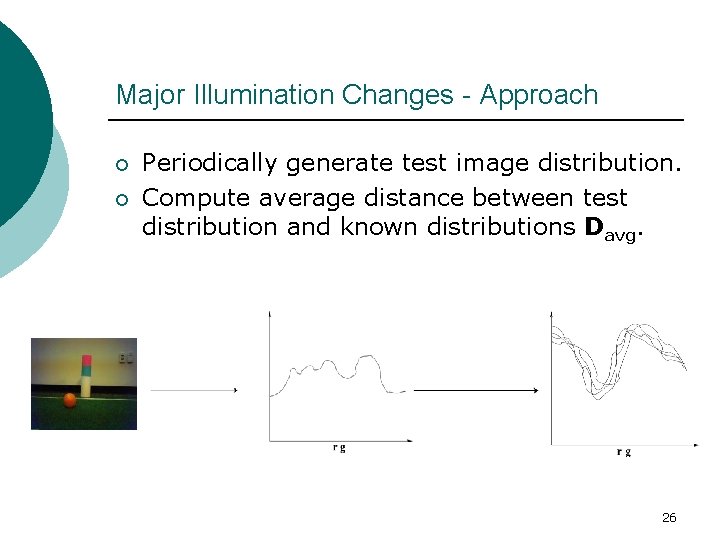
Major Illumination Changes - Approach ¡ ¡ Periodically generate test image distribution. Compute average distance between test distribution and known distributions Davg. 26
Major Illumination changes – Video 27
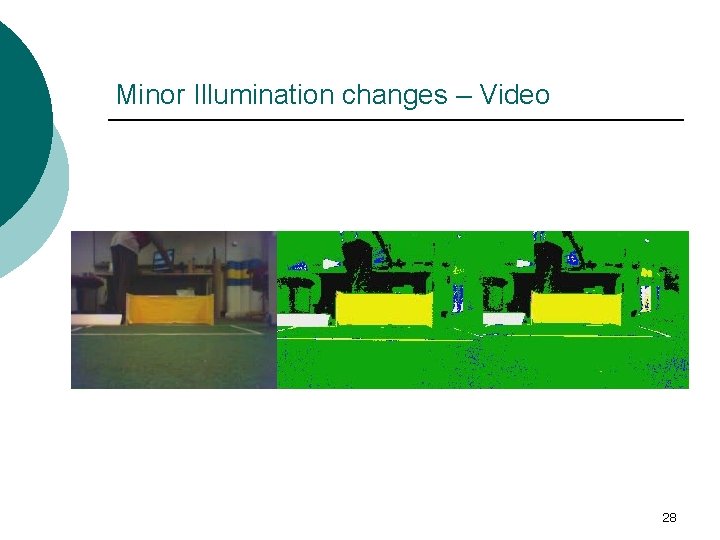
Minor Illumination changes – Video 28
To Summarize… ¡ Color segmentation important sub-task of vision. ¡ Color spaces: choice depends on applications and requirements. ¡ Illumination effects color labels: humans adapt readily, but robots still need some help… 29
That’s all folks 30