
Color Schemes Neutral Neutral color schemes can be

Color Schemes
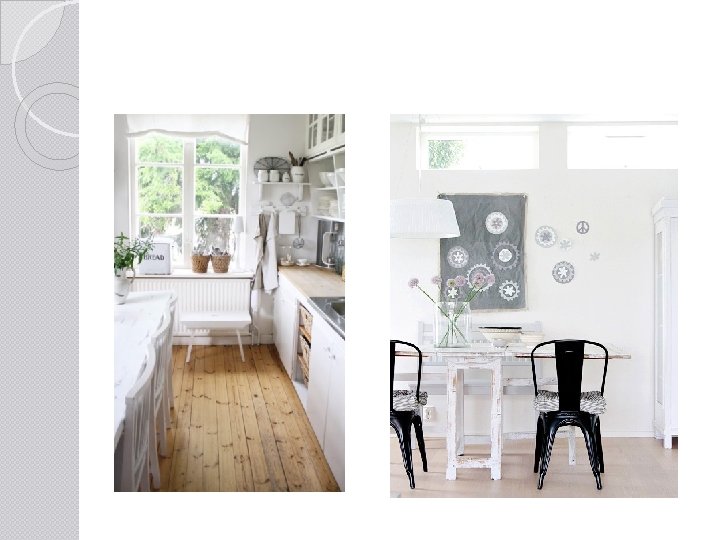
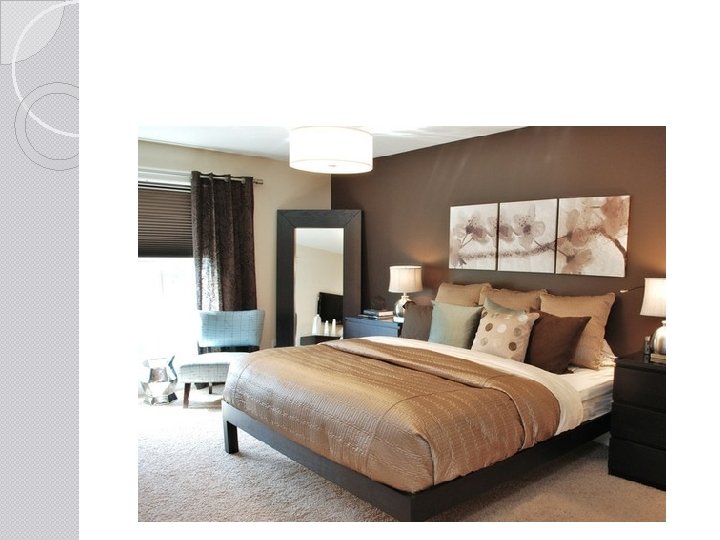
Neutral �Neutral color schemes can be easier to live with than with vibrant color schemes. �True neutral colors are black, white and shades of gray. �Browns are also considered neutral. �To make this scheme look best, use a variety of textures and shapes to add interest.

Monochromatic �Uses tints and shades of a single hue. �The main tint or shade should be easy to live with, and can be accented by more intense shades.

Monochromatic

Monochromatic
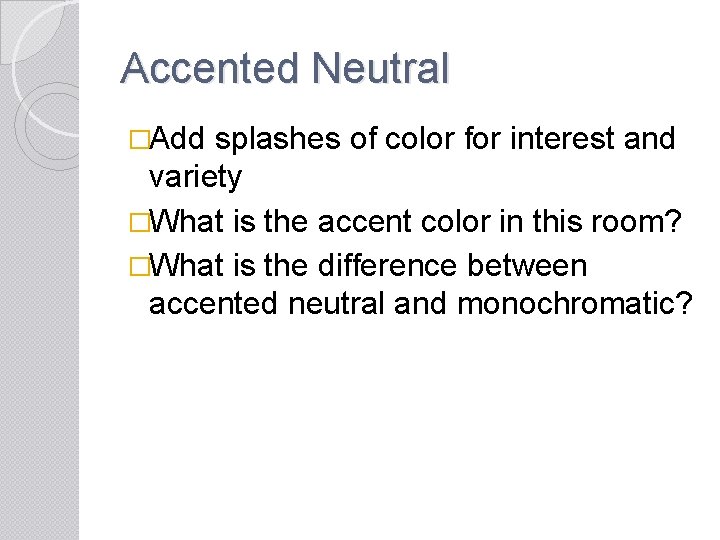
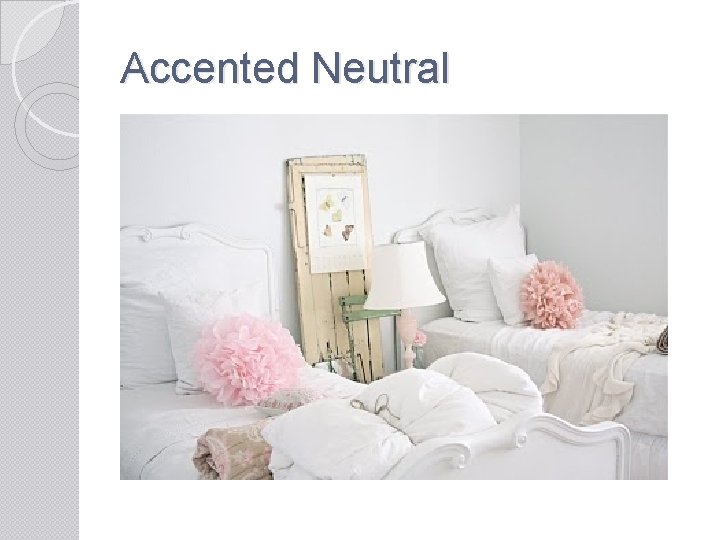
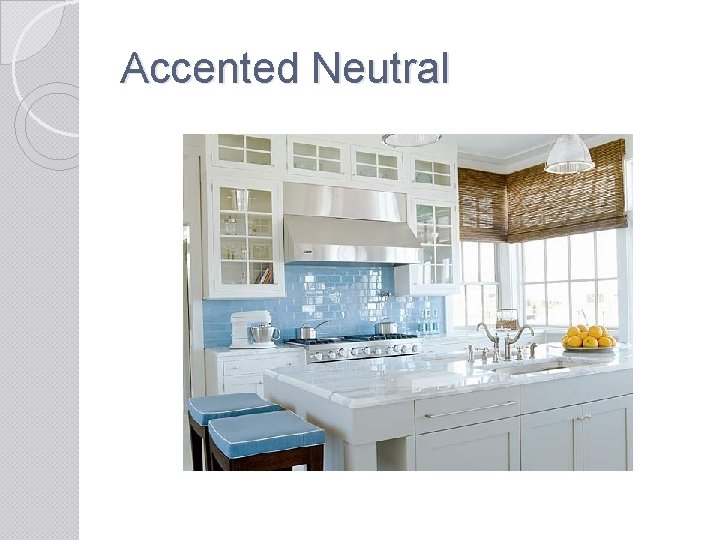
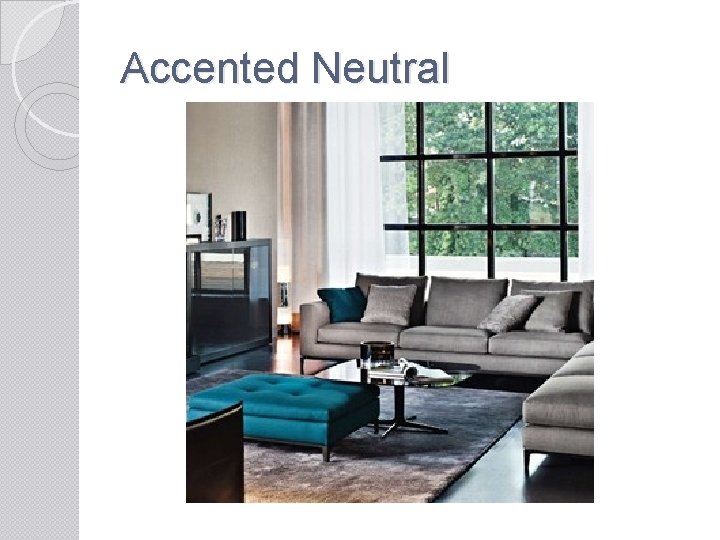
Accented Neutral �Add splashes of color for interest and variety �What is the accent color in this room? �What is the difference between accented neutral and monochromatic?
Accented Neutral
Accented Neutral
Accented Neutral
Analogous �Hues are found next to each other on the color wheel �Usually uses 3 to 5 hues: a primary or secondary and the intermediate hues on each side.
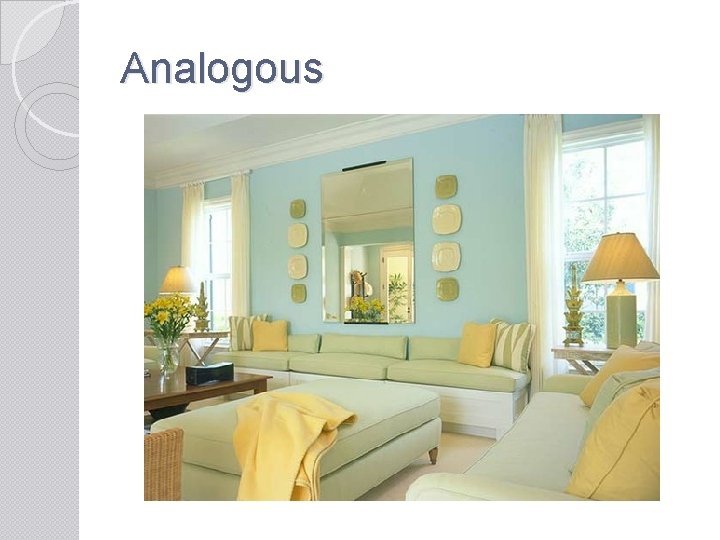
Analogous
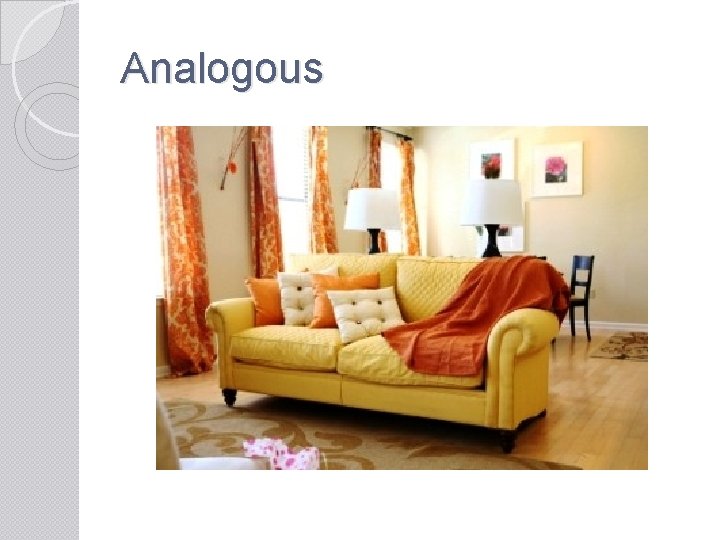
Analogous
Complimentary �Use hues that are opposite each other on the color wheel �Tends to be a lively color scheme �Use similar values and intensities when combining complementary hues �Has one dominant hue and one accent hue.
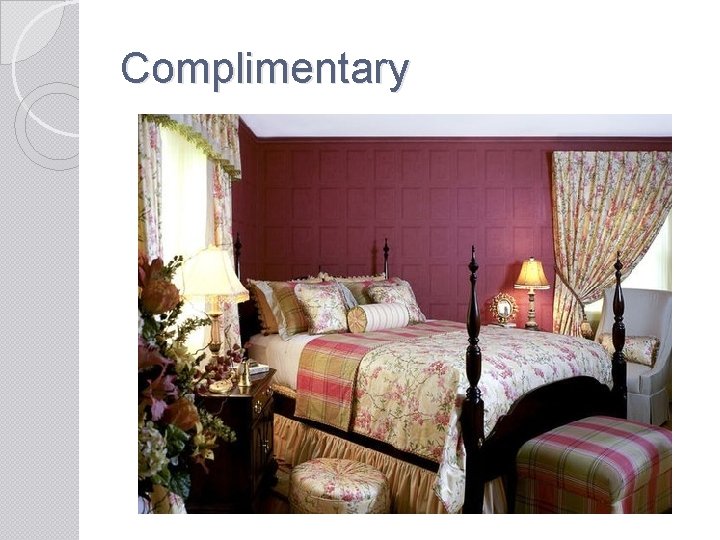
Complimentary
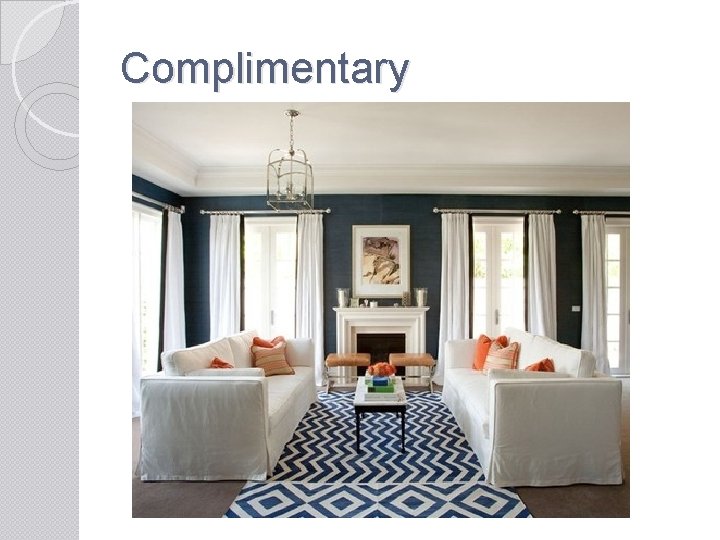
Complimentary
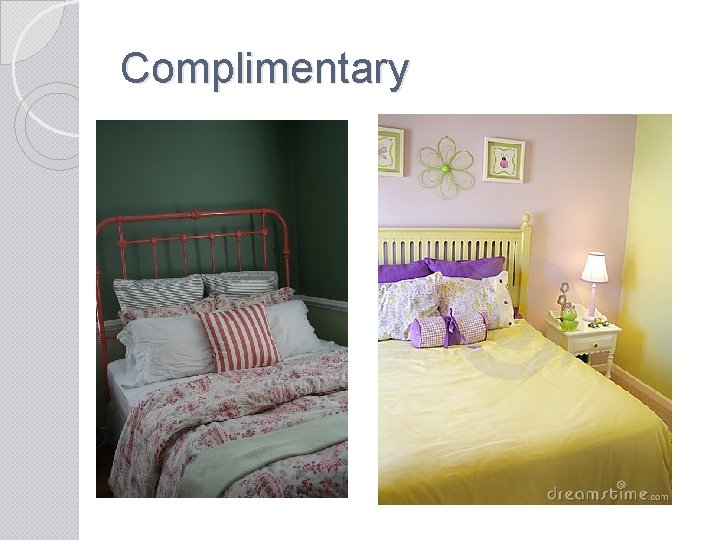
Complimentary
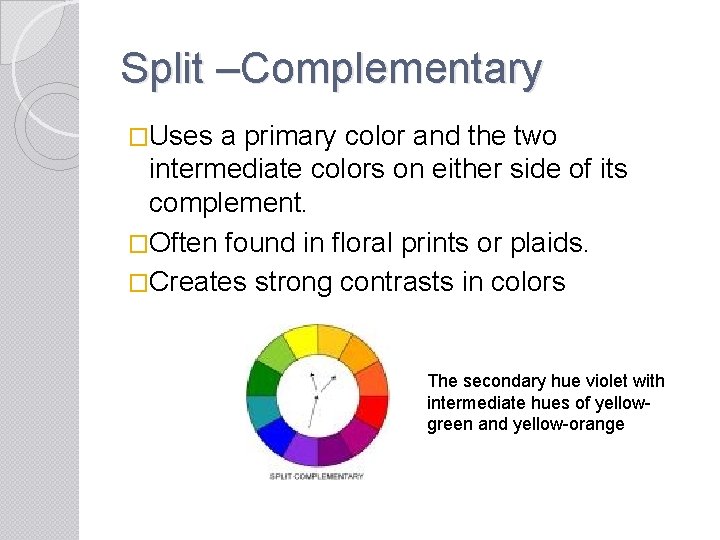
Split –Complementary �Uses a primary color and the two intermediate colors on either side of its complement. �Often found in floral prints or plaids. �Creates strong contrasts in colors The secondary hue violet with intermediate hues of yellowgreen and yellow-orange
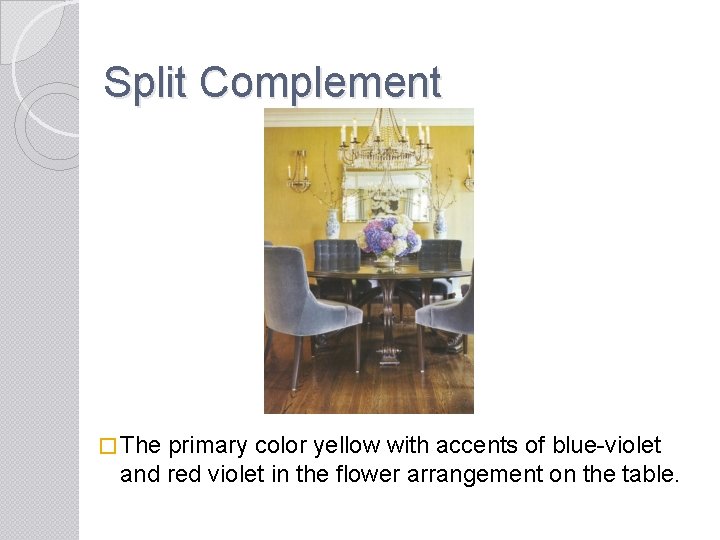
Split Complement � The primary color yellow with accents of blue-violet and red violet in the flower arrangement on the table.
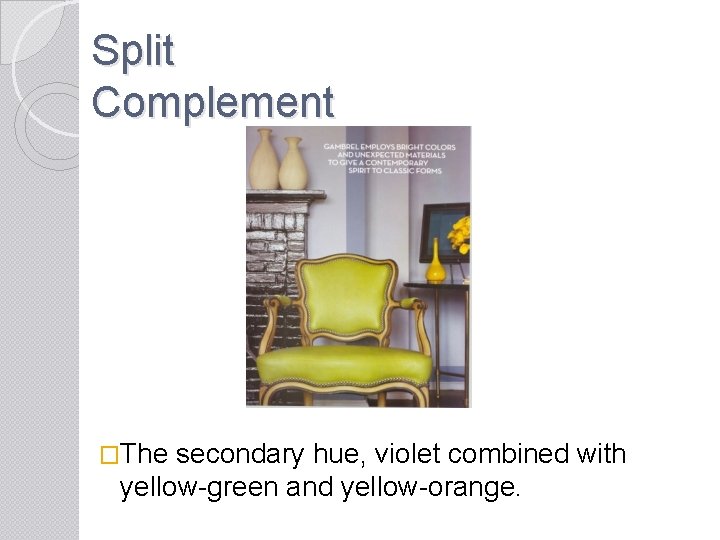
Split Complement �The secondary hue, violet combined with yellow-green and yellow-orange.
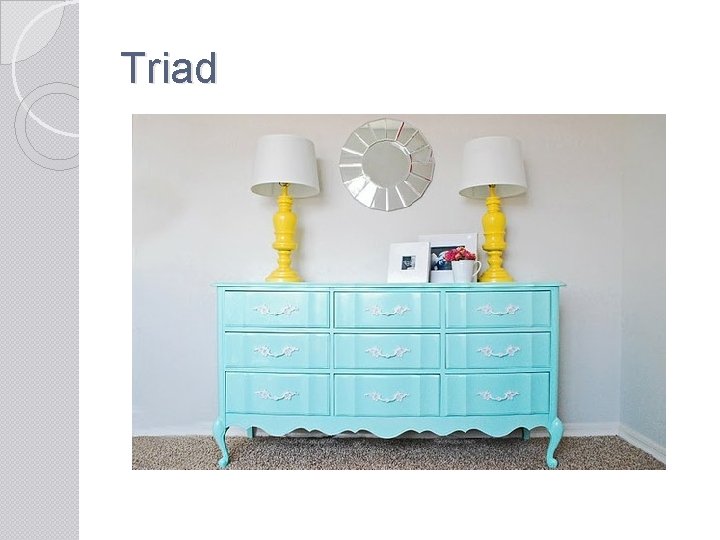
Triad �Use three colors evenly spaced from one another on the color wheel �Usually uses either the primary or secondary colors �Uses a dominant hue, with others for accent
Triad

Triad
- Slides: 24