
COLOR INTRODUCTION TO COLOR THEORY WHAT IS COLOR



- Slides: 47
COLOR INTRODUCTION TO COLOR THEORY
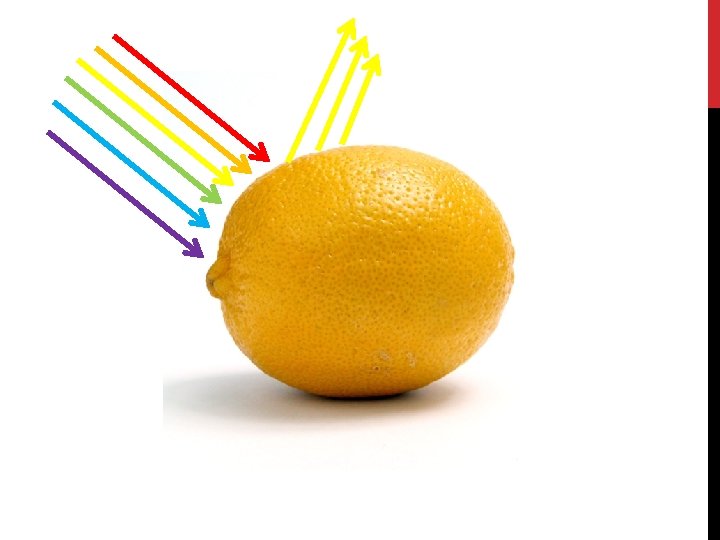
WHAT IS COLOR? Color is the addition or subtraction of white light from any given surface. Light is either absorbed or reflected to produce the visible colors that we see. • White Light: is all the colors combined • Black: absence of color
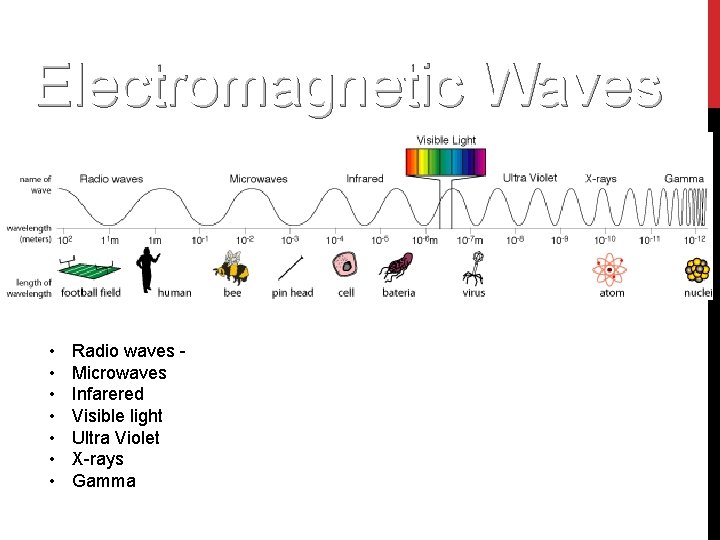
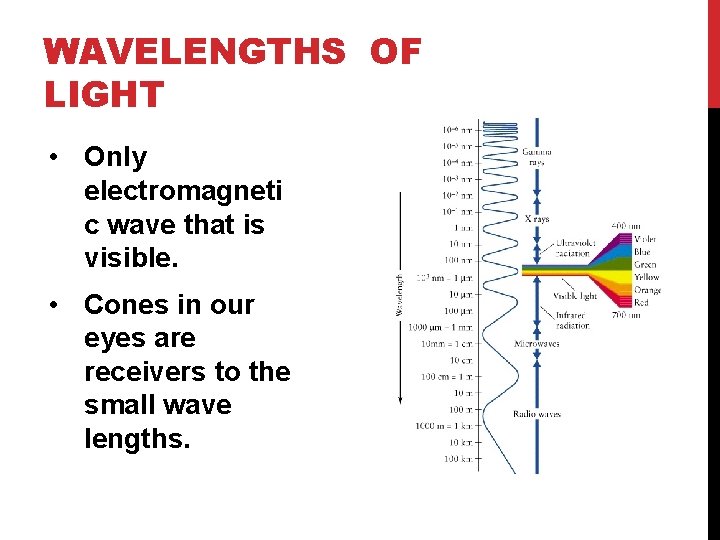
Electromagnetic Waves • • Radio waves Microwaves Infarered Visible light Ultra Violet X-rays Gamma
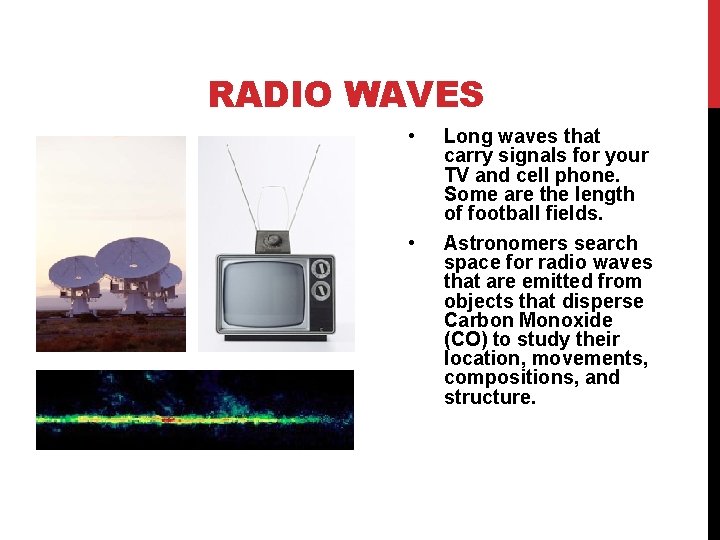
RADIO WAVES • Long waves that carry signals for your TV and cell phone. Some are the length of football fields. • Astronomers search space for radio waves that are emitted from objects that disperse Carbon Monoxide (CO) to study their location, movements, compositions, and structure.
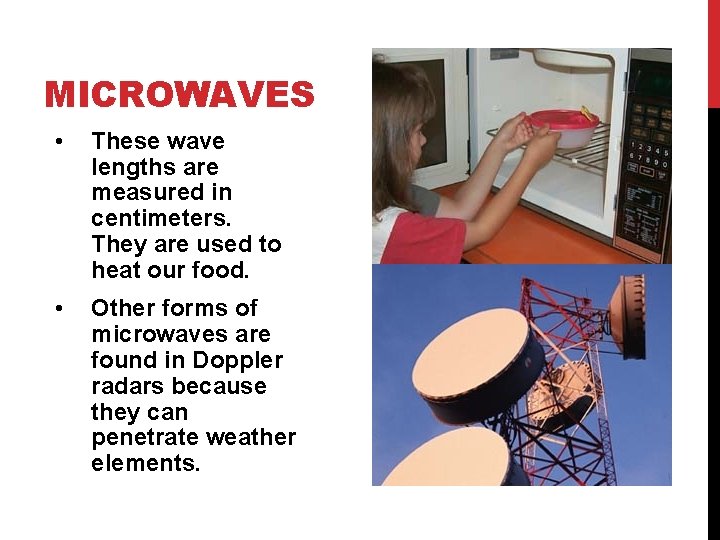
MICROWAVES • These wave lengths are measured in centimeters. They are used to heat our food. • Other forms of microwaves are found in Doppler radars because they can penetrate weather elements.
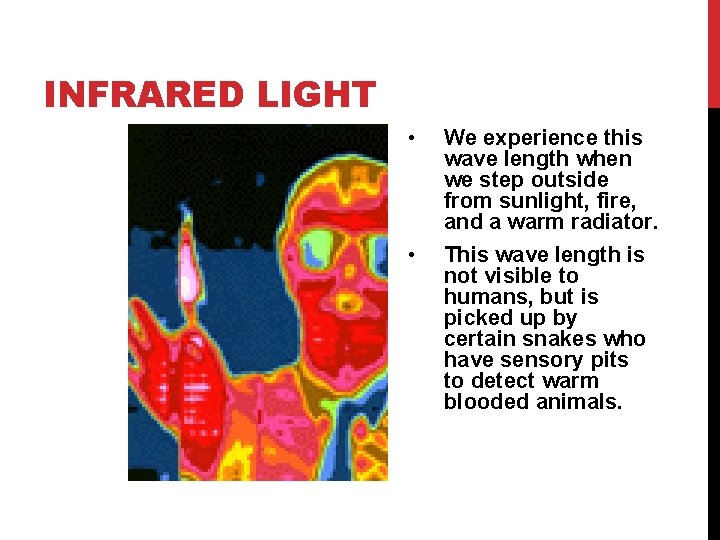
INFRARED LIGHT • • We experience this wave length when we step outside from sunlight, fire, and a warm radiator. This wave length is not visible to humans, but is picked up by certain snakes who have sensory pits to detect warm blooded animals.
WAVELENGTHS OF LIGHT • Only electromagneti c wave that is visible. • Cones in our eyes are receivers to the small wave lengths.
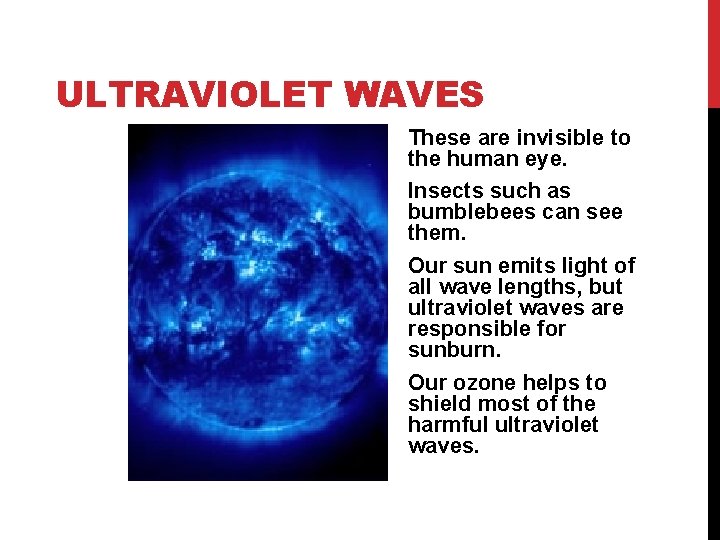
ULTRAVIOLET WAVES These are invisible to the human eye. Insects such as bumblebees can see them. Our sun emits light of all wave lengths, but ultraviolet waves are responsible for sunburn. Our ozone helps to shield most of the harmful ultraviolet waves.
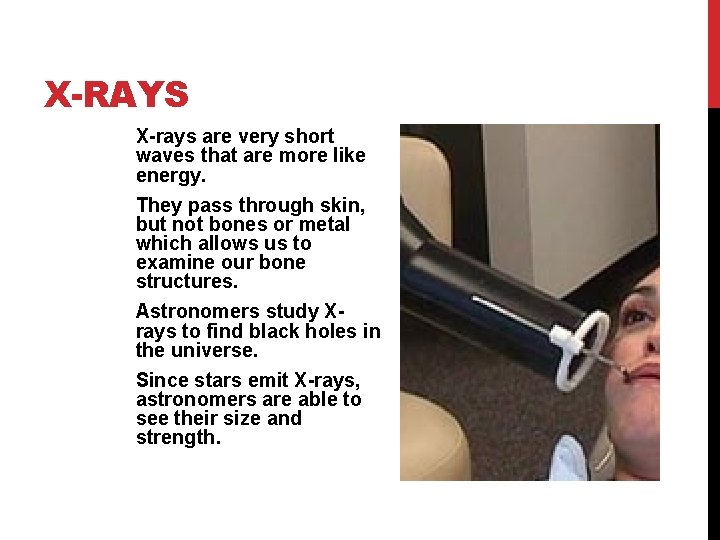
X-RAYS X-rays are very short waves that are more like energy. They pass through skin, but not bones or metal which allows us to examine our bone structures. Astronomers study Xrays to find black holes in the universe. Since stars emit X-rays, astronomers are able to see their size and strength.
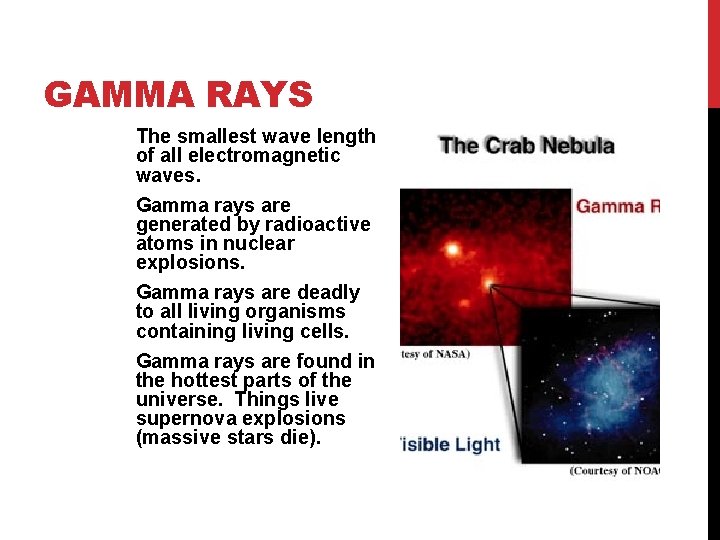
GAMMA RAYS The smallest wave length of all electromagnetic waves. Gamma rays are generated by radioactive atoms in nuclear explosions. Gamma rays are deadly to all living organisms containing living cells. Gamma rays are found in the hottest parts of the universe. Things live supernova explosions (massive stars die).
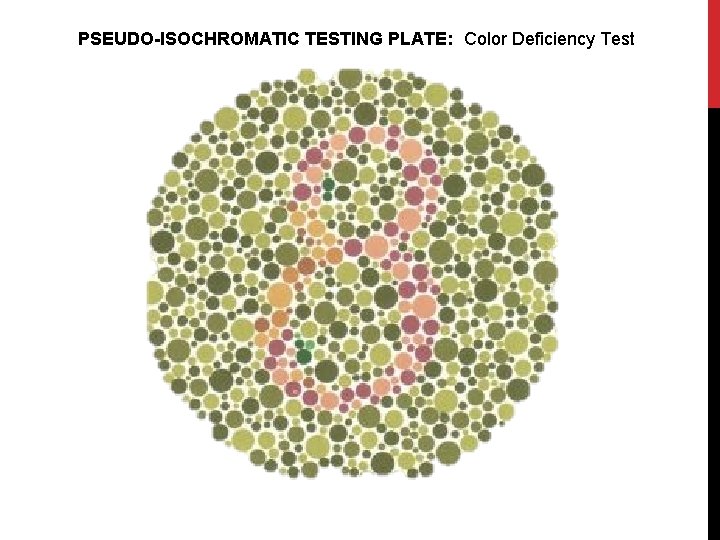
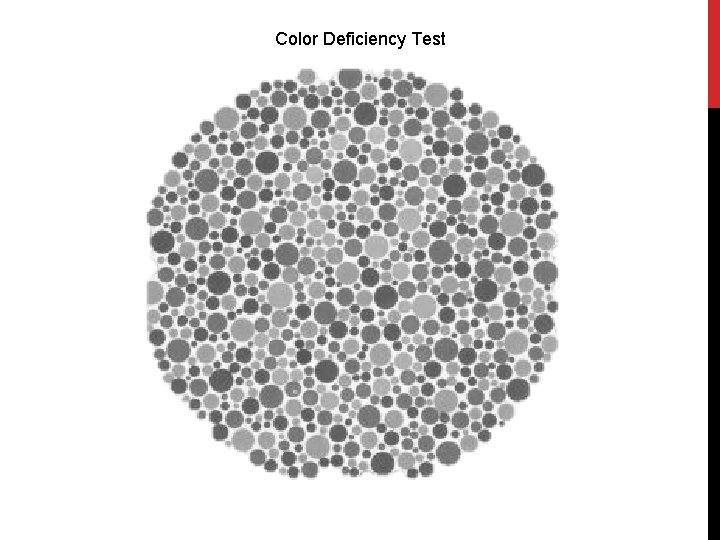
COLOR DEFICIENCY In ability to see certain shades of color, and in more severe cases no color at all. Common deficiencies: • Particular shades of red and/or green (most common) • Particular shades of green and/or yellow (less common) Achromatopsia: term for complete color blindness. These individuals can only see in grayscale.
CAUSES OF COLOR DEFICIENCY Diabetes Glaucoma Macular Degeneration Alzheimer’s Disease Parkinson’s Disease Multiple Sclerosis (MS) Chronic Alcoholism Leukemia Sickle Cell Anemia Aging – can gradually lessen over time Certain Medications – relating to heart problems or nervous disorders Chemical Exposure
PSEUDO-ISOCHROMATIC TESTING PLATE: Color Deficiency Test
Color Deficiency Test
TREATMENTS OF COLOR DEFICIENCY • Organizing and Labeling: clothing, furniture or other colored objects to ease recognition • Remembering the Order of Objects: for example the order of a traffic light
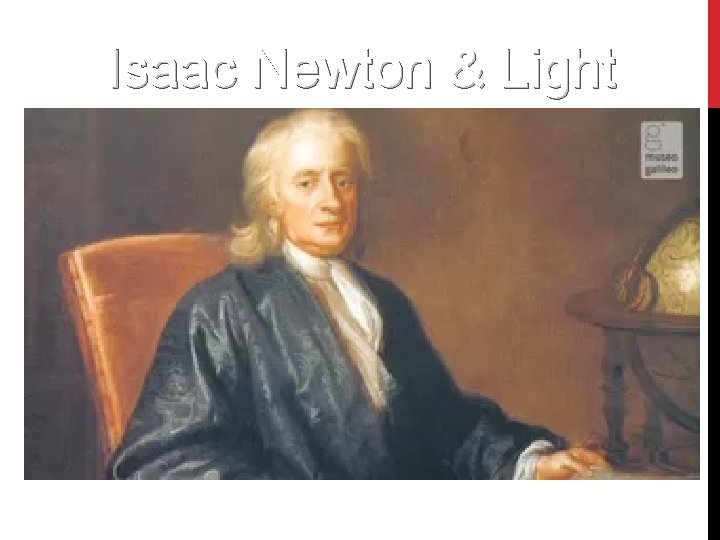
SIR ISAAC NEWTON 1672
Isaac Newton & Light
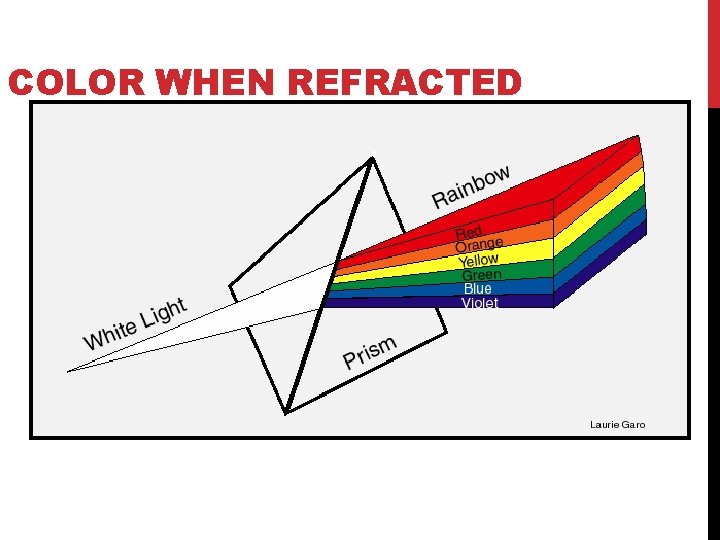
COLOR WHEN REFRACTED
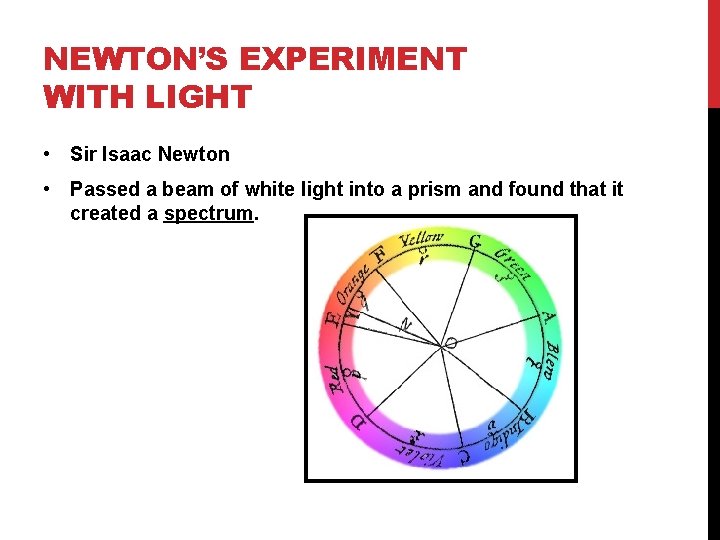
NEWTON’S EXPERIMENT WITH LIGHT • Sir Isaac Newton • Passed a beam of white light into a prism and found that it created a spectrum.
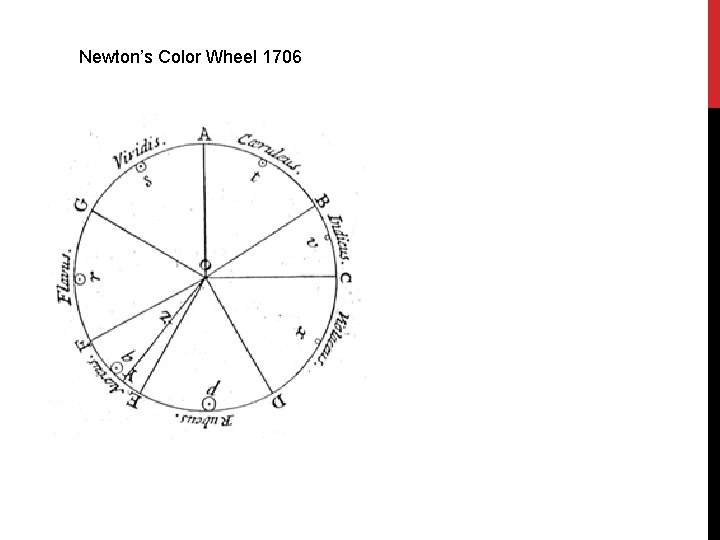
Newton’s Color Wheel 1706
COLOR HARMONIES COLORS SCHEMES IN ART
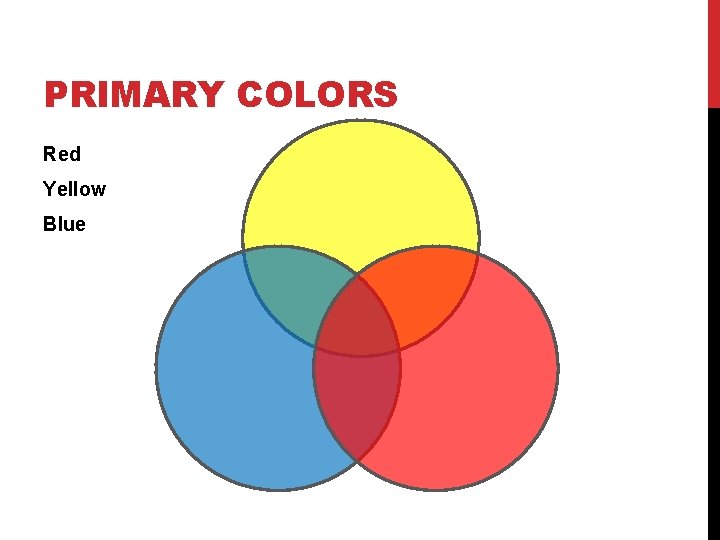
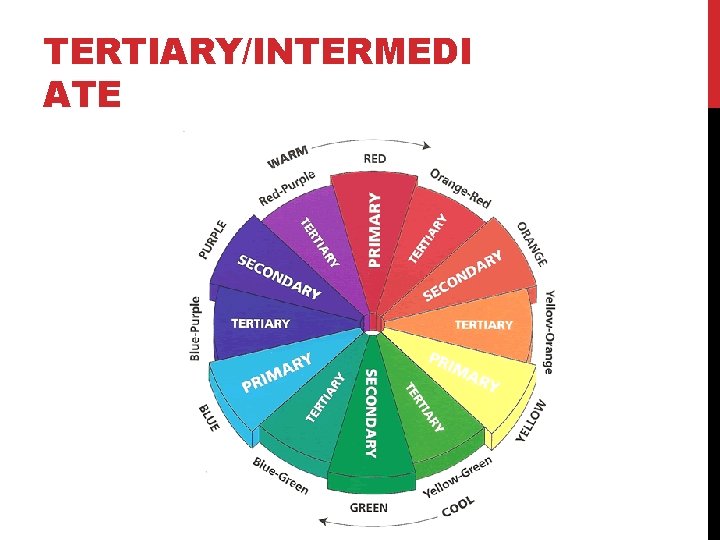
PRIMARY COLORS Red Yellow Blue
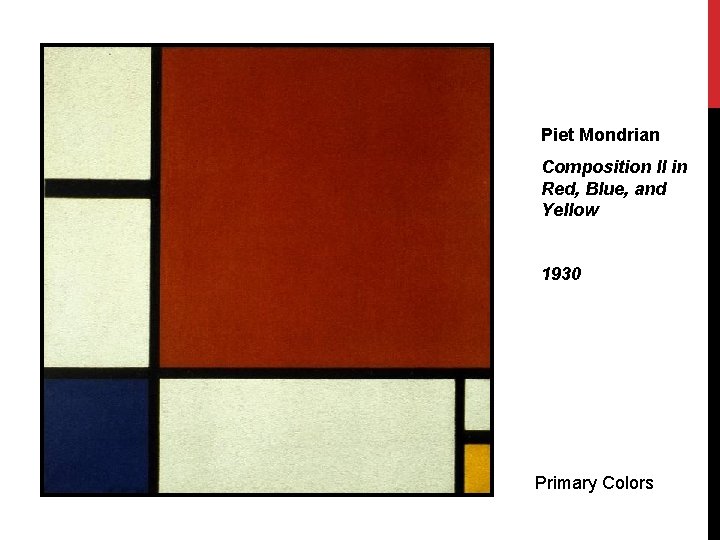
Piet Mondrian Composition II in Red, Blue, and Yellow 1930 Primary Colors
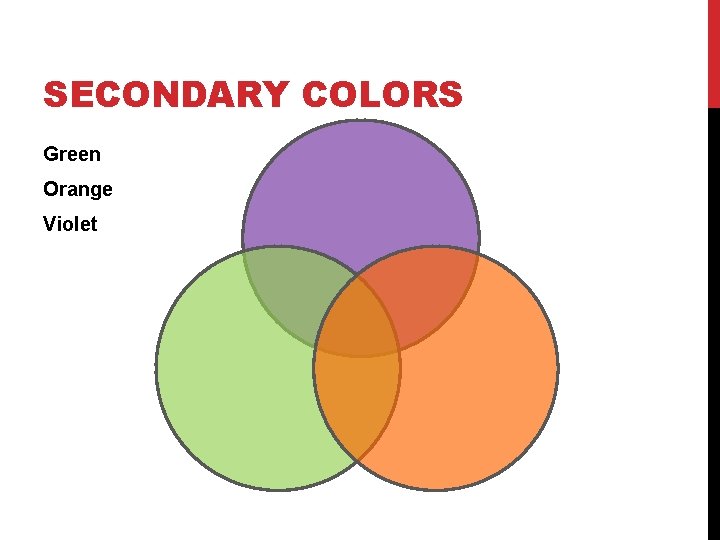
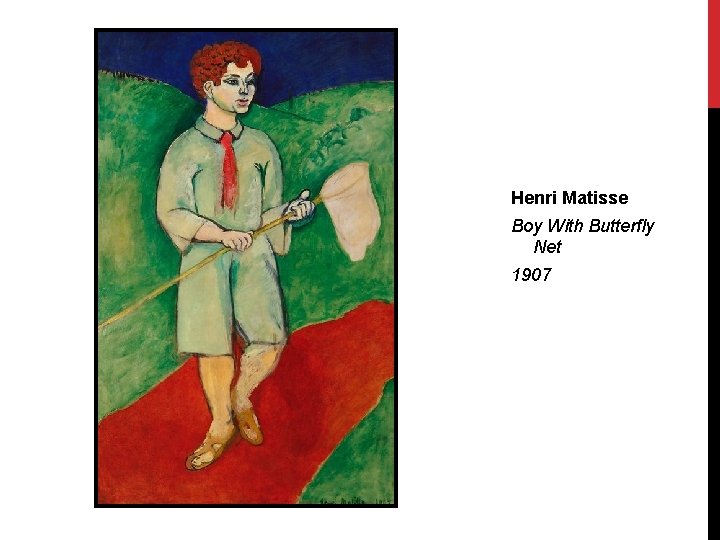
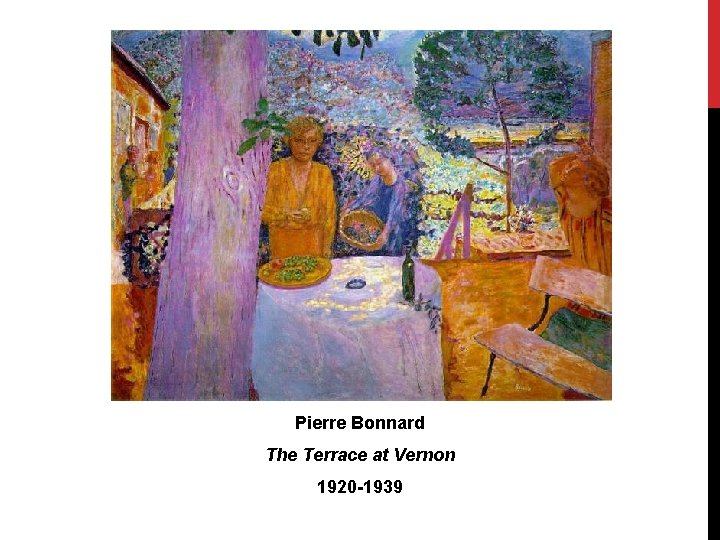
SECONDARY COLORS Green Orange Violet
Henri Matisse Boy With Butterfly Net 1907
Pierre Bonnard The Terrace at Vernon 1920 -1939
TERTIARY/INTERMEDI ATE
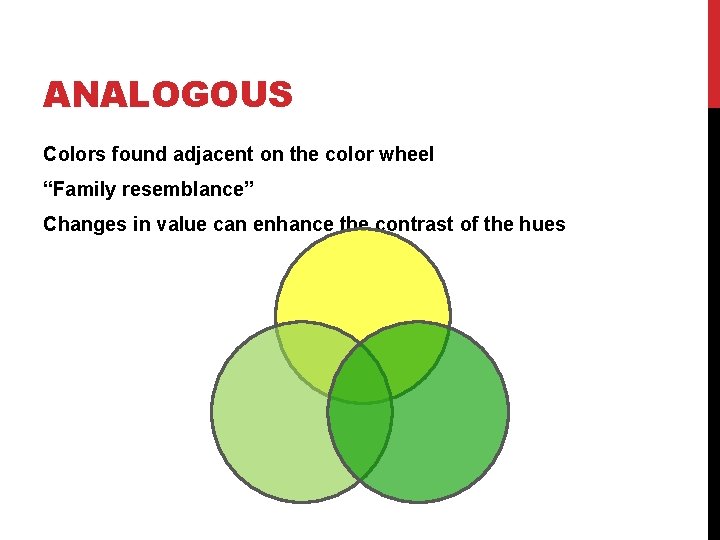
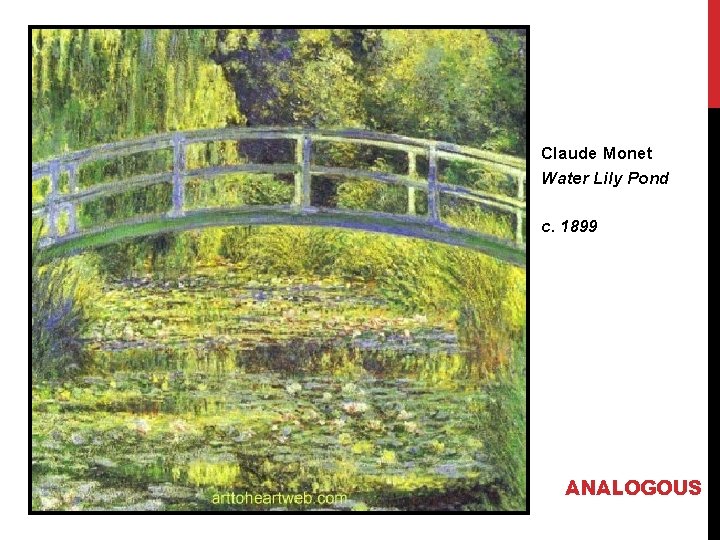
ANALOGOUS Colors found adjacent on the color wheel “Family resemblance” Changes in value can enhance the contrast of the hues
Claude Monet Water Lily Pond c. 1899 ANALOGOUS
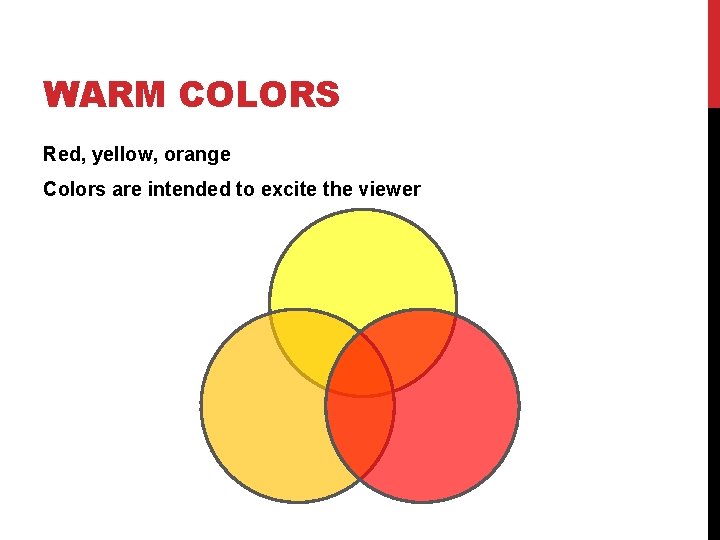
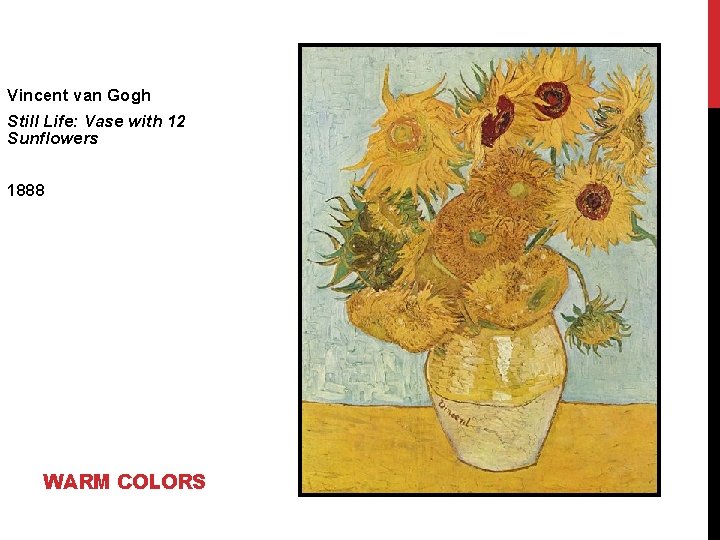
WARM COLORS Red, yellow, orange Colors are intended to excite the viewer
Vincent van Gogh Still Life: Vase with 12 Sunflowers 1888 WARM COLORS
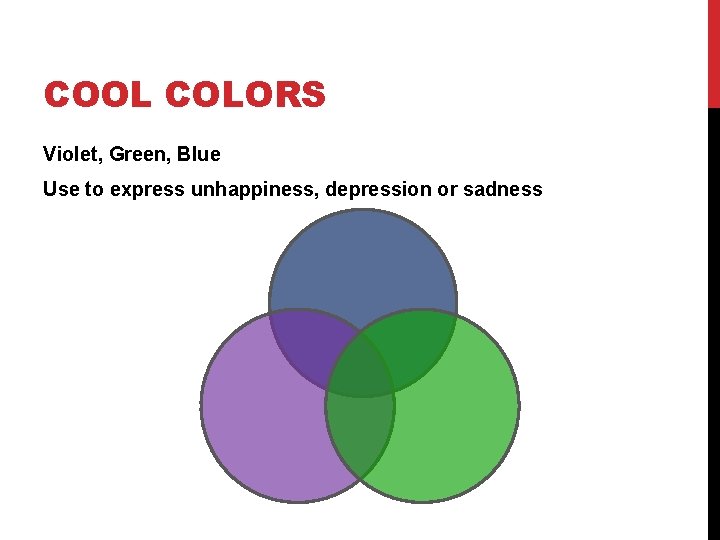
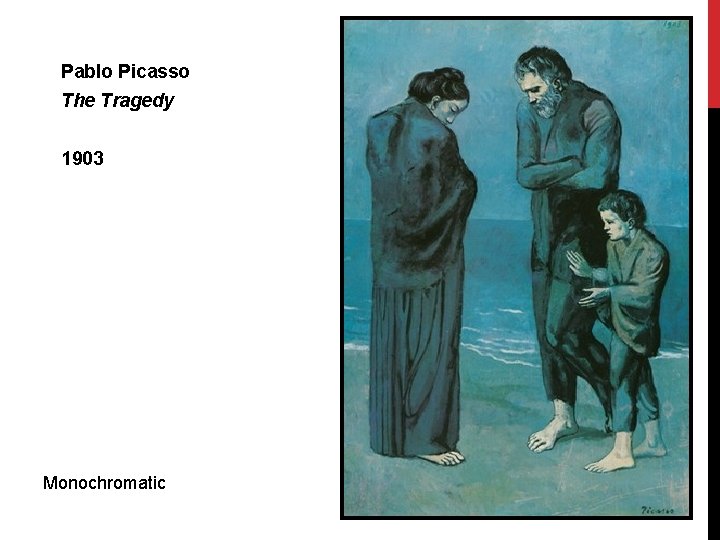
COOL COLORS Violet, Green, Blue Use to express unhappiness, depression or sadness
Pablo Picasso The Tragedy 1903 Monochromatic
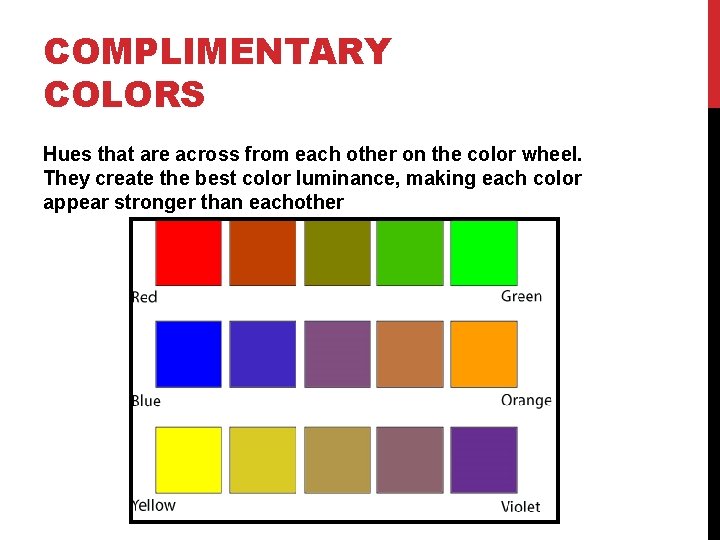
COMPLIMENTARY COLORS Hues that are across from each other on the color wheel. They create the best color luminance, making each color appear stronger than eachother
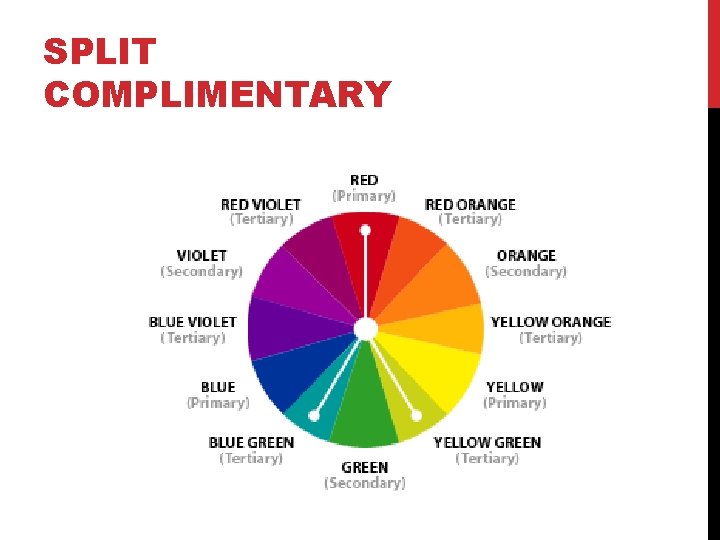
SPLIT COMPLIMENTARY
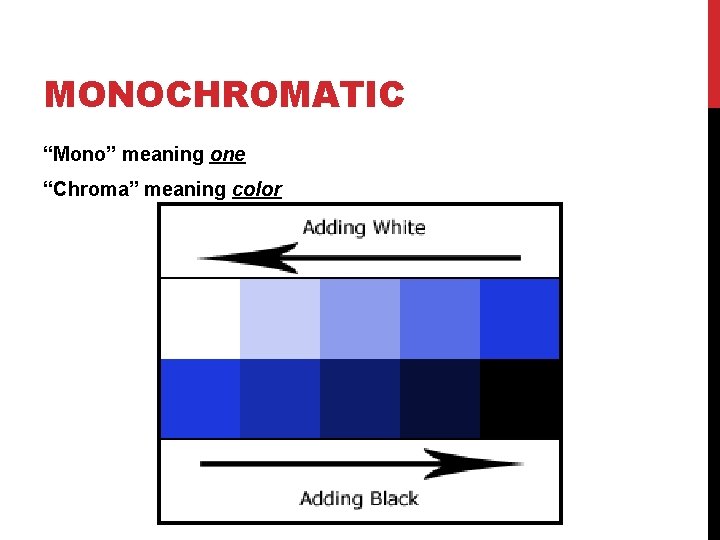
MONOCHROMATIC “Mono” meaning one “Chroma” meaning color
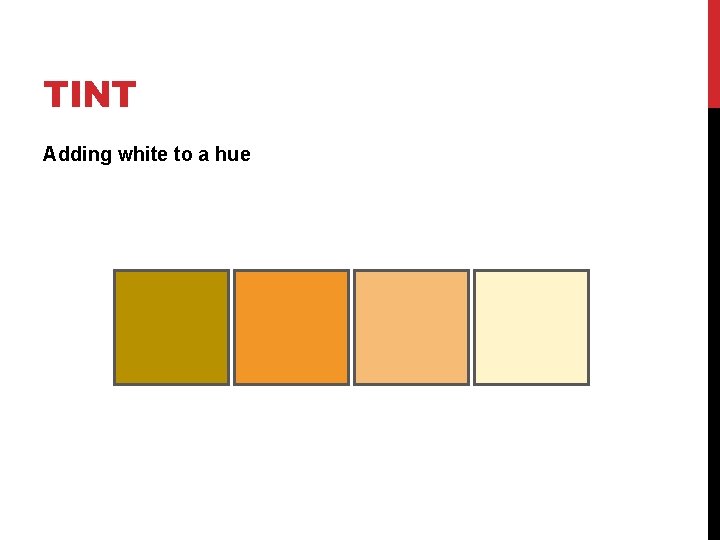
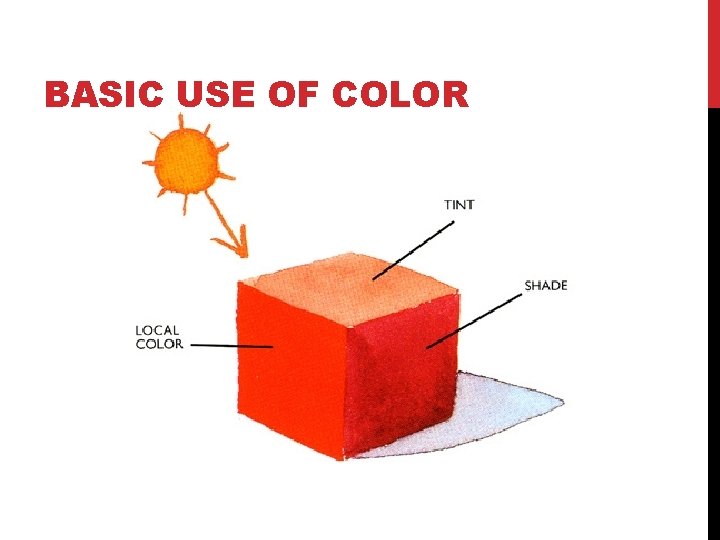
TINT Adding white to a hue
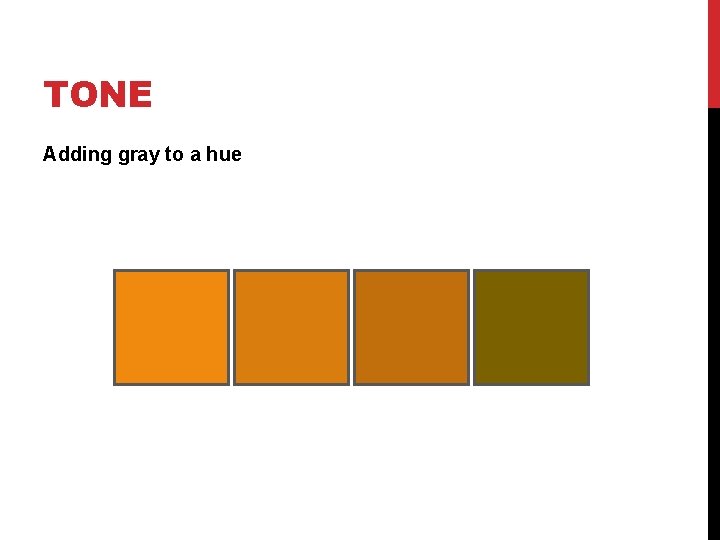
TONE Adding gray to a hue
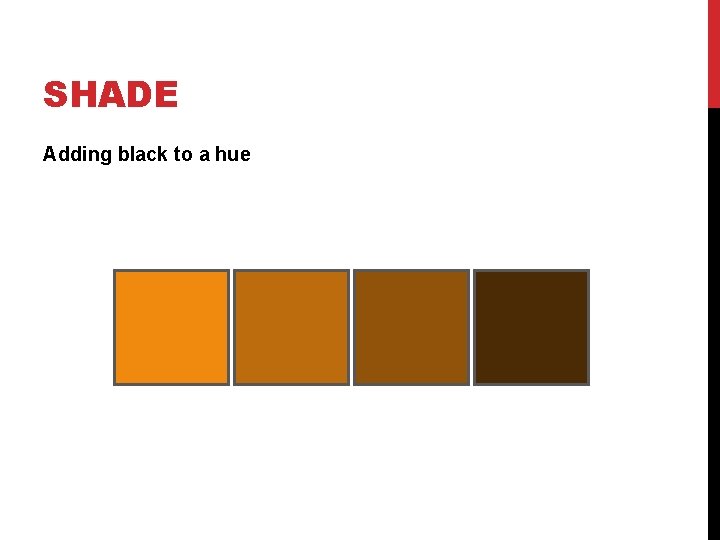
SHADE Adding black to a hue
BASIC USE OF COLOR
Sanford Gifford October in the Catskills 1880
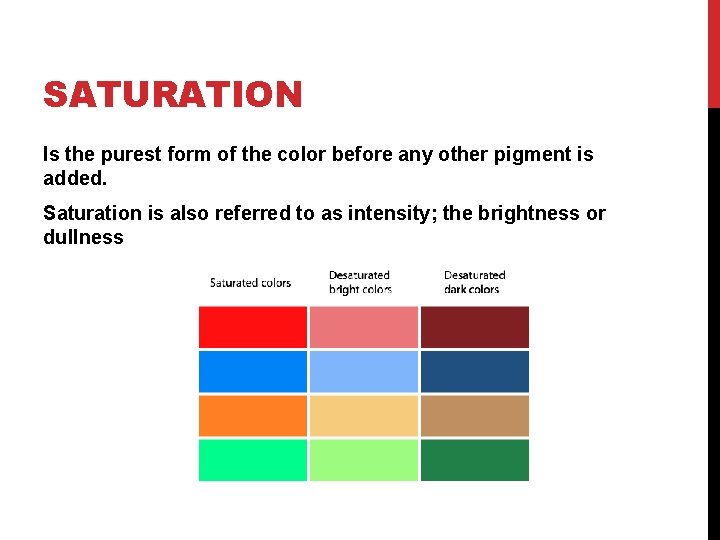
SATURATION Is the purest form of the color before any other pigment is added. Saturation is also referred to as intensity; the brightness or dullness
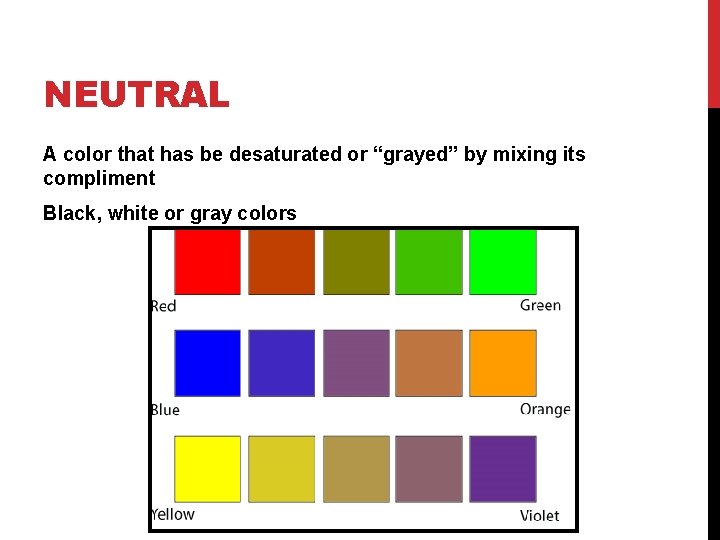
NEUTRAL A color that has be desaturated or “grayed” by mixing its compliment Black, white or gray colors