
Color Colorl the visual response of the eye

- Slides: 75
Color
Colorl the visual response of the eye to reflected rays of light l element of design l 3 dimensions ¡hue ¡value ¡chroma
• Huel the descriptive name of color (i. e. red, yellow, & green) l pure color w/o black, white, or gray added l defines a specific spot on the color wheel ¡ 12 hues on the color wheel
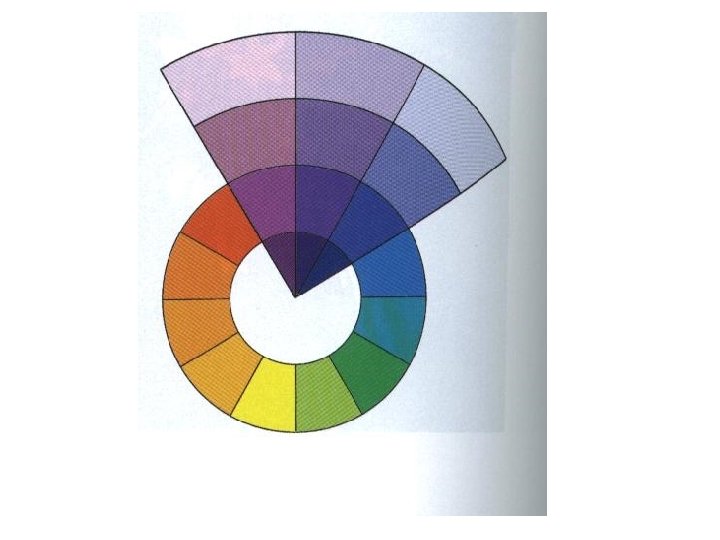
• Valuel the lightness or darkness of a hue l relative to the gray scale l achieved by the addition of black, white, or gray ¡Shade ¡Tint ¡Tone
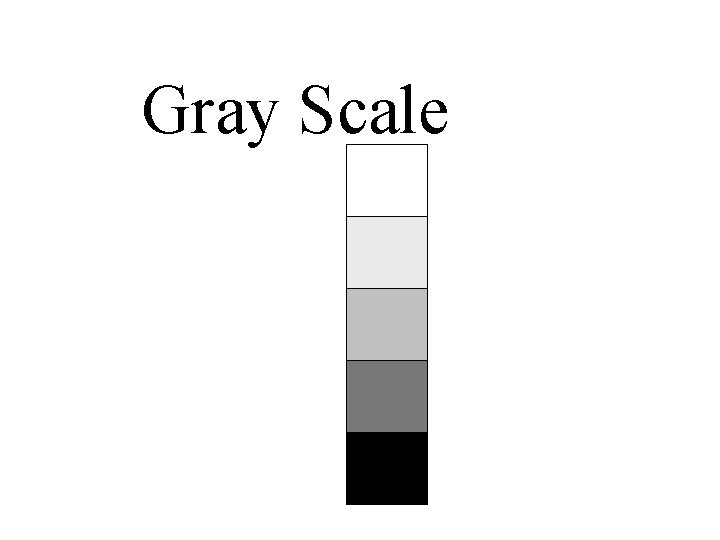
• Gray Scale¡a visual aid which represents the transitional graduations of value from white to black, encompassing all the varying degrees of gray
Gray Scale
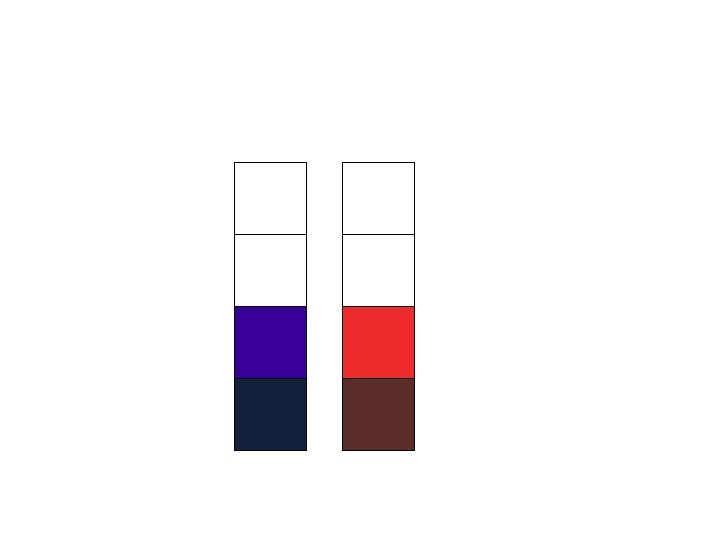
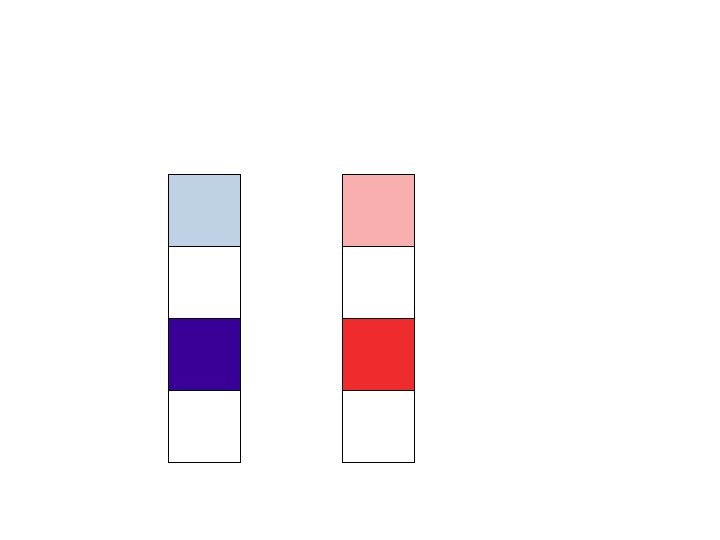
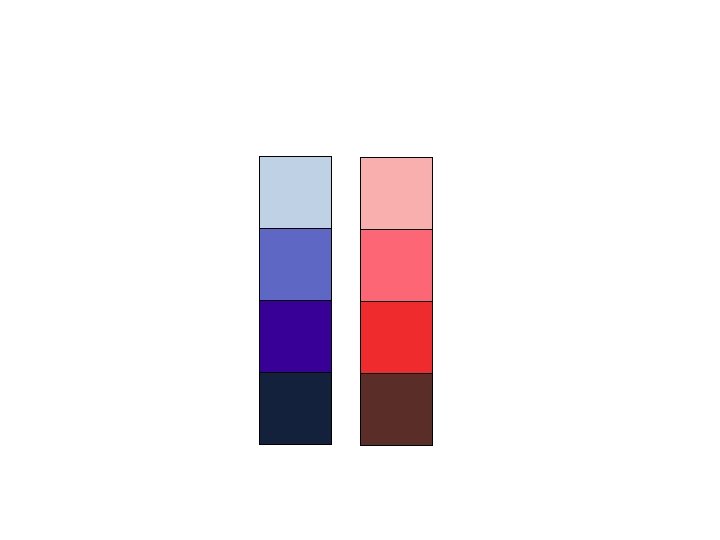
Shadel a hue which has been darkened by the addition of black l deeper in appearance ¡i. e. navy is a shade of blue ¡i. e. burgundy is a shade of red
Tintl a hue which has been lightened by the addition of white l pastel in appearance ¡i. e. baby blue is a tint of blue ¡i. e. pink is a tint of red
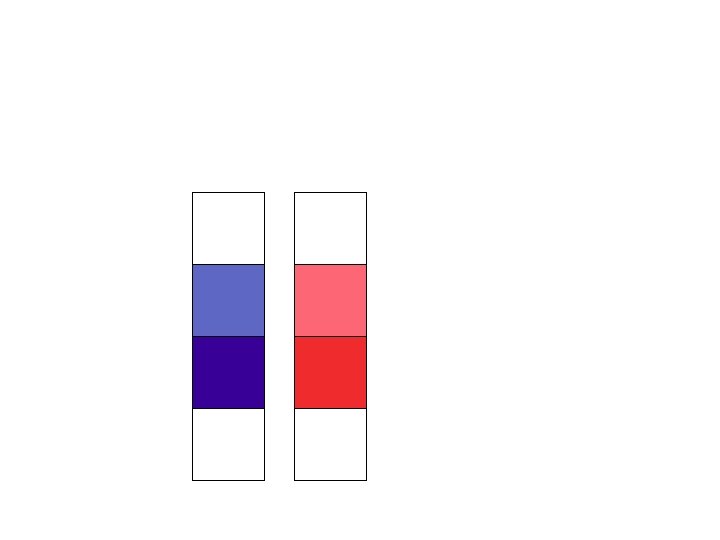
Tonel a hue which has been muted by the addition of gray l dusty in appearance ¡i. e. wedge wood blue is a tone of blue ¡i. e. mauve is a tone of red
Chromal the degree of strength, intensity, saturation or purity of a color l More pigment would make a color brighter; less would make the color more dull
Pigment l substance used to provide color to paints, dyes, plastics, and other materials
Intensity l reflects the maximum amount of light back to the viewer’s eye l is not mixed with black, white, or gray
Saturation l the measure of the intensity or brightness of a color, describing the amount of light reflecting from it l The greater the saturation of color, the higher the chroma
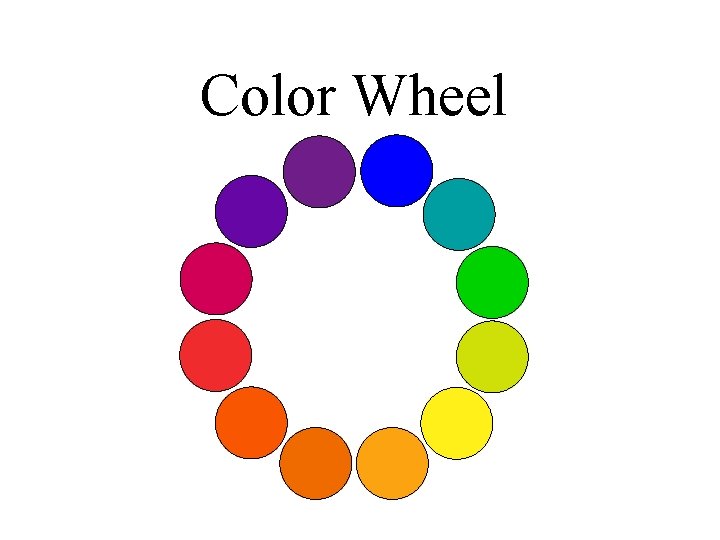
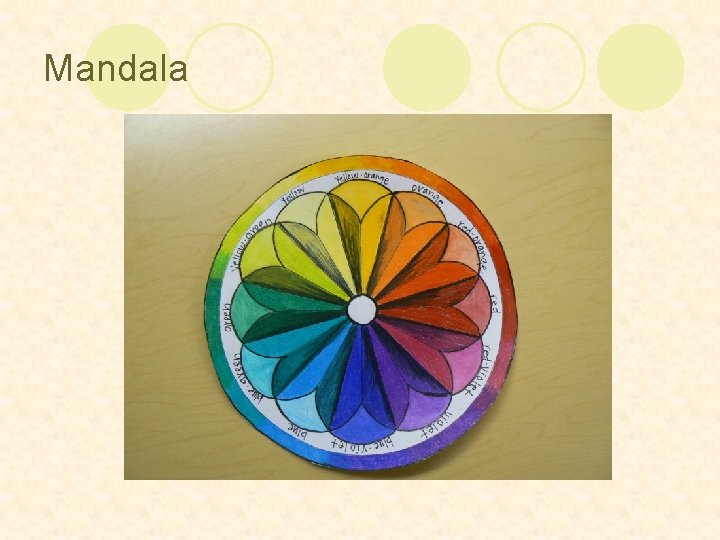
Color wheel l Twelve hour color system which was developed by Louis Prang, an American Printer in 1876.
Color Wheel
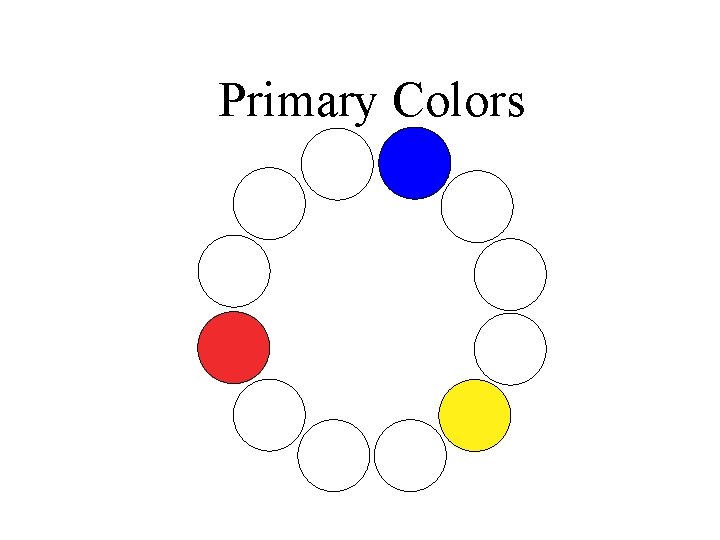
Primary colorsl red, yellow, & blue l spaced equidistantly apart on the color wheel l cannot be created by mixing any other colors together
Primary Colors
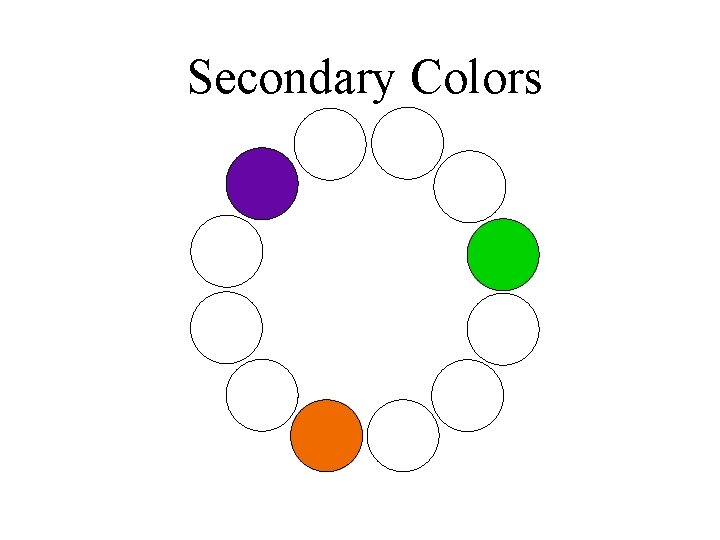
Secondary colorsl orange, green, & violet l created by mixing two primary colors l placed in between primary colors
Secondary Colors
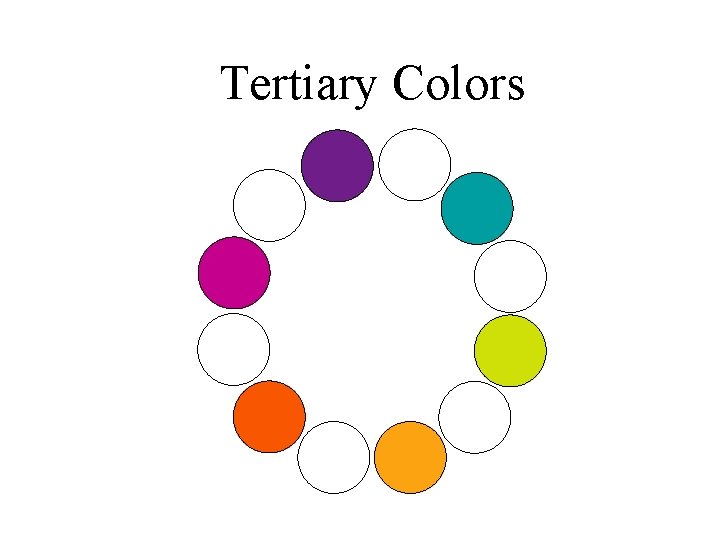
Tertiary colorsl red-orange, red-violet, bluegreen, yellow-green, & yellow-orange l between primary and secondary colors l mixing primary & secondary colors l primary color is always listed first with a hyphen in the center of the word
Tertiary Colors
Chromatic colorsl Colors derived from the visible spectrum l characterized by the presence of both hue and chroma l all colors other than black, white or gray
Achromatic colorsl white, black, & any values of gray l do not appear on the color wheel
Neutral colorsl achromatic color to which a small amount of hue has been added
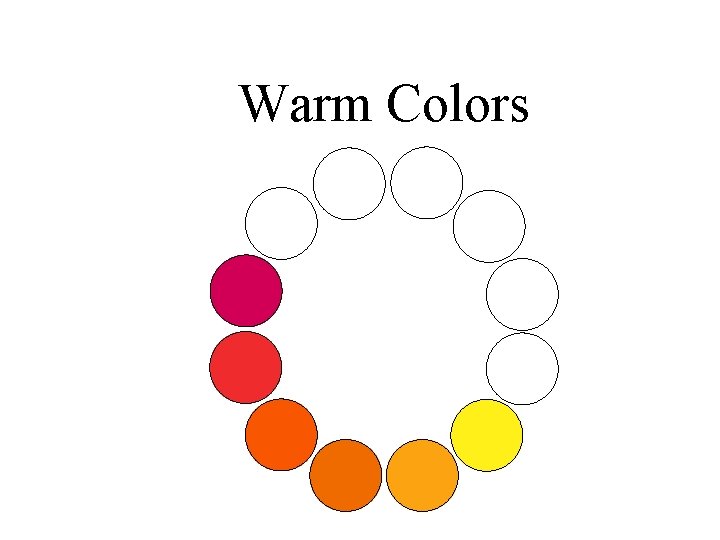
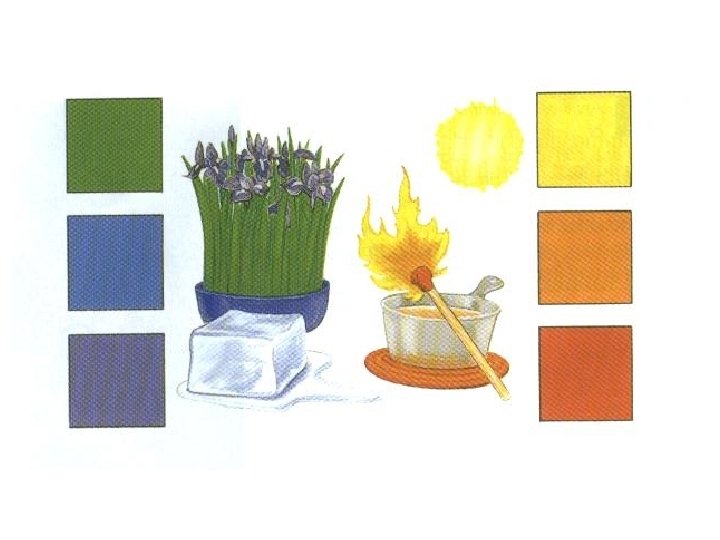
Advancing (warm) colorsl aggressive or warm l predominantly composed of red or yellow l visually move forward toward the viewer
Warm colors l red, orange, yellow l association with warm and hot things l active, cheery, evoking warm and happy feelings l dominate, look larger and advance l informal and blend l irritating if too much
Warm Colors
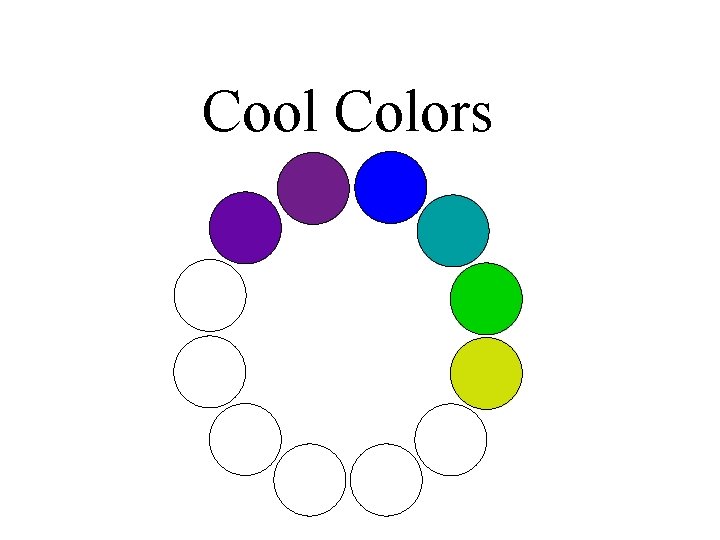
Receding (cool) colorsl passive or cool l predominantly composed of blues or greens l visually pull back from the viewer
Cool Colors l blue, green, violet l association with cool things l restful, peaceful, soothing, quiet, melancholy, “less friendly” l recede, look smaller l may appear formal and lack unity l cannot be seen from a distance l using both increases depth in an arrangement
Cool Colors
Color harmonies— l Groupings of specific hues and/or different values of a hue l resulting in a pleasing or useful combination l Color harmonies may display different values of the given hue and still be (i. e. pink and mint green) considered complementary color harmony. l Achromatic colors can be included in any color harmony
Achromatic color harmonyl A grouping of colors without hue; white, black, and any values of gray.
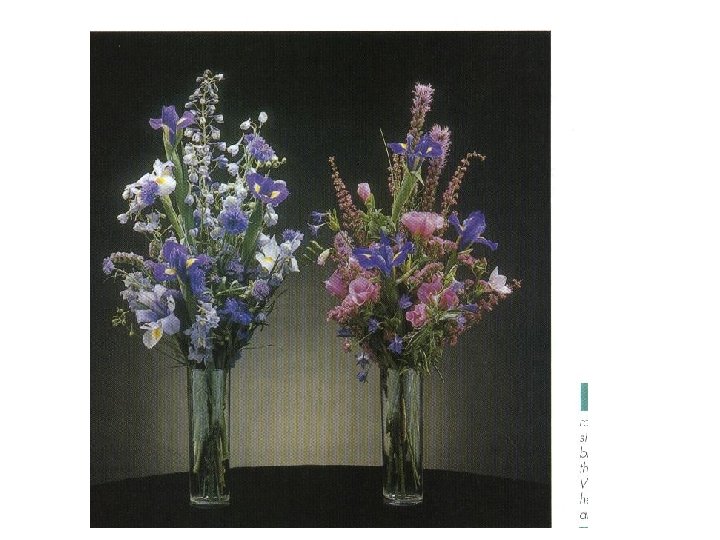
Monochromatic color harmony- l A grouping of different values of one hue l may include achromatic colors l An example would be red and tints, tones, shades of red—i. e. pink, mauve, red, & burgundy
Analogous color harmonyl A color harmony featuring adjacent hues on the color wheel l no more than one primary color l colors form an angle of up to 90 degrees on the color wheel l one color usually dominates l one of the most harmonious and pleasing of all l i. e. green, blue-green, and yellow-green, with green dominating
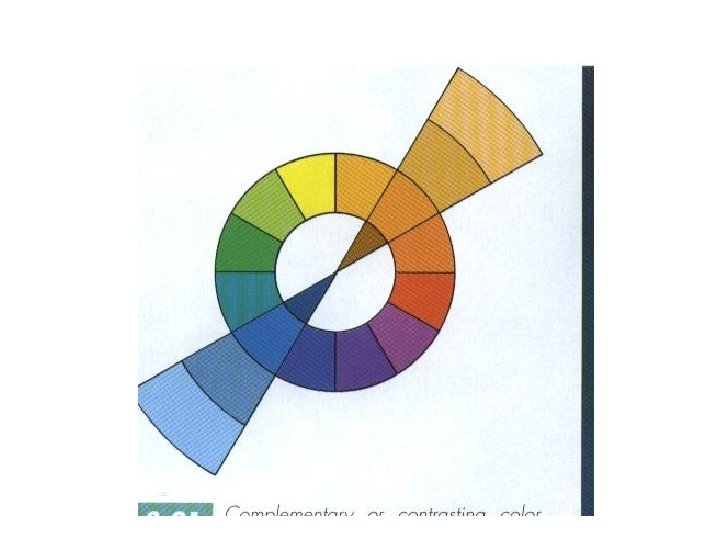
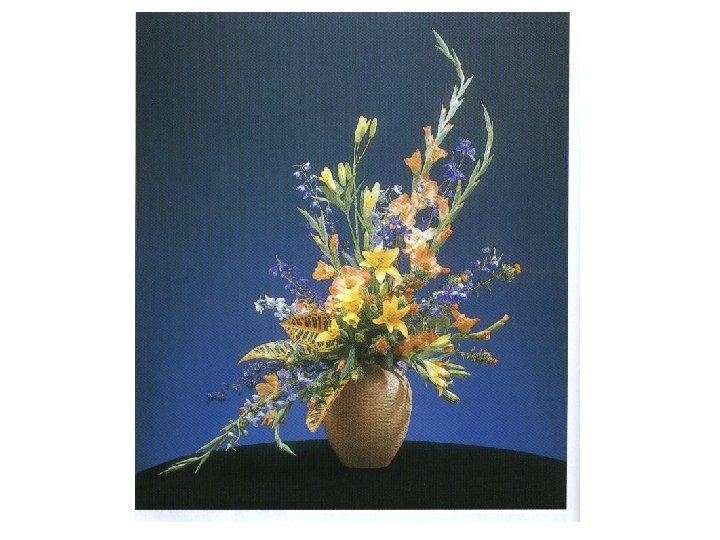
Complementary color harmony- l a pair of hues directly opposite each other on the color wheel l i. e. red & green, violet & yellow, or blue & orange l Many schools select their colors from a complementary color harmony.
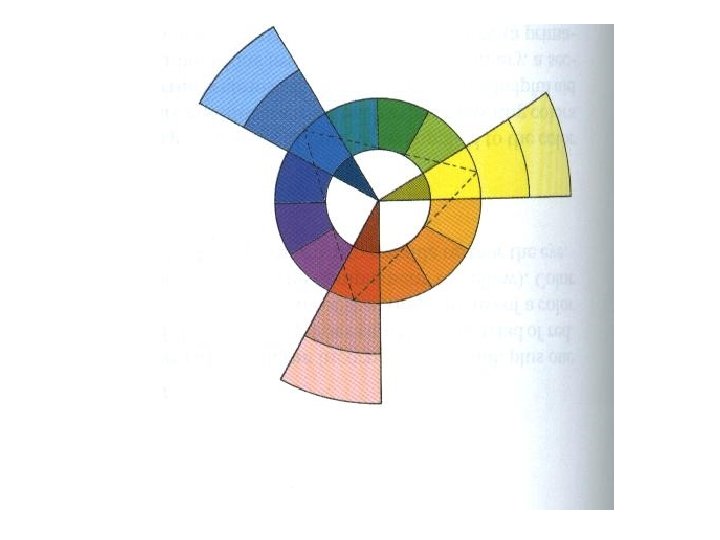
Split complementary color harmony l -a trio of hues, consisting of a hue and the two hues on either side of its direct complement l i. e. violet, yellow-orange, & yellow-green l Many restaurants use a splitcomplementary color scheme
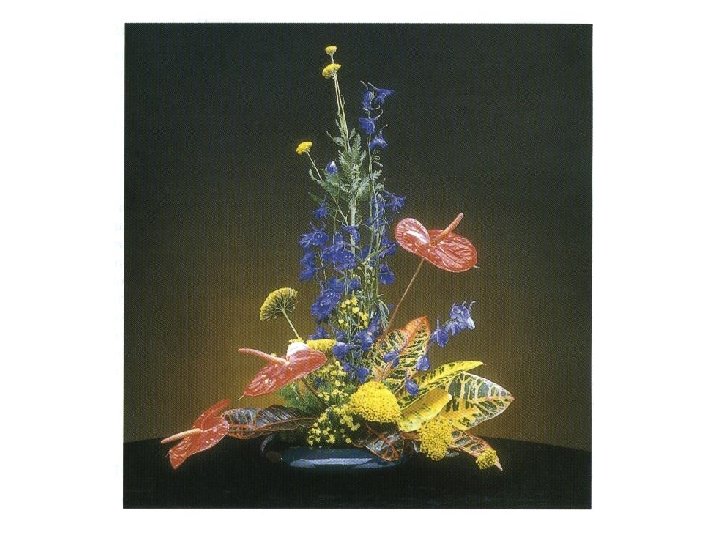
Triadic color harmony l a grouping of three hues which are equidistant on the color wheel l i. e. primary colors--red, blue & yellow ¡Tints of primaries-pink, baby blue, & soft yellow l Changing the value does not change the color harmony.
Tetradic color harmonyl A grouping of four hues which are equidistant on the color wheel
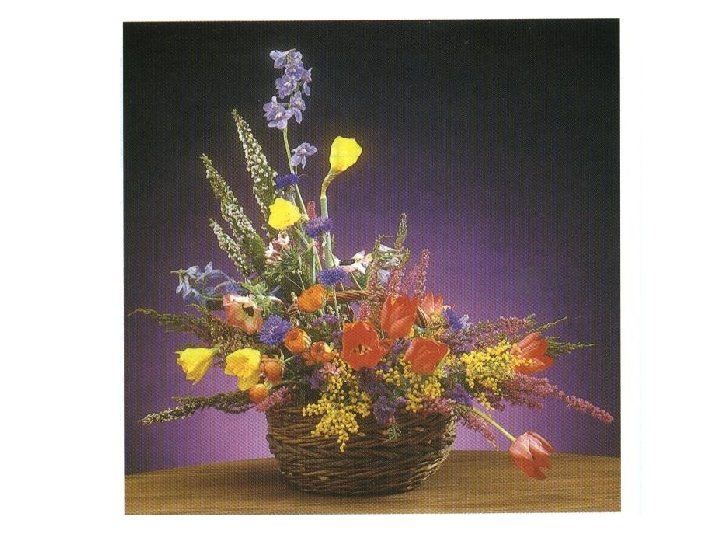
Polychromatic color harmony l a multicolored grouping of many hues which may otherwise be unrelated
Colors in Floral Designs
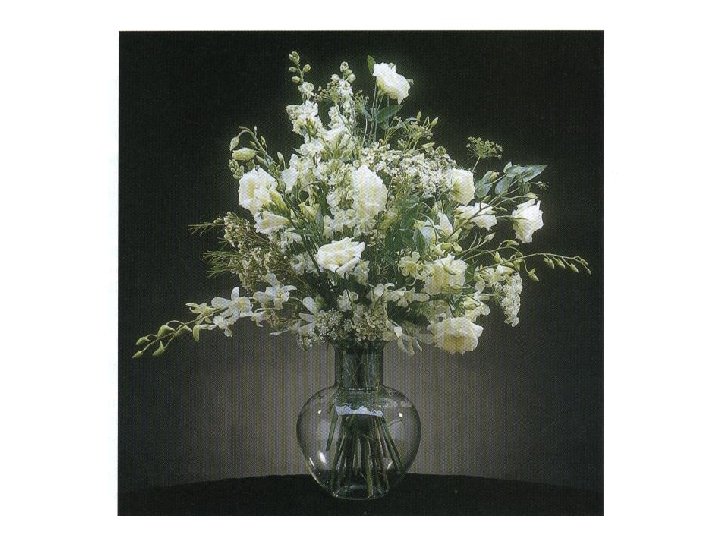
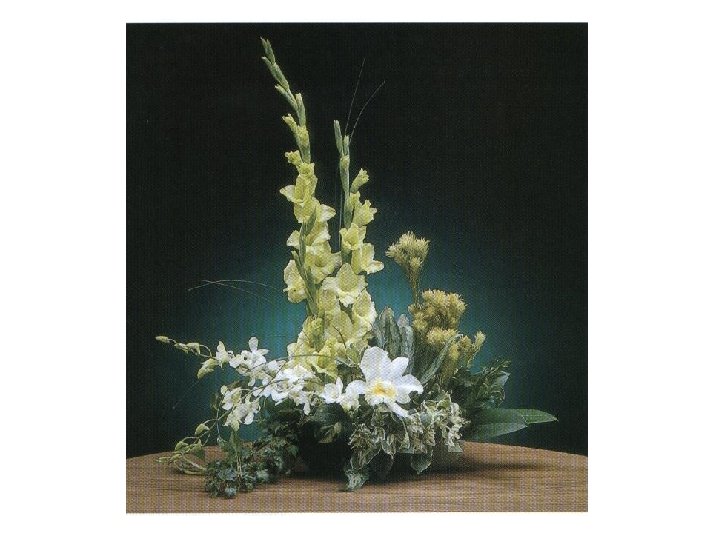
White l Blend easily l Cleaner, livelier l Useful neutral l Adds brightness and contrast l Achromatic-without color l Simple, elegance and sophistication
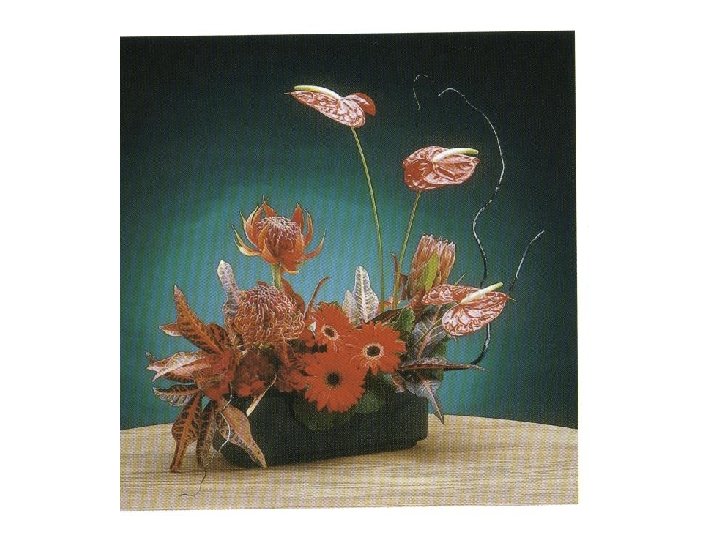
Red l Lively, stimulating l Strength and dominance l Use with care l Demands attention l Could overpower l Green foliage complement red
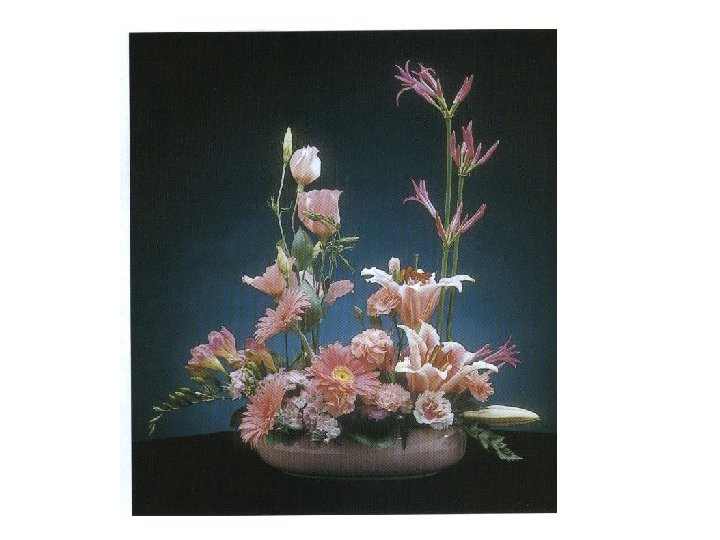
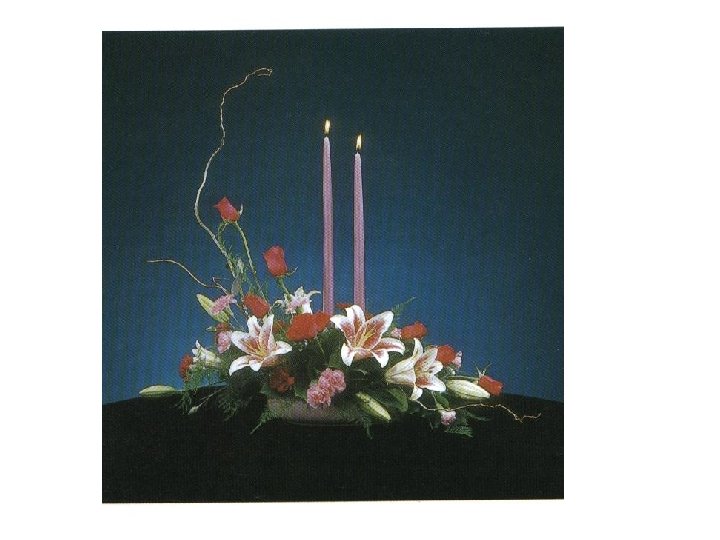
Pink l Combines with many colors l Romance, femininity l Often enhanced by use of stronger contrasting colors l Brighter pink—more attention
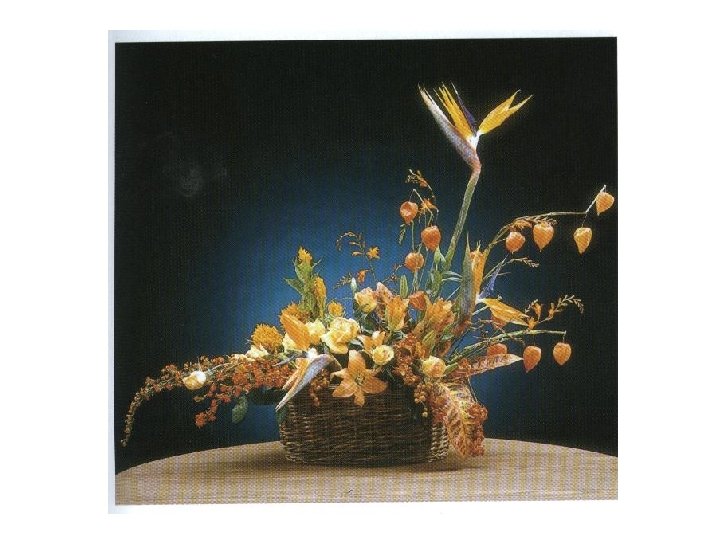
Orange l Stimulating l Compels attention l Adds brightness l Autumn l Tints and shades
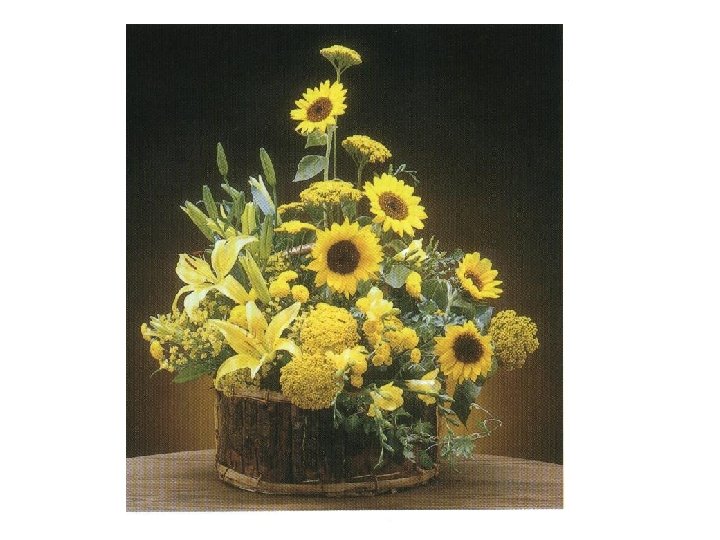
Yellow l Reflects a lot of light l Vibrant and highly visible l Friendly l Spirit and perk l Too much as monochromatic
Green l Natural background l Soothing and restful l Containers
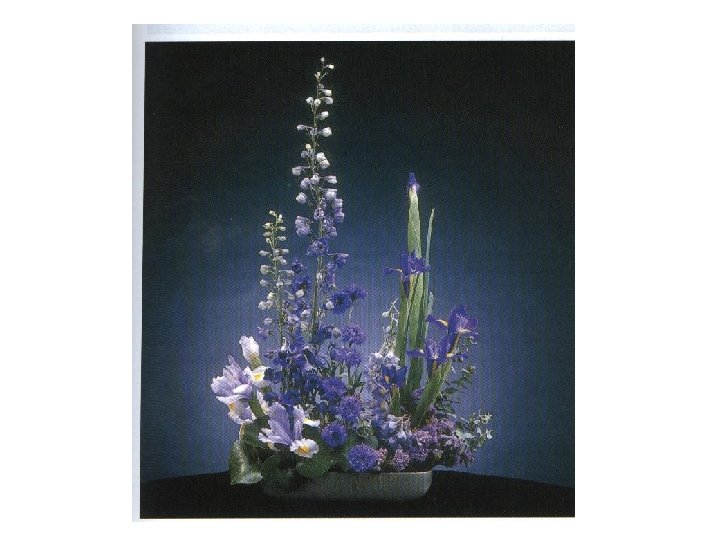
Blue l Peaceful, quiet, and cool l Different lighting—actually purple l depressing
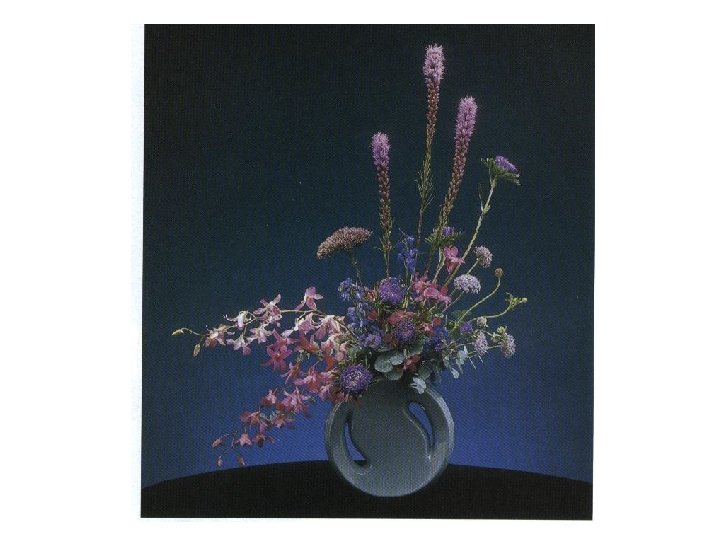
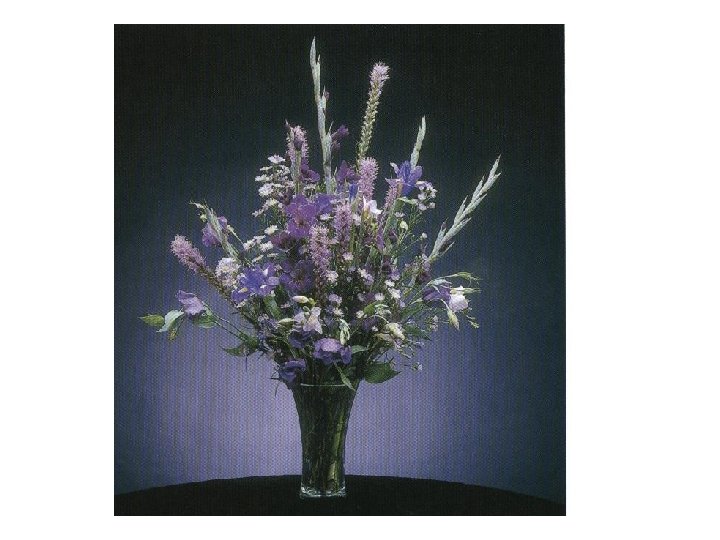
Purple l Rich and dramatic l Opposites in extremes (red and blue) l Cool or warm
Examples of Color Activities
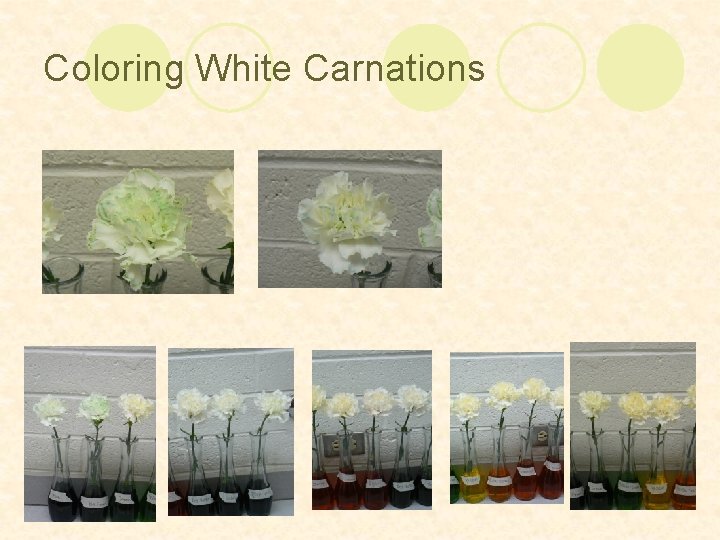
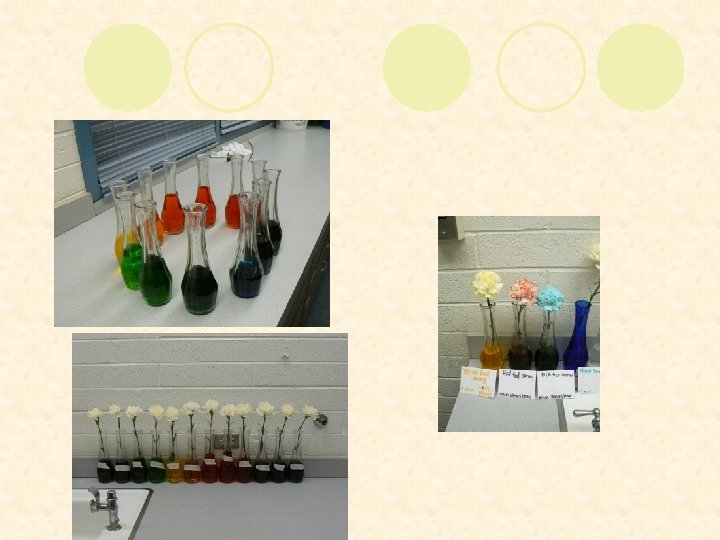
Coloring White Carnations
Mandala