
Color Based on Kristen Graumans Slides for Computer
Color Based on Kristen Grauman's Slides for Computer Vision

Today • Color Spaces • Perception of color – Human photoreceptors – Environmental effects, adaptation • Color in Graphics and Programming
What is color? • The result of interaction between physical light in the environment and our visual system. • A psychological property of our visual experiences when we look at objects and lights, not a physical property of those objects or lights. Slide credit: Lana Lazebnik
Color and light • Color of light arriving at camera depends on – Spectral reflectance of the surface light is leaving – Spectral radiance of light falling on that patch • Color perceived depends on – Physics of light – Visual system receptors – Brain processing, environment

Color and light White light: composed of almost equal energy in all wavelengths of the visible spectrum Newton 1665 Image from http: //micro. magnet. fsu. edu/

Electromagnetic spectrum Human Luminance Sensitivity Function Typical Grayscale conversion: Gray = 0. 3 * R + 0. 59 * G +. 11 * B NOT Gray = R / 3 + G / 3 + B / 3 Image credit: nasa. gov
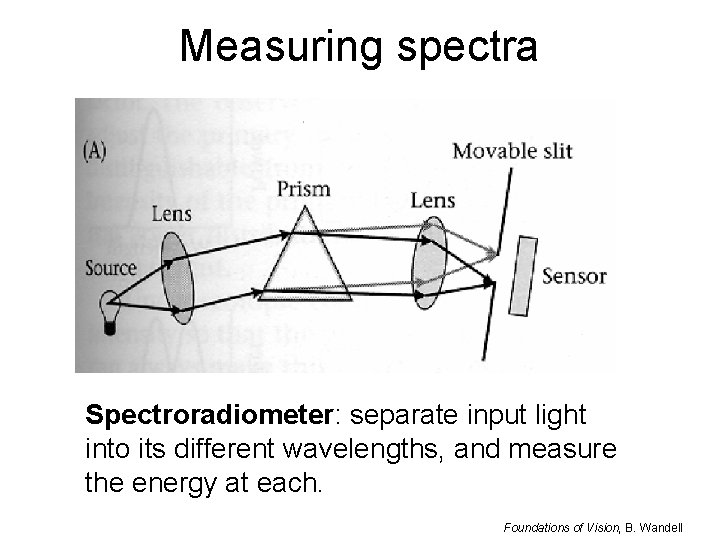
Measuring spectra Spectroradiometer: separate input light into its different wavelengths, and measure the energy at each. Foundations of Vision, B. Wandell
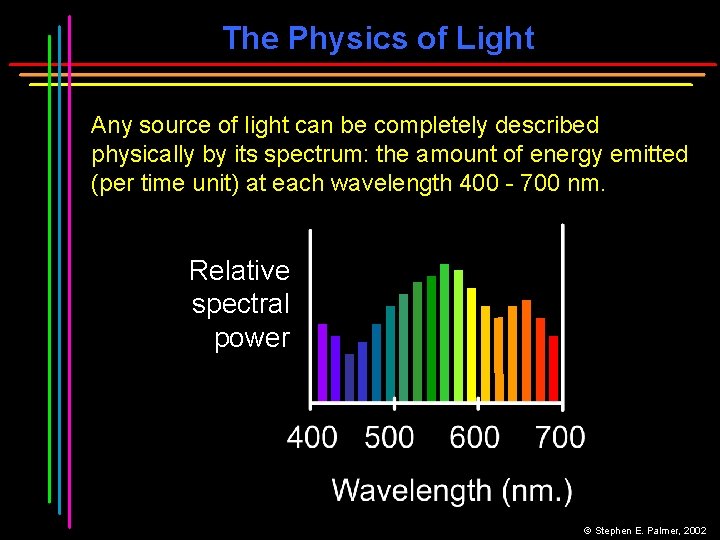
The Physics of Light Any source of light can be completely described physically by its spectrum: the amount of energy emitted (per time unit) at each wavelength 400 - 700 nm. Relative spectral power © Stephen E. Palmer, 2002
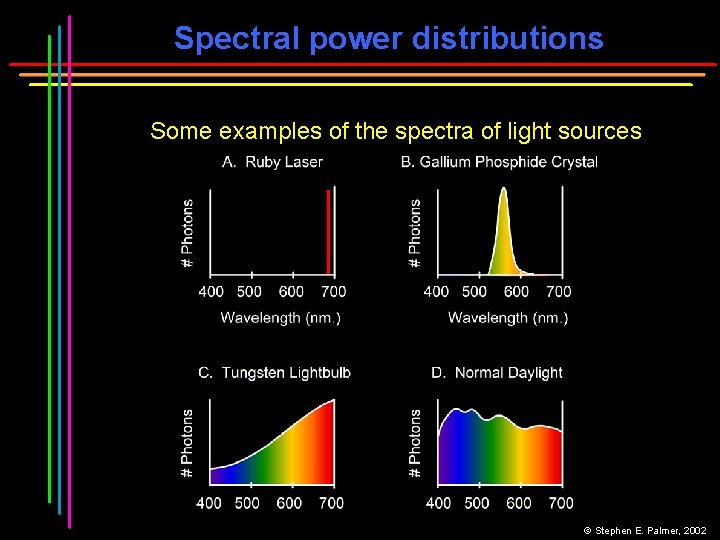
Spectral power distributions Some examples of the spectra of light sources © Stephen E. Palmer, 2002
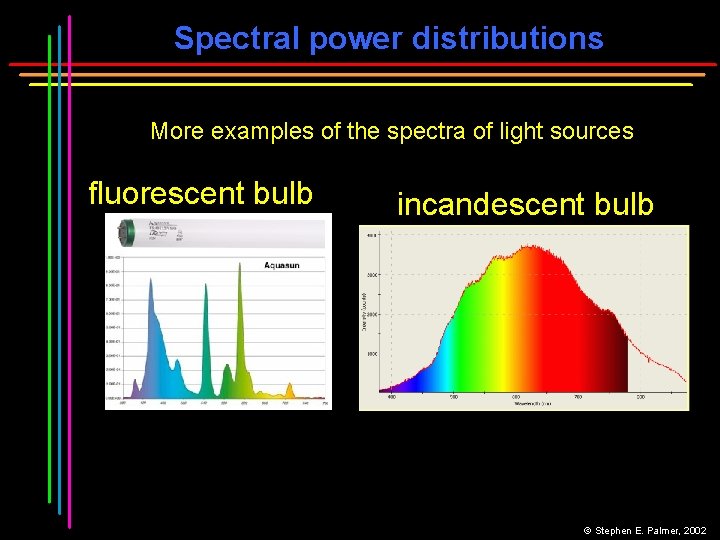
Spectral power distributions More examples of the spectra of light sources fluorescent bulb incandescent bulb © Stephen E. Palmer, 2002
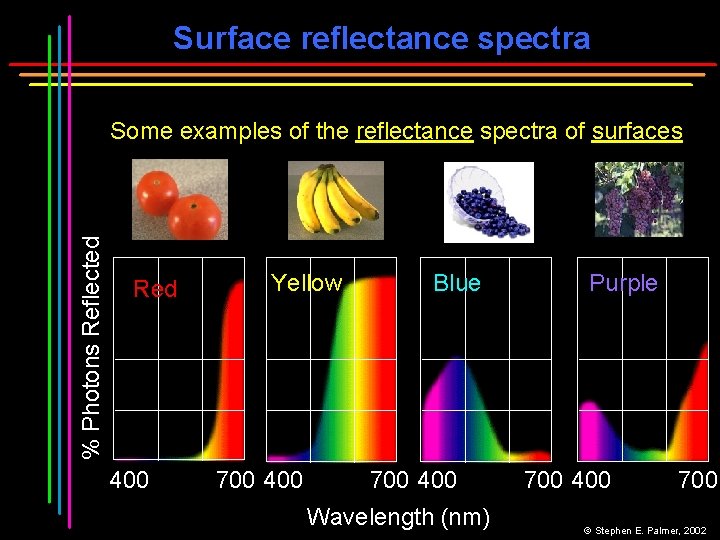
Surface reflectance spectra % Photons Reflected Some examples of the reflectance spectra of surfaces Red 400 Yellow 700 400 Blue 700 400 Wavelength (nm) Purple 700 400 700 © Stephen E. Palmer, 2002

Color mixing Source: W. Freeman
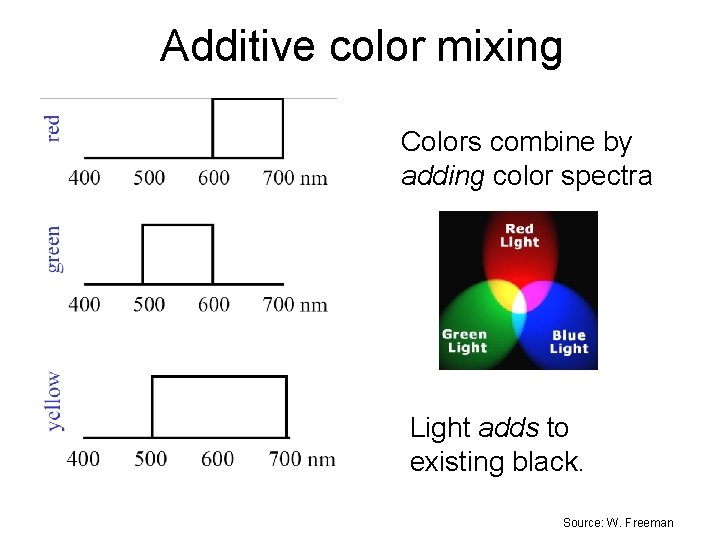
Additive color mixing Colors combine by adding color spectra Light adds to existing black. Source: W. Freeman
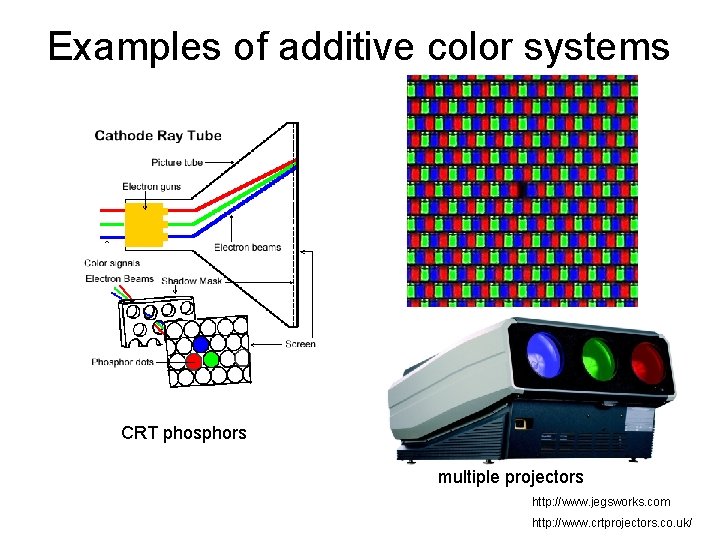
Examples of additive color systems CRT phosphors multiple projectors http: //www. jegsworks. com http: //www. crtprojectors. co. uk/
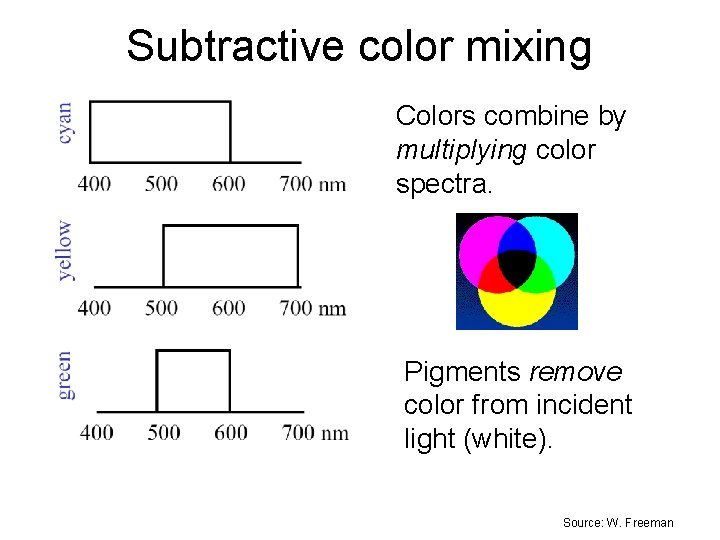
Subtractive color mixing Colors combine by multiplying color spectra. Pigments remove color from incident light (white). Source: W. Freeman
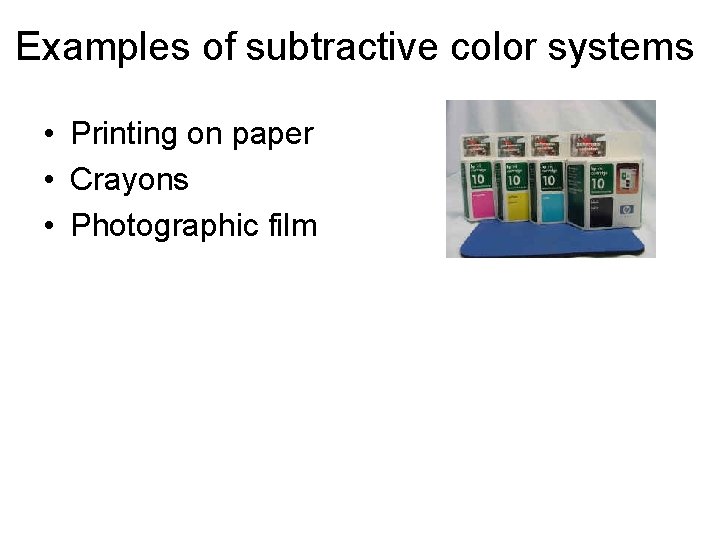
Examples of subtractive color systems • Printing on paper • Crayons • Photographic film

STANDARD COLOR SPACES
Standard Color Spaces • Named Colors – Hundreds – About 800 on Wikipedia "List of Colors" • Model or Color Space exists to handle the large number of colors possible
Standard color spaces • Linear color space – RGB (RED - GREEN - BLUE) • Non-linear color space – HSV (HUE - SATURATION - VALUE)
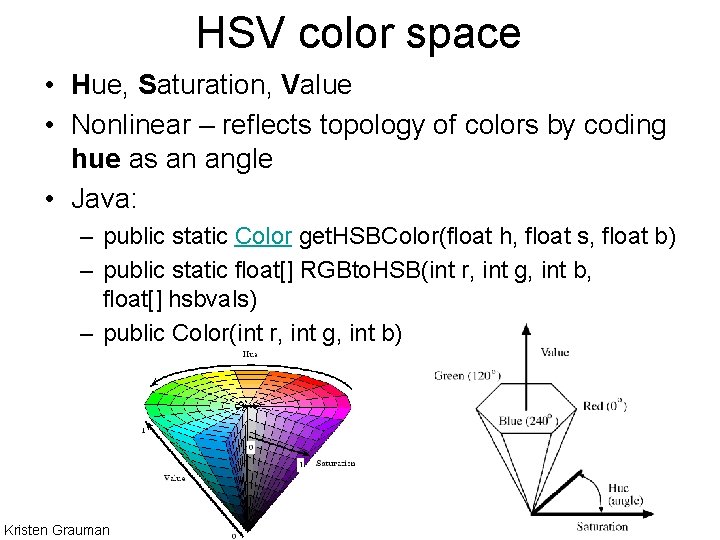
HSV color space • Hue, Saturation, Value • Nonlinear – reflects topology of colors by coding hue as an angle • Java: – public static Color get. HSBColor(float h, float s, float b) – public static float[] RGBto. HSB(int r, int g, int b, float[] hsbvals) – public Color(int r, int g, int b) Kristen Grauman
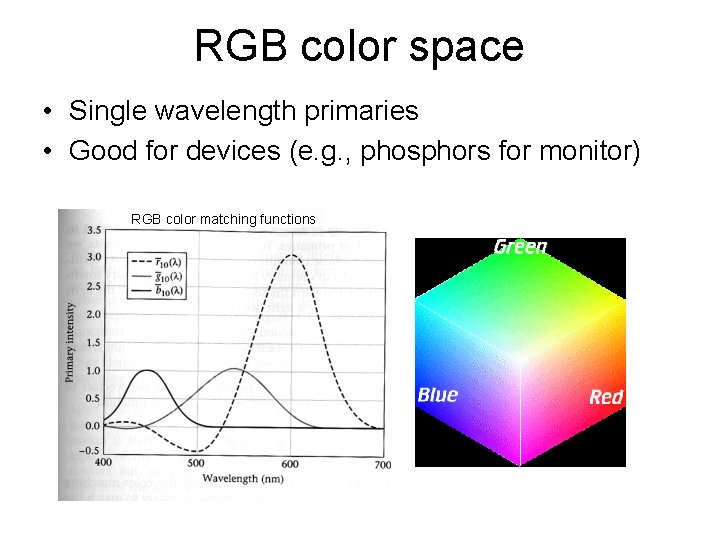
RGB color space • Single wavelength primaries • Good for devices (e. g. , phosphors for monitor) RGB color matching functions
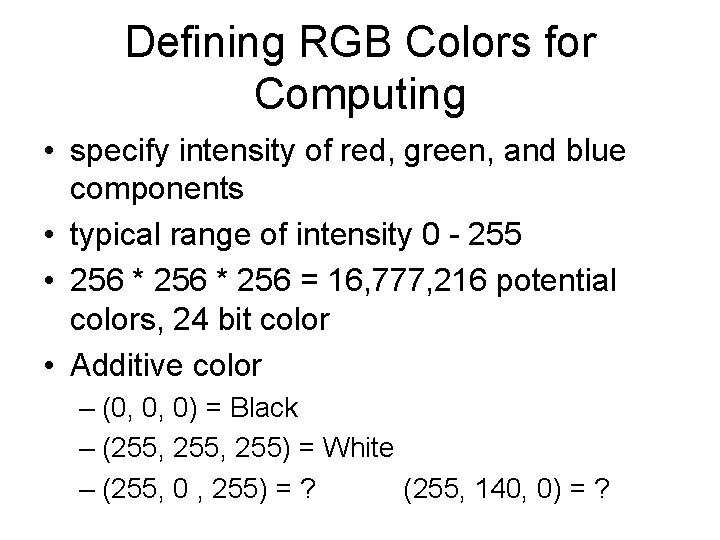
Defining RGB Colors for Computing • specify intensity of red, green, and blue components • typical range of intensity 0 - 255 • 256 * 256 = 16, 777, 216 potential colors, 24 bit color • Additive color – (0, 0, 0) = Black – (255, 255) = White – (255, 0 , 255) = ? (255, 140, 0) = ?
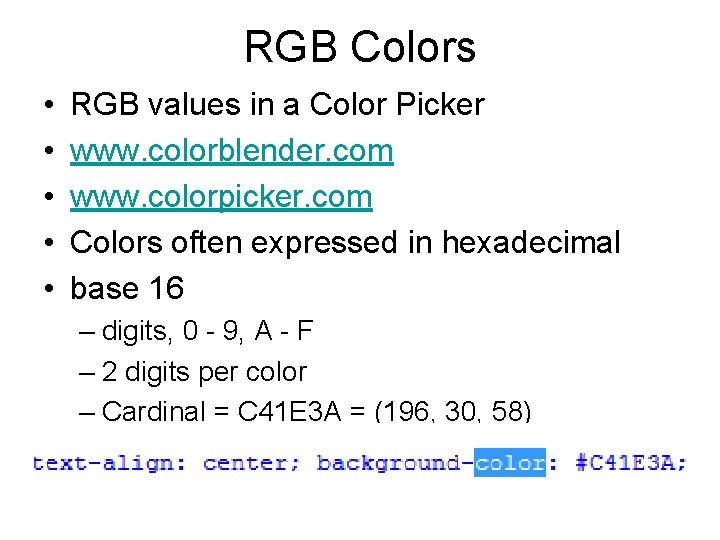
RGB Colors • • • RGB values in a Color Picker www. colorblender. com www. colorpicker. com Colors often expressed in hexadecimal base 16 – digits, 0 - 9, A - F – 2 digits per color – Cardinal = C 41 E 3 A = (196, 30, 58) – 1 E = 1 * 16 + 14 * 1 = 30
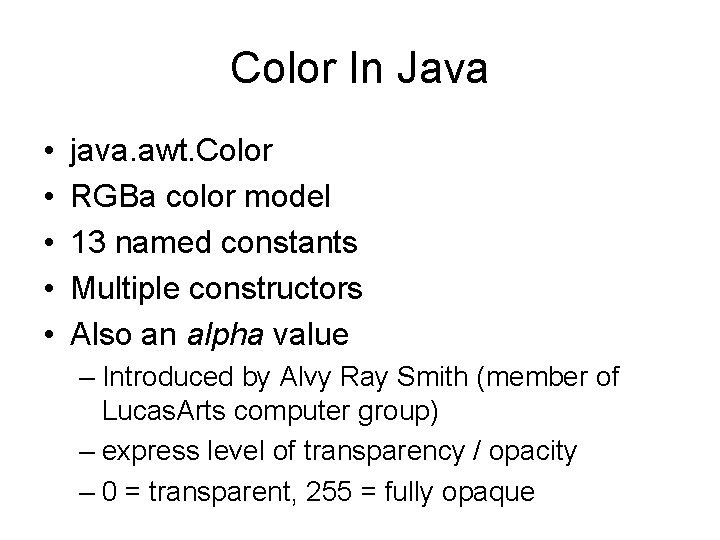
Color In Java • • • java. awt. Color RGBa color model 13 named constants Multiple constructors Also an alpha value – Introduced by Alvy Ray Smith (member of Lucas. Arts computer group) – express level of transparency / opacity – 0 = transparent, 255 = fully opaque
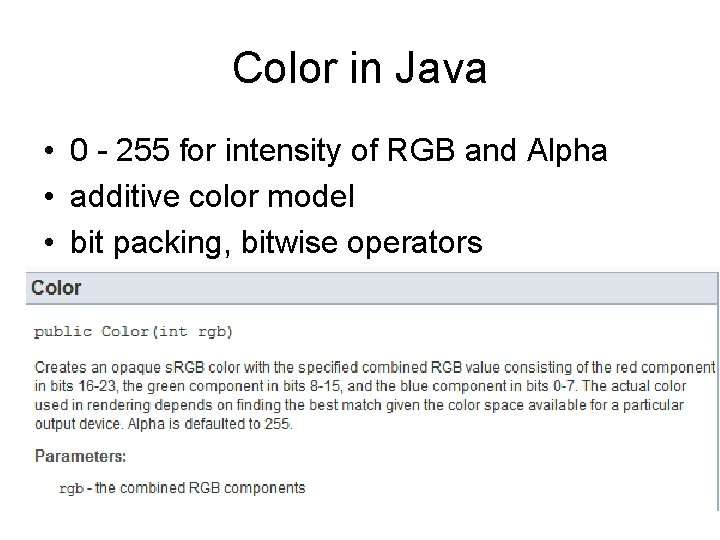
Color in Java • 0 - 255 for intensity of RGB and Alpha • additive color model • bit packing, bitwise operators

Sample Programs • Color. Example – Color. Panel – Alpha. Color. Panel • Color. Chooser. Main – Main - Frame - 2 Panels – JColor. Chooser class built in to Java – http: //docs. oracle. com/javase/tutorial/uiswing/ components/colorchooser. html
COLOR PERCEPTION
Color and light • Color of light arriving at camera depends on – Spectral reflectance of the surface light is leaving – Spectral radiance of light falling on that patch • Color perceived depends on – Physics of light – Visual system receptors – Brain processing, environment
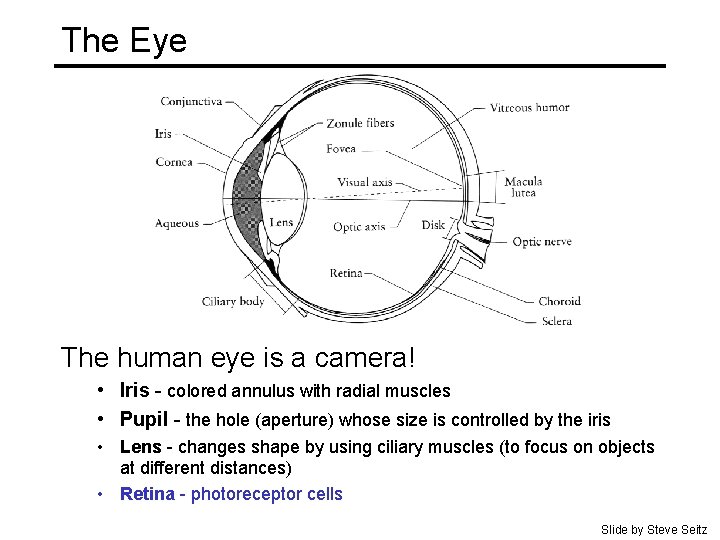
The Eye The human eye is a camera! • Iris - colored annulus with radial muscles • Pupil - the hole (aperture) whose size is controlled by the iris • Lens - changes shape by using ciliary muscles (to focus on objects at different distances) • Retina - photoreceptor cells Slide by Steve Seitz
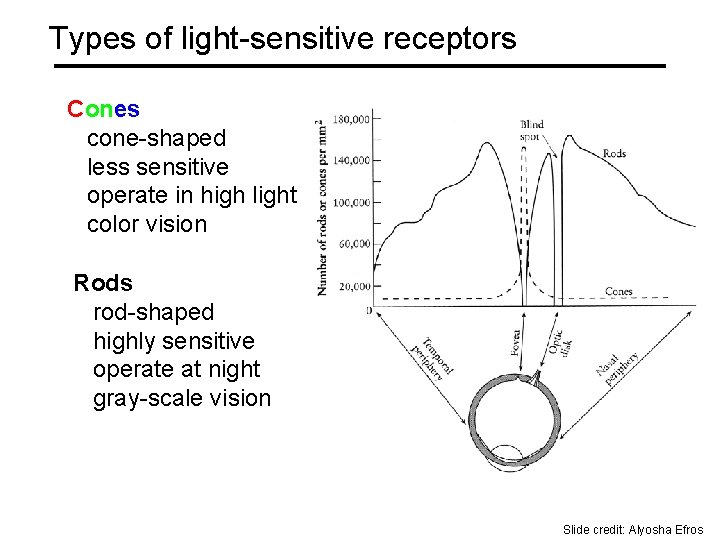
Types of light-sensitive receptors Cones cone-shaped less sensitive operate in high light color vision Rods rod-shaped highly sensitive operate at night gray-scale vision © Stephen E. Palmer, 2002 Slide credit: Alyosha Efros
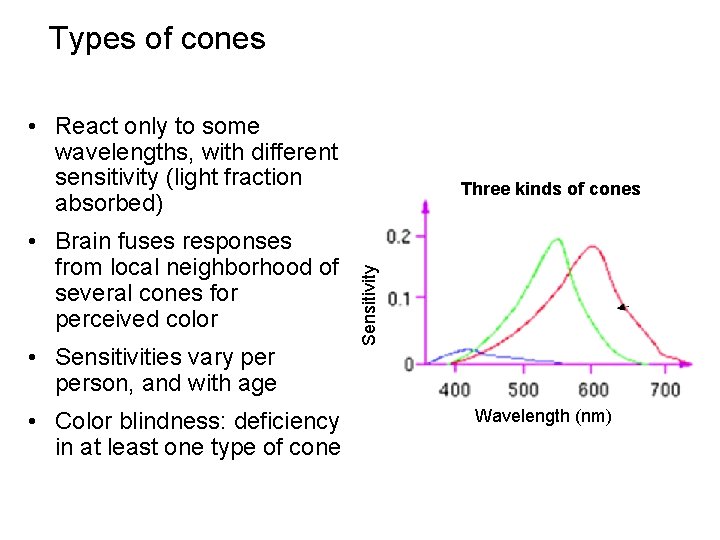
Types of cones • React only to some wavelengths, with different sensitivity (light fraction absorbed) • Sensitivities vary person, and with age • Color blindness: deficiency in at least one type of cone Sensitivity • Brain fuses responses from local neighborhood of several cones for perceived color Three kinds of cones Wavelength (nm)
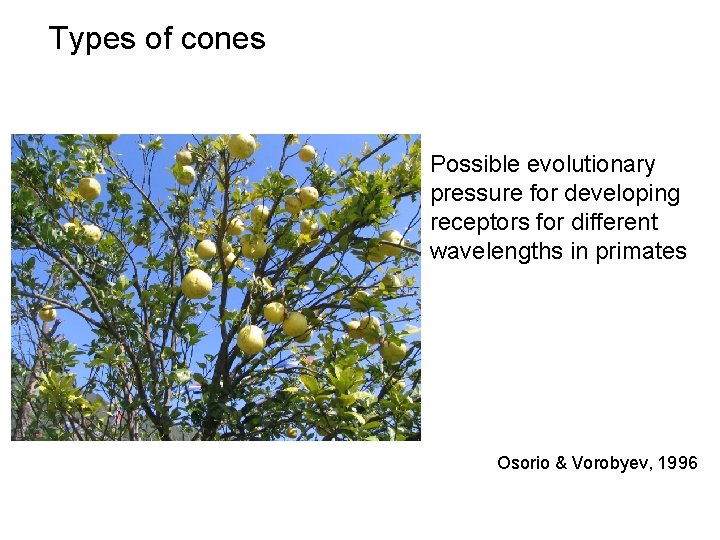
Types of cones Possible evolutionary pressure for developing receptors for different wavelengths in primates Osorio & Vorobyev, 1996
Trichromacy • Experimental facts: – Three primaries will work for most people if we allow subtractive matching; “trichromatic” nature of the human visual system – Most people make the same matches for a given set of primaries (i. e. , select the same mixtures)
Environmental effects & adaptation • Chromatic adaptation: – We adapt to a particular illuminant • Assimilation, contrast effects, chromatic induction: – Nearby colors affect what is perceived; receptor excitations interact across image and time • Afterimages Color matching != color appearance Physics of light != perception of light
Chromatic adaptation • If the visual system is exposed to a certain illuminant for a while, color system starts to adapt / skew.
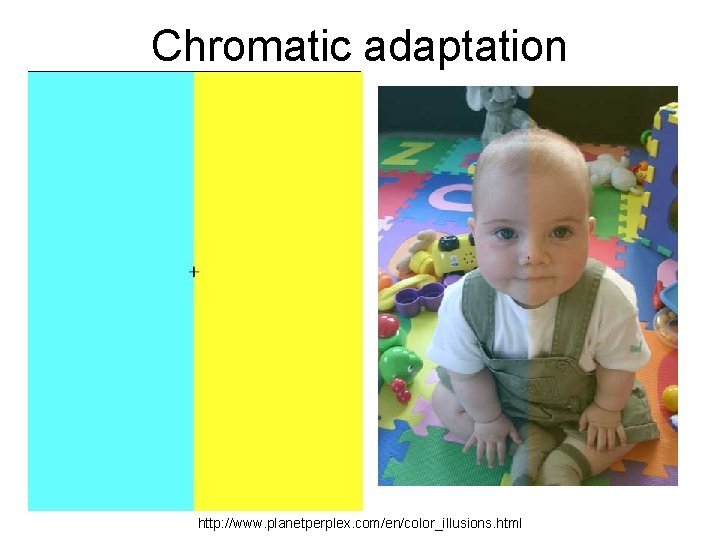
Chromatic adaptation http: //www. planetperplex. com/en/color_illusions. html
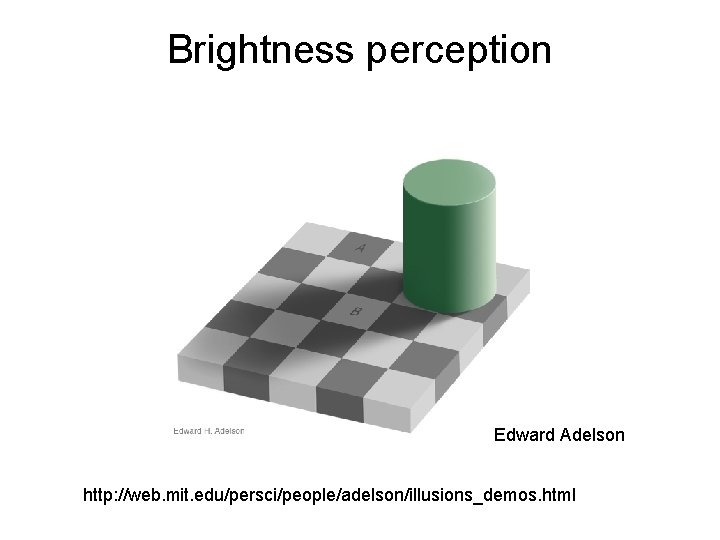
Brightness perception Edward Adelson http: //web. mit. edu/persci/people/adelson/illusions_demos. html
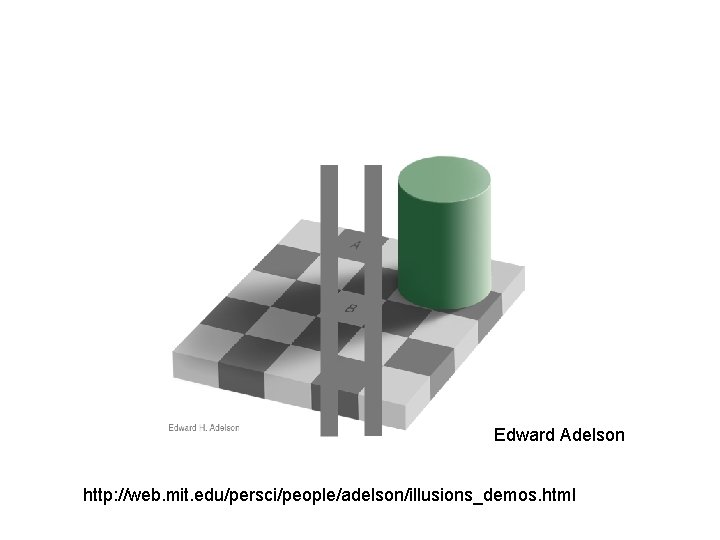
Edward Adelson http: //web. mit. edu/persci/people/adelson/illusions_demos. html
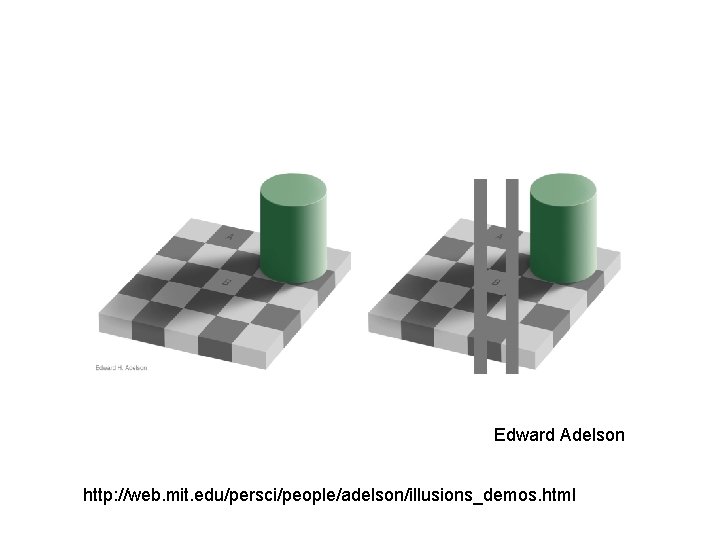
Edward Adelson http: //web. mit. edu/persci/people/adelson/illusions_demos. html
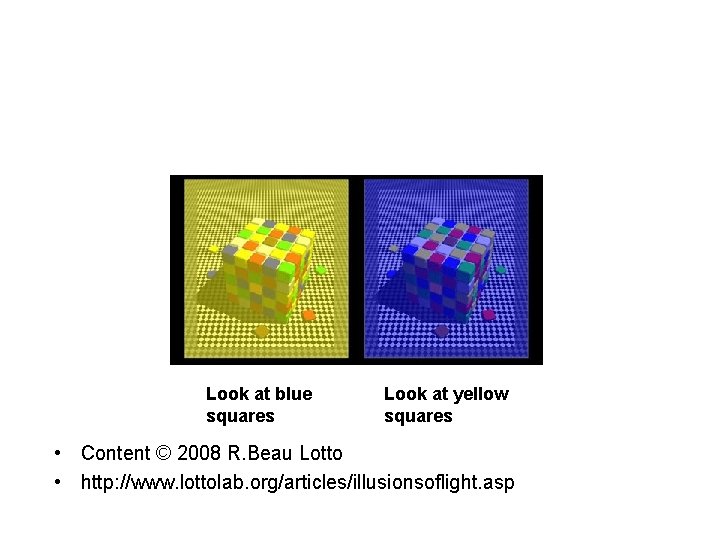
Look at blue squares Look at yellow squares • Content © 2008 R. Beau Lotto • http: //www. lottolab. org/articles/illusionsoflight. asp
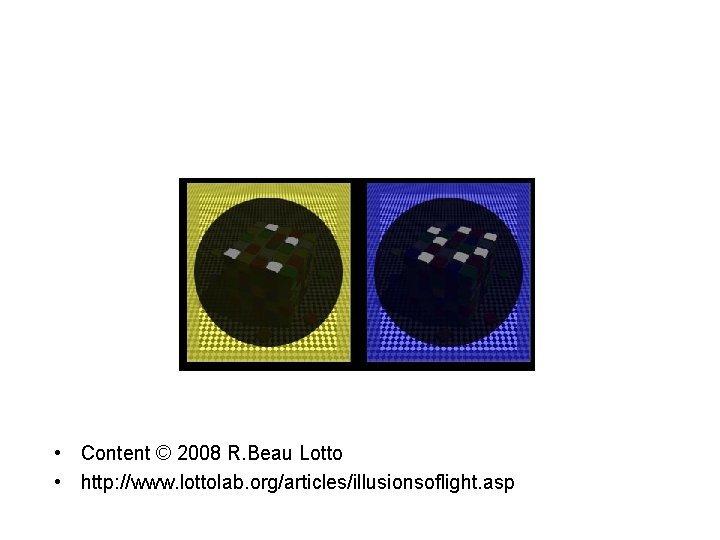
• Content © 2008 R. Beau Lotto • http: //www. lottolab. org/articles/illusionsoflight. asp
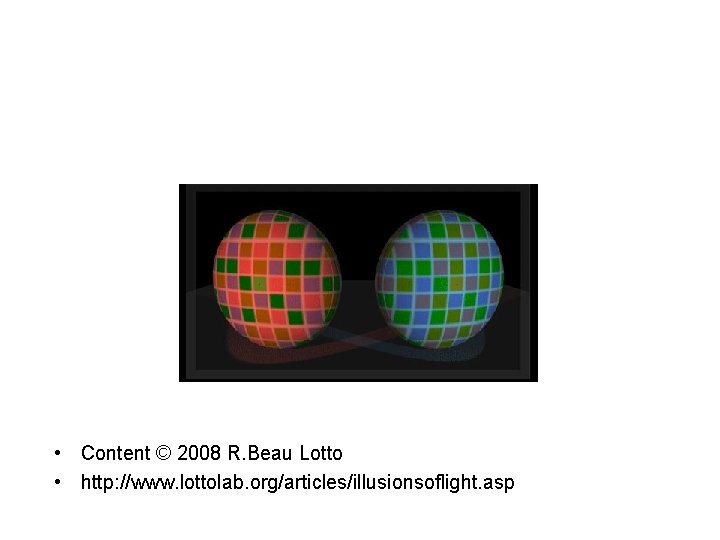
• Content © 2008 R. Beau Lotto • http: //www. lottolab. org/articles/illusionsoflight. asp
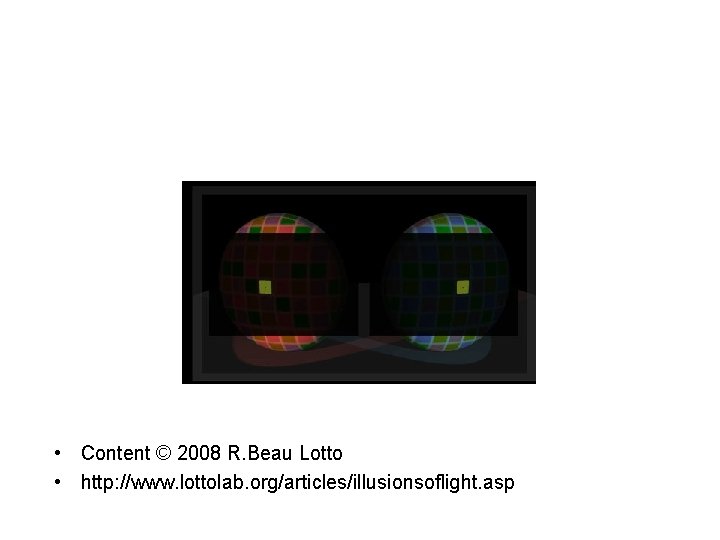
• Content © 2008 R. Beau Lotto • http: //www. lottolab. org/articles/illusionsoflight. asp
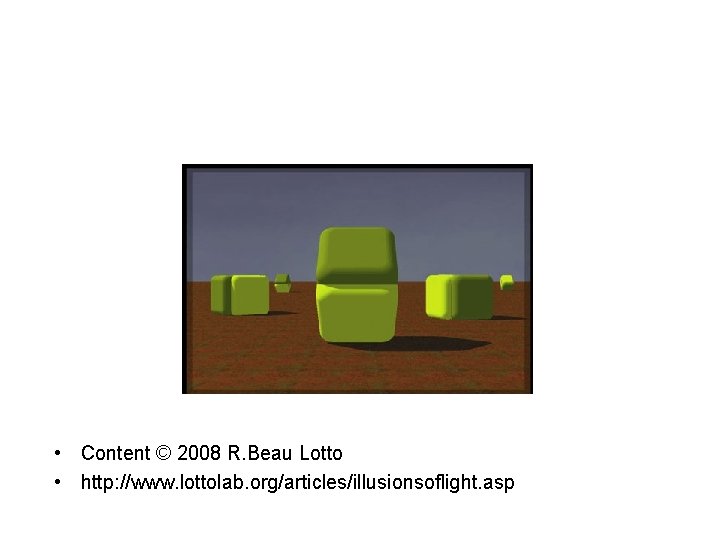
• Content © 2008 R. Beau Lotto • http: //www. lottolab. org/articles/illusionsoflight. asp
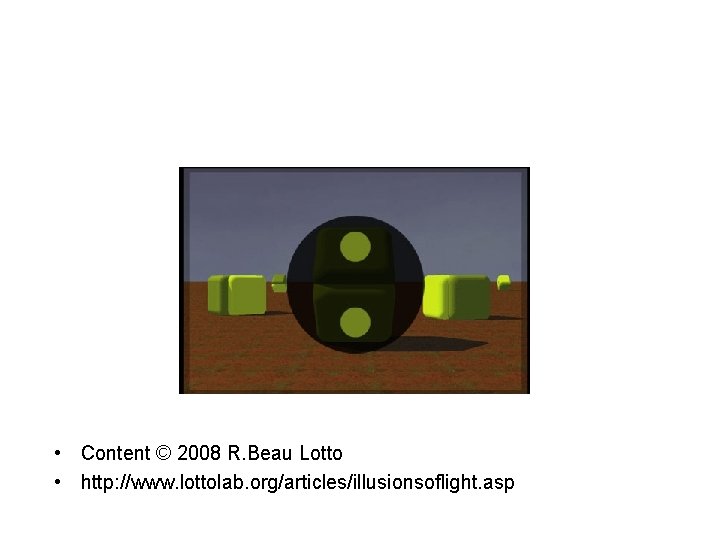
• Content © 2008 R. Beau Lotto • http: //www. lottolab. org/articles/illusionsoflight. asp
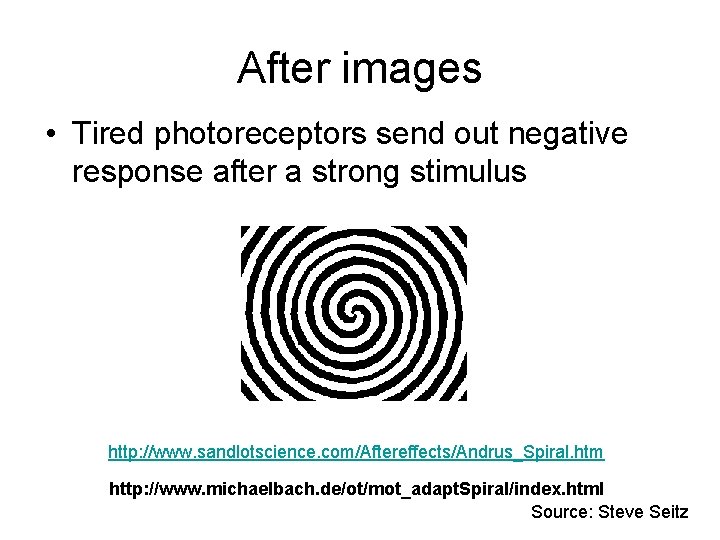
After images • Tired photoreceptors send out negative response after a strong stimulus http: //www. sandlotscience. com/Aftereffects/Andrus_Spiral. htm http: //www. michaelbach. de/ot/mot_adapt. Spiral/index. html Source: Steve Seitz
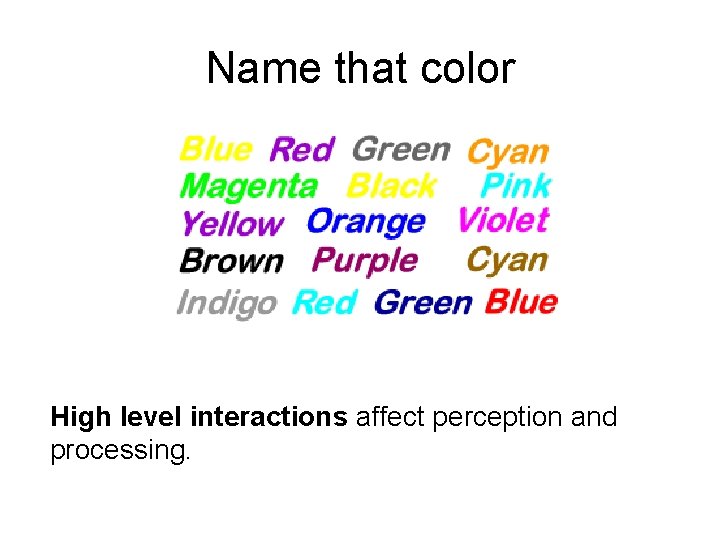
Name that color High level interactions affect perception and processing.

COLOR IN COMPUTER VISION
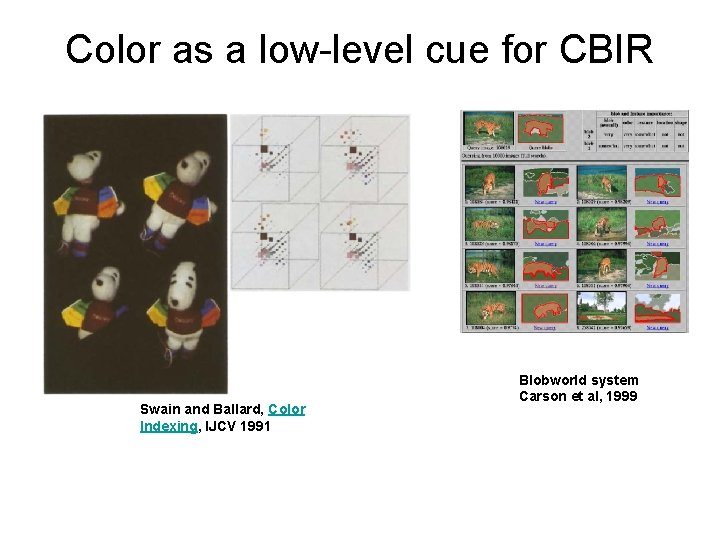
Color as a low-level cue for CBIR Swain and Ballard, Color Indexing, IJCV 1991 Blobworld system Carson et al, 1999
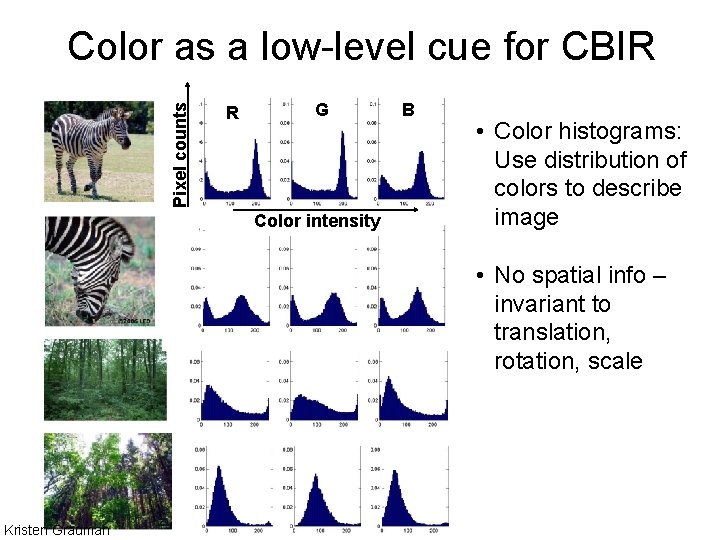
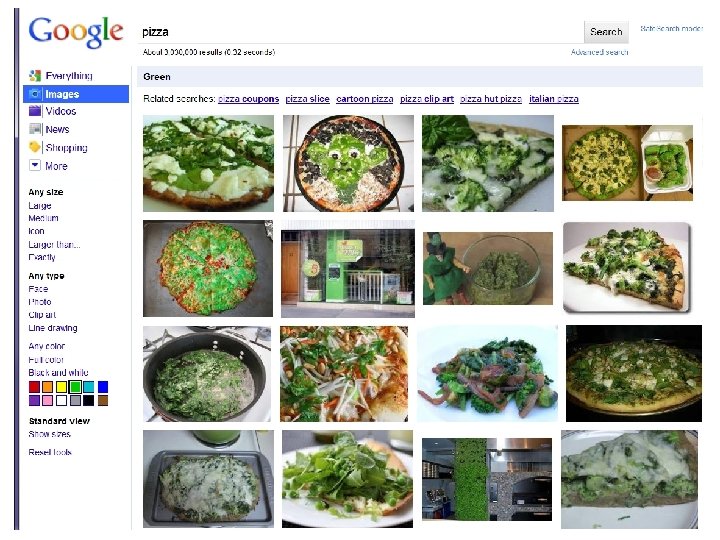
Pixel counts Color as a low-level cue for CBIR R G Color intensity B • Color histograms: Use distribution of colors to describe image • No spatial info – invariant to translation, rotation, scale Kristen Grauman
Color-based image retrieval • Given collection (database) of images: – Extract and store one color histogram per image • Given new query image: – Extract its color histogram – For each database image: • Compute intersection between query histogram and database histogram – Sort intersection values (highest score = most similar) – Rank database items relative to query based on this sorted order Kristen Grauman
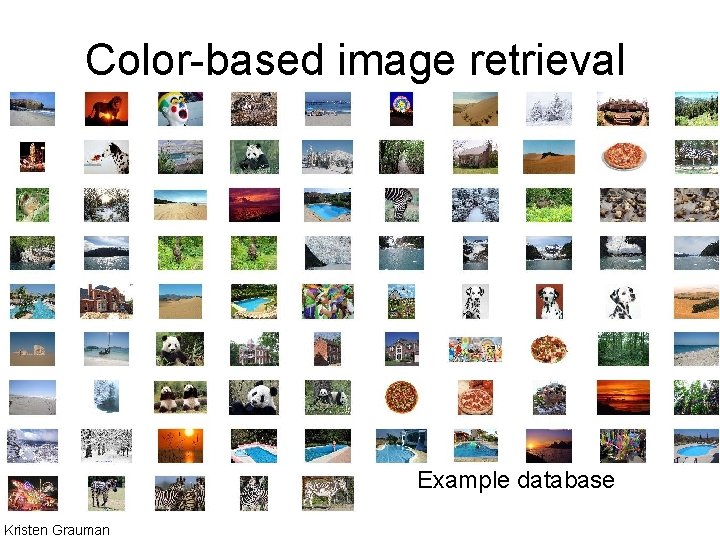
Color-based image retrieval Example database Kristen Grauman
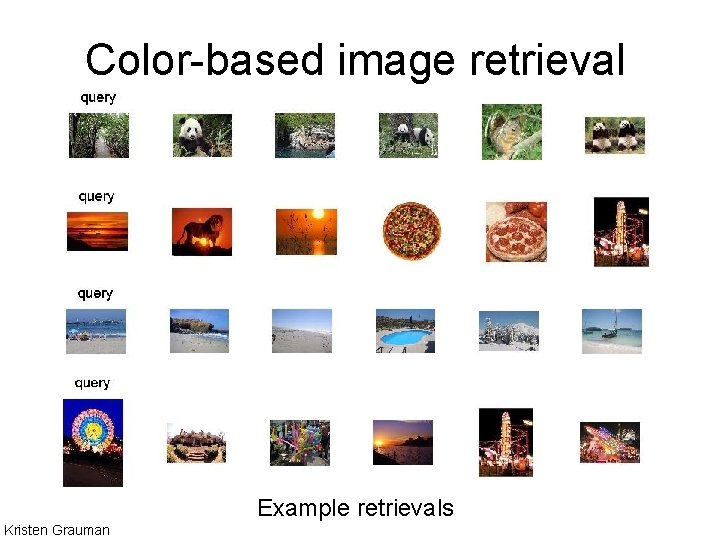
Color-based image retrieval Example retrievals Kristen Grauman
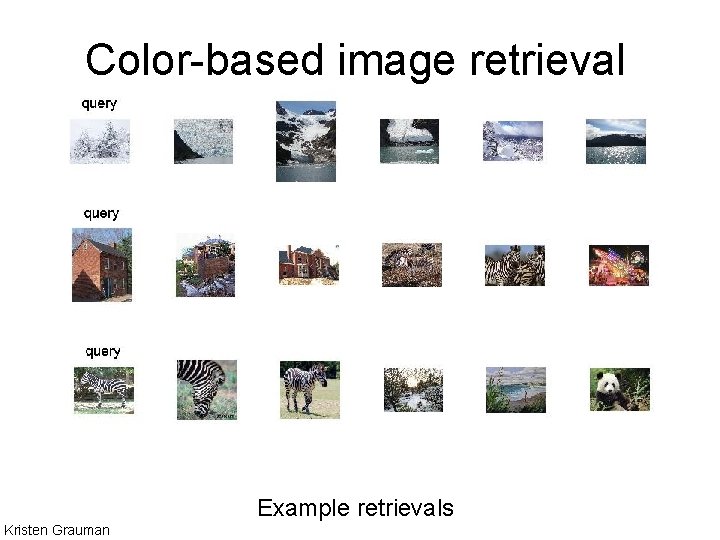
Color-based image retrieval Example retrievals Kristen Grauman
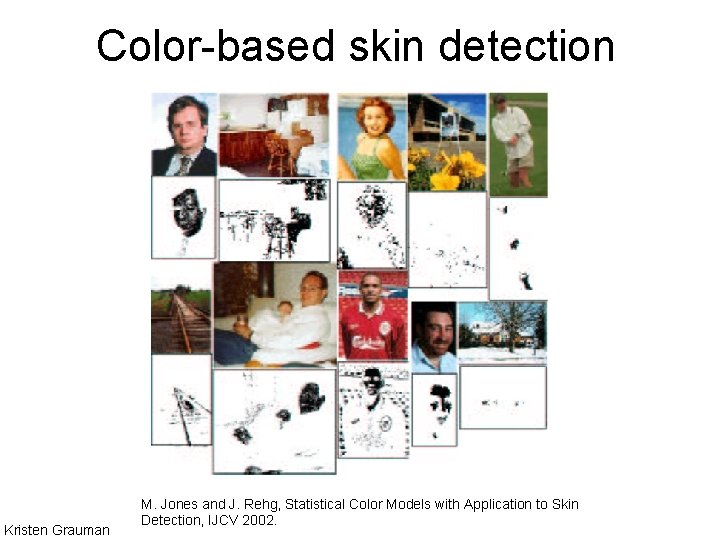
Color-based skin detection Kristen Grauman M. Jones and J. Rehg, Statistical Color Models with Application to Skin Detection, IJCV 2002.
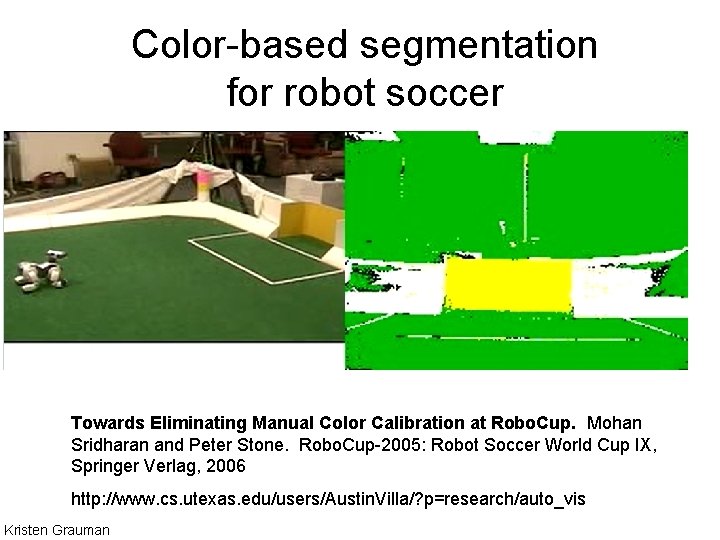
Color-based segmentation for robot soccer Towards Eliminating Manual Color Calibration at Robo. Cup. Mohan Sridharan and Peter Stone. Robo. Cup-2005: Robot Soccer World Cup IX, Springer Verlag, 2006 http: //www. cs. utexas. edu/users/Austin. Villa/? p=research/auto_vis Kristen Grauman
- Slides: 57