
Color and Value Art 1 2 Color and
- Slides: 29
Color and Value Art 1 & 2
Color and Value • Each are only visible because of light. • Light and Darkness are used in legends of most cultures
Color and Value • Light symbolizes truth, hope, and new life. • Darkness symbolizes evil, fear of the unknown, and death
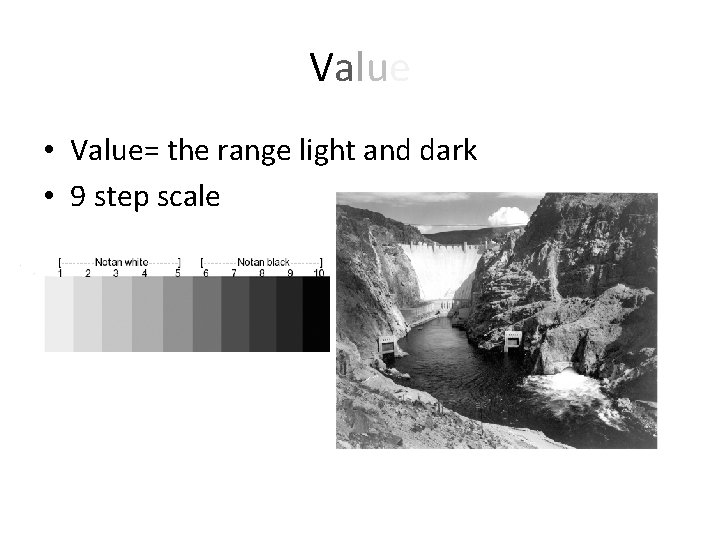
Value • Value= the range light and dark • 9 step scale
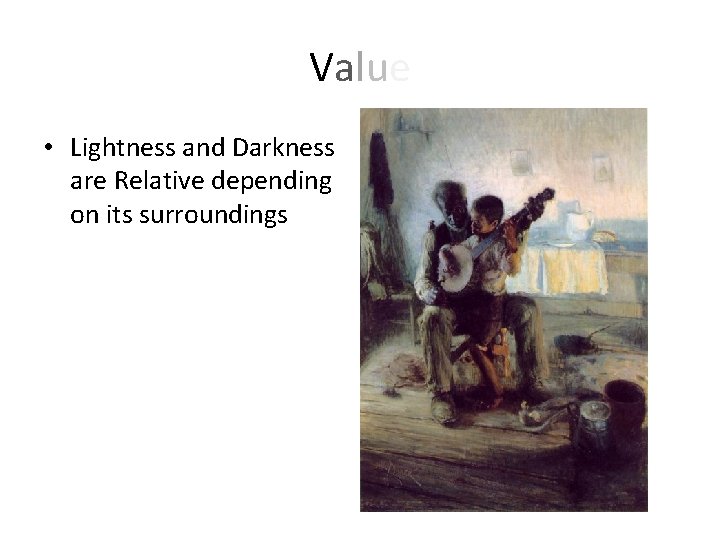
Value • Lightness and Darkness are Relative depending on its surroundings
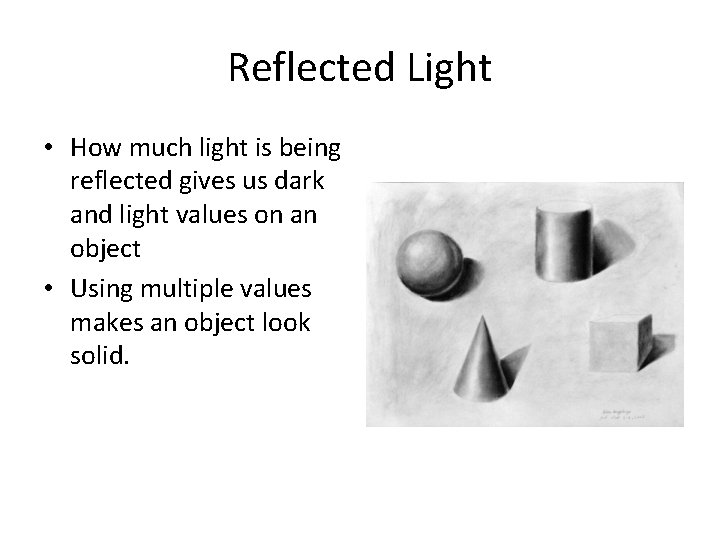
Reflected Light • How much light is being reflected gives us dark and light values on an object • Using multiple values makes an object look solid.
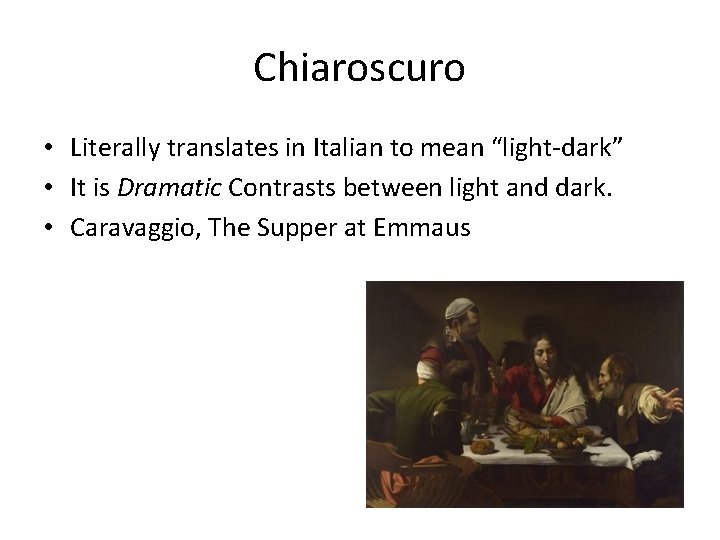
Chiaroscuro • Literally translates in Italian to mean “light-dark” • It is Dramatic Contrasts between light and dark. • Caravaggio, The Supper at Emmaus
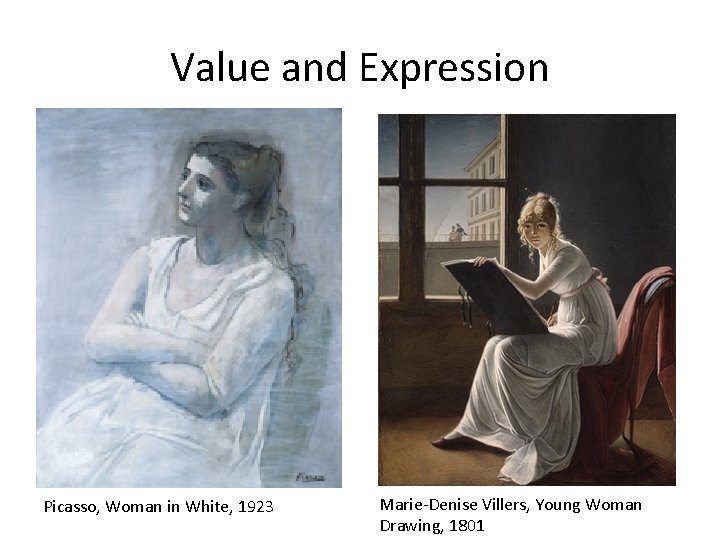
Value and Expression Picasso, Woman in White, 1923 Marie-Denise Villers, Young Woman Drawing, 1801
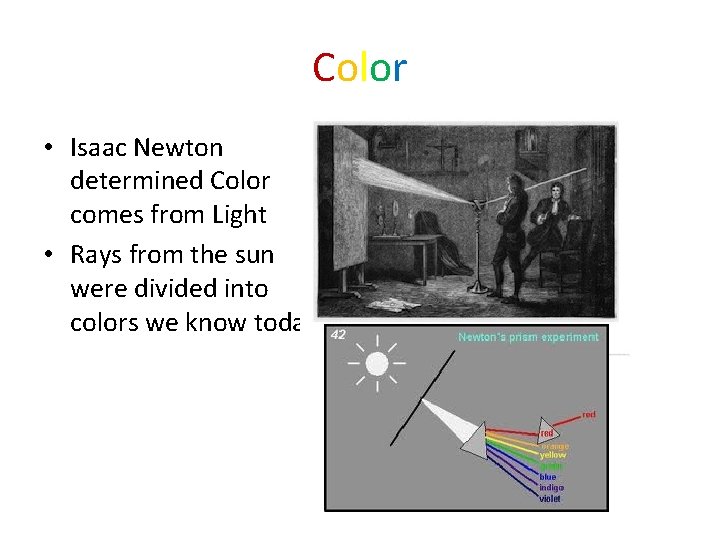
Color • Isaac Newton determined Color comes from Light • Rays from the sun were divided into colors we know today
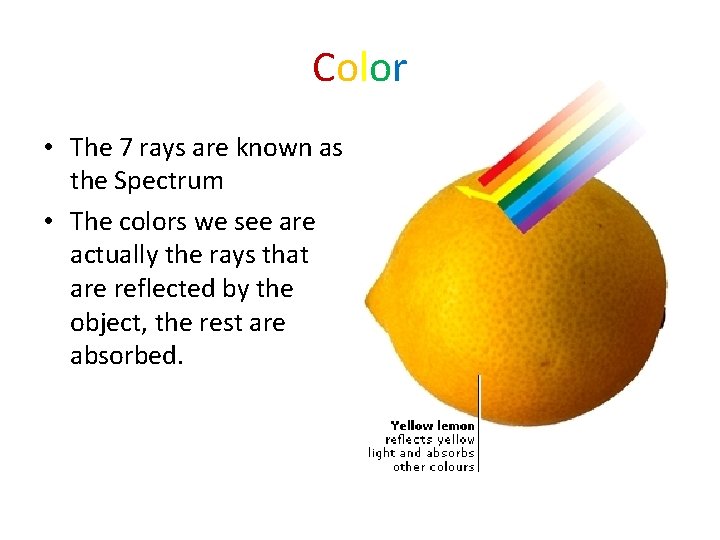
Color • The 7 rays are known as the Spectrum • The colors we see are actually the rays that are reflected by the object, the rest are absorbed.
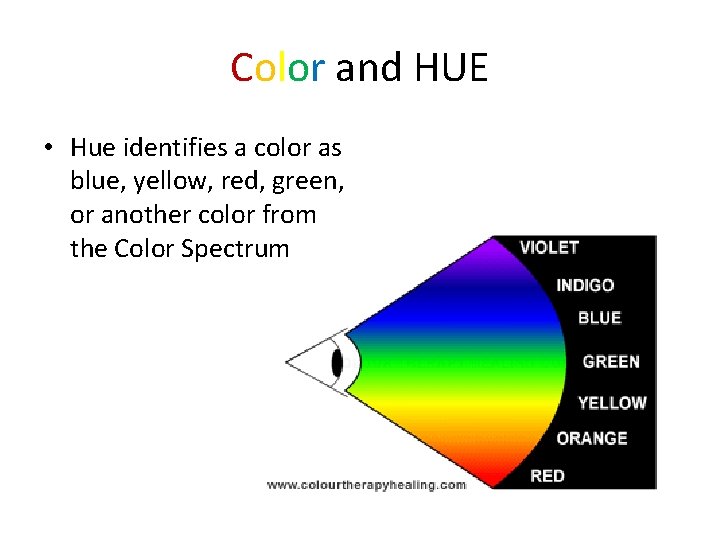
Color and HUE • Hue identifies a color as blue, yellow, red, green, or another color from the Color Spectrum
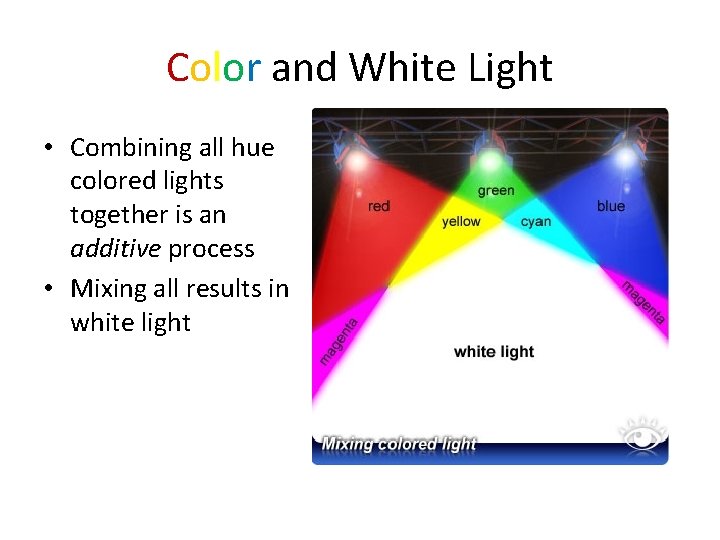
Color and White Light • Combining all hue colored lights together is an additive process • Mixing all results in white light
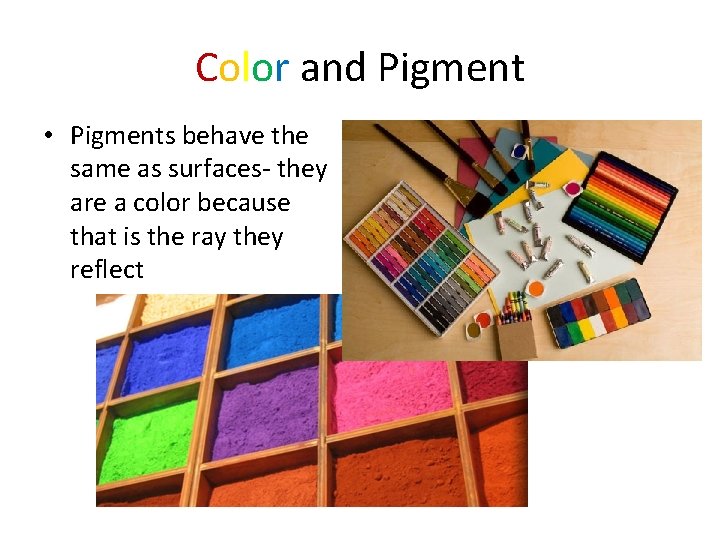
Color and Pigment • Pigments behave the same as surfaces- they are a color because that is the ray they reflect
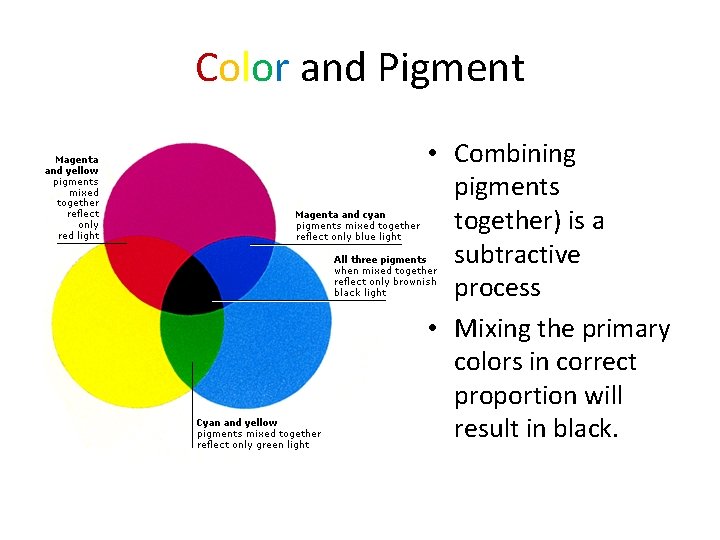
Color and Pigment • Combining pigments together) is a subtractive process • Mixing the primary colors in correct proportion will result in black.
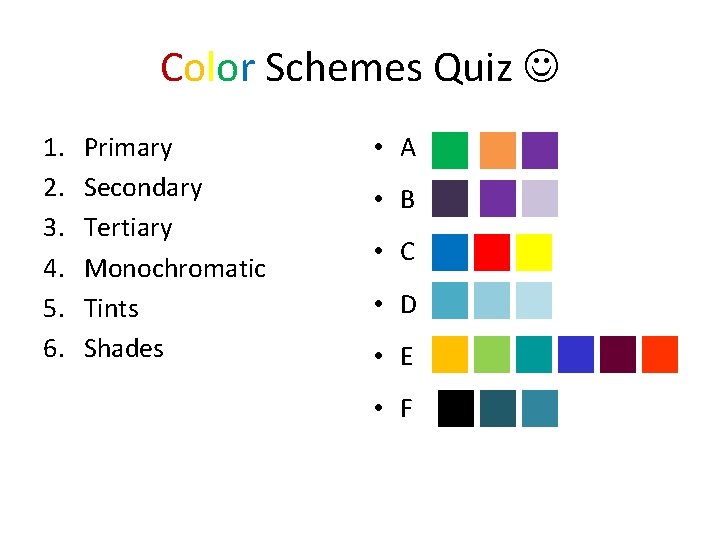
Color Schemes Quiz 1. 2. 3. 4. 5. 6. Primary Secondary Tertiary Monochromatic Tints Shades • A • B • C • D • E • F
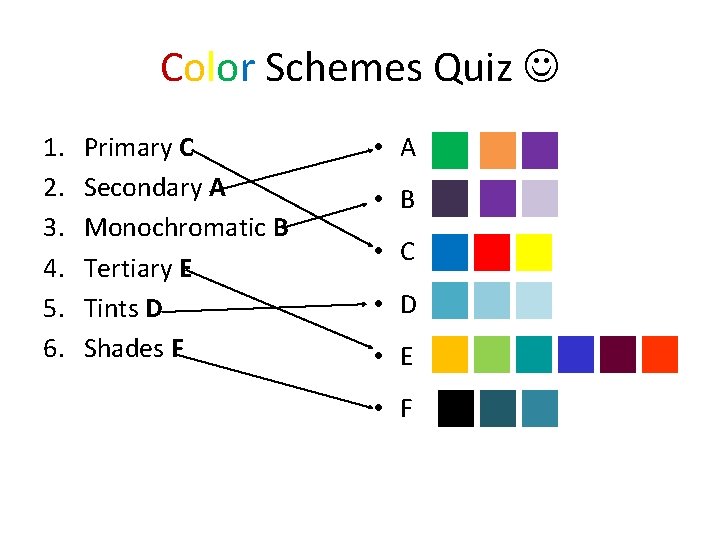
Color Schemes Quiz 1. 2. 3. 4. 5. 6. Primary C Secondary A Monochromatic B Tertiary E Tints D Shades F • A • B • C • D • E • F
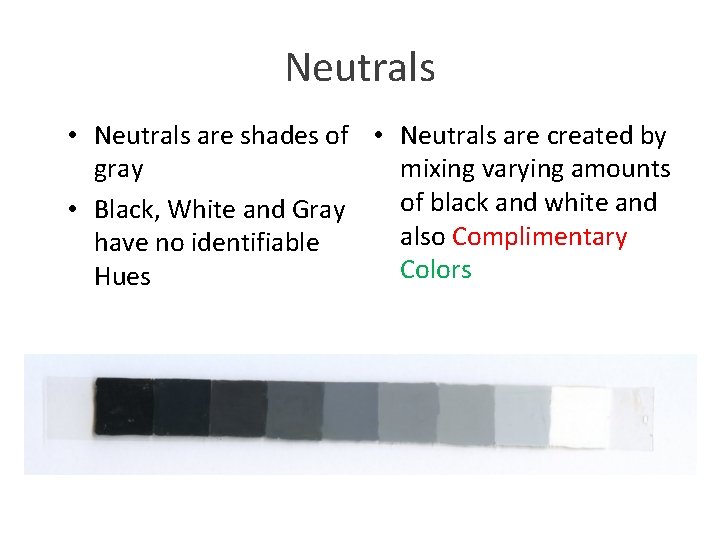
Neutrals • Neutrals are shades of • Neutrals are created by gray mixing varying amounts of black and white and • Black, White and Gray also Complimentary have no identifiable Colors Hues
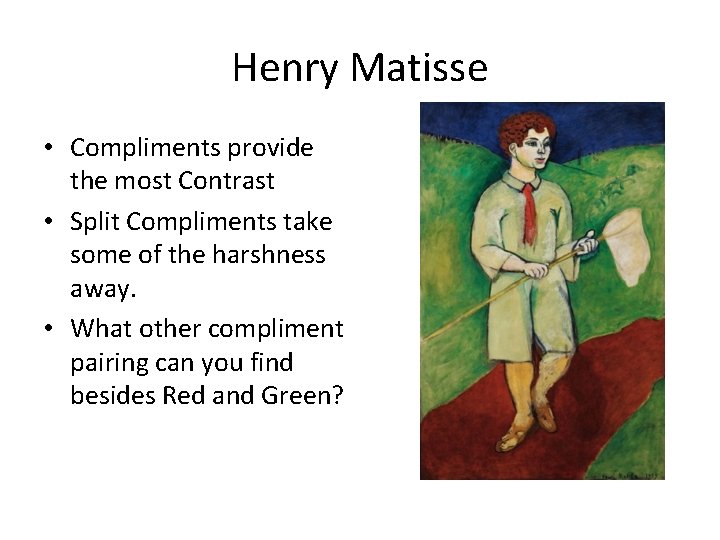
Henry Matisse • Compliments provide the most Contrast • Split Compliments take some of the harshness away. • What other compliment pairing can you find besides Red and Green?
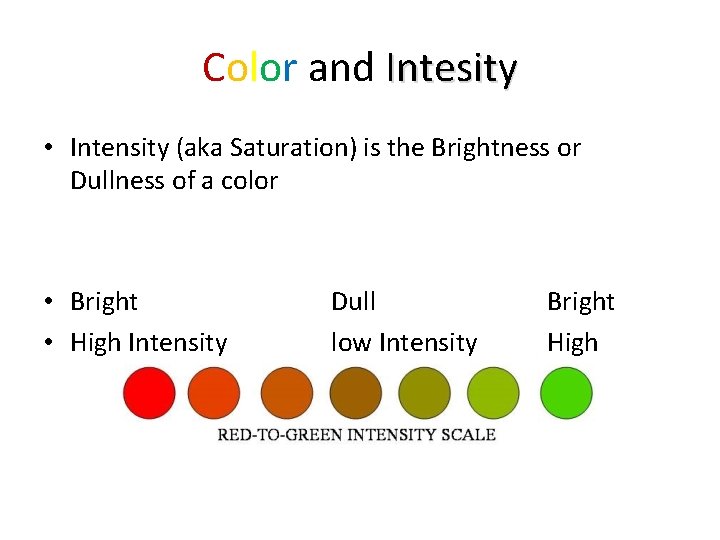
Color and Intesity • Intensity (aka Saturation) is the Brightness or Dullness of a color • Bright • High Intensity Dull low Intensity Bright High
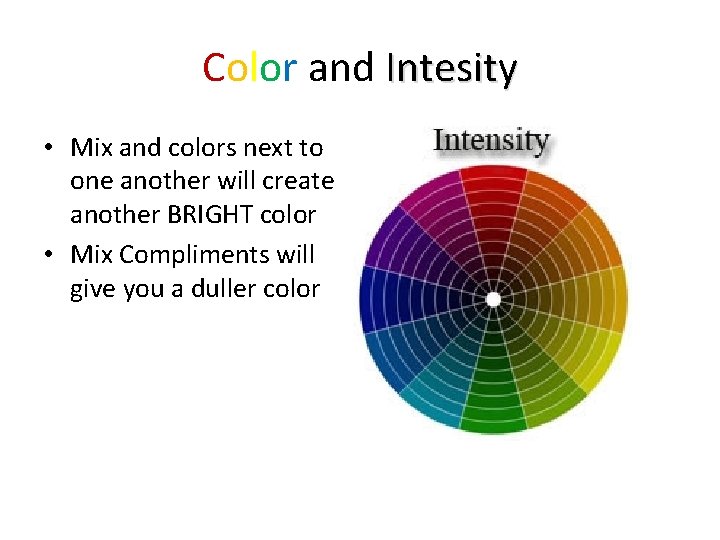
Color and Intesity • Mix and colors next to one another will create another BRIGHT color • Mix Compliments will give you a duller color
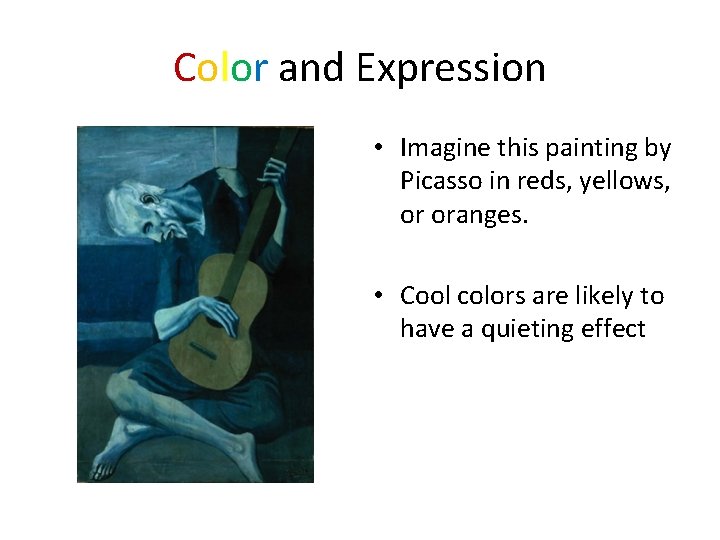
Color and Expression • Imagine this painting by Picasso in reds, yellows, or oranges. • Cool colors are likely to have a quieting effect
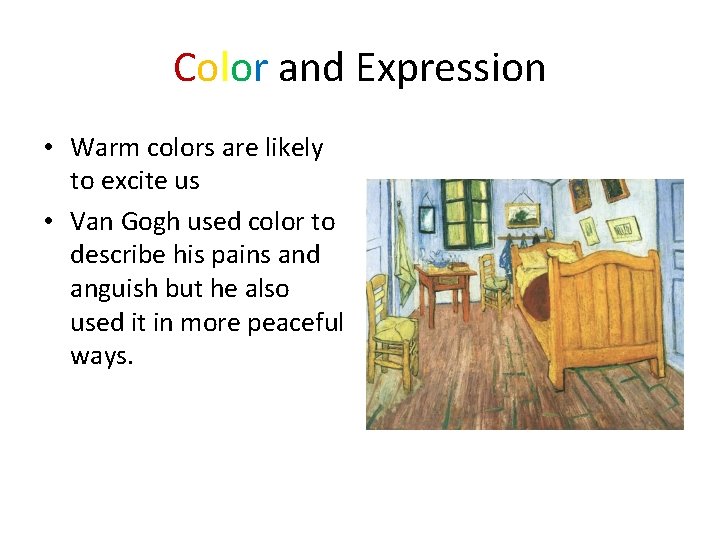
Color and Expression • Warm colors are likely to excite us • Van Gogh used color to describe his pains and anguish but he also used it in more peaceful ways.
Color in Culture • Some cultures only have • While others are very terms for light, dark and attuned to the entire red spectrum…
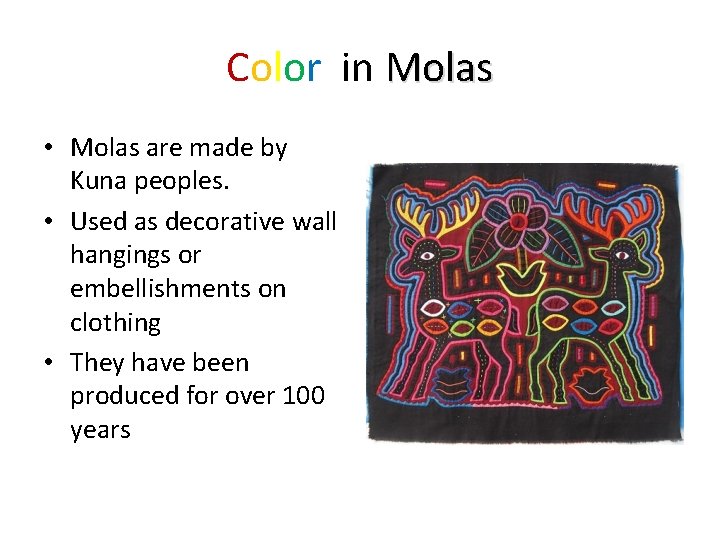
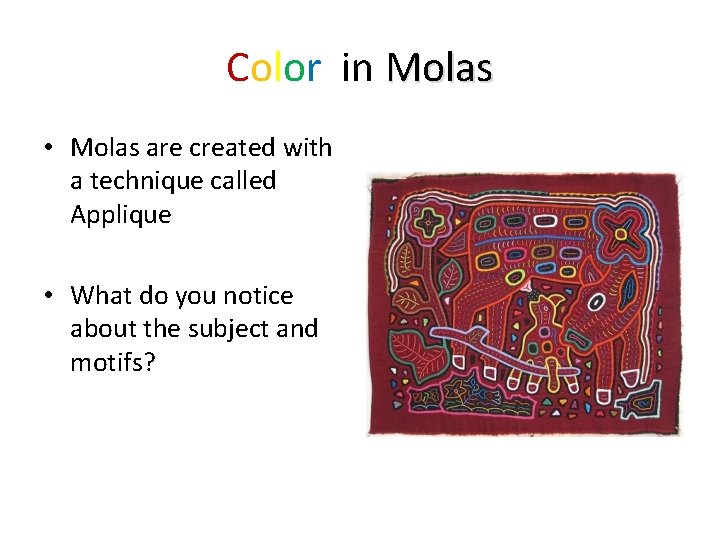
Color in Molas • Molas are made by Kuna peoples. • Used as decorative wall hangings or embellishments on clothing • They have been produced for over 100 years
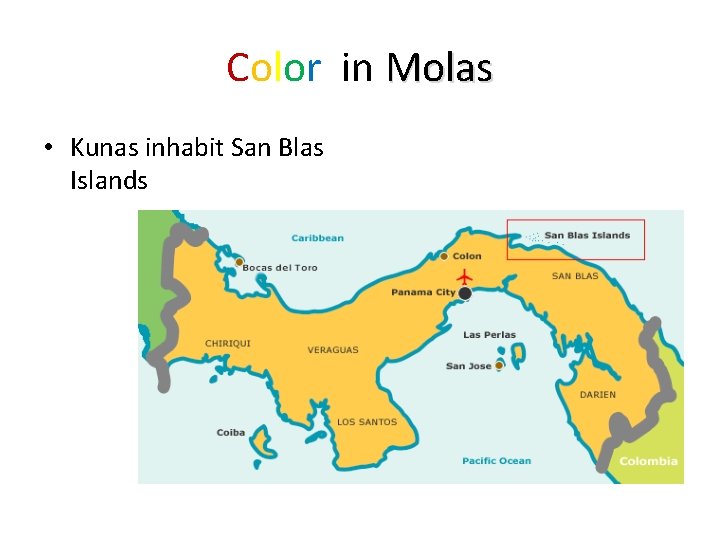
Color in Molas • Kunas inhabit San Blas Islands
Color in Molas • Molas are created with a technique called Applique • What do you notice about the subject and motifs?
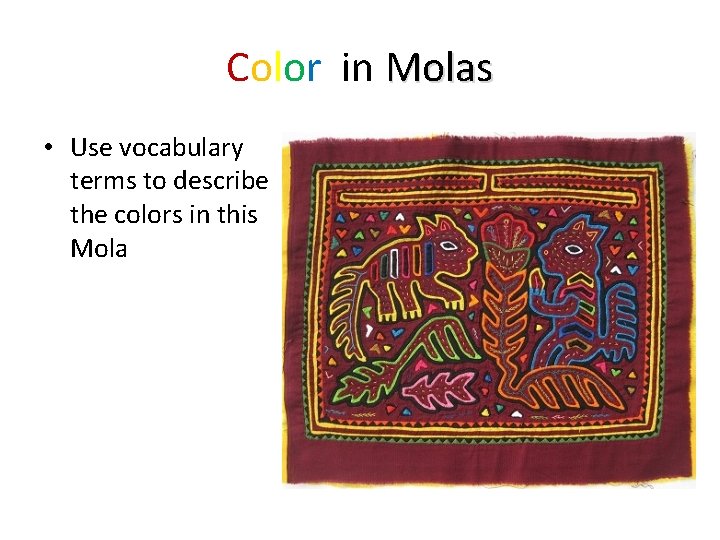
Color in Molas • Use vocabulary terms to describe the colors in this Mola
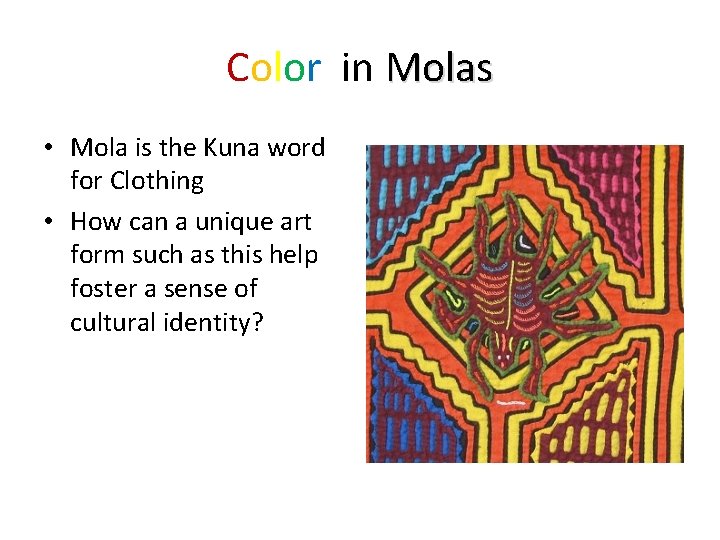
Color in Molas • Mola is the Kuna word for Clothing • How can a unique art form such as this help foster a sense of cultural identity?
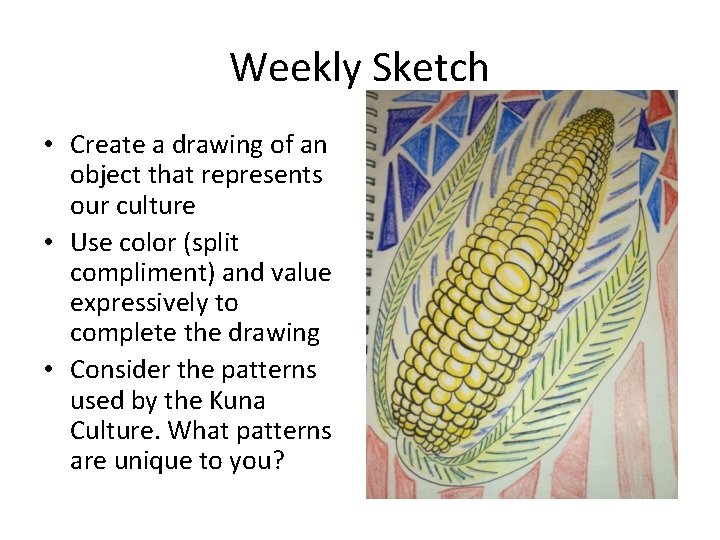
Weekly Sketch • Create a drawing of an object that represents our culture • Use color (split compliment) and value expressively to complete the drawing • Consider the patterns used by the Kuna Culture. What patterns are unique to you?