
Color and the Color Wheel Two ways to

- Slides: 34
Color and the Color Wheel
Two ways to view color n 1. Objectively: laws of chemistry, physics, and physiology n 2. Subjectively: psychology – The perception of color means different things to different people
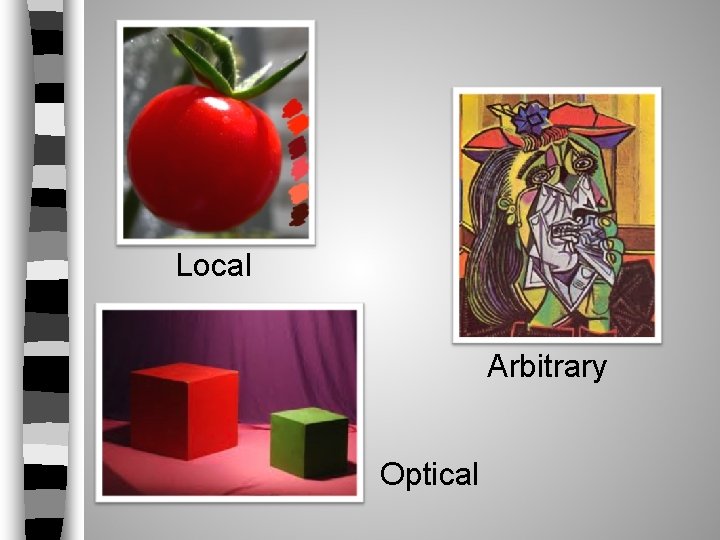
Types of color to be discussed n 1. Local- natural. Reproduces colors seen in daylight n 2. Optical- hues seen in light that is not daylight. n 3. Arbitrary- emotional. Artist’s feelings or interpretations
Local Arbitrary Optical
Color Terminology n Hue: – Another term for color • The name that we give it. n Intensity or Chroma: • The brightness or dullness of a hue. A Hue can be dulled by adding its compliment or adding gray
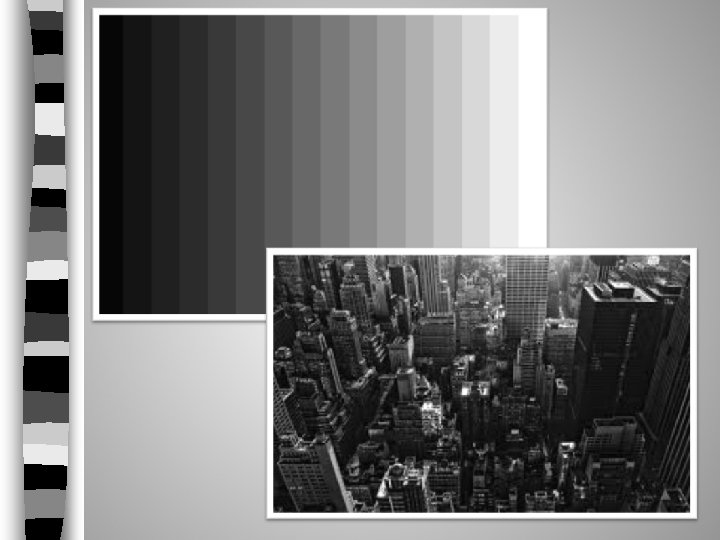
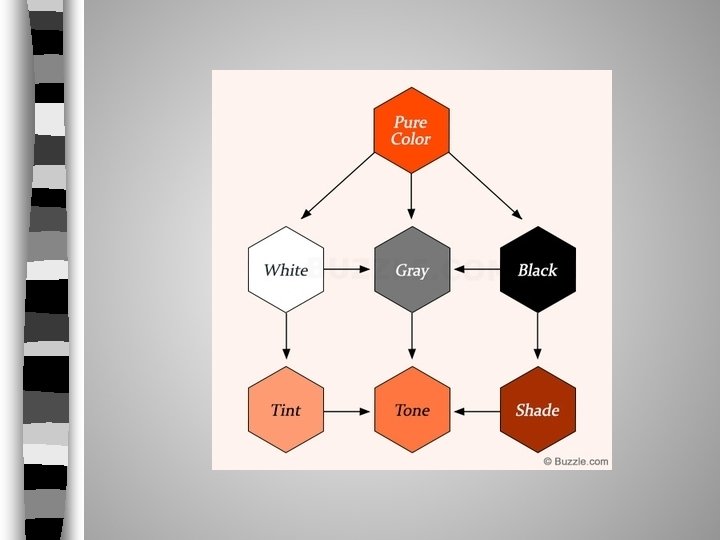
n Value: – The lightness or darkness of a hue in relation to black and white • Tint: a hue with white added • Shade: a hue with black added • Tone: A hue with gray (both black and white) added • Pure Hues vary in value. – Yellow is lighter than viloet. – Needs to adjusted with black/white to be equal in value
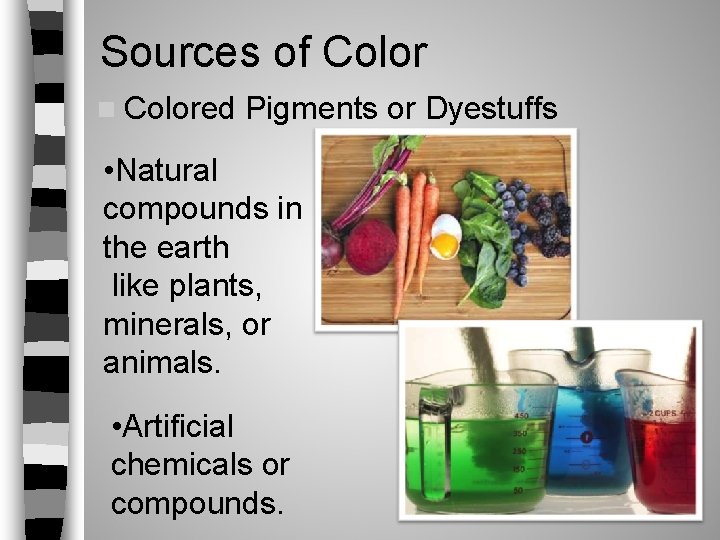
Sources of Color n Colored Pigments or Dyestuffs • Natural compounds in the earth like plants, minerals, or animals. • Artificial chemicals or compounds.
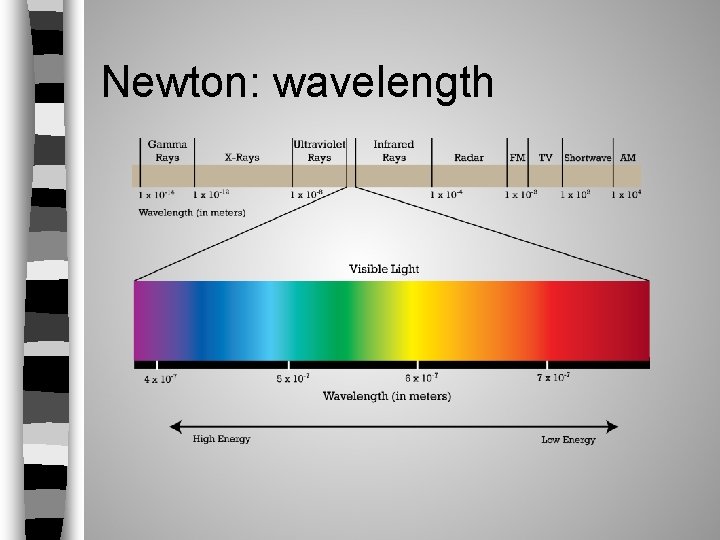
Sources of Color n Spectral Light – Colored light that comes from nature. – Spectral colors are colored light bands known as the visible energy spectrum. – Spectral colors appear as the colors of the rainbow. http: //www. youtube. co m/watch? v=khzv. LB 27 XA&feature= email
Newton: wavelength
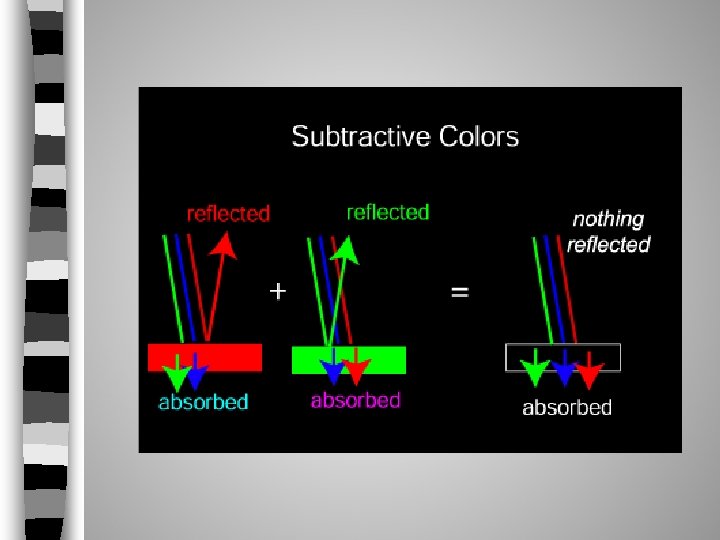
How We See Color n Subtractive color theory: 1. ) Light hits a colored object. 2. ) All of the spectral wave bands are absorbed or subtracted except the hues that are painted, pigmented, or dyed. 3. ) The remaining waves enter our eyes where the brain deciphers them. https: //www. youtube. com/watch? v=r 8 ej. TUNwg. To
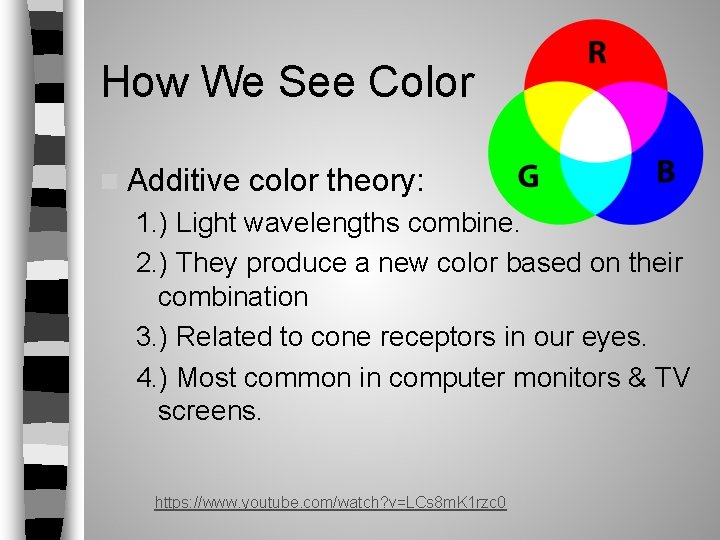
How We See Color n Additive color theory: 1. ) Light wavelengths combine. 2. ) They produce a new color based on their combination 3. ) Related to cone receptors in our eyes. 4. ) Most common in computer monitors & TV screens. https: //www. youtube. com/watch? v=LCs 8 m. K 1 rzc 0
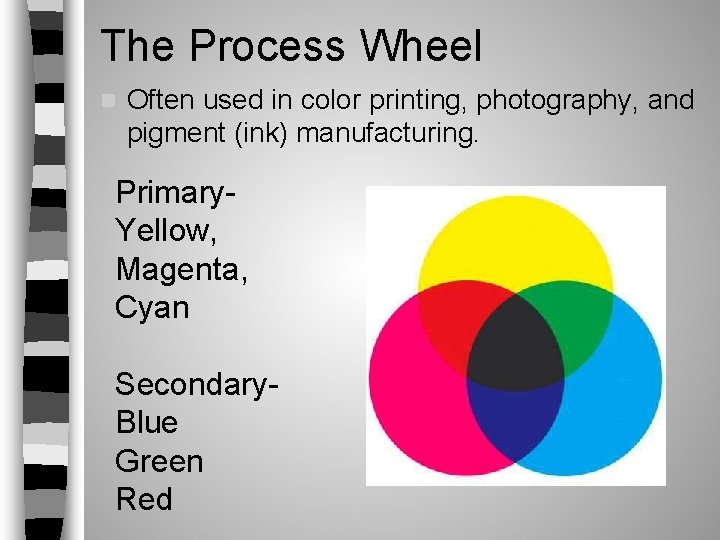
The Process Wheel n Often used in color printing, photography, and pigment (ink) manufacturing. Primary. Yellow, Magenta, Cyan Secondary. Blue Green Red
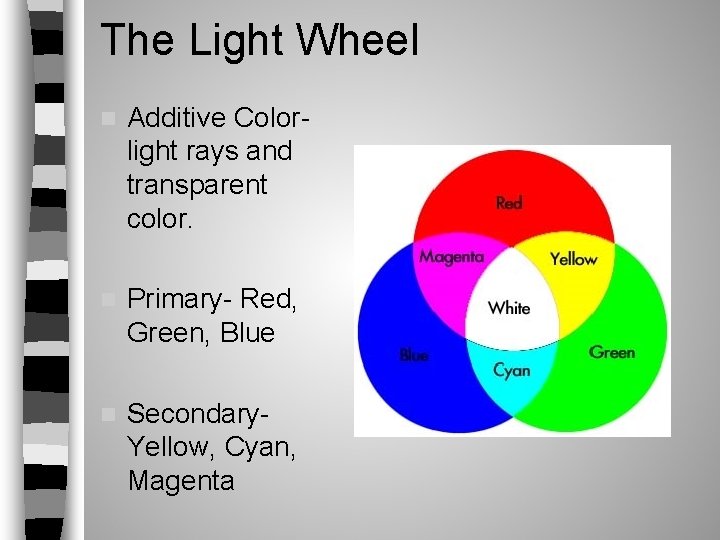
The Light Wheel n Additive Colorlight rays and transparent color. n Primary- Red, Green, Blue n Secondary. Yellow, Cyan, Magenta
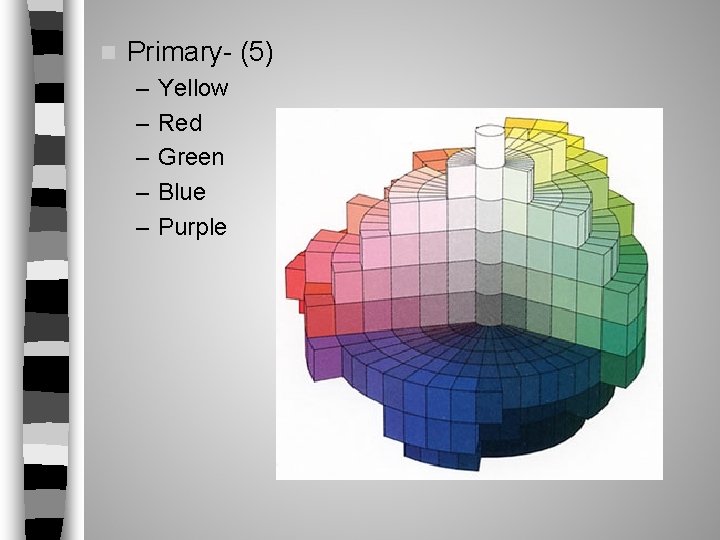
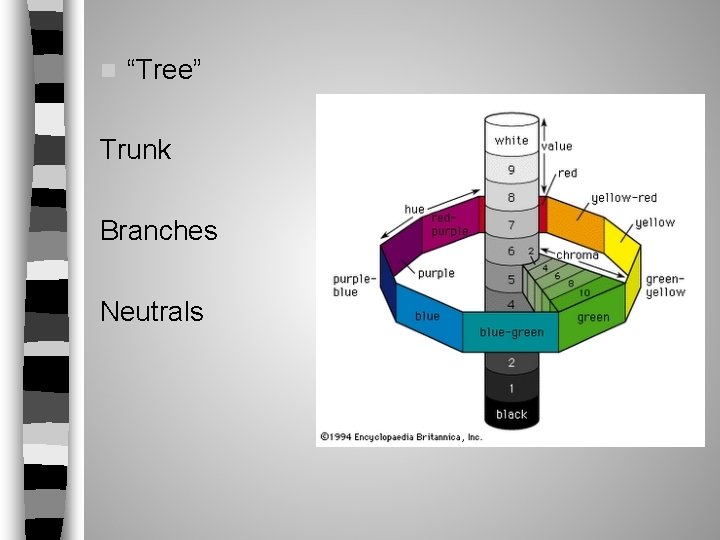
The Munsell Wheel n Partitive Color- based on the viewer’s reaction to colors when they are placed next to each other.
n Primary- (5) – – – Yellow Red Green Blue Purple
n “Tree” Trunk Branches Neutrals
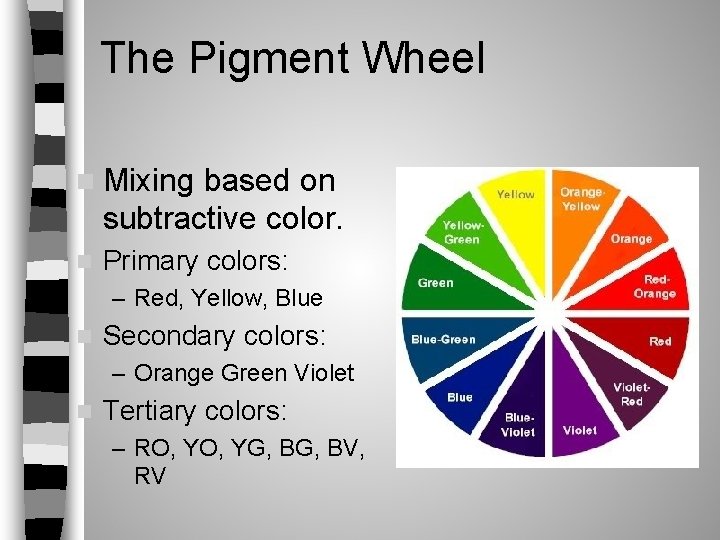
The Pigment Wheel n Mixing based on subtractive color. n Primary colors: – Red, Yellow, Blue n Secondary colors: – Orange Green Violet n Tertiary colors: – RO, YG, BV, RV
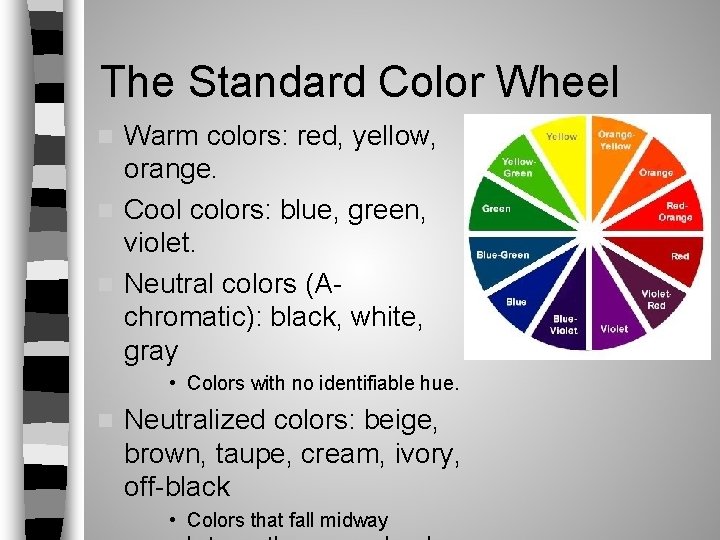
The Standard Color Wheel Warm colors: red, yellow, orange. n Cool colors: blue, green, violet. n Neutral colors (Achromatic): black, white, gray n • Colors with no identifiable hue. n Neutralized colors: beige, brown, taupe, cream, ivory, off-black • Colors that fall midway
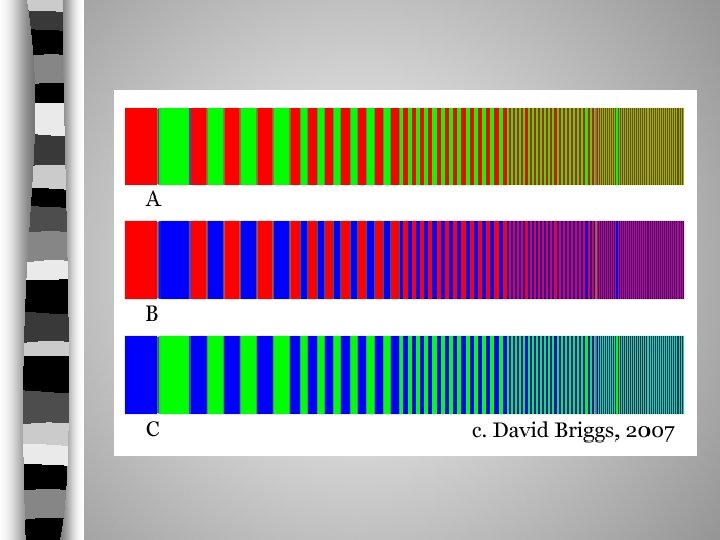
How We See Color n Colors placed very near one another are visually mixed by a process known as subtractive or optical color mixing. n The human eye can potentially decipher over 10 million colors.
After Imagingan optical reaction that occurs after we stare intensely at a hue and then shift our eyes to a white surface. • the second hue is the after image. • Stare at Red and the after image is Blue-Green.
How We See Color n Factors that affect color: – Season and climate – Direction of light • North, South, East and West – Artificial Light
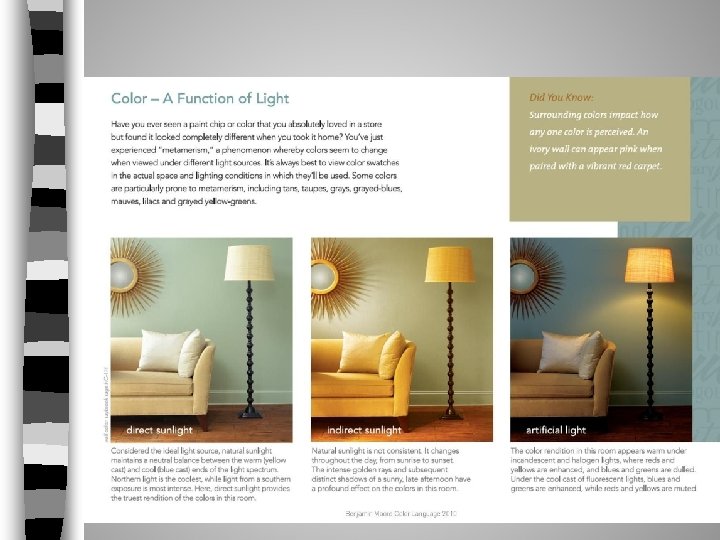
How We See Color n Metamerism – The apparent change in color from one light to another. – True color is best viewed under full spectrum light (AKA natural daylight). – Color is best viewed in the setting in which it will be used.
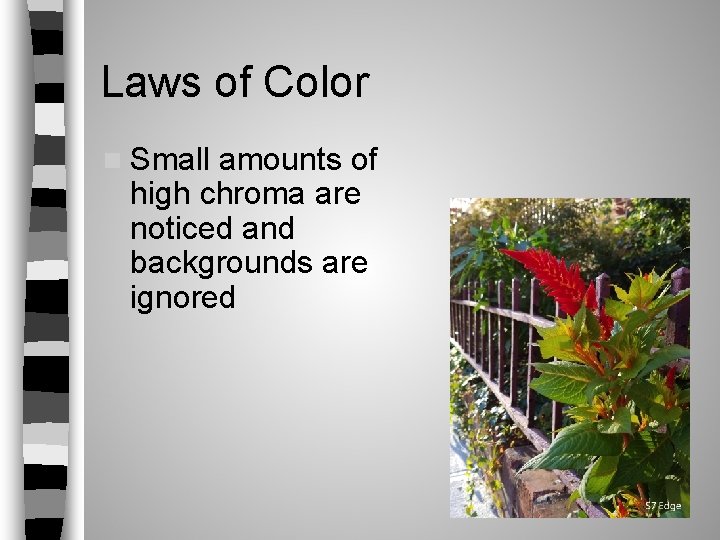
Laws of Color n Small amounts of high chroma are noticed and backgrounds are ignored
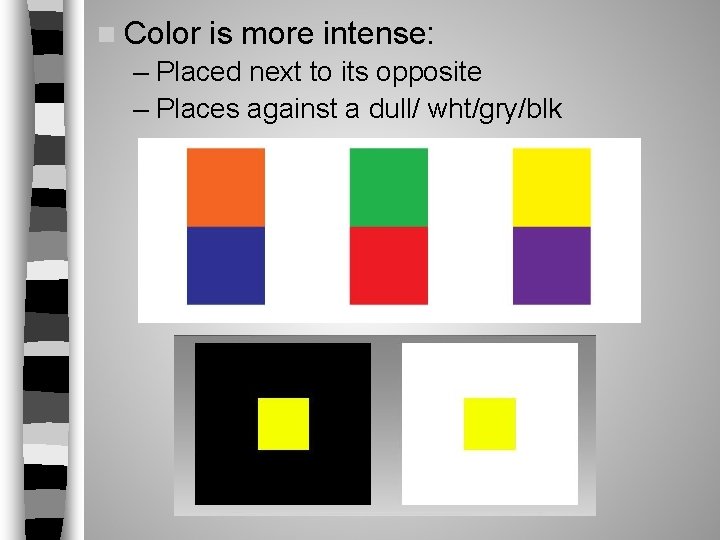
n Color is more intense: – Placed next to its opposite – Places against a dull/ wht/gry/blk
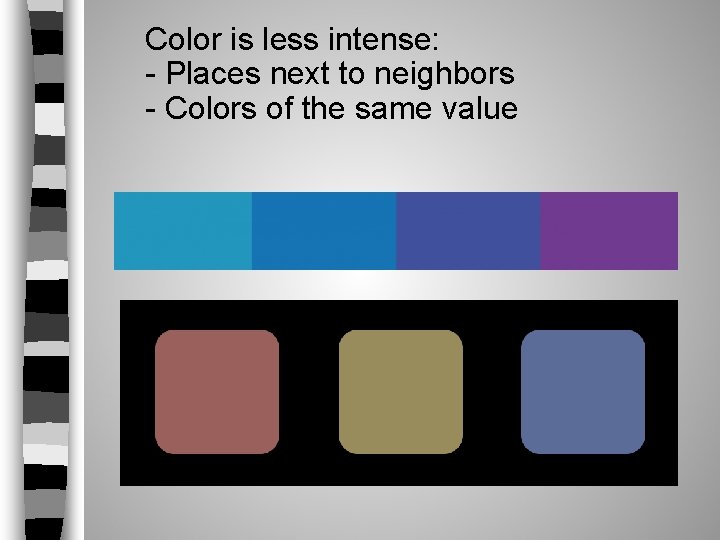
Color is less intense: - Places next to neighbors - Colors of the same value
Visual Acuity and Deficiency n Visual Acuity- the ability to see or not see color. Some of us have more than others. n Color deficiency or color blindness- the inability to correctly distinguish value or pairs of complements from one another. http: //www. xrite. com/online-color-testchallenge
Let’s Get to Painting! n That Rainbow of color… n http: //www. youtube. com/watch? v=t. Hjg 8 WClzz 0