
Colonization 1763 Unit 1 Exploration Discovery of America
- Slides: 44
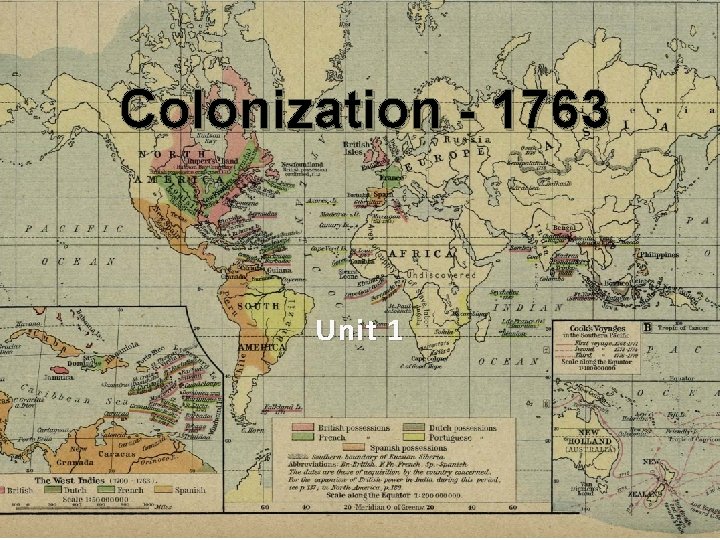
Colonization - 1763 Unit 1
Exploration • Discovery of America • Bering Straits • Vikings – Leif Ericson: Greenland Vinland
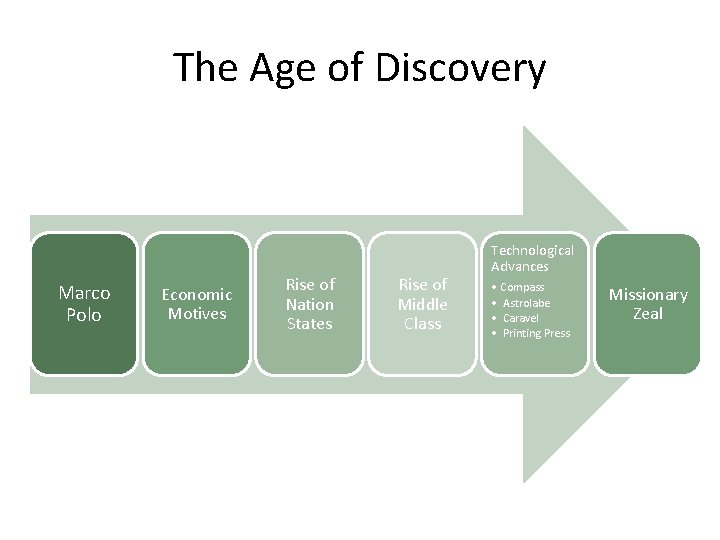
The Age of Discovery Technological Advances Marco Polo Rise of Rise. Exploration of • Compass Preconditions Necessary for Economic Motives Nation States Middle Class • Astrolabe • Caravel • Printing Press Missionary Zeal
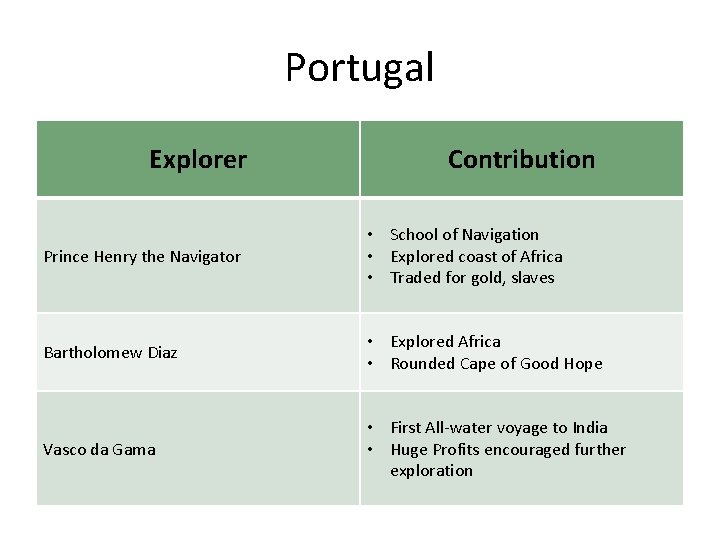
Portugal Explorer Contribution Prince Henry the Navigator • School of Navigation • Explored coast of Africa • Traded for gold, slaves Bartholomew Diaz • Explored Africa • Rounded Cape of Good Hope Vasco da Gama • First All-water voyage to India • Huge Profits encouraged further exploration
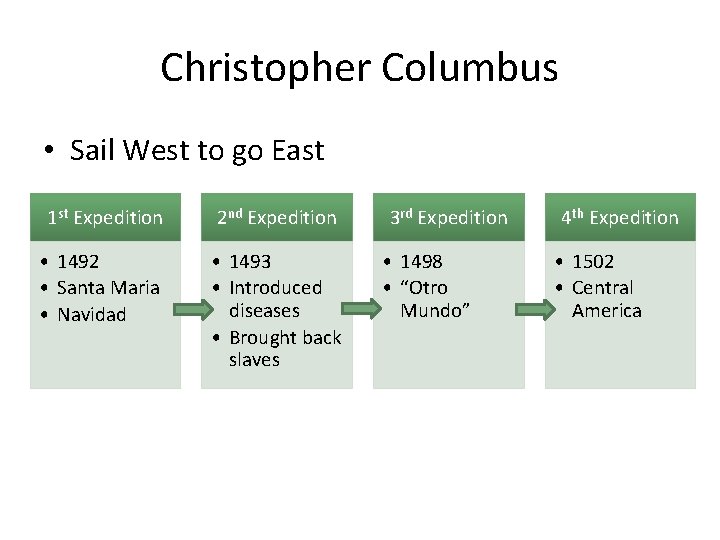
Christopher Columbus • Sail West to go East 1 st Expedition 2 nd Expedition • 1492 • Santa Maria • Navidad • 1493 • Introduced diseases • Brought back slaves 3 rd Expedition • 1498 • “Otro Mundo” 4 th Expedition • 1502 • Central America
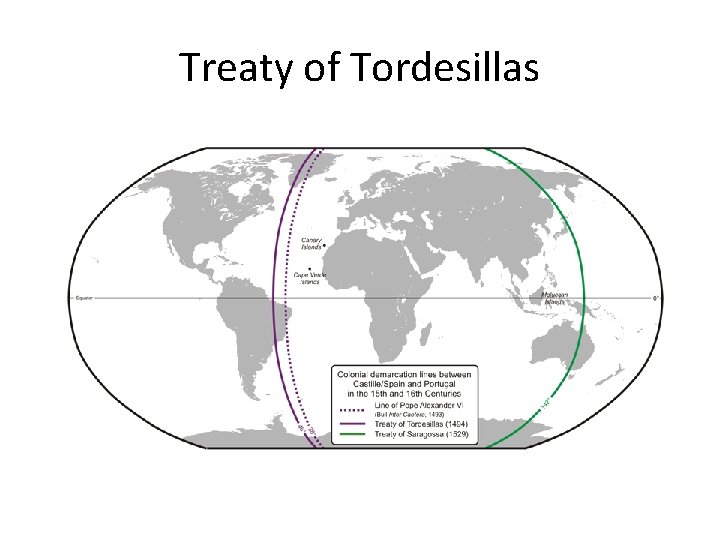
Treaty of Tordesillas
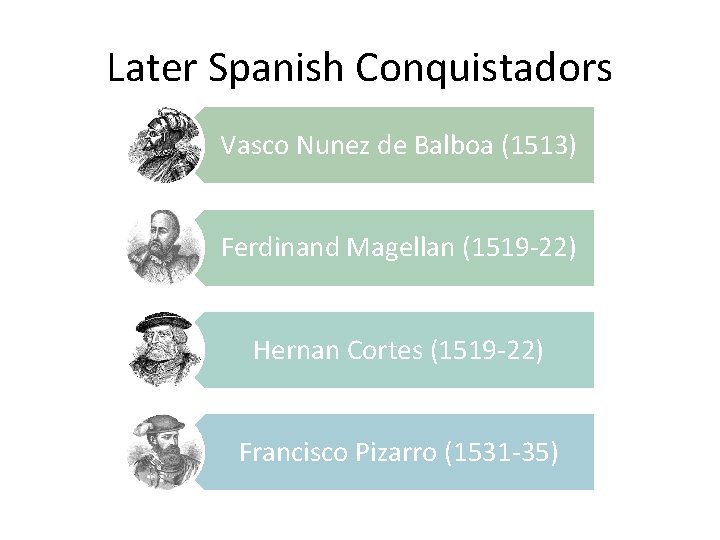
Later Spanish Conquistadors Vasco Nunez de Balboa (1513) Ferdinand Magellan (1519 -22) Hernan Cortes (1519 -22) Francisco Pizarro (1531 -35)
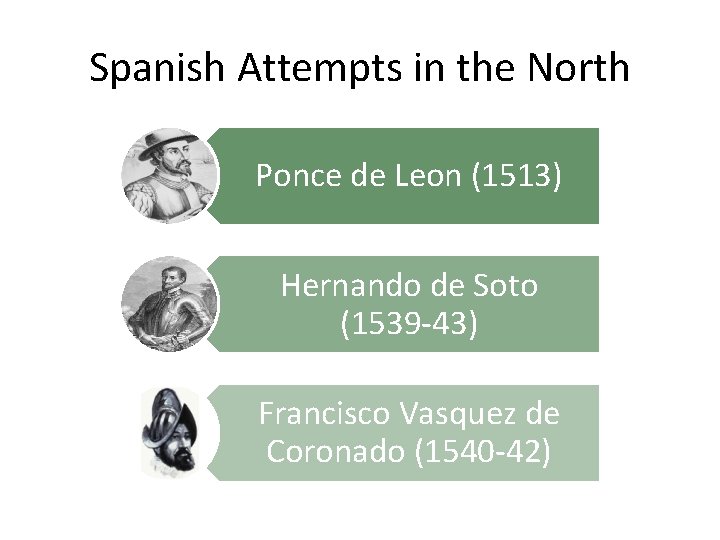
Spanish Attempts in the North Ponce de Leon (1513) Hernando de Soto (1539 -43) Francisco Vasquez de Coronado (1540 -42)
English Exploration John Cabot (1497) Sir Francis Drake (1577 -80) Slow to Capitalize on Discoveries
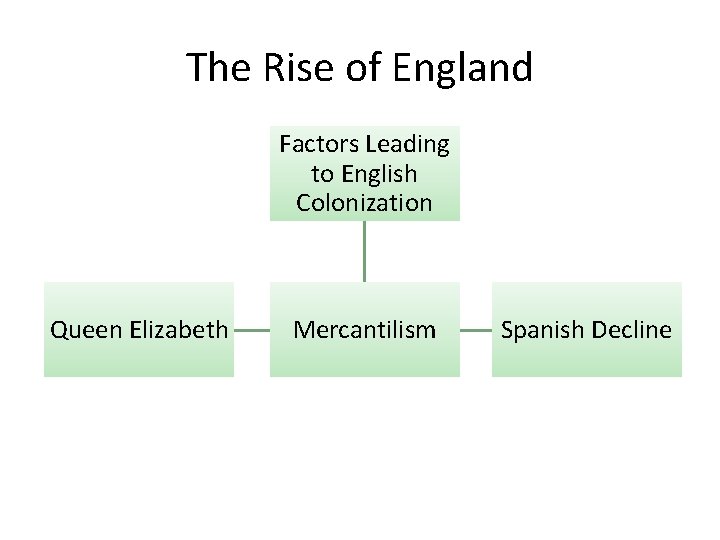
The Rise of England Factors Leading to English Colonization Queen Elizabeth Mercantilism Spanish Decline
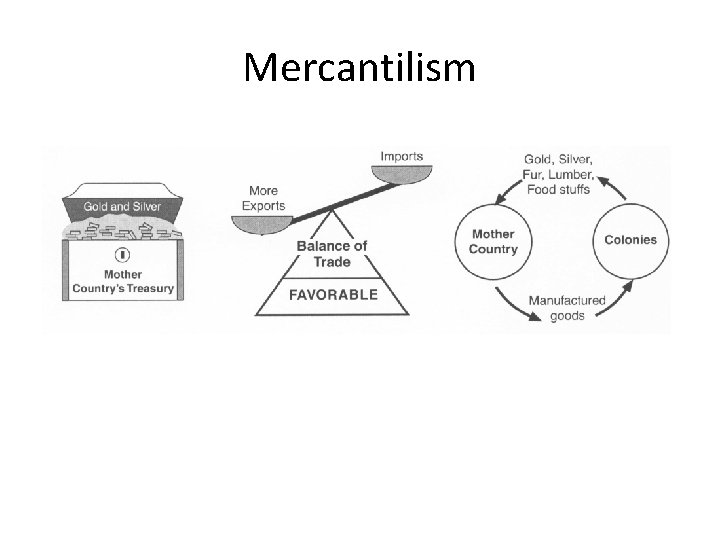
Mercantilism
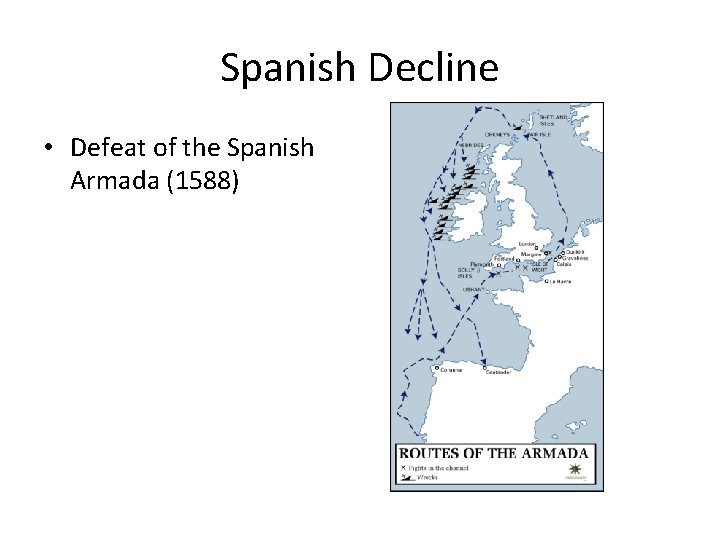
Spanish Decline • Defeat of the Spanish Armada (1588)
Motives For English Colonization • Motives • Initial Attempts – Sir Humphrey Gilbert (1583) – Sir Walter Raleigh (1585)
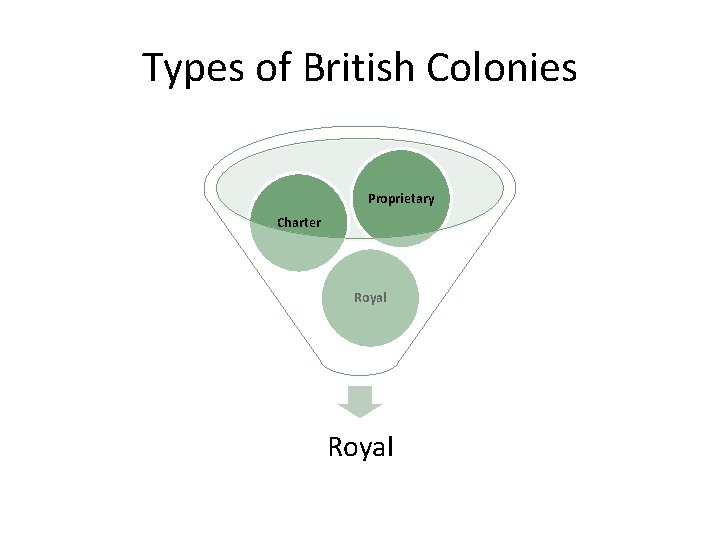
Types of British Colonies Proprietary Charter Royal
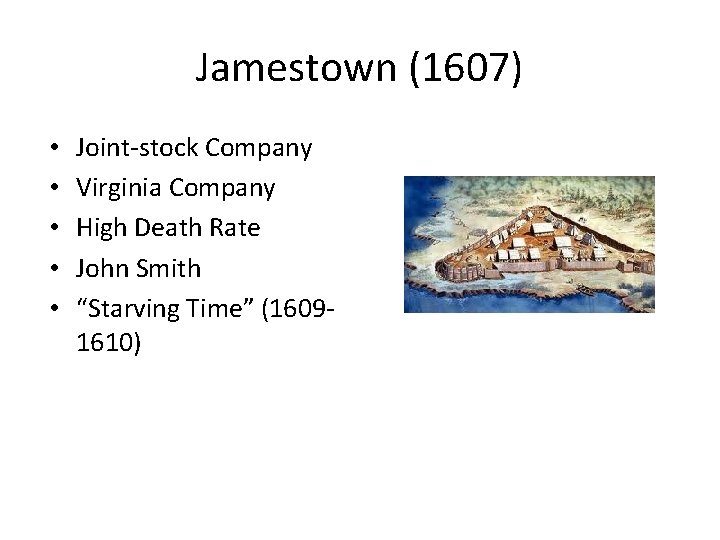
Jamestown (1607) • • • Joint-stock Company Virginia Company High Death Rate John Smith “Starving Time” (16091610)
The Turnaround • • • John Rolfe Cash Crop Introduction of Private Property (1617 -1618) Headright System House of Burgesses (1619)
Labor Shortage • Indentured Servants • Forced African Slaves (1619) • Charter Revoked (1624)
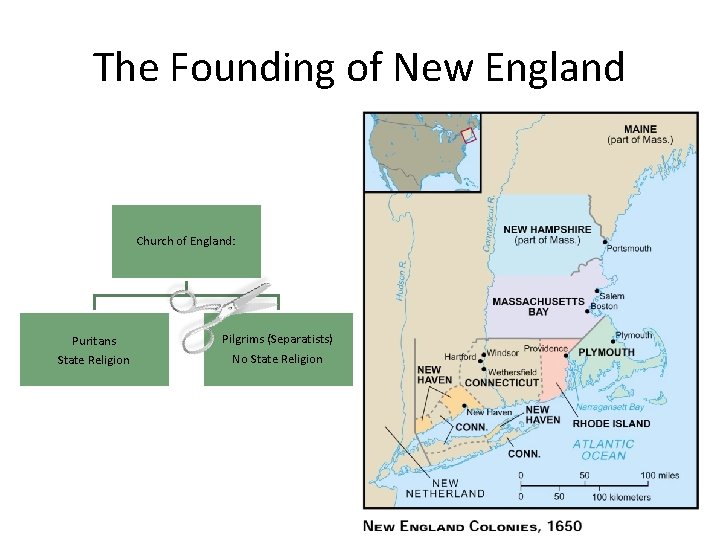
The Founding of New England Church of England: Puritans State Religion Pilgrims (Separatists) No State Religion
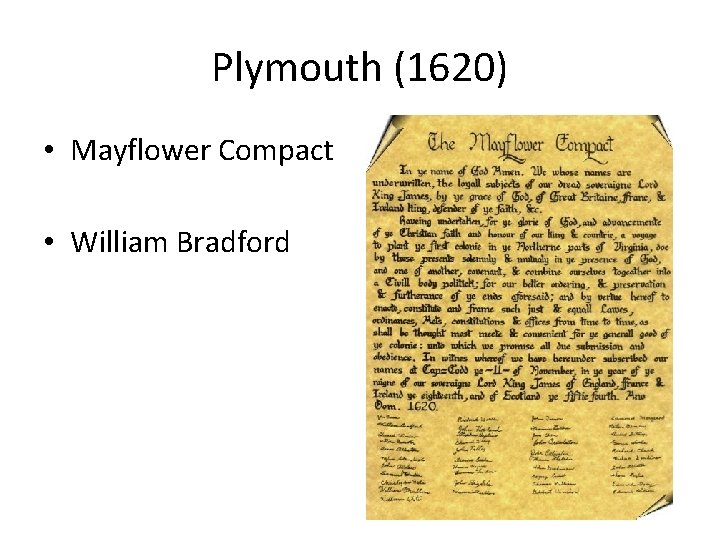
Plymouth (1620) • Mayflower Compact • William Bradford
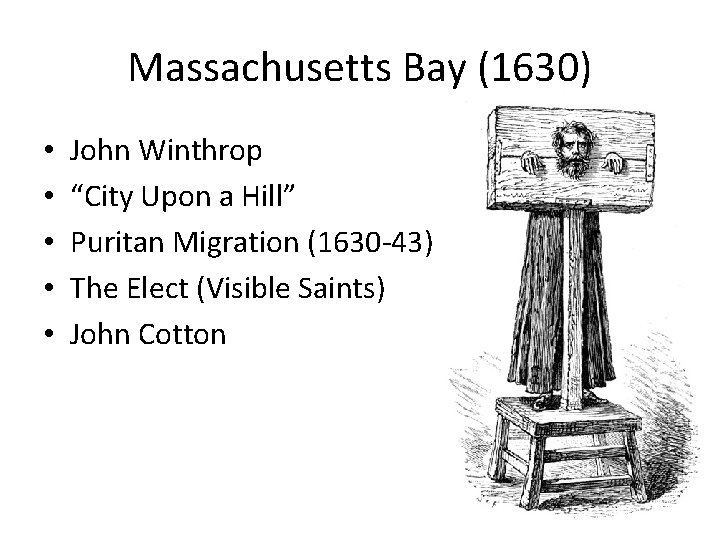
Massachusetts Bay (1630) • • • John Winthrop “City Upon a Hill” Puritan Migration (1630 -43) The Elect (Visible Saints) John Cotton
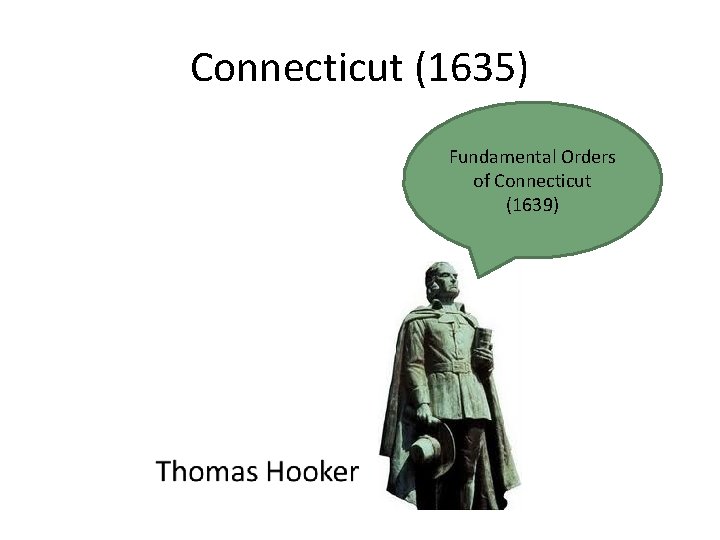
Connecticut (1635) Fundamental Orders of Connecticut (1639)
Rhode Island (1636) • • Roger Williams Separation of Church and State Anne Hutchinson Antinomianism
New Hampshire (1623) • John Mason • Ferdinando Gorges
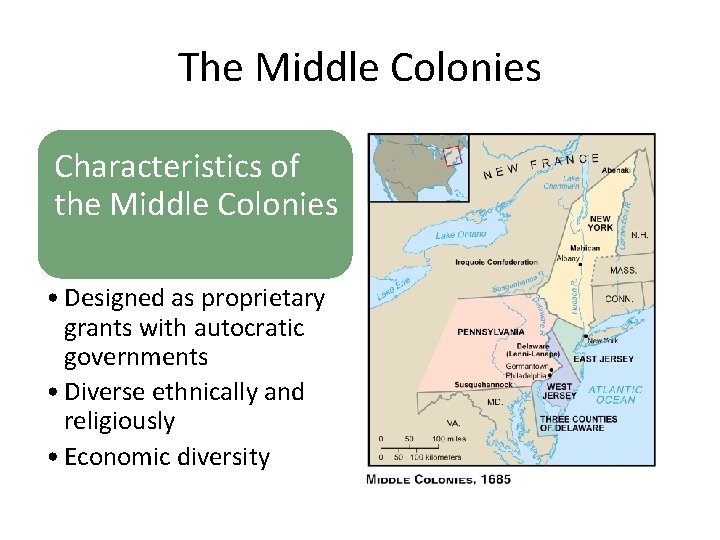
The Middle Colonies Characteristics of the Middle Colonies • Designed as proprietary grants with autocratic governments • Diverse ethnically and religiously • Economic diversity
Maryland (1634) • • Lord Baltimore Indentured Servants Catholic Refuge Act of Toleration (1649)
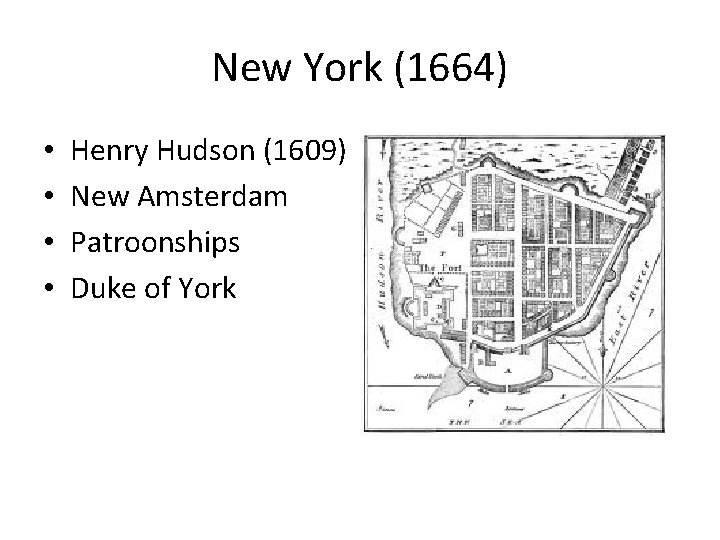
New York (1664) • • Henry Hudson (1609) New Amsterdam Patroonships Duke of York
New Jersey (1664) • John Berkeley • George Carteret • Diverse Makeup
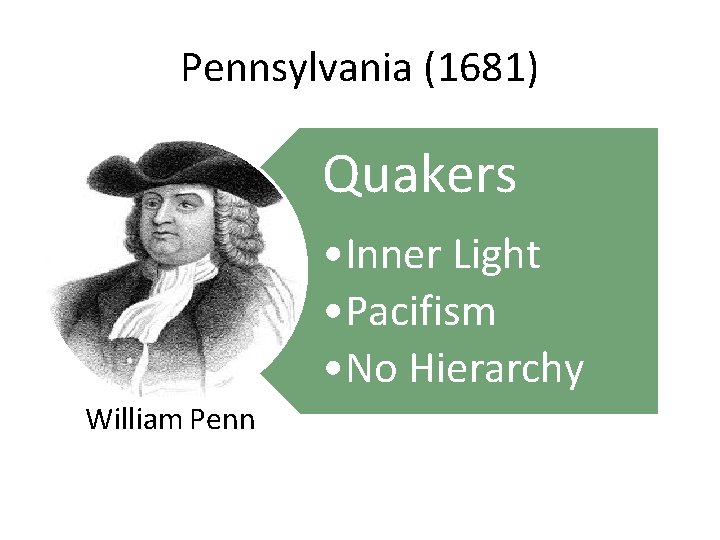
Pennsylvania (1681) Quakers • Inner Light • Pacifism • No Hierarchy William Penn
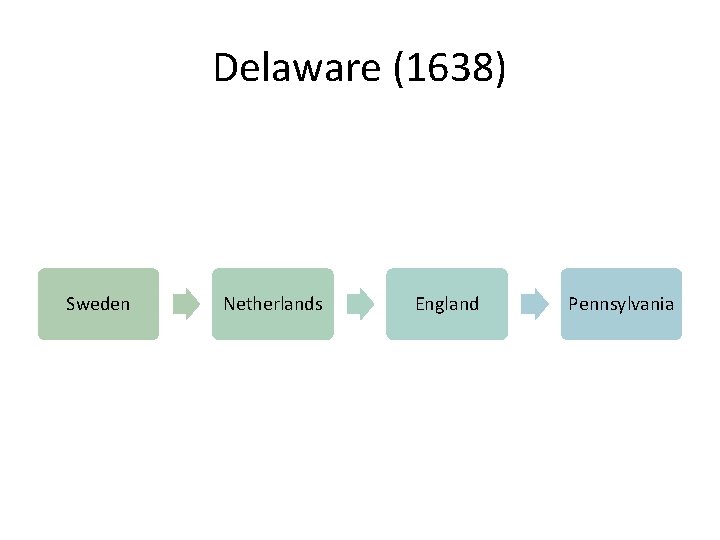
Delaware (1638) Sweden Netherlands England Pennsylvania
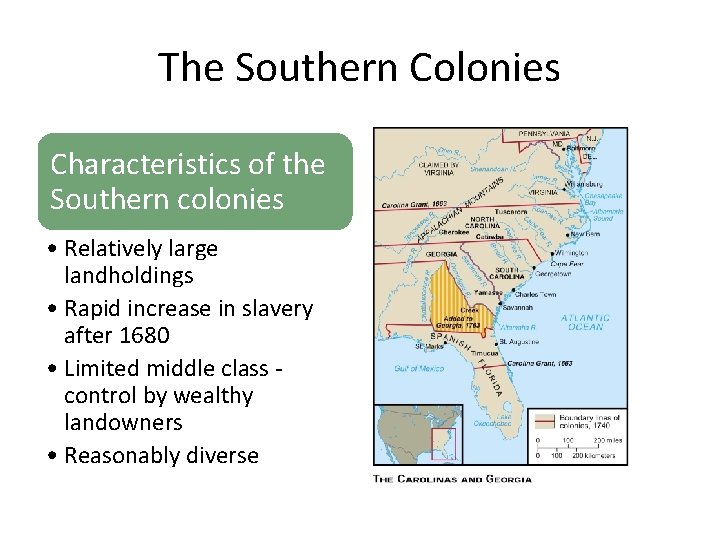
The Southern Colonies Characteristics of the Southern colonies • Relatively large landholdings • Rapid increase in slavery after 1680 • Limited middle class control by wealthy landowners • Reasonably diverse
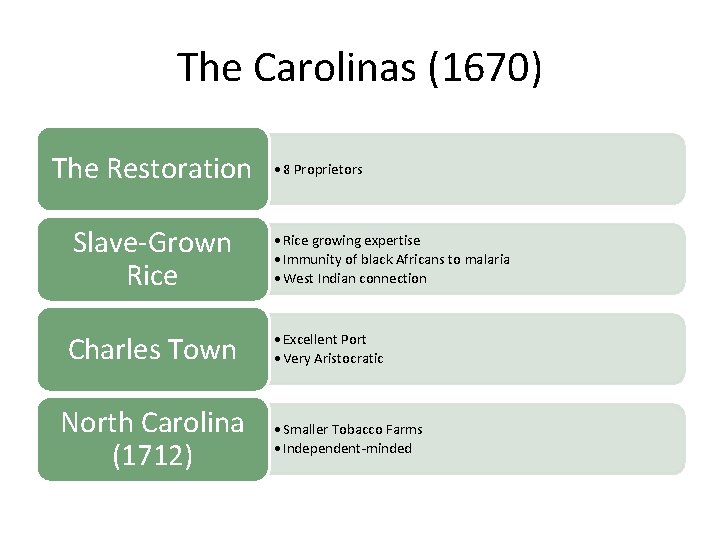
The Carolinas (1670) The Restoration Slave-Grown Rice Charles Town North Carolina (1712) • 8 Proprietors • Rice growing expertise • Immunity of black Africans to malaria • West Indian connection • Excellent Port • Very Aristocratic • Smaller Tobacco Farms • Independent-minded
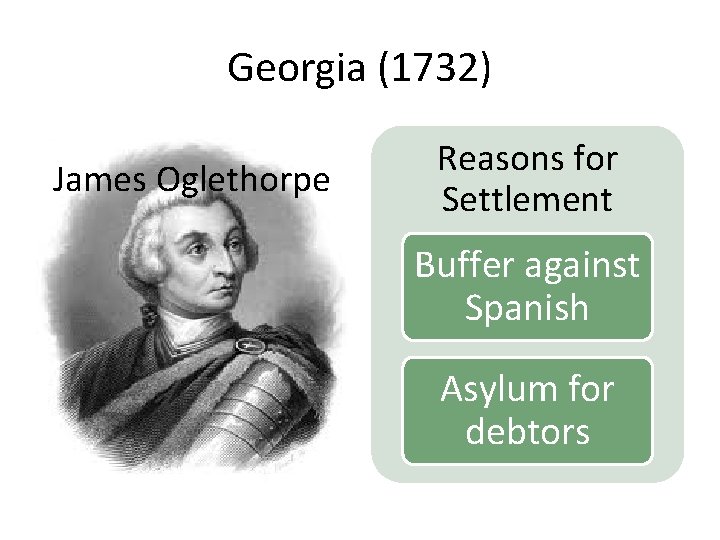
Georgia (1732) James Oglethorpe Reasons for Settlement Buffer against Spanish Asylum for debtors
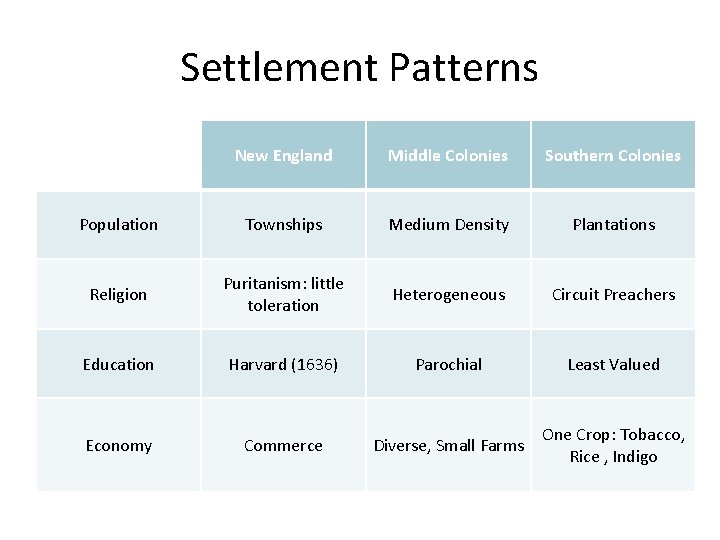
Settlement Patterns New England Middle Colonies Southern Colonies Population Townships Medium Density Plantations Religion Puritanism: little toleration Heterogeneous Circuit Preachers Education Harvard (1636) Parochial Least Valued Economy Commerce Diverse, Small Farms One Crop: Tobacco, Rice , Indigo
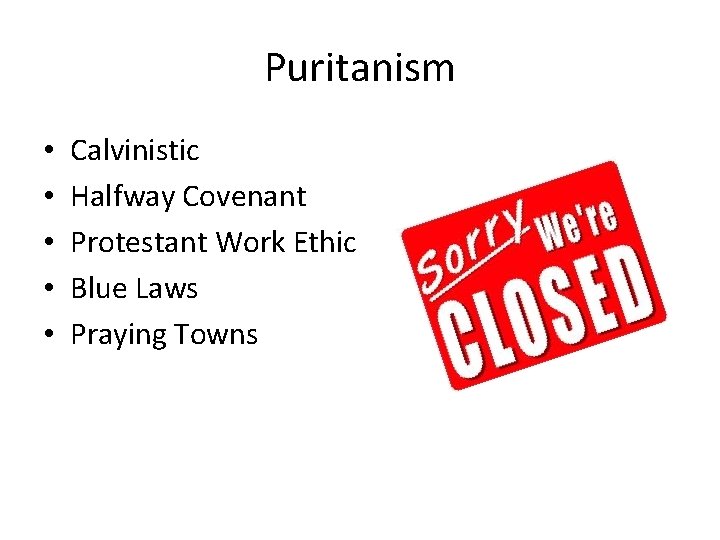
Puritanism • • • Calvinistic Halfway Covenant Protestant Work Ethic Blue Laws Praying Towns
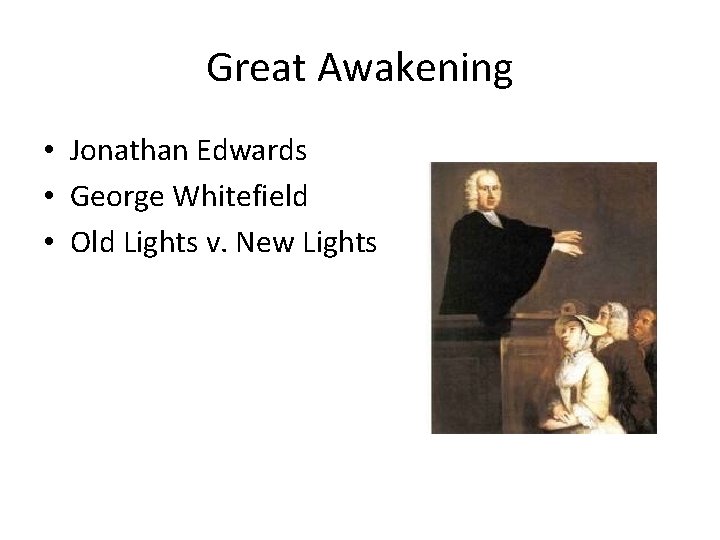
Great Awakening • Jonathan Edwards • George Whitefield • Old Lights v. New Lights
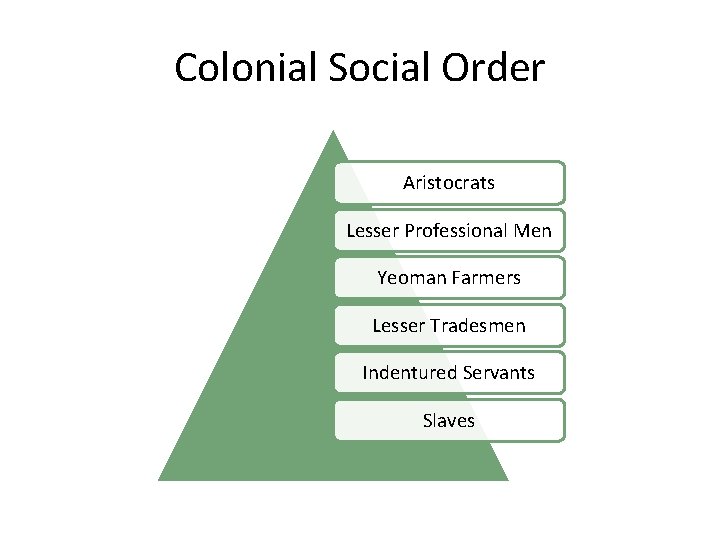
Colonial Social Order Aristocrats Lesser Professional Men Yeoman Farmers Lesser Tradesmen Indentured Servants Slaves
Attempts at Colonial Unity • • • New England Confederation (1643 -1684) Dominion of New England Glorious Revolution (1688) Trade and Navigation Acts Salutary Neglect
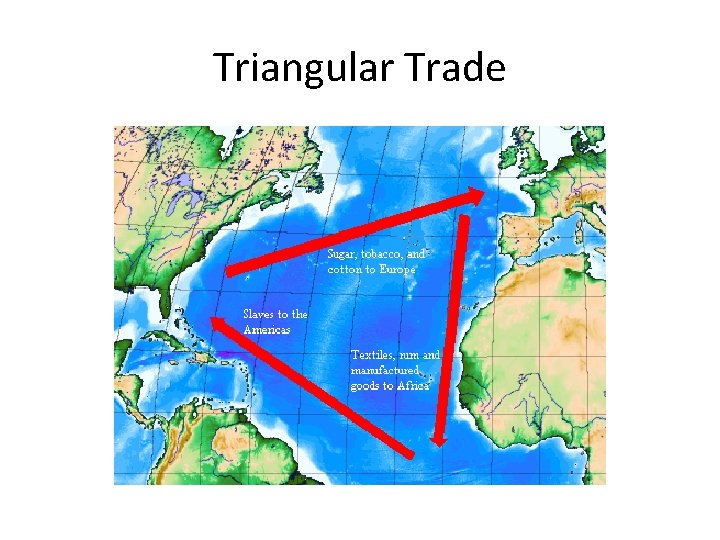
Triangular Trade
Colonial Wars • • King Philip’s War (1675 -1678) King William’s War (1689 -1699) Queen Anne’s War (1702 -1713) King George’s War (1739 -1748)
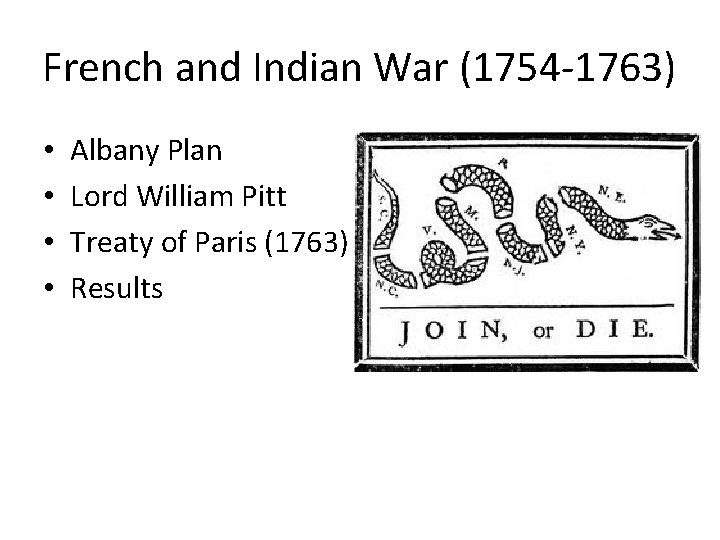
French and Indian War (1754 -1763) • • Albany Plan Lord William Pitt Treaty of Paris (1763) Results