
Colonization 1500 1763 Chapters 1 3 Objectives Identify
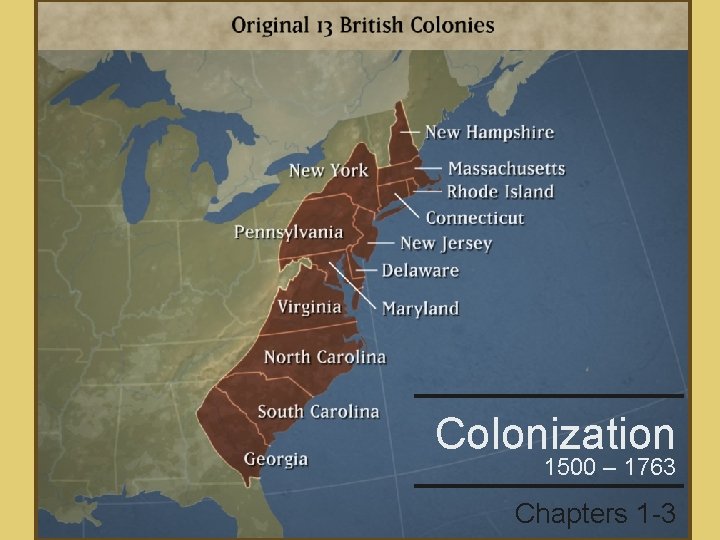
Colonization 1500 – 1763 Chapters 1 -3
Objectives • Identify the primary nations that colonized North America and their objectives. • State England’s process and chronological order of establishing colonies. • Explain the religious, political, economical, and social structures in the south, north, and middle colonies. • Analyze differences between the three regions.
Age of Exploration • Impacted by the Renaissance • Europe began exploration due to needs in trade and new technological tools. • In the age of exploration, three European Powers fought for control of North America: – Spain • Focused on exploitation of Indian wealth – France • Focused on fur trade – England • Late comer to the colony game
The Main Players • All three powers setup colonies: – Santa Fe, 1610 – Quebec, 1608 – Jamestown, 1607 Spain France England • This sets the stage for a power struggle in North America.

Elizabethan England • Protestant Elizabeth begins warring with Catholic Spain: – Spanish Armada defeat in 1588 – England now ruled the seas • Left with a sense of national destiny • Population looks to branch out
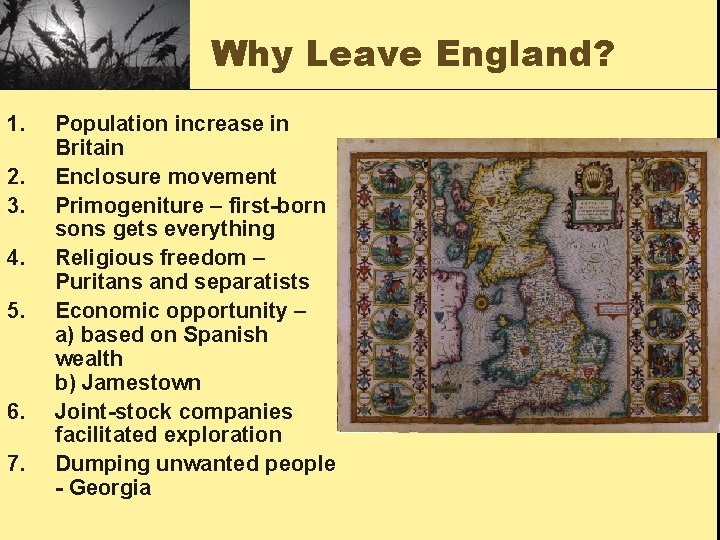
Why Leave England? 1. 2. 3. 4. 5. 6. 7. Population increase in Britain Enclosure movement Primogeniture – first-born sons gets everything Religious freedom – Puritans and separatists Economic opportunity – a) based on Spanish wealth b) Jamestown Joint-stock companies facilitated exploration Dumping unwanted people - Georgia
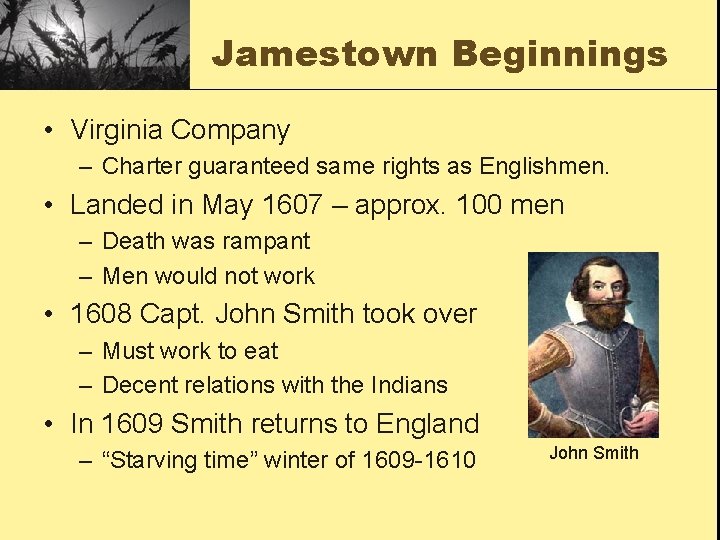
Jamestown Beginnings • Virginia Company – Charter guaranteed same rights as Englishmen. • Landed in May 1607 – approx. 100 men – Death was rampant – Men would not work • 1608 Capt. John Smith took over – Must work to eat – Decent relations with the Indians • In 1609 Smith returns to England – “Starving time” winter of 1609 -1610 John Smith
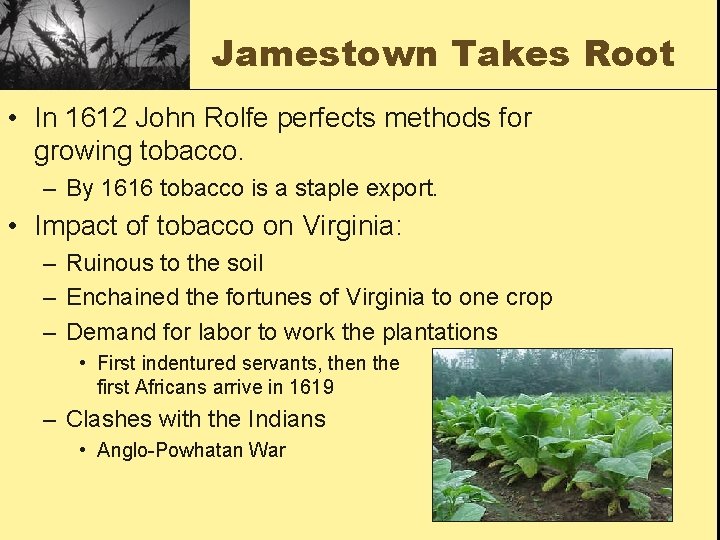
Jamestown Takes Root • In 1612 John Rolfe perfects methods for growing tobacco. – By 1616 tobacco is a staple export. • Impact of tobacco on Virginia: – Ruinous to the soil – Enchained the fortunes of Virginia to one crop – Demand for labor to work the plantations • First indentured servants, then the first Africans arrive in 1619 – Clashes with the Indians • Anglo-Powhatan War
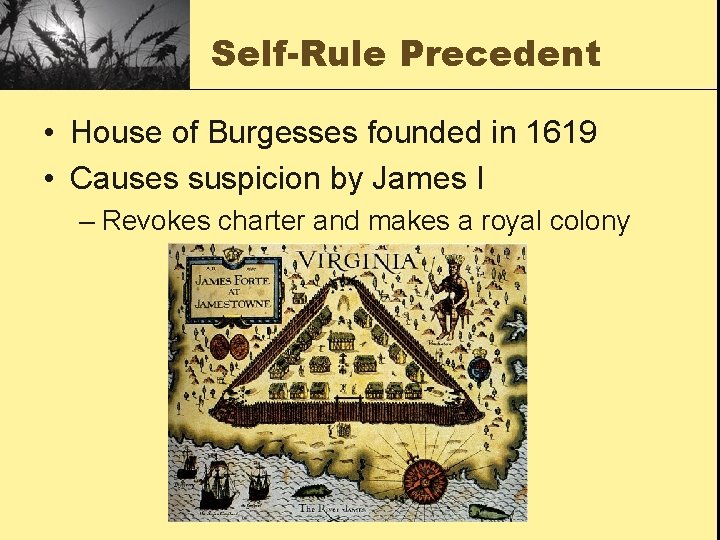
Self-Rule Precedent • House of Burgesses founded in 1619 • Causes suspicion by James I – Revokes charter and makes a royal colony
The Southern Colonies • • • Plantation agriculture Indentured and slave labor Strong economic and social hierarchies Widely scattered populations Focus on profit Poor relations with Indians
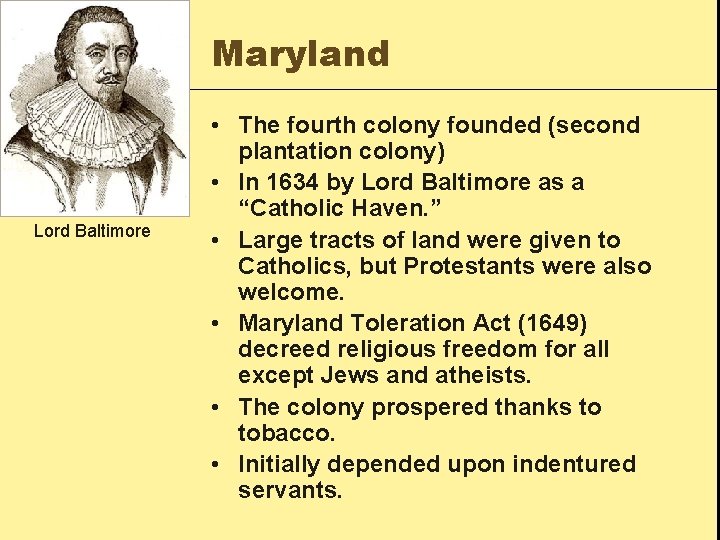
Maryland Lord Baltimore • The fourth colony founded (second plantation colony) • In 1634 by Lord Baltimore as a “Catholic Haven. ” • Large tracts of land were given to Catholics, but Protestants were also welcome. • Maryland Toleration Act (1649) decreed religious freedom for all except Jews and atheists. • The colony prospered thanks to tobacco. • Initially depended upon indentured servants.
Carolina • In 1663 Carolina was named after King Charles II – The king gave 8 proprietors the rights to the colony, but they focused on the southern part • North part of Carolina had many squatters – In 1691 the northern region was recognized by the crown and called North Carolina • 1712 the Carolinas separated and in 1729 South Carolina became a Royal colony • In 1690 s rice was introduced and became the staple crop.
Georgia • Philanthropic experiment, founded by James Oglethorpe in 1733 – the last colony – Intended as a buffer between the French in Louisiana and Spanish in Florida – constant struggles. – Was meant as a refuge for English debtors • All Christians –except Catholics enjoyed religious freedom – Missionaries, including John Wesley, tried to convert the Indians.
The Northern Colonies • • • Shaped by religious and political turmoil Social order based on family and towns Minimal diversity Mostly founded on religious devotion Town Hall Meetings
Religious Dissention • Some factions look to escape Henry VIII’s Anglican Church. – Puritans – Separatists (are kicked out of England move to Holland) • A group of Separatists negotiate with the Virginia Company to come to the colonies
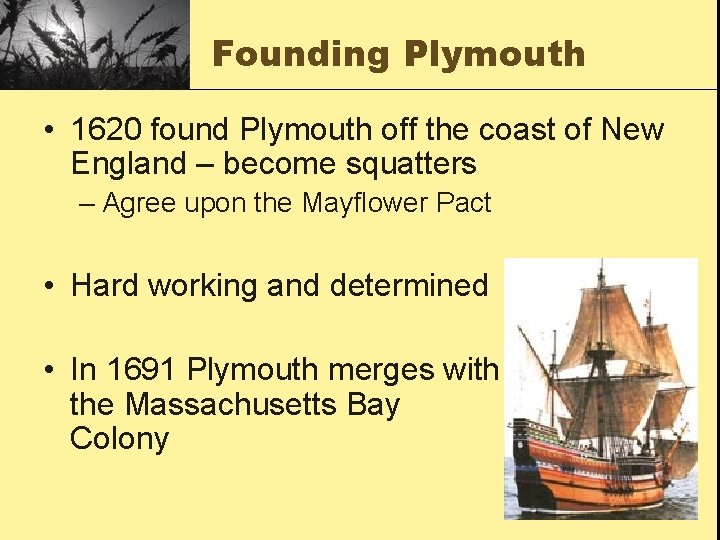
Founding Plymouth • 1620 found Plymouth off the coast of New England – become squatters – Agree upon the Mayflower Pact • Hard working and determined • In 1691 Plymouth merges with the Massachusetts Bay Colony
Mass. Bay Colony • In 1629 Puritans gained a royal charter to settle in the New World • Thrived on fishing, furs, and ship building • Suffrage was extended to all males who were “freemen” and who belonged to the Puritan Churches – Had to be part of the church to vote • Strict religious beliefs keep other views out – Quakers – Anne Hutchinson – Roger Williams
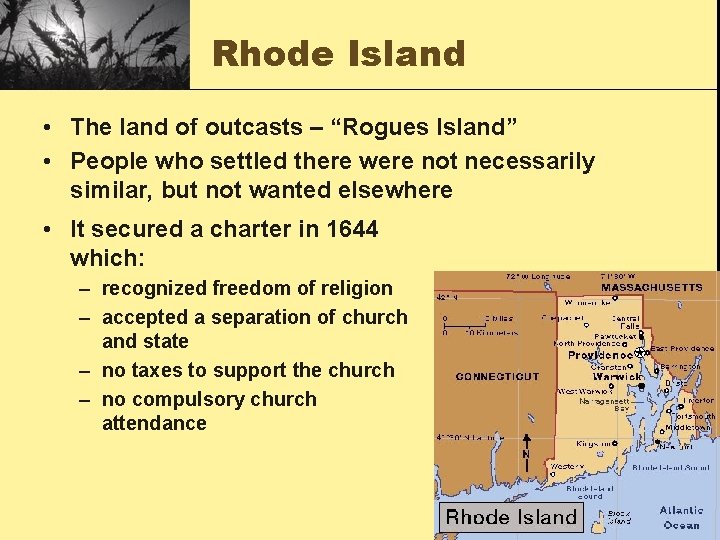
Rhode Island • The land of outcasts – “Rogues Island” • People who settled there were not necessarily similar, but not wanted elsewhere • It secured a charter in 1644 which: – recognized freedom of religion – accepted a separation of church and state – no taxes to support the church – no compulsory church attendance
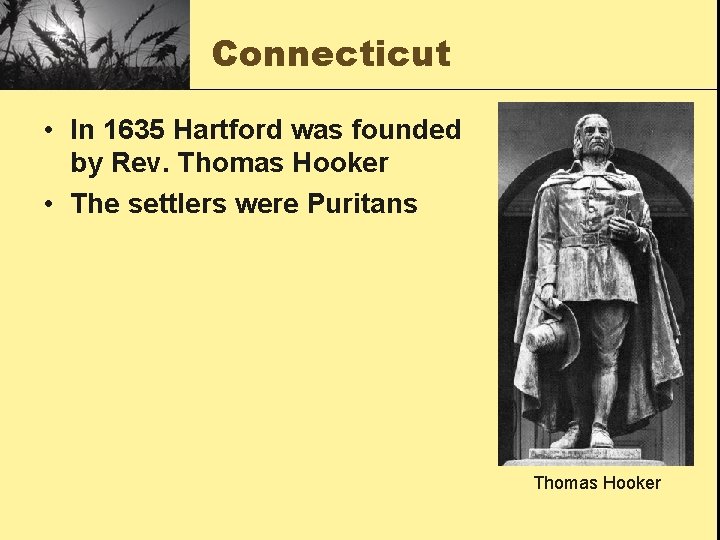
Connecticut • In 1635 Hartford was founded by Rev. Thomas Hooker • The settlers were Puritans Thomas Hooker
New Hampshire • John Mason left rigid Massachusetts for New Hampshire • In 1641 New Hampshire was absorbed by Massachusetts • In 1679 it was separated and made a royal colony
Middle Colonies • • • Rivers helped trading Industry grew Moderate socially More ethnically mixed Cultural and religious diversity • Desirable land • Smaller farms • Better Indian relations
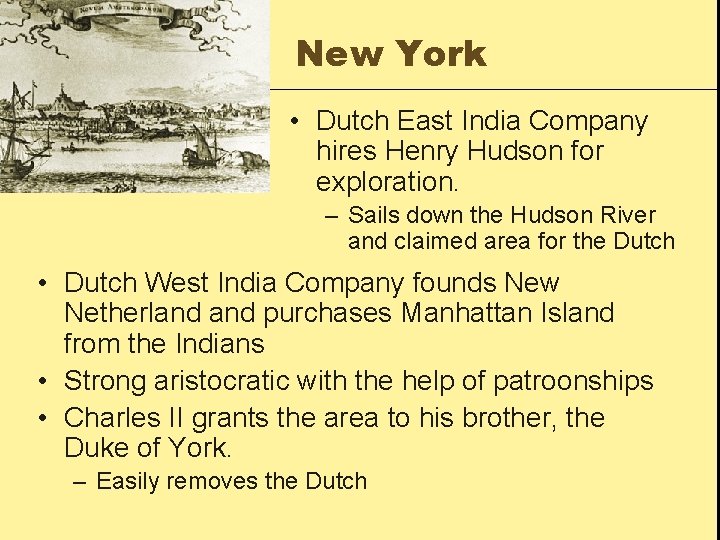
New York • Dutch East India Company hires Henry Hudson for exploration. – Sails down the Hudson River and claimed area for the Dutch • Dutch West India Company founds New Netherland purchases Manhattan Island from the Indians • Strong aristocratic with the help of patroonships • Charles II grants the area to his brother, the Duke of York. – Easily removes the Dutch
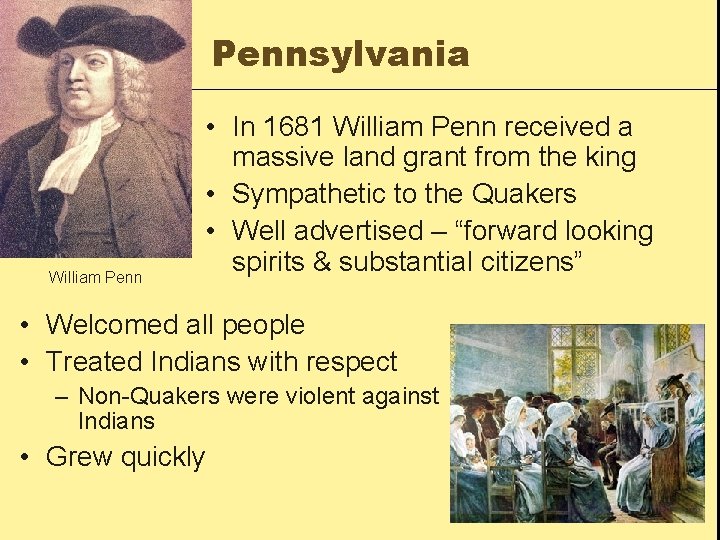
Pennsylvania William Penn • In 1681 William Penn received a massive land grant from the king • Sympathetic to the Quakers • Well advertised – “forward looking spirits & substantial citizens” • Welcomed all people • Treated Indians with respect – Non-Quakers were violent against Indians • Grew quickly
New Jersey & Delaware • New Jersey – Started in 1644 by two nobles who were granted the land from the Duke of York. • Many moved for new soil • Delaware – Under the governor of Pennsylvania until the American Revolution
Images • http: //www. ambrosevideo. com/resources/docs/112. JPG • http: //www. english. upenn. edu/~bushnell/english 330/materials/introduction/elizabeth_1 -g 2. jpeg • http: //www. millikin. edu/history/religiousviolence/images/j amestown. jpg • http: //www. lewiscountyherald. com/tobacco. jpg • http: //www. seacoastnh. com/arts/res/smith 1. jpeg • http: //library. yale. edu/Map. Coll/britain. GIF • http: //www. culturalresources. com/images/Lord. Baltimore. jpg • http: //www. etsu. edu/cas/history/resources/Private/Facult y/Fac_To 1877 Chapter. Doc. Files/Chapter. Images/Ch 3 hoo ker. jpg
- Slides: 25