
Colonialism in Africa History In 1884 the leaders
- Slides: 13
Colonialism in Africa
History • In 1884 the leaders of Europe met at what was called the Berlin Conference. • They decided to define the ground rules as to how Africa would be divided up by the European Powers • One of the rules they came up with was that you had to have people living there in order to claim the land. • By these new rules Africa begins to be divided into colonial sections.
Period of African Colonial Settlement • Colonialism in Africa lasts from 1880’s to 1960 • France gave up their rule of all African countries that asked for it by 1960. • Even though Africa gets independence they were not ready to run their own land. – No developed government in place • Civil Wars broke out and coup de tat were common
Colonial Legacy Continued • The British probably did the most for their African colonies • France was probably second • These countries continue to give aid to these countries today. • The worst country was definitely Belgium • They just took diamonds and copper and treated the Africans like children. • The area called Zaire (now the Democratic Republic of the Congo) was held by Belgium
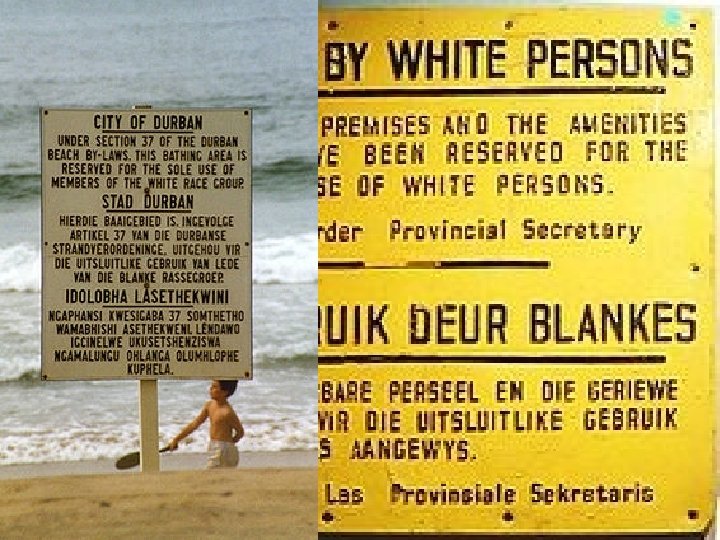
South Africa • Apartheid – A system of legal racial segregation • From 1948 -1954 The small white minority ruled over the African (black) majority • Blacks were relocated and deprived of their citizenship – Many were not allowed on specific streets or had curfews enforced, education, medicine and voting rights were also limited
Relocations • A policy of resettlement also occurred • As many as 3. 5 million African’s were resettled in slums (called black-spots) • Apartheid was formal ended in 1994 under Nelson Mandela (first president elected in a true representative election = Blacks were not kept from voting)
The legacy of Slavery • 30 million people were taken from Africa and helped to prevent its development • Many tribes were separated by lines drawn by colonial powers that created new countries • On average there are 10 armed conflicts a year in Africa. • Natural Resources and Agricultural were taken as well • By the time the colonial powers exited slavery was out.
• The colonies did not invest in infrastructure unless it was to reap the benefits of the natural resources • The population is exploding. • By one estimate in 1976 there were 330 million people in Africa. In 1999 there were 624 million and by one estimate by 2010 there will be 805 million people in Africa (how many are there? ) • The country with the most people in Africa is Nigeria with 114 million people • Ethiopia is second with 60 million
Problems of Population Growth • Africa grows at a 2. 6 percent annually rate which doubles the population every 27 years. • This causes several issues – 1. Starvation – 2. Food Production – 3. Medical Facilities – 4. Poverty
Reasons for the Population Issues • Families in Africa average about 6. 3 people in size • Polygamy is legal in many countries • Women are often shunned if they are infertile • Abortion is generally illegal • Birth Control is not widely practiced.
HIV • As a percentage of the world’s cases Sub Saharan Africa has 63% of the world’s cases of HIV and 82% of the known AIDS patients. • Many believe that these figures are too low because accurate census figures do not exist. • The countries of Zambia, Kenya, and Uganda have been heavily devastated by AIDS • In these countries the population density is decreasing 42. 5% per square mile.
African Tradition • They did not have written language until 1600’s • So Africa’s history (passed on by folklore got wiped out) • Primary duties for African Men – 1. Ceremony – 2. Hunting – 3. Taking Care of Animals
African Tradition Continued • The Role of Women – 1. Support Children – 2. Cooking Cleaning – 3. Farming • There is a very close connection between Africans and the forests • For the most part Africans saw animals as neighbors