
COLONIAL HISTORY OF SOUTH AFRICA 1652 Jan van
- Slides: 22
COLONIAL HISTORY OF SOUTH AFRICA • 1652 Jan van Riebeeck (representing the Dutch East India Company): Cape Colony at Table Bay • 1795 British forces seize Cape Colony from Netherlands • 1880/81 Boers rebel against the British, sparking the first Anglo-Boer War. Conflict ends with a negotiated peace • 1889/1902 Second Anglo-Boer war. The Transvaal and Orange Free State are made self-governing colonies of the British Empire • 1910 Formation of Union of South Africa by former British and Boer colonies • 1912 Native National Congress is founded, later renamed African National Congress (ANC) • 1948 Policy of apartheid adopted when National Party (NP) takes power
APARTHEID The term was coined in the 1930 s from the Afrikaans word for “apartness” and used to define the social and political policy of racial segregation and discrimination enforced by white minority governments in South Africa from 1948 to 1994.
Apartheid was legal from 1948 – 1990 in South Africa. It included two basic species of laws: • Petty Apartheid • Grand Apartheid
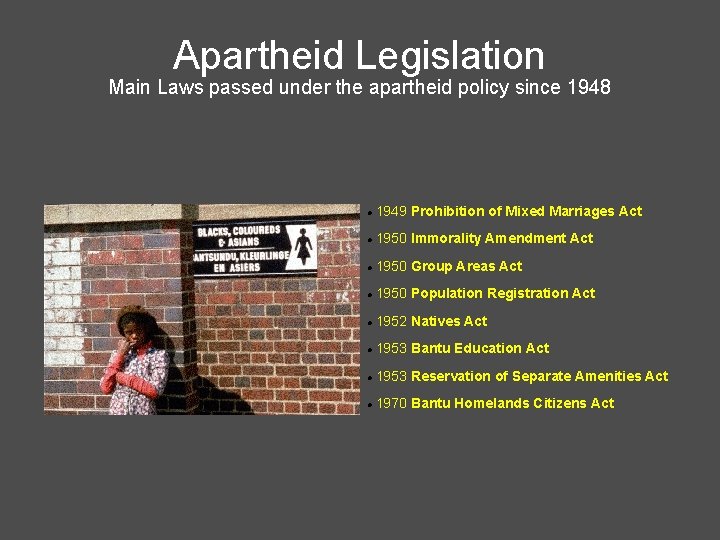
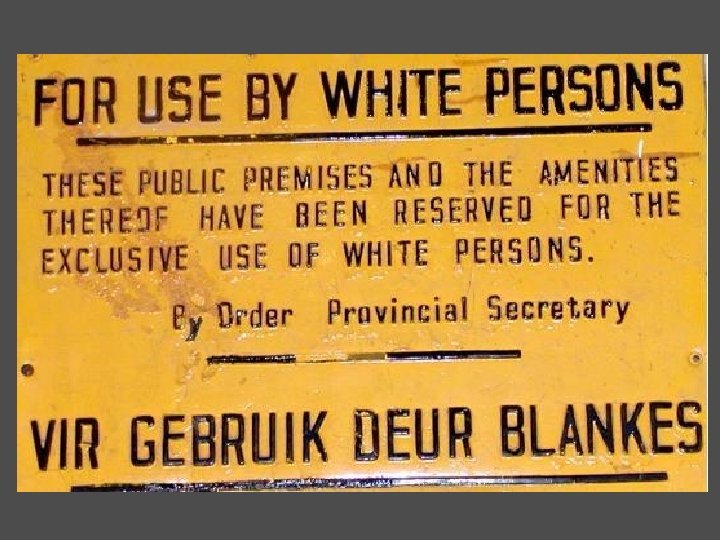
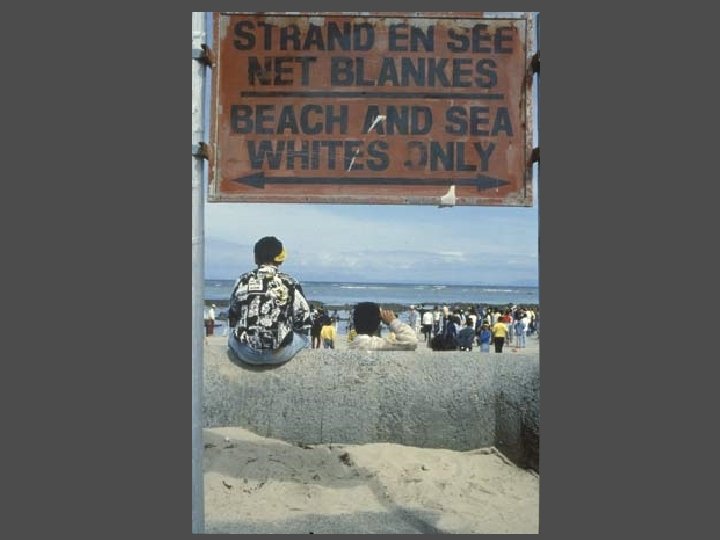
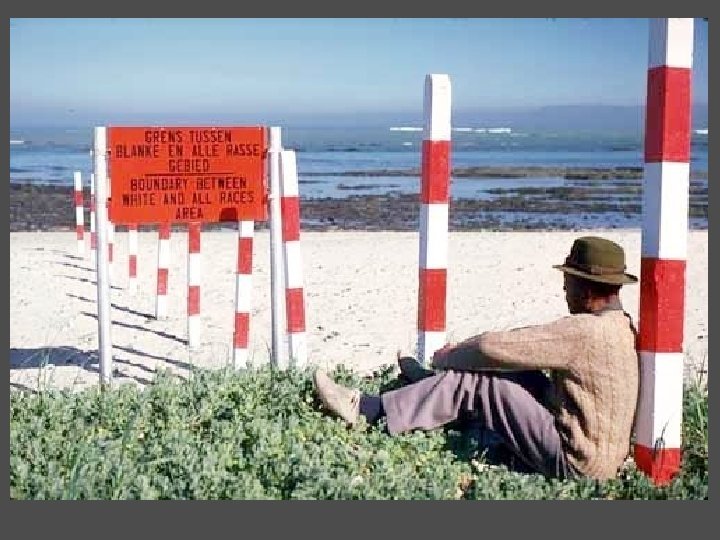
Apartheid Legislation Main Laws passed under the apartheid policy since 1948 1949 Prohibition of Mixed Marriages Act 1950 Immorality Amendment Act 1950 Group Areas Act 1950 Population Registration Act 1952 Natives Act 1953 Bantu Education Act 1953 Reservation of Separate Amenities Act 1970 Bantu Homelands Citizens Act
South Africa bans most anti-apartheid activities • 1950 Suppression of Communism Act: it formally proscribed the ideology of communism. It was in large part due to the believed involvement of communists in the anti-apartheid movement. • 1967 Terrorism Act: It allowed someone suspected of involvement in terrorism to be detained for an indefinite period without trial on the authority of a senior police officer. • South Africa degenerated into a police state
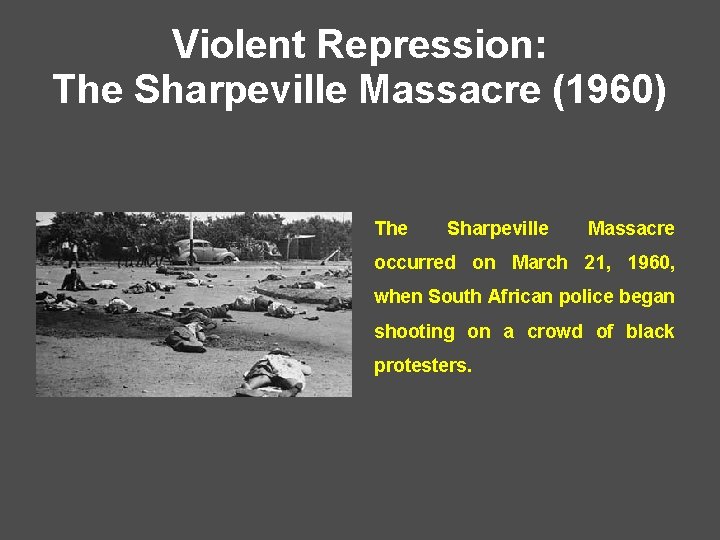
Violent Repression: The Sharpeville Massacre (1960) The Sharpeville Massacre occurred on March 21, 1960, when South African police began shooting on a crowd of black protesters.
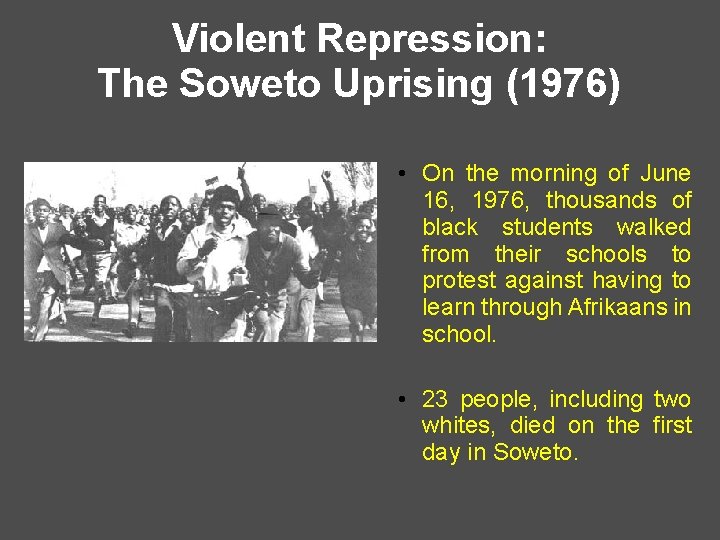
Violent Repression: The Soweto Uprising (1976) • On the morning of June 16, 1976, thousands of black students walked from their schools to protest against having to learn through Afrikaans in school. • 23 people, including two whites, died on the first day in Soweto.
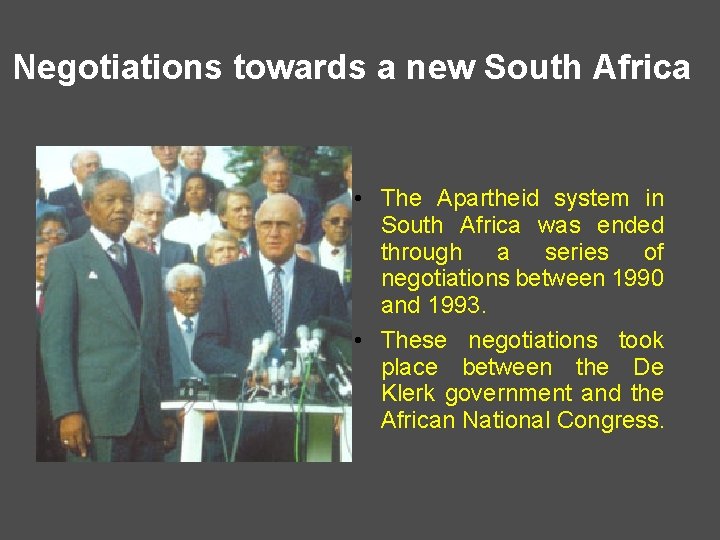
Negotiations towards a new South Africa • The Apartheid system in South Africa was ended through a series of negotiations between 1990 and 1993. • These negotiations took place between the De Klerk government and the African National Congress.
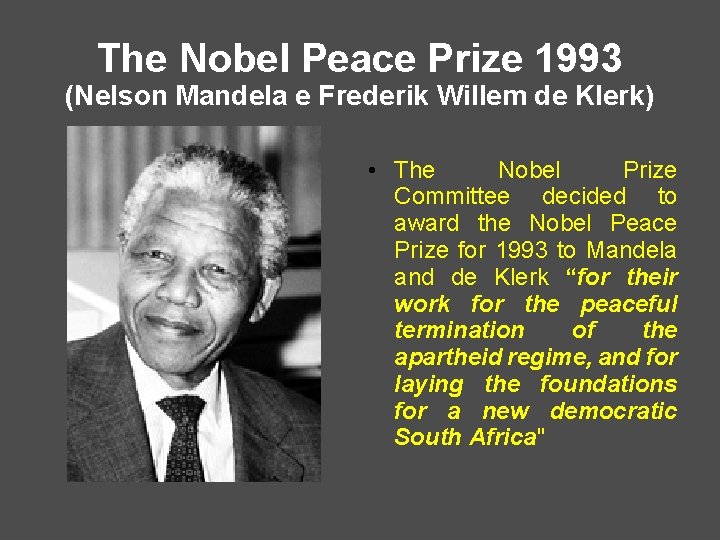
The Nobel Peace Prize 1993 (Nelson Mandela e Frederik Willem de Klerk) • The Nobel Prize Committee decided to award the Nobel Peace Prize for 1993 to Mandela and de Klerk “for their work for the peaceful termination of the apartheid regime, and for laying the foundations for a new democratic South Africa"
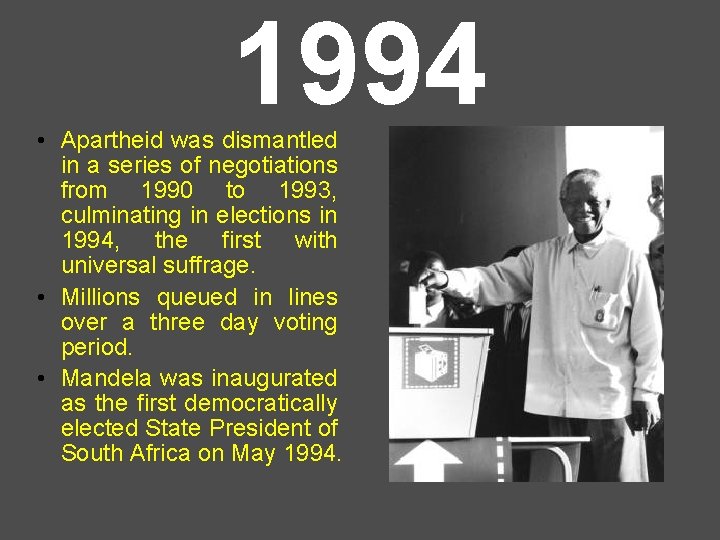
1994 • Apartheid was dismantled in a series of negotiations from 1990 to 1993, culminating in elections in 1994, the first with universal suffrage. • Millions queued in lines over a three day voting period. • Mandela was inaugurated as the first democratically elected State President of South Africa on May 1994.
The Constitution of South Africa The Constitution of the Republic of South Africa, 1996, was approved by the Constitutional Court on 4 December 1996 and took effect on 4 February 1997. It included in its text some of the items called for in the Freedom Charter (1955).
"We, the people of South Africa, recognise the injustices of our past; honour those who suffered for justice and freedom in our land; respect those who have worked to build and develop our country; and believe that South Africa belongs to all who live in it, united in our diversity. ” From the Preamble to the Constitution of South Africa
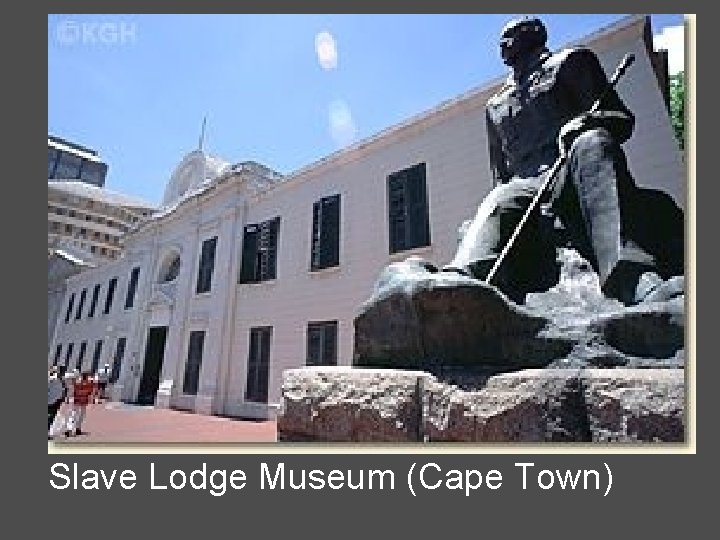
Slave Lodge Museum (Cape Town)
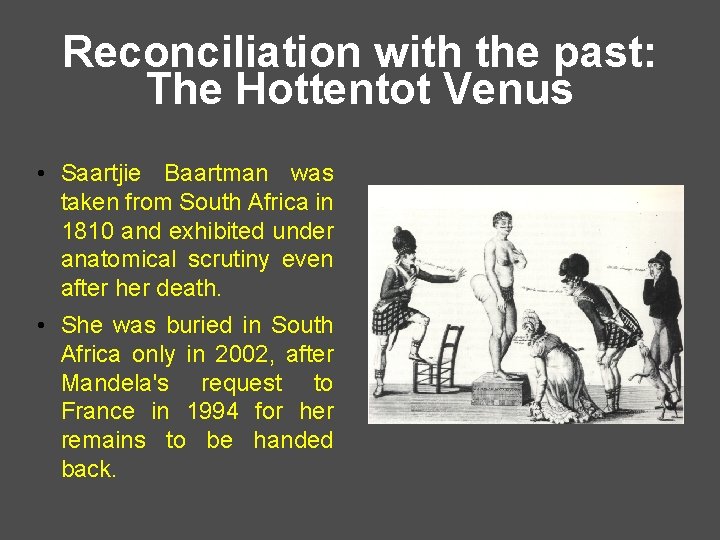
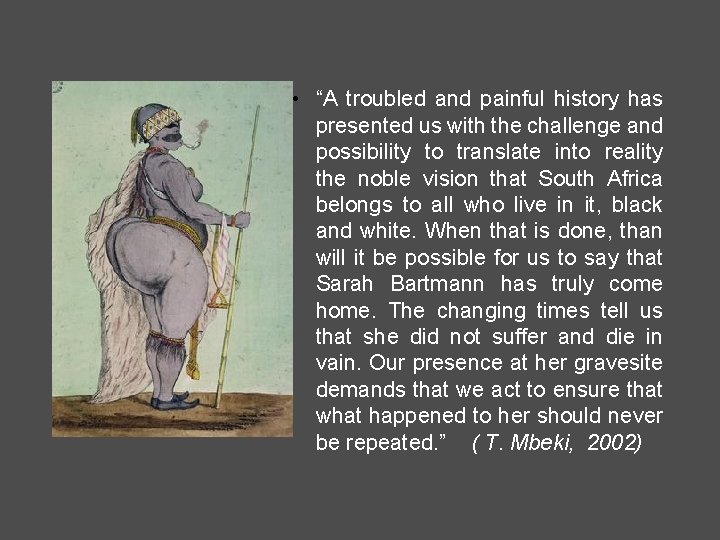
Reconciliation with the past: The Hottentot Venus • Saartjie Baartman was taken from South Africa in 1810 and exhibited under anatomical scrutiny even after her death. • She was buried in South Africa only in 2002, after Mandela's request to France in 1994 for her remains to be handed back.
• “A troubled and painful history has presented us with the challenge and possibility to translate into reality the noble vision that South Africa belongs to all who live in it, black and white. When that is done, than will it be possible for us to say that Sarah Bartmann has truly come home. The changing times tell us that she did not suffer and die in vain. Our presence at her gravesite demands that we act to ensure that what happened to her should never be repeated. ” ( T. Mbeki, 2002)
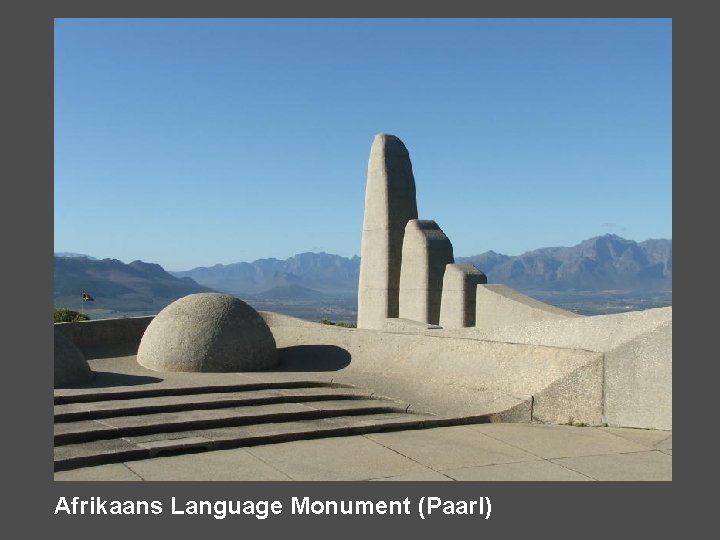
Afrikaans Language Monument (Paarl)
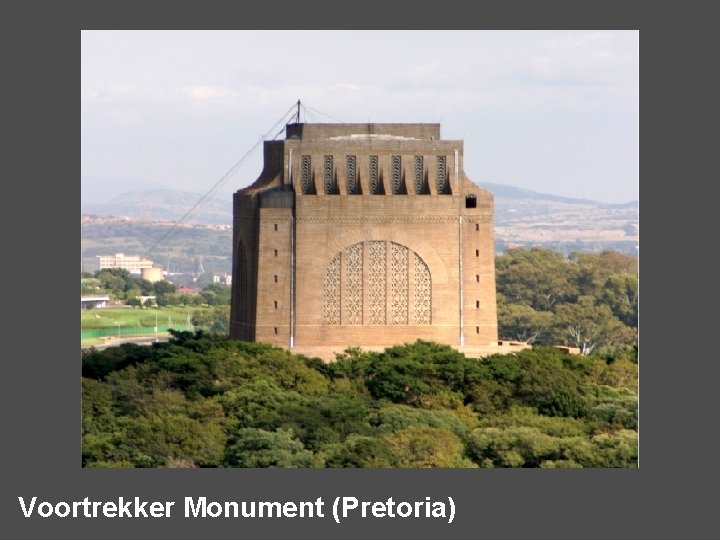
Voortrekker Monument (Pretoria)
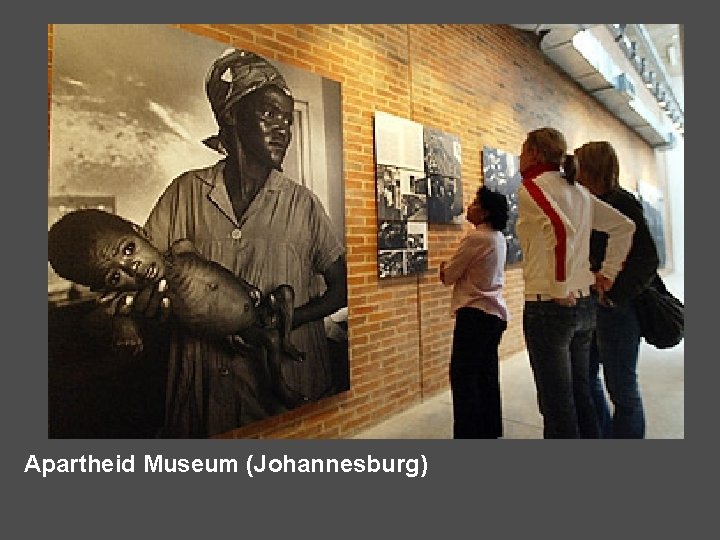
Apartheid Museum (Johannesburg)
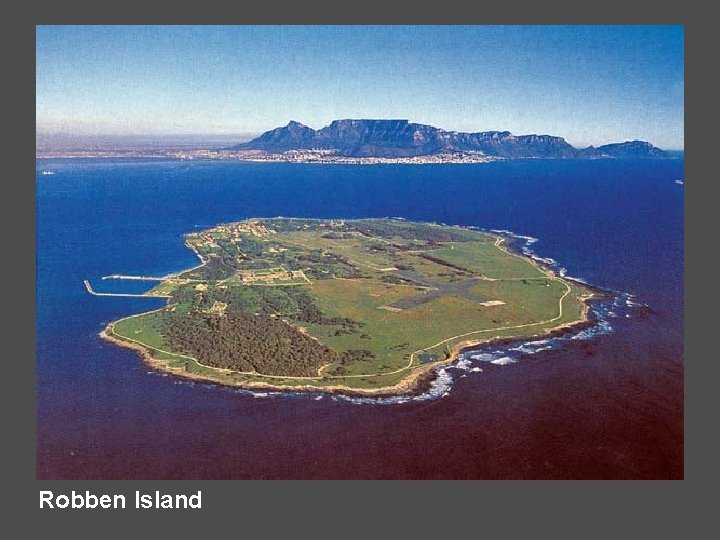
Robben Island