
Colonial Foundations How did English settlement and colonization
- Slides: 12
Colonial Foundations How did English settlement and colonization develop during the 17 th Century?
Rise of European Colonial Empires • 1492 – Spain discovers new world • Conquers Aztecs in Mexico and Inca in Peru to plunder them of vast amounts of gold and silver. • Spain becomes richest country in Europe. • Soon followed by Portugal, France, Holland, and England
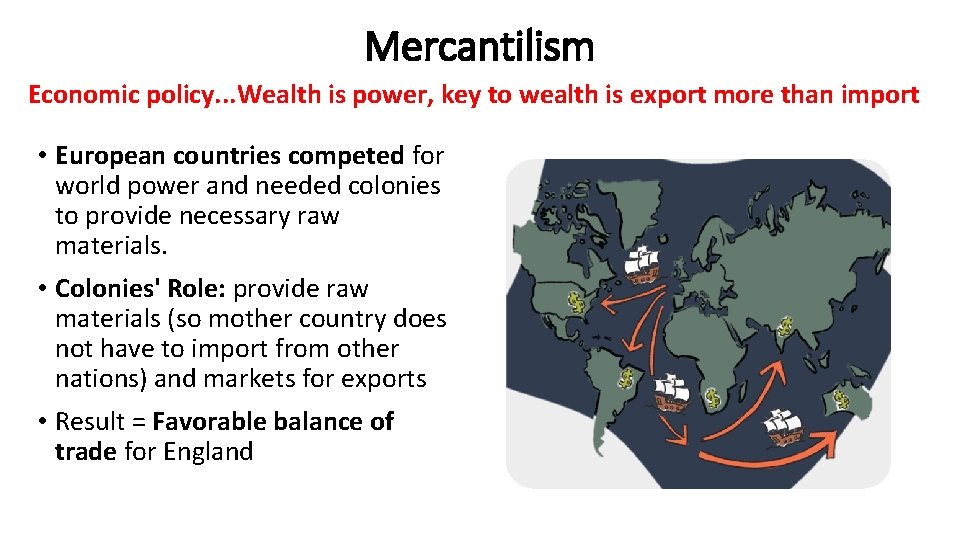
Mercantilism Economic policy. . . Wealth is power, key to wealth is export more than import • European countries competed for world power and needed colonies to provide necessary raw materials. • Colonies' Role: provide raw materials (so mother country does not have to import from other nations) and markets for exports • Result = Favorable balance of trade for England
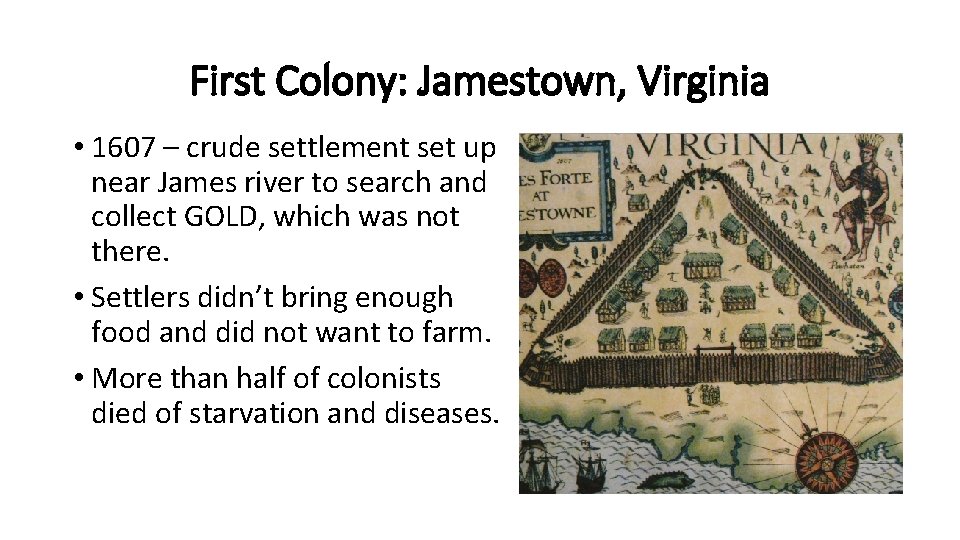
First Colony: Jamestown, Virginia • 1607 – crude settlement set up near James river to search and collect GOLD, which was not there. • Settlers didn’t bring enough food and did not want to farm. • More than half of colonists died of starvation and diseases.
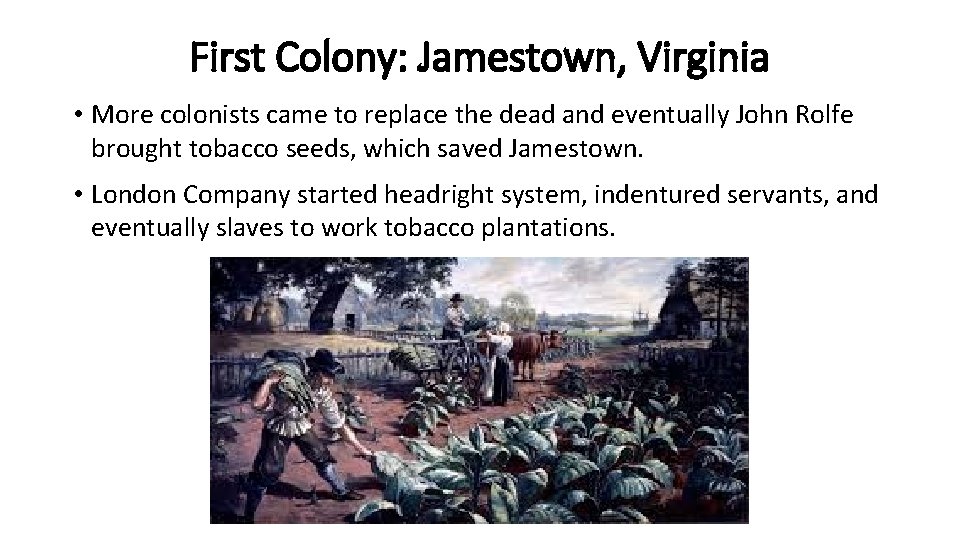
First Colony: Jamestown, Virginia • More colonists came to replace the dead and eventually John Rolfe brought tobacco seeds, which saved Jamestown. • London Company started headright system, indentured servants, and eventually slaves to work tobacco plantations.
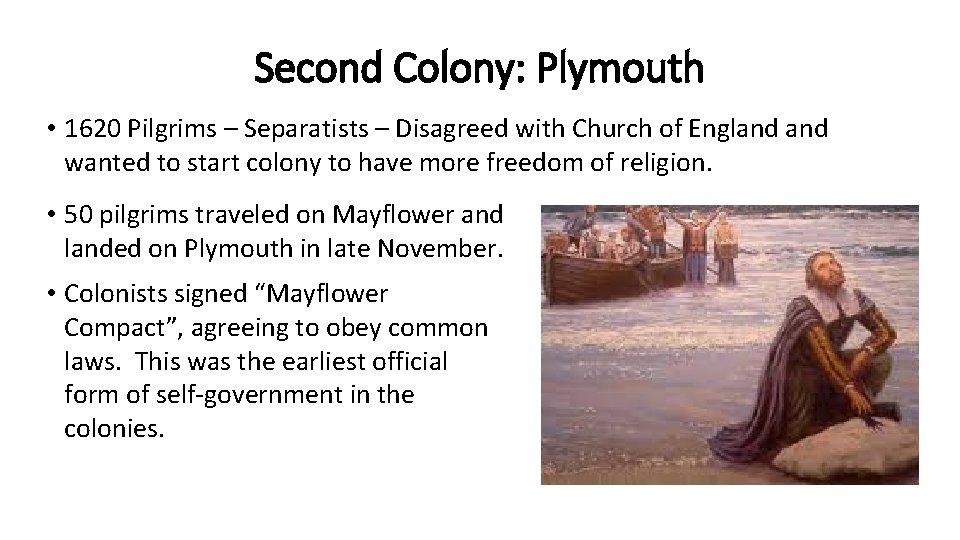
Second Colony: Plymouth • 1620 Pilgrims – Separatists – Disagreed with Church of England wanted to start colony to have more freedom of religion. • 50 pilgrims traveled on Mayflower and landed on Plymouth in late November. • Colonists signed “Mayflower Compact”, agreeing to obey common laws. This was the earliest official form of self-government in the colonies.
Second Colony: Plymouth • Pilgrims weren’t prepared for the harsh New England winter. • Half of Pilgrims died from disease and starvation in the first few months. • All of them may have died without help of local Indians. • Indians taught them how to plant corn and fertilize the soil with fish.
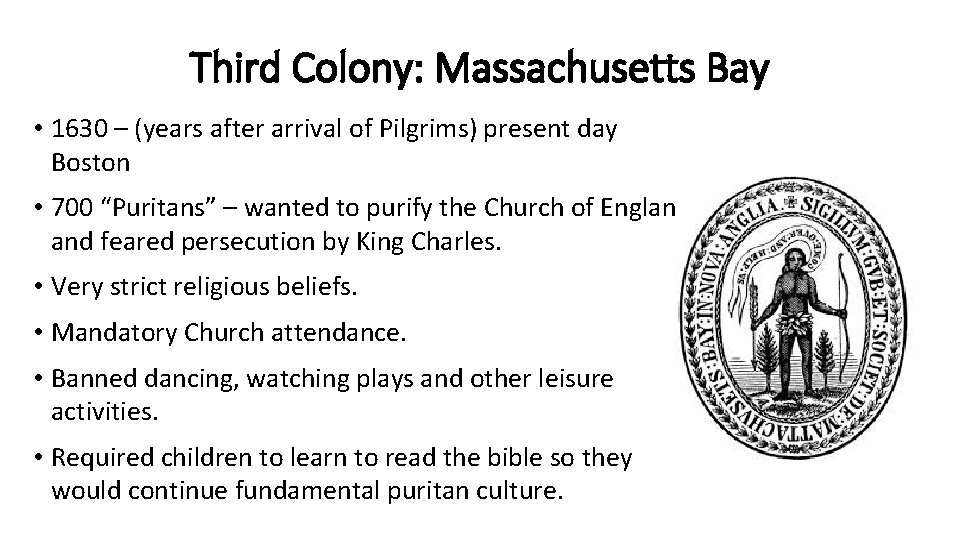
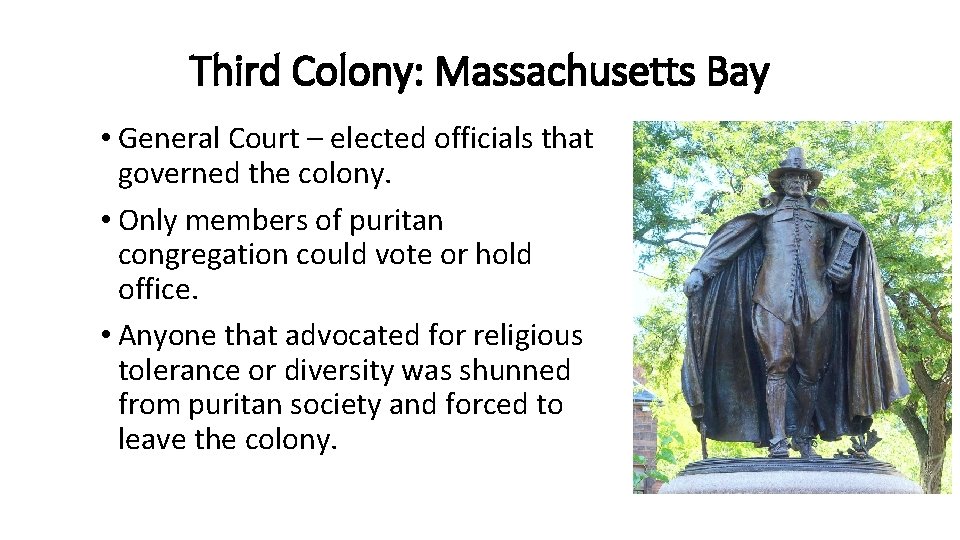
Third Colony: Massachusetts Bay • 1630 – (years after arrival of Pilgrims) present day Boston • 700 “Puritans” – wanted to purify the Church of England feared persecution by King Charles. • Very strict religious beliefs. • Mandatory Church attendance. • Banned dancing, watching plays and other leisure activities. • Required children to learn to read the bible so they would continue fundamental puritan culture.
Third Colony: Massachusetts Bay • General Court – elected officials that governed the colony. • Only members of puritan congregation could vote or hold office. • Anyone that advocated for religious tolerance or diversity was shunned from puritan society and forced to leave the colony.
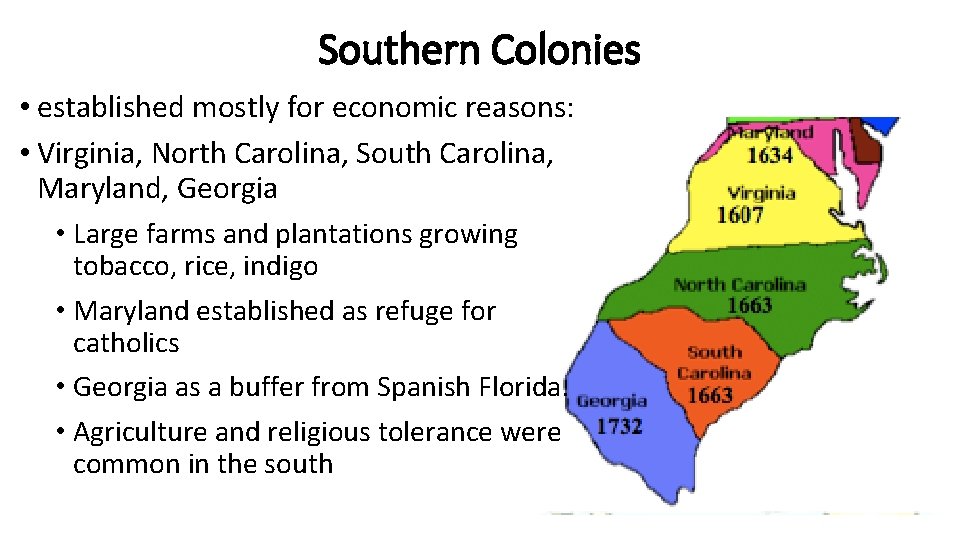
Southern Colonies • established mostly for economic reasons: • Virginia, North Carolina, South Carolina, Maryland, Georgia • Large farms and plantations growing tobacco, rice, indigo • Maryland established as refuge for catholics • Georgia as a buffer from Spanish Florida. • Agriculture and religious tolerance were common in the south
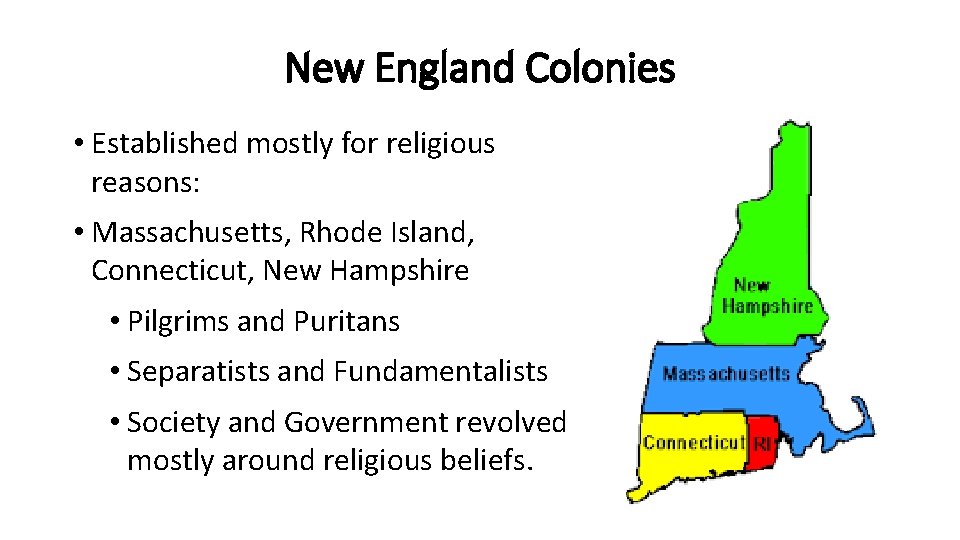
New England Colonies • Established mostly for religious reasons: • Massachusetts, Rhode Island, Connecticut, New Hampshire • Pilgrims and Puritans • Separatists and Fundamentalists • Society and Government revolved mostly around religious beliefs.
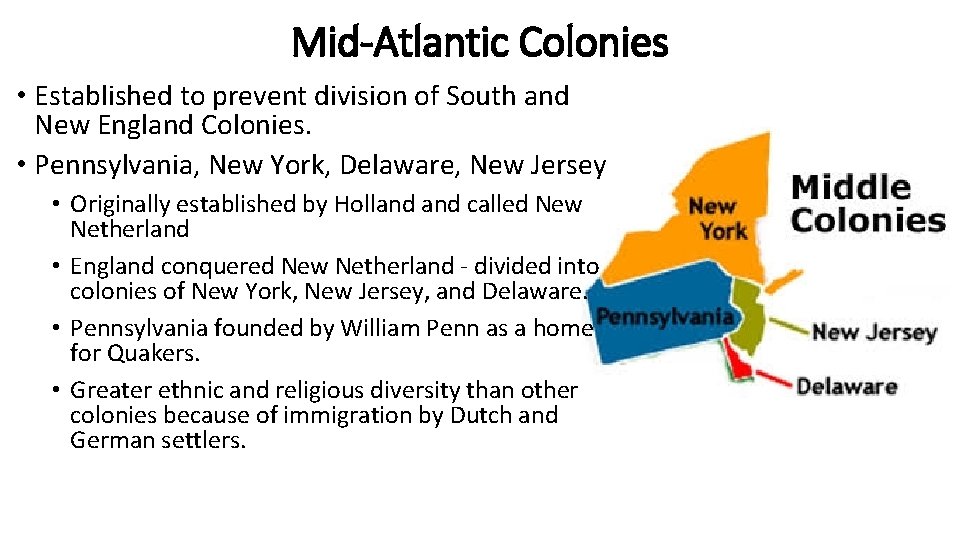
Mid-Atlantic Colonies • Established to prevent division of South and New England Colonies. • Pennsylvania, New York, Delaware, New Jersey • Originally established by Holland called New Netherland • England conquered New Netherland - divided into colonies of New York, New Jersey, and Delaware. • Pennsylvania founded by William Penn as a home for Quakers. • Greater ethnic and religious diversity than other colonies because of immigration by Dutch and German settlers.