
COLONIAL CULTURE Mrs Lacks US History Politics in
- Slides: 22
COLONIAL CULTURE Mrs. Lacks: US History
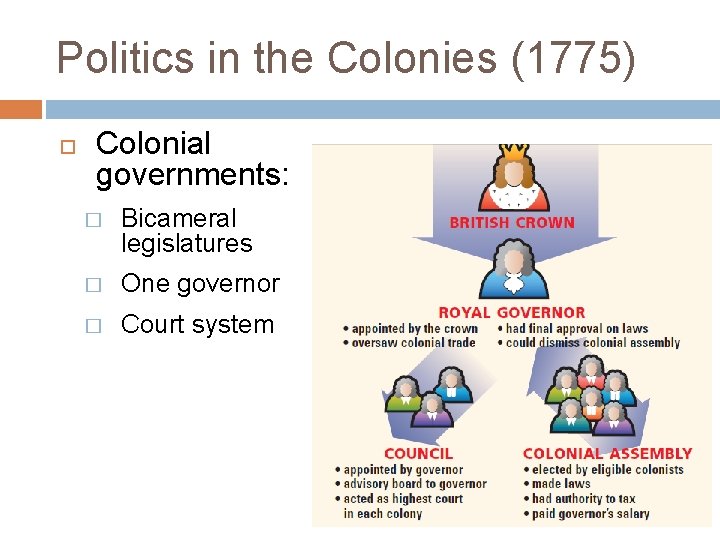
Politics in the Colonies (1775) Colonial governments: � Bicameral legislatures � One governor � Court system
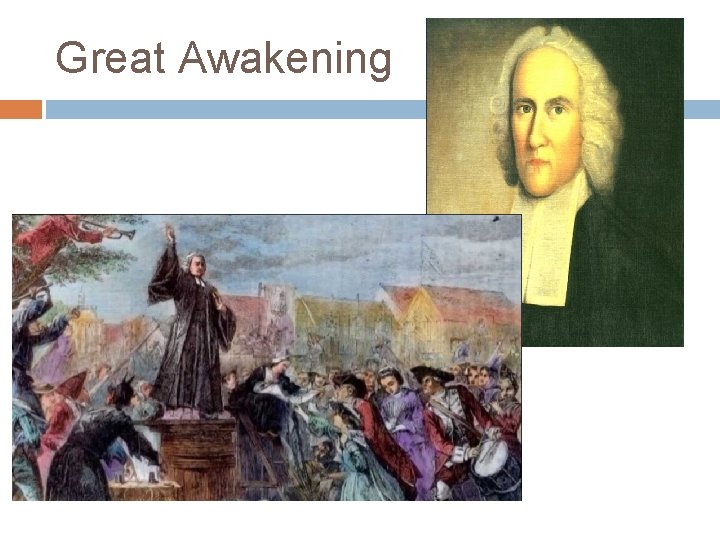
Great Awakening
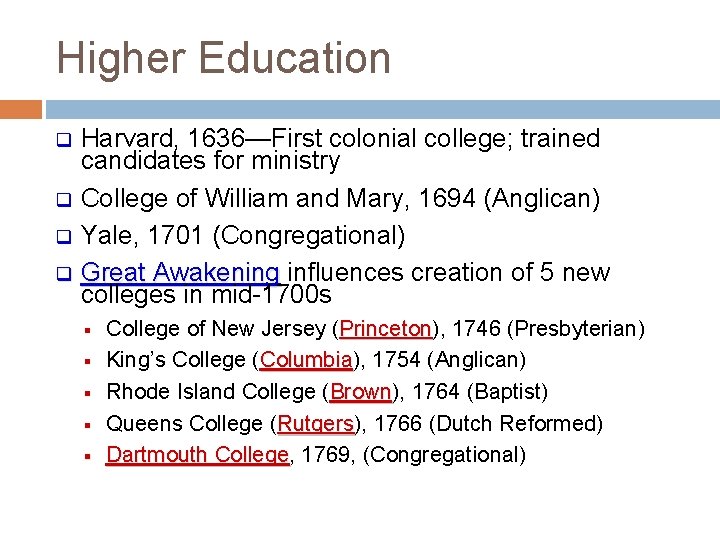
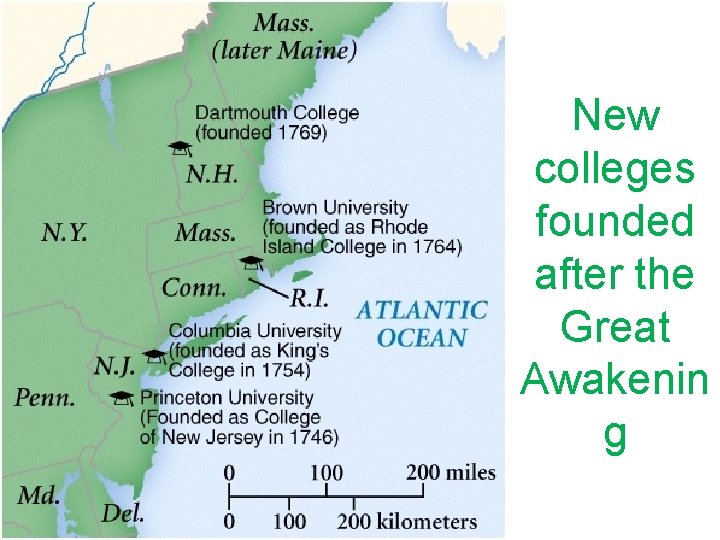
Higher Education Harvard, 1636—First colonial college; trained candidates for ministry q College of William and Mary, 1694 (Anglican) q Yale, 1701 (Congregational) q Great Awakening influences creation of 5 new colleges in mid-1700 s q § § § College of New Jersey (Princeton), Princeton 1746 (Presbyterian) King’s College (Columbia), Columbia 1754 (Anglican) Rhode Island College (Brown), Brown 1764 (Baptist) Queens College (Rutgers), Rutgers 1766 (Dutch Reformed) Dartmouth College, College 1769, (Congregational)
New colleges founded after the Great Awakenin g
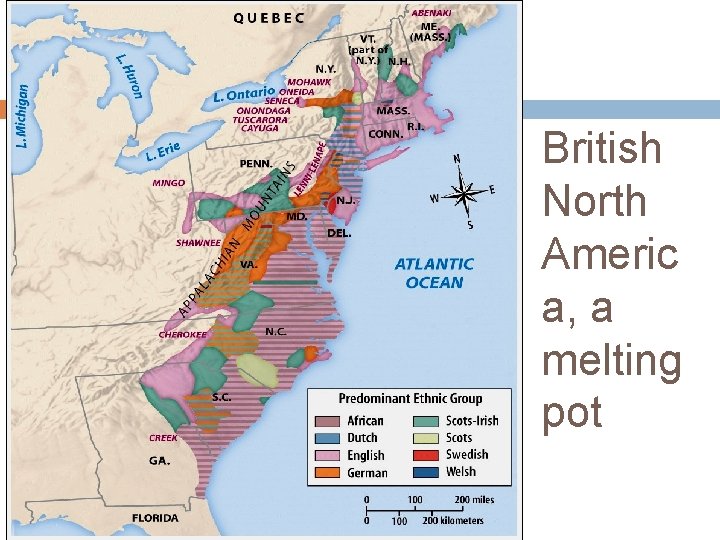
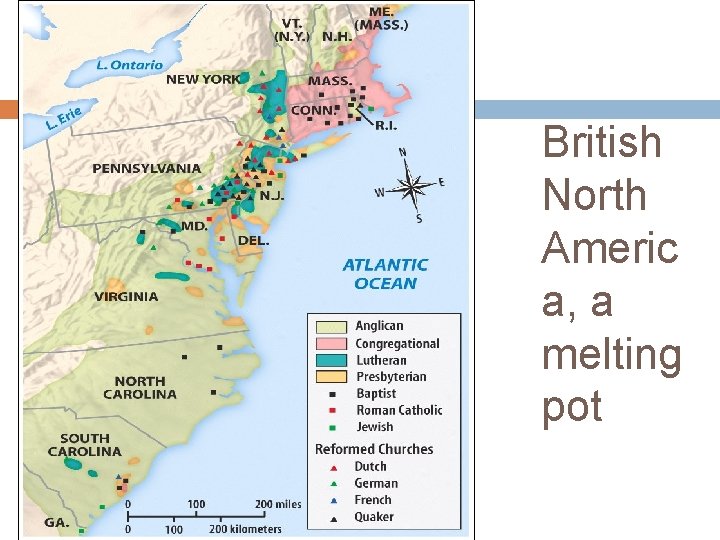
British North Americ a, a melting pot
British North Americ a, a melting pot
Colonial Culture Trends Social Events: � Attending church (most important ritual; showed status) � Tea drinking � punishment of criminals in public (reminded people of what not to do) � Attending elections (south)
City vs. Country Life Urban life: � went to marketplaces � more contact w/the outside world [newspapers, ports] Rural life: � Stayed on or close to farm � Probably never traveled far � Little access to school, church, and the outside world
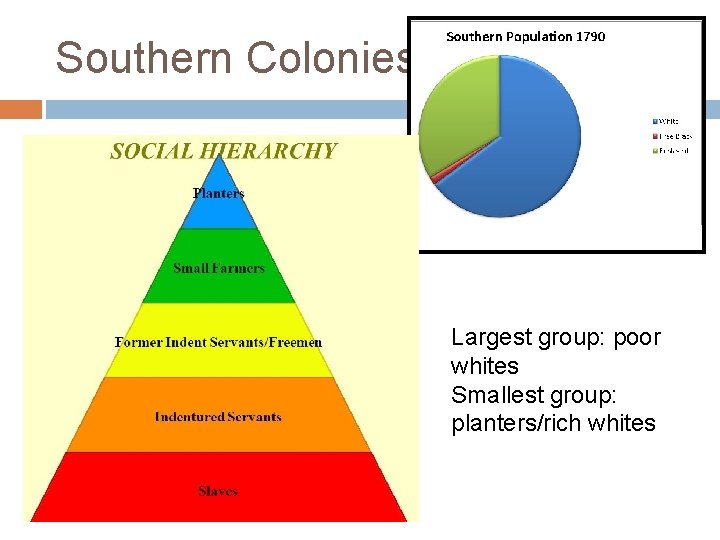
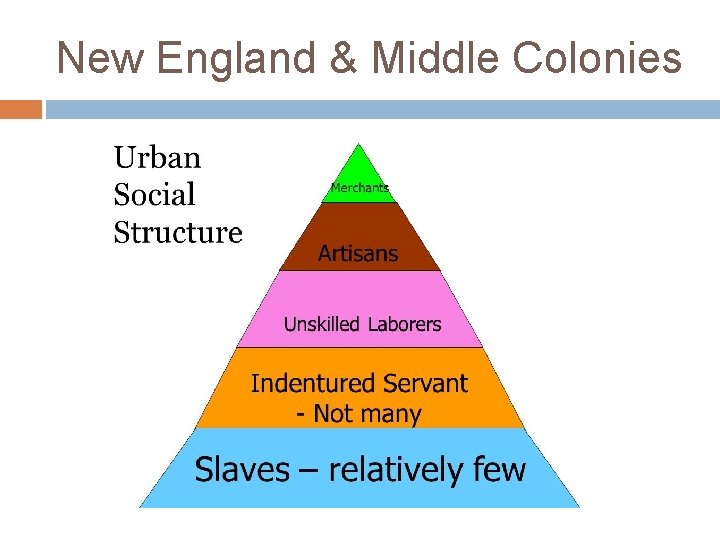
Strict social hierarchy
Southern Colonies Largest group: poor whites Smallest group: planters/rich whites
New England & Middle Colonies
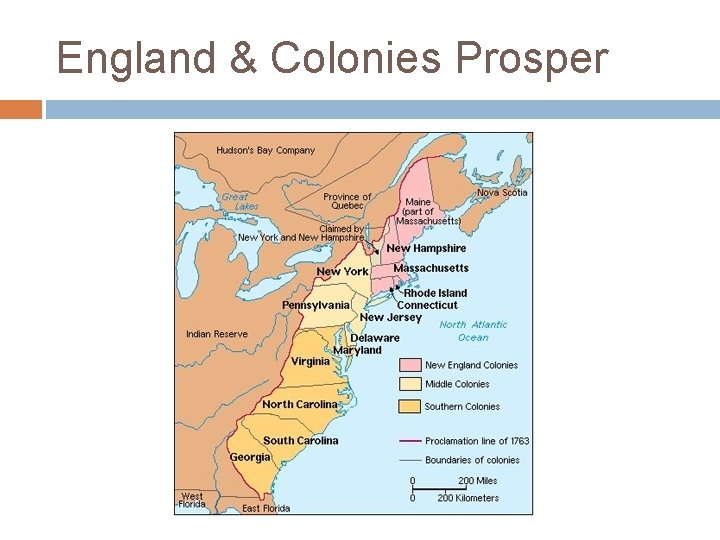
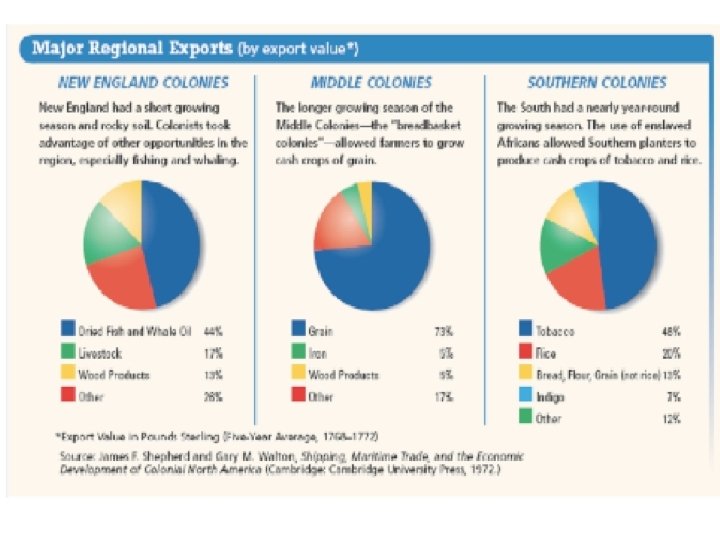
England & Colonies Prosper
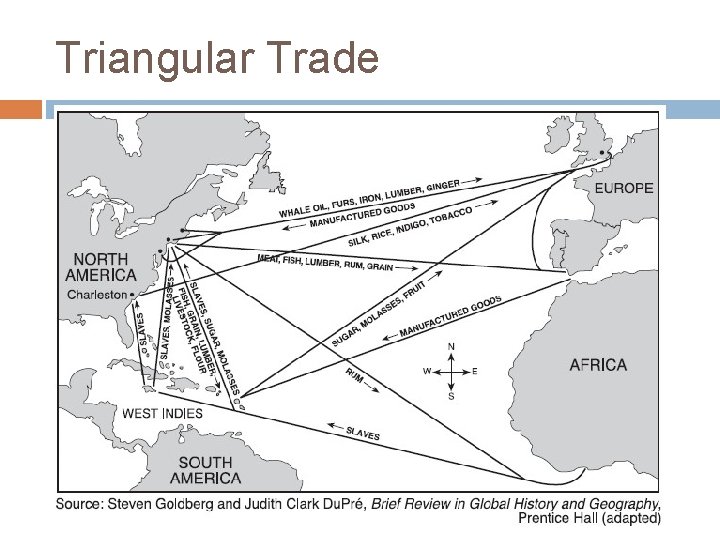
Triangular Trade
Britain wanted more profit from lucrative colonial trade!
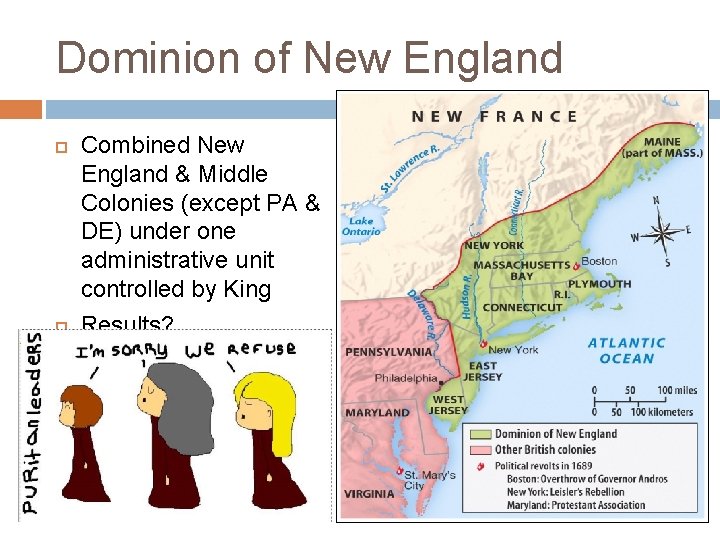
Dominion of New England Combined New England & Middle Colonies (except PA & DE) under one administrative unit controlled by King Results?
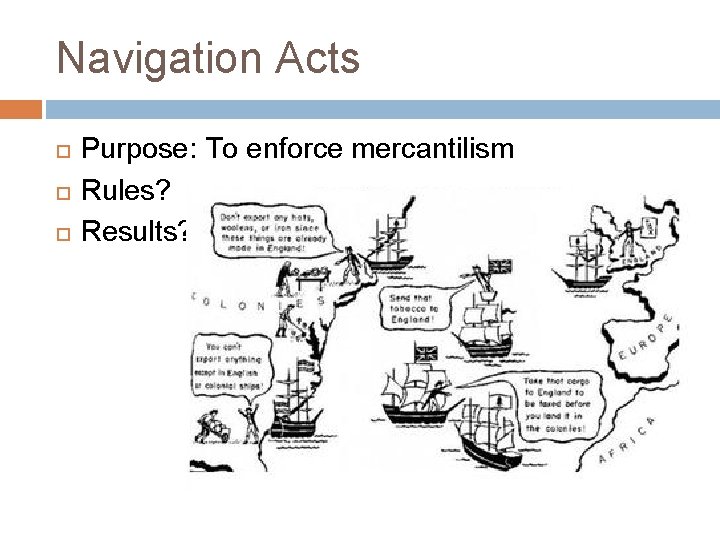
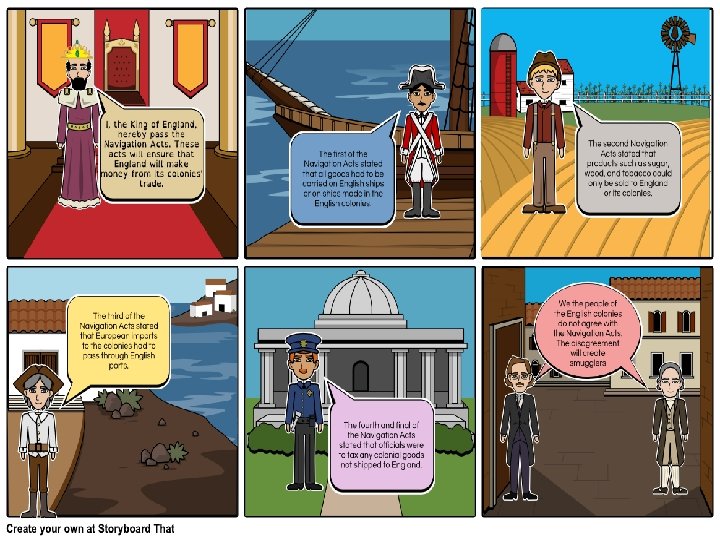
Navigation Acts Purpose: To enforce mercantilism Rules? Results?
Conclusion British at home vs. British in colonies Growing differences… � Political � Social � Economic