Colonial Conflict and the American Revolution War and


- Slides: 12
Colonial Conflict and the American Revolution War and Independence
NC in the Revolution • The Regulator Movement – Protested corruption in colony – Refused to pay taxes – Battle of Alamance • Resistance to corrupt political leaders • Stormed large plantations • 6400 regulators were pardoned
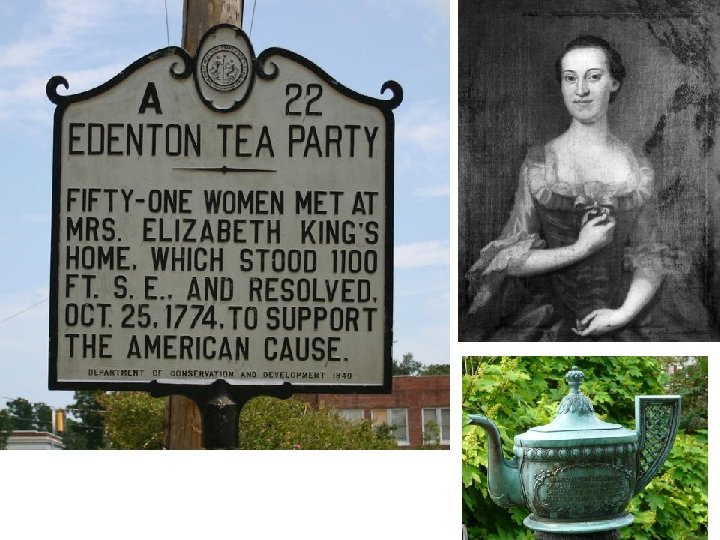
Toward Independence • First Provincial Congress (August 25, 1774) – “First in freedom” – elected leaders to represent NC at the First Continental Congress • Edenton Tea Party – women of NC burned tea to protest British policy
1 st Continental Congress - Called September 5, 1774 - Protest Intolerable Acts - Not ready to declare independence (attempting to solve problems with England) - Issues Declaration of Rights and Grievances (ignored by England) - Agree to reconvene if problems not solved
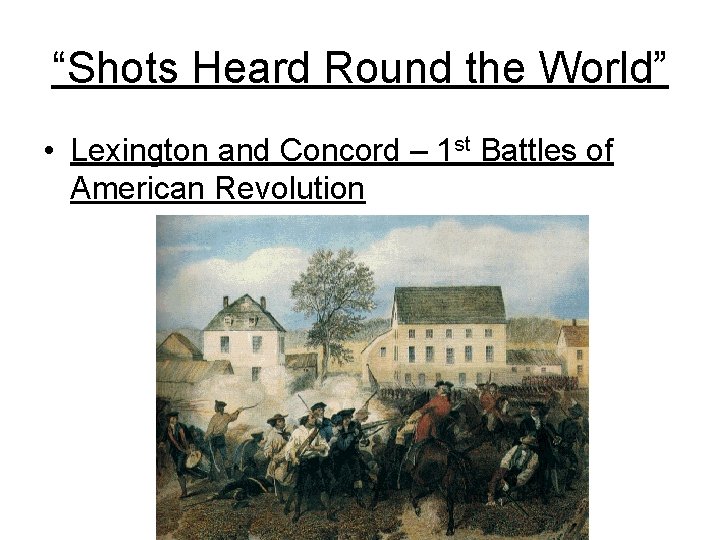
“Shots Heard Round the World” • Lexington and Concord – 1 st Battles of American Revolution
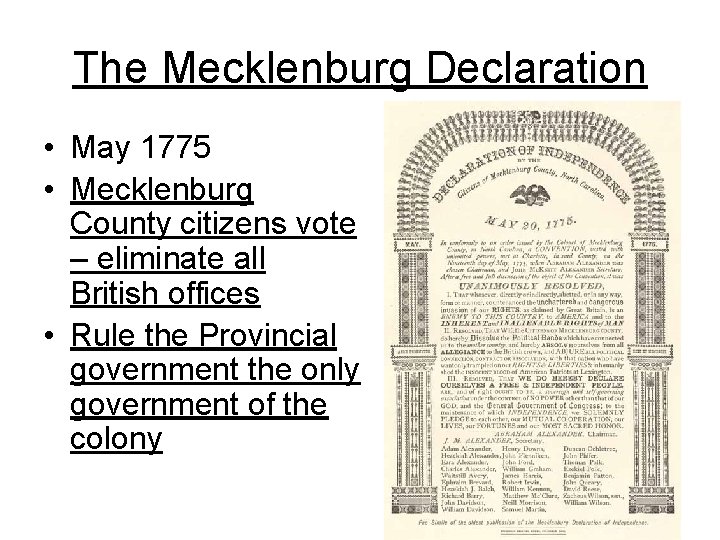
The Mecklenburg Declaration • May 1775 • Mecklenburg County citizens vote – eliminate all British offices • Rule the Provincial government the only government of the colony
Second Continental Congress -Meet in the middle of war -Philadelphia, PA (May 10, 1775) -1 st Job: Appoint General of Continental Army (George Washington) -2 nd Job: Decide how to end war
The Halifax Resolves • April 12, 1776 • First colony to call for total independence from Great Britain
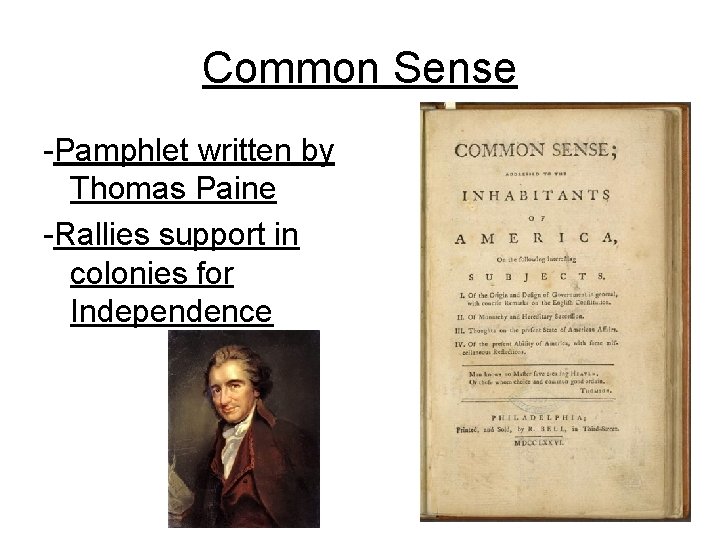
Common Sense -Pamphlet written by Thomas Paine -Rallies support in colonies for Independence
The Declaration of Independence -June 7, 1776; Independence proposed by Richard Henry Lee of Virginia -Committee organized to draft document (John Adams, Benjamin Franklin, Roger Sherman, Robert Livingstone, Thomas Jefferson) -Jefferson chosen to write document -July 4, 1776; Declaration of Independence adopted by Second Continental Congress (America is now independent of England)
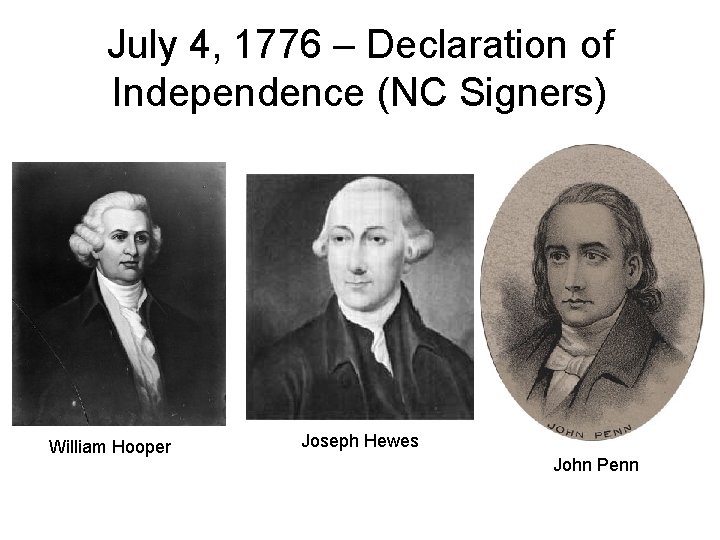
July 4, 1776 – Declaration of Independence (NC Signers) William Hooper Joseph Hewes John Penn