
Colombia Firm Energy Auction Descending Clock or SealedBid

Colombia Firm Energy Auction: Descending Clock or Sealed-Bid Peter Cramton University of Maryland 1 June 2015 1
Outline • Review of key features of market • • Purpose of market Why forward procurement? Commitment period Demand curve • Comparison • Descending clock auction • Sealed bid auction • Recommendation 2
Purpose of market • Induce just enough investment to maintain adequate resources • Induce efficient mix of resources • Reduce market risk • Avoid market power in firm energy market • Reduce market power in energy market • Pay no more than necessary 3
Why forward procurement? • New projects compete in advance of entry • Coordinated entry • • Less uncertainty in achieving target Avoid boom/bust New resources set price directly Less reliance on demand curve for price setting • Long-term commitment for new resources • Reduced investor risk • Better price signal for new investment 4
Commitment period • New resources ― up to 20 years • Supplier selected at qualification • Long commitment lets new resources lock-in firm energy price, reducing risk and encouraging investment • Price is in constant $ (adjusted for inflation) • Existing resources ― one year • Does not need long commitment, since costs are already sunk • Short commitment reduces risk (more draws from price distribution) 5

Demand curve Price of firm energy 2 CONE Price ceiling Curve reflects marginal value of firm energy Able to withstand scarcity events worse than worstcase benchmark CONE ½ CONE Price floor 4% 0 Load not fully hedged Target Firm energy CONE = Cost of New Entry (marginal unit) 6
Comparison of descending clock and sealed-bid 7
Descending clock auction • Auctioneer announces high starting price • Suppliers name quantities • Excess supply is determined • Auctioneer announces a lower price • Process continues until supply equals demand 8
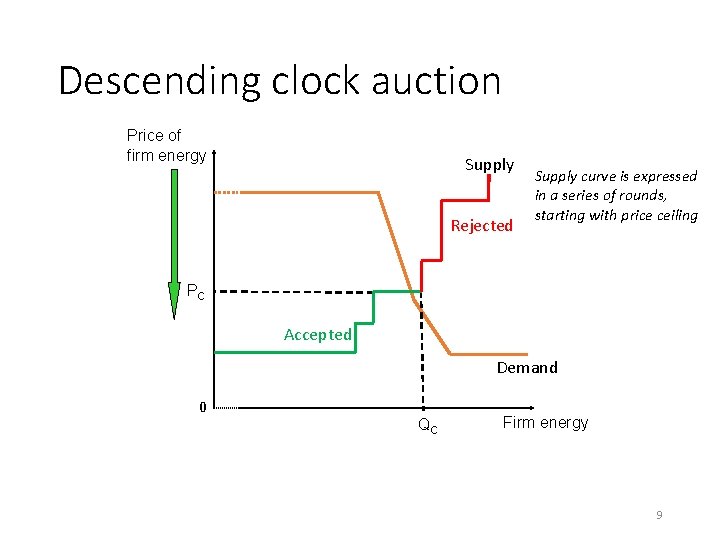
Descending clock auction Price of firm energy Supply Rejected Supply curve is expressed in a series of rounds, starting with price ceiling PC Accepted Demand 0 QC Firm energy 9
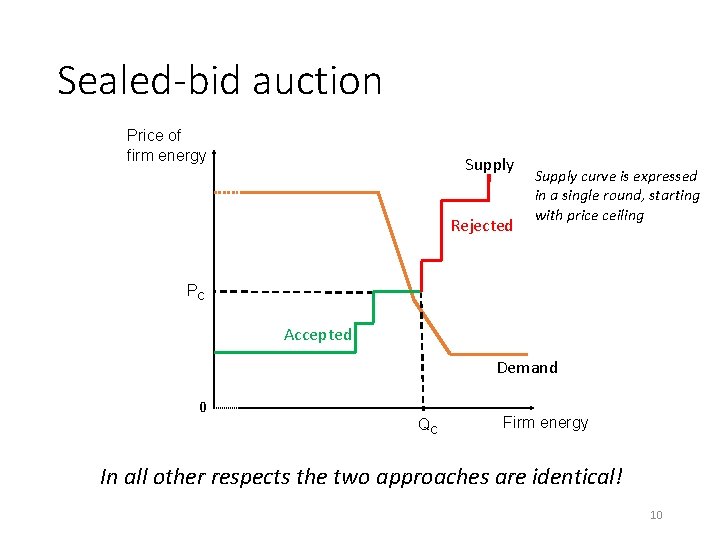
Sealed-bid auction Price of firm energy Supply Rejected Supply curve is expressed in a single round, starting with price ceiling PC Accepted Demand 0 QC Firm energy In all other respects the two approaches are identical! 10
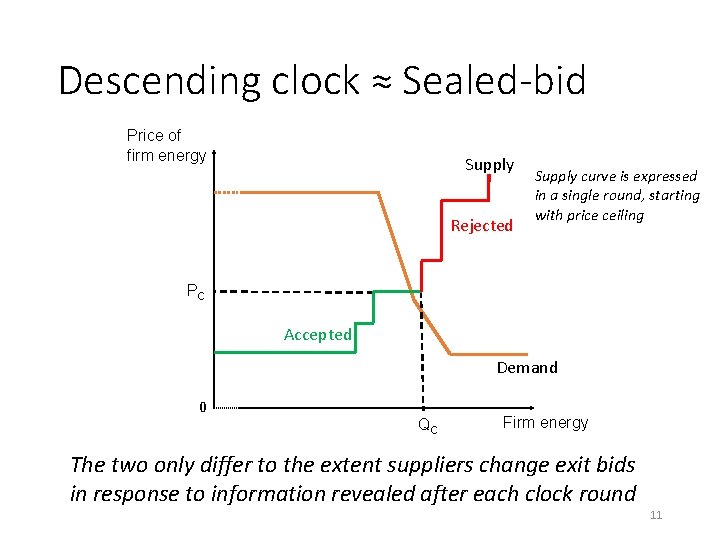
Descending clock ≈ Sealed-bid Price of firm energy Supply Rejected Supply curve is expressed in a single round, starting with price ceiling PC Accepted Demand 0 QC Firm energy The two only differ to the extent suppliers change exit bids in response to information revealed after each clock round 11
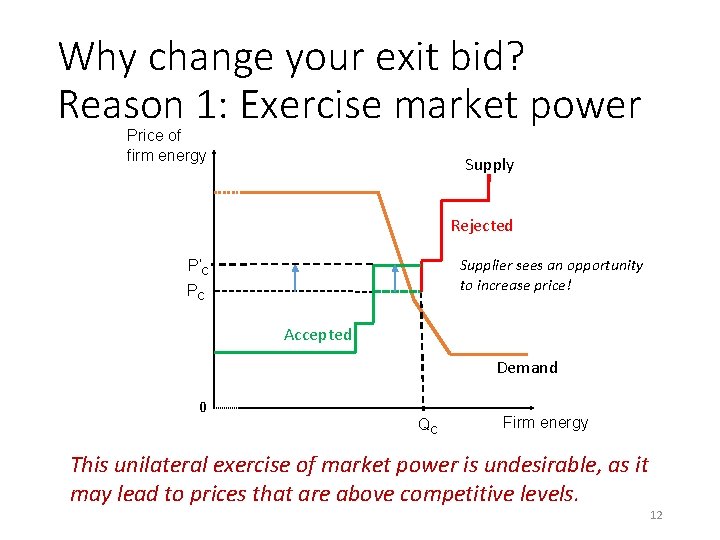
Why change your exit bid? Reason 1: Exercise market power Price of firm energy Supply Rejected Supplier sees an opportunity to increase price! P’C PC Accepted Demand 0 QC Firm energy This unilateral exercise of market power is undesirable, as it may lead to prices that are above competitive levels. 12
Why change your exit bid? Other reasons • Revelation of common value uncertainty • Causes bidders to bid more or less aggressively as they get information about the supply curve • Outcome discovery • Budget, portfolio, or other constraints cause a shift in business plans Both of these reasons are good reasons for the adjustment of exit bids— consistent with economic efficiency But neither seems too important in the case of a small number of new bids and a single merit order
Other factors to consider • Privacy • Clock auctions respect the privacy of infra-marginal bids • Only reveal the high (rejected) portions of supply curve • Winning suppliers only reveal, “I’m willing to supply at the clearing price” • Transparency • Clock auctions have a higher level of transparency as bidders can see the supply curve as it is bid • Simplicity • A clock auction is slightly harder to conduct and participate in than a seal-bid auction • However, with proxy bidding, participation can be just as easy But none of these factors are important in this case of a small number of new bids and single merit order
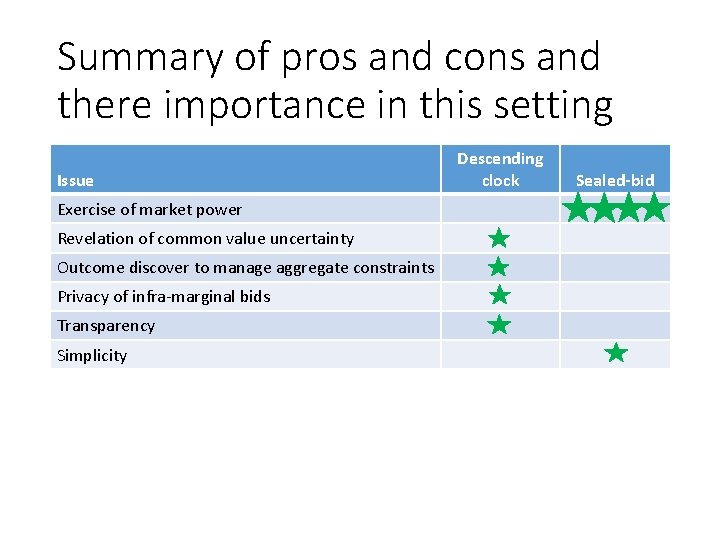
Summary of pros and cons and there importance in this setting Issue Exercise of market power Revelation of common value uncertainty Outcome discover to manage aggregate constraints Privacy of infra-marginal bids Transparency Simplicity Descending clock Sealed-bid
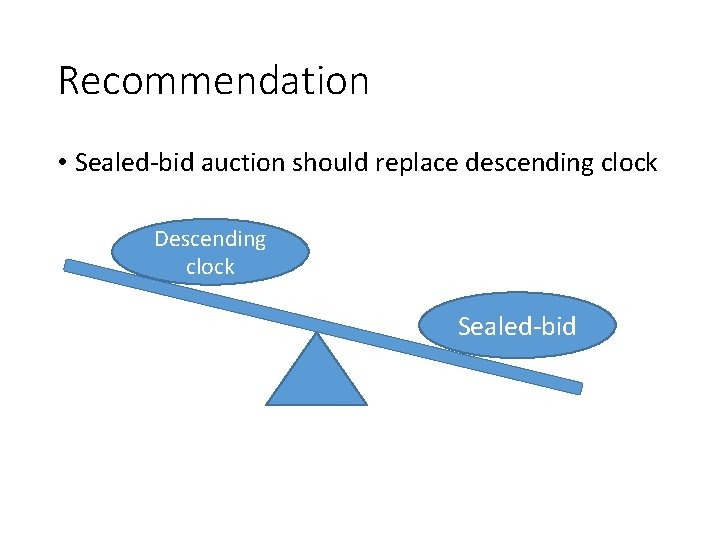
Recommendation • Sealed-bid auction should replace descending clock Descending clock Sealed-bid
Supplier concerns 17

Questions 18

Background 19
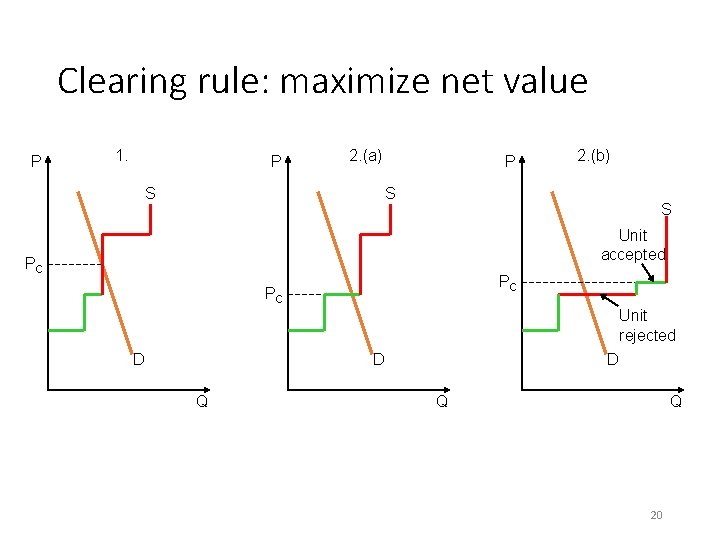
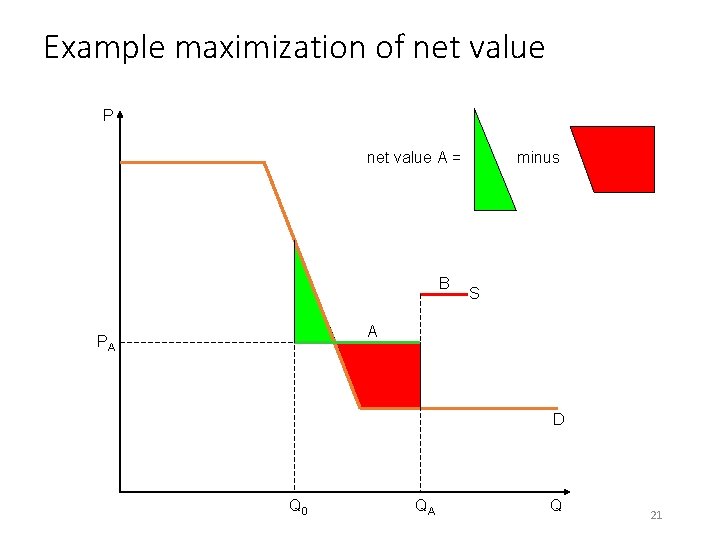
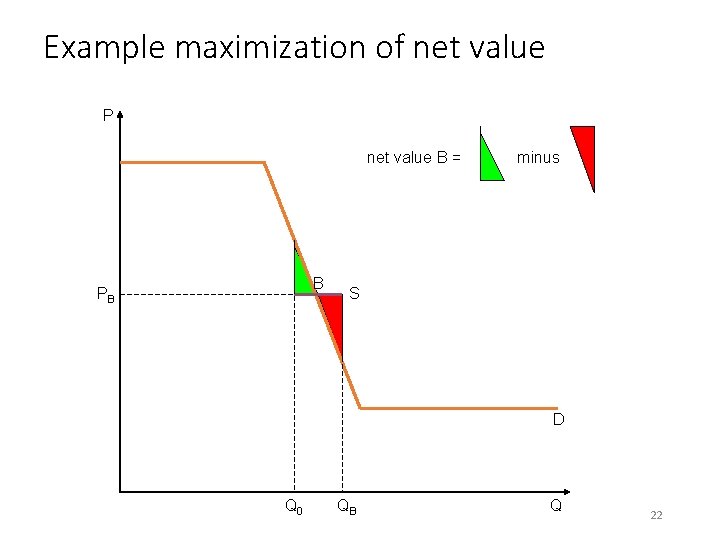
Clearing rule: maximize net value P 1. P 2. (a) S P 2. (b) S S Unit accepted PC PC PC Unit rejected D D Q Q 20
Example maximization of net value P net value A = B minus S A PA D Q 0 QA Q 21
Example maximization of net value P net value B = B PB minus S D Q 0 QB Q 22
Information policy • Demand curve and starting price announced before auction • After every round, auctioneer reports • Aggregate supply by hydro, baseload, peaker • Excess supply at end of round price • End of round price for next round (determined from extent of excess supply) 23
New projects are all or nothing • Lumpy investment respected; investor does not fear partial acceptance • If multiple bidders drop at the clearing price, the group of bids are accepted that minimizes excess supply 24
Market power • Addressing market power in firm energy market is essential • Strong incentive to exercise market power • Existing resources have substantial sunk costs • New resources are only a tiny fraction of total • Market is concentrated • Any of top-4 suppliers could unilaterally set price • Long-term price signals are more stable and efficient if determined from competitive forces, rather than market power 25
Market power solution • New resources • Bids are not mitigated in any way • Assumes competition for new resources • Existing resources • Resources can opt out of market with either an opt-out bid or retirement bid • Opt-out bid • • • Not revealed during auction Cannot impact the price for existing supply May be rejected for reliability reasons; gets reliability must run payment if rejected • Retirement bid ― permanent opt out of firm energy market • • • Submitted four weeks before start of auction Accepted retirements excluded from any future firm energy payments Retirements may be rejected for reliability reasons, but only if the reliability problem cannot be resolved during the planning period with alternative actions, such as transmission upgrades or new resources Retirements are posted as soon as they are accepted Retirements are replaced with new resources in the auction (represented as a shift to right in the demand curve for all prices below the retirement bid) • Repower bids • Replacement of generating unit(s) at existing plant • Replacement unit is bid as new resources • Existing unit is a conditional-retirement 26
Repowering bids • Easily accommodated in auction • Two types: • Quick switchovers (down time less than 1 year) • Repower bid is a new entry bid and a conditional retirement • Extended down time (more than 1 year) • Retirement followed by new entry bid 1 or more years later 27
Market power solution • New resources almost always set the price • Demand curve sets the price in surplus years in which new entry is not needed • Retirements occasionally set the price • Other than retirements, existing resources never impact the price 28
Replacing accepted opt-outs • Opt-outs are replaced by new resources • March up the supply curve revealed in the clock auction • But not more than a 30% increase in price • Any additional replacements occur in reconfiguration • All new resources receives this higher price • Existing resources receive the original clearing price 29
Fail-safe mechanism 30
Inadequate supply • If, at the starting price, there is insufficient supply of firm energy • New resources are paid starting price • Existing resources are paid 1. 1 CONE • Rule does not discourage new projects 31
Insufficient competition • Existing resources, less retirements, are less than demand at the starting price, • At the starting price, the firm energy bid exceeds demand but less than 4% excess, or a supplier’s new resources are pivotal, and • At qualification, quantity of new projects from small players (those with less than 15% maximum firm-energy market share) > 50% of required new firm energy • Otherwise insufficient competition: • Auction held • New entry paid clearing price • Existing capacity paid 1. 1 CONE (or clearing price if less) • Rule does not discourage new projects 32
- Slides: 32