
Colombia and the Drug Trade Keith Keiderling Renata
Colombia and the Drug Trade Keith Keiderling Renata Sheyner
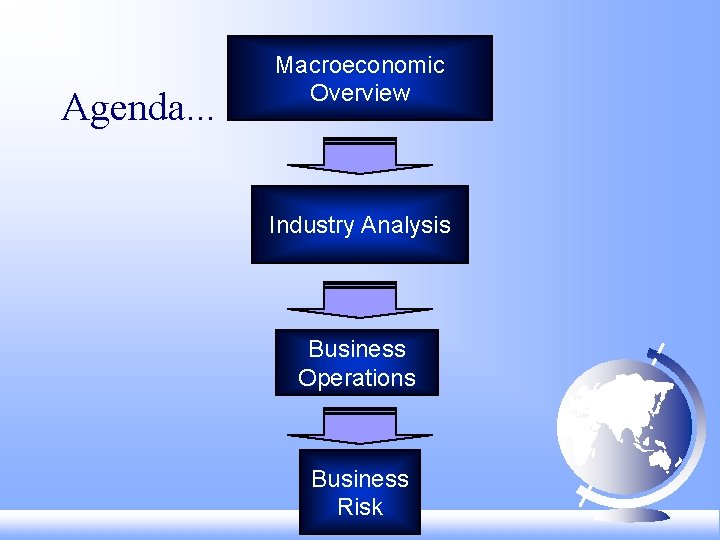
Agenda. . . Macroeconomic Overview Industry Analysis Business Operations Business Risk
Investors taking long-term approach as result of macroeconomic stability. F Economic indicators-1980 s – avg. GNP growth: 14% – avg. GDP growth: 3. 5% F Economic reforms-1990 – Privatization program – Trade reform program u Tariff reduction: 44% (1983) to 12% (1993)
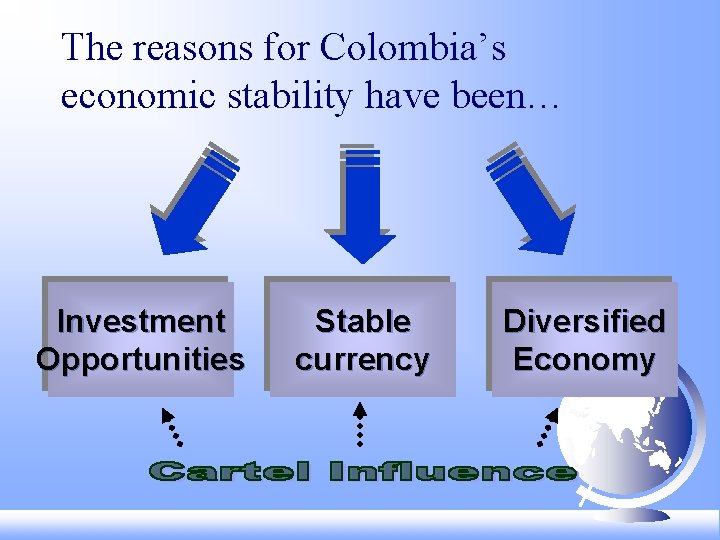
The reasons for Colombia’s economic stability have been… Investment Opportunities Stable currency Diversified Economy
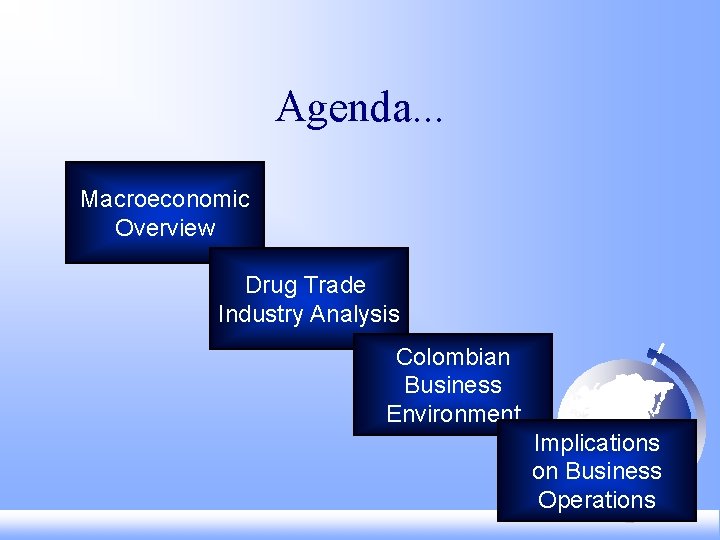
Agenda. . . Macroeconomic Overview Drug Trade Industry Analysis Colombian Business Environment Implications on Business Operations
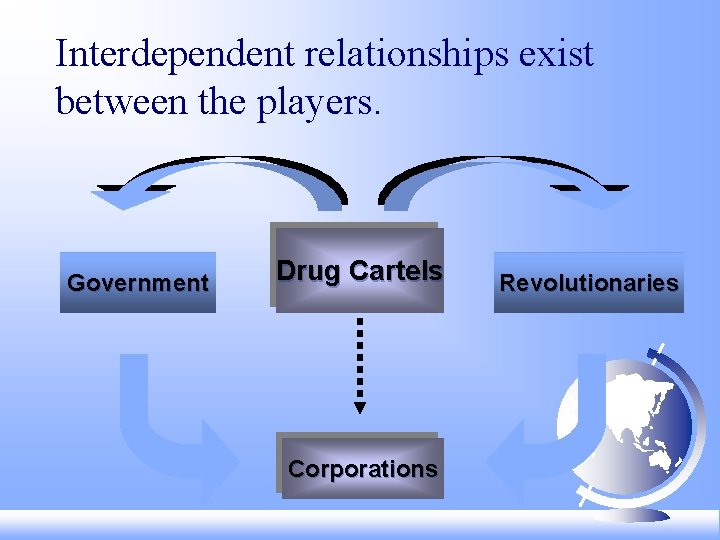
Interdependent relationships exist between the players. Government Drug Cartels Corporations Revolutionaries
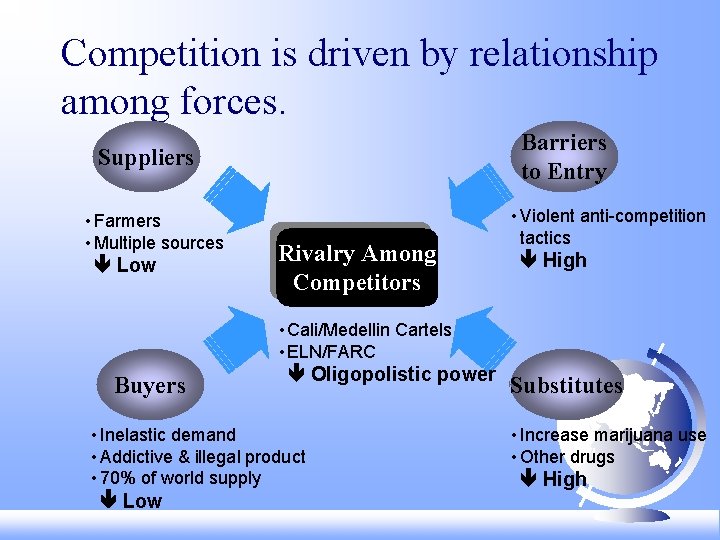
Competition is driven by relationship among forces. Barriers to Entry Suppliers • Farmers • Multiple sources Low Rivalry Among Competitors • Violent anti-competition tactics High • Cali/Medellin Cartels • ELN/FARC Buyers Oligopolistic power • Inelastic demand • Addictive & illegal product • 70% of world supply Low Substitutes • Increase marijuana use • Other drugs High
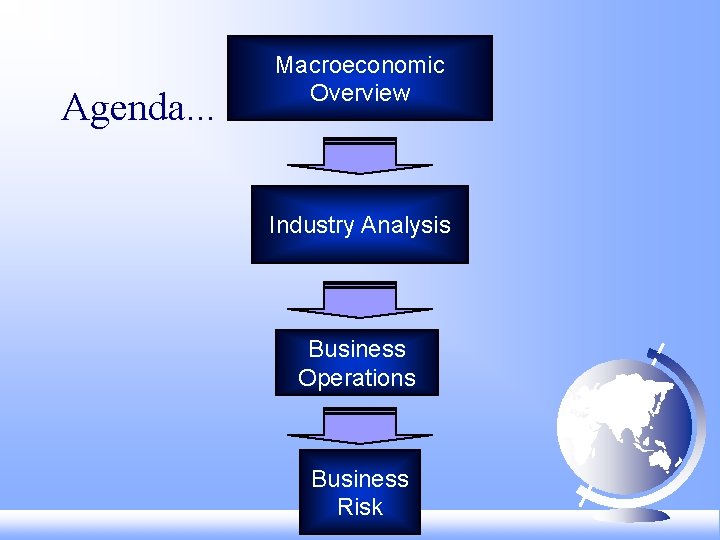
Agenda. . . Macroeconomic Overview Industry Analysis Business Operations Business Risk
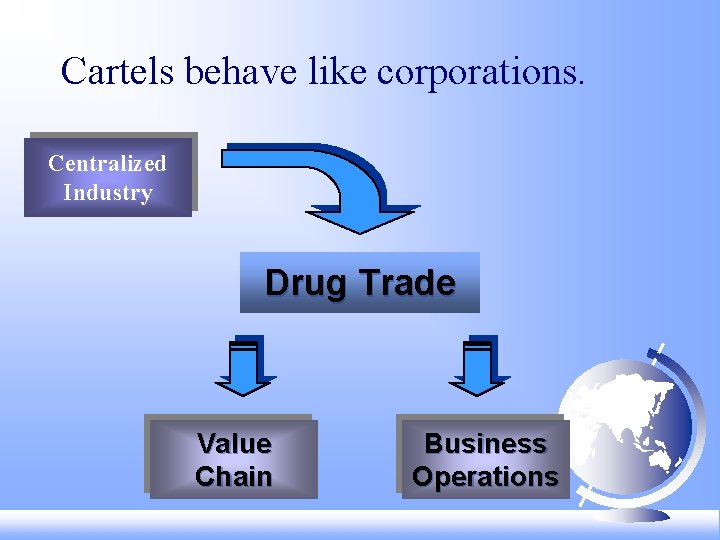
Cartels behave like corporations. Centralized Industry Drug Trade Value Chain Business Operations
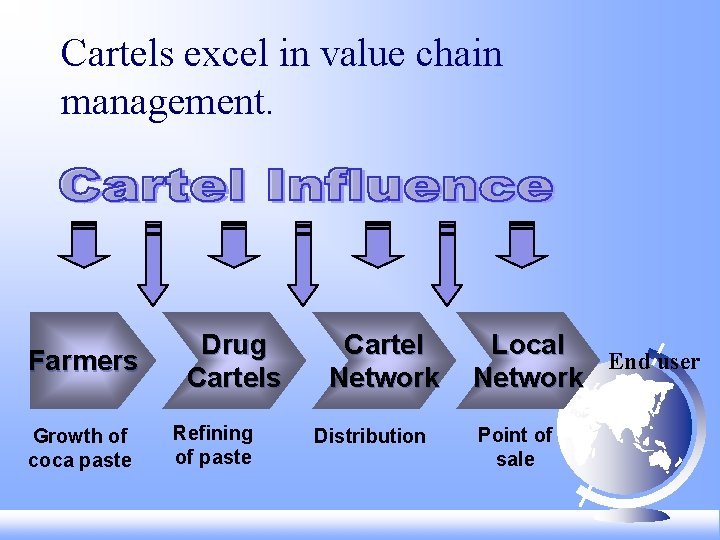
Cartels excel in value chain management. Farmers Growth of coca paste Drug Cartels Refining of paste Cartel Network Distribution Local End user Network Point of sale
Drug Cartels compete as global businesses. F “True business” organization – Law and business professionals – Usage of technology to gain competitive advantage – Influential salesforce F Decentralization of operations – Reduce risk exposure
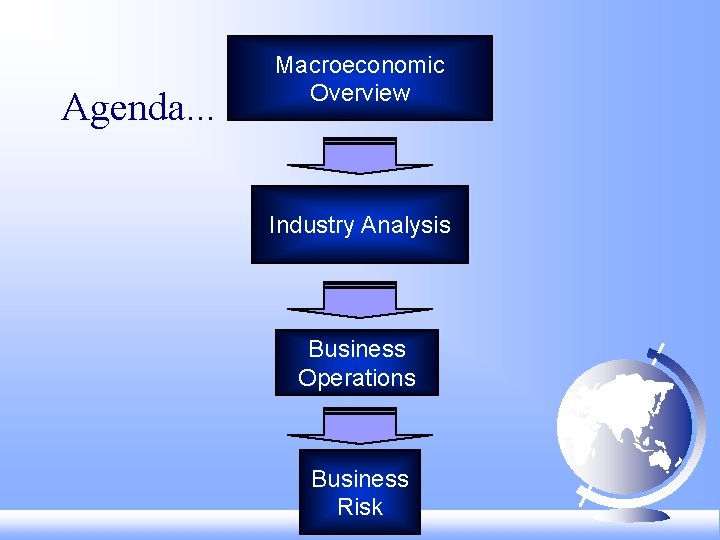
Agenda. . . Macroeconomic Overview Industry Analysis Business Operations Business Risk
Negative impacts. . . F “Dutch disease” – Repatriation- $2 billion/yr. u Return in form of foreign exchange, contraband legal imports P$ overvalued peso competitiveness of exports u “Dollarization” F Short-term investments Inefficient allocation of resources
… and positive F Barriers against recessionary pressure – Capital inflow F Demand – Farm equipment, chemicals, … F Social development – Reinvestment into community-services, wages, protection – Construction boom
Cartels influence government behavior and international perceptions. F Policies – Extradition (1991 and 1997) u US Decertification – “Muddling through” – “Apertura” – Government expenditures Military u Social opportunity costs u F Government – 40% Congress connected to Cartels corruption – Samper F Future issue-privatization?
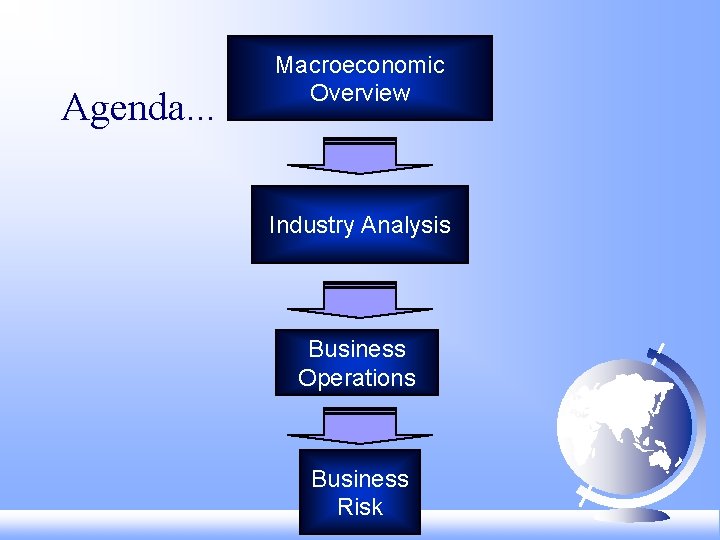
Agenda. . . Macroeconomic Overview Industry Analysis Business Operations Business Risk
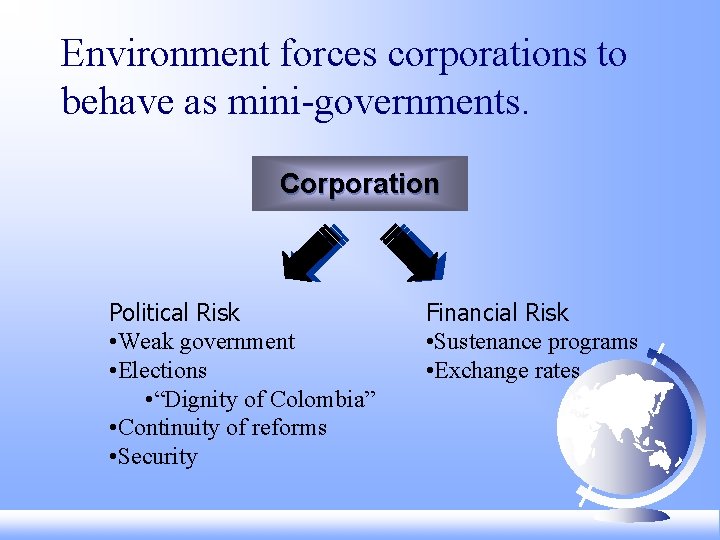
Environment forces corporations to behave as mini-governments. Corporation Political Risk • Weak government • Elections • “Dignity of Colombia” • Continuity of reforms • Security Financial Risk • Sustenance programs • Exchange rates
- Slides: 17