
Collisions in the solar system Collisions have played
- Slides: 12
Collisions in the solar system Collisions have played a major part in both the formation and the evolution of the solar system Q: Can you give a number of pieces of evidence for collisions and impacts (a) In the early solar system? (b) Ongoing impacts?
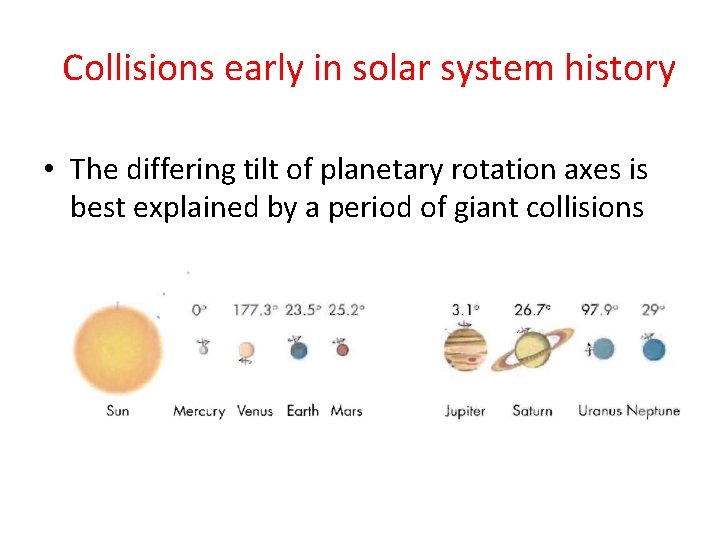
Collisions early in solar system history • The differing tilt of planetary rotation axes is best explained by a period of giant collisions
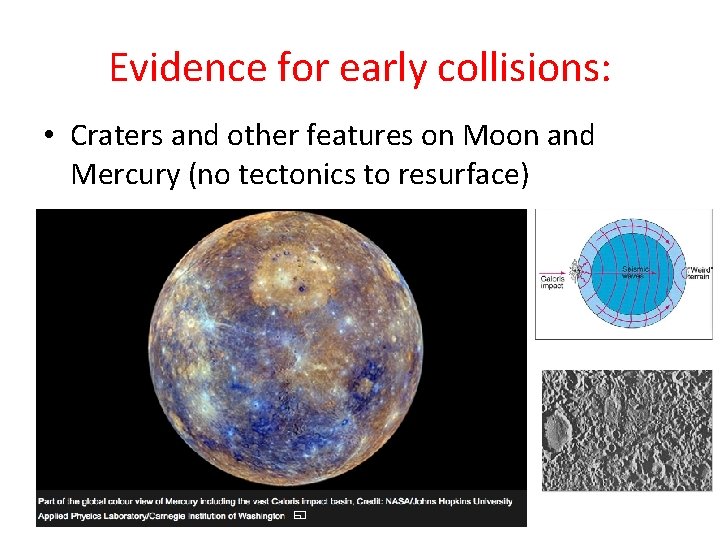
Evidence for early collisions: • Craters and other features on Moon and Mercury (no tectonics to resurface)
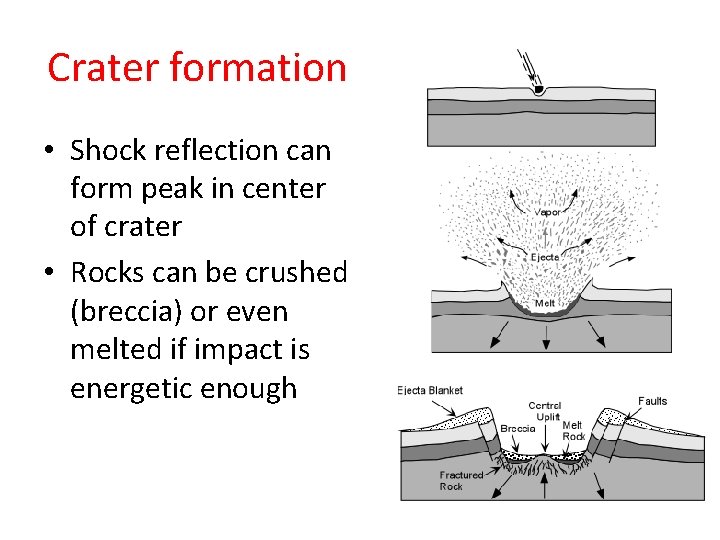
Crater formation • Shock reflection can form peak in center of crater • Rocks can be crushed (breccia) or even melted if impact is energetic enough
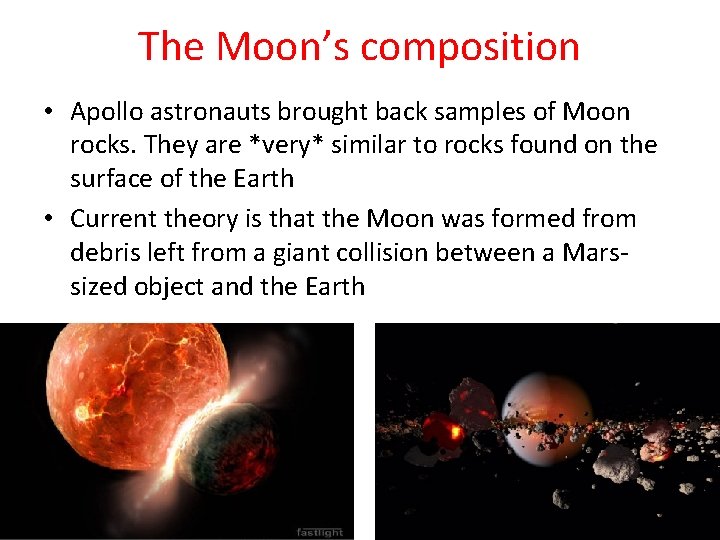
The Moon’s composition • Apollo astronauts brought back samples of Moon rocks. They are *very* similar to rocks found on the surface of the Earth • Current theory is that the Moon was formed from debris left from a giant collision between a Marssized object and the Earth
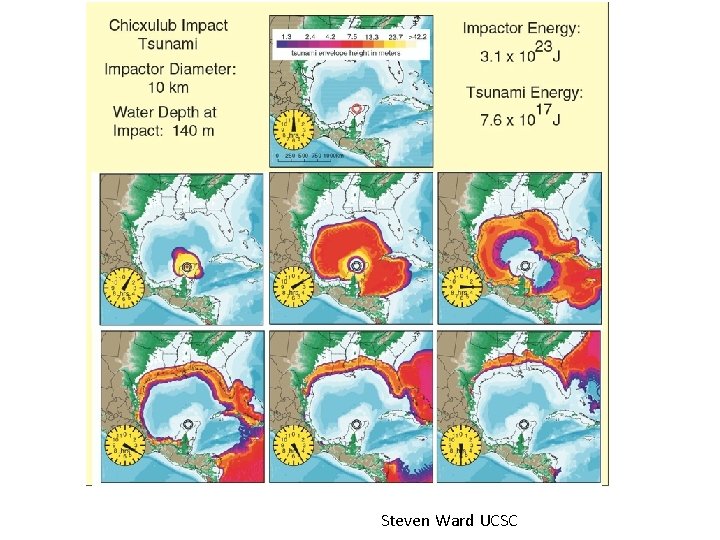
Steven Ward UCSC
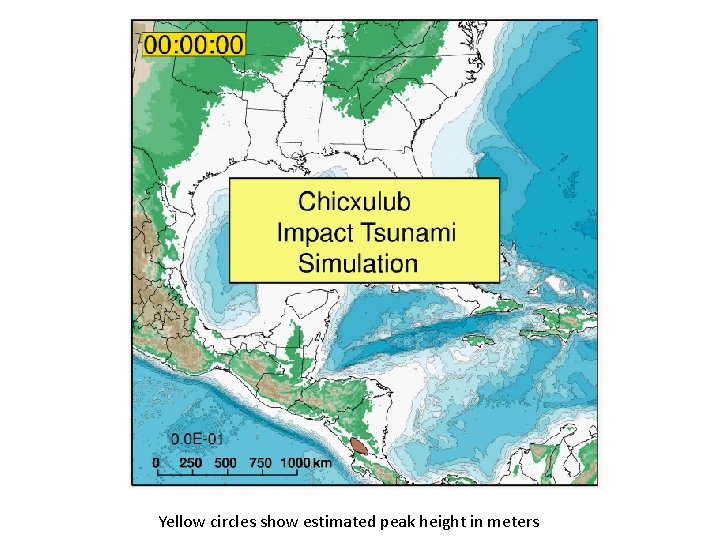
Yellow circles show estimated peak height in meters
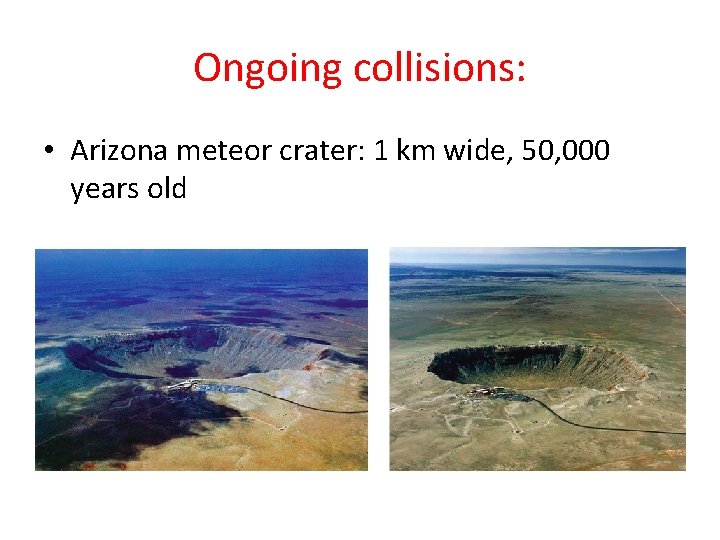
Ongoing collisions: • Arizona meteor crater: 1 km wide, 50, 000 years old
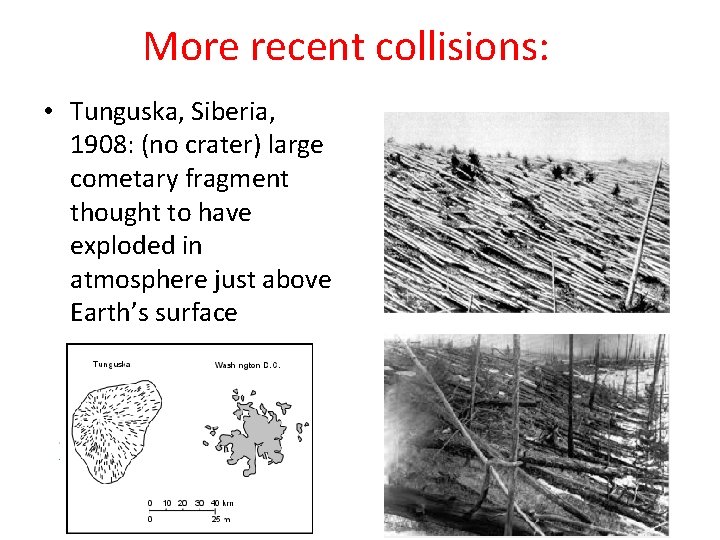
More recent collisions: • Tunguska, Siberia, 1908: (no crater) large cometary fragment thought to have exploded in atmosphere just above Earth’s surface
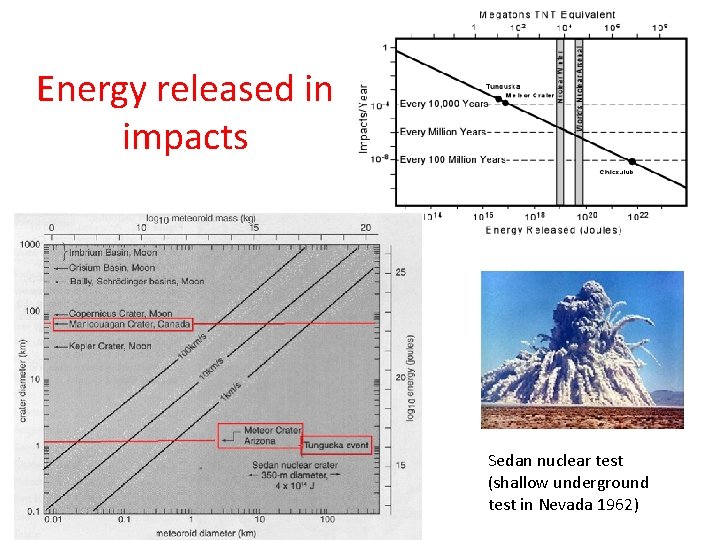
Energy released in impacts Sedan nuclear test (shallow underground test in Nevada 1962)