
Collisions David Hoult 2010 Elastic Collisions Elastic Collisions


- Slides: 72
Collisions © David Hoult 2010
Elastic Collisions
Elastic Collisions 1 dimensional collision
Elastic Collisions 1 dimensional collision: bodies of equal mass
Elastic Collisions 1 dimensional collision: bodies of equal mass (one body initially stationary)
Elastic Collisions 1 dimensional collision: bodies of equal mass (one body initially stationary)
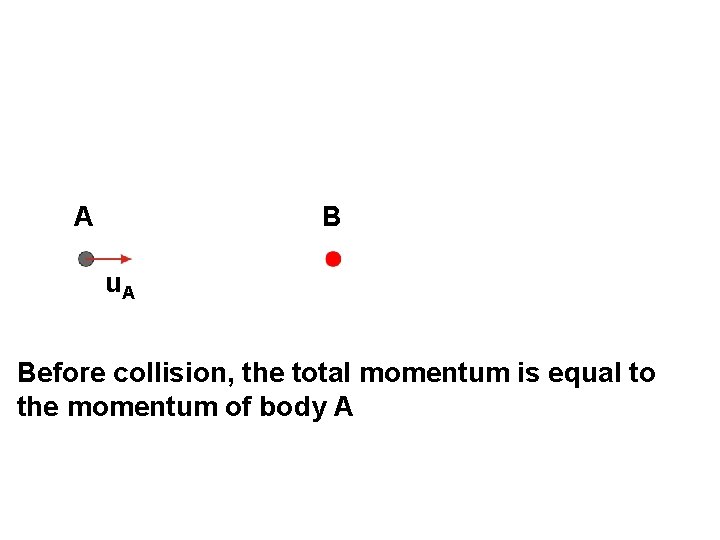
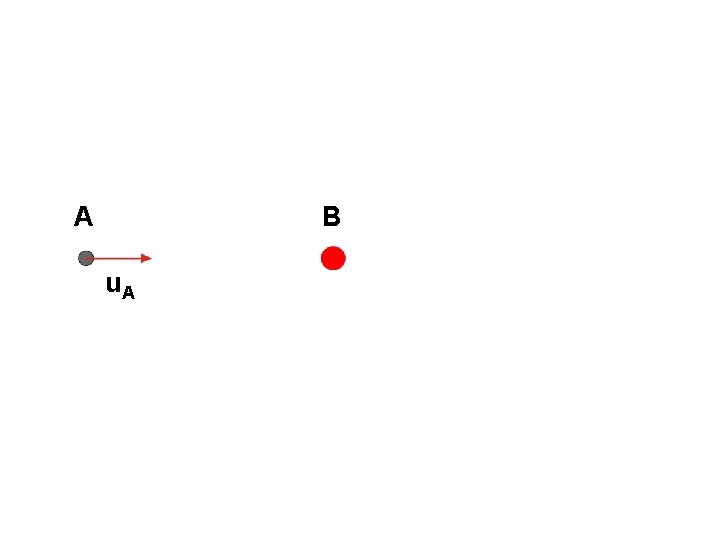
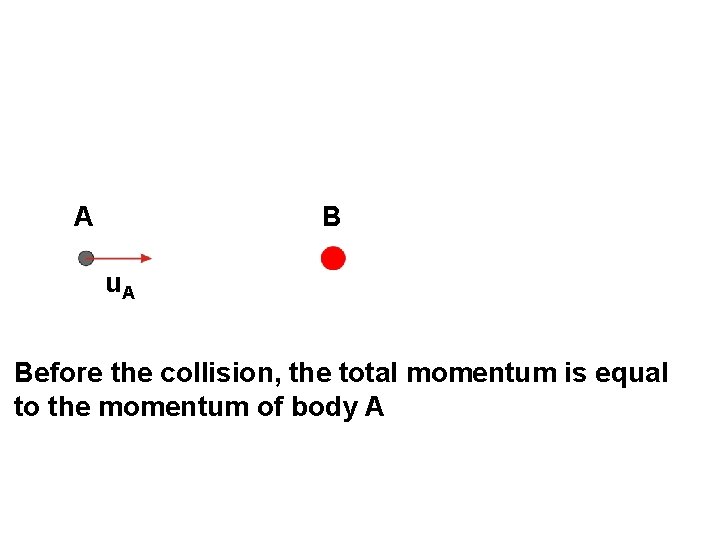
A B u. A Before collision, the total momentum is equal to the momentum of body A
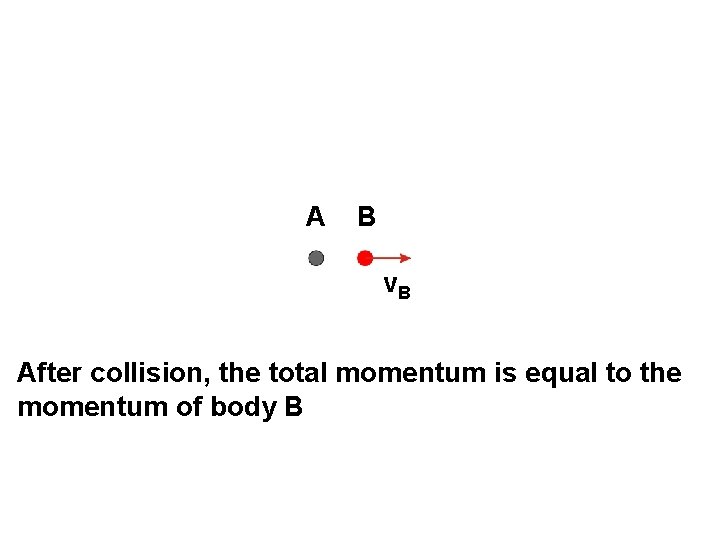
A B v. B After collision, the total momentum is equal to the momentum of body B
The principle of conservation of momentum states that the total momentum after collision equal to the total momentum before collision (assuming no external forces acting on the bodies)
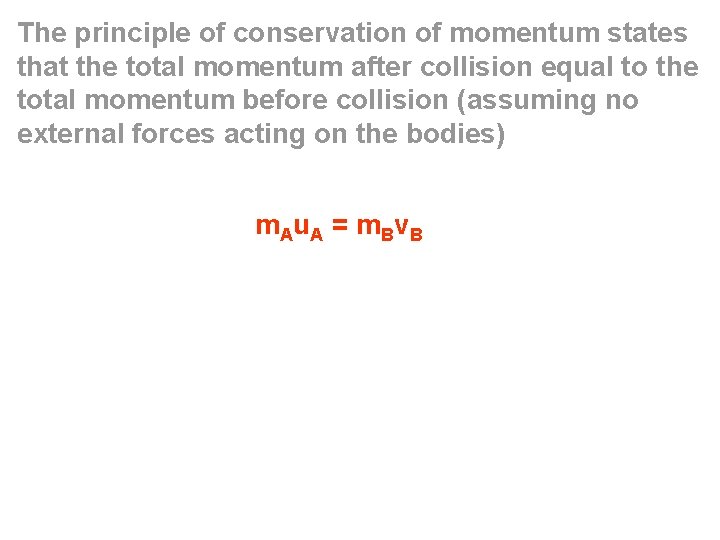
The principle of conservation of momentum states that the total momentum after collision equal to the total momentum before collision (assuming no external forces acting on the bodies) m Au A = m Bv B
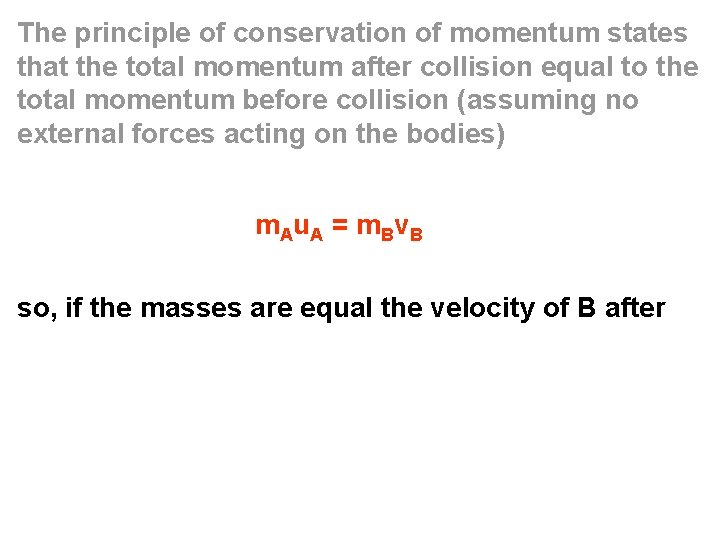
The principle of conservation of momentum states that the total momentum after collision equal to the total momentum before collision (assuming no external forces acting on the bodies) m Au A = m Bv B so, if the masses are equal the velocity of B after
The principle of conservation of momentum states that the total momentum after collision equal to the total momentum before collision (assuming no external forces acting on the bodies) m Au A = m Bv B so, if the masses are equal the velocity of B after is equal to the velocity of A before
Bodies of different mass
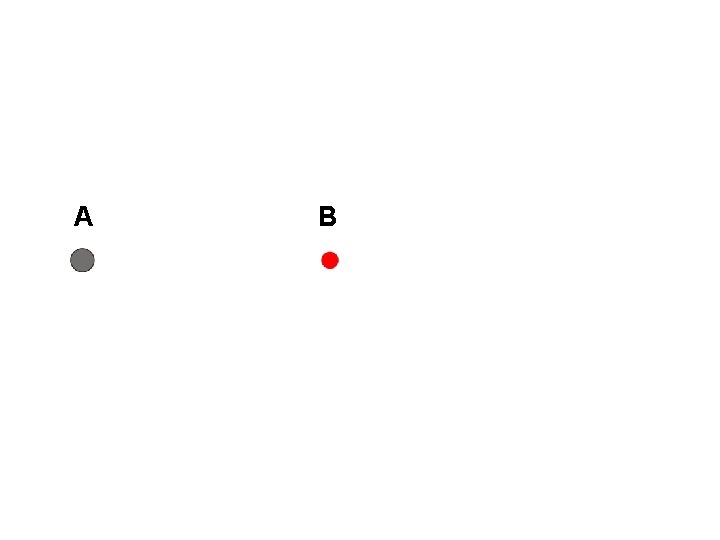
A B
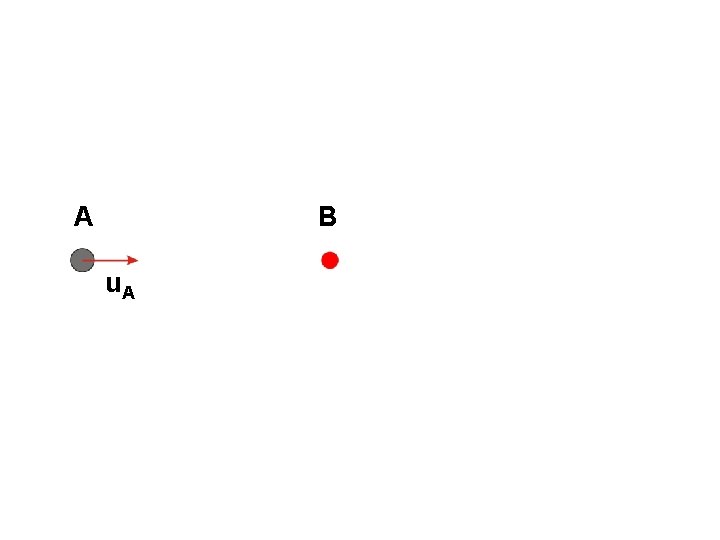
A B u. A
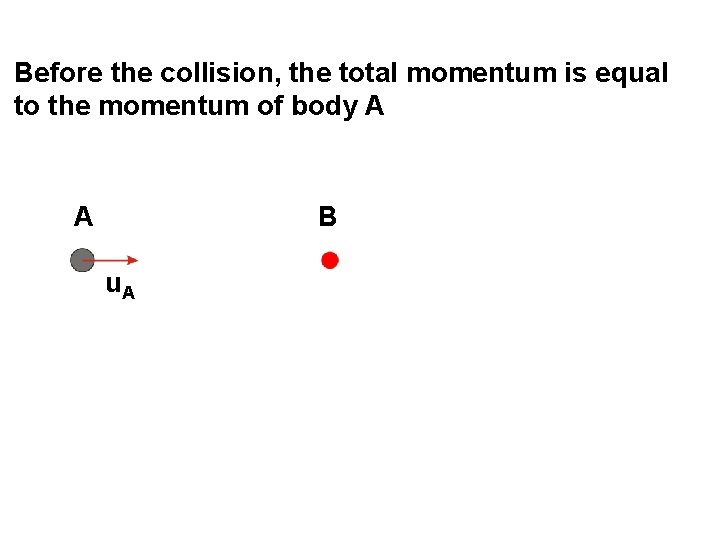
Before the collision, the total momentum is equal to the momentum of body A A B u. A
A v. A B v. B
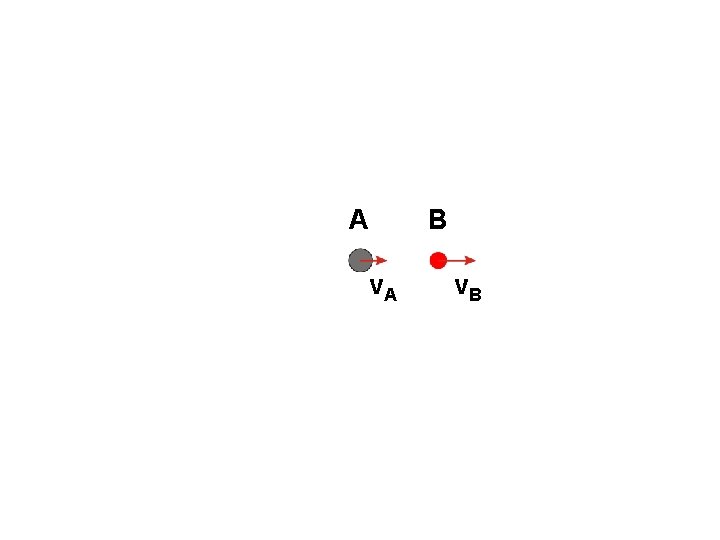
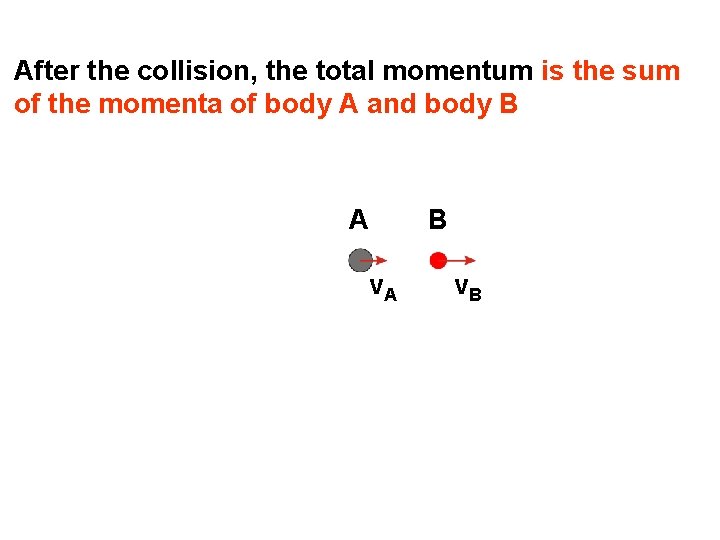
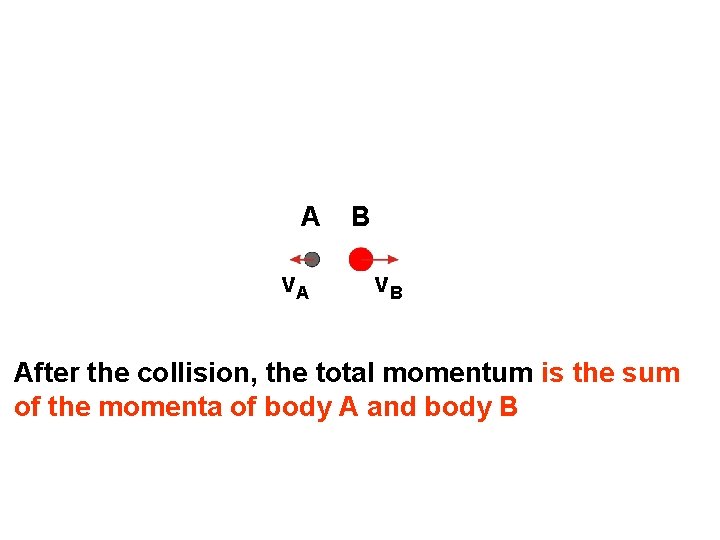
After the collision, the total momentum is the sum of the momenta of body A and body B A v. A B v. B
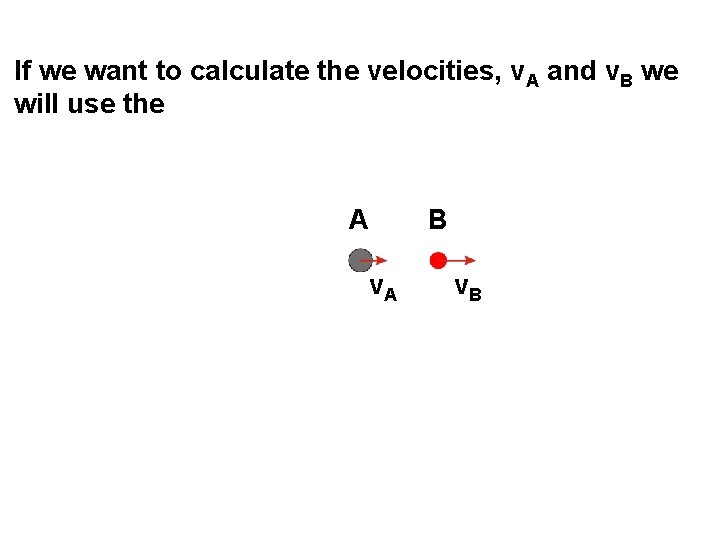
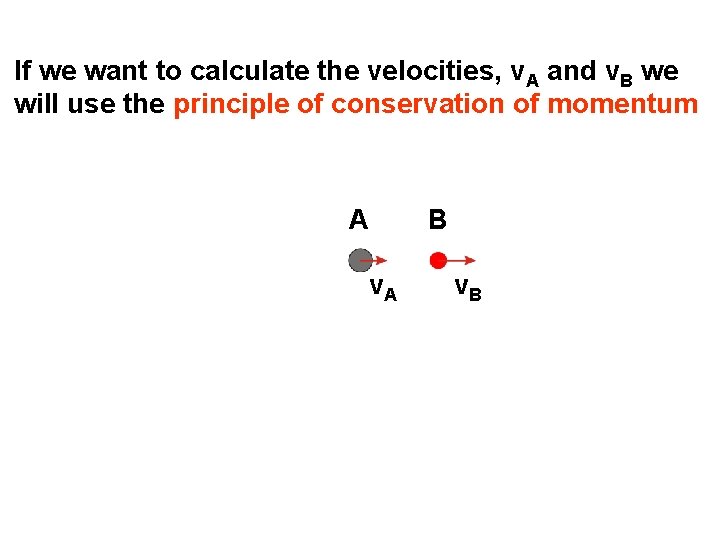
If we want to calculate the velocities, v. A and v. B we will use the A v. A B v. B
If we want to calculate the velocities, v. A and v. B we will use the principle of conservation of momentum A v. A B v. B
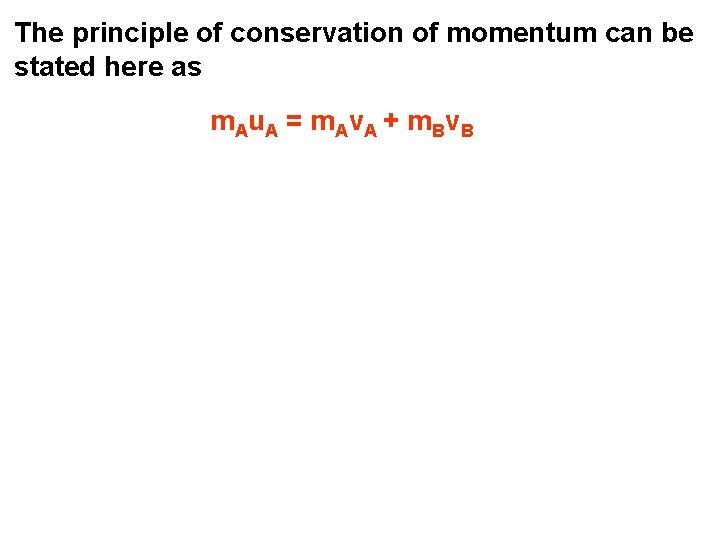
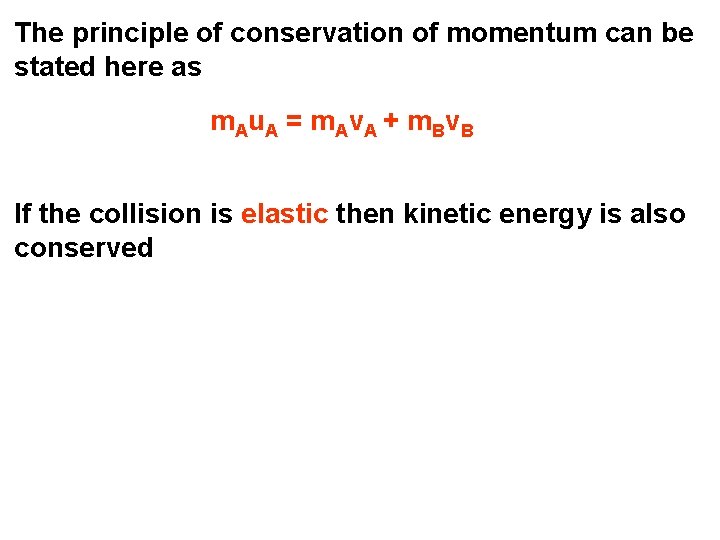
The principle of conservation of momentum can be stated here as
The principle of conservation of momentum can be stated here as m Au A = m Av A + m Bv B
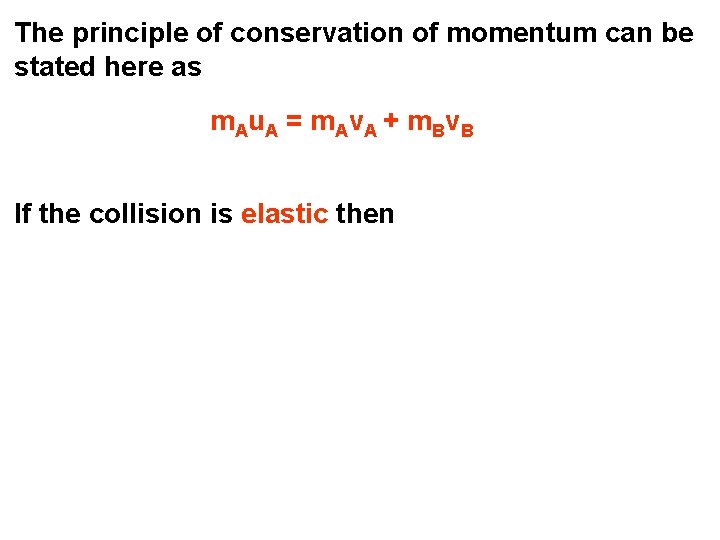
The principle of conservation of momentum can be stated here as m Au A = m Av A + m Bv B If the collision is elastic then
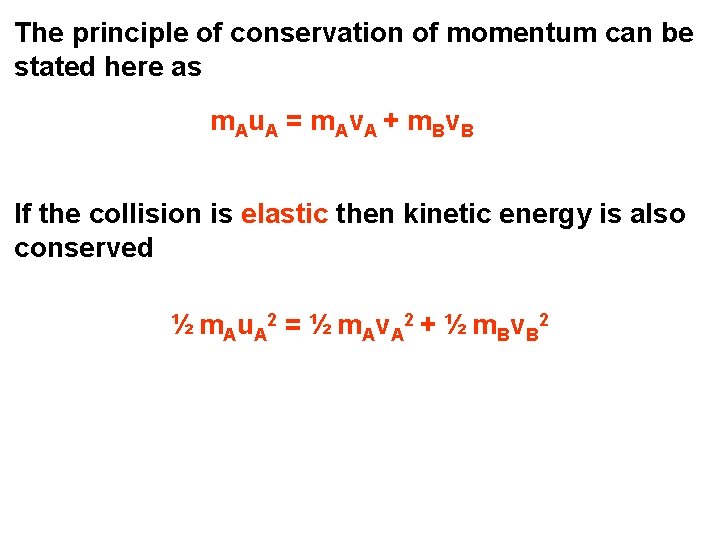
The principle of conservation of momentum can be stated here as m Au A = m Av A + m Bv B If the collision is elastic then kinetic energy is also conserved
The principle of conservation of momentum can be stated here as m Au A = m Av A + m Bv B If the collision is elastic then kinetic energy is also conserved ½ m Au A 2 = ½ m Av A 2 + ½ m Bv B 2
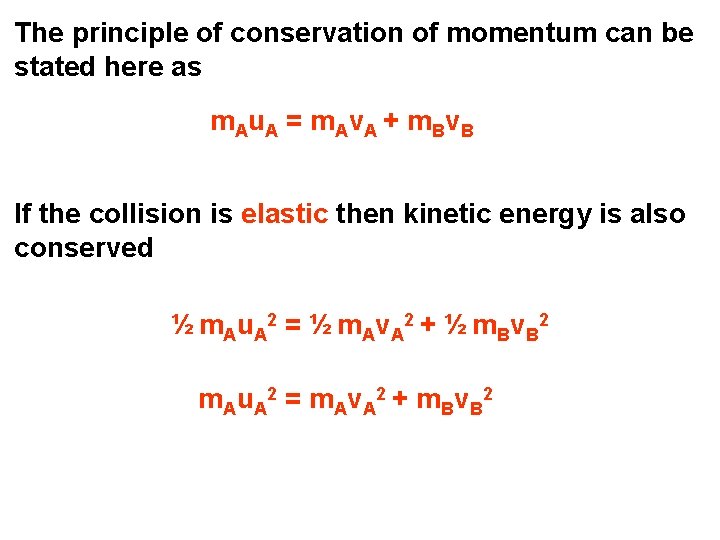
The principle of conservation of momentum can be stated here as m Au A = m Av A + m Bv B If the collision is elastic then kinetic energy is also conserved ½ m Au A 2 = ½ m Av A 2 + ½ m Bv B 2 m Au A 2 = m Av A 2 + m Bv B 2
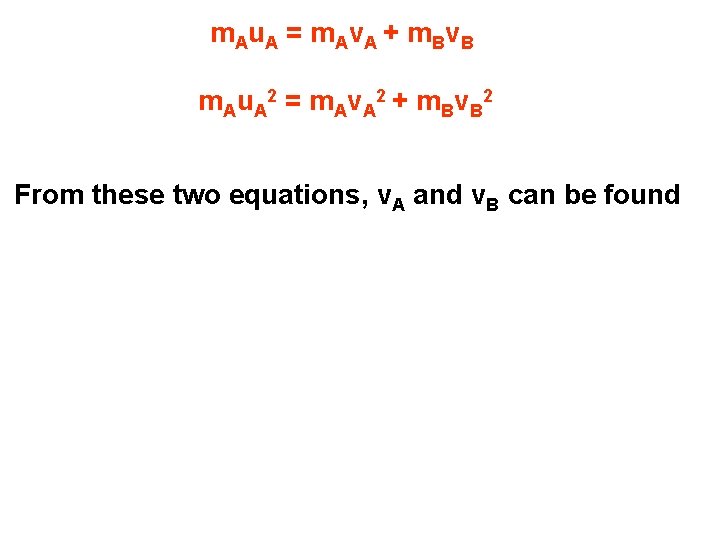
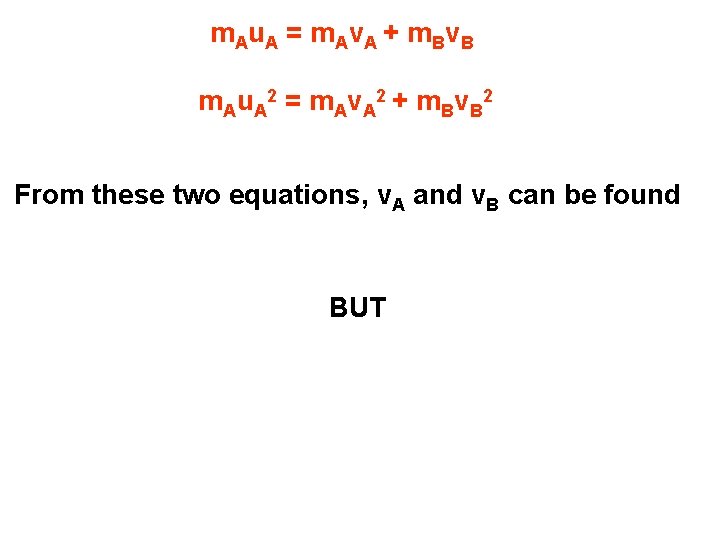
m Au A = m Av A + m Bv B m Au A 2 = m Av A 2 + m Bv B 2 From these two equations, v. A and v. B can be found
m Au A = m Av A + m Bv B m Au A 2 = m Av A 2 + m Bv B 2 From these two equations, v. A and v. B can be found BUT
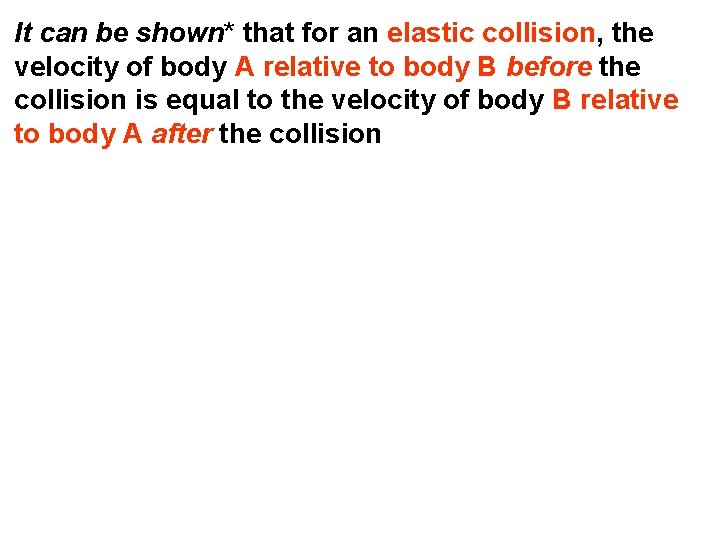
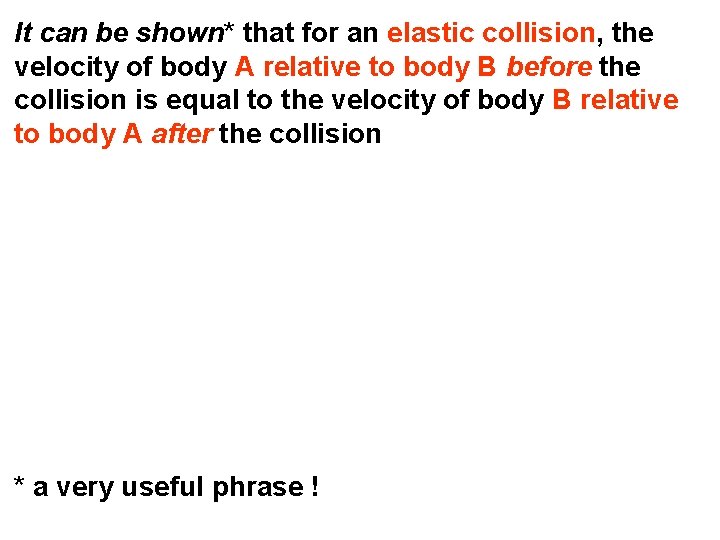
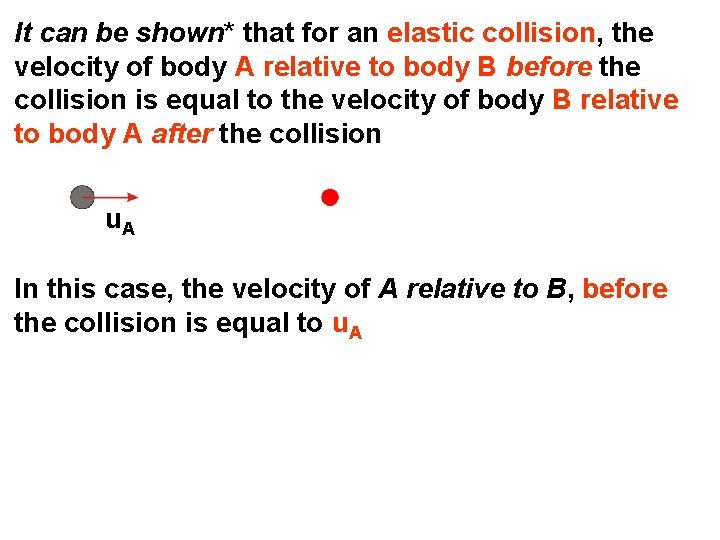
It can be shown* that for an elastic collision, the velocity of body A relative to body B before the collision is equal to the velocity of body B relative to body A after the collision
It can be shown* that for an elastic collision, the velocity of body A relative to body B before the collision is equal to the velocity of body B relative to body A after the collision * a very useful phrase !
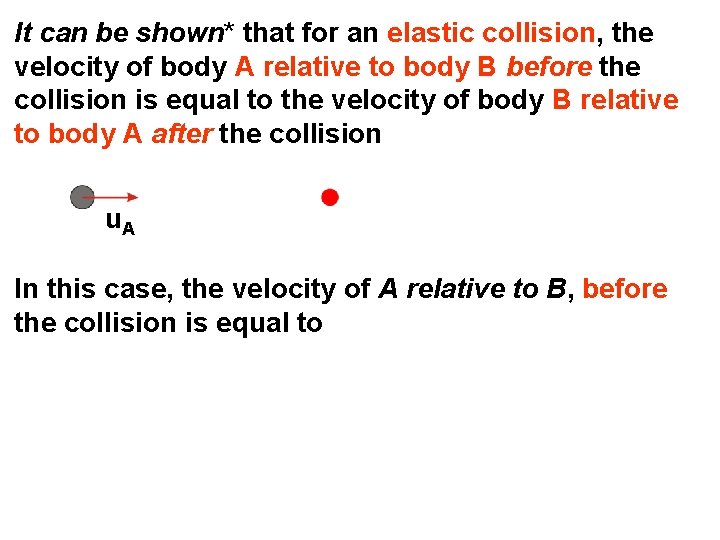
It can be shown* that for an elastic collision, the velocity of body A relative to body B before the collision is equal to the velocity of body B relative to body A after the collision u. A In this case, the velocity of A relative to B, before the collision is equal to
It can be shown* that for an elastic collision, the velocity of body A relative to body B before the collision is equal to the velocity of body B relative to body A after the collision u. A In this case, the velocity of A relative to B, before the collision is equal to u. A
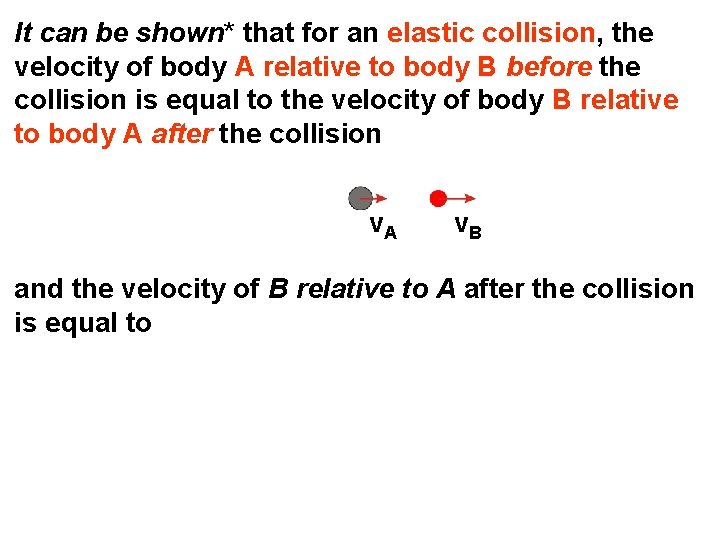
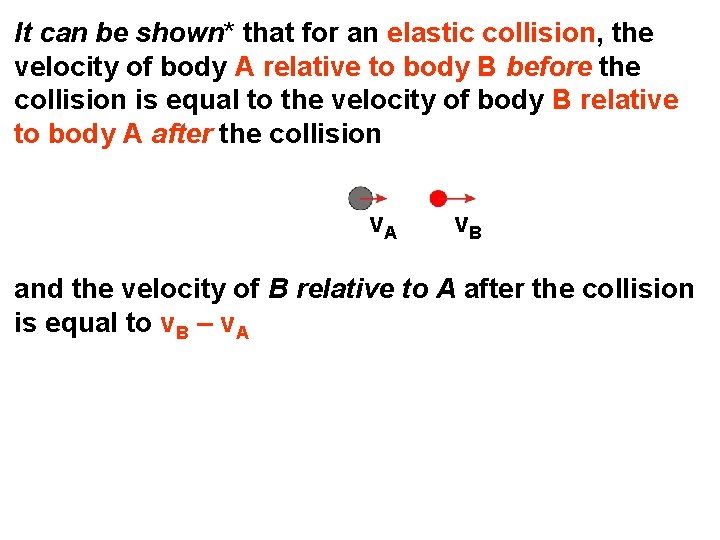
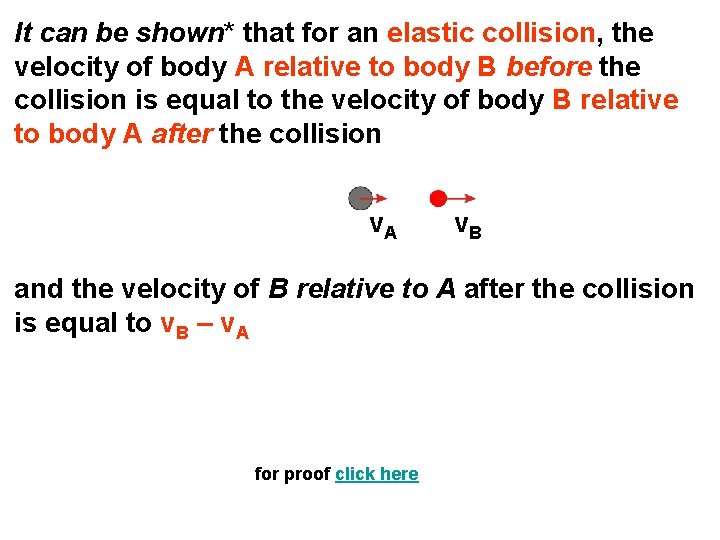
It can be shown* that for an elastic collision, the velocity of body A relative to body B before the collision is equal to the velocity of body B relative to body A after the collision v. A v. B and the velocity of B relative to A after the collision is equal to
It can be shown* that for an elastic collision, the velocity of body A relative to body B before the collision is equal to the velocity of body B relative to body A after the collision v. A v. B and the velocity of B relative to A after the collision is equal to v. B – v. A
It can be shown* that for an elastic collision, the velocity of body A relative to body B before the collision is equal to the velocity of body B relative to body A after the collision v. A v. B and the velocity of B relative to A after the collision is equal to v. B – v. A for proof click here
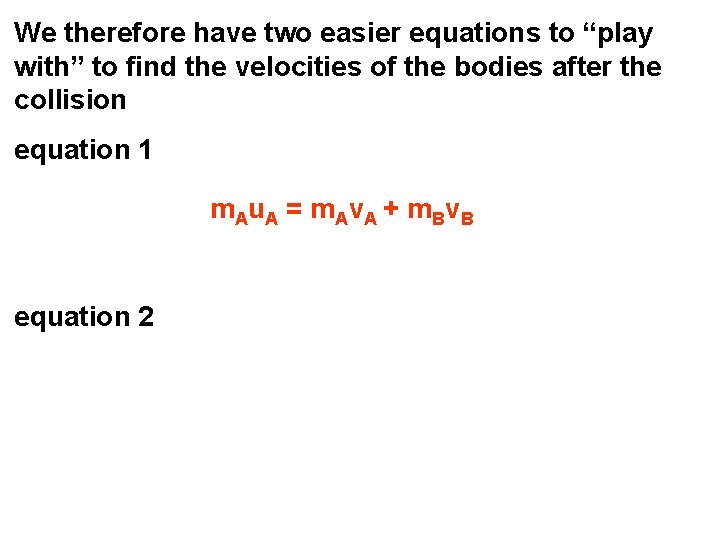
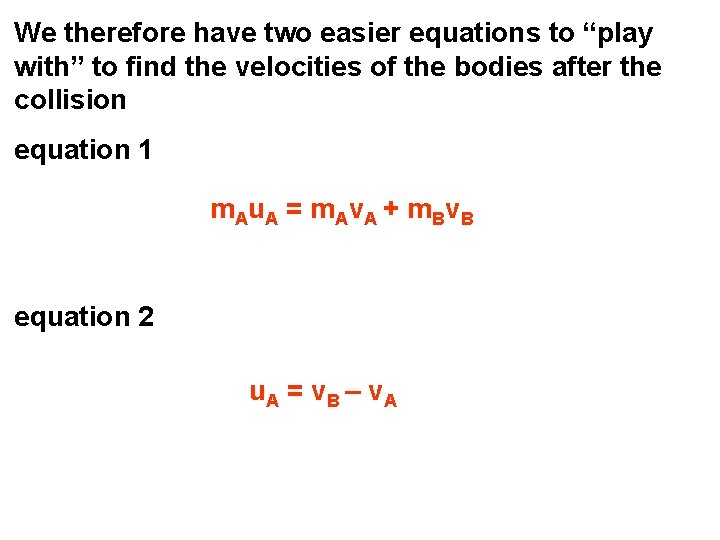
We therefore have two easier equations to “play with” to find the velocities of the bodies after the collision equation 1
We therefore have two easier equations to “play with” to find the velocities of the bodies after the collision equation 1 m Au A = m Av A + m Bv B equation 2
We therefore have two easier equations to “play with” to find the velocities of the bodies after the collision equation 1 m Au A = m Av A + m Bv B equation 2 u A = v. B – v. A
A B u. A
A B u. A Before the collision, the total momentum is equal to the momentum of body A
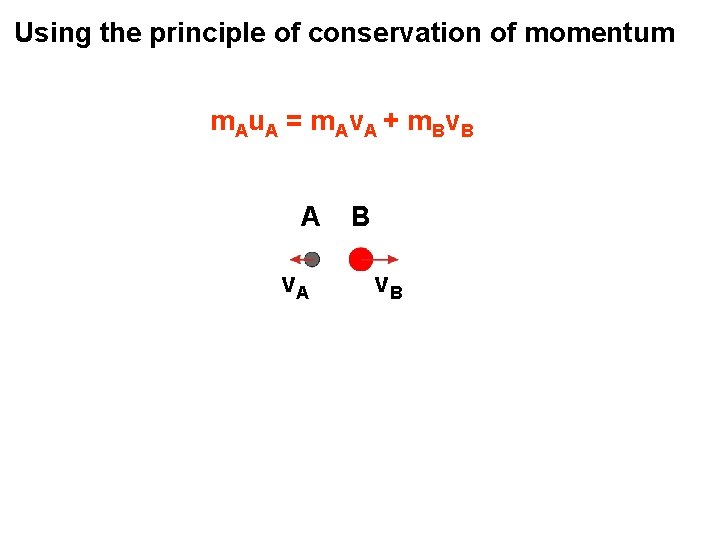
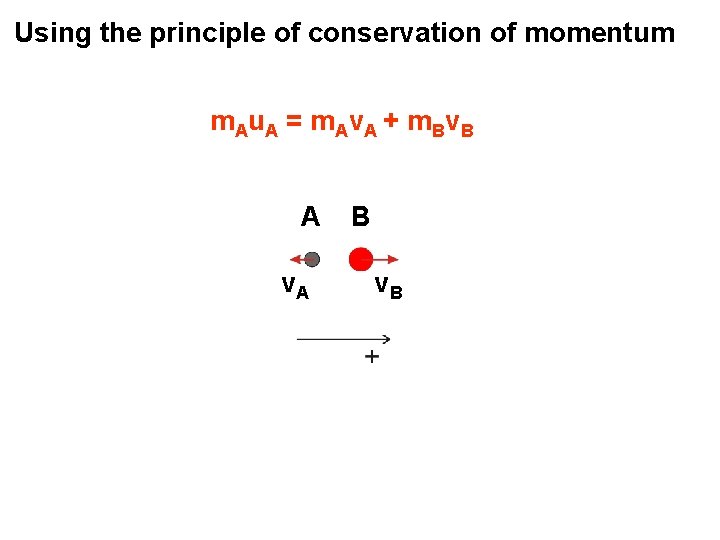
A v. A B v. B After the collision, the total momentum is the sum of the momenta of body A and body B
Using the principle of conservation of momentum
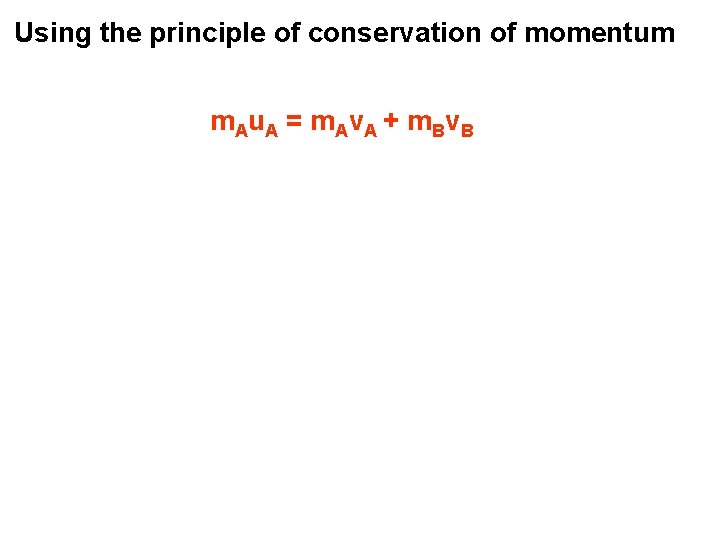
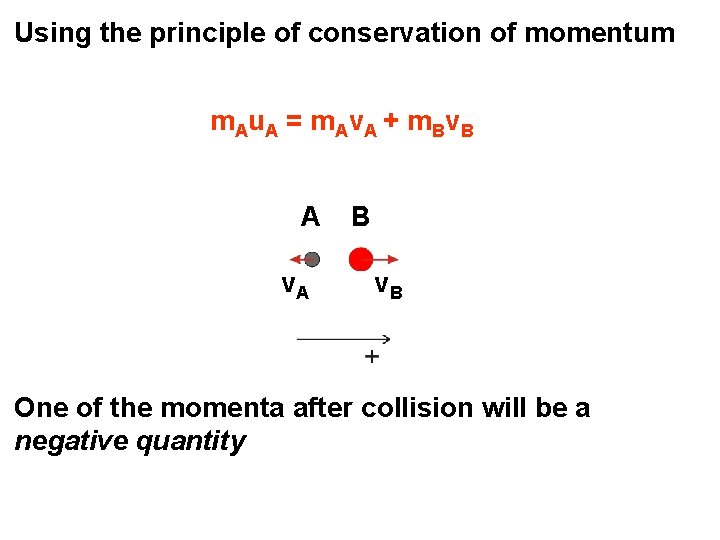
Using the principle of conservation of momentum m Au A = m Av A + m Bv B
Using the principle of conservation of momentum m Au A = m Av A + m Bv B A v. A B v. B
Using the principle of conservation of momentum m Au A = m Av A + m Bv B A v. A B v. B
Using the principle of conservation of momentum m Au A = m Av A + m Bv B A v. A B v. B One of the momenta after collision will be a negative quantity
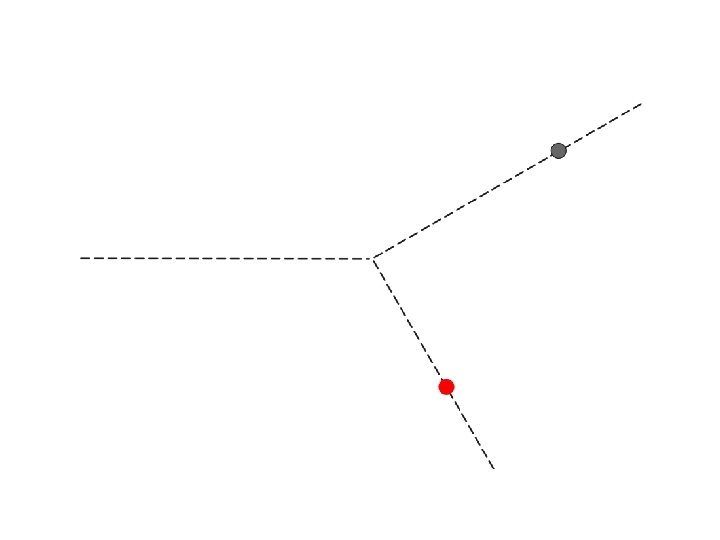
2 dimensional collision
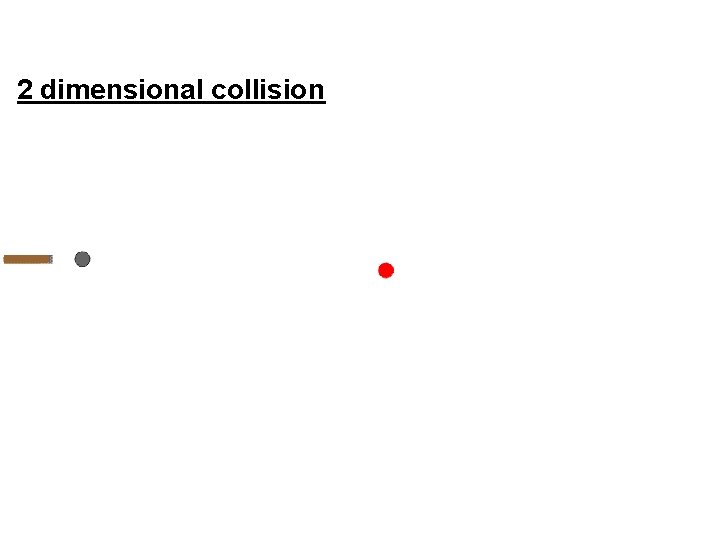
2 dimensional collision
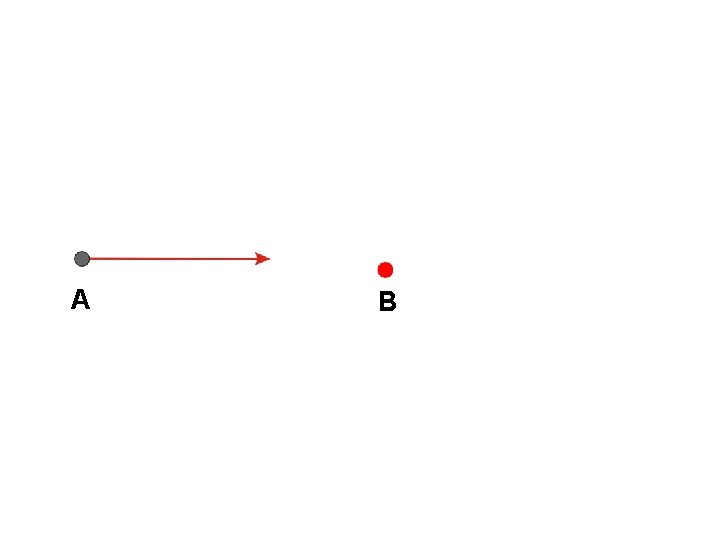
A B
A B Before the collision, the total momentum is equal to the momentum of body A
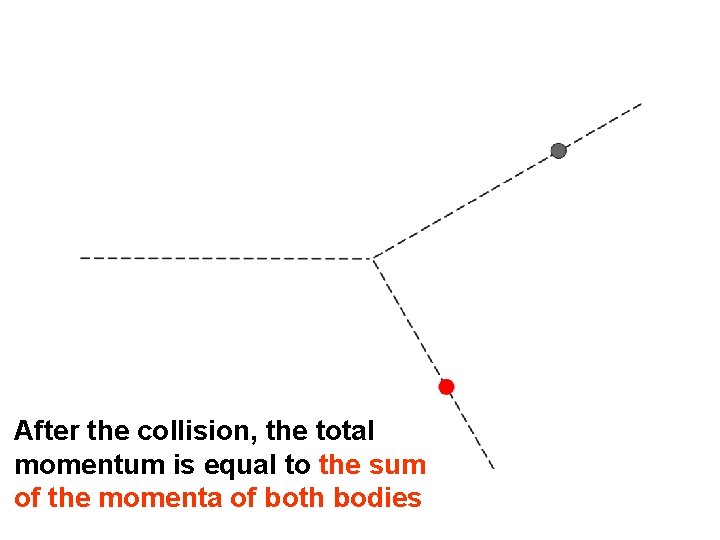
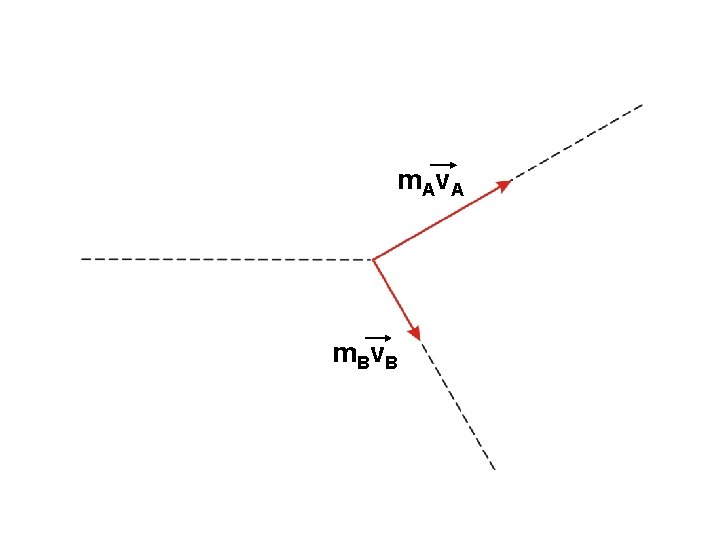
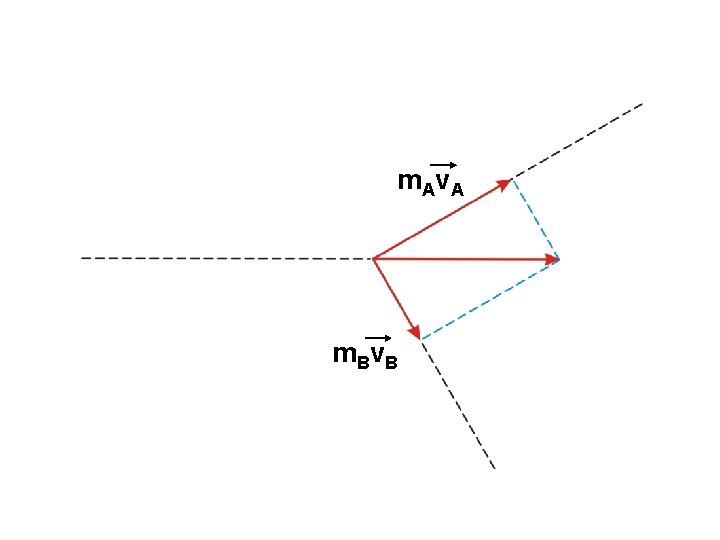
After the collision, the total momentum is equal to the sum of the momenta of both bodies
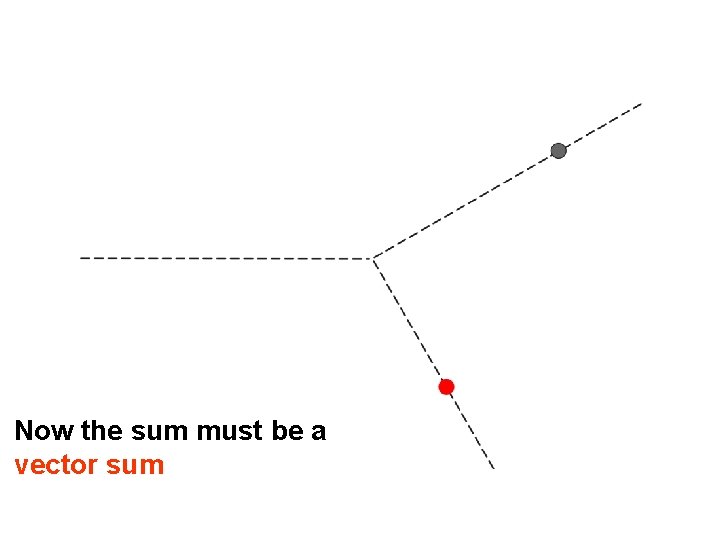
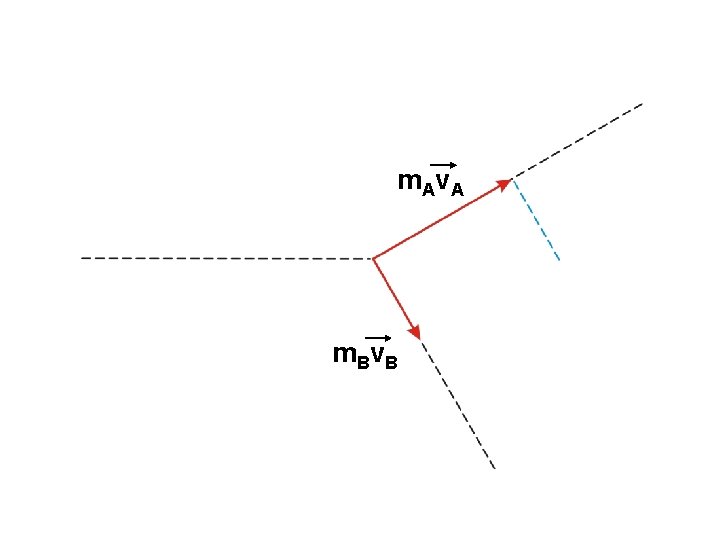
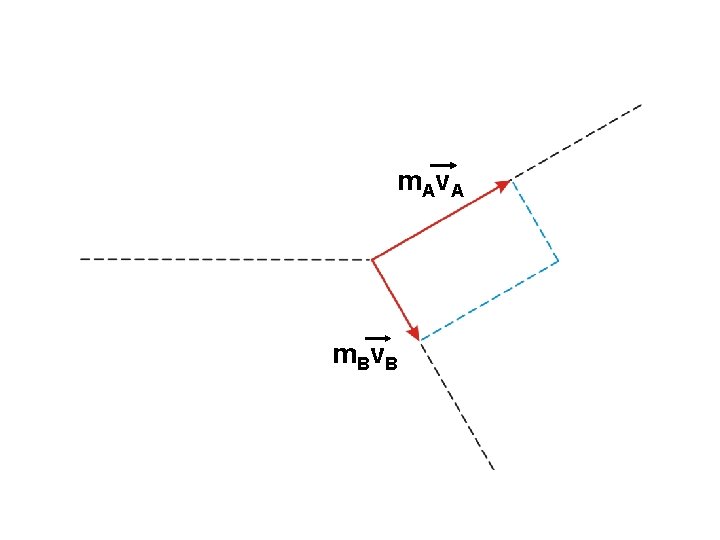
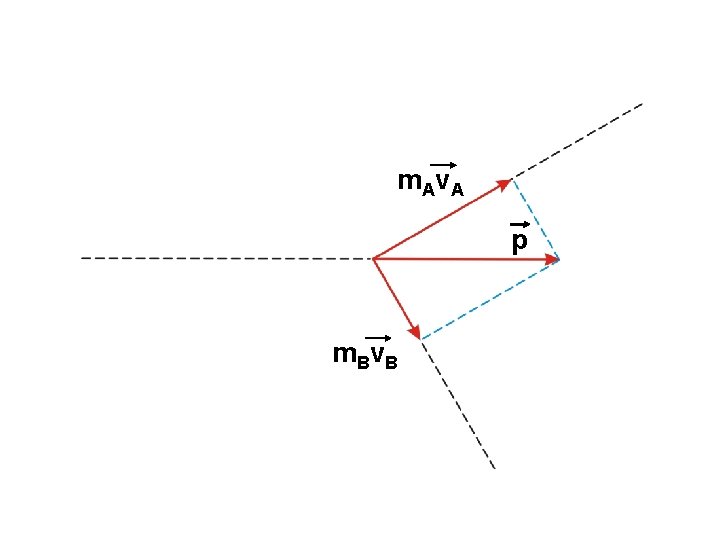
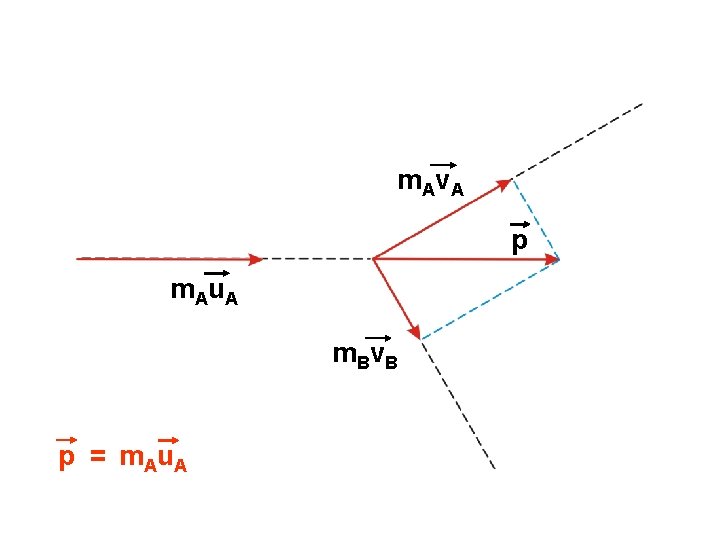
Now the sum must be a vector sum
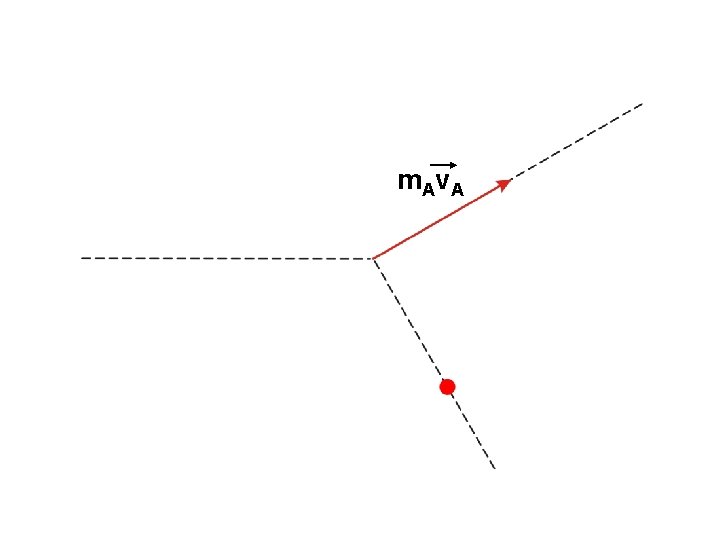
m Av A
m Av A m Bv B
m Av A m Bv B
m Av A m Bv B
m Av A m Bv B
m Av A p m Bv B
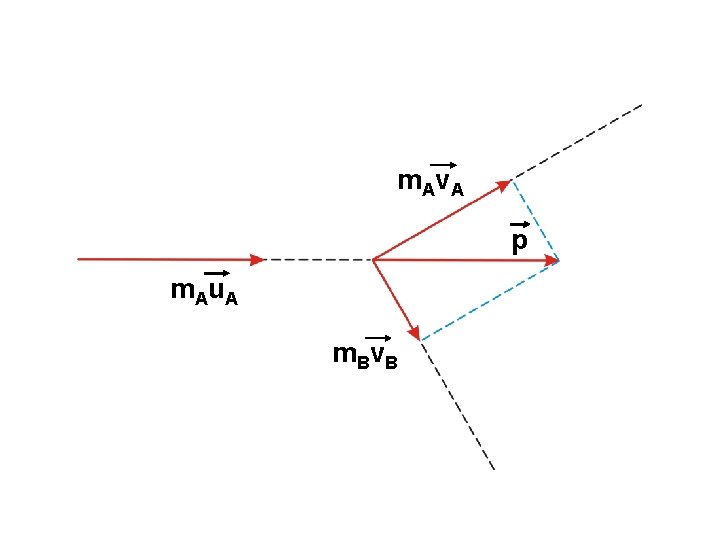
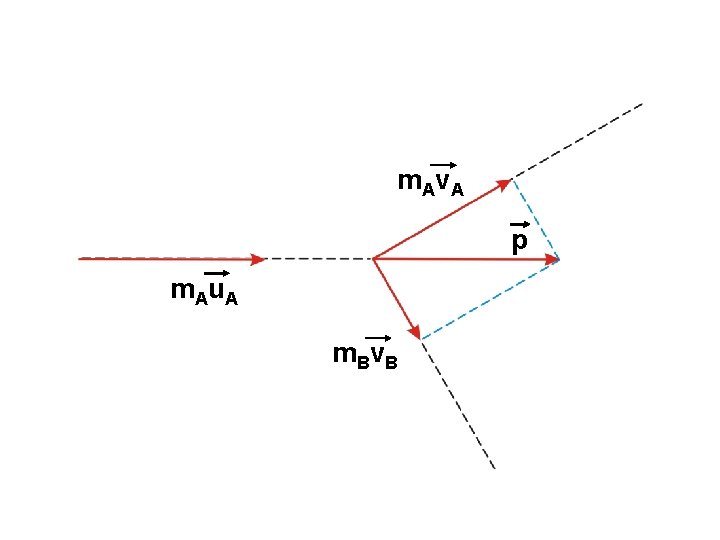
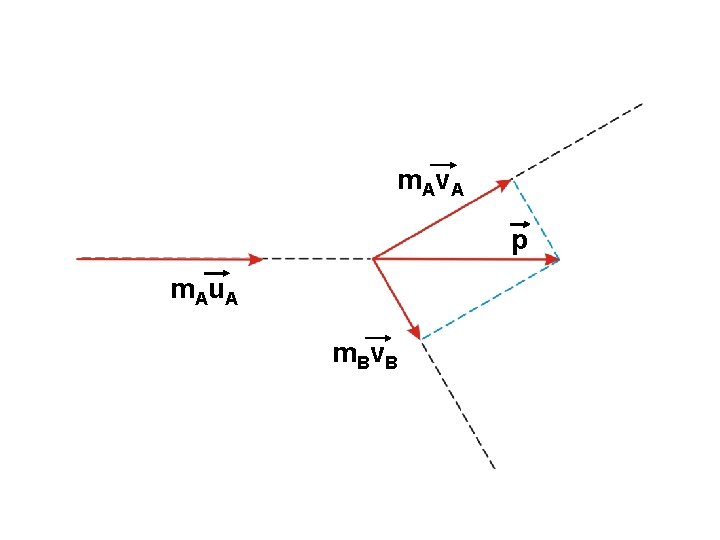
m Av A p m Au A m Bv B
m Av A p m Au A m Bv B
m Av A p m Au A m Bv B
m Av A p m Au A m Bv B p = m Au A
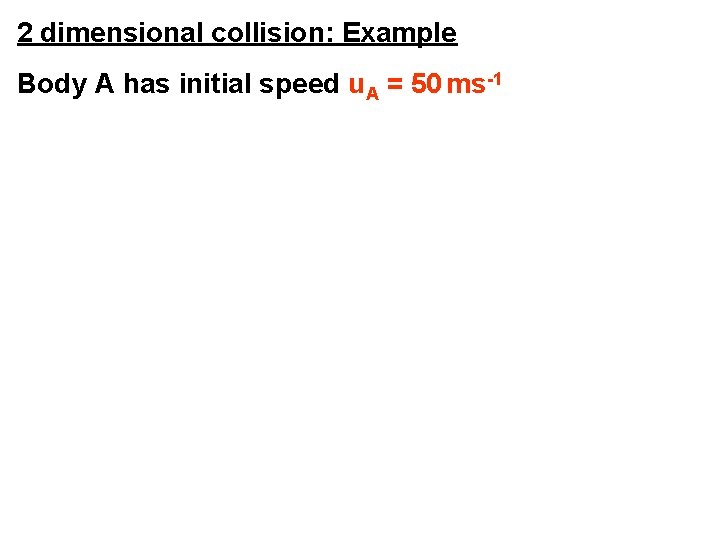
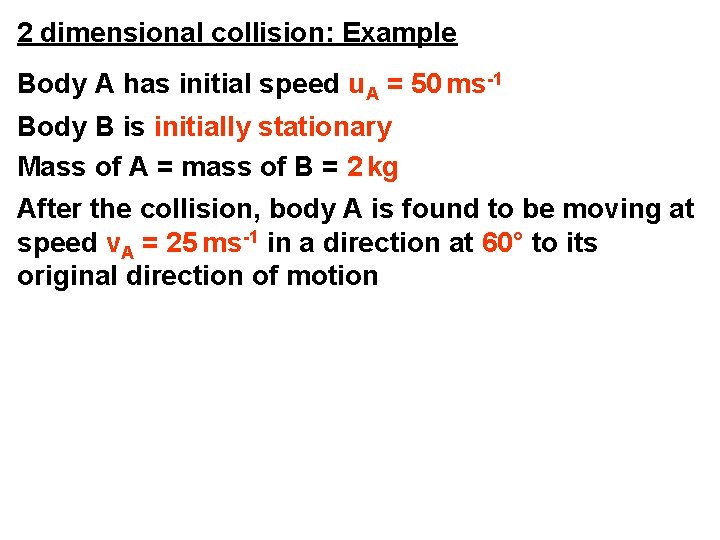
2 dimensional collision: Example Body A has initial speed u. A = 50 ms-1
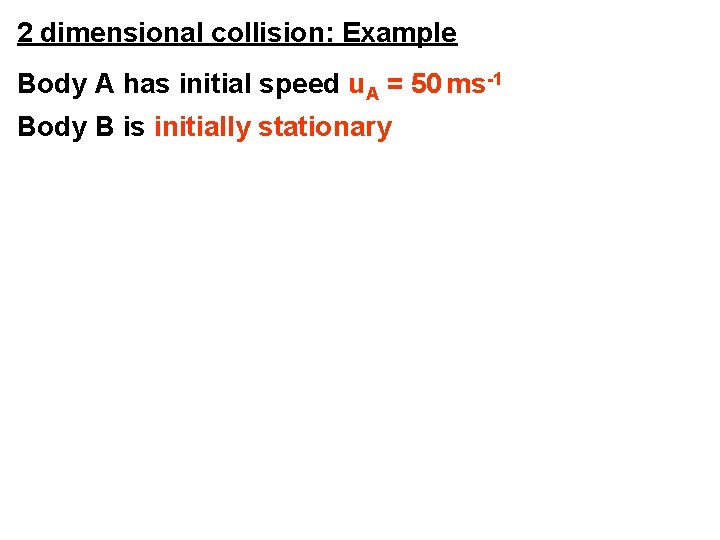
2 dimensional collision: Example Body A has initial speed u. A = 50 ms-1 Body B is initially stationary
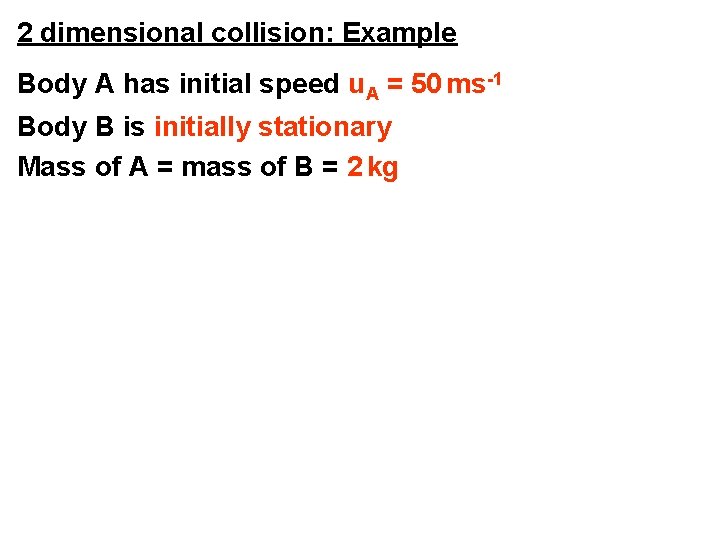
2 dimensional collision: Example Body A has initial speed u. A = 50 ms-1 Body B is initially stationary Mass of A = mass of B = 2 kg
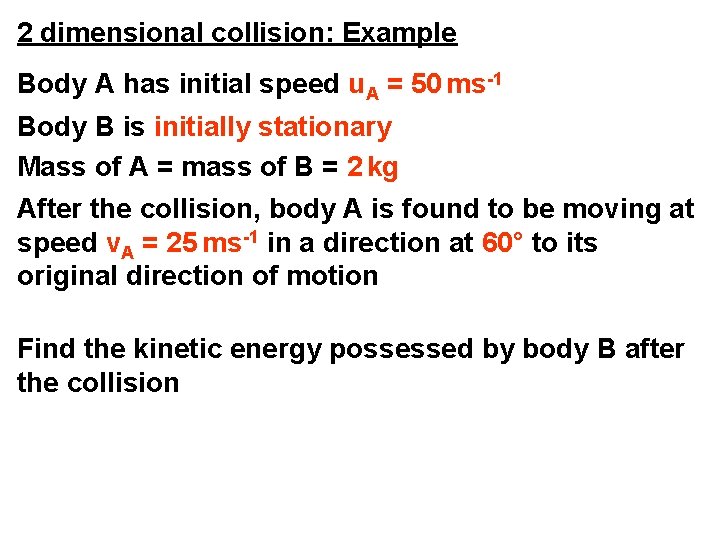
2 dimensional collision: Example Body A has initial speed u. A = 50 ms-1 Body B is initially stationary Mass of A = mass of B = 2 kg After the collision, body A is found to be moving at speed v. A = 25 ms-1 in a direction at 60° to its original direction of motion
2 dimensional collision: Example Body A has initial speed u. A = 50 ms-1 Body B is initially stationary Mass of A = mass of B = 2 kg After the collision, body A is found to be moving at speed v. A = 25 ms-1 in a direction at 60° to its original direction of motion Find the kinetic energy possessed by body B after the collision