
Collisions and energy Collisions Kinetic energy and momentum

- Slides: 11
Collisions and energy
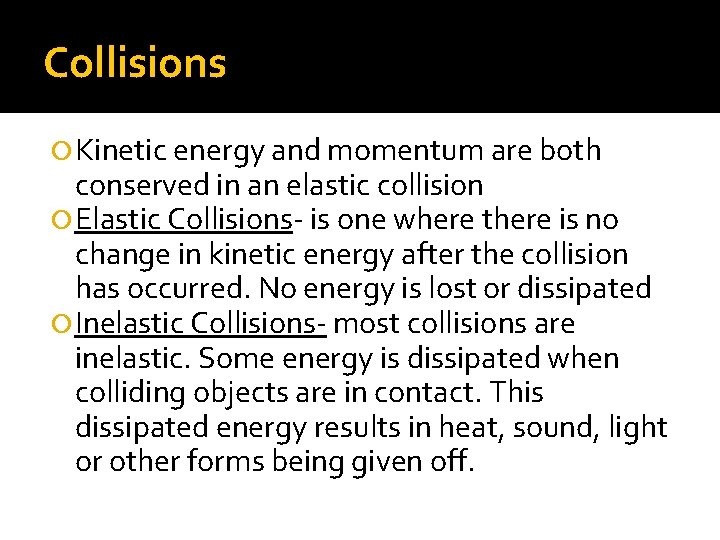
Collisions Kinetic energy and momentum are both conserved in an elastic collision Elastic Collisions- is one where there is no change in kinetic energy after the collision has occurred. No energy is lost or dissipated Inelastic Collisions- most collisions are inelastic. Some energy is dissipated when colliding objects are in contact. This dissipated energy results in heat, sound, light or other forms being given off.
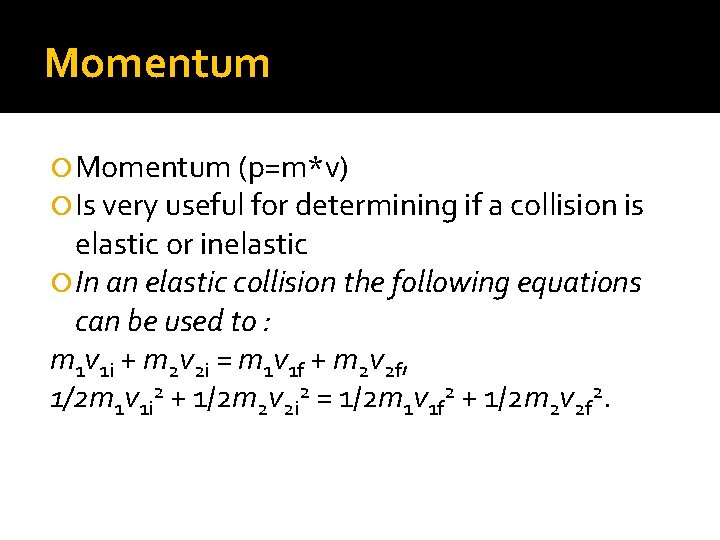
Momentum (p=m*v) Is very useful for determining if a collision is elastic or inelastic In an elastic collision the following equations can be used to : m 1 v 1 i + m 2 v 2 i = m 1 v 1 f + m 2 v 2 f, 1/2 m 1 v 1 i 2 + 1/2 m 2 v 2 i 2 = 1/2 m 1 v 1 f 2 + 1/2 m 2 v 2 f 2.
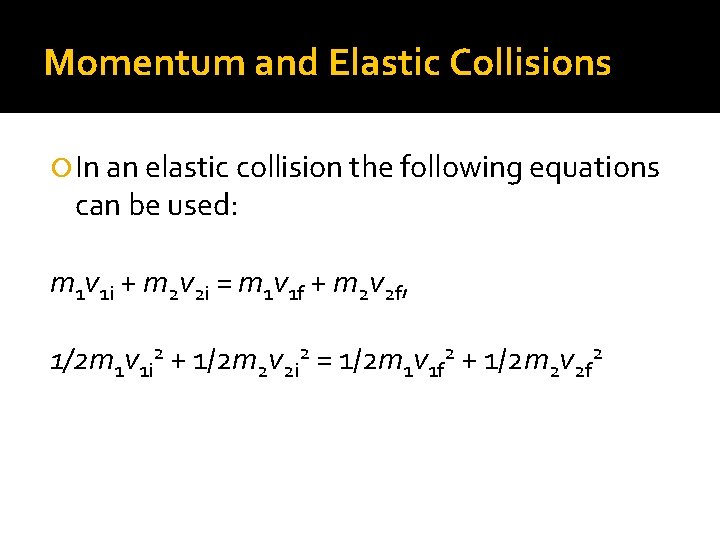
Momentum and Elastic Collisions In an elastic collision the following equations can be used: m 1 v 1 i + m 2 v 2 i = m 1 v 1 f + m 2 v 2 f, 1/2 m 1 v 1 i 2 + 1/2 m 2 v 2 i 2 = 1/2 m 1 v 1 f 2 + 1/2 m 2 v 2 f 2
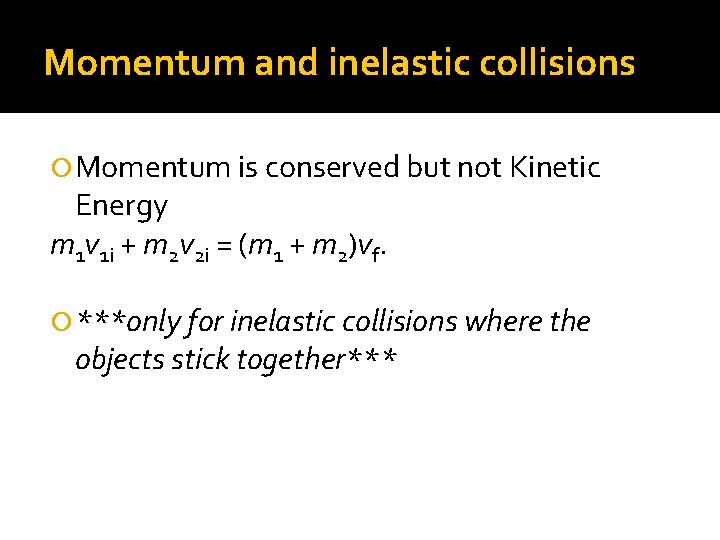
Momentum and inelastic collisions Momentum is conserved but not Kinetic Energy m 1 v 1 i + m 2 v 2 i = (m 1 + m 2)vf. ***only for inelastic collisions where the objects stick together***
Applet showing collisions http: //www. walter-fendt. de/ph 14 e/collision. htm
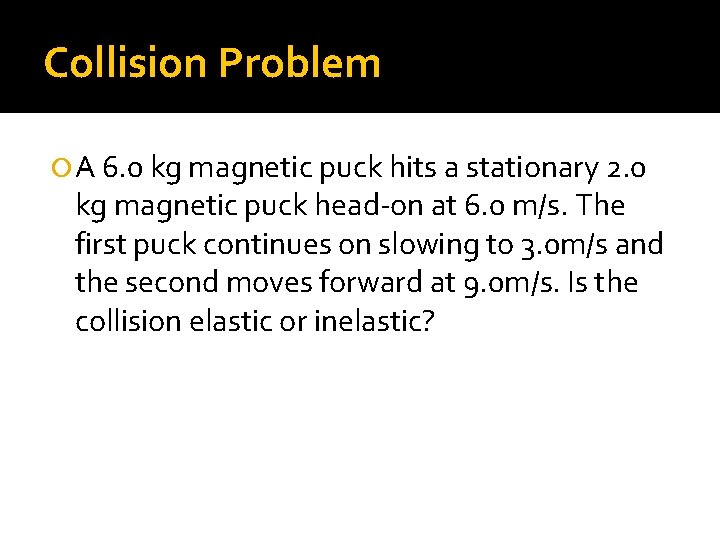
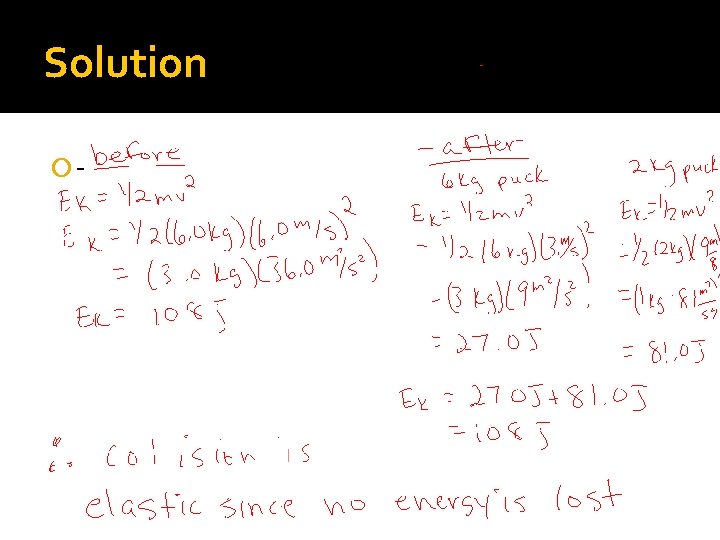
Collision Problem A 6. 0 kg magnetic puck hits a stationary 2. 0 kg magnetic puck head-on at 6. 0 m/s. The first puck continues on slowing to 3. 0 m/s and the second moves forward at 9. 0 m/s. Is the collision elastic or inelastic?
Solution -
Video of collisions http: //www. youtube. com/watch? v=W 9 Eq. U 1 _DXUw
Assignment Collision worksheet