
Collision Resolution Collision Resolution No hashing methods are
- Slides: 13
Collision Resolution
Collision Resolution • No hashing methods are 1 -to-1 mapping – except the direct and subtraction methods • Several collision resolution methods – Open Addressing – Linked List Resolution – Bucket Hashing
Open Addressing • Resolve collisions in the prime area – That contains all of the home addresses • Four different methods: – linear probe – quadratic probe – double hashing – key offset
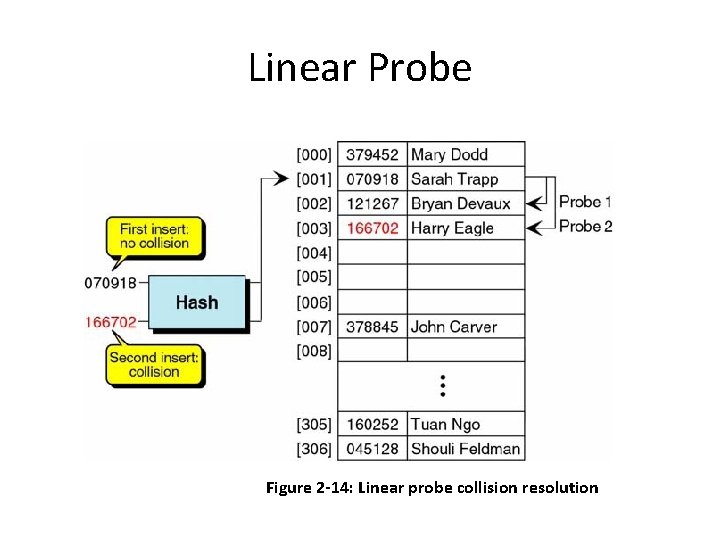
Open Addressing • Linear Probe – If data cannot be stored in the home address • adding 1 to the current address. – Two advantages • quite simple to implement • data tend to remain near their home address
Linear Probe Figure 2 -14: Linear probe collision resolution
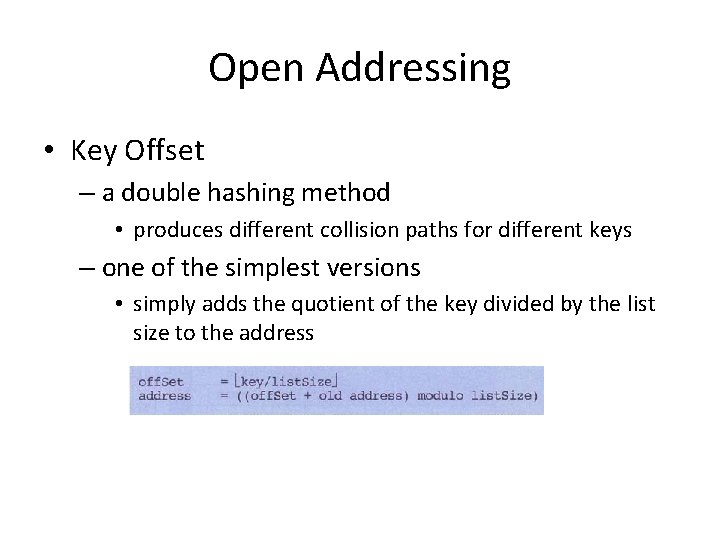
Open Addressing • Key Offset – a double hashing method • produces different collision paths for different keys – one of the simplest versions • simply adds the quotient of the key divided by the list size to the address
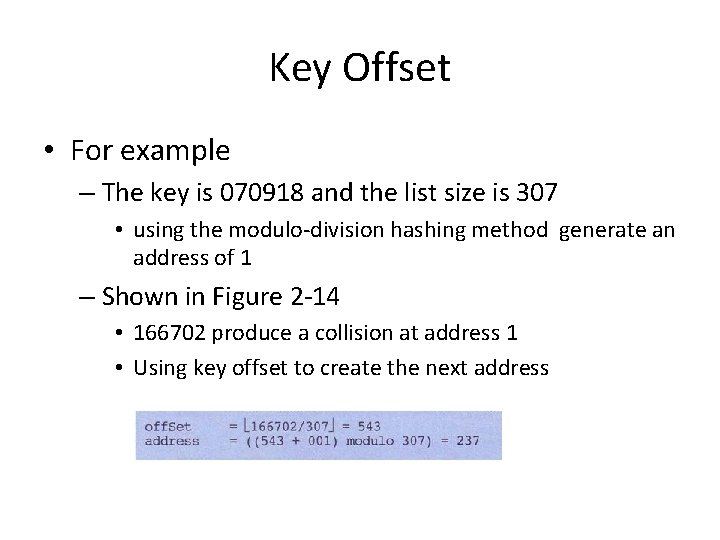
Key Offset • For example – The key is 070918 and the list size is 307 • using the modulo-division hashing method generate an address of 1 – Shown in Figure 2 -14 • 166702 produce a collision at address 1 • Using key offset to create the next address
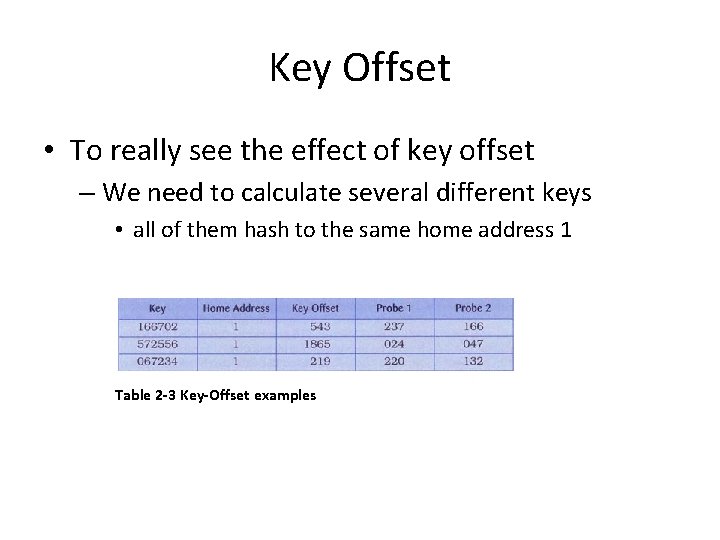
Key Offset • To really see the effect of key offset – We need to calculate several different keys • all of them hash to the same home address 1 Table 2 -3 Key-Offset examples
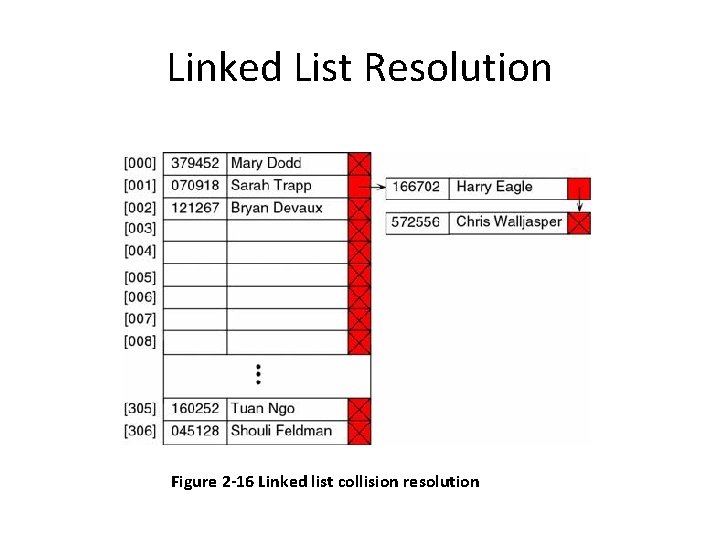
Linked List Resolution • A major disadvantage to open addressing – each collision resolution increases the probability of future collision • Linked list – an ordered collection of data • each element contains the location of next element
Linked List Resolution Figure 2 -16 Linked list collision resolution
Linked List Resolution • uses two storage areas – the prime area – the overflow area • linked list data can be stored in any order • Most common order – a last in-first out (LIFO) sequence • element is placed at the beginning of the overflow list – a key sequence
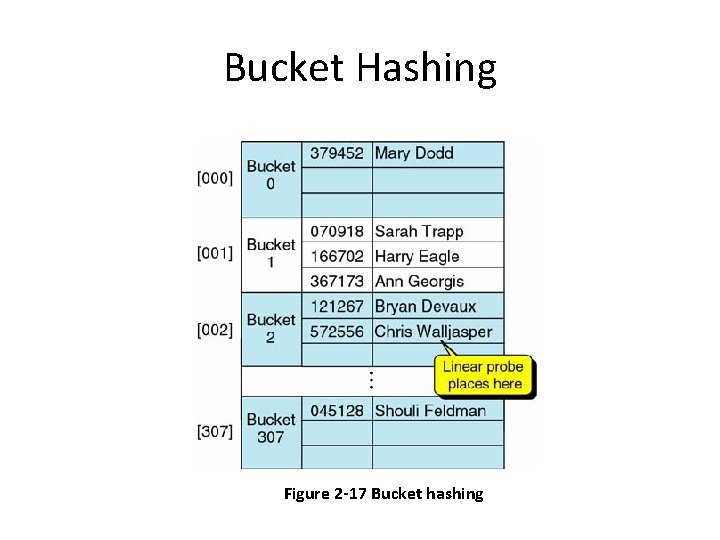
Bucket Hashing • Because a bucket can hold multiple data – collision are postponed until the bucket is full • Two problems – it uses significant more space – it dose not completely resolve the collision problem
Bucket Hashing Figure 2 -17 Bucket hashing