
College Board AP Human Geography Brock Brown Texas
• • College Board AP Human Geography Brock Brown Texas State University—San Marcos July 6, 2010 Introduction/Review—beyond content alone Population Cultural Patterns and Processes Political Organization of Space
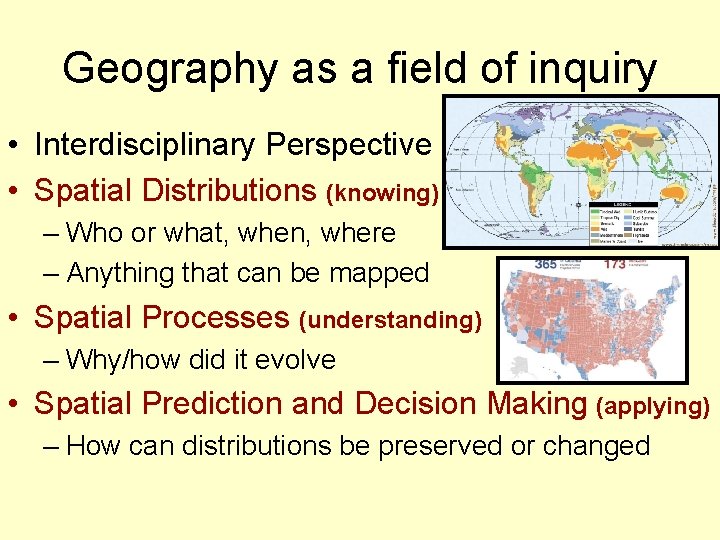
Geography as a field of inquiry • Interdisciplinary Perspective • Spatial Distributions (knowing) – Who or what, when, where – Anything that can be mapped • Spatial Processes (understanding) – Why/how did it evolve • Spatial Prediction and Decision Making (applying) – How can distributions be preserved or changed
Geographic perspective promotes problem solving • • Learning information/content is not enough! If knew all, still not enough Constantly changing Not have a clue about future problems – cfcs – Terrorism – Economic stability – Climate change – Others (energy, housing, food, . . . )
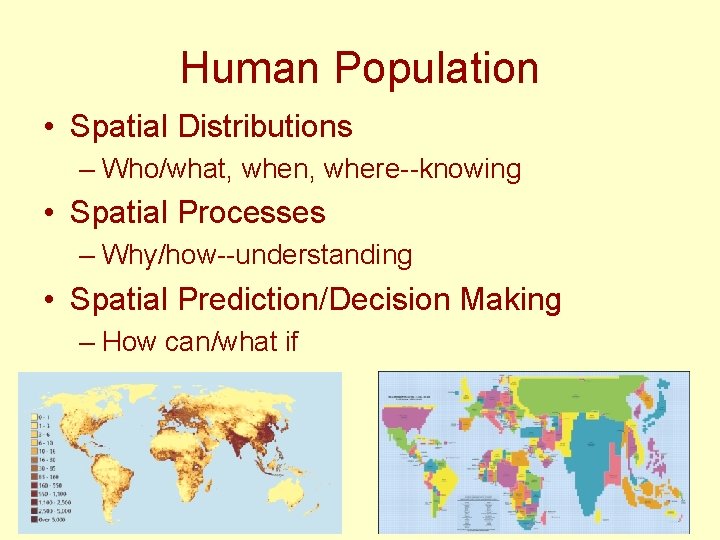
Human Population • Spatial Distributions – Who/what, when, where--knowing • Spatial Processes – Why/how--understanding • Spatial Prediction/Decision Making – How can/what if
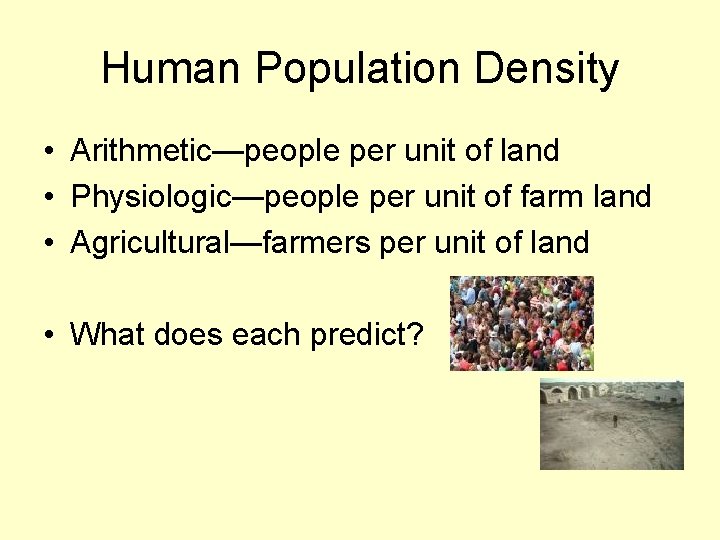
Human Population Density • Arithmetic—people per unit of land • Physiologic—people per unit of farm land • Agricultural—farmers per unit of land • What does each predict?
Data as a table History of World Population • • 1 A. D. 250, 000 1650 A. D. 500, 000 1830 A. D. 1, 000, 000 1930 A. D. 2, 000, 000 1974 A. D. 4, 000, 000 Mid 2001 6, 137, 000 Today about 6. 7 billion
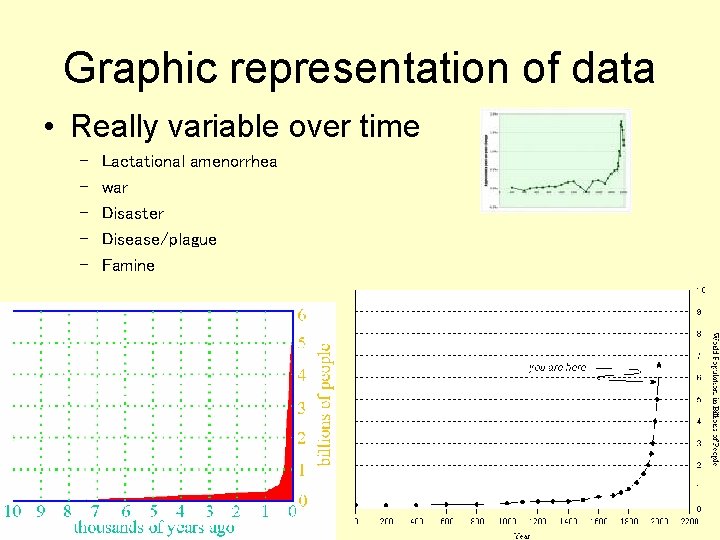
Graphic representation of data • Really variable over time – – – Lactational amenorrhea war Disaster Disease/plague Famine
Cartographic portrayal of global population growth 1 ad to 2020. • Cartographic bias—dots for data • Data often estimated, often wrong, but trends are pretty accurate • Philosophical bias, video produced by Zero Population Growth—they have a resource pessimism perspective, but the data portrayal
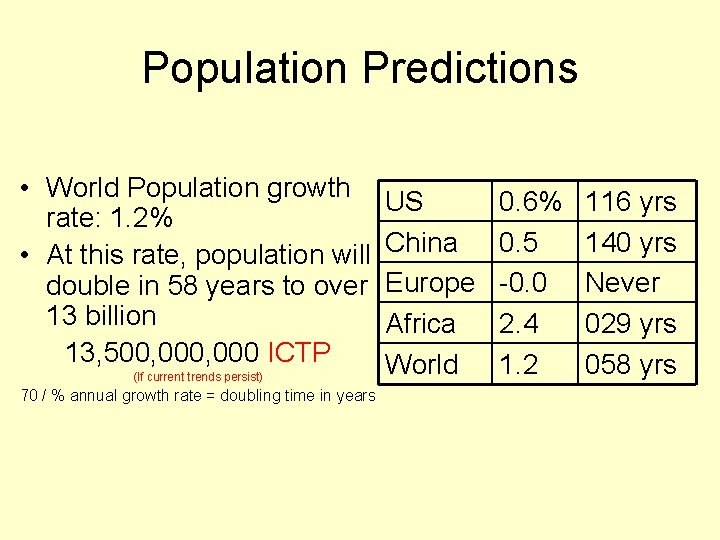
Population Predictions • World Population growth rate: 1. 2% • At this rate, population will double in 58 years to over 13 billion 13, 500, 000 ICTP (If current trends persist) 70 / % annual growth rate = doubling time in years US China Europe Africa World 0. 6% 0. 5 -0. 0 2. 4 1. 2 116 yrs 140 yrs Never 029 yrs 058 yrs
This as a STANDARD OF LIVING issue • Standard of living vs. quality of life • SOL = availability of resources • LDC/MDC distribution issues – Average (arithmetic mean) is less representative in LDC because. . .
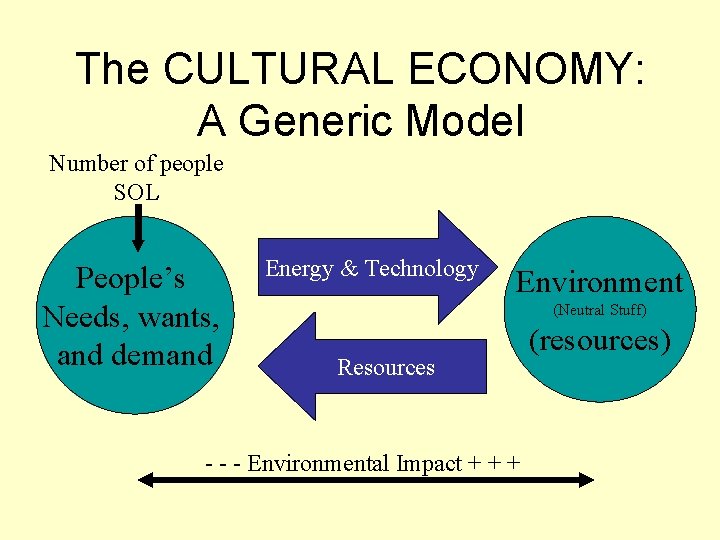
The CULTURAL ECONOMY: A Generic Model Number of people SOL People’s Needs, wants, and demand Energy & Technology Environment (Neutral Stuff) Resources - - - Environmental Impact + + + (resources)
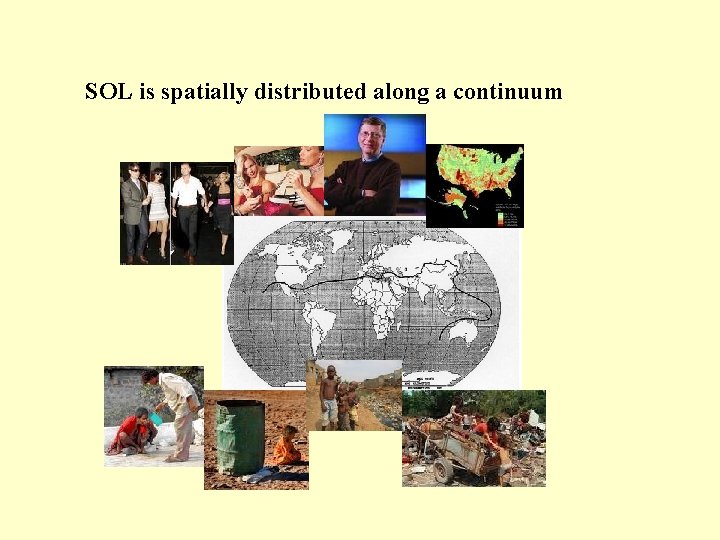
SOL is spatially distributed along a continuum
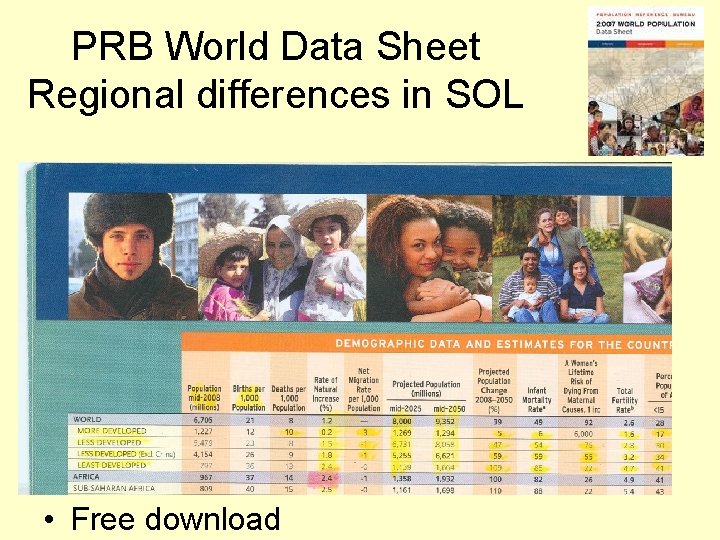
PRB World Data Sheet Regional differences in SOL • Free download
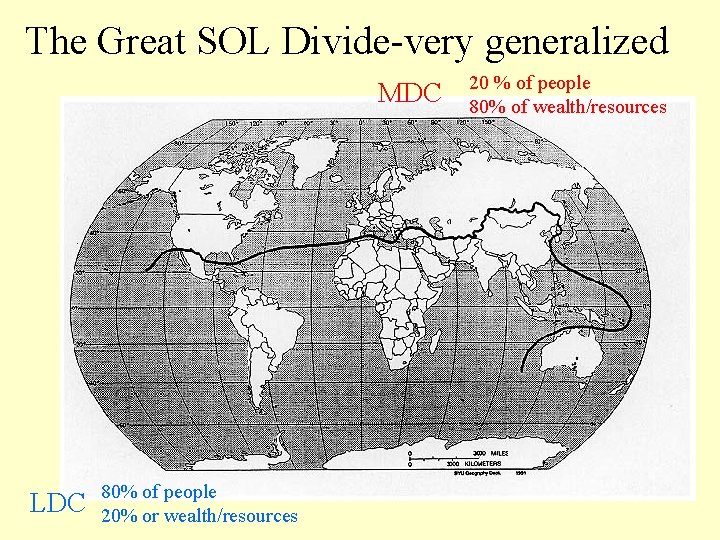
The Great SOL Divide-very generalized MDC LDC 80% of people 20% or wealth/resources 20 % of people 80% of wealth/resources
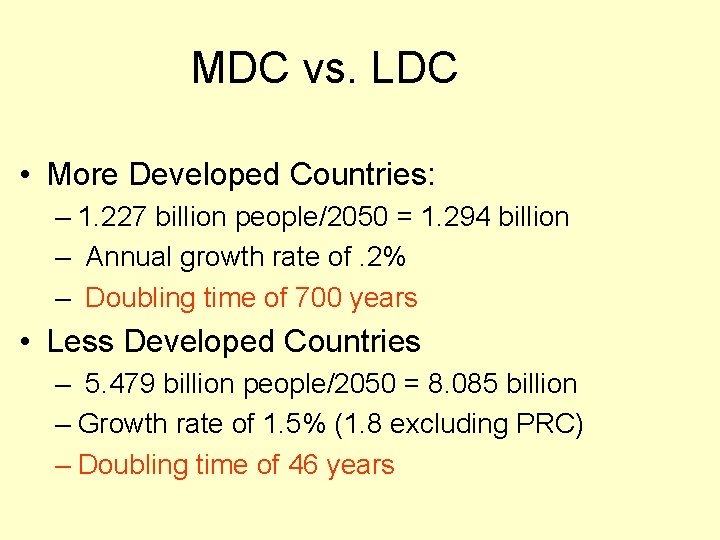
MDC vs. LDC • More Developed Countries: – 1. 227 billion people/2050 = 1. 294 billion – Annual growth rate of. 2% – Doubling time of 700 years • Less Developed Countries – 5. 479 billion people/2050 = 8. 085 billion – Growth rate of 1. 5% (1. 8 excluding PRC) – Doubling time of 46 years
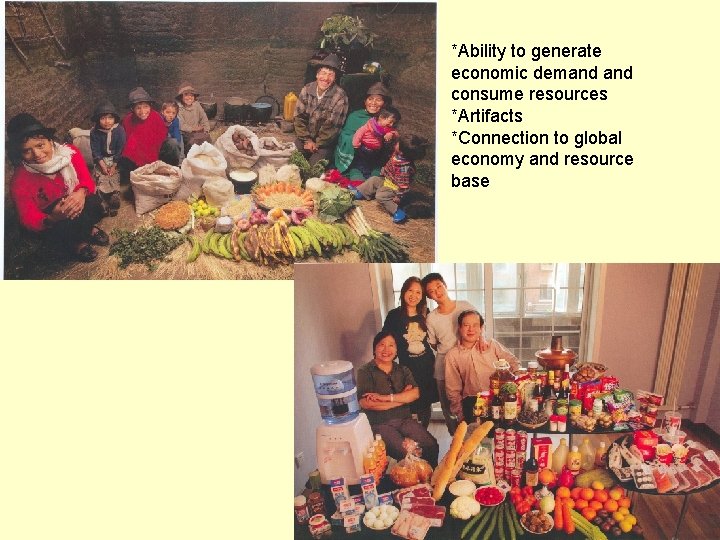
*Ability to generate economic demand consume resources *Artifacts *Connection to global economy and resource base
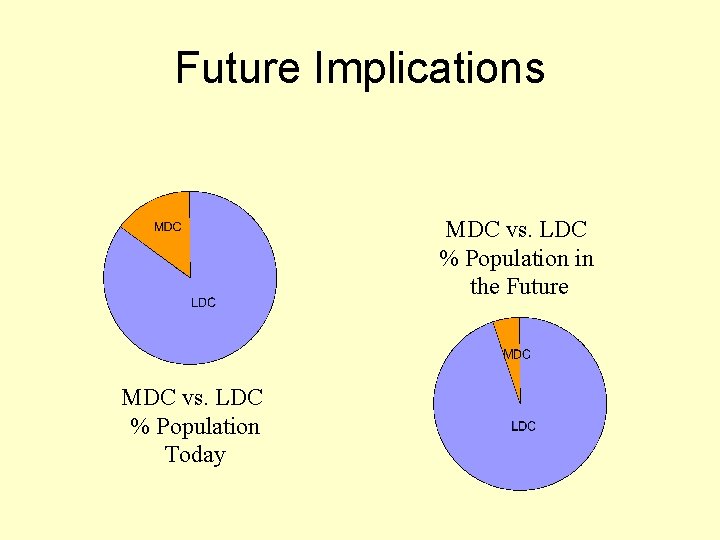
Future Implications MDC vs. LDC % Population in the Future MDC vs. LDC % Population Today
Population and sustainability • As population grows, need, want, and demand increase • Resource extraction from the environmental resource base increases • We are withdrawing resources in a deficit mode • There is less each year • Will there be enough? Will discuss soon
People translate into increased need, want and demand for resources • Need – Absolute needs of humans – Ex. food, clothing shelter • Demand – Economic Term – Having the money to buy what you want and need – Determines who gets what, LDC/MDC
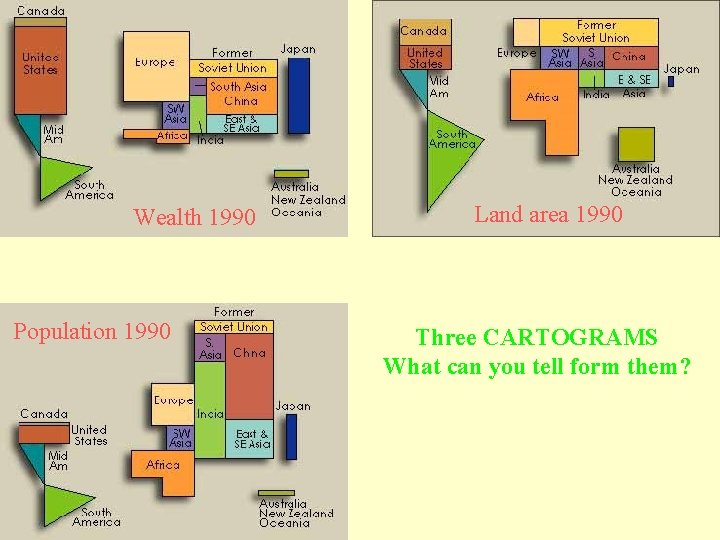
Wealth 1990 Population 1990 Land area 1990 Three CARTOGRAMS What can you tell form them?
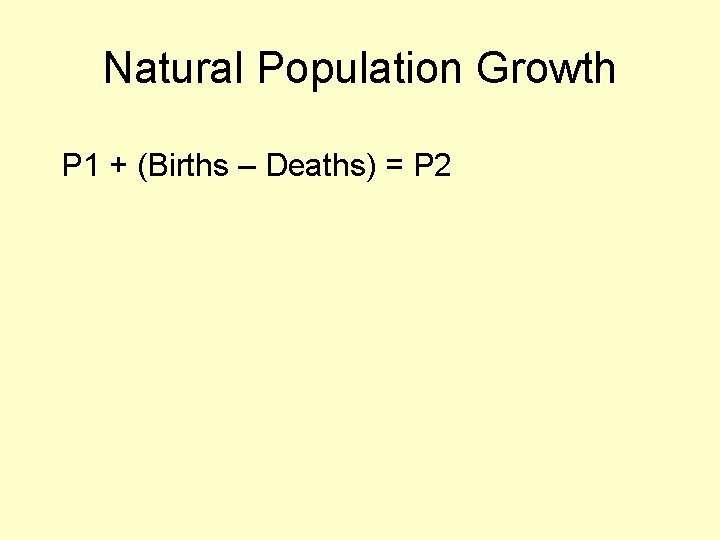
Natural Population Growth P 1 + (Births – Deaths) = P 2
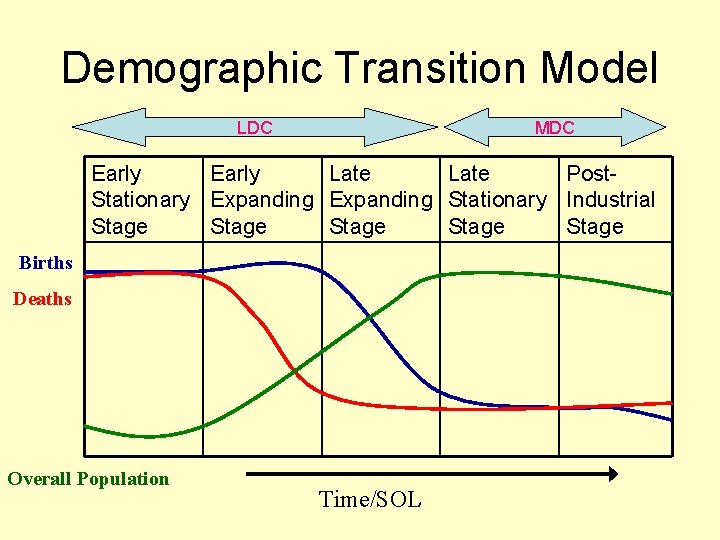
Demographic Transition Model LDC MDC Early Late Post. Stationary Expanding Stationary Industrial Stage Stage Births Deaths Overall Population Time/SOL
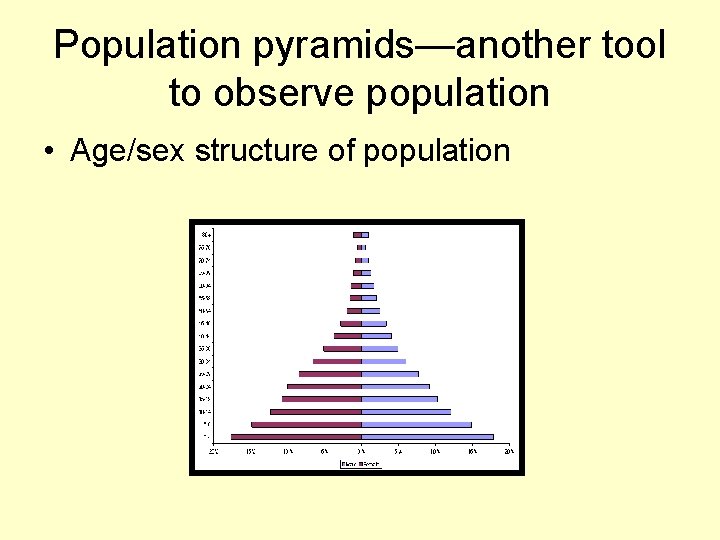
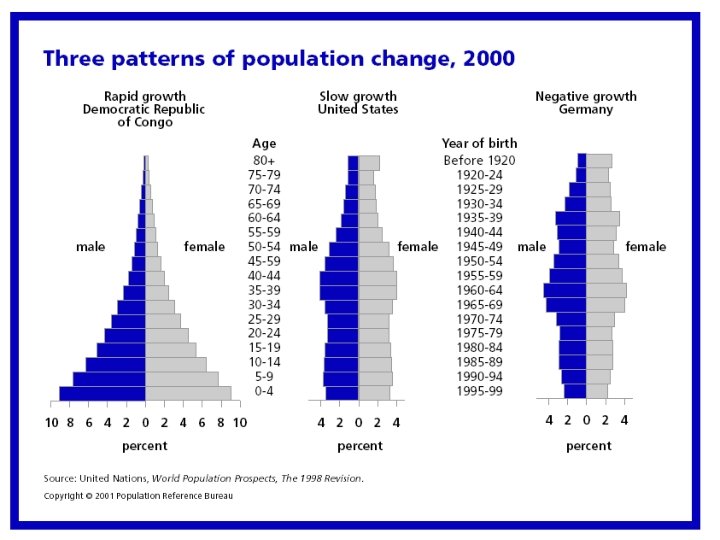
Population pyramids—another tool to observe population • Age/sex structure of population
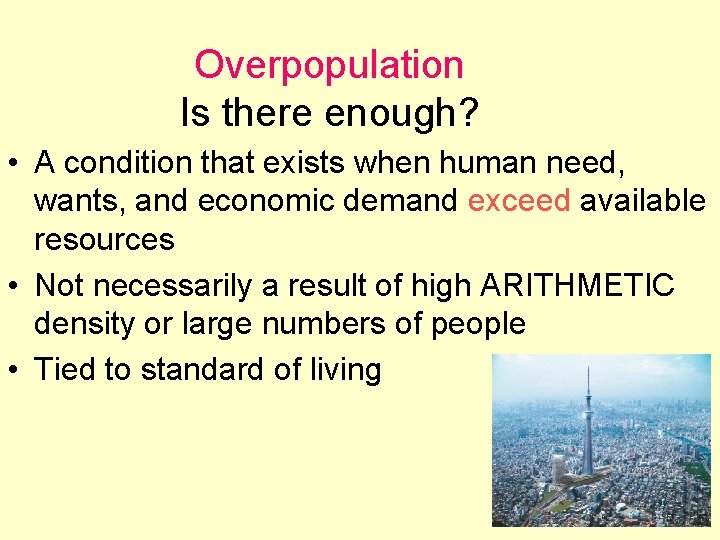
Overpopulation Is there enough? • A condition that exists when human need, wants, and economic demand exceed available resources • Not necessarily a result of high ARITHMETIC density or large numbers of people • Tied to standard of living
Creating enough resources to meet human need = managing CARRYING CAPACITY • CC refers to the number of organisms that a resource base can support • For humans, it is impacted by: – Standard of Living (SOL)—how much they consume – Current level of technology – Prices (in market economies) really level of scarcity • Overpopulation is a result of inadequate resource availability—exceeding local CC, does not require a large population! – Crowded rich, crowded poor, un-crowded rich, uncrowded poor
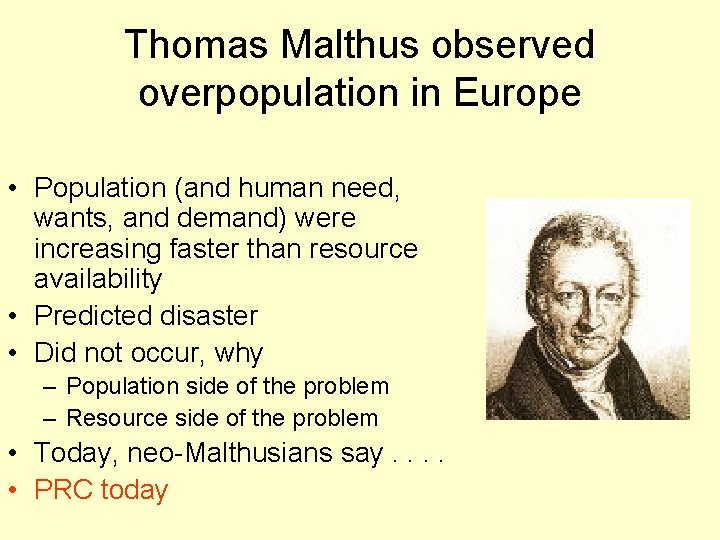
Thomas Malthus observed overpopulation in Europe • Population (and human need, wants, and demand) were increasing faster than resource availability • Predicted disaster • Did not occur, why – Population side of the problem – Resource side of the problem • Today, neo-Malthusians say. . • PRC today
Overpopulation, are there solutions? Is there enough? • Technological fix, economic, resource optimism – R&D, but for whom? $ • Demographic, resource pessimism (less people, better resource utilization) (PRC) (Europe) – – Reduce population growth (resource need/demand) Substitution or abstinence from resource use-use less Reuse (requiring less new extraction and processing Recycle (requiring less extraction) • Third view: the end is near and the Judaic, Islamic, Christian God of the Old Testament is in charge and no solution is needed (refer to Moyer’s essay) • Fourth view: Evangelical response
Another solution to REGIONAL overpopulation was migration • Migration, physically moving to another area • Once a safety valve, but what about today? • Where are those empty quarters when you need them?
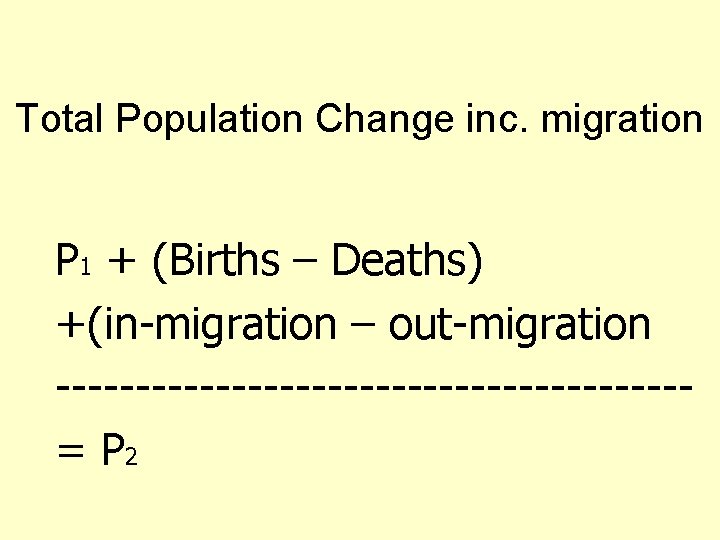
Total Population Change inc. migration P 1 + (Births – Deaths) +(in-migration – out-migration --------------------= P 2
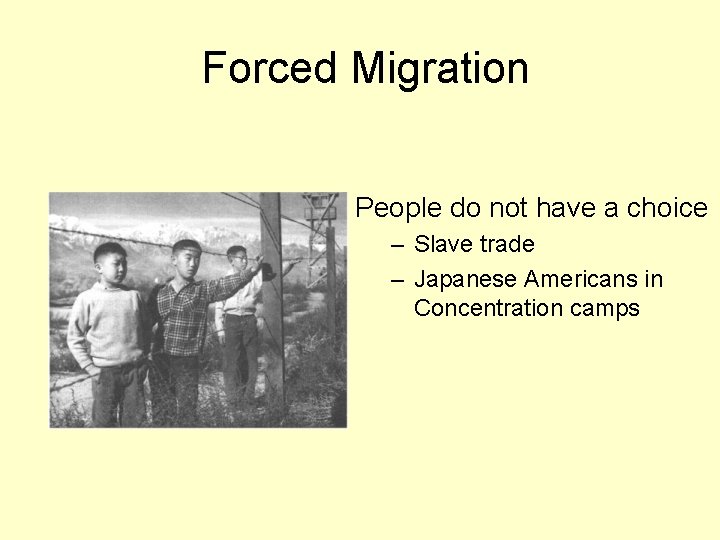
Forced Migration People do not have a choice – Slave trade – Japanese Americans in Concentration camps
Voluntary Migration • Push Factors perception about a place making someone want to leave • Pull Factors perception of a place making someone want to go there
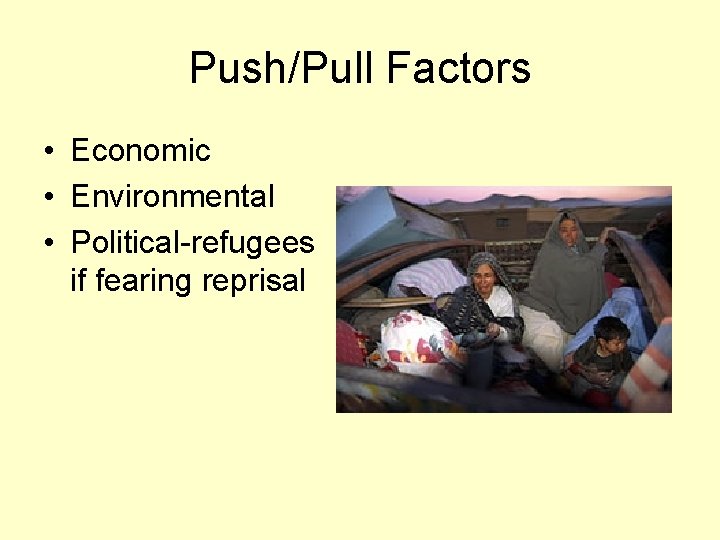
Push/Pull Factors • Economic • Environmental • Political-refugees if fearing reprisal
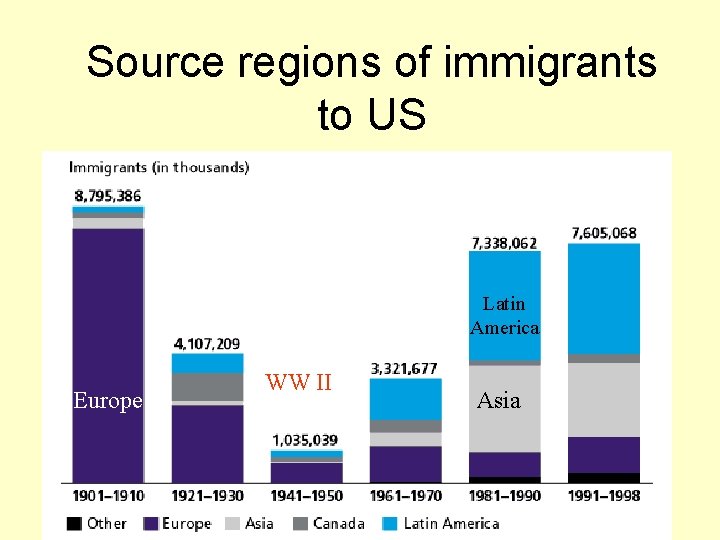
Source regions of immigrants to US Latin America Europe WW II Asia
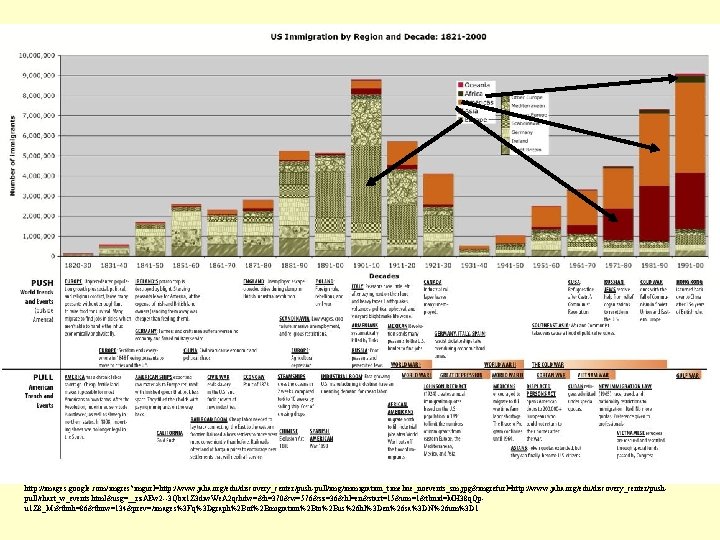
http: //images. google. com/imgres? imgurl=http: //www. jaha. org/edu/discovery_center/push-pull/img/immigration_timeline_noevents_sm. jpg&imgrefurl=http: //www. jaha. org/edu/discovery_center/pushpull/chart_w_events. html&usg=__rz. AEw 2 --3 Qbx 1 Z 3 diw. We. A 2 qchdw=&h=370&w=576&sz=36&hl=en&start=15&um=1&tbnid=MH 38 q. Qpu 1 Z 8_M: &tbnh=86&tbnw=134&prev=/images%3 Fq%3 Dgraph%2 Bof%2 Bmigration%2 Bto%2 Bus%26 hl%3 Den%26 sa%3 DN%26 um%3 D 1
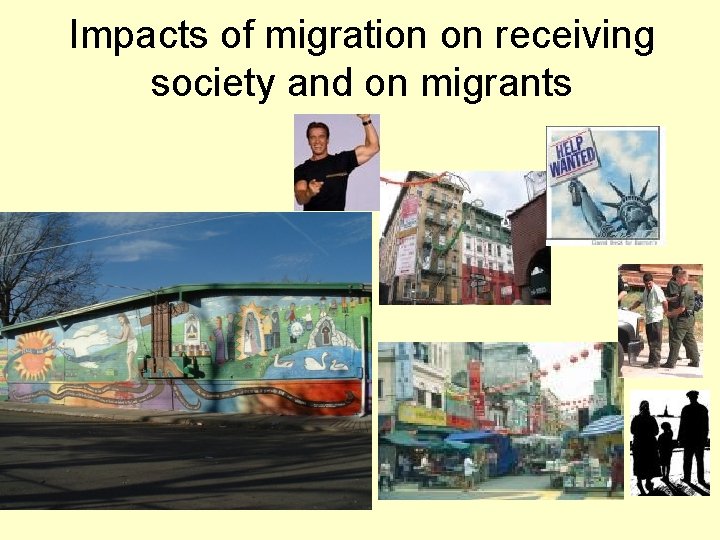
Impacts of migration on receiving society and on migrants
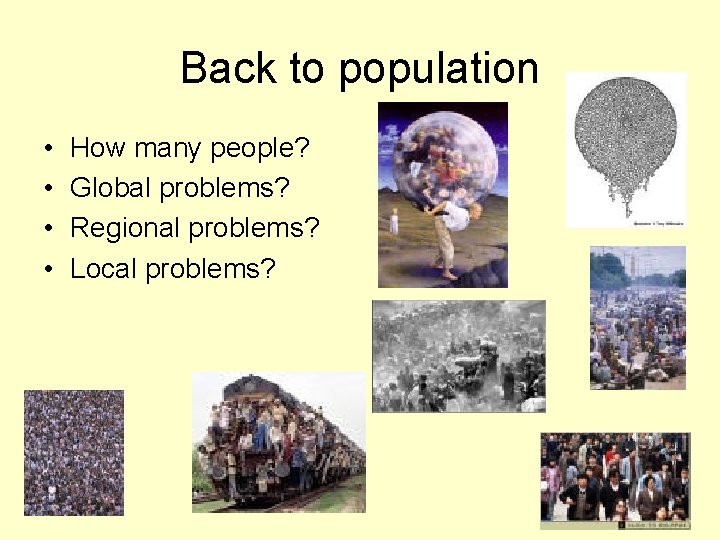
Back to population • • How many people? Global problems? Regional problems? Local problems?
Cultural Patterns and Processes • • Unique to humans (generally) Learned (epigenome? ) Integrated whole—way of life Cultural traits – Artifacts, sociofacts, mentifacts – Food, language, beliefs and religion, social customs, clothing, music, whatever is human created. • Creates cultural landscapes • Impact due to #, time, tech
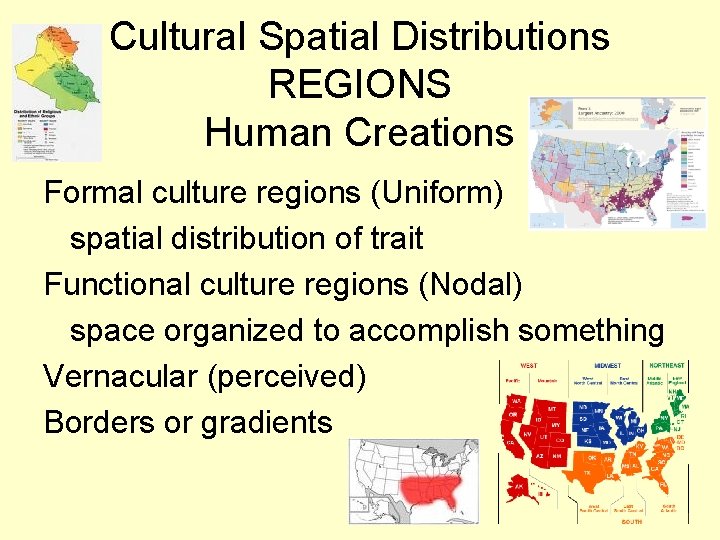
Cultural Spatial Distributions REGIONS Human Creations Formal culture regions (Uniform) spatial distribution of trait Functional culture regions (Nodal) space organized to accomplish something Vernacular (perceived) Borders or gradients
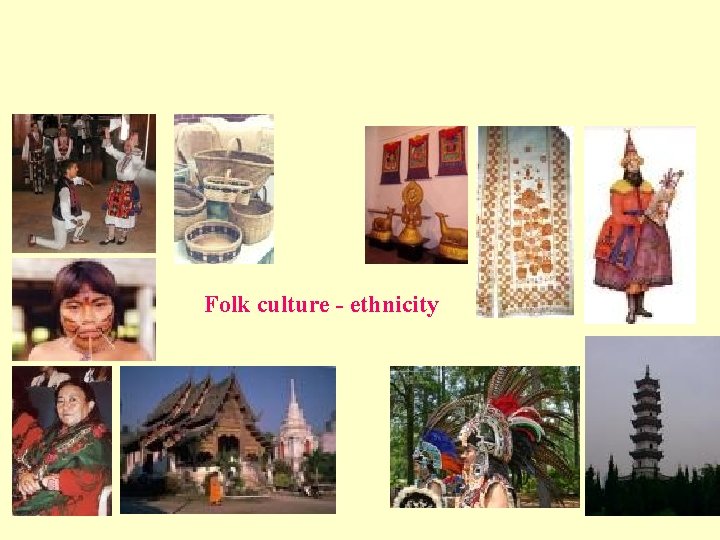
Folk culture - ethnicity
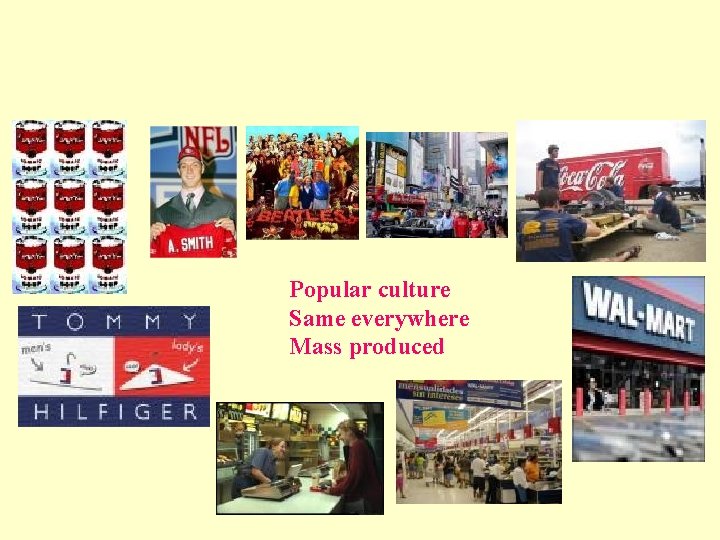
Popular culture Same everywhere Mass produced
THE CULTURAL CONTINUUM FROM FOLK TO POPULAR • FOLK CULTURE / POPULAR CULTURE • Subsistence / commercial • Local / global environment and resource base • Low / high technology • Low / high environmental impact • Regional self-sufficiency / regional specialization • Geography isolation / geographic connectivity • Slow cultural change / rapid cultural change • Low cultural diversity / high cultural diversity • Folk culture landscapes / popular culture landscapes • Ethnicity / no ethnicity • Disappearance / expansion
FOLK CULTURE / POPULAR CULTURE • Popular culture bleaches the ethnicity out of society • Folk cultures that are surviving are the ones that are most isolated • Subsistence vs. commercial economies • Environment consumption/impact (SOL) • Technology/energy use • Folk in decline/popular expanding due to accelerated diffusion of globalization • Fajitas, football, on and on!!!
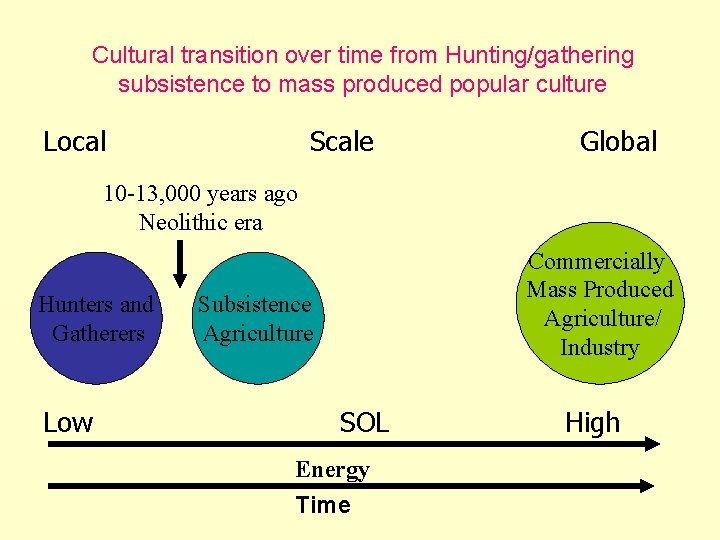
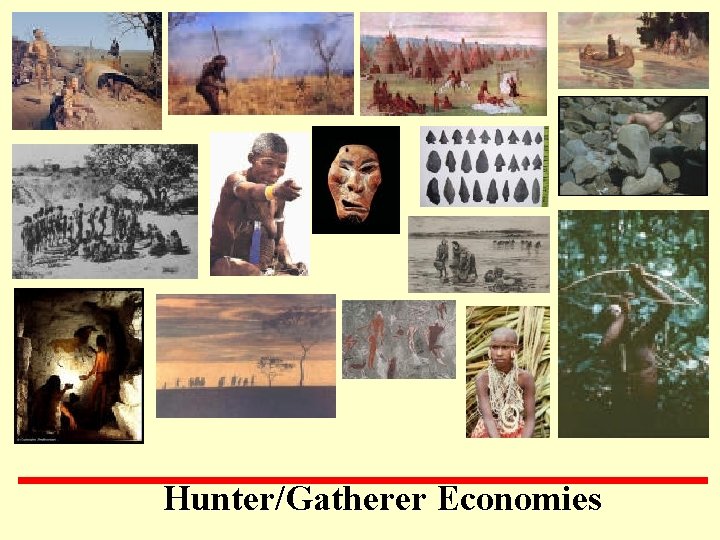
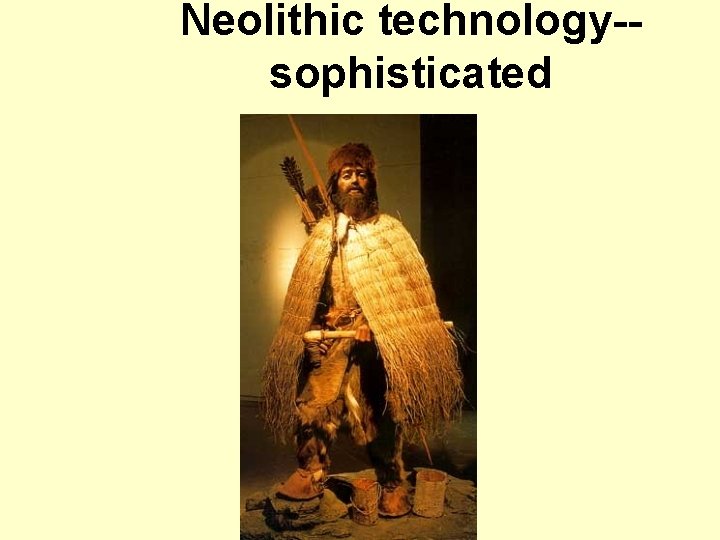
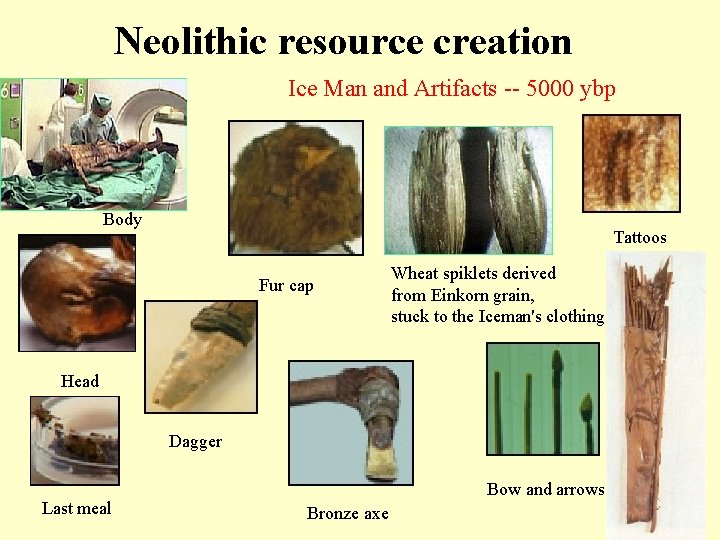
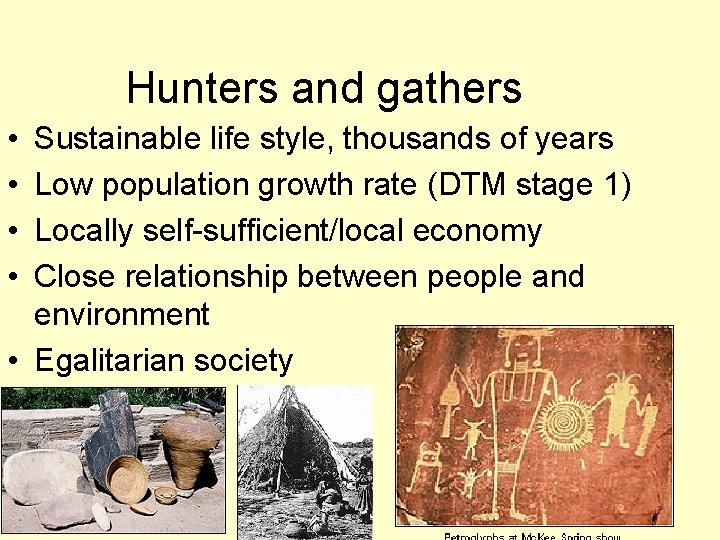
Cultural transition over time from Hunting/gathering subsistence to mass produced popular culture Local Scale Global 10 -13, 000 years ago Neolithic era Hunters and Gatherers Low Commercially Mass Produced Agriculture/ Industry Subsistence Agriculture SOL Energy Time High
Hunter/Gatherer Economies
Neolithic technology-sophisticated
Neolithic resource creation Ice Man and Artifacts -- 5000 ybp Body Tattoos Fur cap Wheat spiklets derived from Einkorn grain, stuck to the Iceman's clothing Head Dagger Last meal Bow and arrows Bronze axe
Hunters and gathers • • Sustainable life style, thousands of years Low population growth rate (DTM stage 1) Locally self-sufficient/local economy Close relationship between people and environment • Egalitarian society
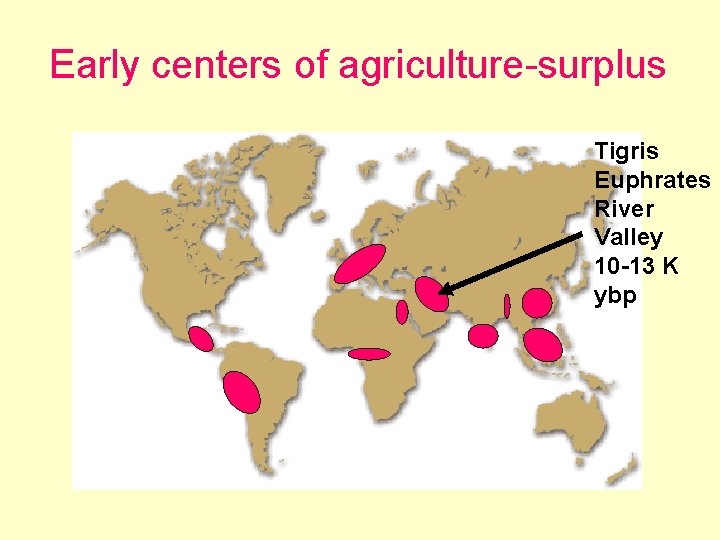
Early centers of agriculture-surplus Tigris Euphrates River Valley 10 -13 K ybp
Early Agriculture--subsistence • Locally produced to meet local needs • Limited by environment – – Climate Soil Landform Plants available for domestication • Low technology and information – Growing plants is magic/spiritual • Increasing technology/control – Irrigation – Storage for future use • Cessation of Lactational Amenorrhea – Birth rates increase = increased population growth – Death rates decline due to increase in SOL = inc pop growth
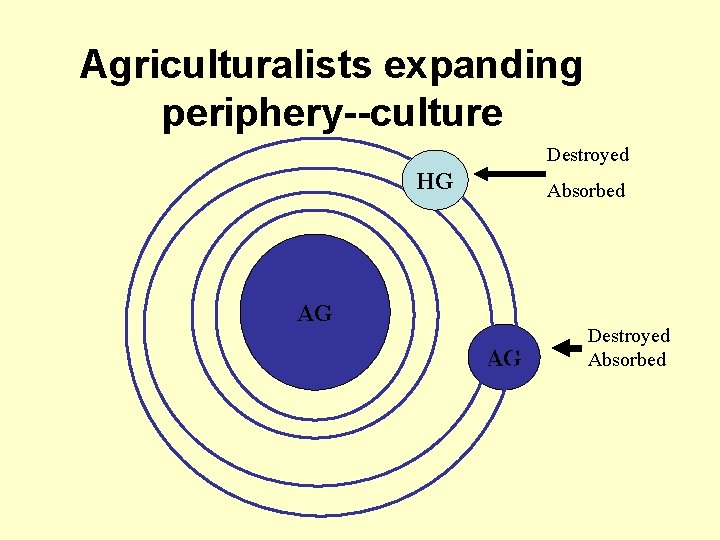
Agriculturalists expanding periphery--culture Destroyed HG Absorbed AG AG Destroyed Absorbed
Economic Transitions • Hunting/gathering • Agriculture • Merchant capitalism – Replaced feudalism • Industrial capitalism • Information/Technology • Changing spatial distribution tied to changing patterns of SOL
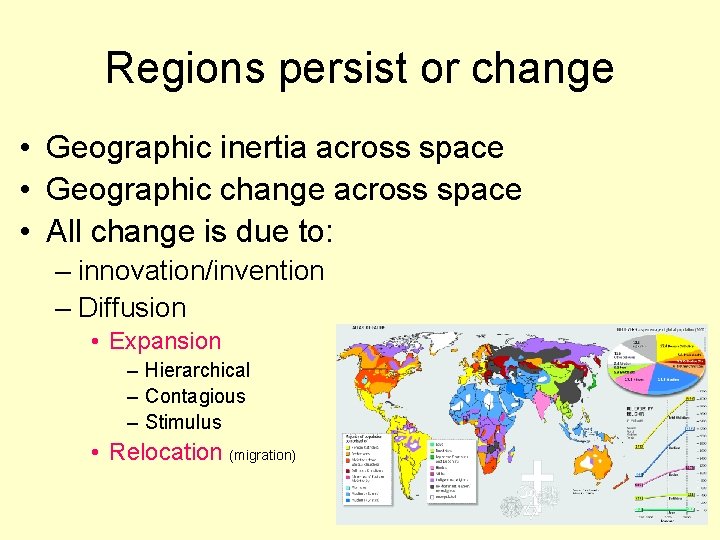
Regions persist or change • Geographic inertia across space • Geographic change across space • All change is due to: – innovation/invention – Diffusion • Expansion – Hierarchical – Contagious – Stimulus • Relocation (migration)
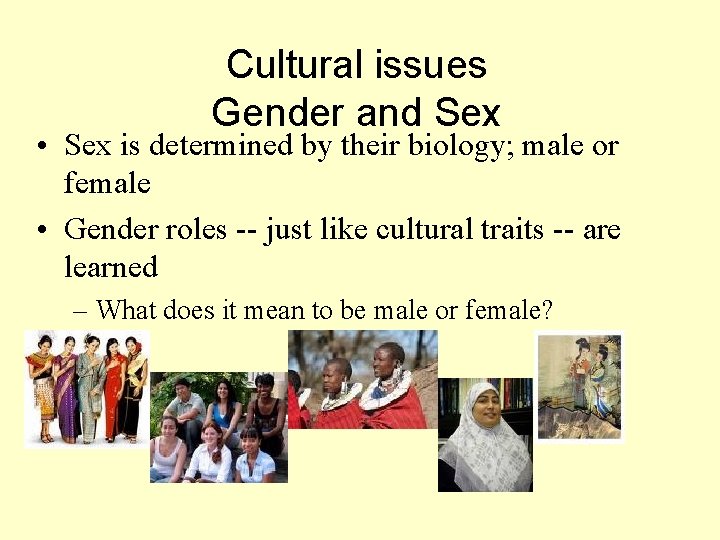
Cultural issues Gender and Sex • Sex is determined by their biology; male or female • Gender roles -- just like cultural traits -- are learned – What does it mean to be male or female?
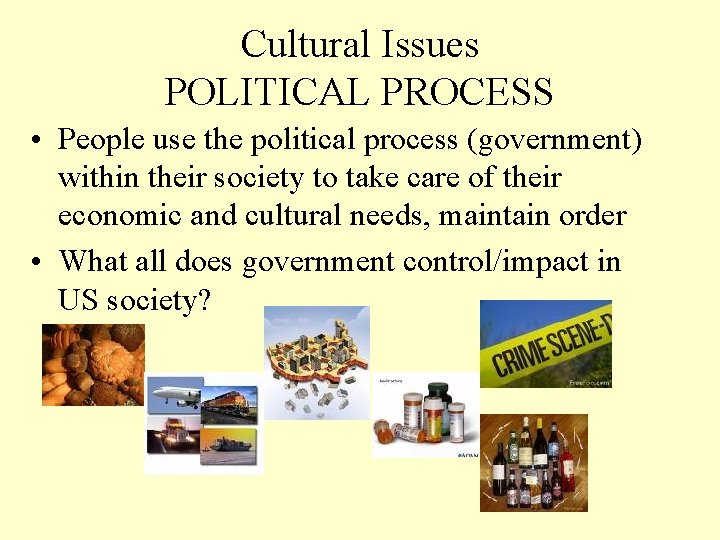
Cultural Issues POLITICAL PROCESS • People use the political process (government) within their society to take care of their economic and cultural needs, maintain order • What all does government control/impact in US society?
PURPOSE OF POLITICAL PROCESS • • • Decision making / resource allocation Formalization of values and priorities (what should be legal / illegal) Franchise on use of force / coercion Cultural / legal lag time
SPATIAL ASPECTS OF GOVERNMENT • Nation (formal - ethnic) • Central state (functional-territorygovernment) – physical borders – cultural borders – frontiers
MAINTAINING POLITICAL PATTERNS-BORDERS • Military conflict – costs – conventional weapons – mass destruction weapons • Economic sanctions
SPATIAL ASPECTS OF GOVERNMENT • • Regional self autonomy Imperialism Colonialism Rise and decline
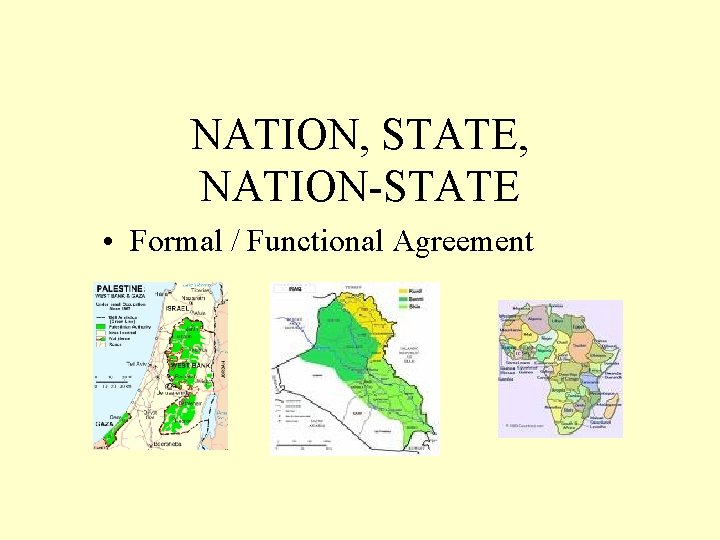
NATION, STATE, NATION-STATE • Formal / Functional Agreement
GEOGRAPHIC REQUIREMENTS FOR A STATE • • • Must have land territory Must have permanent resident population Must have a government (political organization) Must have an organized economy Must have a circulation (transportation) system POLITICAL REQUIREMENTS FOR A STATE • Must possess sovereignty • Must be recognized by a significant portion of the international community • - Does a state exist before it is recognized?
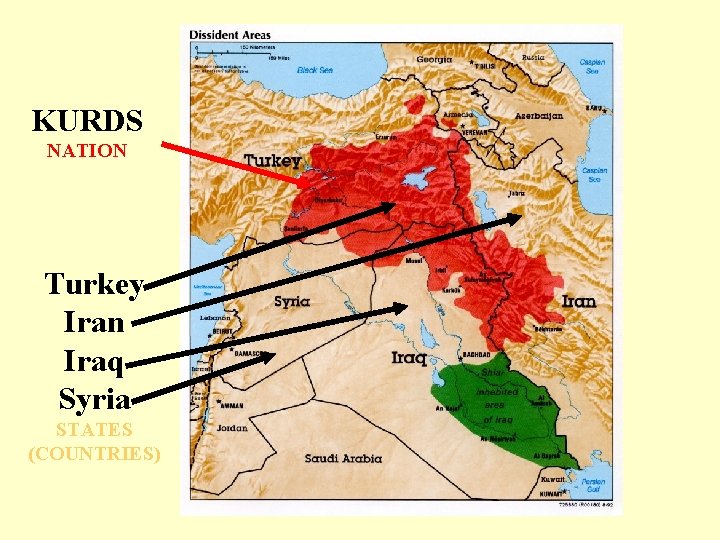
KURDS NATION Turkey Iran Iraq Syria STATES (COUNTRIES)
THE NATION (casually called “a people”) • DOES NOT refer to the country or THE STATE itself, but rather to a reasonably large group of people with a common culture, a territory they view as their homeland, and one or more commonly held cultural traits (religion, language, political institutions, values, or historical experience). • Tend to feel closer to one another than to outsiders and believe they belong together • Clearly distinguishable from others that don’t share their culture
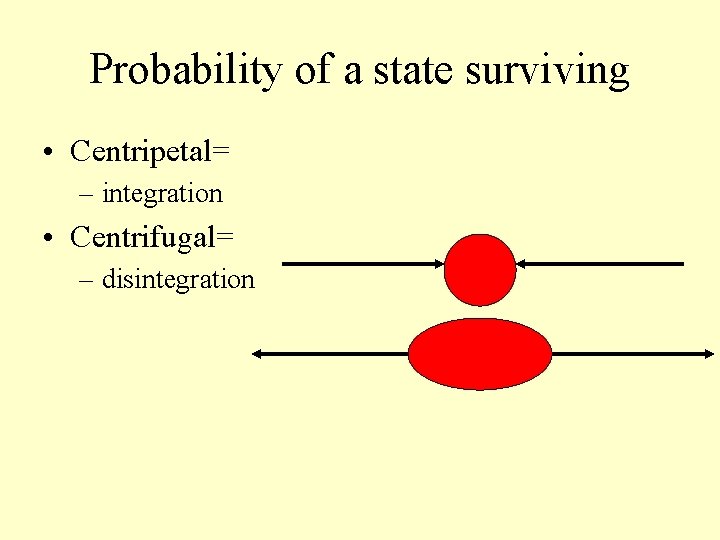
Probability of a state surviving • Centripetal= – integration • Centrifugal= – disintegration
CONTEMPORARY CASE STUDIES • • • Arab Nation -- States USSR, later Ukraine Canada Yugoslavia Czech Republic / Slovakia California / Kansas / Alaska
SO? • Questions, comments, and insights
- Slides: 66