
College and Career Readiness Standards for Mathematical Practice
- Slides: 23
College and Career Readiness Standards for Mathematical Practice Overview
District-Wide 2013 -14 Math Goals • Collaboratively plan, deliver, reflect upon, and revise instruction that differentiates for all learners and includes the Standards for Mathematical Practice: – MP 1 - Make sense of problems and persevere in solving them – MP 3 - Construct viable arguments and critique the reasoning of others – MP 4 - Model with mathematics • Build understanding of the Common Core instructional shifts focus, coherence, and rigor • Integrate technology in support of teaching and learning
Session Outcome • Collaboratively define Common Core Standards for Mathematical Practice 1, 3, and 4
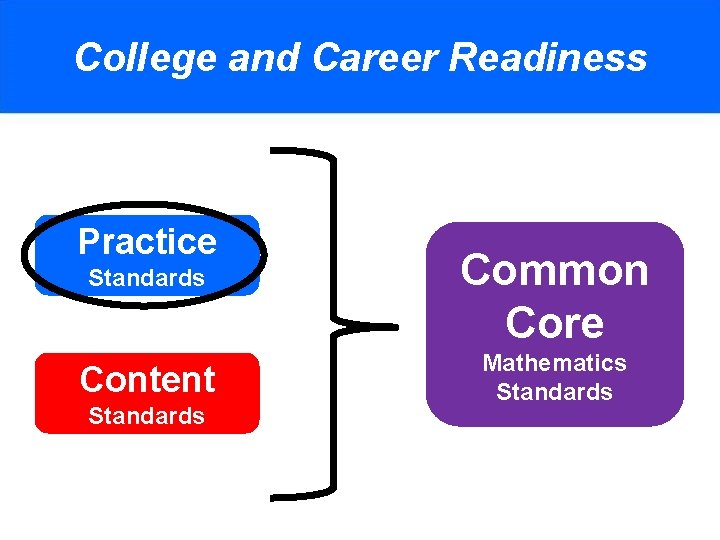
College and Career Readiness Practice Standards Content Standards Common Core Mathematics Standards
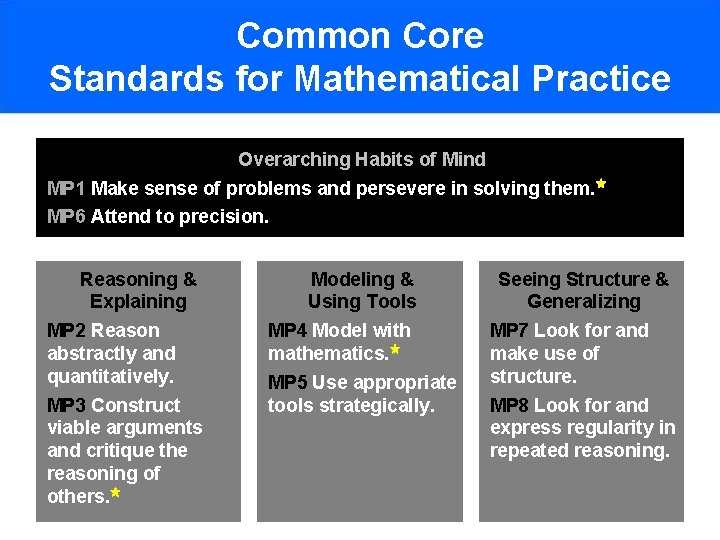
Common Core Standards for Mathematical Practice Overarching Habits of Mind MP 1 Make sense of problems and persevere in solving them. MP 6 Attend to precision. Reasoning & Explaining MP 2 Reason abstractly and quantitatively. MP 3 Construct viable arguments and critique the reasoning of others. Modeling & Using Tools MP 4 Model with mathematics. MP 5 Use appropriate tools strategically. Seeing Structure & Generalizing MP 7 Look for and make use of structure. MP 8 Look for and express regularity in repeated reasoning.
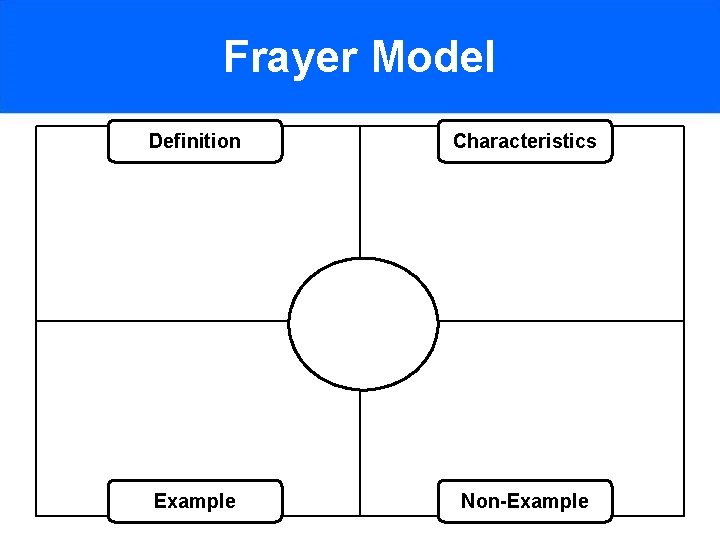
Frayer Model Definition Characteristics Example Non-Example
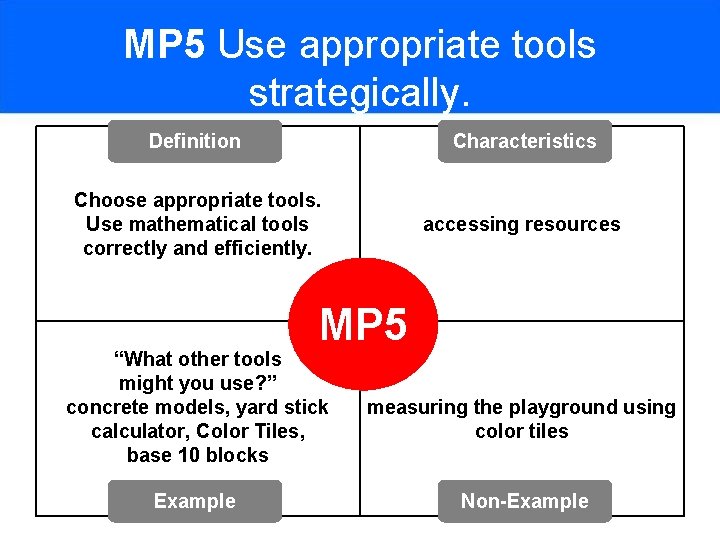
MP 5 Use appropriate tools strategically. Definition Characteristics Choose appropriate tools. Use mathematical tools correctly and efficiently. accessing resources MP 5 “What other tools might you use? ” concrete models, yard stick calculator, Color Tiles, base 10 blocks Example measuring the playground using color tiles Non-Example
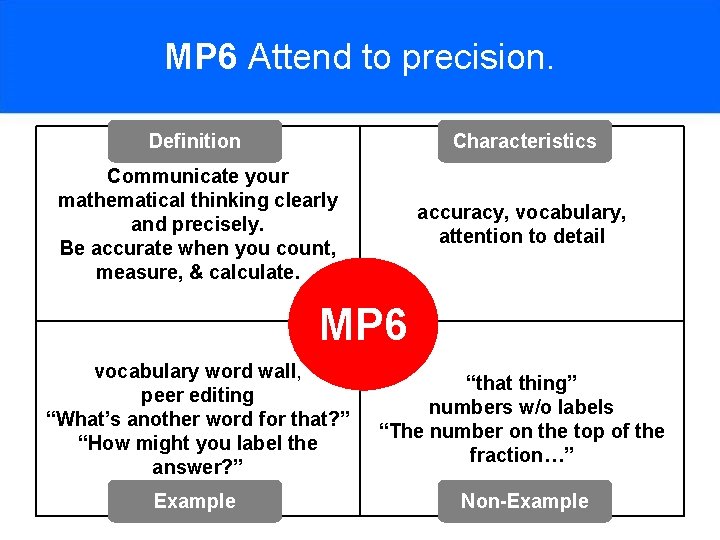
MP 6 Attend to precision. Definition Characteristics Communicate your mathematical thinking clearly and precisely. Be accurate when you count, measure, & calculate. accuracy, vocabulary, attention to detail MP 6 vocabulary word wall, peer editing “What’s another word for that? ” “How might you label the answer? ” “that thing” numbers w/o labels “The number on the top of the fraction…” Example Non-Example
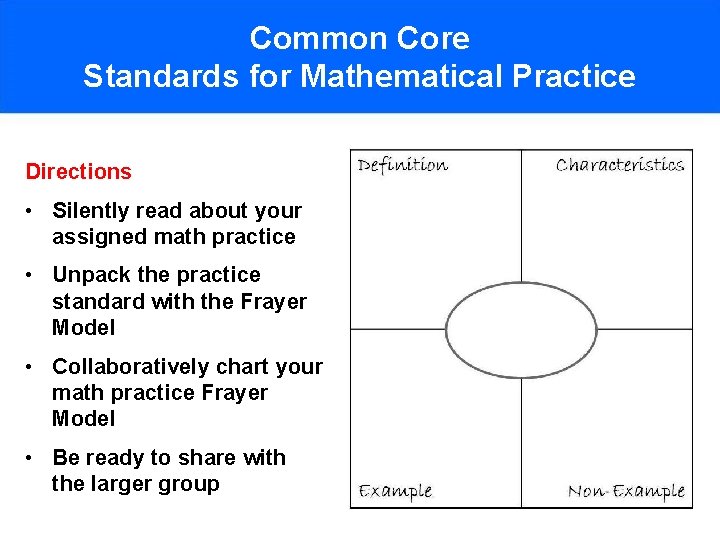
Common Core Standards for Mathematical Practice Directions • Silently read about your assigned math practice • Unpack the practice standard with the Frayer Model • Collaboratively chart your math practice Frayer Model • Be ready to share with the larger group
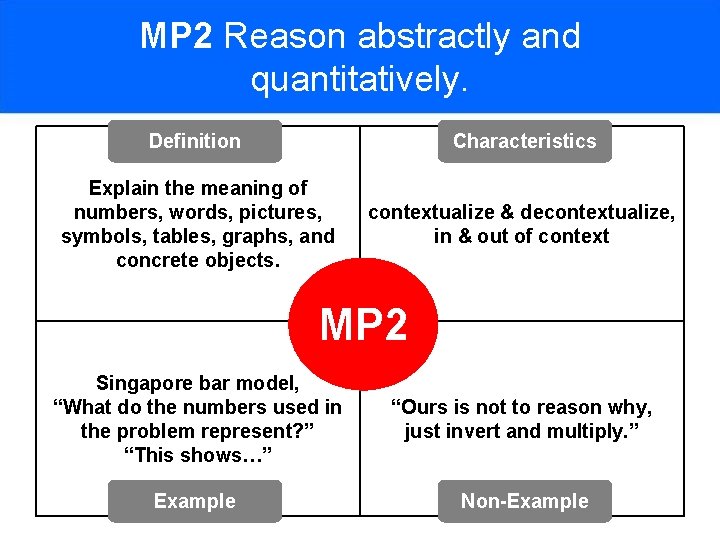
MP 2 Reason abstractly and quantitatively. Definition Characteristics Explain the meaning of numbers, words, pictures, symbols, tables, graphs, and concrete objects. contextualize & decontextualize, in & out of context MP 2 Singapore bar model, “What do the numbers used in the problem represent? ” “This shows…” “Ours is not to reason why, just invert and multiply. ” Example Non-Example
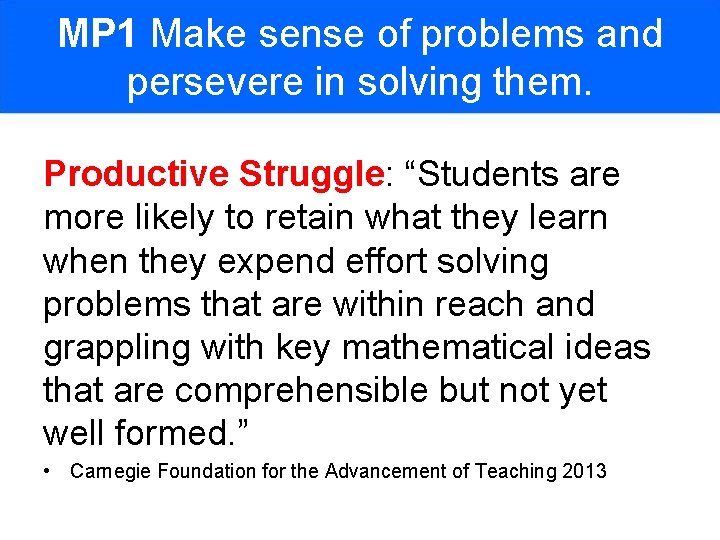
MP 1 Make sense of problems and persevere in solving them. Productive Struggle: “Students are more likely to retain what they learn when they expend effort solving problems that are within reach and grappling with key mathematical ideas that are comprehensible but not yet well formed. ” • Carnegie Foundation for the Advancement of Teaching 2013
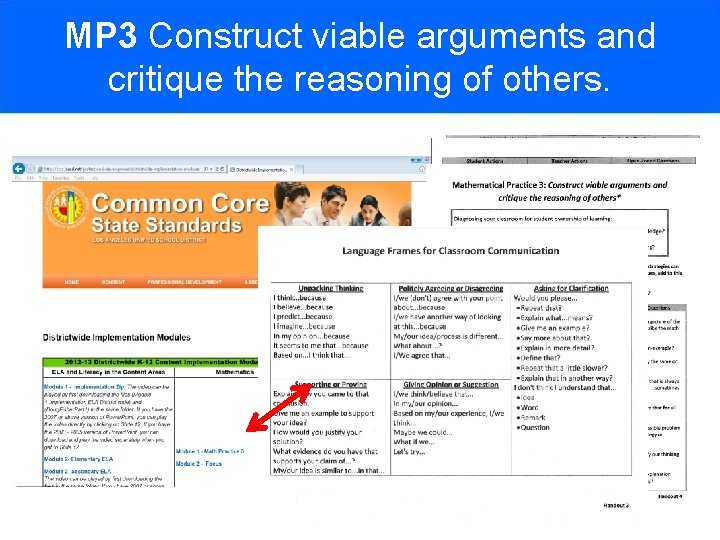
MP 3 Construct viable arguments and critique the reasoning of others.
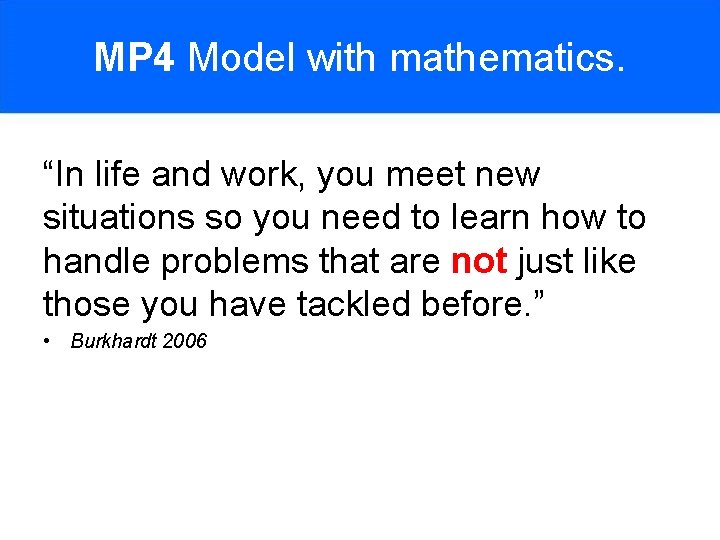
MP 4 Model with mathematics. “In life and work, you meet new situations so you need to learn how to handle problems that are not just like those you have tackled before. ” • Burkhardt 2006
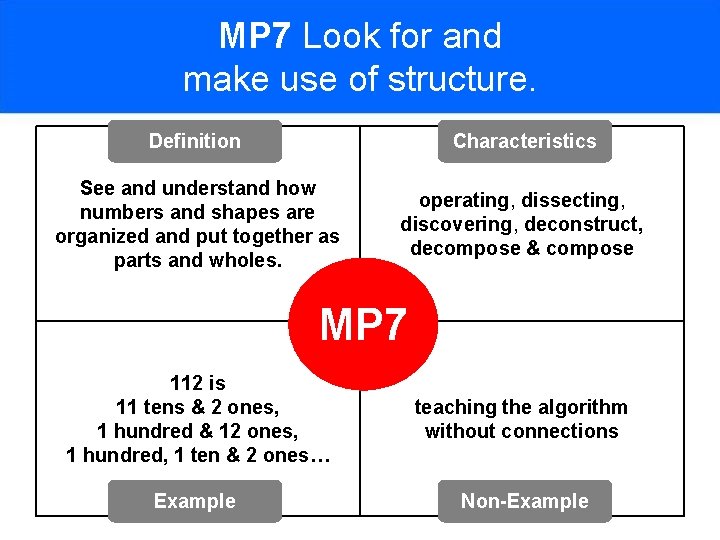
MP 7 Look for and make use of structure. Definition Characteristics See and understand how numbers and shapes are organized and put together as parts and wholes. operating, dissecting, discovering, deconstruct, decompose & compose MP 7 112 is 11 tens & 2 ones, 1 hundred & 12 ones, 1 hundred, 1 ten & 2 ones… teaching the algorithm without connections Example Non-Example
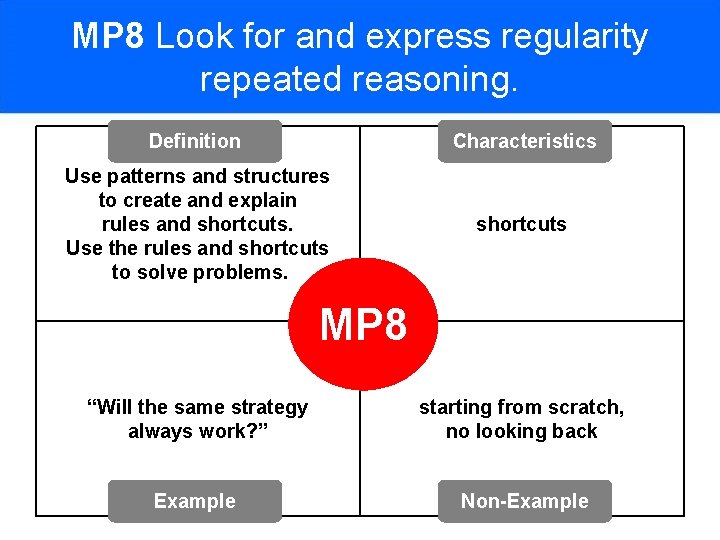
MP 8 Look for and express regularity repeated reasoning. Definition Characteristics Use patterns and structures to create and explain rules and shortcuts. Use the rules and shortcuts to solve problems. shortcuts MP 8 “Will the same strategy always work? ” starting from scratch, no looking back Example Non-Example
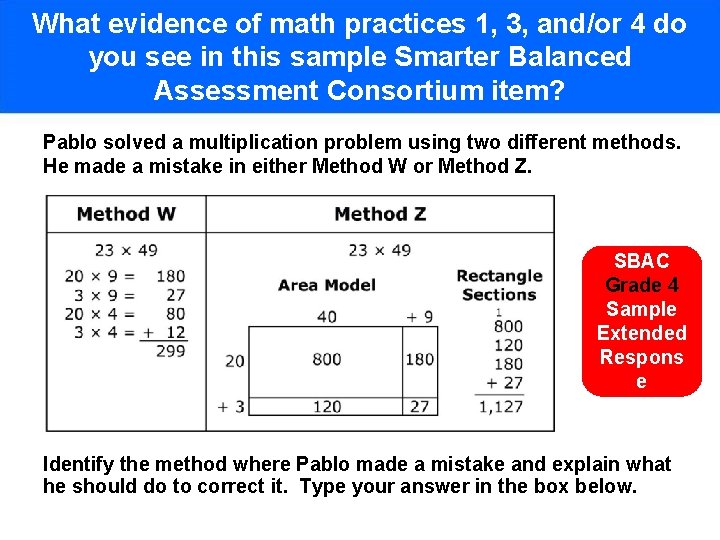
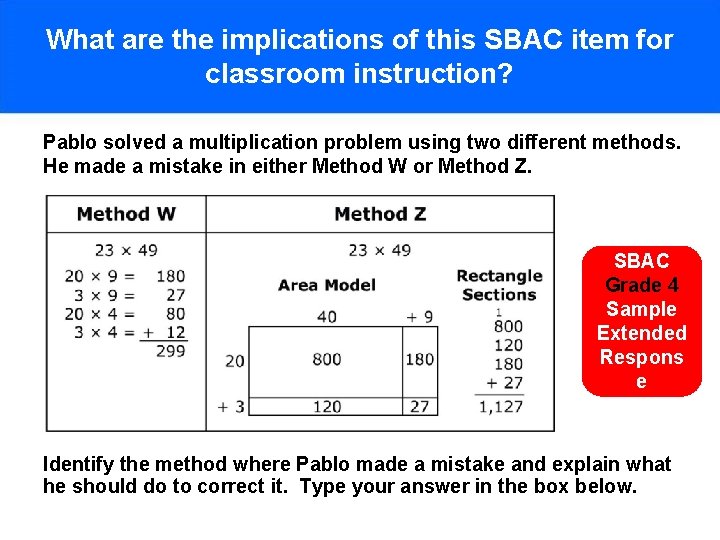
What evidence of math practices 1, 3, and/or 4 do you see in this sample Smarter Balanced Assessment Consortium item? Pablo solved a multiplication problem using two different methods. He made a mistake in either Method W or Method Z. SBAC Grade 4 Sample Extended Respons e Identify the method where Pablo made a mistake and explain what he should do to correct it. Type your answer in the box below.
What are the implications of this SBAC item for classroom instruction? Pablo solved a multiplication problem using two different methods. He made a mistake in either Method W or Method Z. SBAC Grade 4 Sample Extended Respons e Identify the method where Pablo made a mistake and explain what he should do to correct it. Type your answer in the box below.
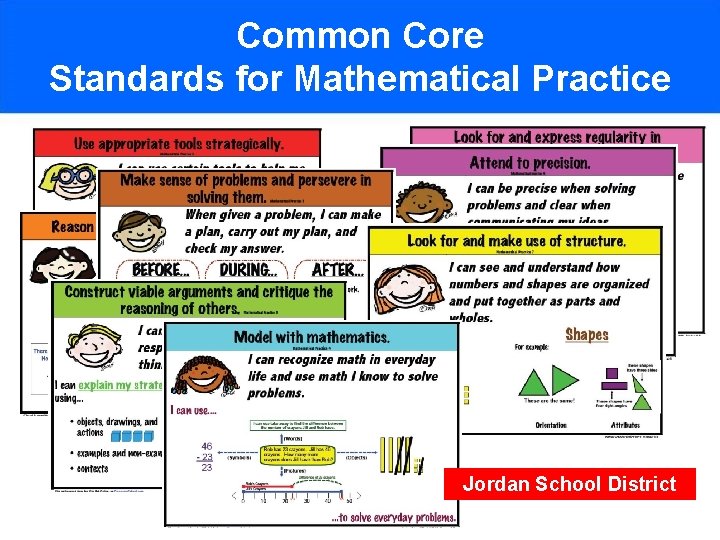
Common Core Standards for Mathematical Practice Jordan School District
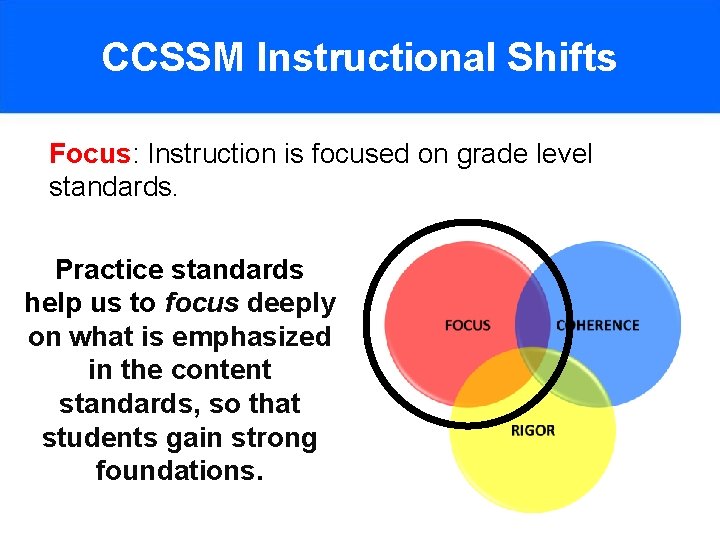
CCSSM Instructional Shifts Focus: Instruction is focused on grade level standards. Practice standards help us to focus deeply on what is emphasized in the content standards, so that students gain strong foundations.
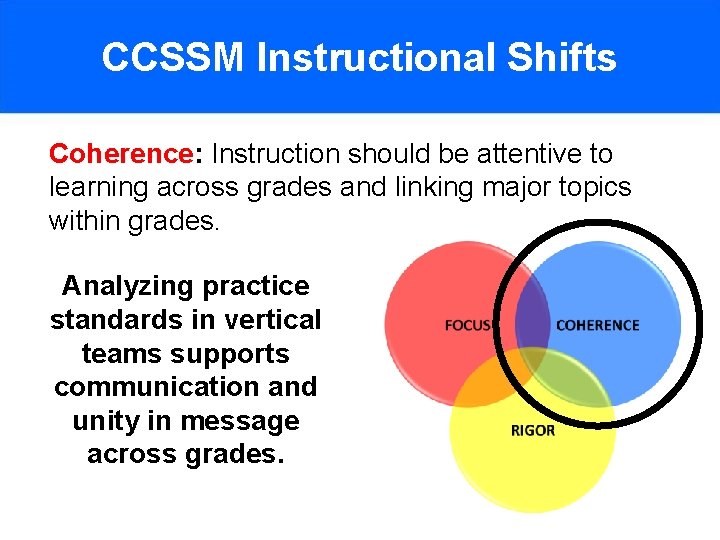
CCSSM Instructional Shifts Coherence: Instruction should be attentive to learning across grades and linking major topics within grades. Analyzing practice standards in vertical teams supports communication and unity in message across grades.
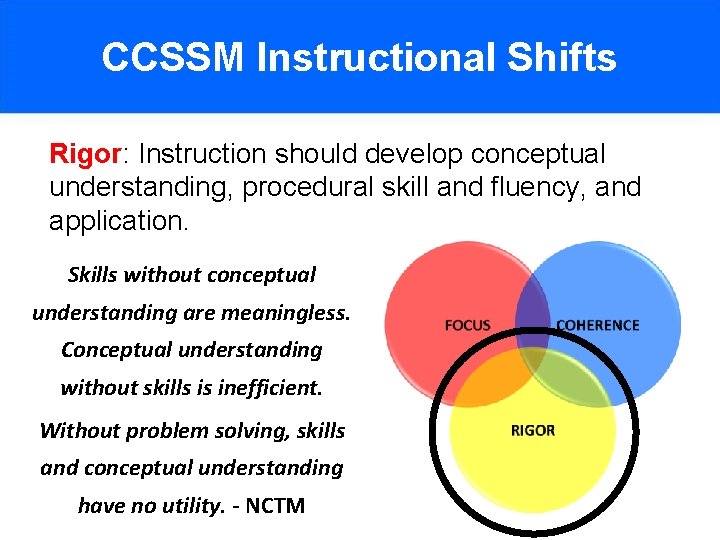
CCSSM Instructional Shifts Rigor: Instruction should develop conceptual understanding, procedural skill and fluency, and application. Skills without conceptual understanding are meaningless. Conceptual understanding without skills is inefficient. Without problem solving, skills and conceptual understanding have no utility. - NCTM
Session Outcome • Collaboratively define Common Core Standards for Mathematical Practice 1, 3, and 4
College and Career Readiness Thank You