
College Algebra Module 9 Power and Polynomial Functions

College Algebra Module 9: Power and Polynomial Functions
Module Learning Outcomes: Power and Polynomial Functions • • Introduction to Characteristics of Power and Polynomial Functions Introduction to Graphs of Polynomial Functions Introduction to Divide Polynomials Introduction to Methods for Finding Zeros of Polynomials
Characteristics of Power and Polynomial Functions
Learning Outcomes: Characteristics of Power and Polynomial Functions Introduction to Characteristics of Power and Polynomial Functions • Identify power functions • Identify end behavior of power functions • Identify polynomial functions • Identify the degree and leading coefficient of polynomial functions • Identify local behavior of polynomial functions
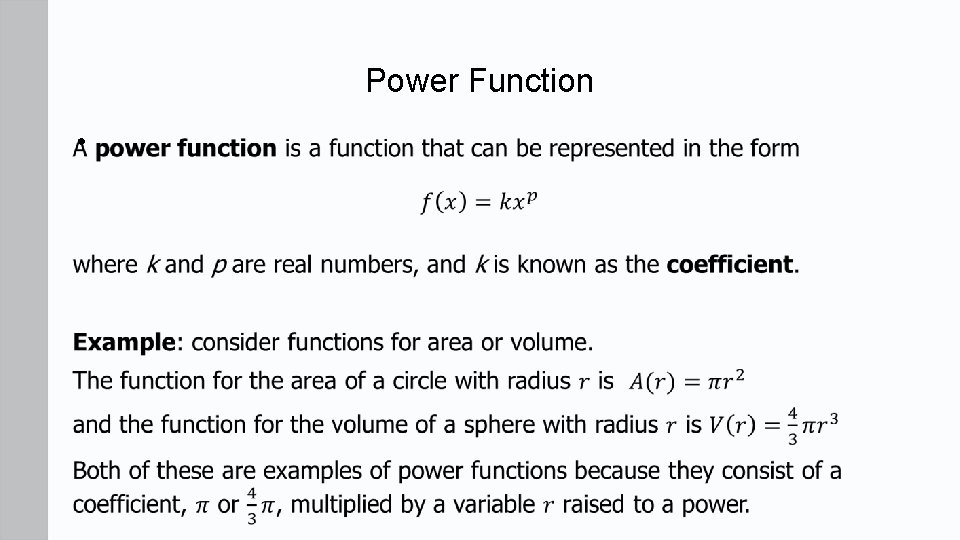
Power Function •
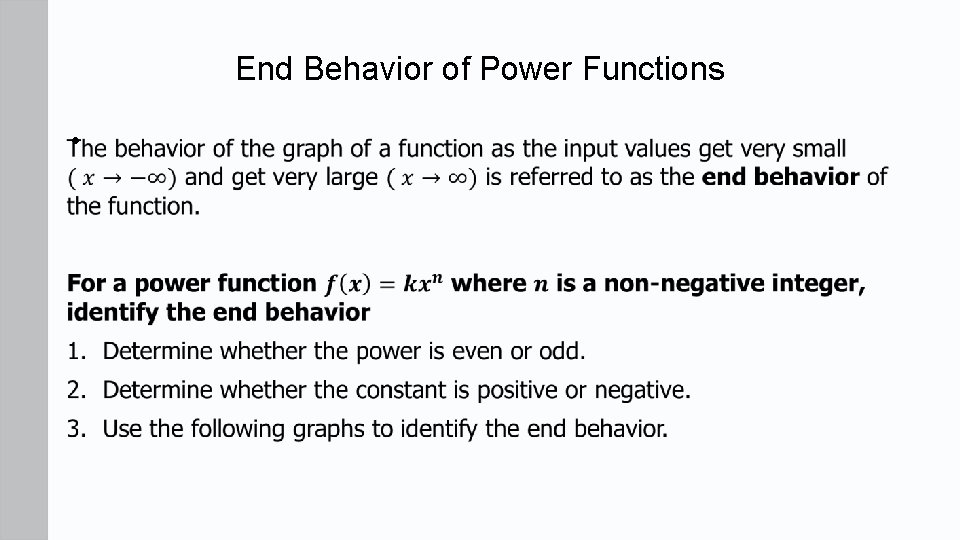
End Behavior of Power Functions •
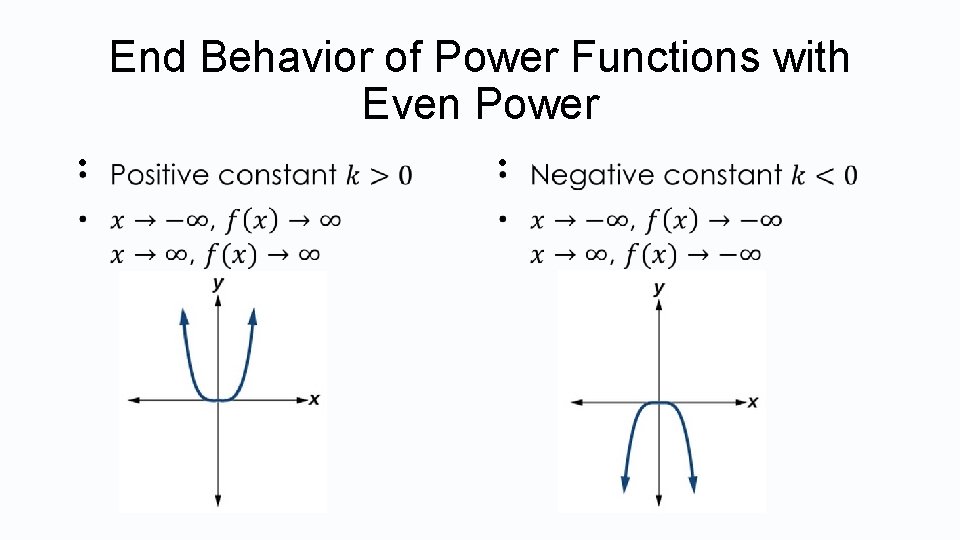
End Behavior of Power Functions with Even Power • •
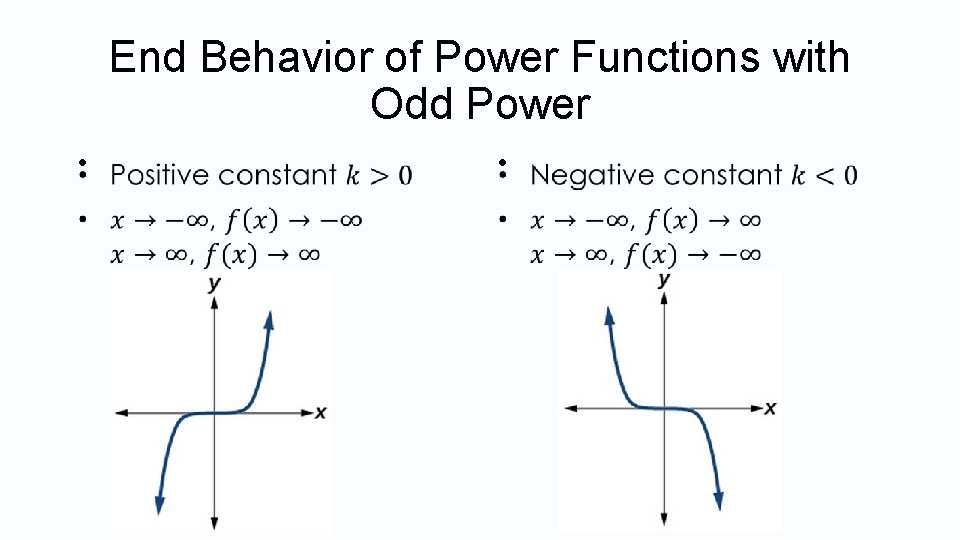
End Behavior of Power Functions with Odd Power • •
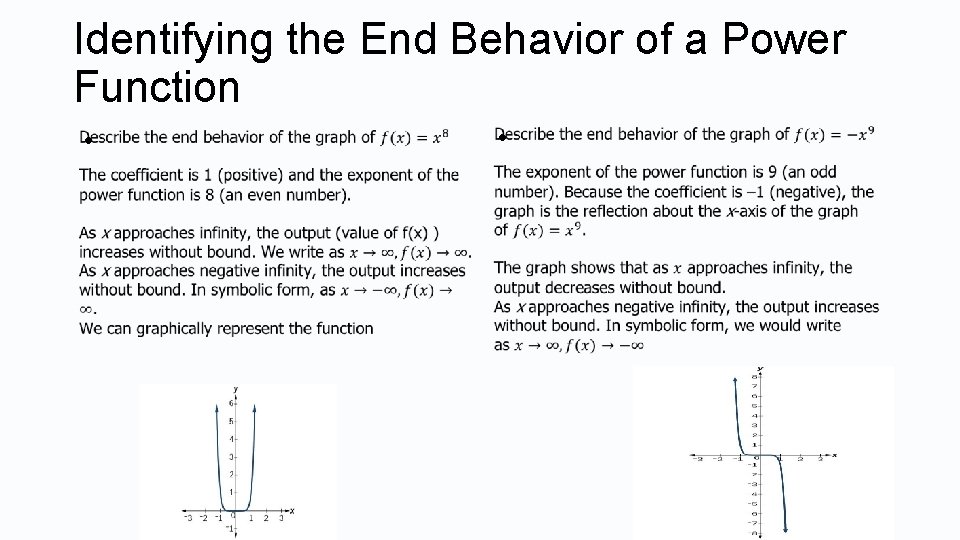
Identifying the End Behavior of a Power Function • •
Desmos Interactives Topic: end behavior of power functions (Even powers) - https: //www. desmos. com/calculator/rgdspbzldy (Odd powers) - https: //www. desmos. com/calculator/4 aeczmnp 1 w
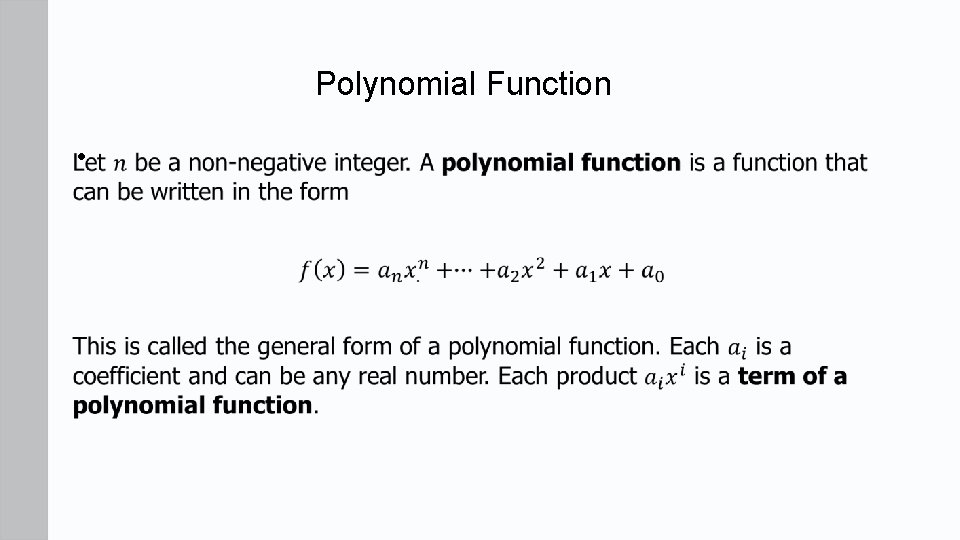
Polynomial Function •
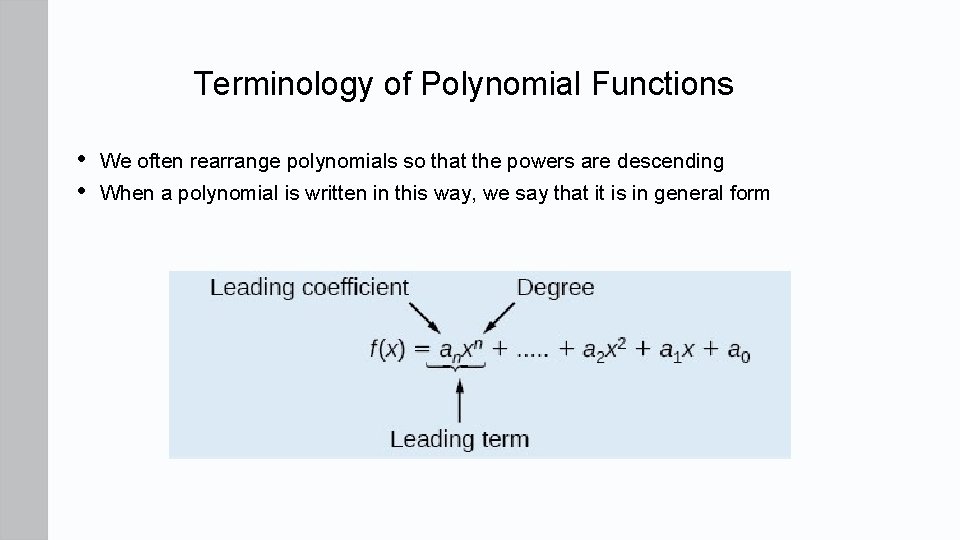
Terminology of Polynomial Functions • • We often rearrange polynomials so that the powers are descending When a polynomial is written in this way, we say that it is in general form
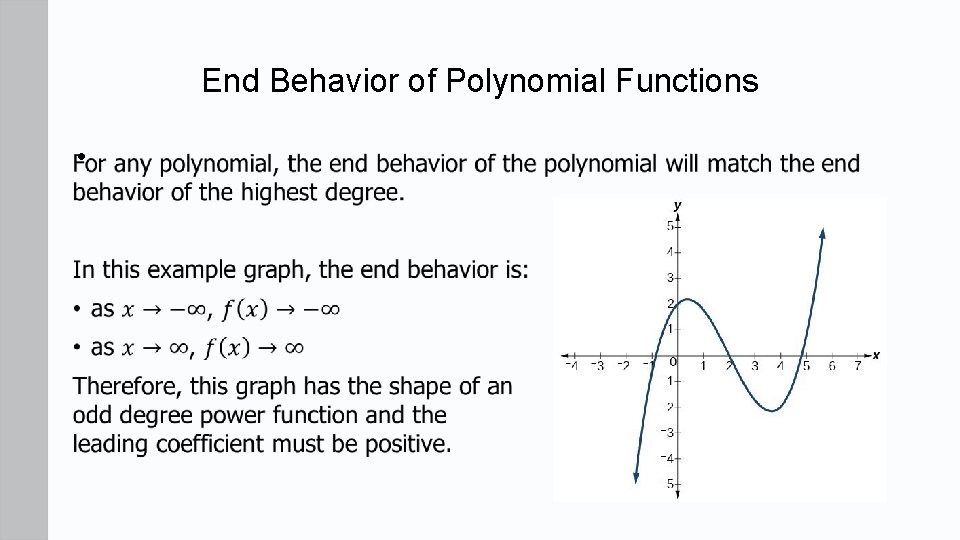
End Behavior of Polynomial Functions •
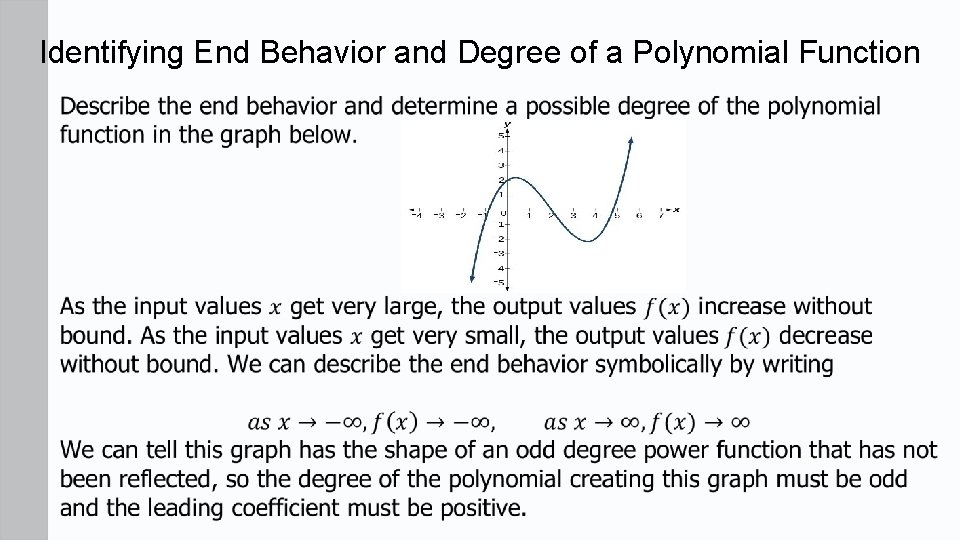
Identifying End Behavior and Degree of a Polynomial Function
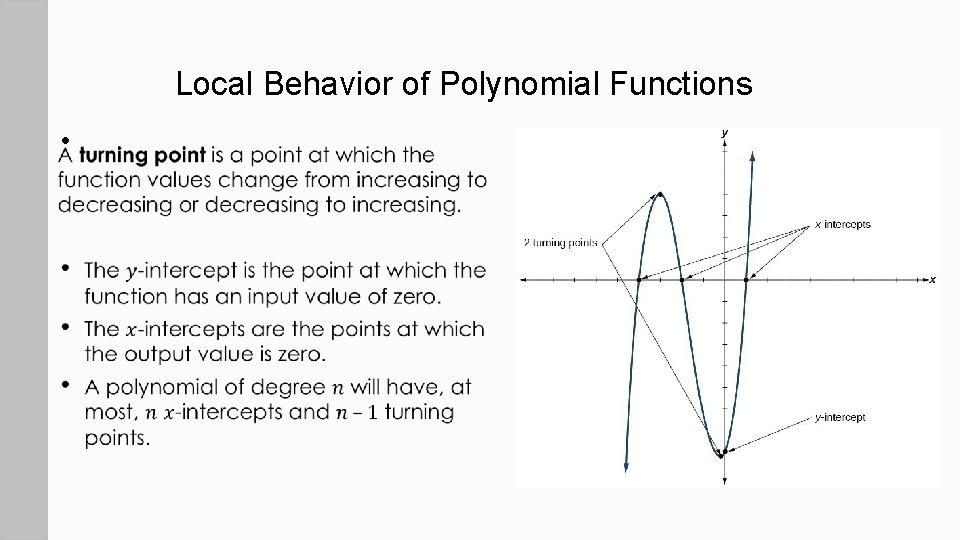
Local Behavior of Polynomial Functions •
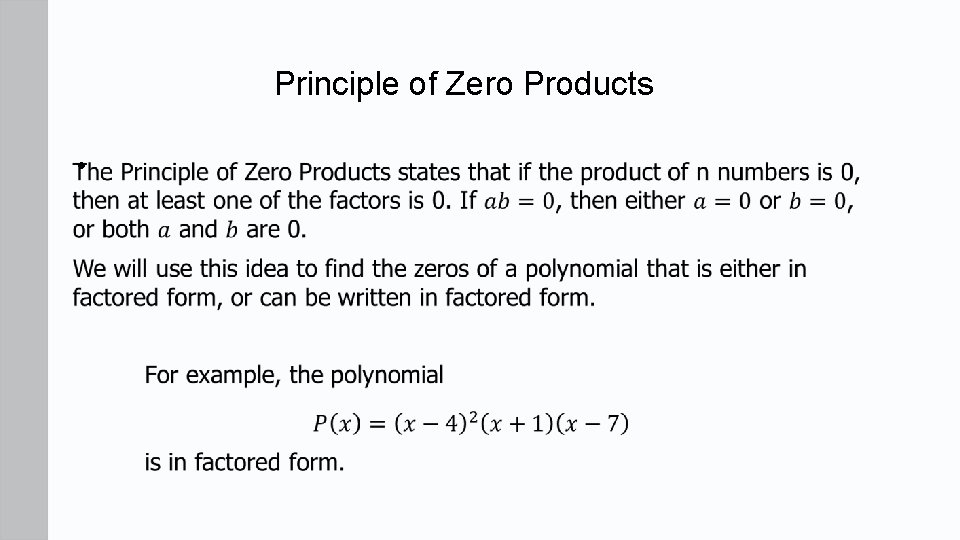
Principle of Zero Products •
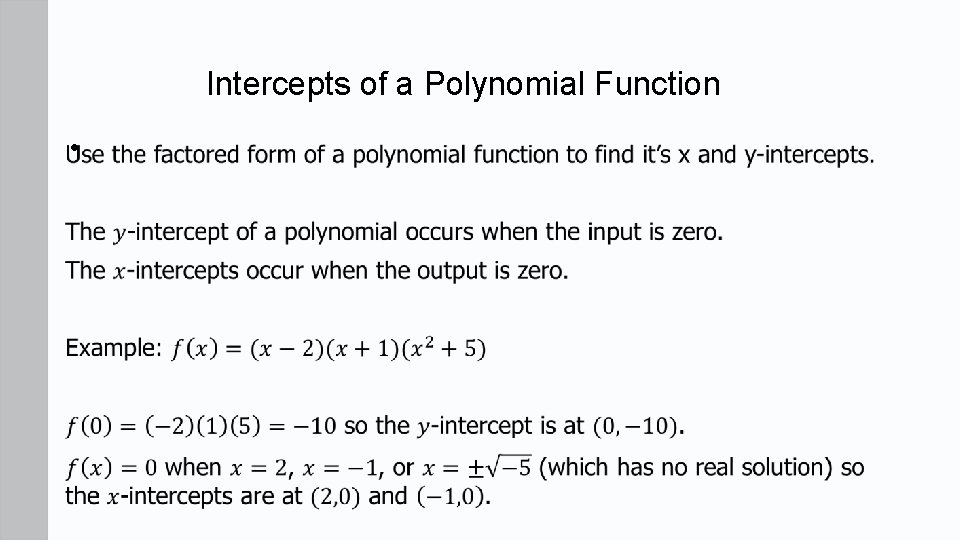
Intercepts of a Polynomial Function •
Graphs of Polynomial Functions
Learning Outcomes: Graphs of Polynomial Functions Introduction to Graphs of Polynomial Functions • Identify zeros of polynomial functions with even and odd multiplicity • Use the degree of a polynomial to determine the number of turning points of its • • graph Draw the graph of a polynomial function using end behavior, turning point, intercepts, and the intermediate value theorem Write the equation of a polynomial function given its graph
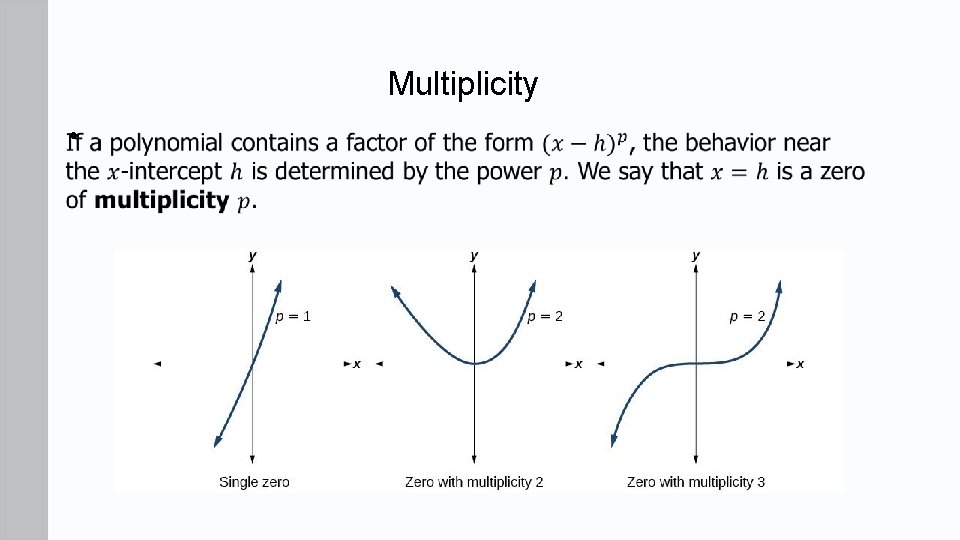
Multiplicity •
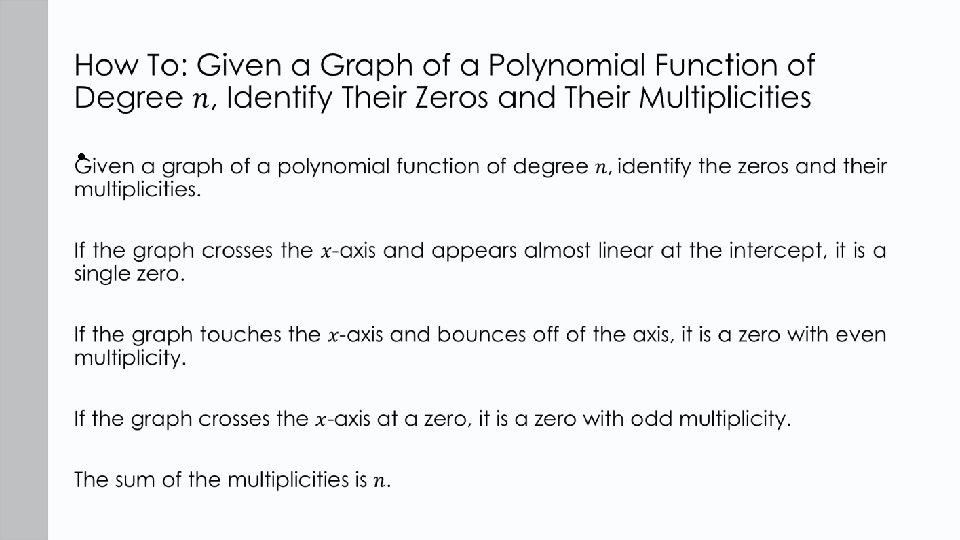
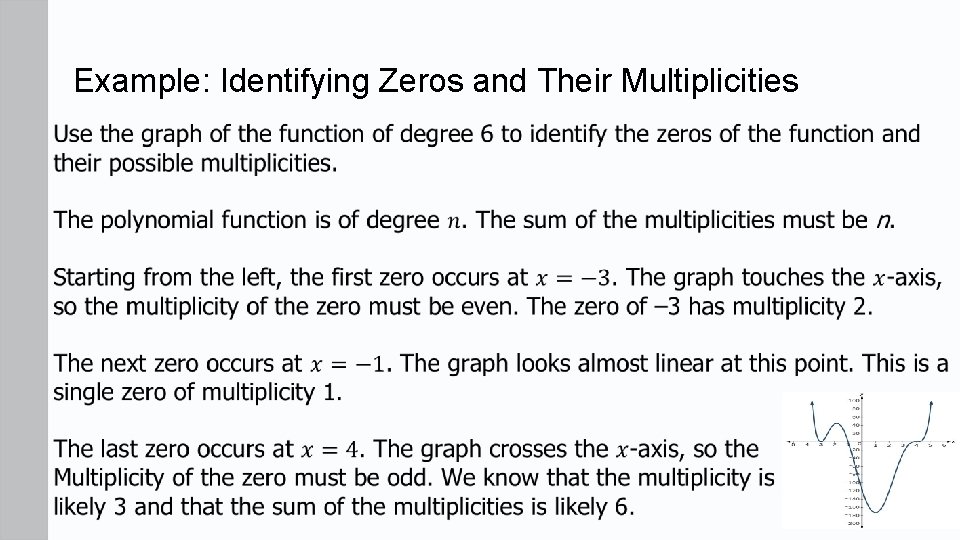
Example: Identifying Zeros and Their Multiplicities
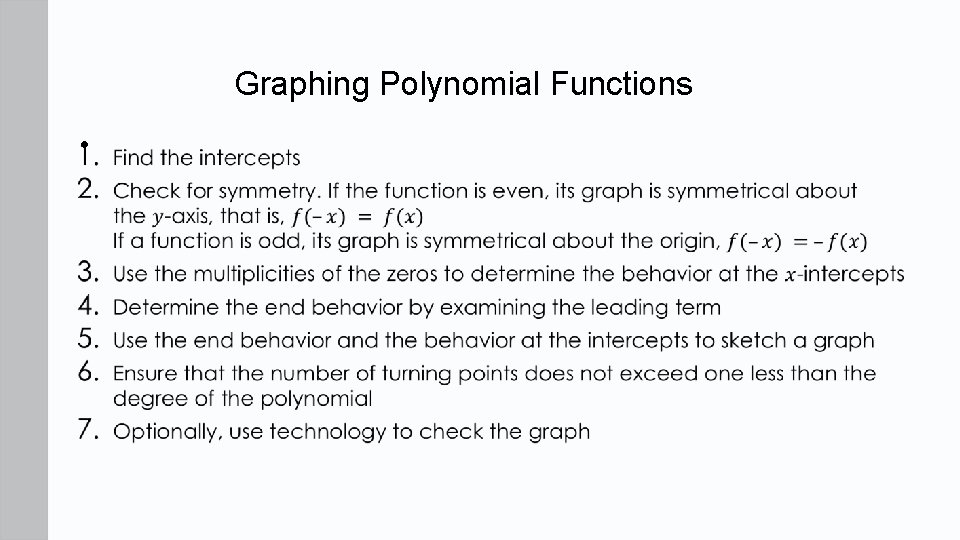
Graphing Polynomial Functions •
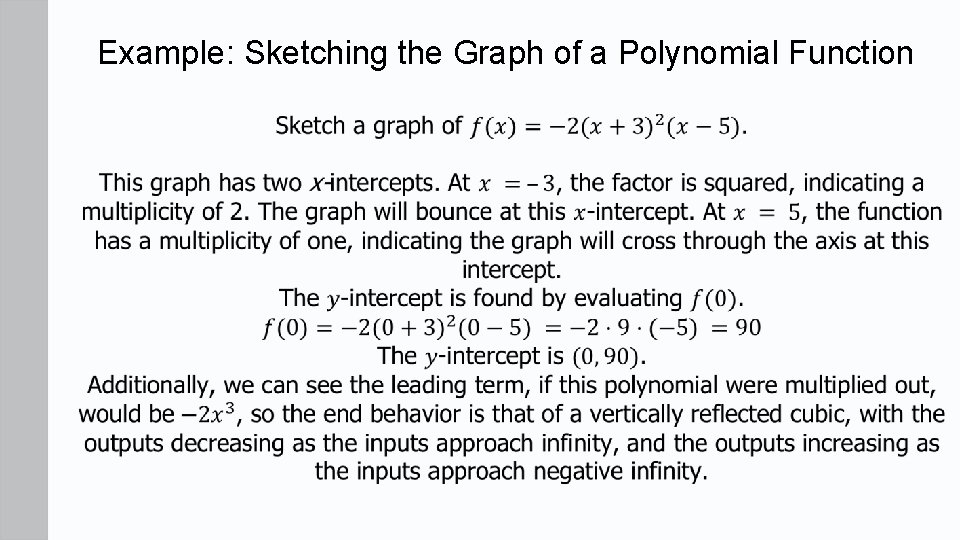
Example: Sketching the Graph of a Polynomial Function
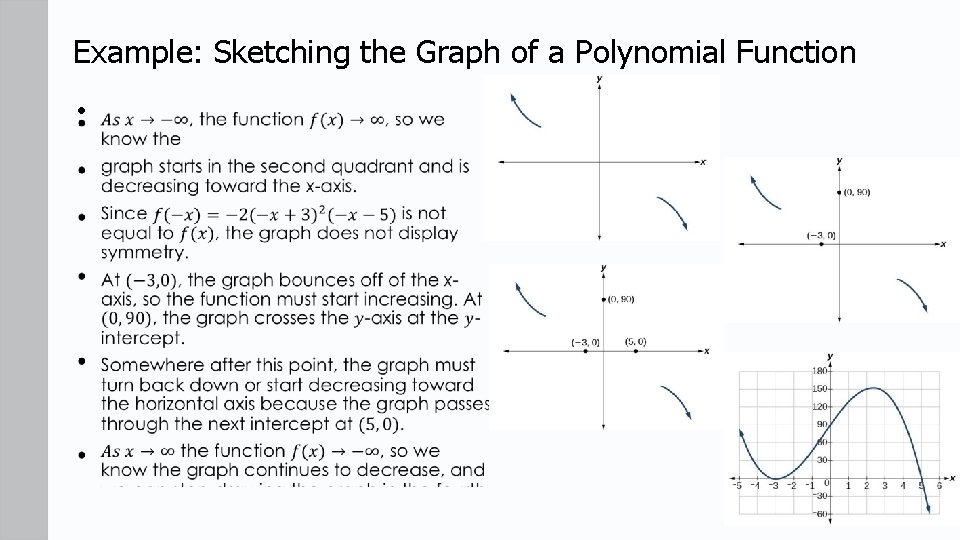
Example: Sketching the Graph of a Polynomial Function •
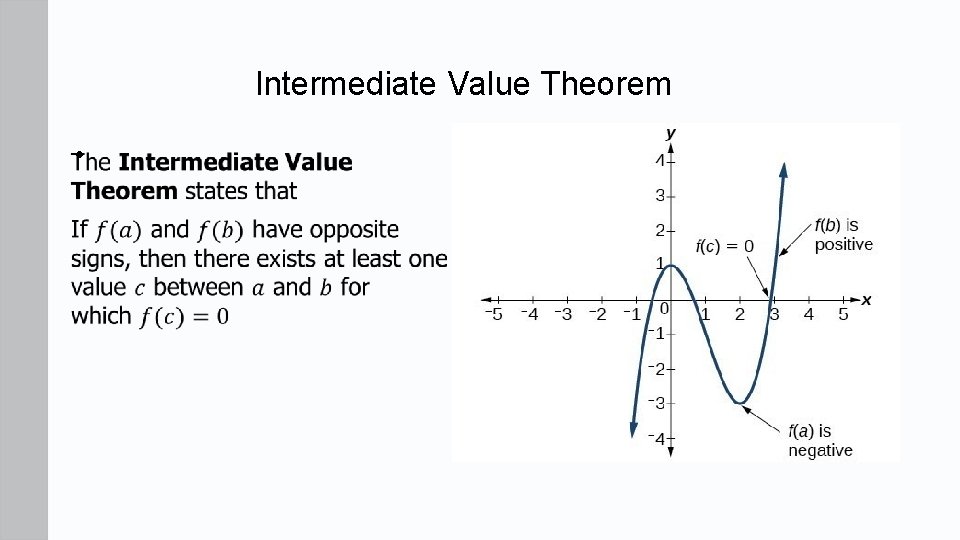
Intermediate Value Theorem •
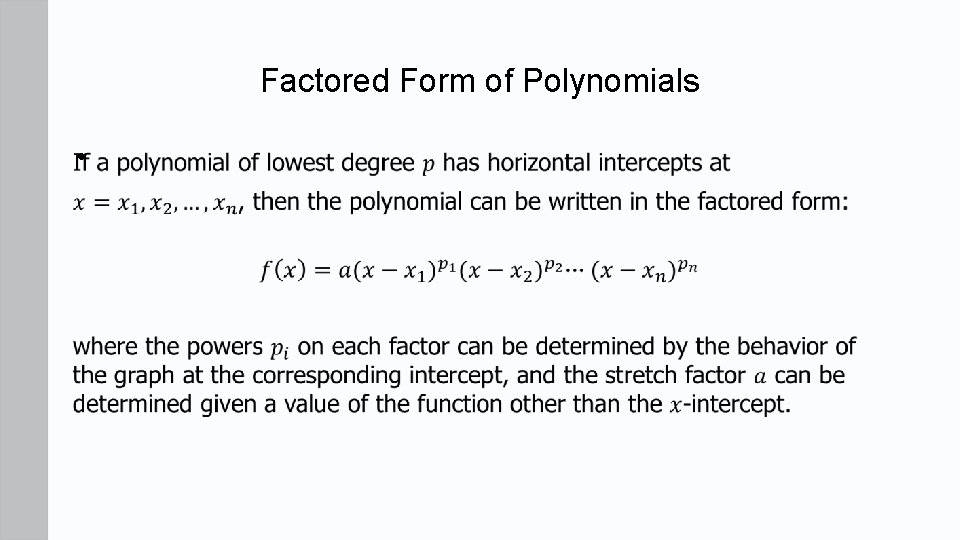
Factored Form of Polynomials •
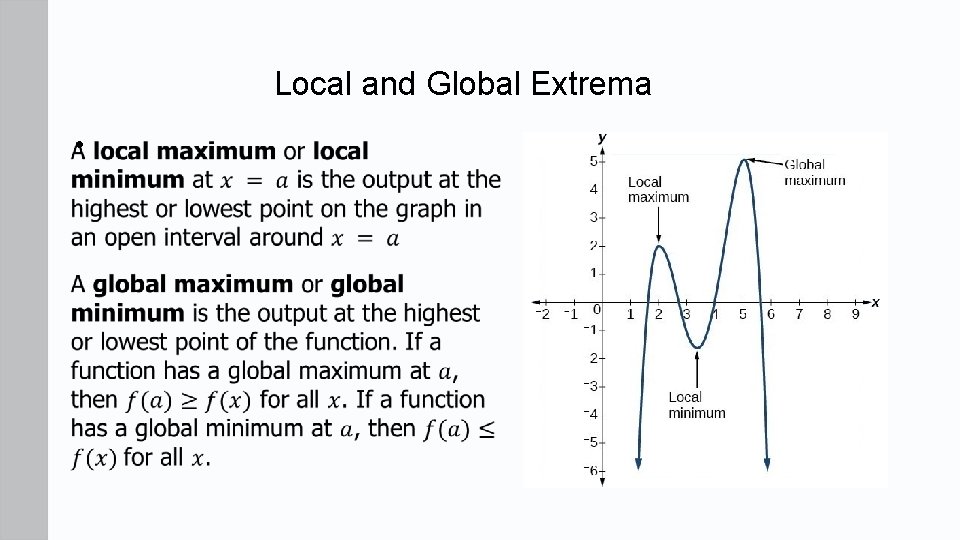
Local and Global Extrema •
Desmos Interactive Topic: zeros from a graph with slider = a to change y-intercept https: //www. desmos. com/calculator/5 oyyx 0 vbiv

Divide Polynomials
Learning Outcomes: Divide Polynomials Introduction to Dividing Polynomials • Use long division to divide polynomials • Use synthetic division to divide polynomials
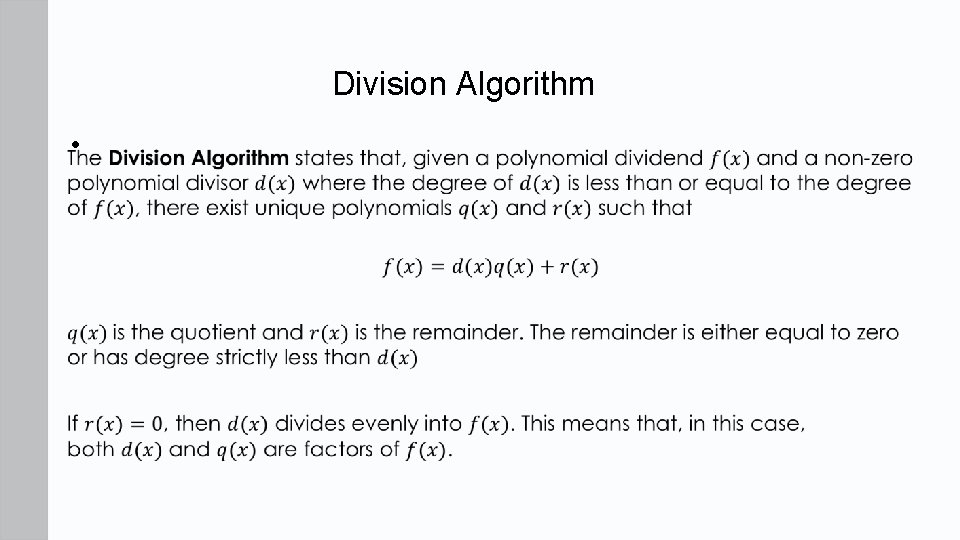
Division Algorithm •
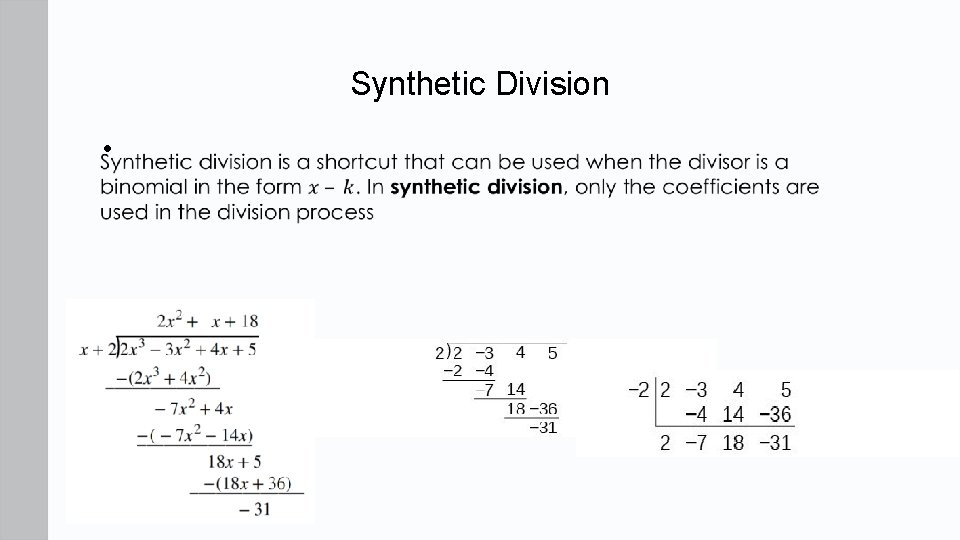
Synthetic Division •
Methods for Finding Zeros of Polynomials
Learning Outcomes: Methods for Finding Zeros of Polynomials Introduction to Divide Polynomials • Evaluate a polynomial using the Remainder Theorem • Use the Factor Theorem to solve a polynomial equation • Use the Rational Zero Theorem to find rational zeros • Find zeros of a polynomial function • Use the Linear Factorization Theorem to find polynomials with given zeros • Use Descartes’ Rule of Signs • Solve real-world applications of polynomial equations
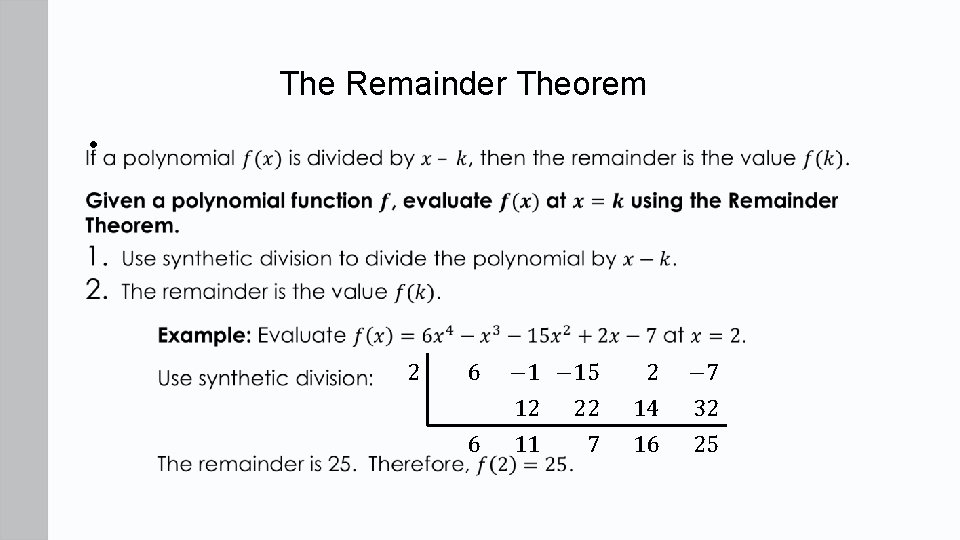
The Remainder Theorem • 2 6 6 − 15 12 22 11 7 2 14 16 − 7 32 25
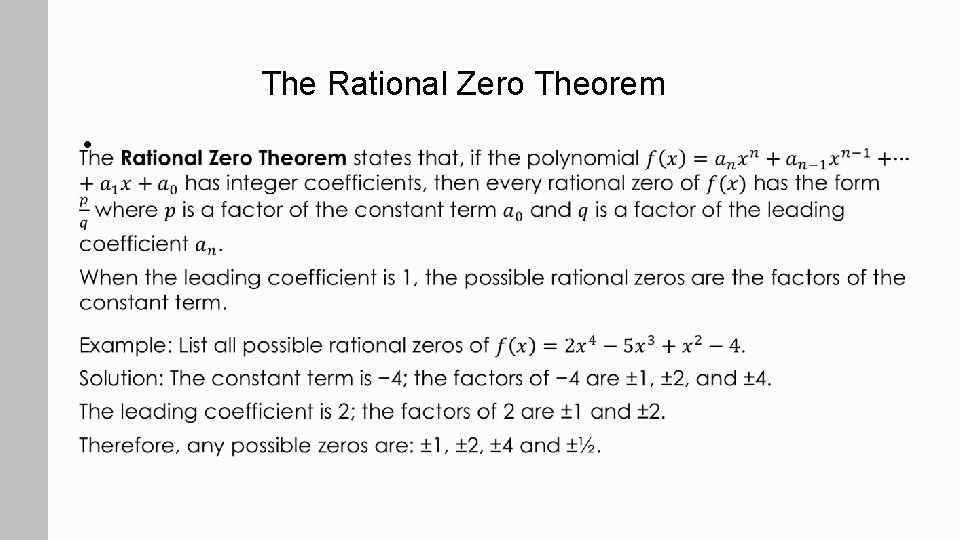
The Rational Zero Theorem •
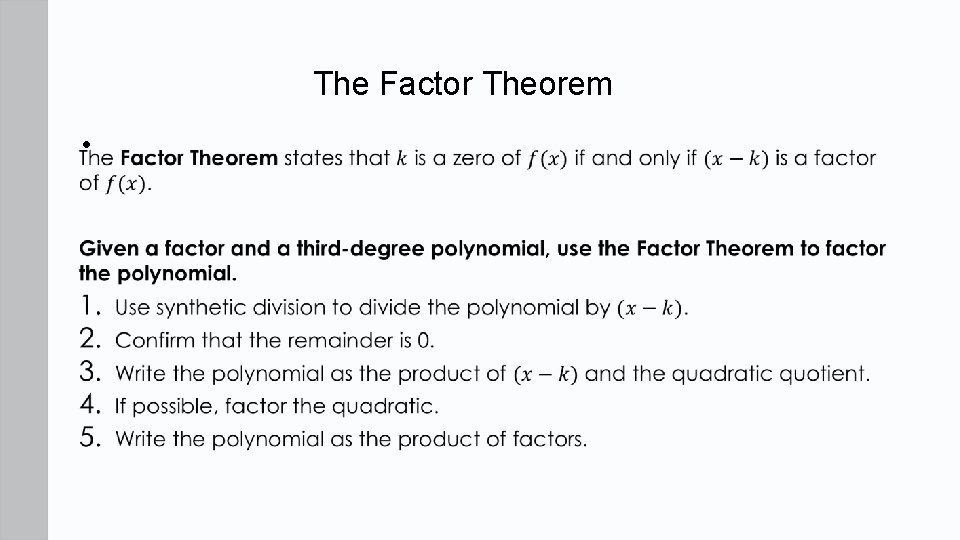
The Factor Theorem •
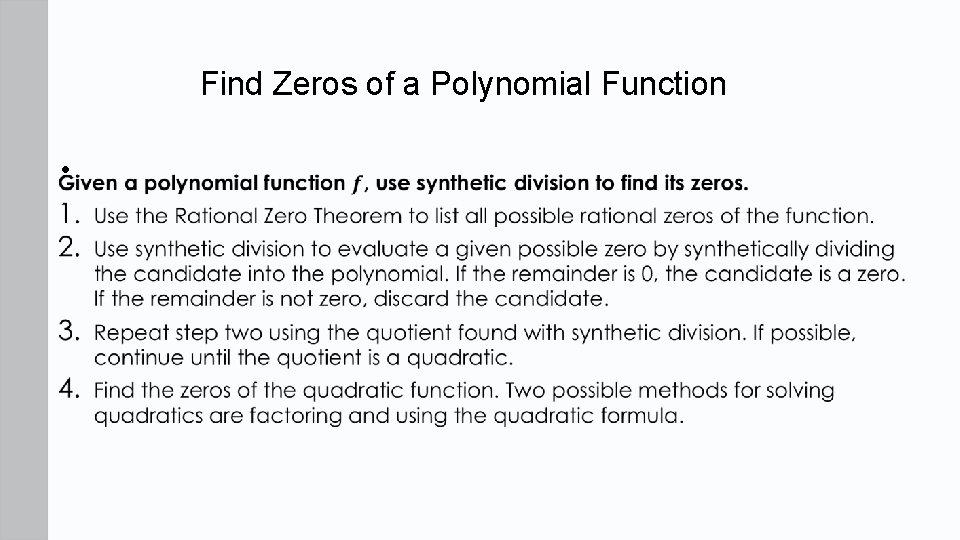
Find Zeros of a Polynomial Function •
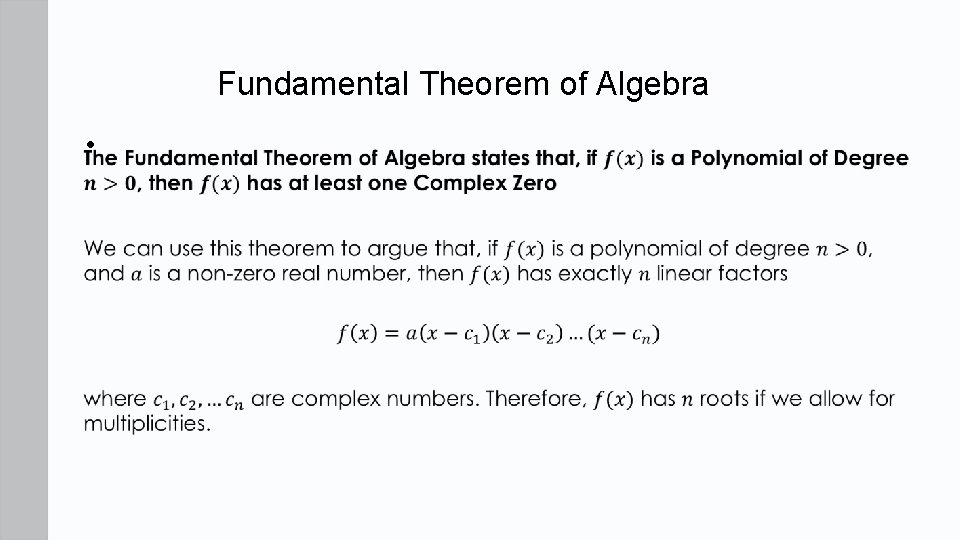
Fundamental Theorem of Algebra •
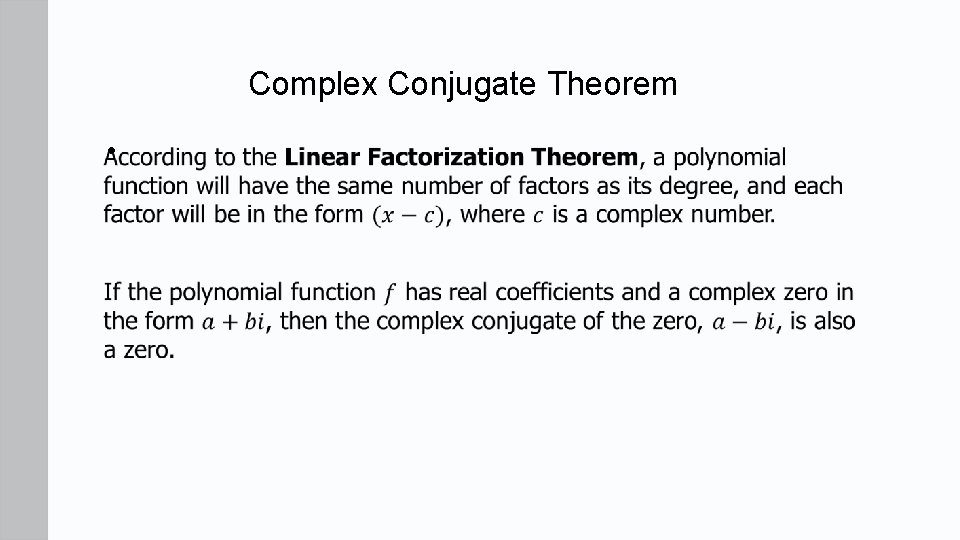
Complex Conjugate Theorem •
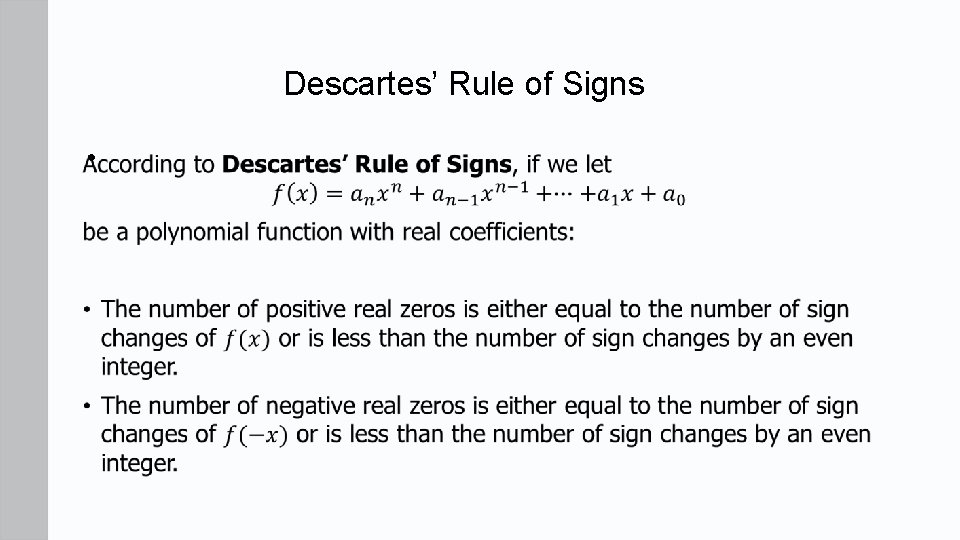
Descartes’ Rule of Signs •
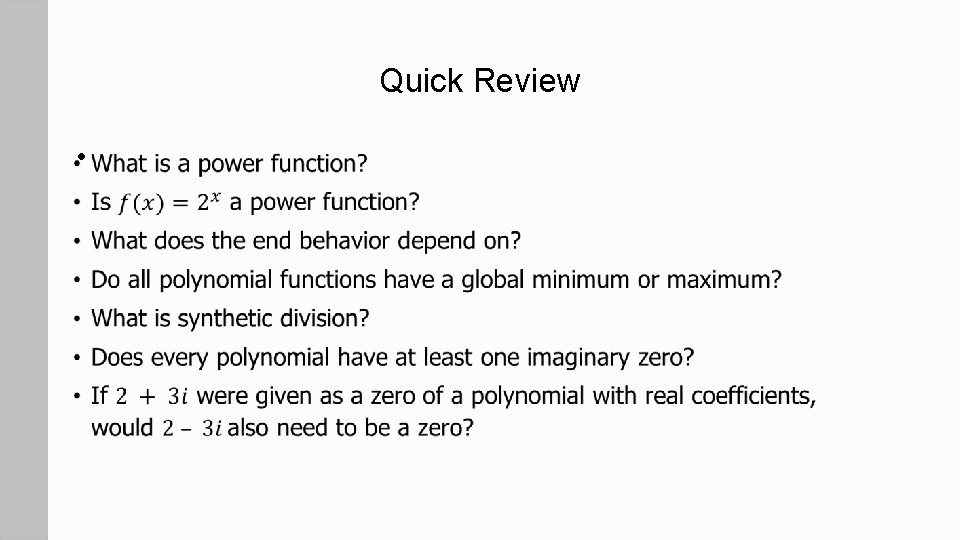
Quick Review •
- Slides: 43