
Collective Impact Tools Techniques A Tamarack Webinar Event
Collective Impact Tools & Techniques A Tamarack Webinar Event December 17 th, 2014
Technical Considerations Visuals: If you can see this slide please raise your hand in the Go. To. Webinar control panel Audio Options: • Vo. IP: You may choose to connect your audio using your computer’s speakers. A headset is recommended. • Phone: You may choose to call in using your telephone • Enter the unique audio pin you see in the audio tab of your Go. To. Webinar control panel Tech Support: Use Question/Chat box in your Go. To Webinar control panel or email Kirsti@tamarackcommunity. ca. Twitter: For those of you who like to tweet your thoughts as you learn – we invite you to use the hashtag - #tamarackconnect. Questions? Please use the question/chat box.
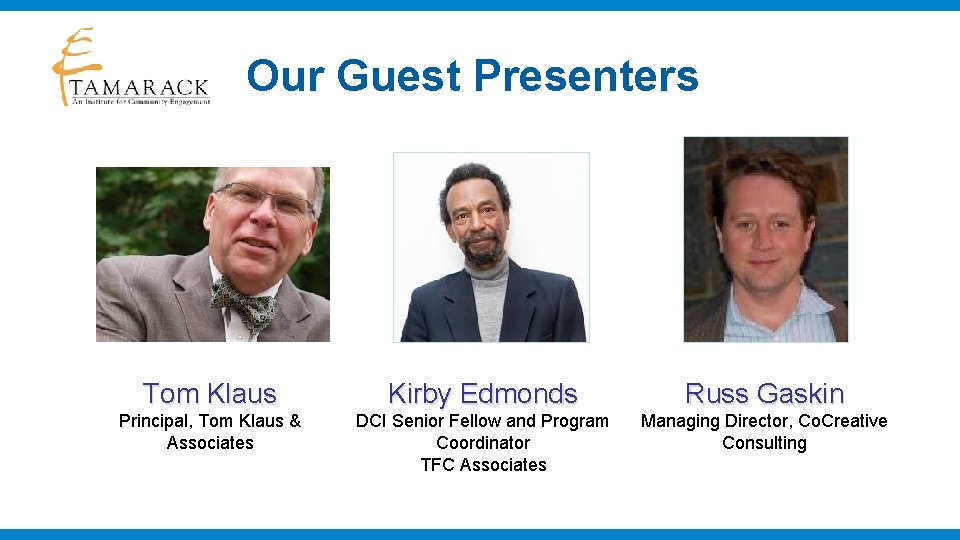
Our Guest Presenters Tom Klaus Kirby Edmonds Russ Gaskin Principal, Tom Klaus & Associates DCI Senior Fellow and Program Coordinator TFC Associates Managing Director, Co. Creative Consulting
Roots to Fruit of Sustainable Community Change Presented by Tom Klaus
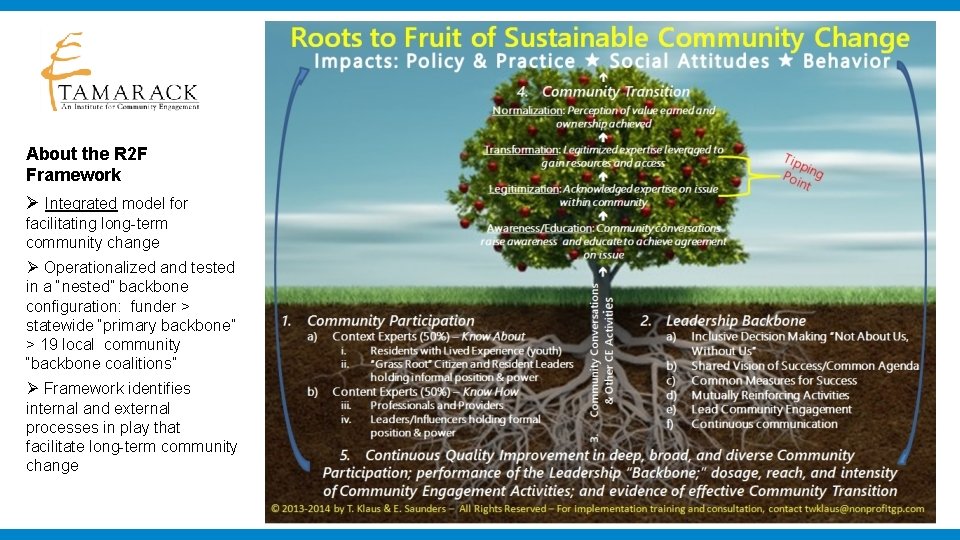
About the R 2 F Framework Ø Integrated model for facilitating long-term community change Ø Operationalized and tested in a “nested” backbone configuration: funder > statewide “primary backbone” > 19 local community “backbone coalitions” Ø Framework identifies internal and external processes in play that facilitate long-term community change
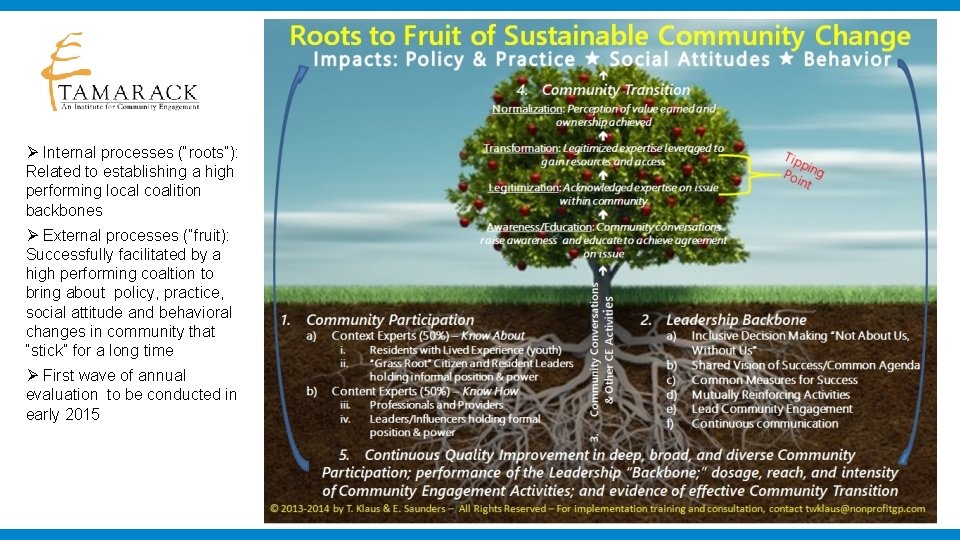
Ø Internal processes (“roots”): Related to establishing a high performing local coalition backbones Ø External processes (“fruit): Successfully facilitated by a high performing coaltion to bring about policy, practice, social attitude and behavioral changes in community that “stick” for a long time Ø First wave of annual evaluation to be conducted in early 2015
R 2 F Tools Self-Assessment (Currently available free upon request) Ø Currently used by community coalitions to assess their progress in both coalition development and community engagement progress R 2 F Tailored Implementation Instruction and Training (January, 2015) Ø R 2 F framework presented as a “min specs” approach to community transition Ø Tailored instruction focused on helping sites develop strategies and tactics for use in their unique communities and situations
R 2 F Tools Online Evaluation Survey (available by Spring 2015 in conjunction with R 2 F training and instruction) Ø Online survey completed by individual members of the coalition backbones – individual people, not organizations Ø Eight scales – related to the major processes in the R 2 F framework § Scales have been shown to have strong reliability in pilot tests § Individual measures within scales have similarly been shown to have strong face validity For more information about the R 2 F framework or any of these tools, contact: Tom Klaus, Ph. D. twklaus@nonprofitgp. com Phone: 240 -319 -8525
Problem Identification Tool Presented by Kirby Edmonds
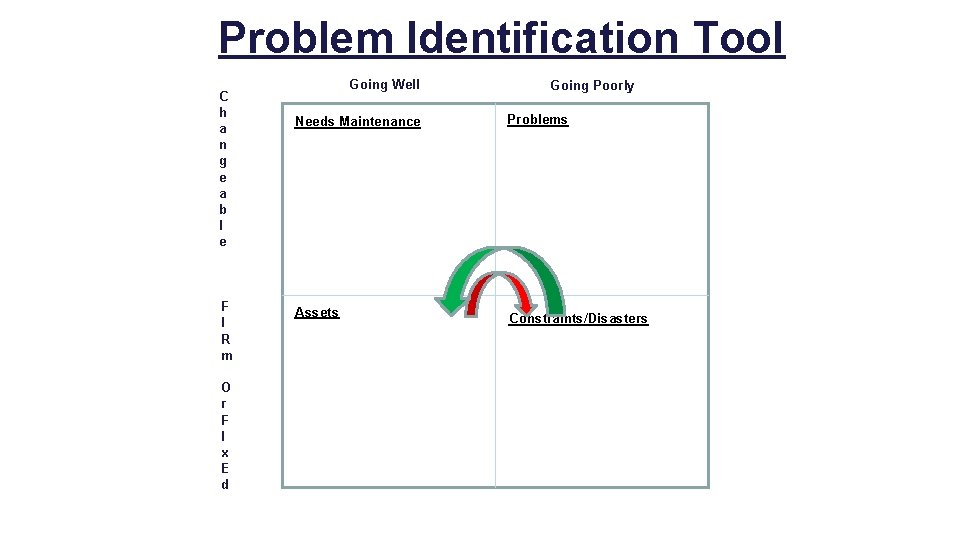
Problem Identification Tool C h a n g e a b l e F I R m O r F I x E d Going Well Going Poorly Needs Maintenance Problems Assets Constraints/Disasters
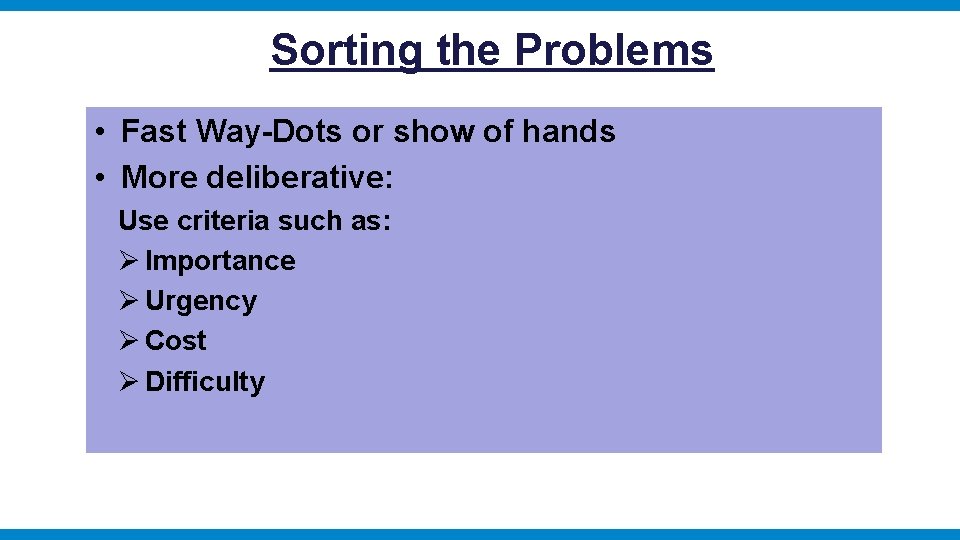
Sorting the Problems • Fast Way-Dots or show of hands • More deliberative: Use criteria such as: Ø Importance Ø Urgency Ø Cost Ø Difficulty
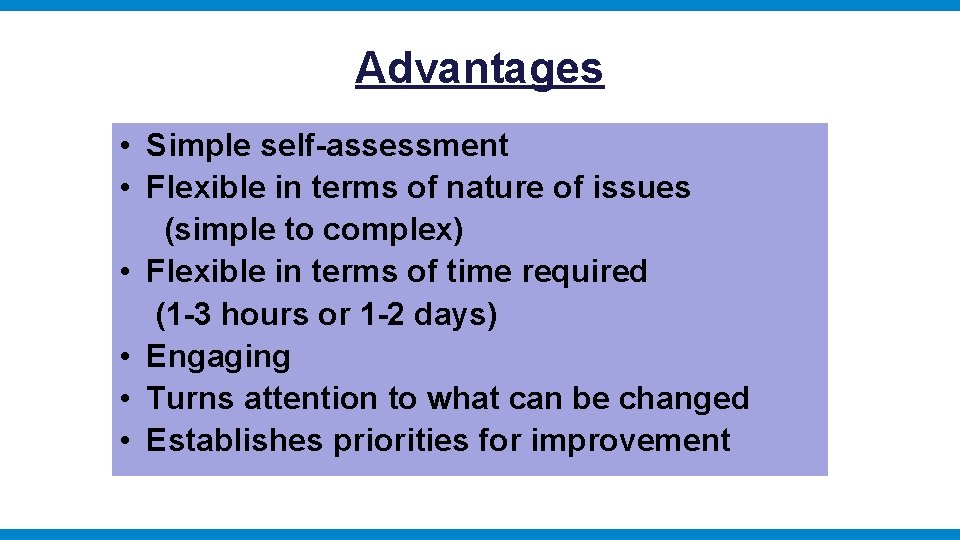
Advantages • Simple self-assessment • Flexible in terms of nature of issues (simple to complex) • Flexible in terms of time required (1 -3 hours or 1 -2 days) • Engaging • Turns attention to what can be changed • Establishes priorities for improvement
The Key Initiator Approach Presented by Russ Gaskin
Key Initiator Examples Community Capital to move $1 billion in new capital to U. S. CDFI’s (3 X success) Market differentiation at no cost Solar Circle to bring U. S. cost of solar to 50% of supply by 2050 (on track for 2025) Policy, industry coordination, research, new ventures Better Paper to transition U. S. magazine industry to recycled paper (150+ titles) Best practices, myth-busting, research, testing Impacting Poverty to move 5 million Americans out of poverty The Southern Initiative to revitalize South Auckland, New Zealand Non-GMO Supply Working Group return non-GMO corn and soy to market dominance Clean Electronics Production to eliminate toxic exposures in electronics manufacturing Utility of the Future create the US’s first vertically-integrated 100% renewable energy utility. +1 -202 -525 -6070 | russ@cocreativeconsulting. com
Key Initiator Situations • The problem is chronic and previous attempts to solve it have failed • Stakeholders have divergent worldviews and frames for defining the problem • The system is complex and no one person has a view on the whole problem • The system is fragmented and there is a distinct lack of communication and coordination among the parts • The system is paradoxically dynamic yet stuck and while the influence of various actors shifts over time, there is no meaningful movement • There is some level of anticipation among SOME stakeholders that new, more integrated solutions could emerge +1 -202 -525 -6070 | russ@cocreativeconsulting. com
Key Initiator Qualities Characteristic Polarity Held in high regard by their peers Humility & Confidence High expertise in their part of the system/value chain Expertise & Ignorance Proven collaboration abilities Self-interest & Common good Willingness to really understand the issues/system, and courage to act quickly on that understanding Analytical & Action-oriented Able to represent their institution’s involvement Individual interests & Institutional interests 90% of participants are 100% committed to the goal; 10% are skeptics but open to evidence-based learning Commitment & Skepticism +1 -202 -525 -6070 | russ@cocreativeconsulting. com
Key Initiator Principles (Based on the work of Susan Davis) “A deal is a good deal when it is good for all concerned” Each member does what s/he loves to do, does uniquely well, and does as little else as possible Build trust, build collective intelligence, and build momentum Analyze fast, prototype early, and learn with our hands Everything is a hypothesis, even our goal Differentiate before we integrate Leverage tensions +1 -202 -525 -6070 | russ@cocreativeconsulting. com

Comments or Questions?

- Slides: 20