
Collective Impact General Overview December 2012 Developing a
Collective Impact General Overview December 2012
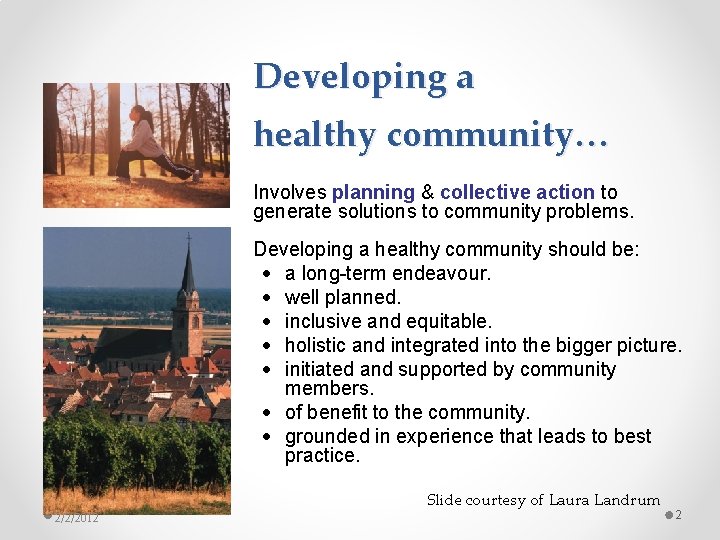
Developing a healthy community… Involves planning & collective action to generate solutions to community problems. Developing a healthy community should be: a long-term endeavour. well planned. inclusive and equitable. holistic and integrated into the bigger picture. initiated and supported by community members. of benefit to the community. grounded in experience that leads to best practice. Slide courtesy of Laura Landrum 2/2/2012 2

Developing a healthy community… …requires and helps build community capacity • to address issues. • to take advantage of opportunities. • to find common ground. • to balance competing interests. It does not just happen—it requires both a conscious and a conscientious effort to do something (or many things) to improve the community. Slide courtesy of Laura Landrum 2/2/2012 3
Partner Benefits - Examples • Increases their visibility and stature in the community • Supports their mission or serves their constituency • Positions them for future funding opportunities • Strengthens partnerships for future endeavors 2/2/2012 4
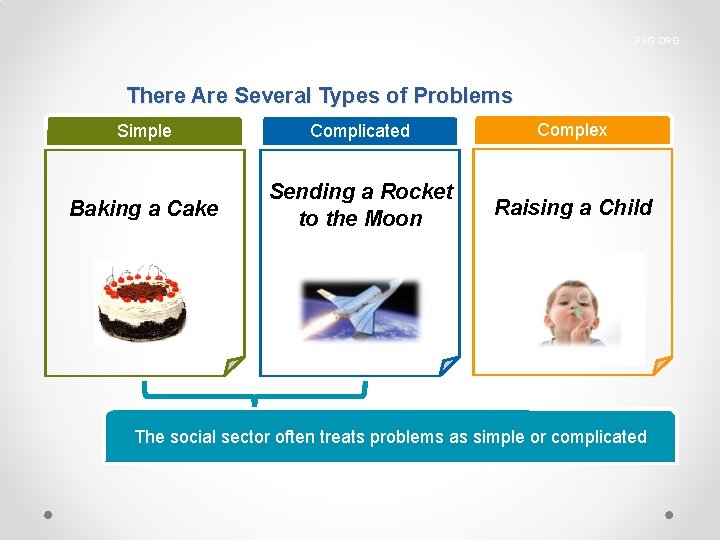
FSG. ORG There Are Several Types of Problems Simple Complicated Complex Baking a Cake Sending a Rocket to the Moon Raising a Child The social sector often treats problems as simple or complicated
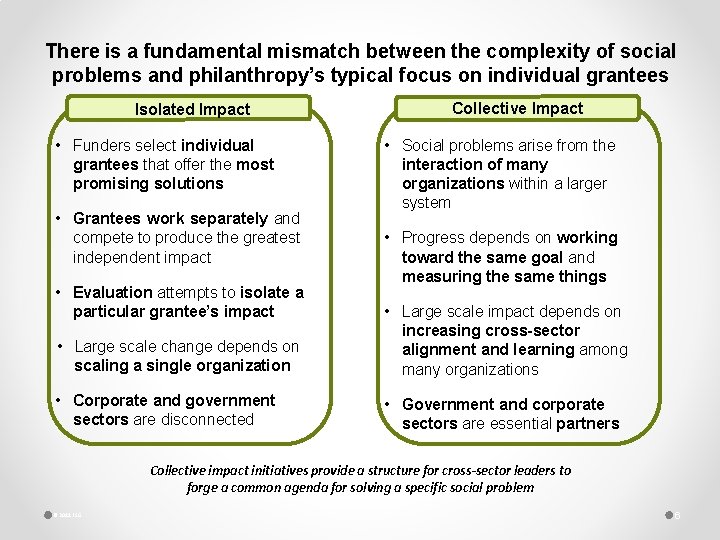
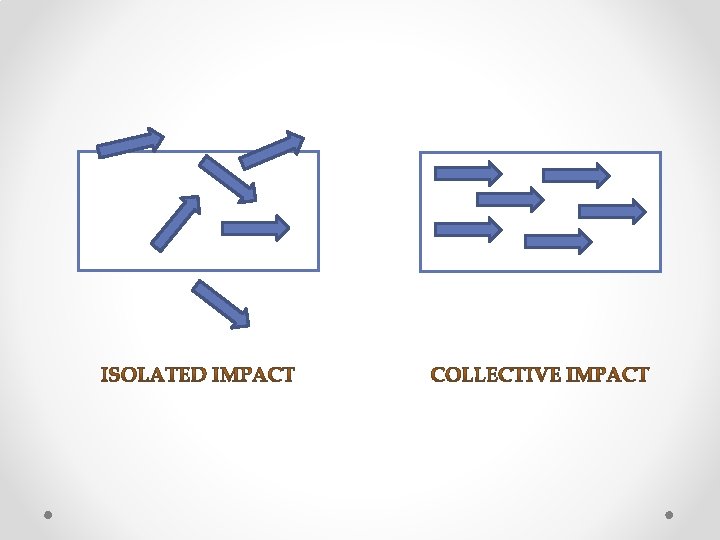
There is a fundamental mismatch between the complexity of social problems and philanthropy’s typical focus on individual grantees Isolated Impact • Funders select individual grantees that offer the most promising solutions • Grantees work separately and compete to produce the greatest independent impact • Evaluation attempts to isolate a particular grantee’s impact Collective Impact • Social problems arise from the interaction of many organizations within a larger system • Progress depends on working toward the same goal and measuring the same things • Large scale change depends on scaling a single organization • Large scale impact depends on increasing cross-sector alignment and learning among many organizations • Corporate and government sectors are disconnected • Government and corporate sectors are essential partners Collective impact initiatives provide a structure for cross-sector leaders to forge a common agenda for solving a specific social problem © 2011 FSG 6
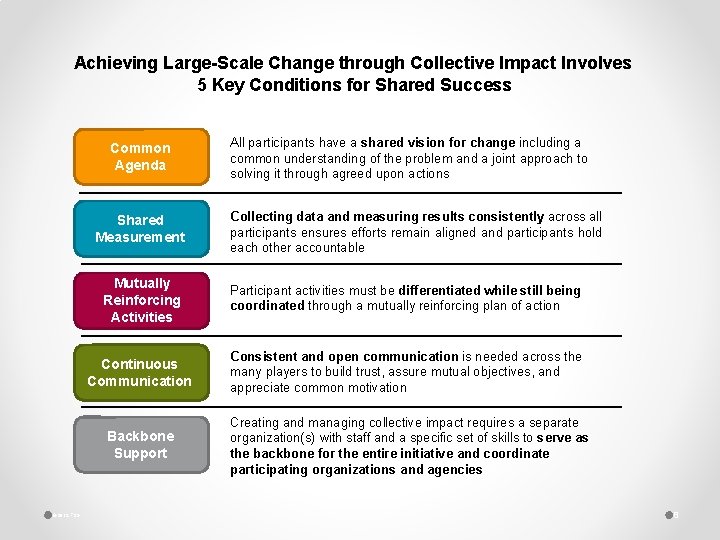
Achieving Large-Scale Change through Collective Impact Involves 5 Key Conditions for Shared Success Common Agenda Shared Measurement © 2012 FSG All participants have a shared vision for change including a common understanding of the problem and a joint approach to solving it through agreed upon actions Collecting data and measuring results consistently across all participants ensures efforts remain aligned and participants hold each other accountable Mutually Reinforcing Activities Participant activities must be differentiated while still being coordinated through a mutually reinforcing plan of action Continuous Communication Consistent and open communication is needed across the many players to build trust, assure mutual objectives, and appreciate common motivation Backbone Support Creating and managing collective impact requires a separate organization(s) with staff and a specific set of skills to serve as the backbone for the entire initiative and coordinate participating organizations and agencies 8
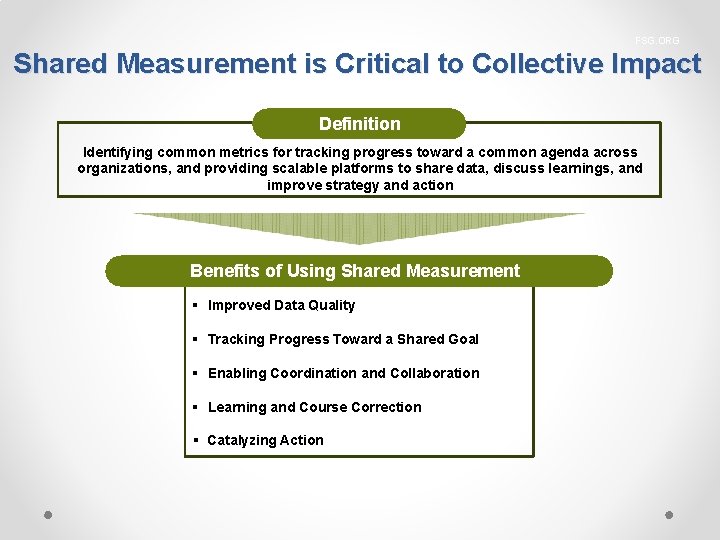
FSG. ORG Shared Measurement is Critical to Collective Impact Definition Identifying common metrics for tracking progress toward a common agenda across organizations, and providing scalable platforms to share data, discuss learnings, and improve strategy and action Benefits of Using Shared Measurement Improved Data Quality Tracking Progress Toward a Shared Goal Enabling Coordination and Collaboration Learning and Course Correction Catalyzing Action
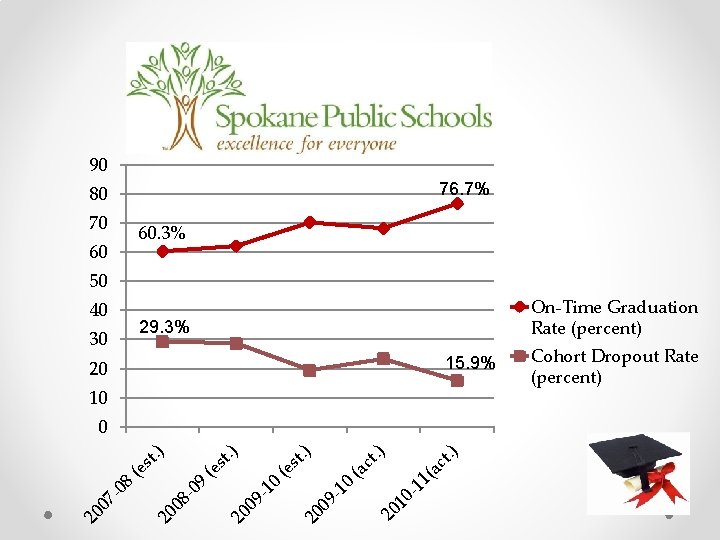
90 76. 7% 80 70 60. 3% 60 50 40 On-Time Graduation Rate (percent) 29. 3% 30 15. 9% 20 10 t. ) ac 11 ( 20 -1 0 20 09 10 - (a ct . ) st. ) 20 09 - 10 (e st. ) (e 09 08 20 20 07 - 08 (e st. ) 0 Cohort Dropout Rate (percent)
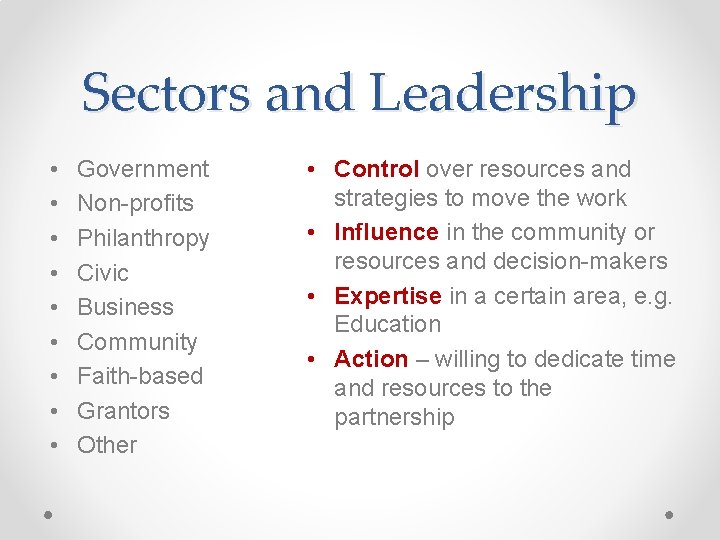
Sectors and Leadership • • • Government Non-profits Philanthropy Civic Business Community Faith-based Grantors Other • Control over resources and strategies to move the work • Influence in the community or resources and decision-makers • Expertise in a certain area, e. g. Education • Action – willing to dedicate time and resources to the partnership
• Examples of collective impact initiatives: http: //www. fsg. org/FSGNews/News. Events. Details/Article. I d/985/New-Collective-Impact-Resources-8 -Case-Studiesof-Successful-Initiatives. aspx • Article about collective impact: http: //www. ssireview. org/articles/entry/collective_impact
- Slides: 12