
Collection system Monitoring CMOM II and CSO Bob
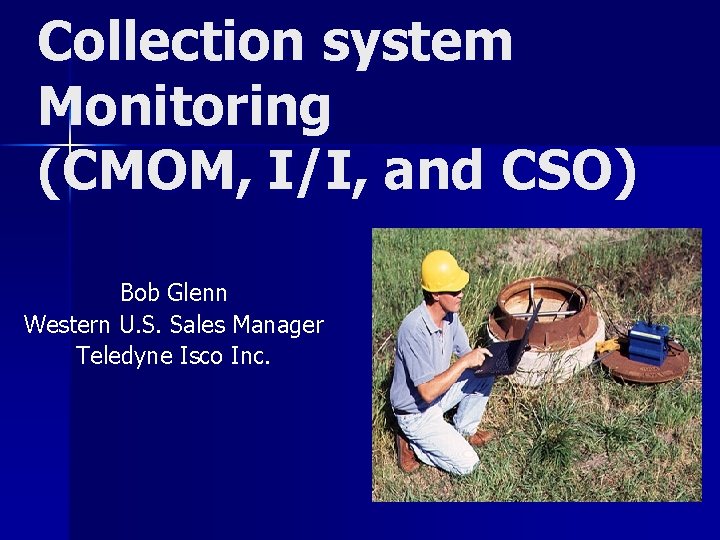
Collection system Monitoring (CMOM, I/I, and CSO) Bob Glenn Western U. S. Sales Manager Teledyne Isco Inc.
Municipalities striving to… – Deliver a high level of service to their customers – Maintain regulatory compliance at all times – **Improve asset management – **Develop more efficient & productive work management plans **Especially critical in current municipal environment
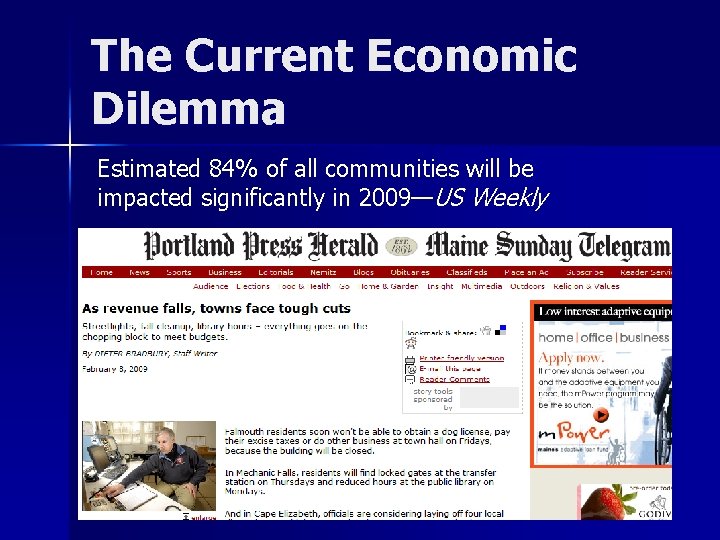
The Current Economic Dilemma Estimated 84% of all communities will be impacted significantly in 2009—US Weekly
What does this mean? Reduced staffing (RIF) n Hiring & wage freezes n Fewer new projects being funded n Budget dollars spread thinner across the board n – Replacement equipment reduced or cancelled – Training & professional development opportunities limited
The Challenge Current economy does not grant Municipal entities a “mulligan” against their permit requirements n Like everyone else…Do more with less. n Problems can increase in intensity and frequency with fewer resources to engage in preventative maintenance. n
Complicating the Challenge Limited resources available to rectify often numerous problems n Aging assets & infrastructure n Elevated regulatory requirements n Rapid rise in citizen awareness elevates expectations n Potential for I/I events to have “magnified” consequences n
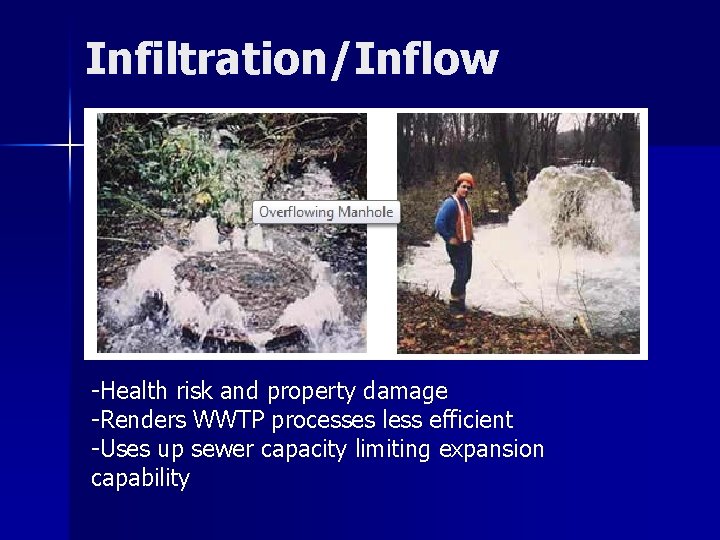
Infiltration/Inflow -Health risk and property damage -Renders WWTP processes less efficient -Uses up sewer capacity limiting expansion capability
Typical I/I Sources Cracked & broken pipes n Root intrusion n Roof vents & drains in older structures n Older or improperly fitted manhole covers n CSO tie-ins n Illegal sewer service taps (sump pumps etc…) n
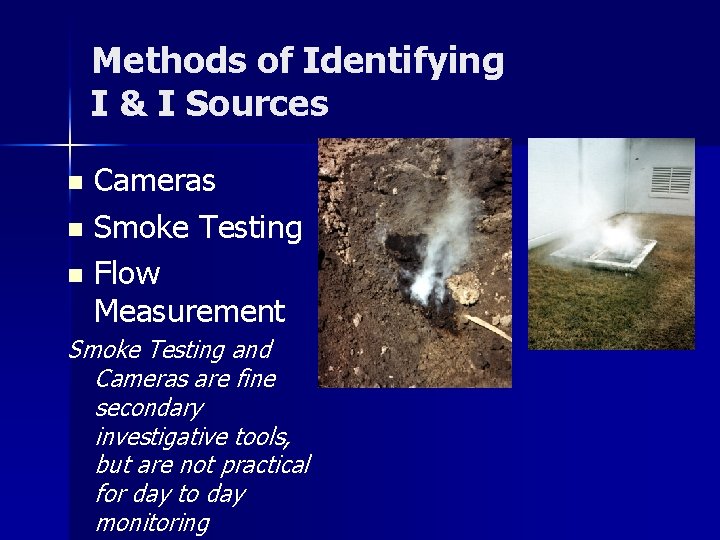
Methods of Identifying I & I Sources Cameras n Smoke Testing n Flow Measurement n Smoke Testing and Cameras are fine secondary investigative tools, but are not practical for day to day monitoring
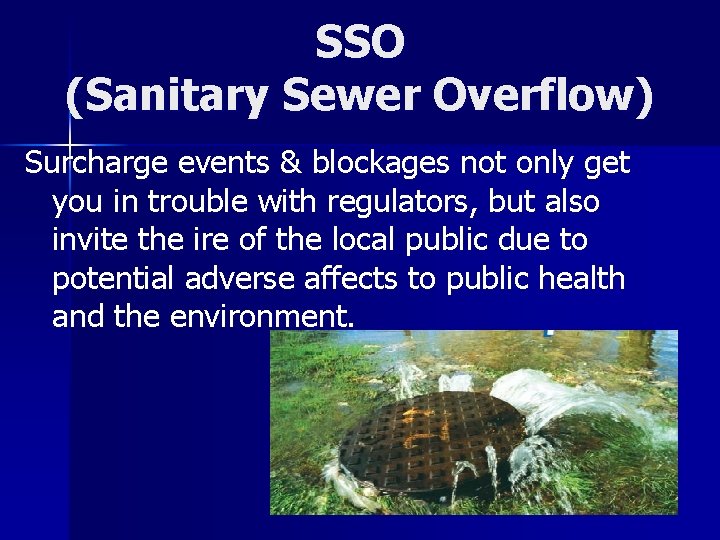
SSO (Sanitary Sewer Overflow) Surcharge events & blockages not only get you in trouble with regulators, but also invite the ire of the local public due to potential adverse affects to public health and the environment.
SSO (Sanitary Sewer Overflow) n n 80% of U. S. population provided with drinking water from surface sources Deadly bacteria deposited into these surface waters (human illness due to direct exposure + food chain contamination) Property depreciation, extensive cleanup costs, long term health issues 65% of polled municipalities in lower 48 reported AT LEAST one major SSO event
Where do we start ? Develop an overall strategy n Conduct internal audit to assess core competency & capabilities n Identify resources available to assist in addressing problems n Collect professional input when needed n Begin to “know your system” n
Indicators of System performance n n n Peaking responses during storm events System (basin) response time # of customer complaints # of blockages # and volume of un-permitted discharges Effect on operation of treatment facilities
Flow Monitoring? Why? n n n NPDES – Permit Compliance Billing applications – Flumes/Weirs I & I studies – Promote efficient treatment – CSO and SSO reduction c. MOM – Capacity Management Operations and Maintenance (System Optimization) Storm water monitoring
Flow Measurement n n The absolute KEY to understanding & optimizing the performance of your collection system! Various technologies to choose from Examine system needs and potential monitoring locations BEFORE committing to any single technology Multiple technologies often needed due to myriad of site-specific variables
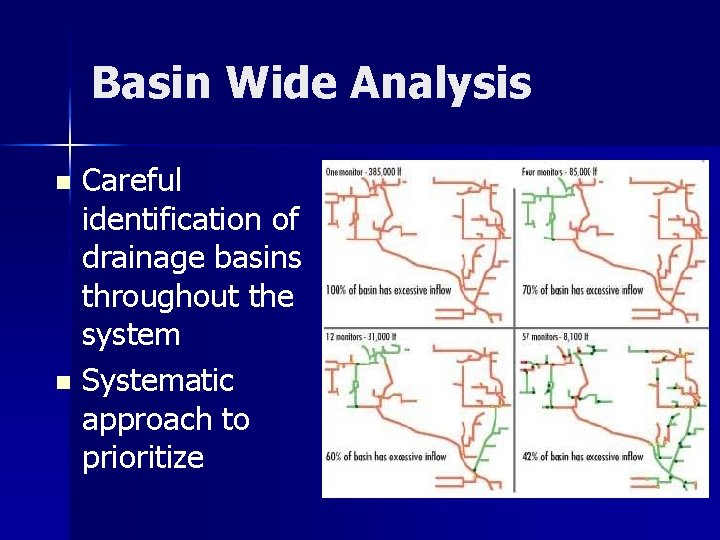
Basin Wide Analysis Careful identification of drainage basins throughout the system n Systematic approach to prioritize n
The Systematic approach -Volume/effect of inflow on WWTP process & system welfare must be weighed -”Pain Index” must be considered -Limited resources to resolve issues also must be considered
Step #1: Temporary Monitoring
Temporary Monitoring Use lightweight, battery powered flow meters to collect baseline data n Identify & Prioritize problems basins n Investigate & Eliminate major I/I contributors n Structure finite maintenance resources to address biggest threats n
Targets for Maintenance Programs based on flow data Analysis n n n Excessive siltation reducing capacity Hydraulic issues causing backups & surcharges Identify excessive or illegal flow contributors Address H 2 S generation issues Gain insight into pump station performance
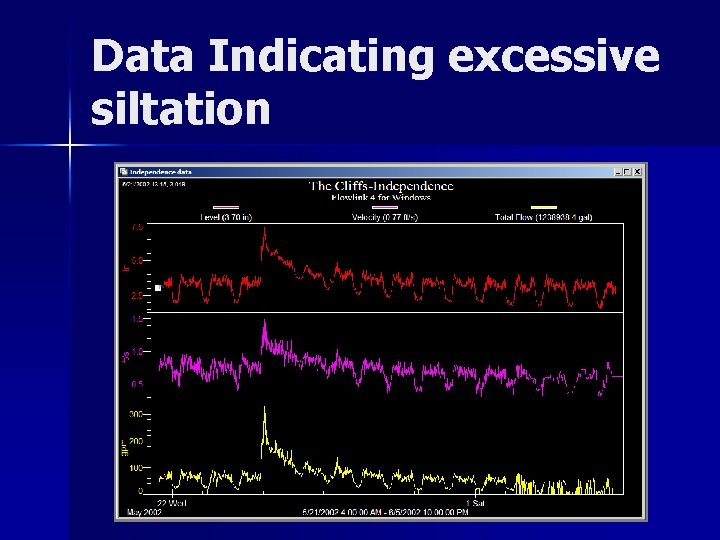
Data Indicating excessive siltation
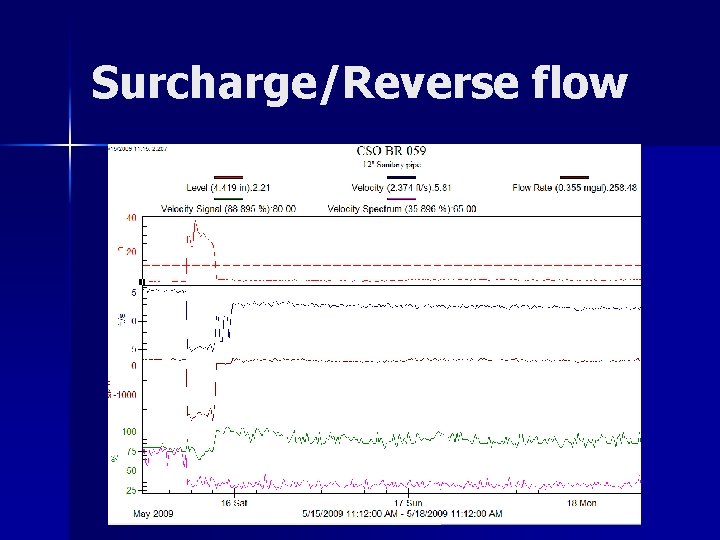
Surcharge/Reverse flow
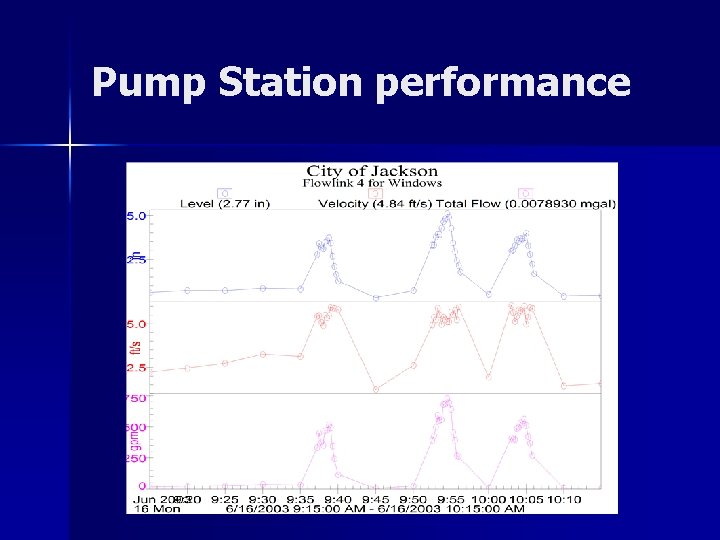
Pump Station performance
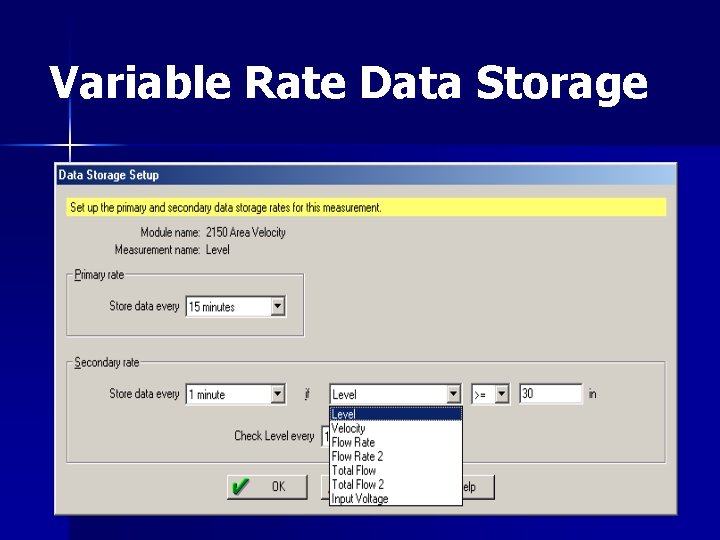
Variable Rate Data Storage
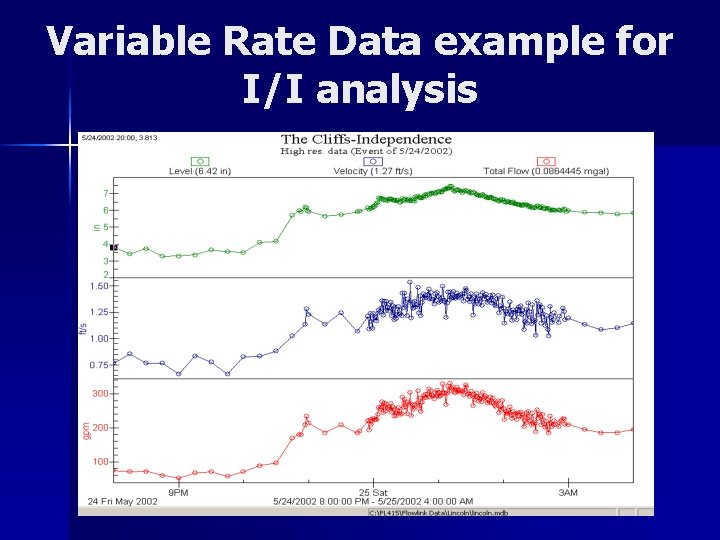
Variable Rate Data example for I/I analysis
Modeling n n n Helps “predict” flow patterns and system wide capacity. Assess seasonable cycles & variables Used to approve municipal expansion projects – New residential housing area – New industrial plant expansion n Can help with prioritization by considering future I/I’s effect on future expansion
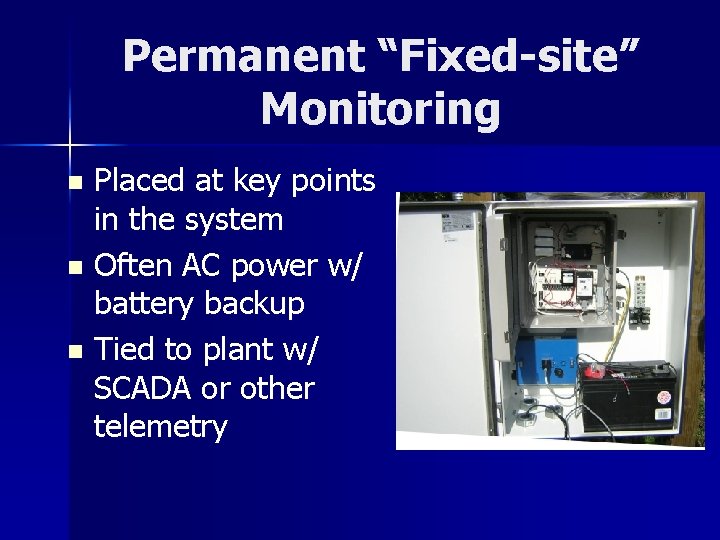
Permanent “Fixed-site” Monitoring Placed at key points in the system n Often AC power w/ battery backup n Tied to plant w/ SCADA or other telemetry n
Permanent “Fixed-site” Monitoring Allows reaction time @ plant during extreme events via alarms n Opportunity to divert flows to maintain plant integrity n Insight into effectiveness of maintenance programs with elimination of problem flows, backups, and siltation issues n
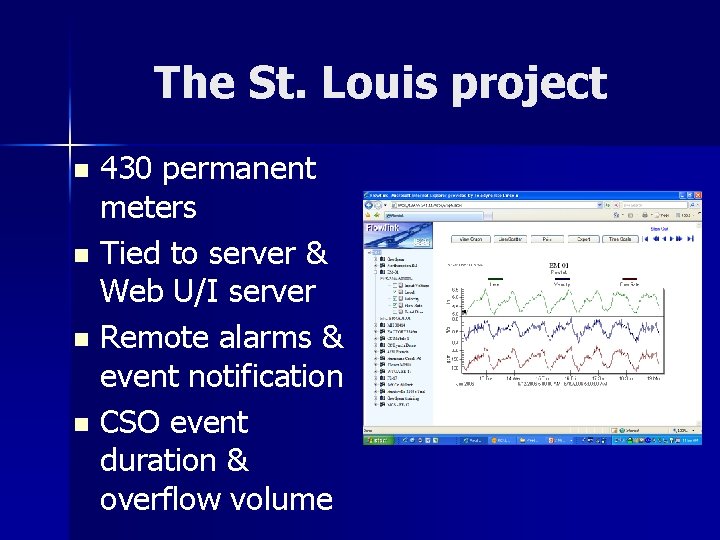
The St. Louis project 430 permanent meters n Tied to server & Web U/I server n Remote alarms & event notification n CSO event duration & overflow volume n
The Future holds? ? ? This is too big an issue to ignore… n Expertise in this area can benefit both government & private sector employees n
CONCLUSION Regardless of Consultant or Municipality conducting the study… CAREFUL PREPARATION AND ANALYSIS is the key! ALWAYS have a plan. Be systematic & thorough, using the best information & technologies.

Questions?
- Slides: 32