
Collection Management Objectives To introduce Collections Management CM
Collection Management
Objectives • • To introduce Collections Management (CM) Understand the role and responsibilities Better understand the linkages with IRM and CM staff Develop understanding of ISR planning
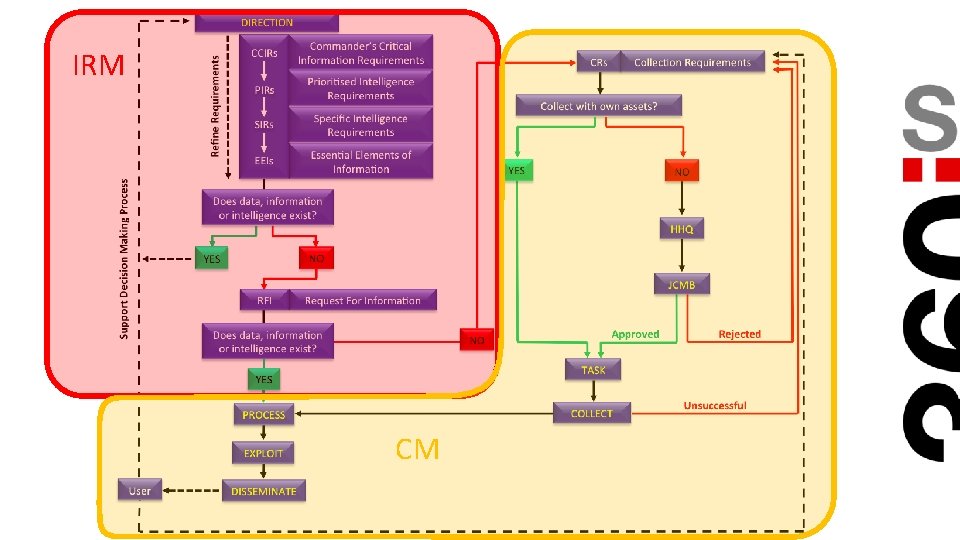
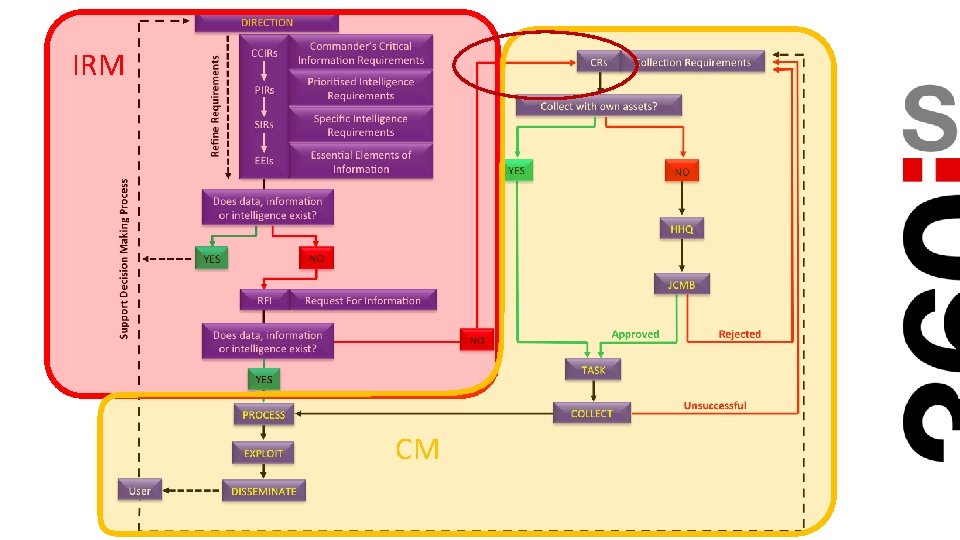
IRM CM
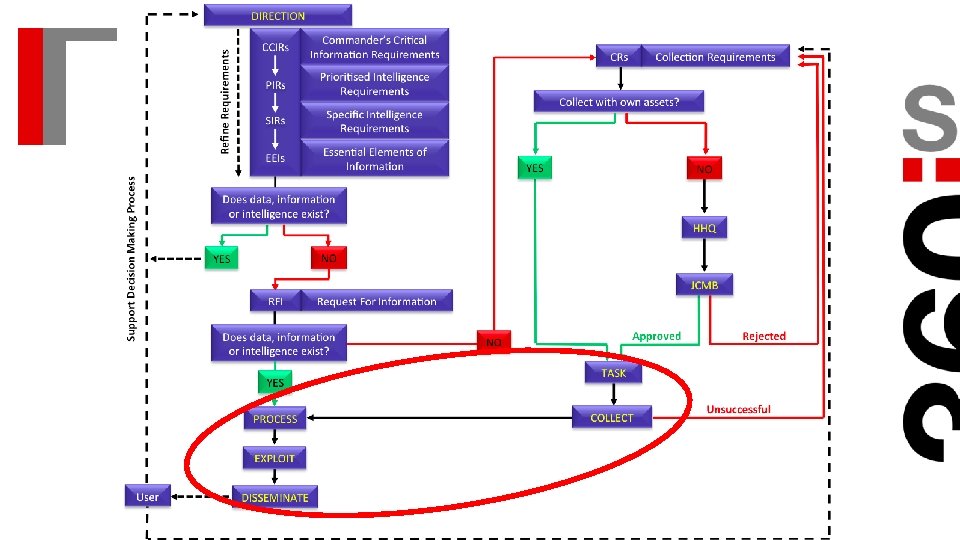
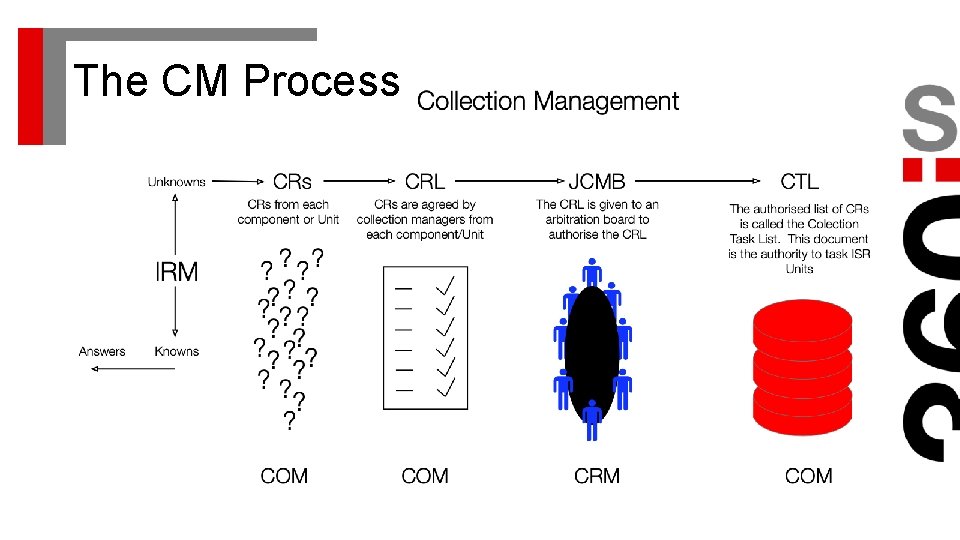
Collection Management • CM is a management staff function converting intelligence requirements and RFIs into CRs. • The CM process • prioritizes these CRs • coordinates requirements with appropriate collection capabilities, assets or commands • monitors the results re-tasking as required. • This process must take into consideration the availability of assets, sensor coverage, environmental conditions and communications capabilities to make the best use of the collection capabilities.
• CM supports IRM in satisfying the intelligence and operations staff’s CRs. • These CRs are derived from the ICP (standing or emerging) or have emerged through RFIs. • Step 3. What don’t I know?
Collection Management • Collection Management Authority (CMA) • Collection Requirements Management (CRM) • Collection Operations Management (COM)
Collection Management Authority • What: – Highest level of authority – Authority to establish asset tasking guidance and develop collection plans – Assigns the appropriate traditional assets and requests NDISR to satisfy mission objectives – Permits ISR requestors (who can get ISR) ‘PERMISSION TO REQUEST’
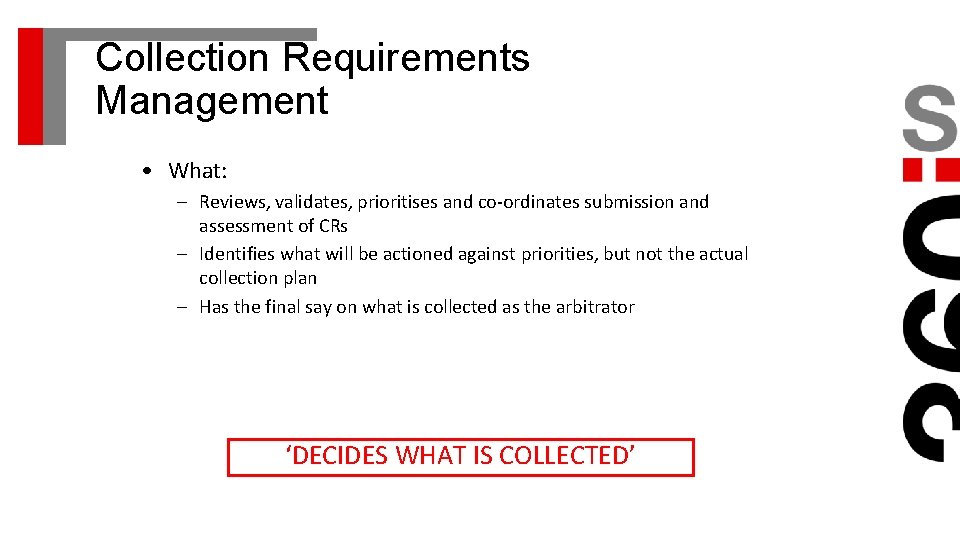
Collection Requirements Management • What: – Reviews, validates, prioritises and co-ordinates submission and assessment of CRs – Identifies what will be actioned against priorities, but not the actual collection plan – Has the final say on what is collected as the arbitrator ‘DECIDES WHAT IS COLLECTED’
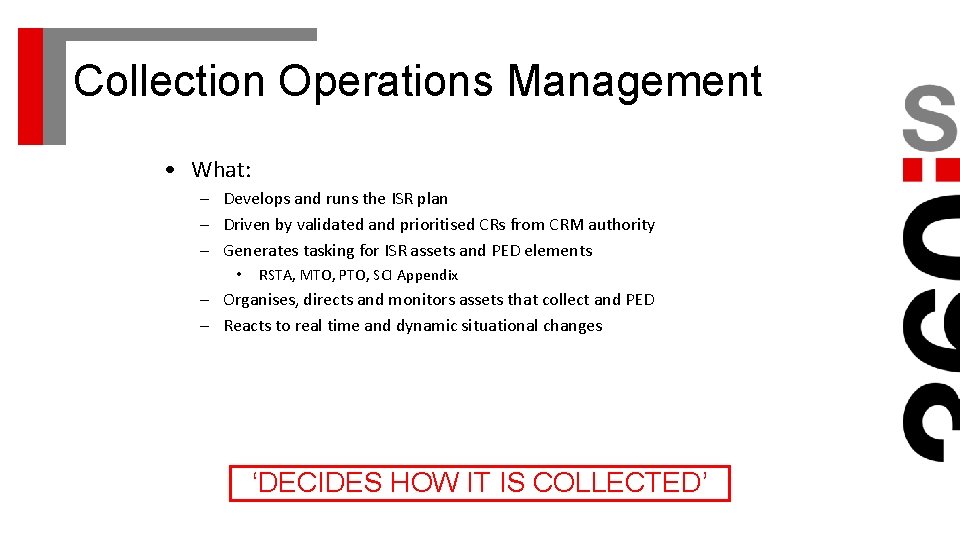
Collection Operations Management • What: – Develops and runs the ISR plan – Driven by validated and prioritised CRs from CRM authority – Generates tasking for ISR assets and PED elements • RSTA, MTO, PTO, SCI Appendix – Organises, directs and monitors assets that collect and PED – Reacts to real time and dynamic situational changes ‘DECIDES HOW IT IS COLLECTED’
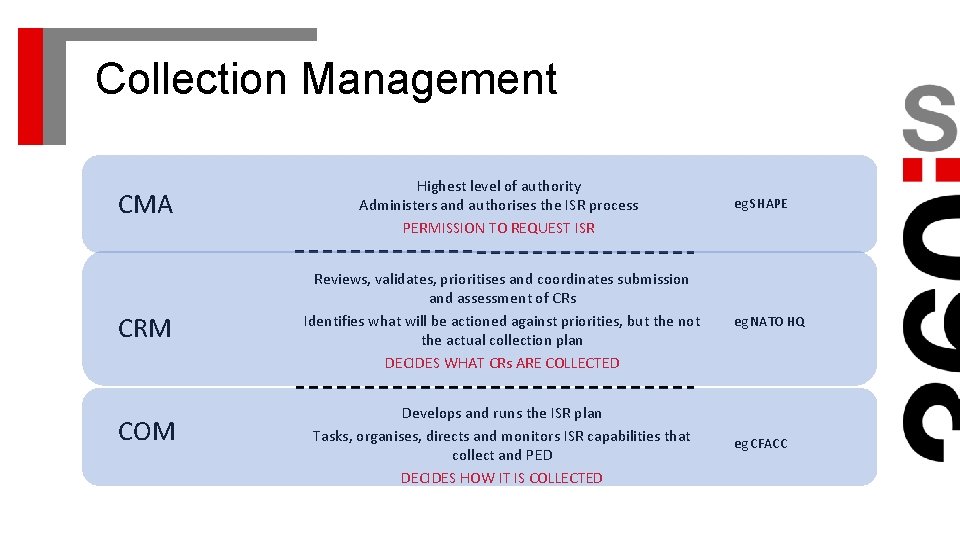
Collection Management CMA Highest level of authority Administers and authorises the ISR process PERMISSION TO REQUEST ISR CRM Reviews, validates, prioritises and coordinates submission and assessment of CRs Identifies what will be actioned against priorities, but the not the actual collection plan DECIDES WHAT CRs ARE COLLECTED COM Develops and runs the ISR plan Tasks, organises, directs and monitors ISR capabilities that collect and PED DECIDES HOW IT IS COLLECTED eg SHAPE eg NATO HQ eg CFACC
IRM CM
The Start… • At the start of this CM process the Collection Manager receives a Collection Requirements List • The CRL contains all of the CRs from the IRM process • Intelligence • Operations
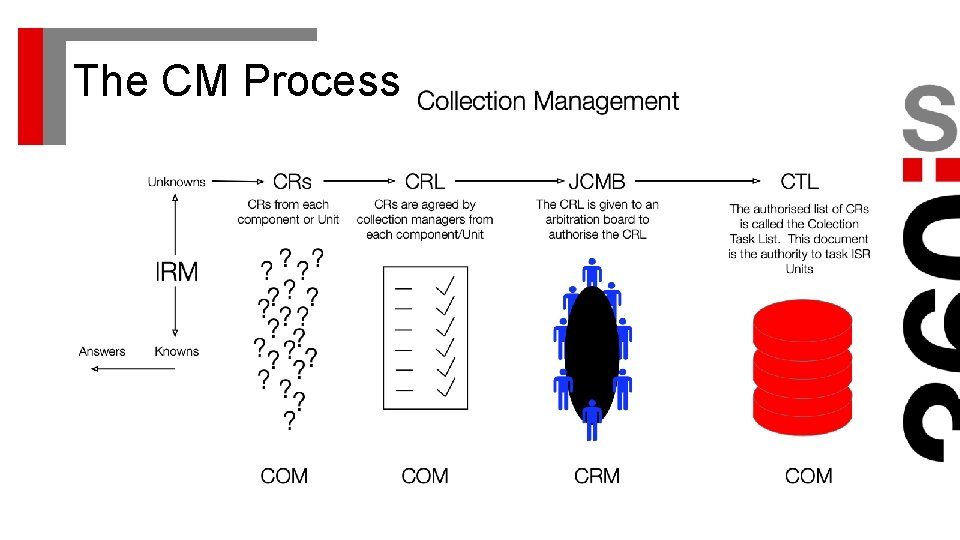
The CM Process
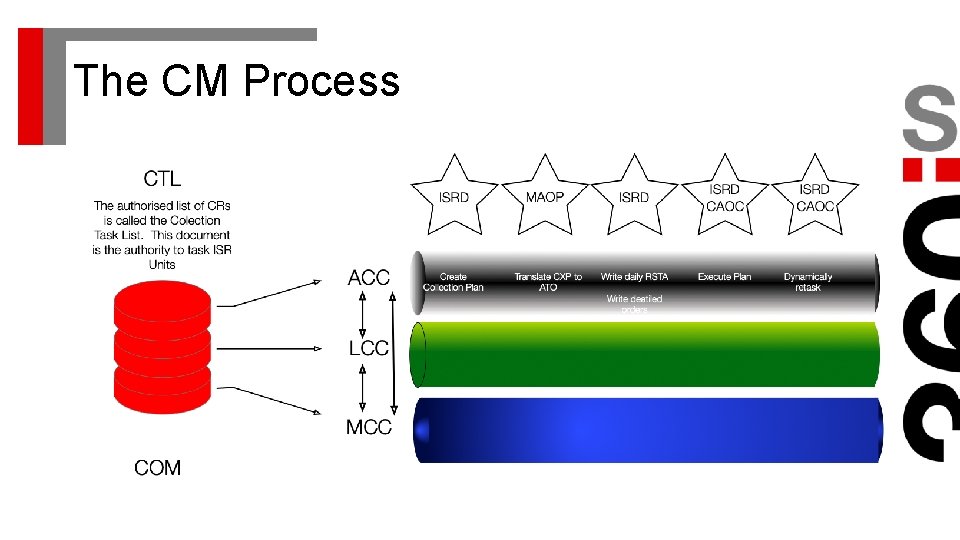
The CM Process
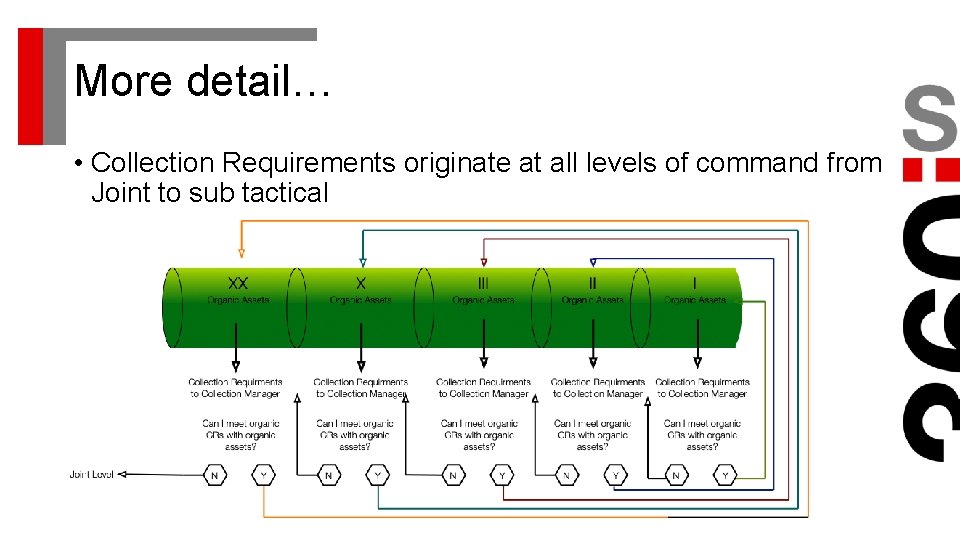
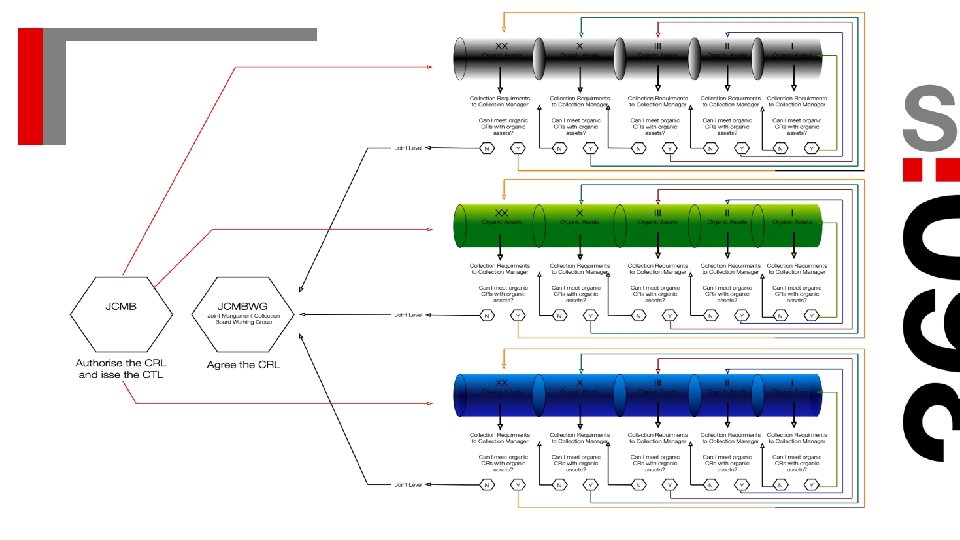
More detail… • Collection Requirements originate at all levels of command from Joint to sub tactical LCC
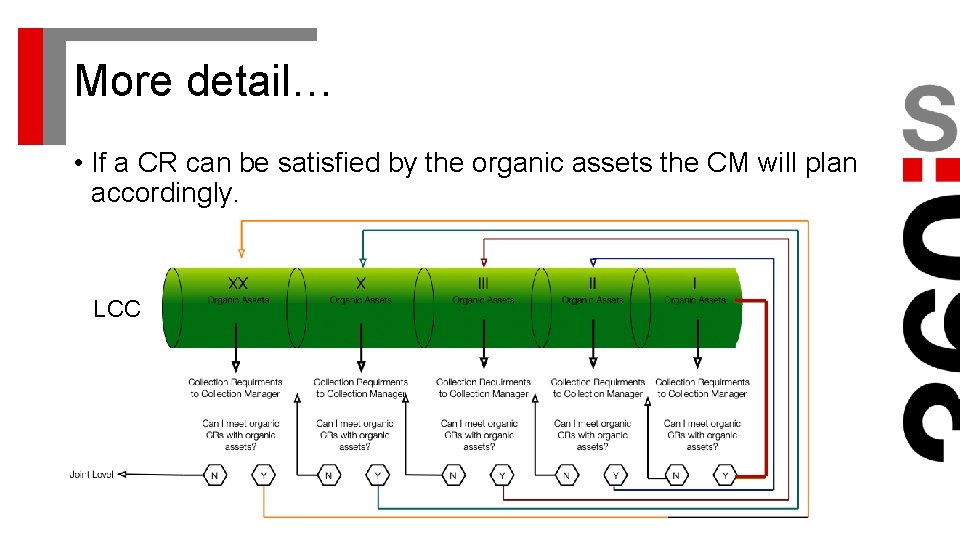
More detail… • If a CR can be satisfied by the organic assets the CM will plan accordingly. LCC
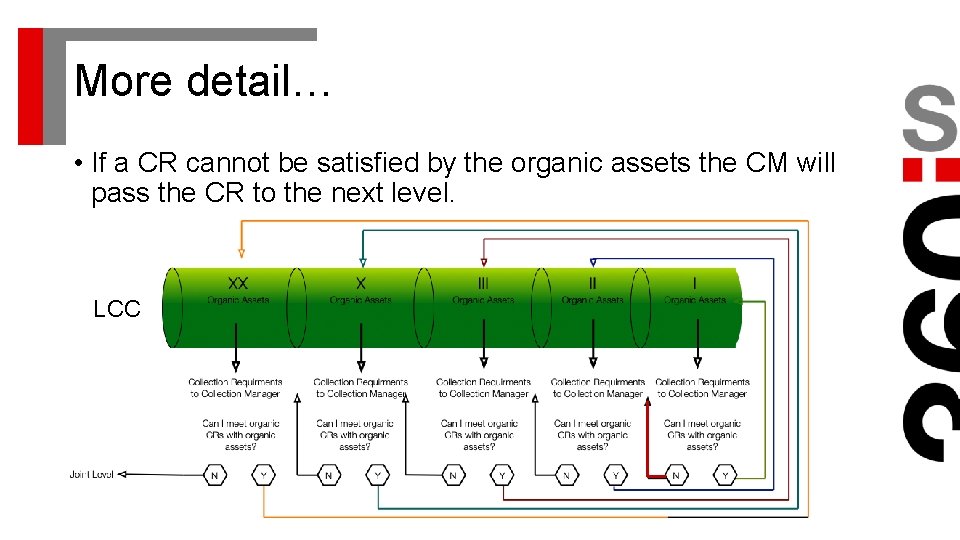
More detail… • If a CR cannot be satisfied by the organic assets the CM will pass the CR to the next level. LCC
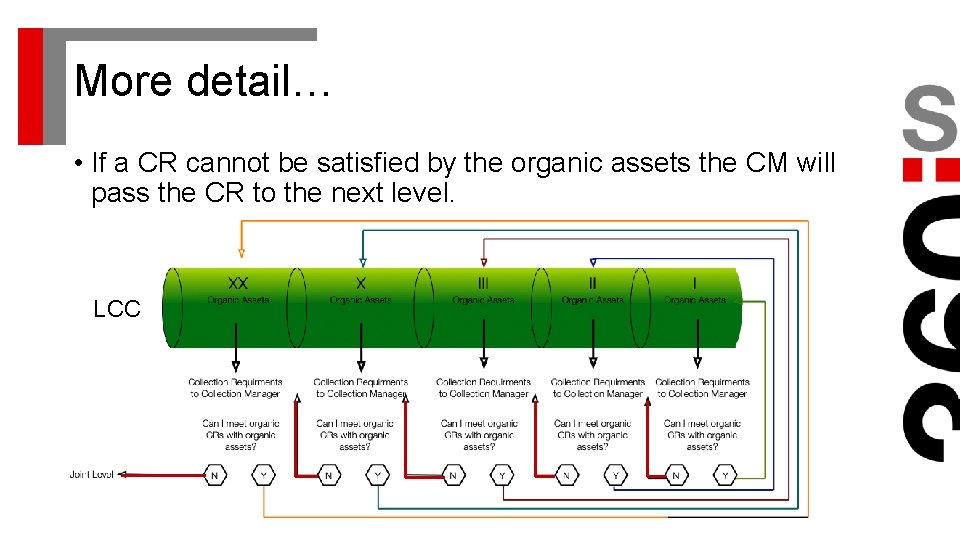
More detail… • If a CR cannot be satisfied by the organic assets the CM will pass the CR to the next level. LCC
The CM Process
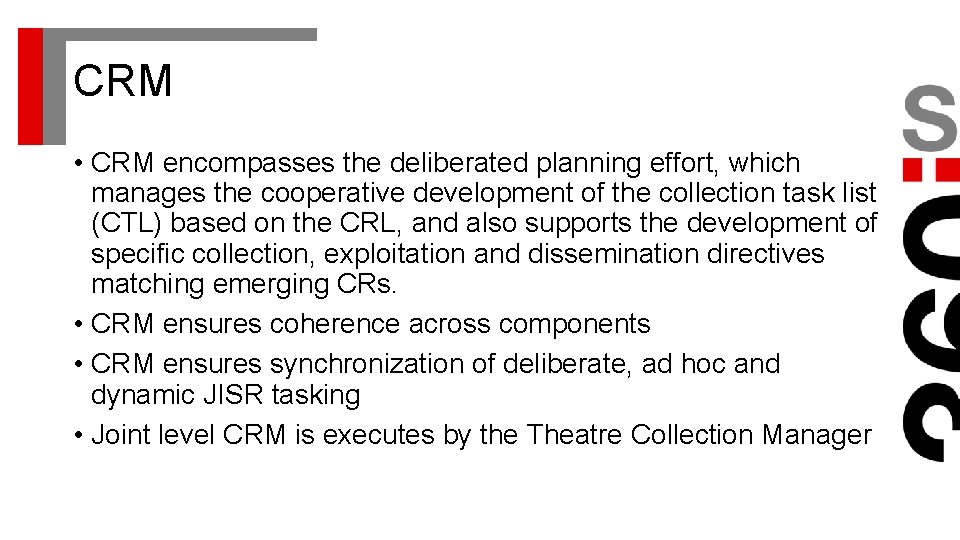
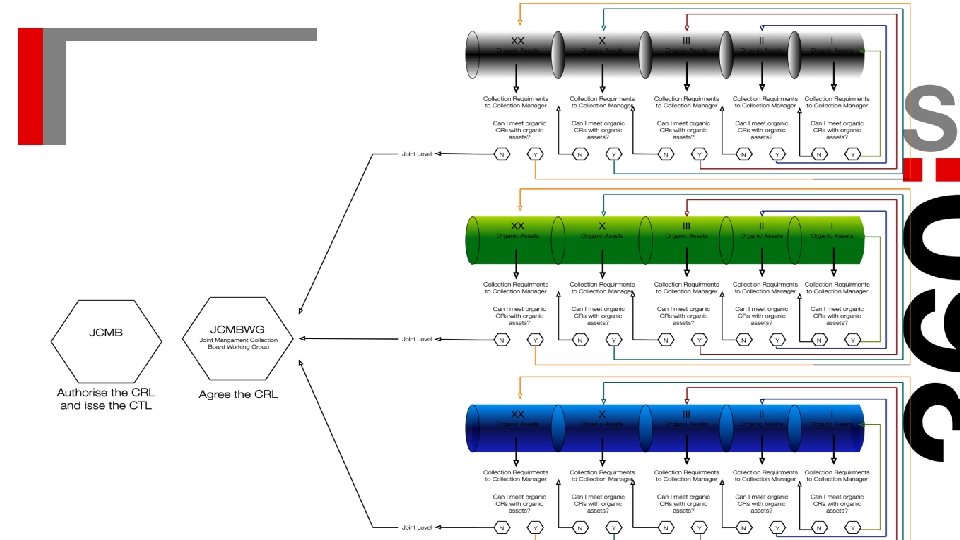
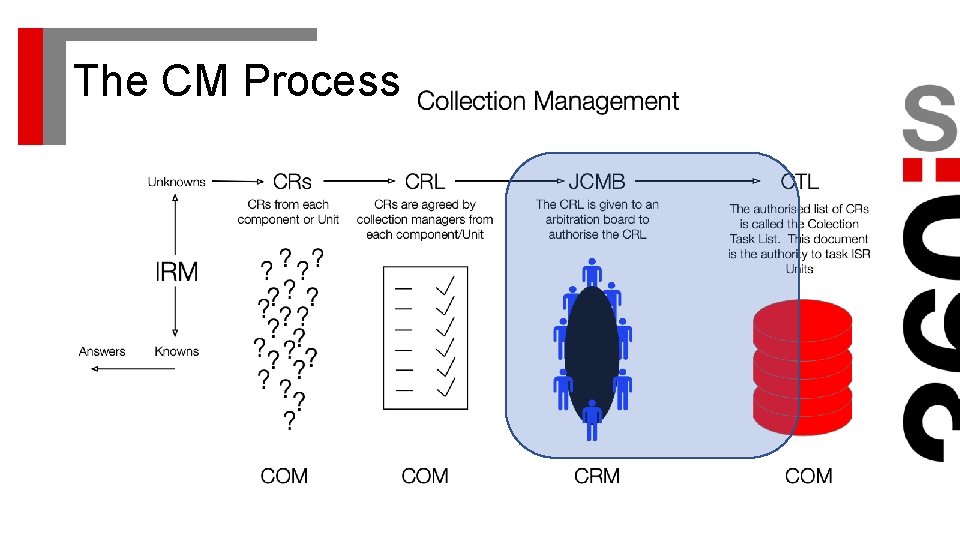
CRM • CRM encompasses the deliberated planning effort, which manages the cooperative development of the collection task list (CTL) based on the CRL, and also supports the development of specific collection, exploitation and dissemination directives matching emerging CRs. • CRM ensures coherence across components • CRM ensures synchronization of deliberate, ad hoc and dynamic JISR tasking • Joint level CRM is executes by the Theatre Collection Manager
The CM Process
COM • COM is a management staff function to integrate the collection operations into the overall OPLAN • COM has the authority to direct, schedule, prioritize and control specific collection operations and associated processing, exploitation and information reporting resources. • COM authority is usually held at the appropriate command level which executes operational control (OPCON) over dedicated or assigned JISR assets. • National JISR capabilities placed under a commander’s OPCON will be tasked by the respective collection requirements management staff. • When OPCON is retained by the nations, the collection and exploitation directives, specified in the CTL, are sent as requests by the TCM.
COM • COM starts with mission integration where the approved CTL/ad hoc/dynamic JISR tasks are integrated with the operations staff into operations and missions planning. • This initial phase results in developing strategies for collection and then issuing precise mission orders by the operations staff to assigned JISR assets.
• The key responsibilities of the COM authority include: • managing the collection operation • performing the processing and exploitation of collected data, information and single source intelligence; and disseminating JISR results • the monitoring of planned activities is essentially conducted at each level of command. • Similar to CRM, COM is performed at different levels of command requires coordination at a higher level (e. g. at the operational level by the TCM for a given NATO operation), particularly for handling dynamic situations that may necessitate the reallocation of JISR assets.

Contact • Ewen • 07730355714 • ewen@360 isr. com
Questions
- Slides: 29