
Collection Development For School Library Programming Funding support
Collection Development For School Library Programming
Funding & support provided by
What parts of programming involve collection development? ● ● ● Print books e. Books Audiobooks Maker kits Magazines ● Destiny Collections ● Makerspaces ● Equipment ● Displays
Programming relies on the collection and the growth of the collection relies on the programming
Why is School Library Programming Important? A rich, robust, creative and varied library program allows the librarian to impact students, staff and families, exposing them to a wide and diverse collection of reading experiences, learning resources and collaboration opportunities.
Collection Development Policy Just like collection development for the print collection, selecting materials for programming relies on needs assessments and financial planning to systematically develop programming that promotes the print collection and meets the needs of students, teachers & parents. Why do I need one for programing? ● To aggregate data important to your stakeholders ● Advocate for funding ● Clarify your selection and deselection policies ● Be prepared in the instance of challenged programs
Student Needs In order to stay relevant, students’ needs should be at the forefront of any and all selections for your library. ● ● Who are your students? What is the makeup of your community? What are their needs? What materials will support teachers and extend student learning & fuel curiosity?
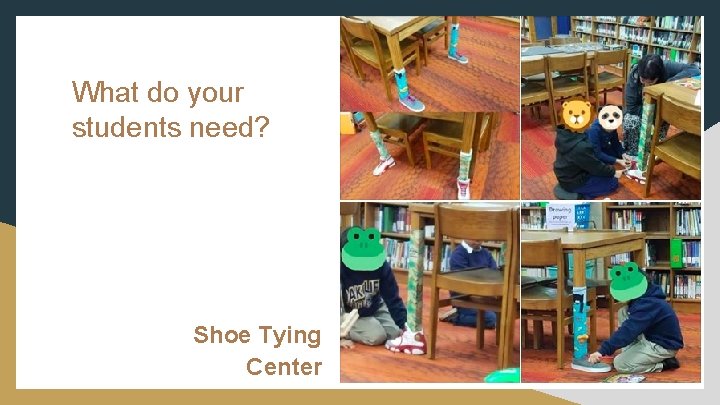
What do your students need? Shoe Tying Center
Program Vision Having a vision for your library is essential. Knowing your stakeholders vision is critical. By helping your administrator and community meet a specific vision, you may also garner support for your program. ● What is your administrator’s vision for the school. ● What is your district’s vision? ● How do you promote the vision through the library?

Programming Selection Questions 1. How does your programming align with the classroom curriculum? 2. Does your program support and promote your print collection? 3. How do you use the print collection to promote your program? 4. Does programming provide “windows and mirrors. ” 5. What is the sustainability of each program?

Windows & Mirrors Displays are part of passive programming and should reflect the library’s patrons as well providing windows to unfamiliar cultures and ideas.
Diverse Library Programming Diversity in library programming allows students and their caregivers to develop cultural literacy, or an appreciation of their culture as well as the cultures of other people. Consistently offering programs that highlight cultural and linguistic diversity provides opportunities for students and their families to begin the journey to developing cultural competence. ALSC Whitepaper on The Importance of Diversity in Library Programs and Material Collections for Children
Diverse Library Programming When librarians introduce diversity in materials and programming and promote cultural competence, they create learning environments that help students develop a positive sense of self, explore the larger world around them, and celebrate the accomplishments of people from diverse cultural and linguistic backgrounds. ALSC Whitepaper on The Importance of Diversity in Library Programs and Material Collections for Children
Diversity Analysis Tools
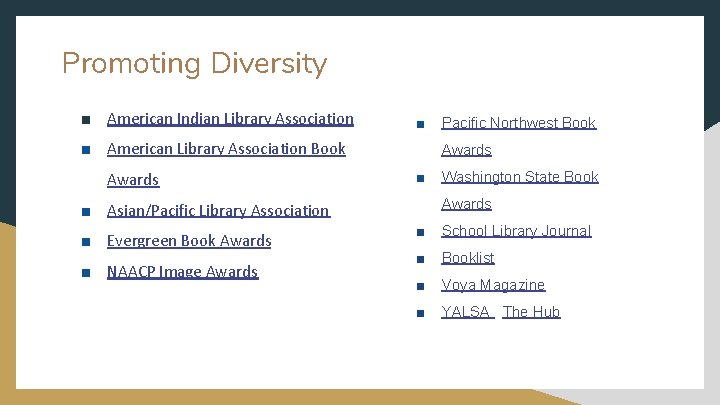
Promoting Diversity ■ American Indian Library Association ■ ■ American Library Association Book Awards ■ ■ NAACP Image Awards Washington State Book Awards ■ Asian/Pacific Library Association ■ Evergreen Book Awards Pacific Northwest Book ■ School Library Journal ■ Booklist ■ Voya Magazine ■ YALSA The Hub
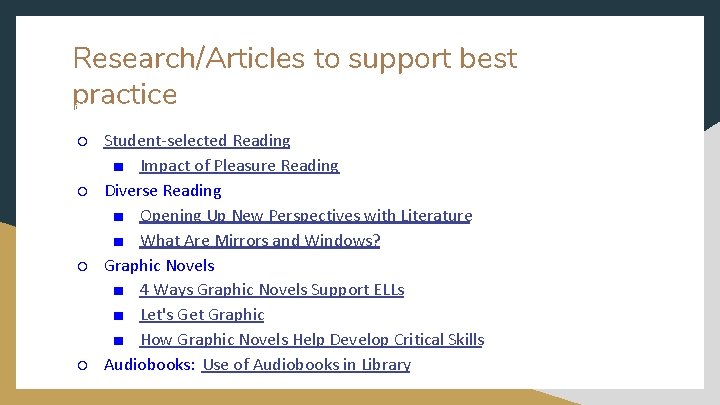
Research/Articles to support best practice Share with administrators, teachers, and parents as needed. ○ Student-selected Reading ■ Impact of Pleasure Reading ○ Diverse Reading ■ Opening Up New Perspectives with Literature ■ What Are Mirrors and Windows? ○ Graphic Novels ■ 4 Ways Graphic Novels Support ELLs ■ Let's Get Graphic ■ How Graphic Novels Help Develop Critical Skills ○ Audiobooks: Use of Audiobooks in Library
- Slides: 16