
Collection and Analysis of Evidence of Explosives Class

- Slides: 13
Collection and Analysis of Evidence of Explosives Class Notes S
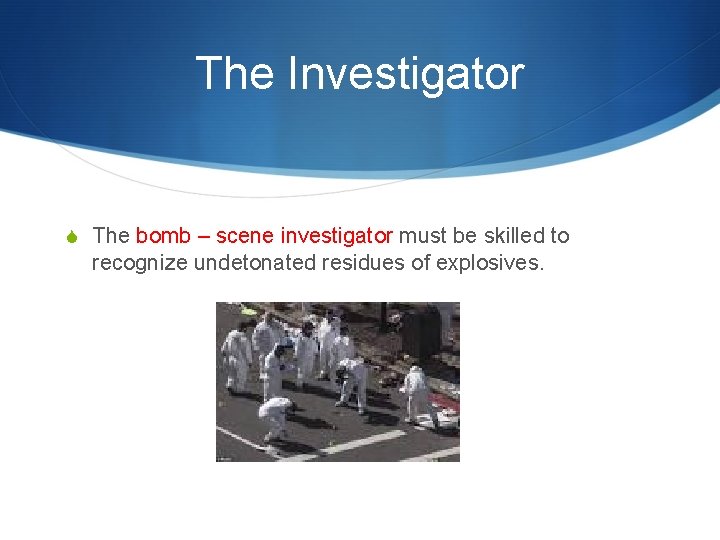
The Investigator S The bomb – scene investigator must be skilled to recognize undetonated residues of explosives.
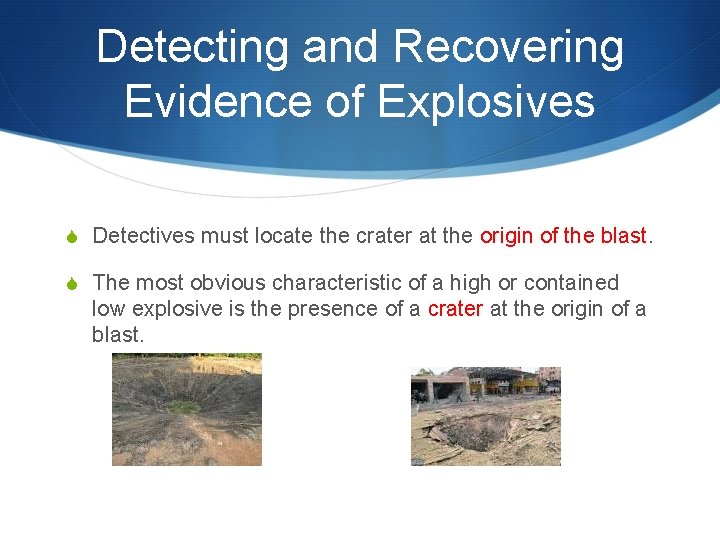
Detecting and Recovering Evidence of Explosives S Detectives must locate the crater at the origin of the blast. S The most obvious characteristic of a high or contained low explosive is the presence of a crater at the origin of a blast.
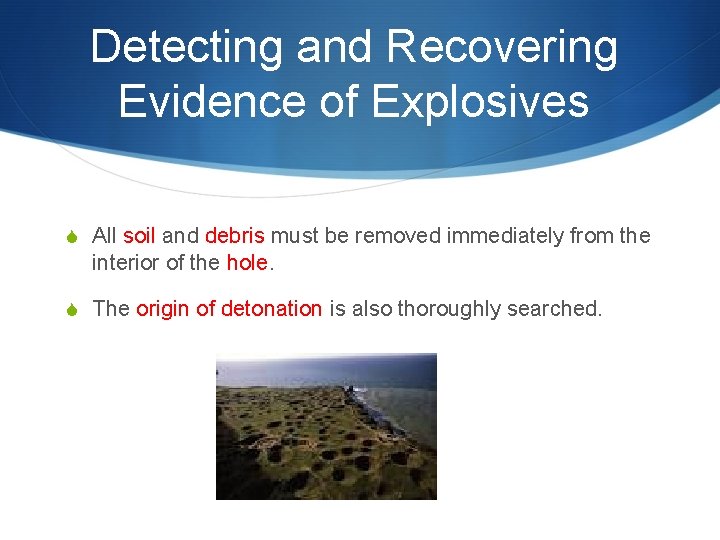
Detecting and Recovering Evidence of Explosives S All soil and debris must be removed immediately from the interior of the hole. S The origin of detonation is also thoroughly searched.
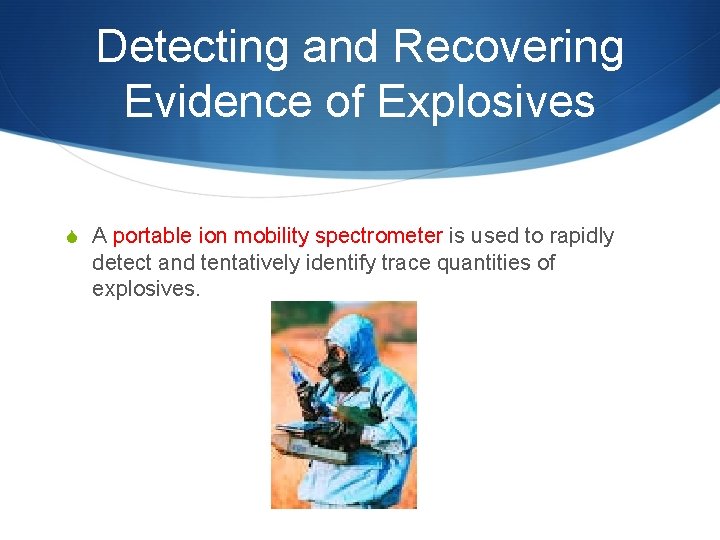
Detecting and Recovering Evidence of Explosives S A portable ion mobility spectrometer is used to rapidly detect and tentatively identify trace quantities of explosives.
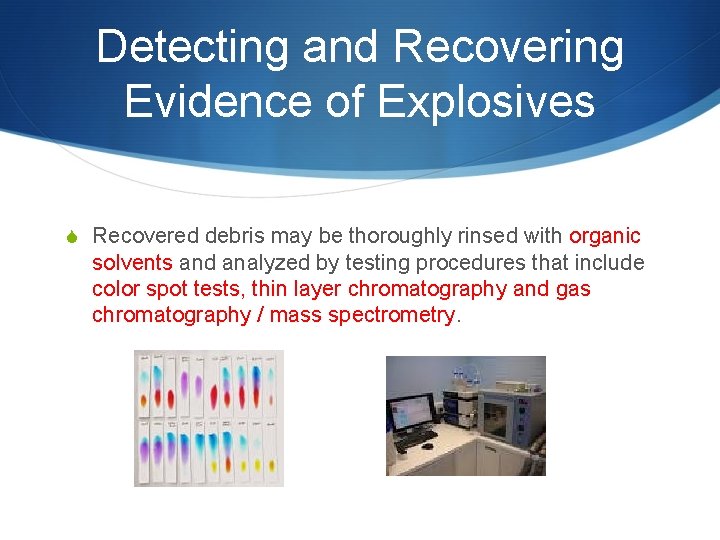
Detecting and Recovering Evidence of Explosives S Recovered debris may be thoroughly rinsed with organic solvents and analyzed by testing procedures that include color spot tests, thin layer chromatography and gas chromatography / mass spectrometry.
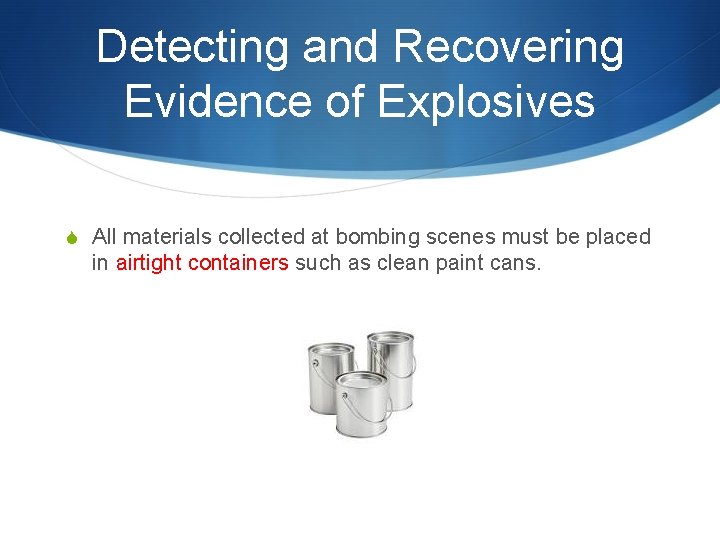
Detecting and Recovering Evidence of Explosives S All materials collected at bombing scenes must be placed in airtight containers such as clean paint cans.
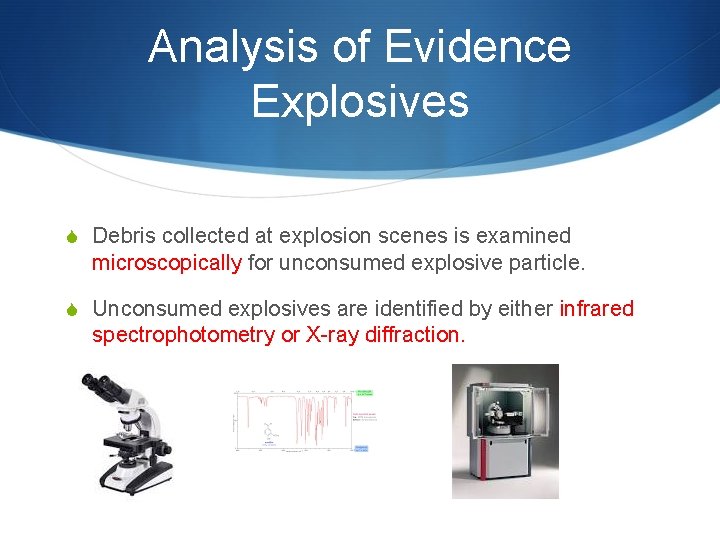
Analysis of Evidence Explosives S Debris collected at explosion scenes is examined microscopically for unconsumed explosive particle. S Unconsumed explosives are identified by either infrared spectrophotometry or X-ray diffraction.
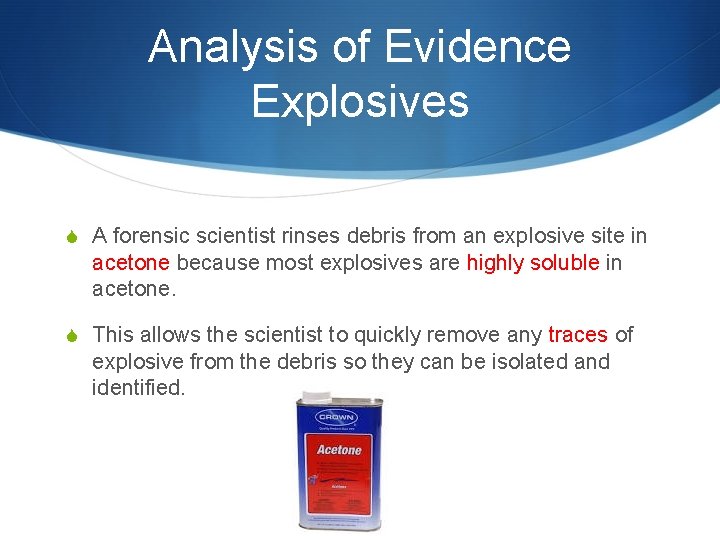
Analysis of Evidence Explosives S A forensic scientist rinses debris from an explosive site in acetone because most explosives are highly soluble in acetone. S This allows the scientist to quickly remove any traces of explosive from the debris so they can be isolated and identified.
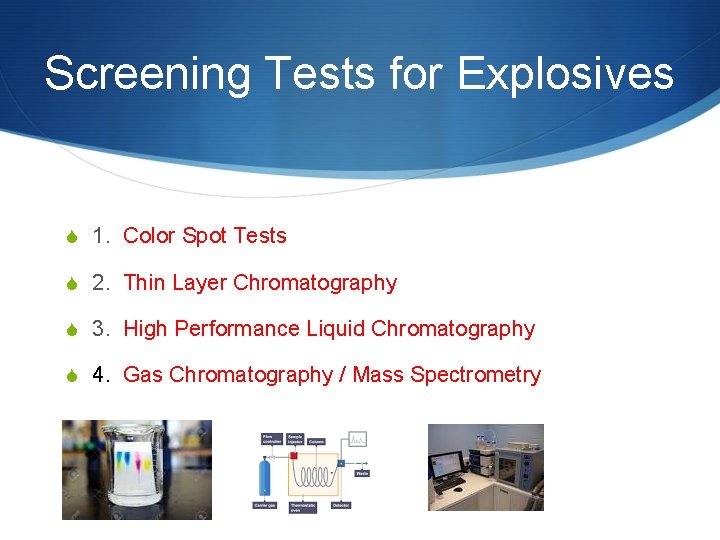
Screening Tests for Explosives S 1. Color Spot Tests S 2. Thin Layer Chromatography S 3. High Performance Liquid Chromatography S 4. Gas Chromatography / Mass Spectrometry
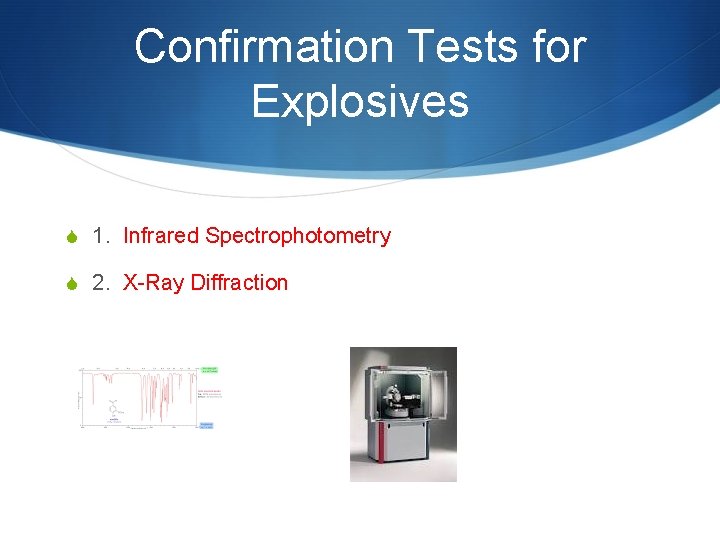
Confirmation Tests for Explosives S 1. Infrared Spectrophotometry S 2. X-Ray Diffraction
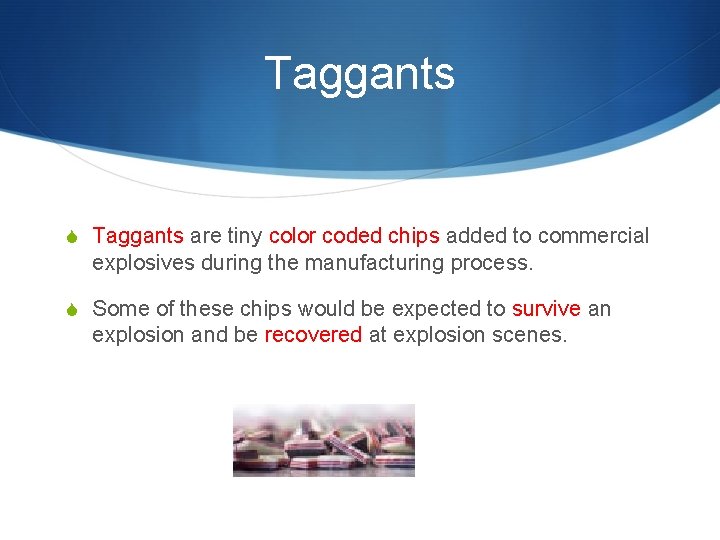
Taggants S Taggants are tiny color coded chips added to commercial explosives during the manufacturing process. S Some of these chips would be expected to survive an explosion and be recovered at explosion scenes.
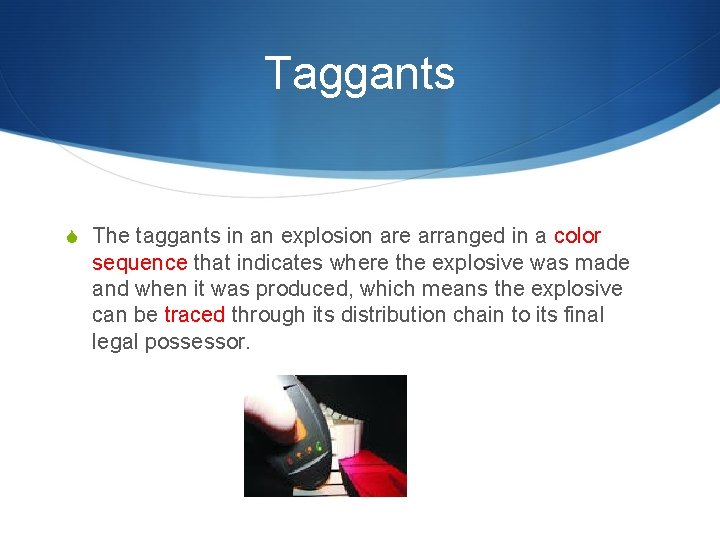
Taggants S The taggants in an explosion are arranged in a color sequence that indicates where the explosive was made and when it was produced, which means the explosive can be traced through its distribution chain to its final legal possessor.