
Collecting Primary Language Information LINKEDDISC provincial database system
Collecting Primary Language Information LINKED-DISC - provincial database system for early childhood intervention Services Herb Chan
Purposes of Collecting Primary Language Information v Language related access barriers and interpreter services? v Assessing service disparities among different ethnic communities? v Providing ethnically or culturally appropriate services? v Matching families with similar language/culture for group services/programs? v Designing language and cultural training workshops for service providers?
Language Barrier Interpreter service may be needed when: 1. Both parents with limited English 2. One of the two parents with limited English
Interpreter Service as proxy for Language Barrier • Some families may speak limited English but for some reasons did not want interpreter services. • Some families may speak limited English. No interpreter was requested because the service provider was able to speak their language
Ethnicity Are we interested in the family’s q. Ethnic background? q. Cultural background?
Terminology Race suggests a biological basis for socially constructed categories and implies genetic homogeneity within broadly defined heterogeneous population. Ethnicity means different things in different context. In a general term, ethnicity refers to membership in a wide range of groups defined by culture, heritage or national origin. Culture can be defined as all the ways of life including arts, beliefs and institutions of a population that are passed down from generation to generation.
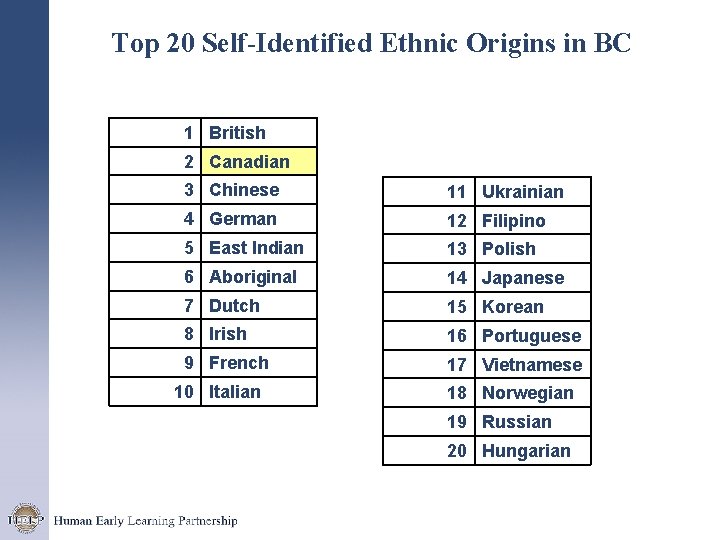
Top 20 Self-Identified Ethnic Origins in BC 1 British 2 Canadian 3 Chinese 11 Ukrainian 4 German 12 Filipino 5 East Indian 13 Polish 6 Aboriginal 14 Japanese 7 Dutch 15 Korean 8 Irish 16 Portuguese 9 French 17 Vietnamese 10 Italian 18 Norwegian 19 Russian 20 Hungarian
Issues in collecting ethnicity data in a multicultural society v Multiple ethnic backgrounds (Kaplan & Bennett, 2003) v Relationship between health outcome and ethnicity is not a straightforward concept v We need to know the purpose of collecting ethnic information. For example, are we interested in studying underserved ethnic communities? v If we focus on the ethnicity only, information such as recent immigrants will be missed.
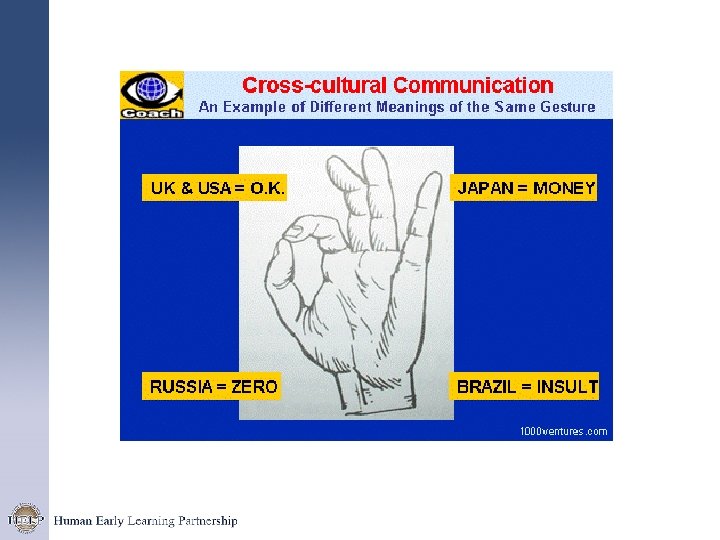
Cultural Background Primary Language as Proxy for Cultural information v This might just be a good alternative

Primary language spoken at home reflects: Ø Recent immigrant, Ø The way we live, Ø Cultural background, and/or Ø Health belief

Primary Languages in BC (at least 75 languages) Dutch Czech Punjabi Urdu Hungarian German Danish Hindi Italian French Chinese- Cantonese Spanish Ukrainian English Gujarati Polish Japanese Farsi Greek Vietnamese Serbo-Croatian Tagalog Romanian Russian Serbian Croatian Chinese- Mandarin
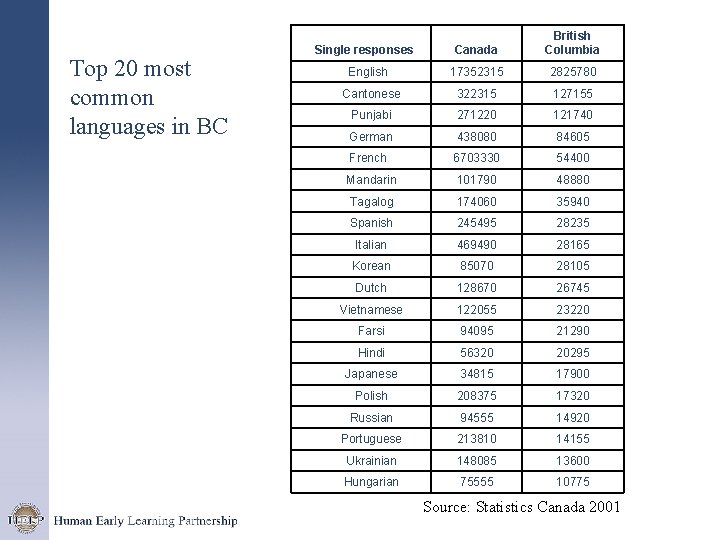
Top 20 most common languages in BC Single responses Canada British Columbia English 17352315 2825780 Cantonese 322315 127155 Punjabi 271220 121740 German 438080 84605 French 6703330 54400 Mandarin 101790 48880 Tagalog 174060 35940 Spanish 245495 28235 Italian 469490 28165 Korean 85070 28105 Dutch 128670 26745 Vietnamese 122055 23220 Farsi 94095 21290 Hindi 56320 20295 Japanese 34815 17900 Polish 208375 17320 Russian 94555 14920 Portuguese 213810 14155 Ukrainian 148085 13600 Hungarian 75555 10775 Source: Statistics Canada 2001
Don’t forget these v Aboriginal/First Nations Languages v English + Another language v American Sign Language
Primary Language of the Child: v Same as primary caregiver’s? v English + primary caregiver’s language? v A different dialect from parents’ when grandparent is the primary caregiver? v Sign language?
LINKED-DISC Database Family Information Module Primary caregiver 1 – ESL as language barrier Primary caregiver 2 – ESL as language barrier Primary caregiver 1 – Primary Language Primary caregiver 2 – Primary Language Interpreter service and comment
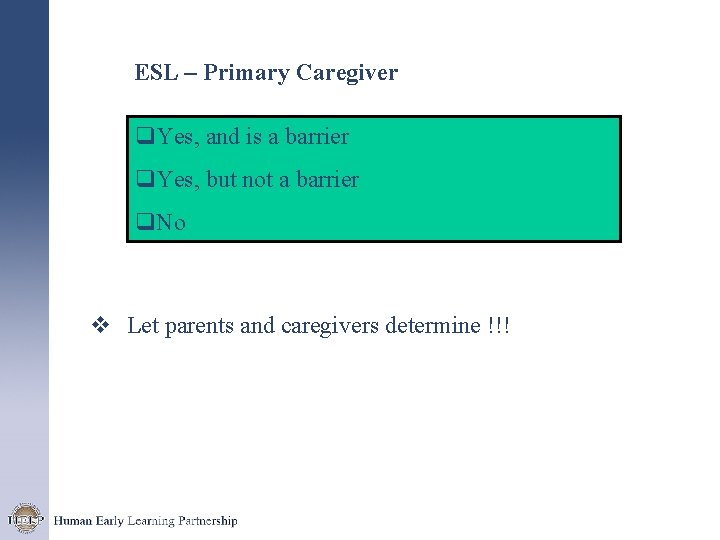
ESL – Primary Caregiver q. Yes, and is a barrier q. Yes, but not a barrier q. No v Let parents and caregivers determine !!!
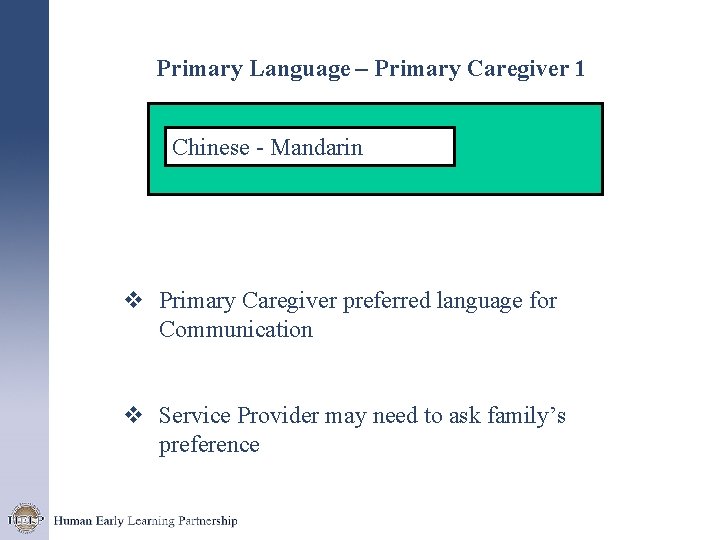
Primary Language – Primary Caregiver 1 Chinese - Mandarin v Primary Caregiver preferred language for Communication v Service Provider may need to ask family’s preference
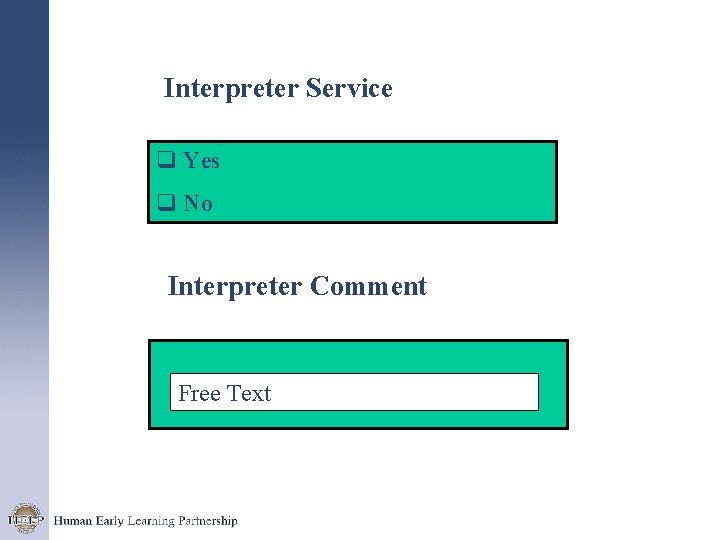
Interpreter Service q Yes q No Interpreter Comment Free Text
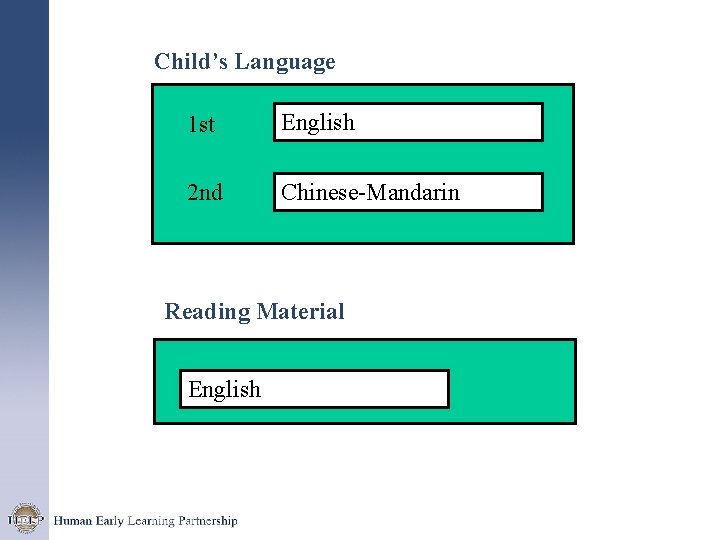
Child’s Language 1 st English 2 nd Chinese-Mandarin Reading Material English
References Obtaining Data on Patient Race, Ethnicity, and Primary Language in Health Care Organizations: Current Challenges and Proposed Solutions. Hasnain-Wynia and Baker: Health Services Research 41(4): 1501 -1517, 2006 The Assessment and Documentation of Language and Communication Needs in Healthcare System: Current Practices and Future Directions for Coordinating Safe, Patient-Centred Care. Nalion: Nursing Outlook 55: 311 -317, 2007 Glossary of Terms Relating to Ethnicity and Race: For reflection and Debate Bhopal: Journal of Epidemiology and Community Health 58: 441 -445, 2004 User of Race and Ethnicity in Biomedical Publication. Kaplan and Bennett 289: 2709 -2716, 2007
HELP’s Mission “To create, promote and apply new knowledge through leading interdisciplinary research to help children thrive. ” Please visit HELP’s website: www. earlylearning. ubc. ca Sign up for HELP’s Listserv. Find info on research projects, new publications and resources, maps, upcoming events, etc.
- Slides: 23