
Collecting Costs from Expenses Concept Collecting Costs from
- Slides: 25
Collecting Costs from Expenses Concept
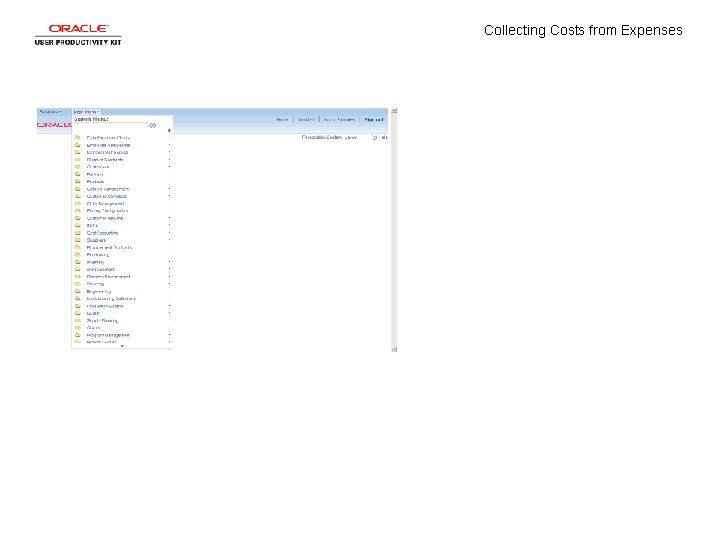
Collecting Costs from Expenses
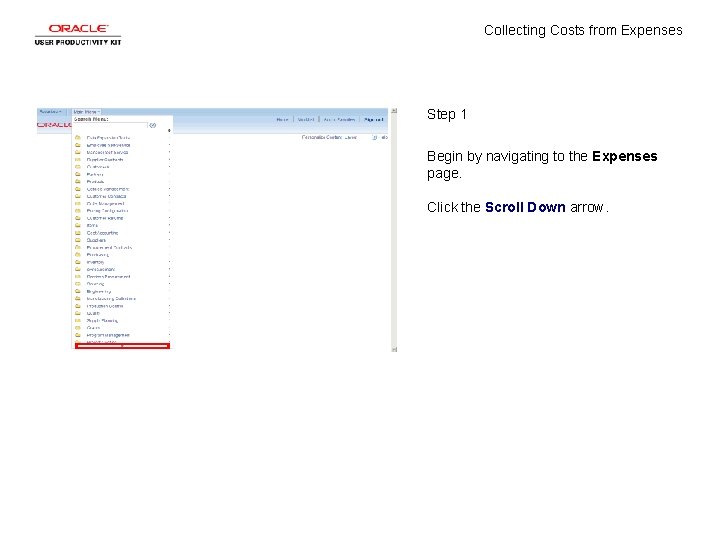
Collecting Costs from Expenses Step 1 Begin by navigating to the Expenses page. Click the Scroll Down arrow.
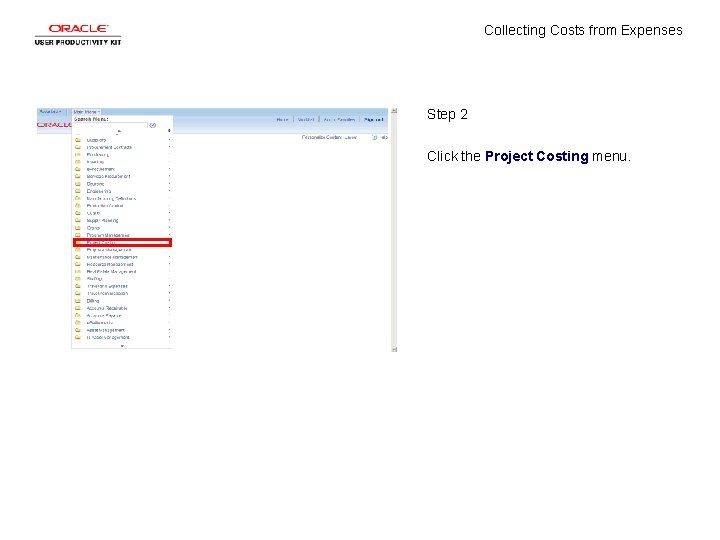
Collecting Costs from Expenses Step 2 Click the Project Costing menu.
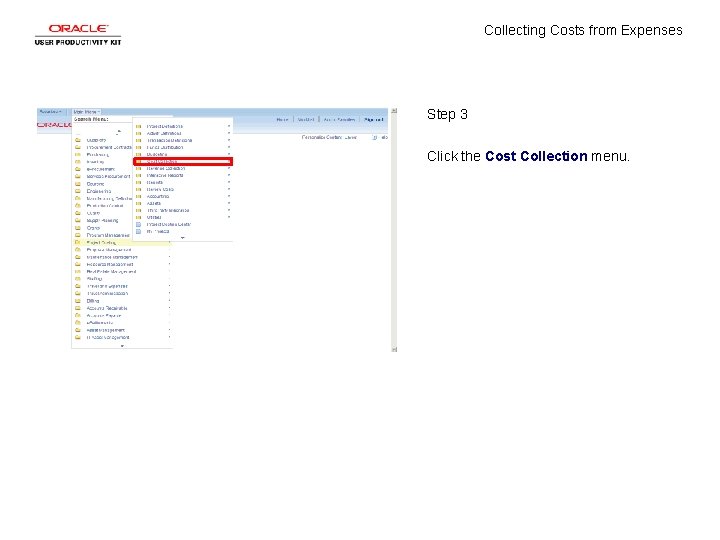
Collecting Costs from Expenses Step 3 Click the Cost Collection menu.
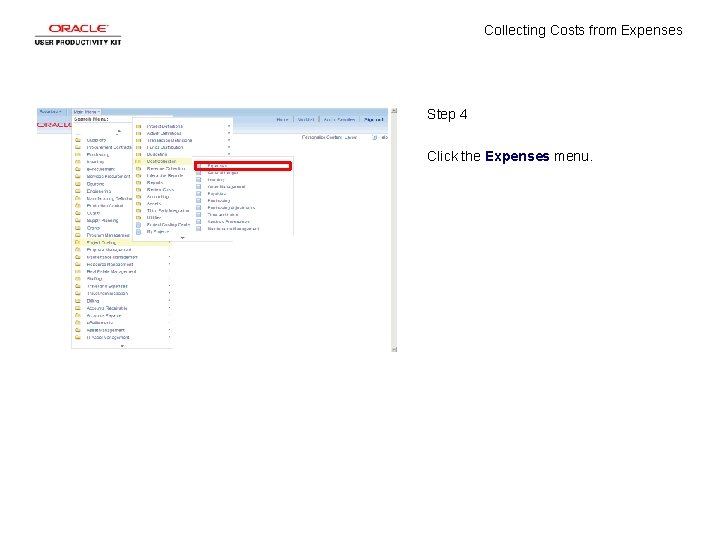
Collecting Costs from Expenses Step 4 Click the Expenses menu.
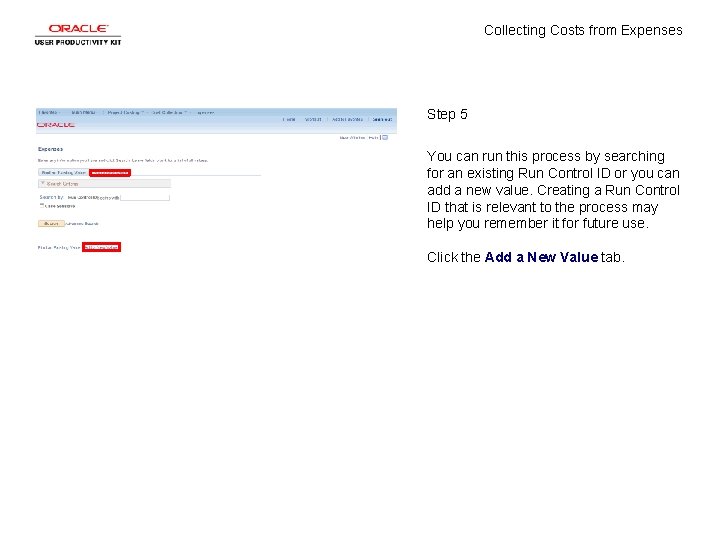
Collecting Costs from Expenses Step 5 You can run this process by searching for an existing Run Control ID or you can add a new value. Creating a Run Control ID that is relevant to the process may help you remember it for future use. Click the Add a New Value tab.
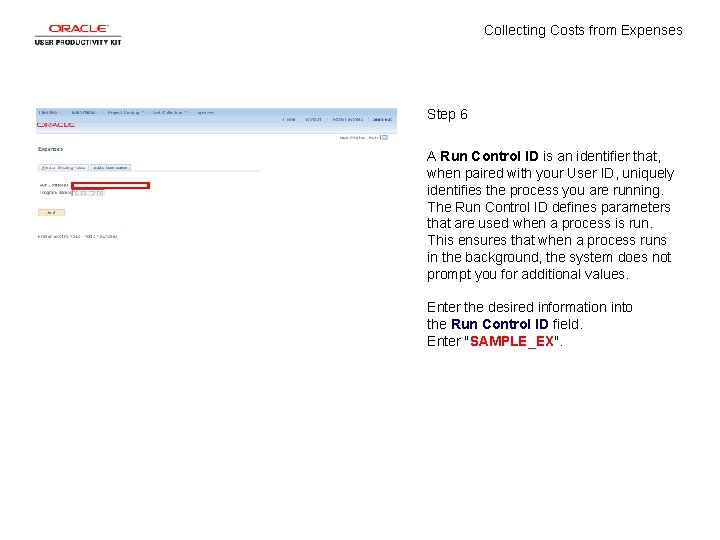
Collecting Costs from Expenses Step 6 A Run Control ID is an identifier that, when paired with your User ID, uniquely identifies the process you are running. The Run Control ID defines parameters that are used when a process is run. This ensures that when a process runs in the background, the system does not prompt you for additional values. Enter the desired information into the Run Control ID field. Enter "SAMPLE_EX".
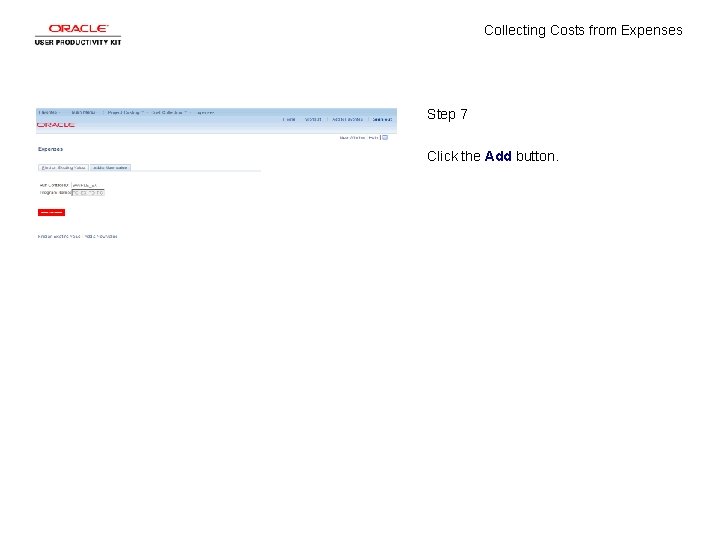
Collecting Costs from Expenses Step 7 Click the Add button.
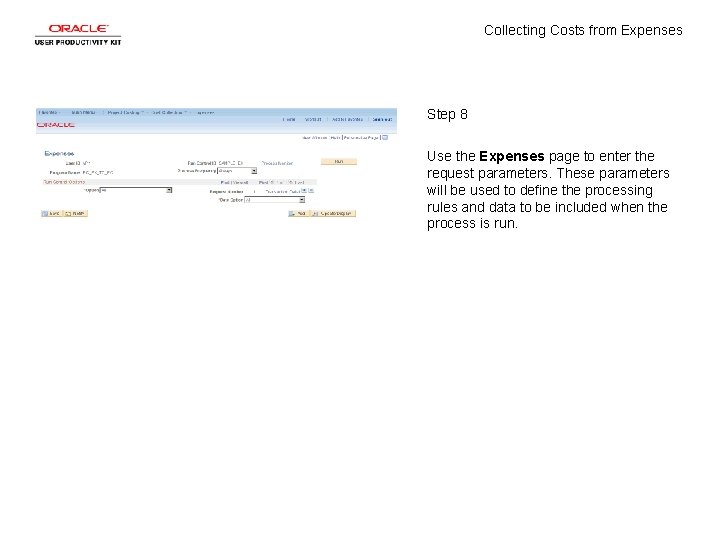
Collecting Costs from Expenses Step 8 Use the Expenses page to enter the request parameters. These parameters will be used to define the processing rules and data to be included when the process is run.
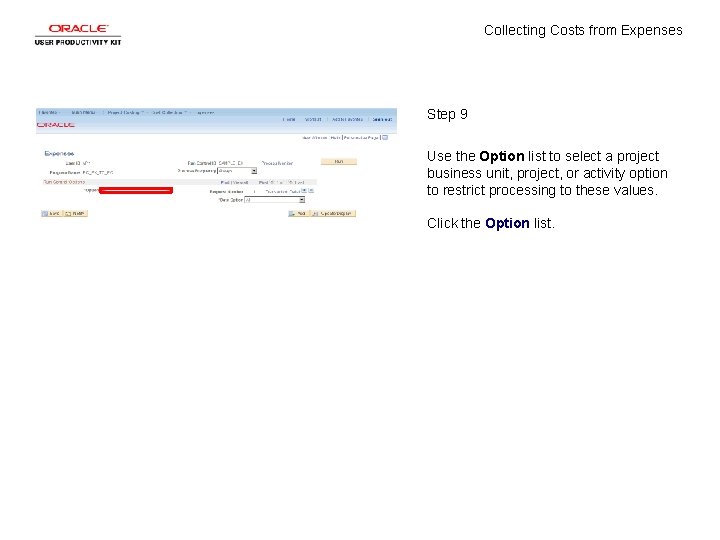
Collecting Costs from Expenses Step 9 Use the Option list to select a project business unit, project, or activity option to restrict processing to these values. Click the Option list.
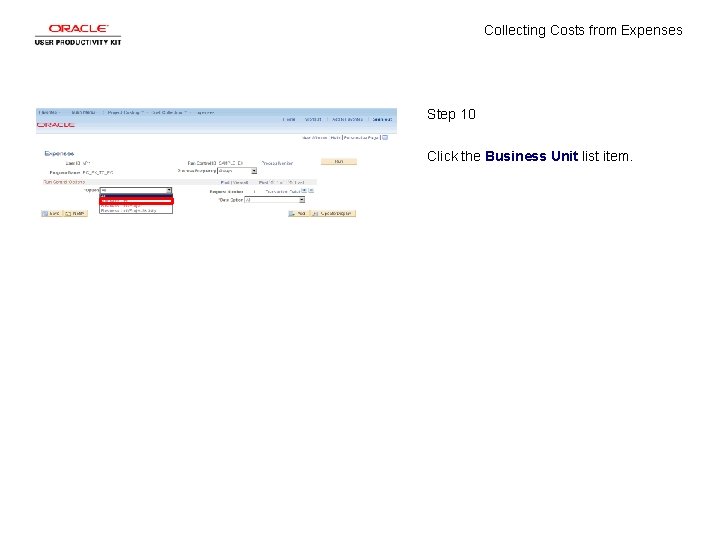
Collecting Costs from Expenses Step 10 Click the Business Unit list item.
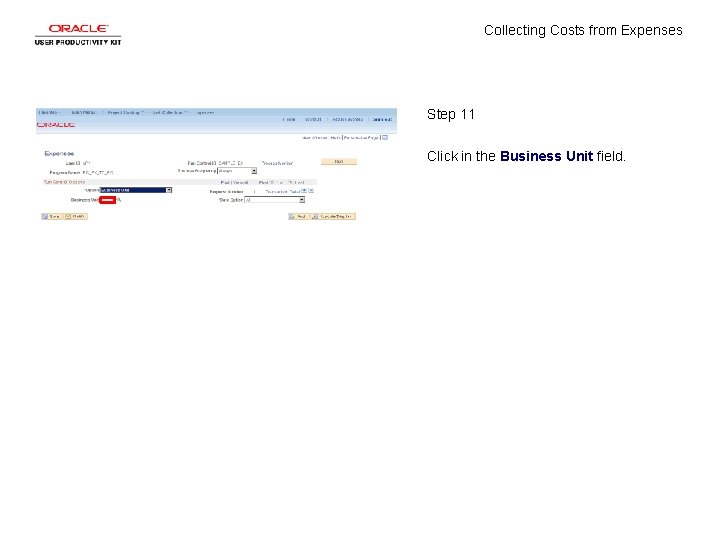
Collecting Costs from Expenses Step 11 Click in the Business Unit field.
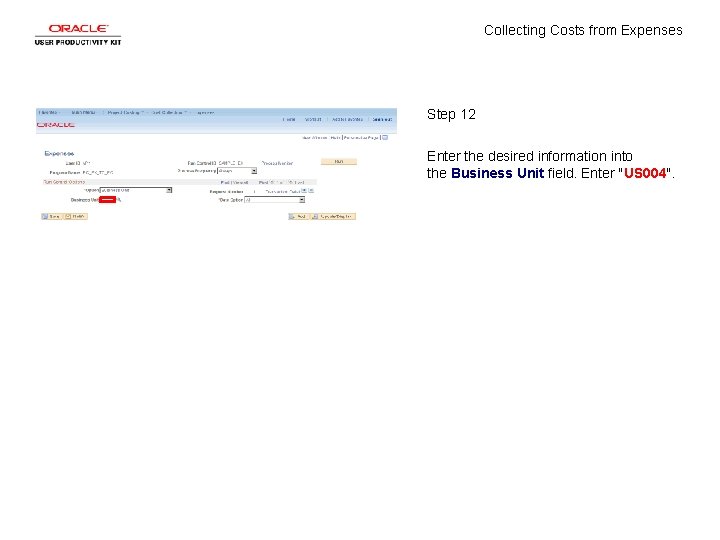
Collecting Costs from Expenses Step 12 Enter the desired information into the Business Unit field. Enter "US 004".
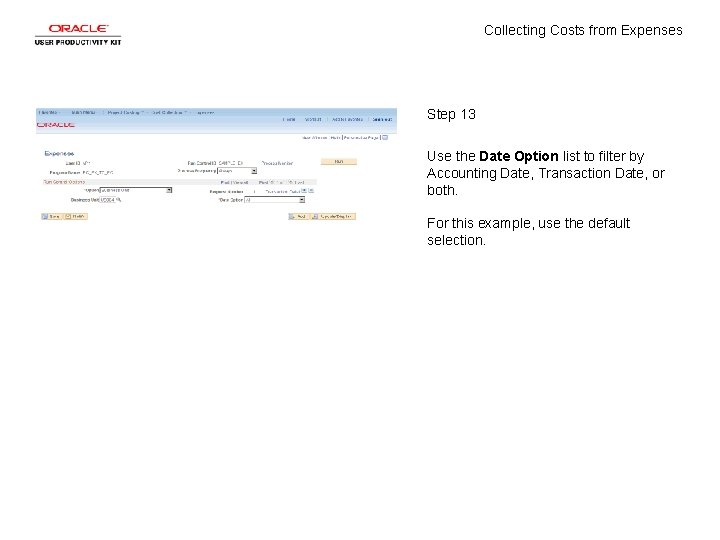
Collecting Costs from Expenses Step 13 Use the Date Option list to filter by Accounting Date, Transaction Date, or both. For this example, use the default selection.
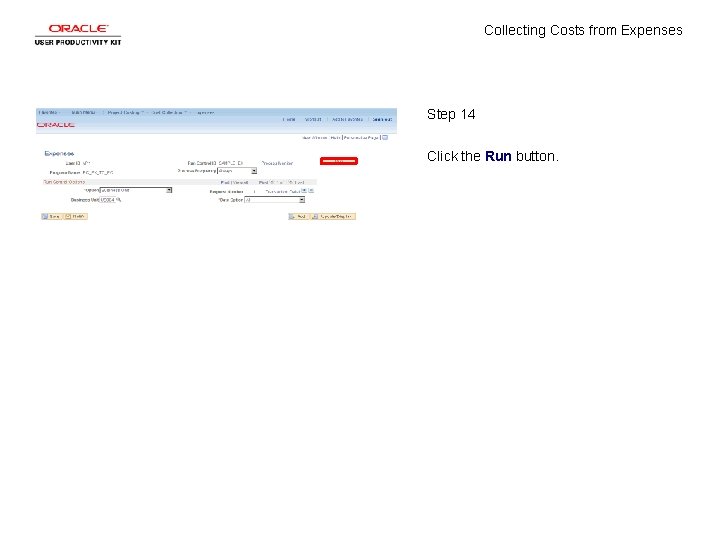
Collecting Costs from Expenses Step 14 Click the Run button.
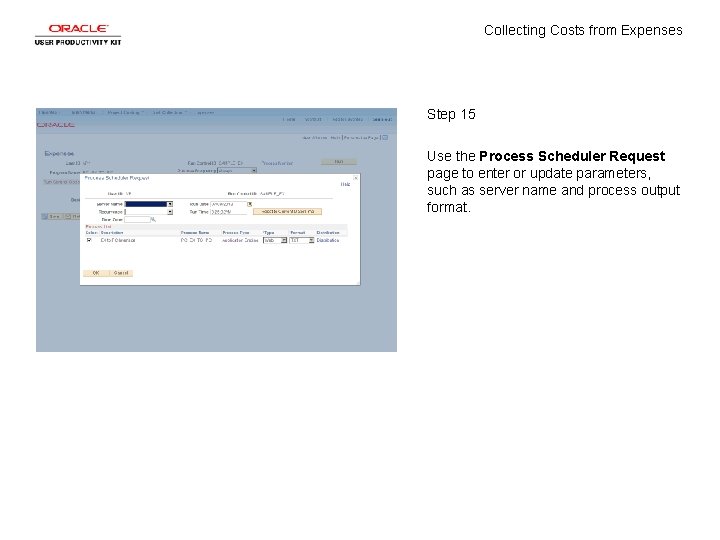
Collecting Costs from Expenses Step 15 Use the Process Scheduler Request page to enter or update parameters, such as server name and process output format.
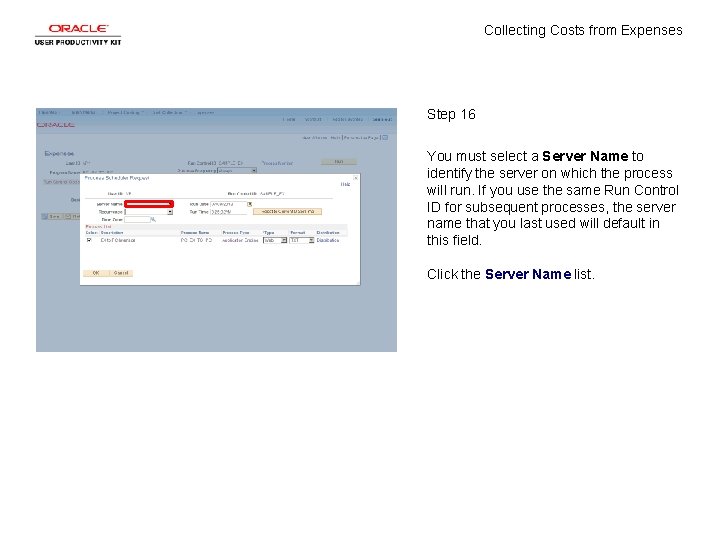
Collecting Costs from Expenses Step 16 You must select a Server Name to identify the server on which the process will run. If you use the same Run Control ID for subsequent processes, the server name that you last used will default in this field. Click the Server Name list.
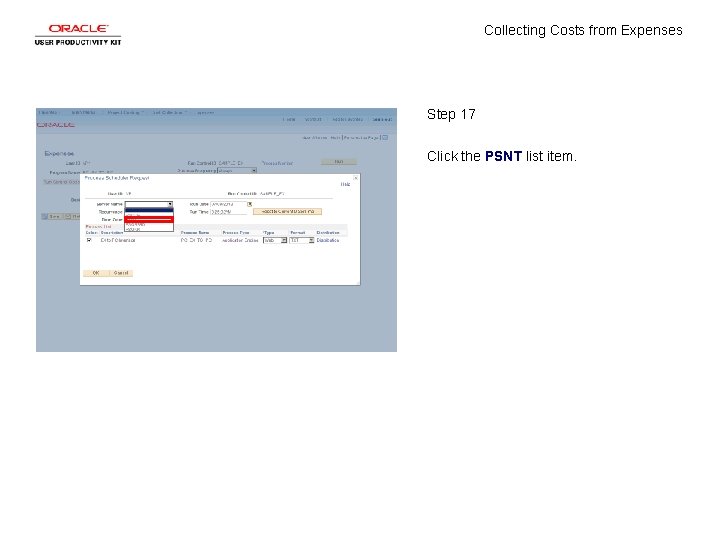
Collecting Costs from Expenses Step 17 Click the PSNT list item.
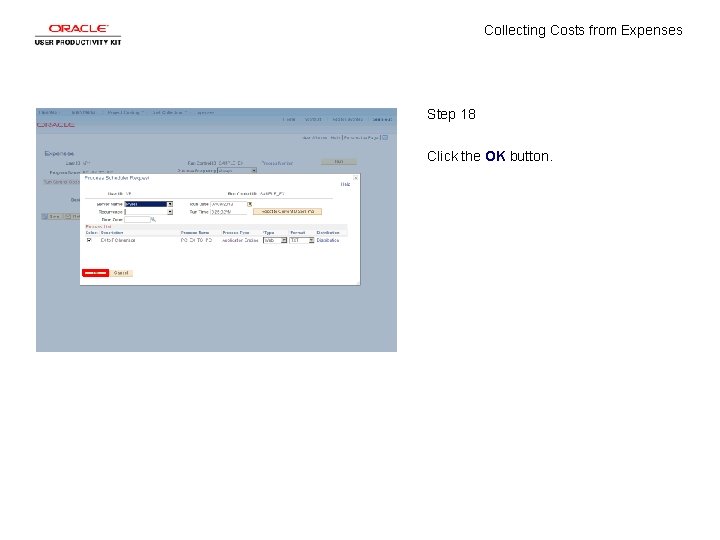
Collecting Costs from Expenses Step 18 Click the OK button.
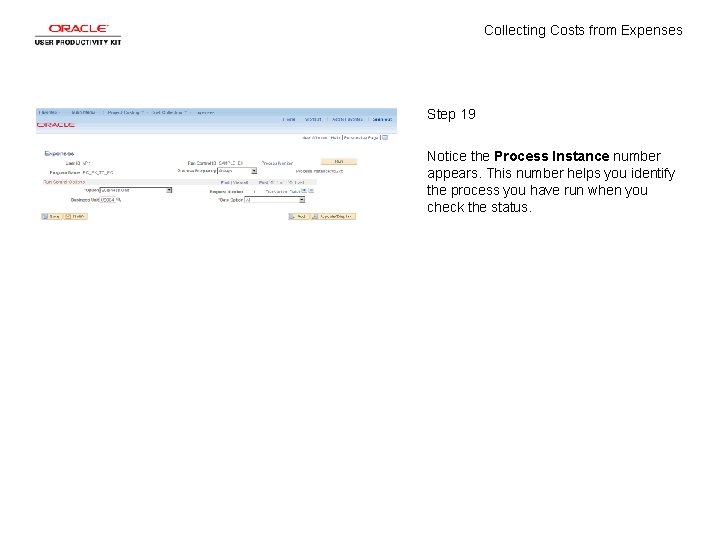
Collecting Costs from Expenses Step 19 Notice the Process Instance number appears. This number helps you identify the process you have run when you check the status.
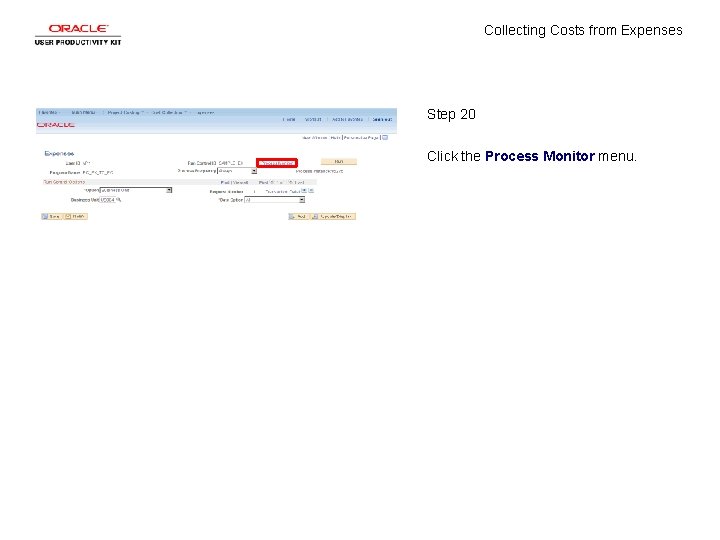
Collecting Costs from Expenses Step 20 Click the Process Monitor menu.
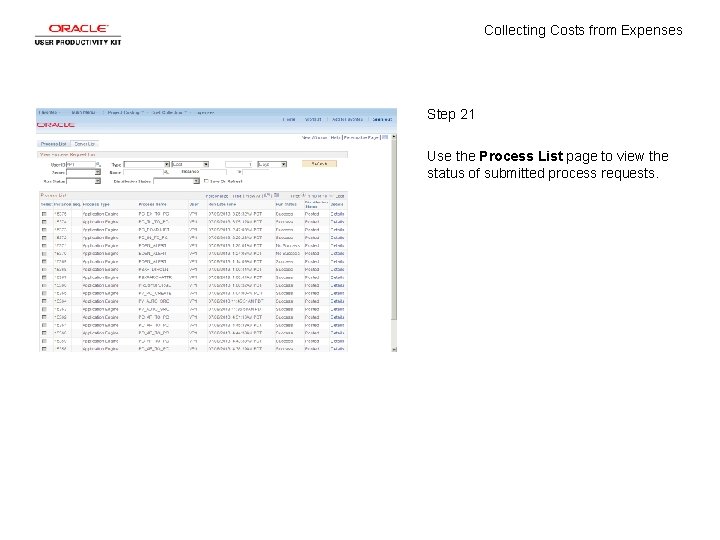
Collecting Costs from Expenses Step 21 Use the Process List page to view the status of submitted process requests.
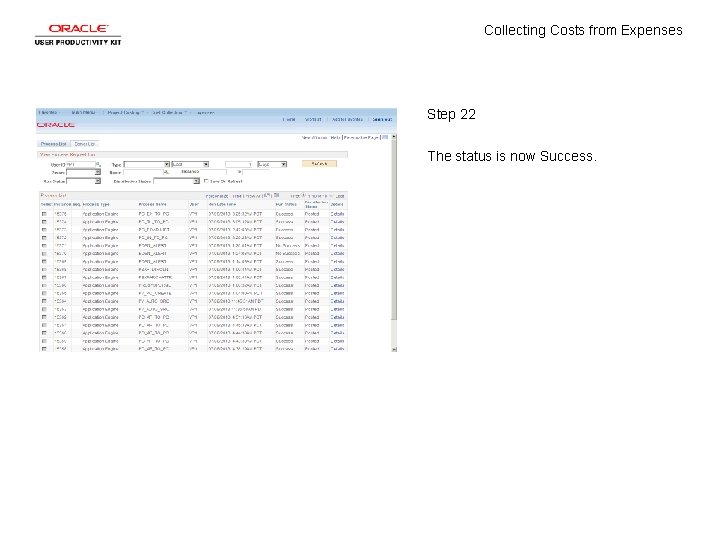
Collecting Costs from Expenses Step 22 The status is now Success.
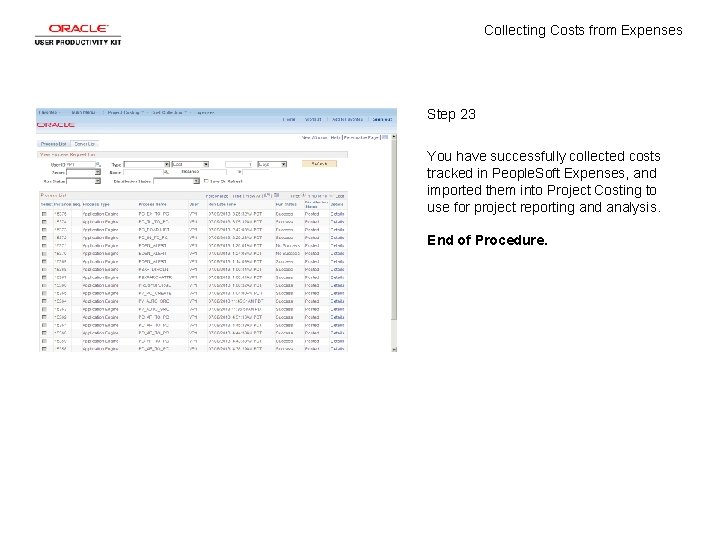
Collecting Costs from Expenses Step 23 You have successfully collected costs tracked in People. Soft Expenses, and imported them into Project Costing to use for project reporting and analysis. End of Procedure.