
Collapse of Older RC Frames during Earthquakes A

- Slides: 10
Collapse of Older RC Frames during Earthquakes A Collaborative Study: NCREE / UBC / PEER Soheil Yavari, UBC Kenneth Elwood, UBC Chuin-lin Wu, NCREE Shyh-Jiann Hwang, NCREE Jack Moehle, PEER
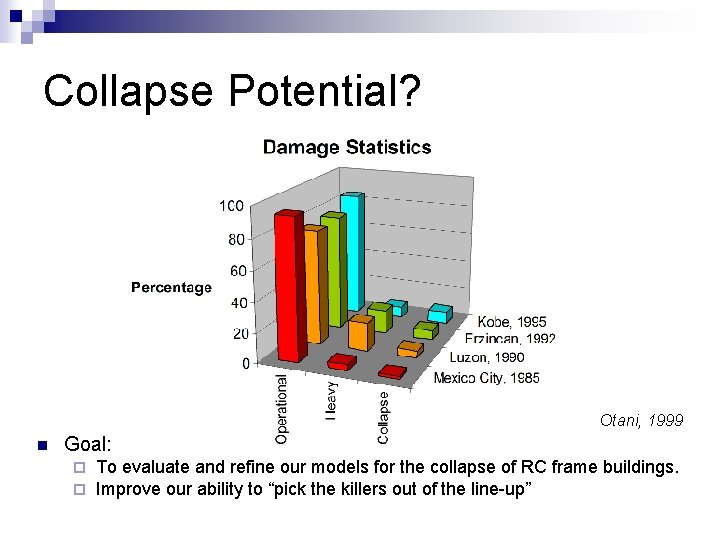
Collapse Potential? Otani, 1999 n Goal: ¨ ¨ To evaluate and refine our models for the collapse of RC frame buildings. Improve our ability to “pick the killers out of the line-up”
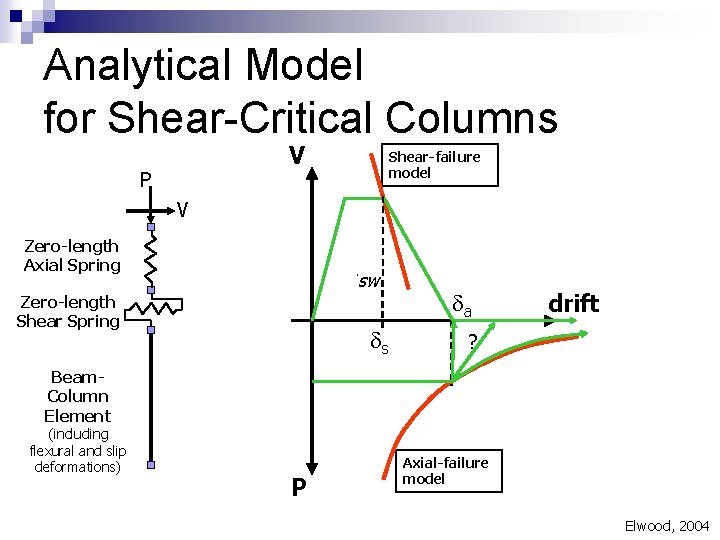
Analytical Model for Shear-Critical Columns V P Shear-failure model V Zero-length Axial Spring sw Zero-length Shear Spring ds da drift ? Beam. Column Element (including flexural and slip deformations) P Axial-failure model Elwood, 2004
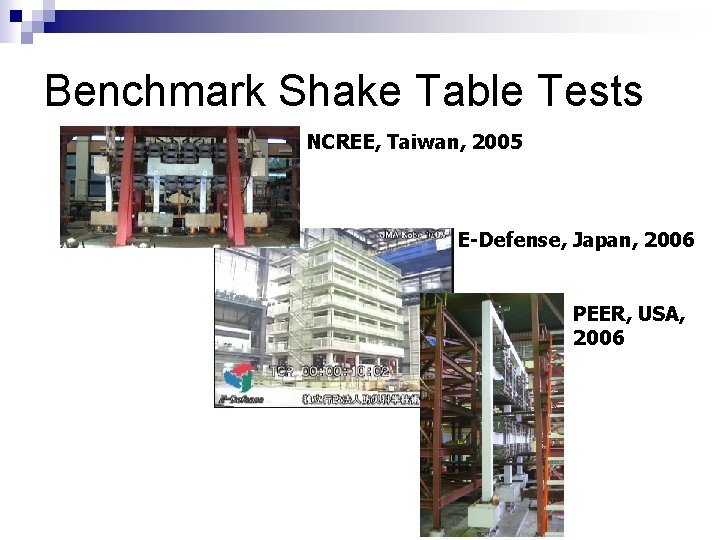
Benchmark Shake Table Tests NCREE, Taiwan, 2005 E-Defense, Japan, 2006 PEER, USA, 2006
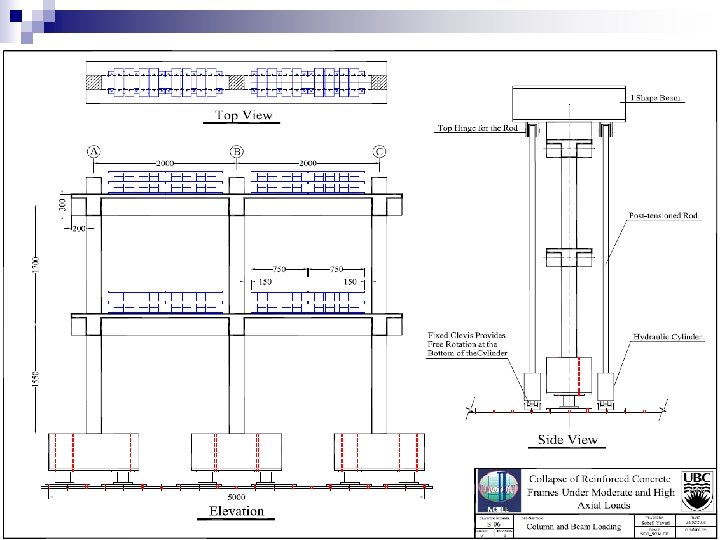
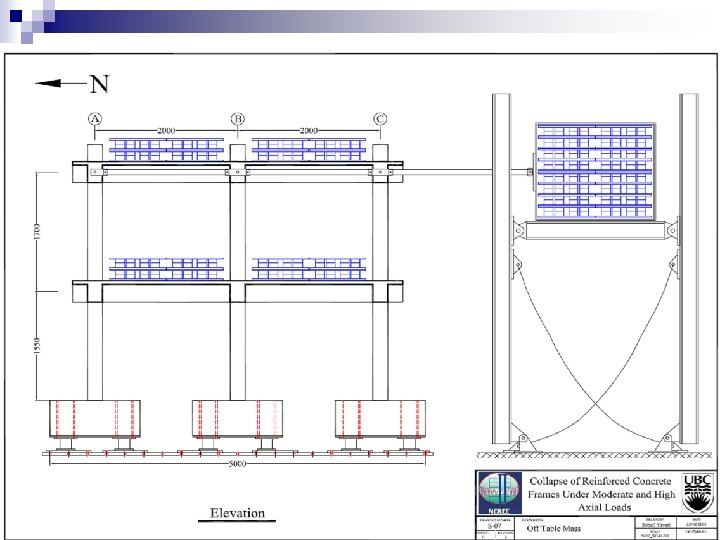
Parameters to consider in 2008 tests: n Axial load ¨ Nearly n all dynamic tests have had low axial loads. Realistic beam stiffness ¨ Important n Influence of upper stories ¨ Changes n for load redistribution. the response dynamics. Joint details ¨ How do nonductile joints interact with nonductile columns?
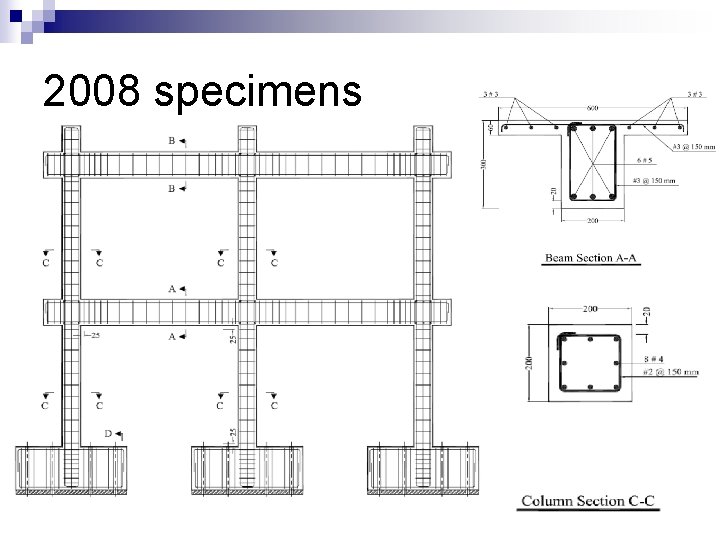
2008 specimens
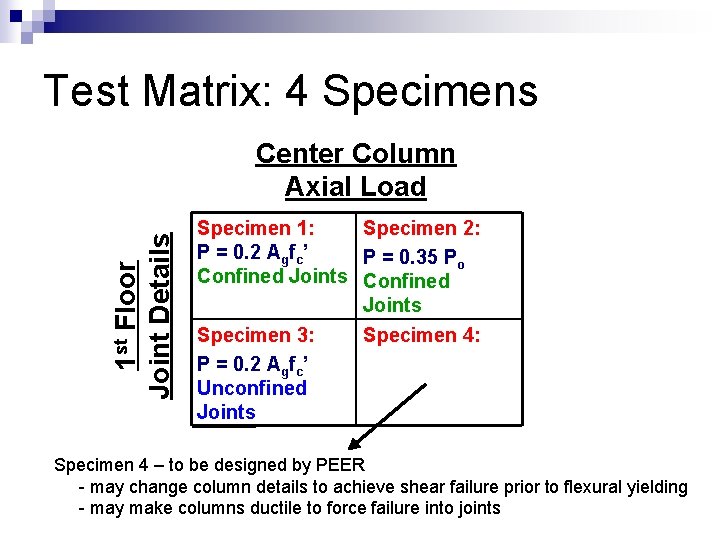
Test Matrix: 4 Specimens 1 st Floor Joint Details Center Column Axial Load Specimen 1: Specimen 2: P = 0. 2 Agfc’ P = 0. 35 Po Confined Joints Specimen 3: Specimen 4: P = 0. 2 Agfc’ Unconfined Joints Specimen 4 – to be designed by PEER - may change column details to achieve shear failure prior to flexural yielding - may make columns ductile to force failure into joints
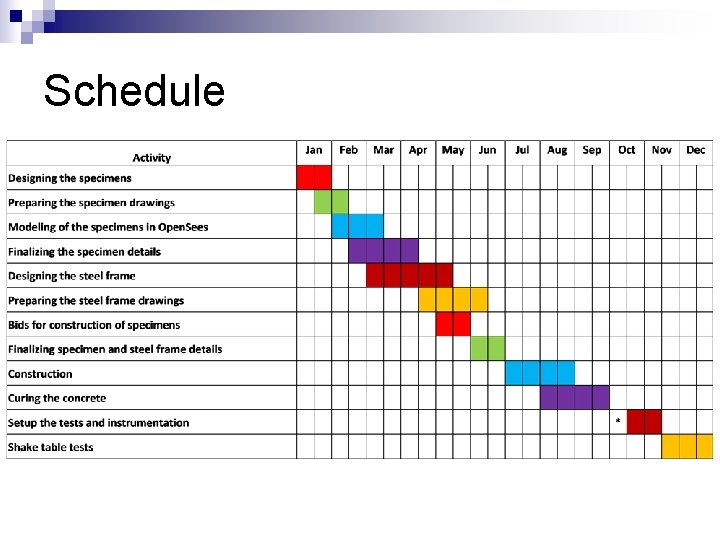
Schedule