
Collaboration and Plural OntoEpistemologies How can we know
Collaboration and Plural Onto/Epistemologies: How can we know together? Caroline Gatt Knowing from the Inside University of Aberdeen
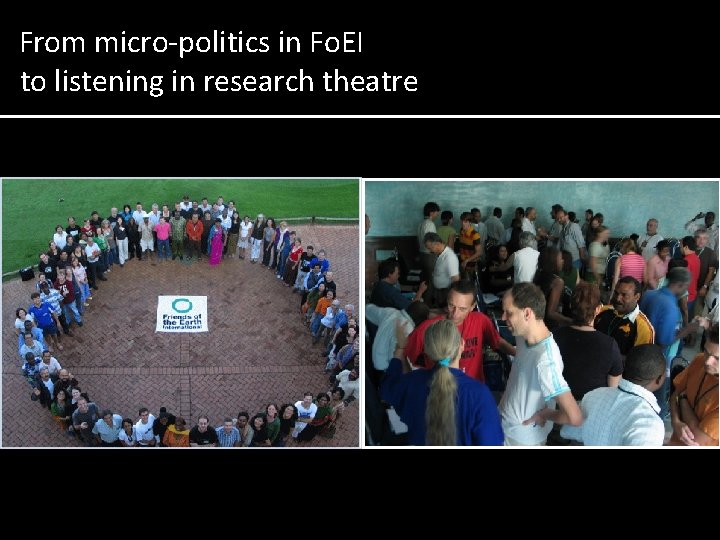
From micro-politics in Fo. EI to listening in research theatre
From micro-politics in Fo. EI to listening in research theatre What is needed in order to be able to attend to and to generate ‘communication’ between distinguishable ways of knowing such as research theatre and anthropology?
Making my positioning explicit 1. Collaborative Anthropology 2. The Ontological Turn 3. Ingoldian Correspondence

Collaborative Anthropology “Shared Puzzles” George Marcus and Michael Fischer. 1986. Anthropology as Cultural Critique “Theatres of complicit reflexivity” George Marcus. 2001. ‘From Rapport under erasure to theatres of complicit reflexivity’

The Ontological Turn “Permanent decolonization of thought” Viveiros de Castro, Eduardo, Holbraad, Martin and Axel Pedersen, Morten. 2014. “The Politics of Ontology: Anthropological Positions” The recursive anthropologist “transforms his own concepts by altering them in the light of the exigencies of ethnographic description” Martin Holbraad. 2012. Truth in Motion
The Ontological Turn “[h]uman physiology and behaviour can be modified, affecting both what is ‘known’ and what is knowable” Greg Downey. 2007. ‘Visuomotor “Knowing” and the Plasticity of Perception’ “You can’t think your way into a new way of living you have to live your way into a new way of thinking” Mike Wesch. https: //www. youtube. com/watch? v=Lea. AHv 4 UTI 8
The Ontological Turn “[anthropological] metropolitan critiques … rarely questioned the taken-for-granted academic environment in which anthropology existed, nor could they adumbrate a post-anthropological era, so that the critics ended up being ‘conservative rebels’ implicated in the reproduction of the academy. ” Archie Mafeje. 2001. ‘Anthropology in Post-independence Africa: End of an Era and the Problem of Self-redefinition’
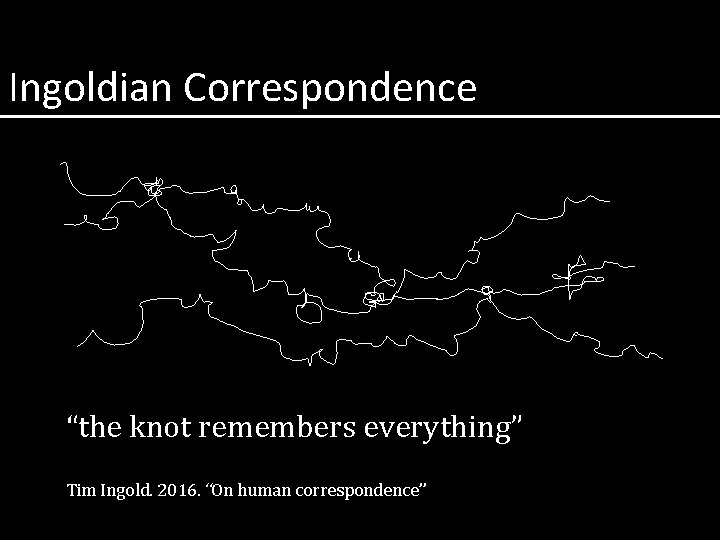
Ingoldian Correspondence “the knot remembers everything” Tim Ingold. 2016. “On human correspondence”
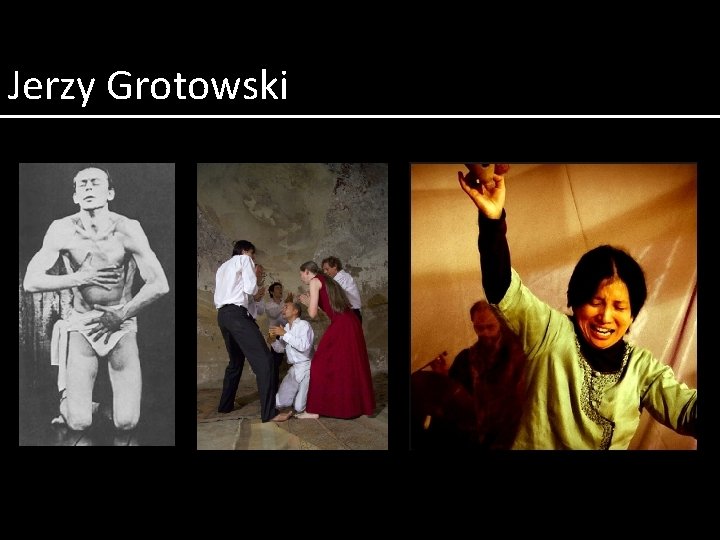
Jerzy Grotowski
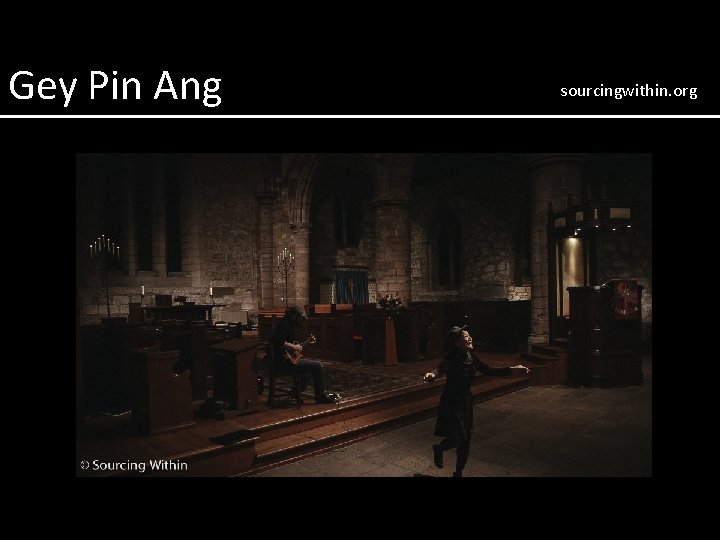
Gey Pin Ang sourcingwithin. org
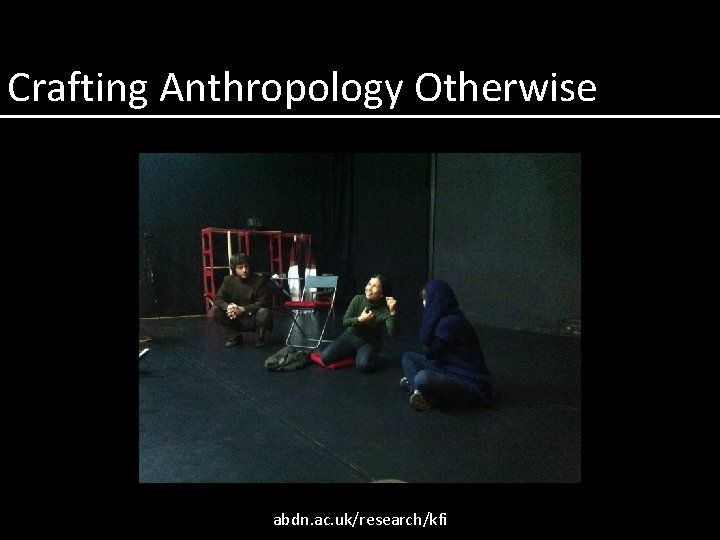
Crafting Anthropology Otherwise abdn. ac. uk/research/kfi
Equal but not semblable ‘We are returned here to the Latin etymology of “comparison”: com- par designates those who regard each other as equals – that is, as able to agree, which means also able to disagree, object, negotiate, and contest’ Isabelle Stengers. 2011. ‘Comparison as a matter of concern’
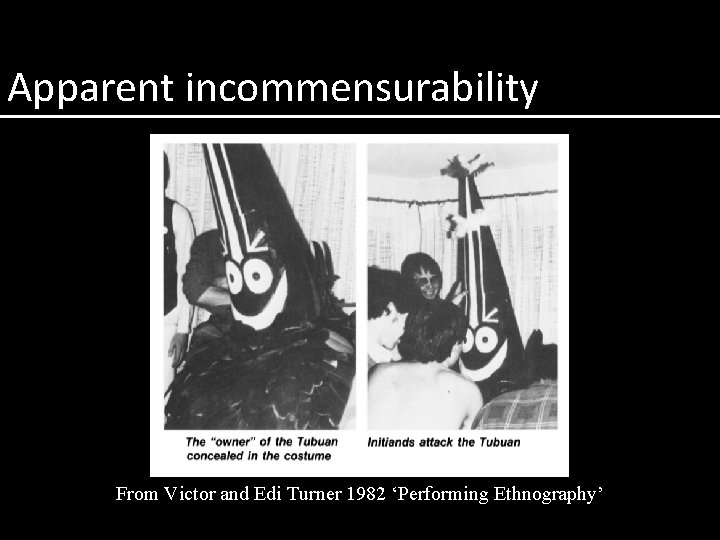
Apparent incommensurability From Victor and Edi Turner 1982 ‘Performing Ethnography’

Go to slideshow
Theories of Communication 1. 2. 3. 4. Generative Sociological Individual Ecological
Generative ‘Encounter’ is a state when listening and offering is equally and simultaneously present
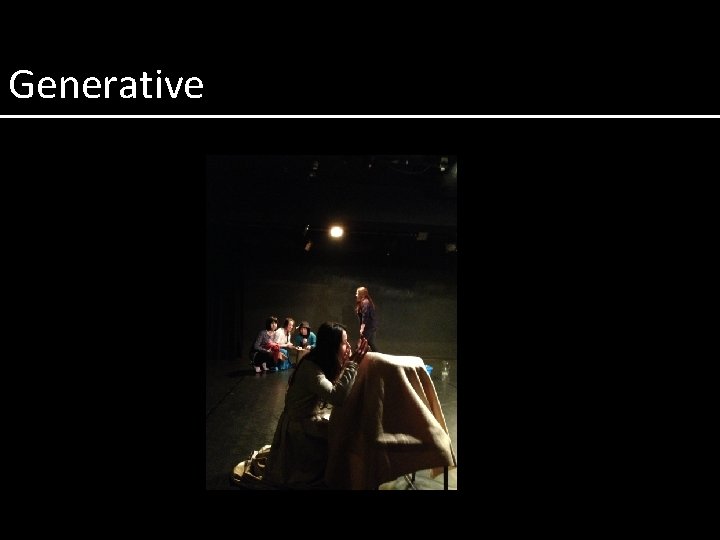
Generative
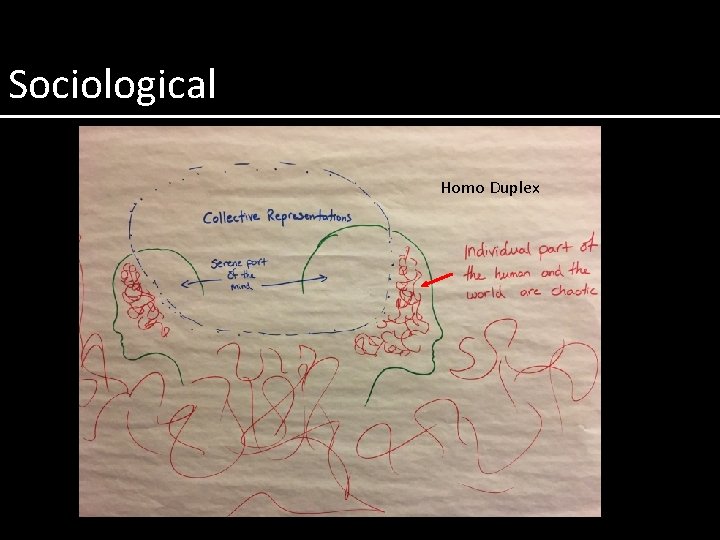
Sociological Homo Duplex
Individual One’s own individual lifeworld is transparent. Other humans’ lifeworlds, in contrast, are the most opaque worlds of perception; and the breach from self to other cannot be bridged. Paraphrased from Nigel Rapport. 2003. I am Dynamite
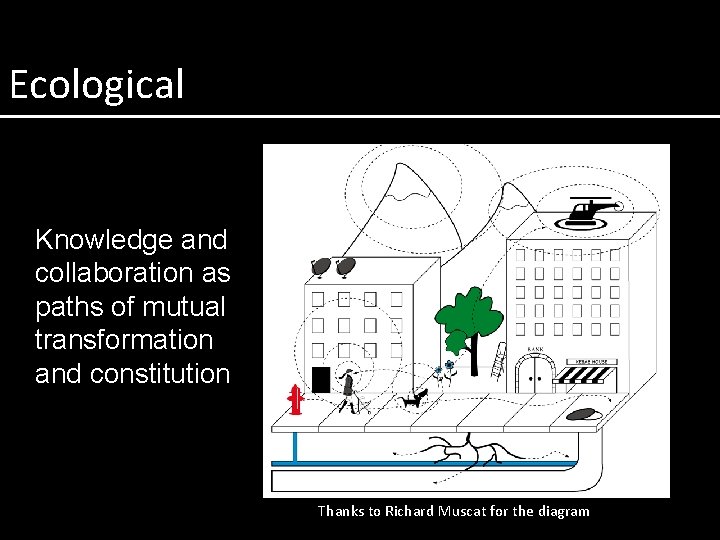
Ecological Knowledge and collaboration as paths of mutual transformation and constitution Thanks to Richard Muscat for the diagram
Conclusion laboratory theatre asks not what communication is but what it could be But the ways of knowing embedded in the orthopraxy of academic institutions need to be allowed to transform in order for the way of knowing of research theatre to become knowable
Thank you Caroline Gatt c. gatt@abdn. ac. uk/research/kfi
- Slides: 23