
Collaborate Create Module 4 Control Compete Promoting Change
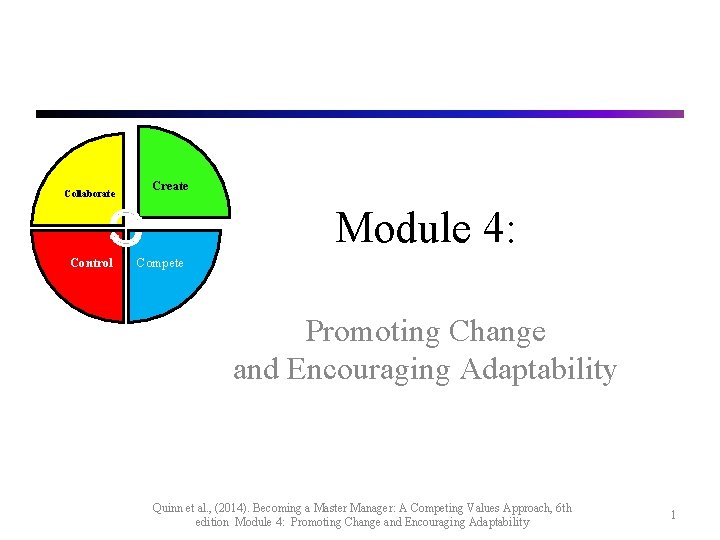
Collaborate Create Module 4: Control Compete Promoting Change and Encouraging Adaptability Quinn et al. , (2014). Becoming a Master Manager: A Competing Values Approach, 6 th edition Module 4: Promoting Change and Encouraging Adaptability 1
Agenda for Module 4 Open Systems Model • Assumptions and Goals • Paradoxes • Competencies Quinn et al. , (2014). Becoming a Master Manager: A Competing Values Approach, 6 th edition Module 4: Promoting Change and Encouraging Adaptability 2

Open Systems Model Assumptions and Goals Criteria of effectiveness Adaptability, change Means-ends theory Adaptation and innovation lead to acquiring external resources Action imperative Create Emphasis Political adaptation, creative problem solving, change management Culture Adhocracy Quinn et al. , (2014). Becoming a Master Manager: A Competing Values Approach, 6 th edition Module 4: Promoting Change and Encouraging Adaptability 3

Paradoxes of Creating • People yearn for and also distrust power • New innovations often depend on old habits • The harder we try to make changes, the more resistance we encounter Quinn et al. , (2014). Becoming a Master Manager: A Competing Values Approach, 6 th edition Module 4: Promoting Change and Encouraging Adaptability 4

Create Core Competencies • Using Power Ethically and Effectively • Championing and Selling New Ideas • Fueling and Fostering Innovation • Negotiating Agreement and Commitment • Implementing and Sustaining Change Quinn et al. , (2014). Becoming a Master Manager: A Competing Values Approach, 6 th edition Module 4: Promoting Change and Encouraging Adaptability 5

Managers who focus on open systems … • Build powerful networks and use influence in ethical ways • Know their audience as well as their own purpose when communicating ideas • Accept failure as a path to innovation • Seek to find win-win outcomes • Consider the concerns of individuals when planning and implementing change Quinn et al. , (2014). Becoming a Master Manager: A Competing Values Approach, 6 th edition Module 4: Promoting Change and Encouraging Adaptability 6
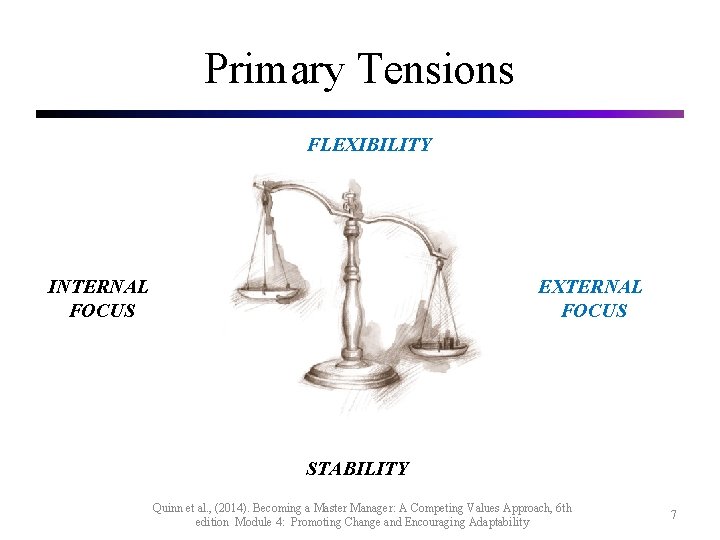
Primary Tensions FLEXIBILITY INTERNAL FOCUS EXTERNAL FOCUS STABILITY Quinn et al. , (2014). Becoming a Master Manager: A Competing Values Approach, 6 th edition Module 4: Promoting Change and Encouraging Adaptability 7
Using Power Ethically and Effectively Quinn et al. , (2014). Becoming a Master Manager: A Competing Values Approach, 6 th edition Module 4: Promoting Change and Encouraging Adaptability 8
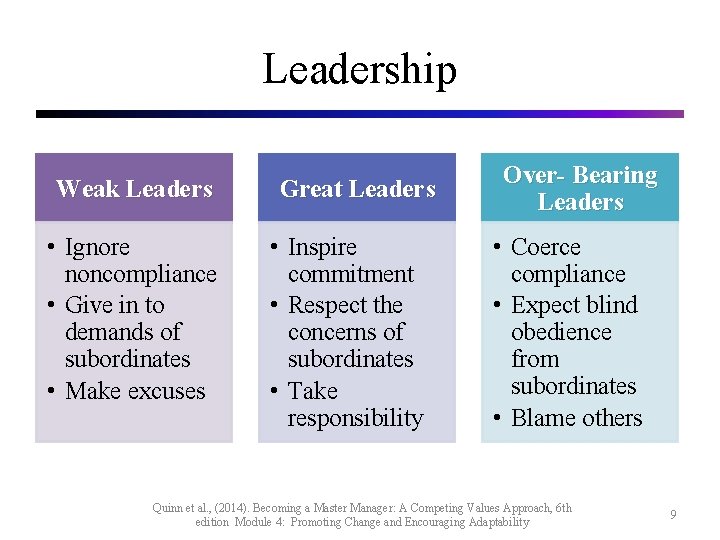
Leadership Weak Leaders • Ignore noncompliance • Give in to demands of subordinates • Make excuses Great Leaders • Inspire commitment • Respect the concerns of subordinates • Take responsibility Over- Bearing Leaders • Coerce compliance • Expect blind obedience from subordinates • Blame others Quinn et al. , (2014). Becoming a Master Manager: A Competing Values Approach, 6 th edition Module 4: Promoting Change and Encouraging Adaptability 9
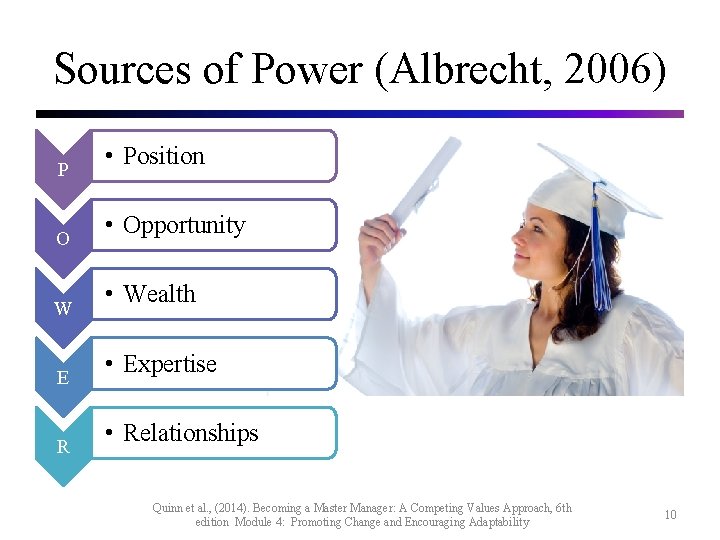
Sources of Power (Albrecht, 2006) P O W E R • Position • Opportunity • Wealth • Expertise • Relationships Quinn et al. , (2014). Becoming a Master Manager: A Competing Values Approach, 6 th edition Module 4: Promoting Change and Encouraging Adaptability 10

“Lifting” Your Network Be Otherfocused Be Externall y open Be Internally directed Be Purposecentered Quinn et al. , (2014). Becoming a Master Manager: A Competing Values Approach, 6 th edition Module 4: Promoting Change and Encouraging Adaptability 11

Influence Strategies & Tactics Position, Opportunity, & Wealth • Legitimate authority • Upward appeal • Co-optation • Bargaining • Pressure Relationships • Inspirational appeal • Personal appeal • Ingratiation • Coalition formation Expertise • Rational persuasion Quinn et al. , (2014). Becoming a Master Manager: A Competing Values Approach, 6 th edition Module 4: Promoting Change and Encouraging Adaptability 12
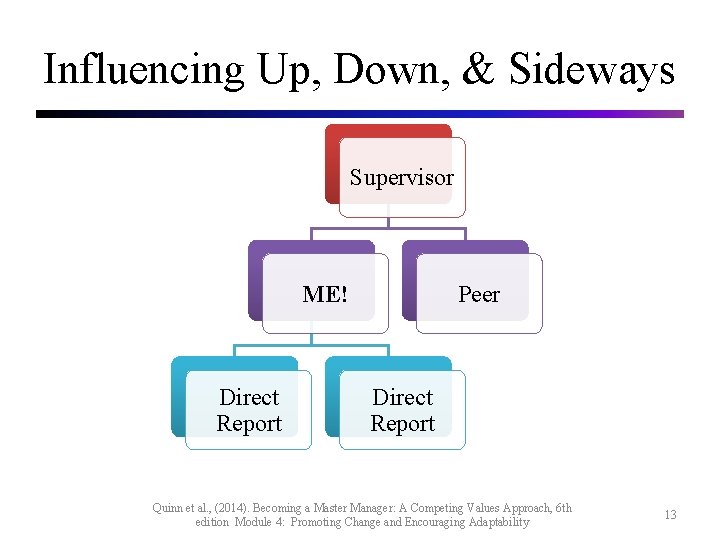
Influencing Up, Down, & Sideways Supervisor ME! Direct Report Peer Direct Report Quinn et al. , (2014). Becoming a Master Manager: A Competing Values Approach, 6 th edition Module 4: Promoting Change and Encouraging Adaptability 13
Championing and Selling New Ideas Quinn et al. , (2014). Becoming a Master Manager: A Competing Values Approach, 6 th edition Module 4: Promoting Change and Encouraging Adaptability 14
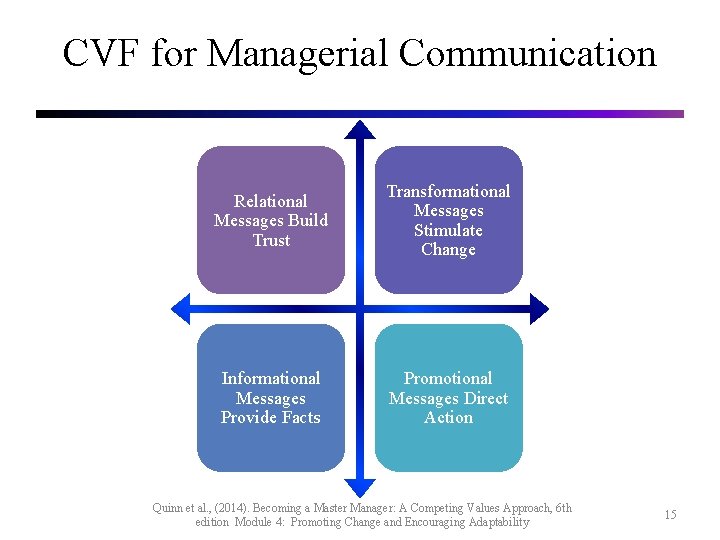
CVF for Managerial Communication Relational Messages Build Trust Transformational Messages Stimulate Change Informational Messages Provide Facts Promotional Messages Direct Action Quinn et al. , (2014). Becoming a Master Manager: A Competing Values Approach, 6 th edition Module 4: Promoting Change and Encouraging Adaptability 15

SSSAP for Effective Presentations Set Polish Access Support Sequence Quinn et al. , (2014). Becoming a Master Manager: A Competing Values Approach, 6 th edition Module 4: Promoting Change and Encouraging Adaptability 16
Managerial Sequence Quinn et al. , (2014). Becoming a Master Manager: A Competing Values Approach, 6 th edition Module 4: Promoting Change and Encouraging Adaptability 17
Flow Structures for Presentations or Reports • Chronological • Physical • Problem-solution • Issues-actions • Case study • Argument/fallacy • Features/benefits Quinn et al. , (2014). Becoming a Master Manager: A Competing Values Approach, 6 th edition Module 4: Promoting Change and Encouraging Adaptability 18
Fueling and Fostering Innovation Quinn et al. , (2014). Becoming a Master Manager: A Competing Values Approach, 6 th edition Module 4: Promoting Change and Encouraging Adaptability 19
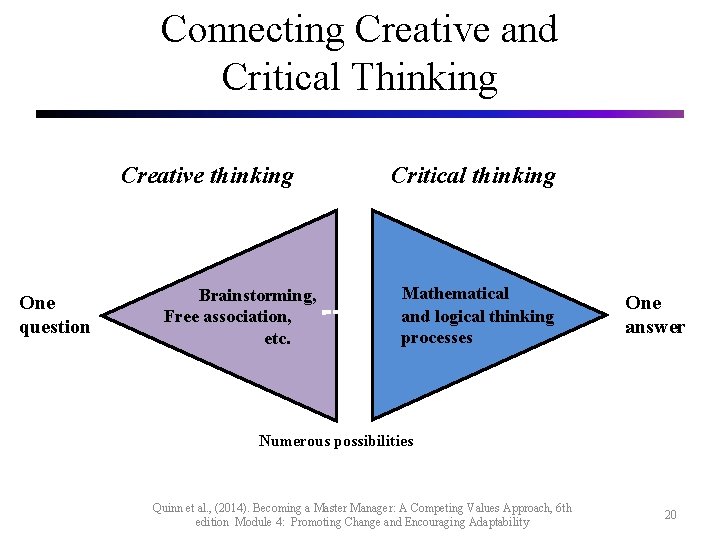
Connecting Creative and Critical Thinking Creative thinking One question Brainstorming, Free association, etc. Critical thinking Mathematical and logical thinking processes One answer Numerous possibilities Quinn et al. , (2014). Becoming a Master Manager: A Competing Values Approach, 6 th edition Module 4: Promoting Change and Encouraging Adaptability 20
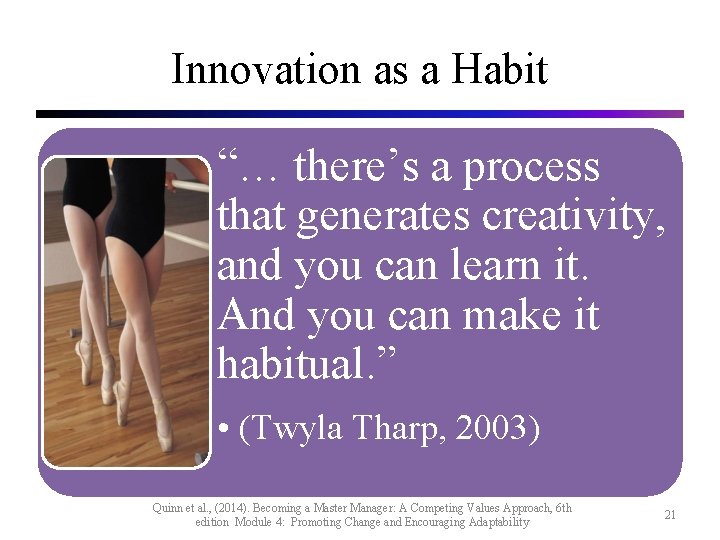
Innovation as a Habit “… there’s a process that generates creativity, and you can learn it. And you can make it habitual. ” • (Twyla Tharp, 2003) Quinn et al. , (2014). Becoming a Master Manager: A Competing Values Approach, 6 th edition Module 4: Promoting Change and Encouraging Adaptability 21
Barriers to Creative Thinking • Resistance to change • Excessive self criticism • Fear of mistakes or of failure • Fear of looking foolish • Intolerance of ambiguity • Judging, rather than generating, ideas • Inability to relax to let things incubate • Wanting to give the expected answer • Stereotyping and limiting possibilities to what we “know” • Lack of, or incorrect, information Quinn et al. , (2014). Becoming a Master Manager: A Competing Values Approach, 6 th edition Module 4: Promoting Change and Encouraging Adaptability 22
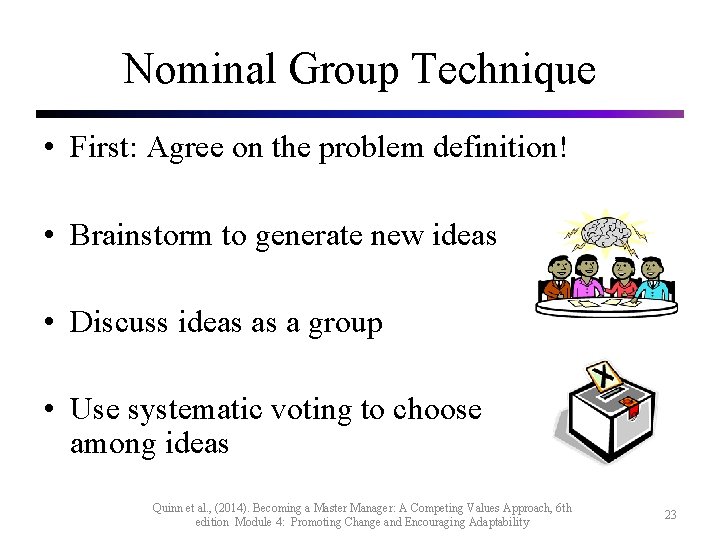
Nominal Group Technique • First: Agree on the problem definition! • Brainstorm to generate new ideas • Discuss ideas as a group • Use systematic voting to choose among ideas Quinn et al. , (2014). Becoming a Master Manager: A Competing Values Approach, 6 th edition Module 4: Promoting Change and Encouraging Adaptability 23

Negotiating Agreement and Commitment Quinn et al. , (2014). Becoming a Master Manager: A Competing Values Approach, 6 th edition Module 4: Promoting Change and Encouraging Adaptability 24
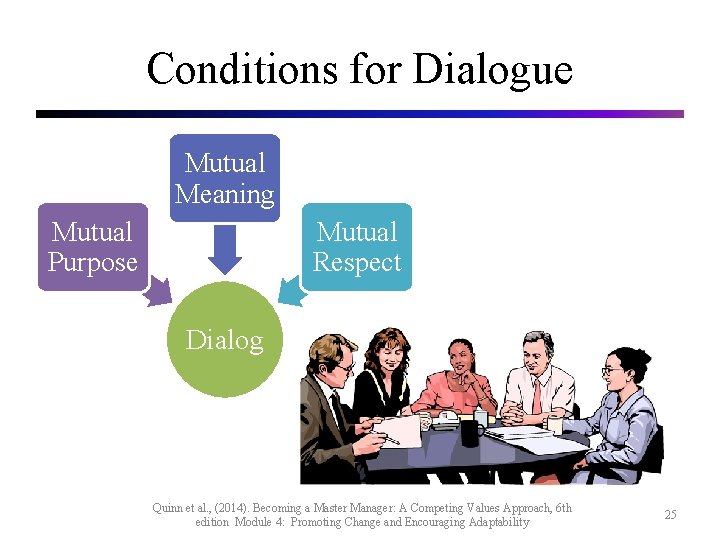
Conditions for Dialogue Mutual Meaning Mutual Purpose Mutual Respect Dialog Quinn et al. , (2014). Becoming a Master Manager: A Competing Values Approach, 6 th edition Module 4: Promoting Change and Encouraging Adaptability 25
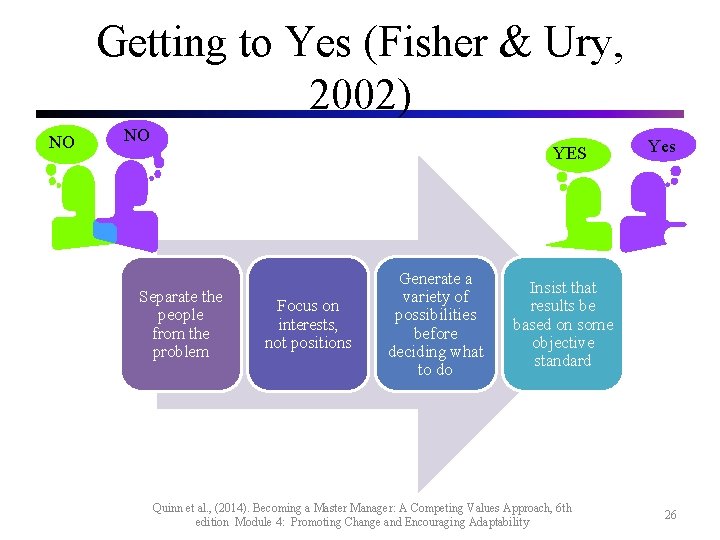
Getting to Yes (Fisher & Ury, 2002) NO NO YES Separate the people from the problem Focus on interests, not positions Generate a variety of possibilities before deciding what to do Yes Insist that results be based on some objective standard Quinn et al. , (2014). Becoming a Master Manager: A Competing Values Approach, 6 th edition Module 4: Promoting Change and Encouraging Adaptability 26
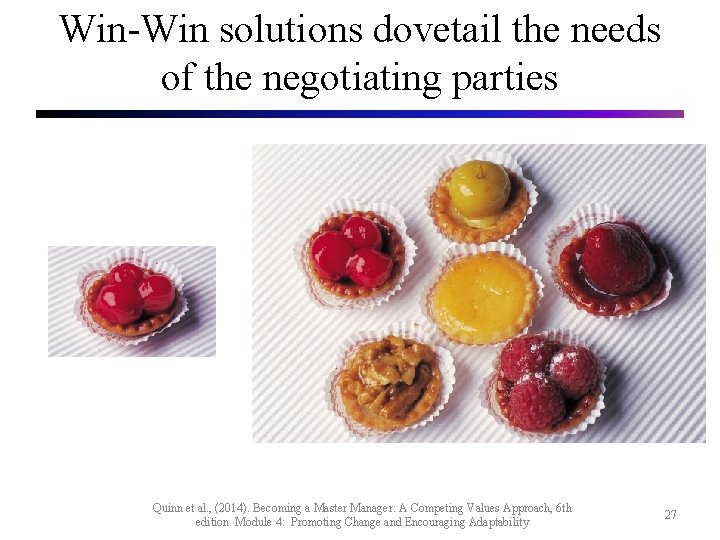
Win-Win solutions dovetail the needs of the negotiating parties Quinn et al. , (2014). Becoming a Master Manager: A Competing Values Approach, 6 th edition Module 4: Promoting Change and Encouraging Adaptability 27
Implementing and Sustaining Change Quinn et al. , (2014). Becoming a Master Manager: A Competing Values Approach, 6 th edition Module 4: Promoting Change and Encouraging Adaptability 28
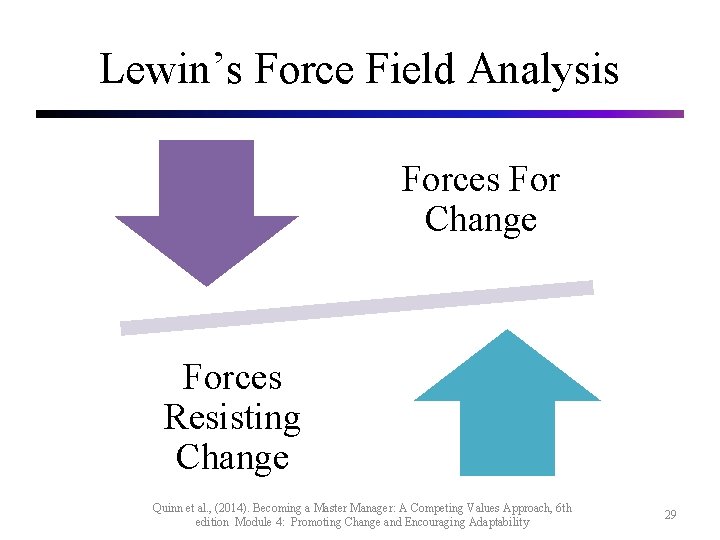
Lewin’s Force Field Analysis Forces For Change Forces Resisting Change Quinn et al. , (2014). Becoming a Master Manager: A Competing Values Approach, 6 th edition Module 4: Promoting Change and Encouraging Adaptability 29
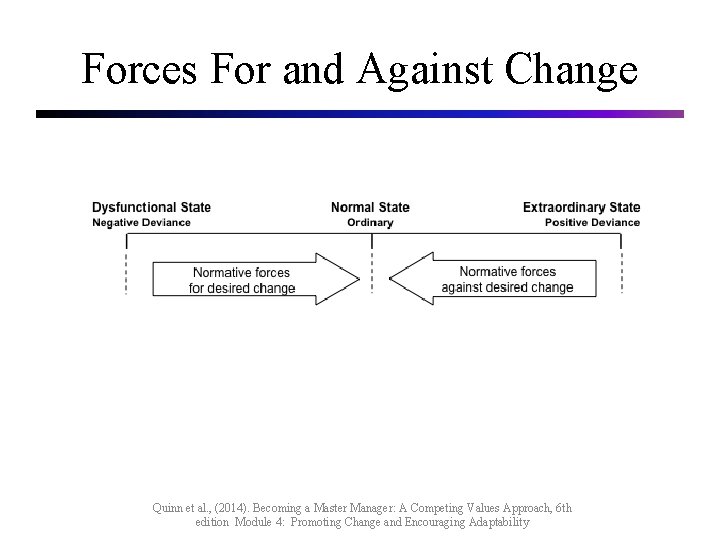
Forces For and Against Change Quinn et al. , (2014). Becoming a Master Manager: A Competing Values Approach, 6 th edition Module 4: Promoting Change and Encouraging Adaptability
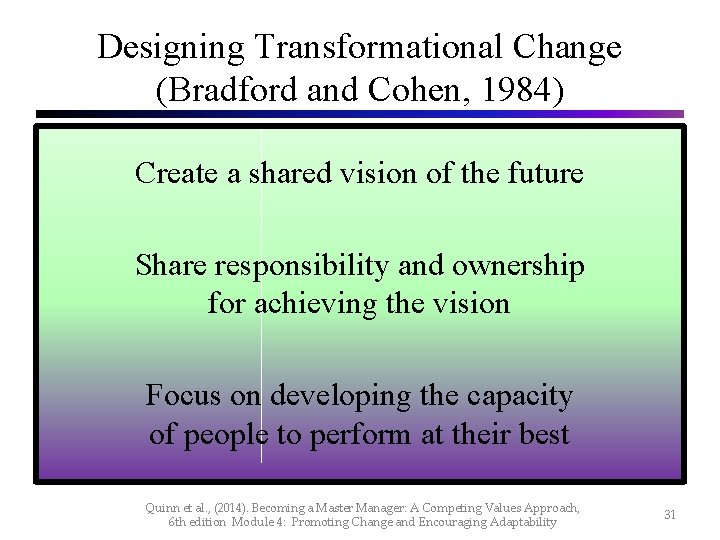
Designing Transformational Change (Bradford and Cohen, 1984) Create a shared vision of the future Share responsibility and ownership for achieving the vision Focus on developing the capacity of people to perform at their best Quinn et al. , (2014). Becoming a Master Manager: A Competing Values Approach, 6 th edition Module 4: Promoting Change and Encouraging Adaptability 31
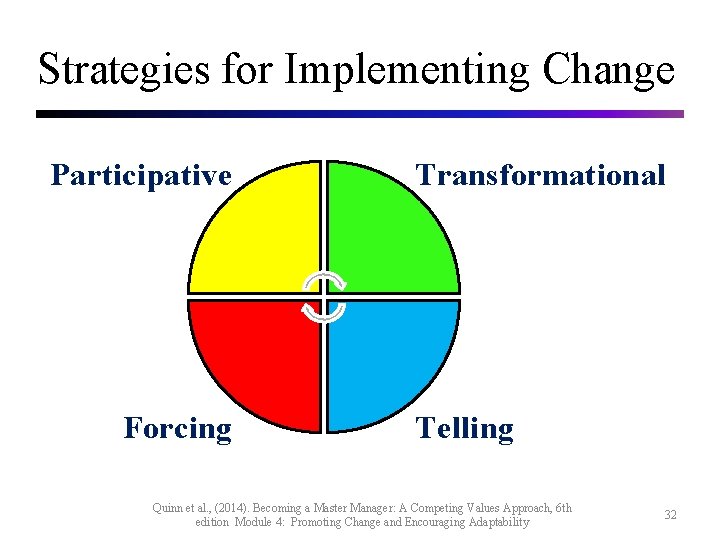
Strategies for Implementing Change Participative Forcing Transformational Telling Quinn et al. , (2014). Becoming a Master Manager: A Competing Values Approach, 6 th edition Module 4: Promoting Change and Encouraging Adaptability 32
- Slides: 32