
Colegio Pablo Apstol Fundacin Mara Educadora English Department

Colegio Pablo Apóstol Fundación María Educadora English Department First Grade 2020 Welcome 3 A: Part D Miss Paola Urbina
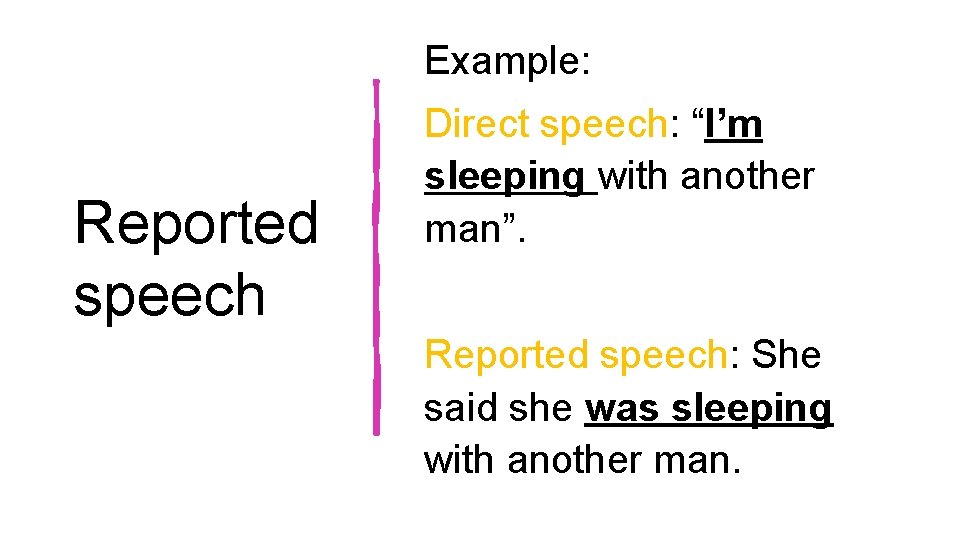
Example: Reported speech Direct speech: “I’m sleeping with another man”. Reported speech: She said she was sleeping with another man.
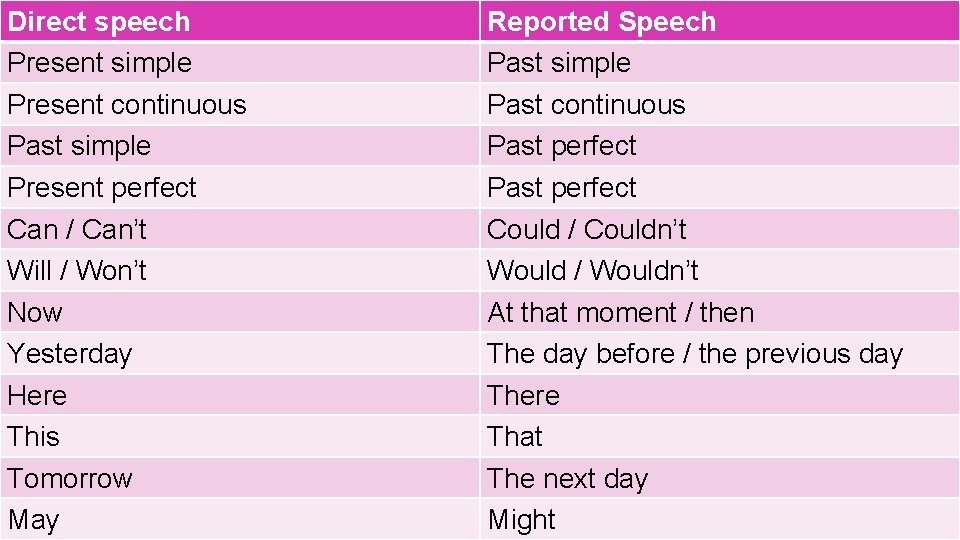
Direct speech Present simple Present continuous Past simple Present perfect Can / Can’t Will / Won’t Now Yesterday Here This Tomorrow May Reported Speech Past simple Past continuous Past perfect Could / Couldn’t Would / Wouldn’t At that moment / then The day before / the previous day There That The next day Might
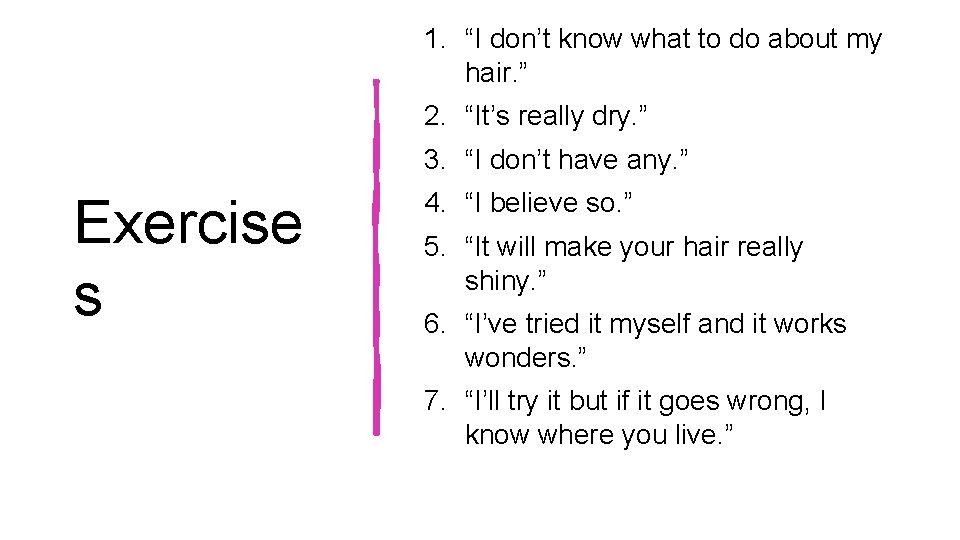
1. “I don’t know what to do about my hair. ” 2. “It’s really dry. ” 3. “I don’t have any. ” Exercise s 4. “I believe so. ” 5. “It will make your hair really shiny. ” 6. “I’ve tried it myself and it works wonders. ” 7. “I’ll try it but if it goes wrong, I know where you live. ”
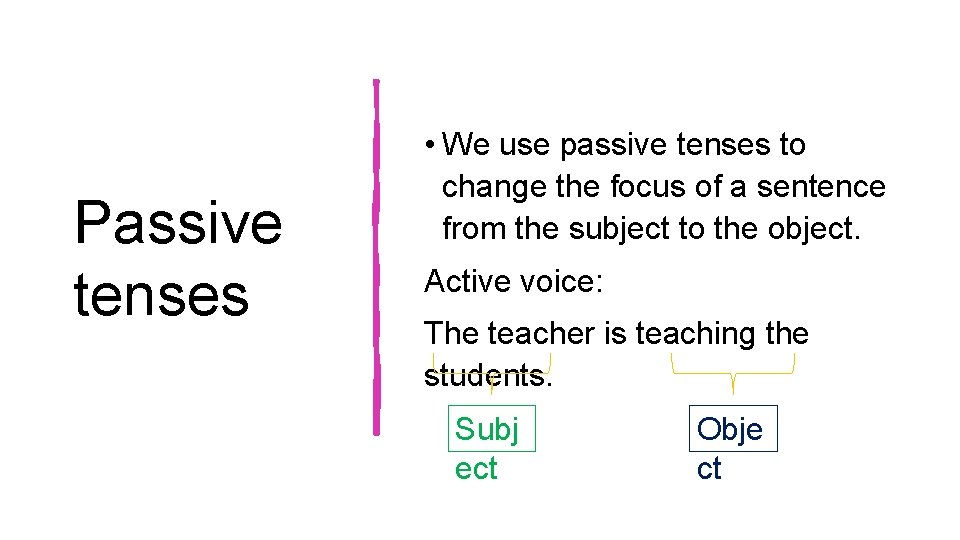
Passive tenses • We use passive tenses to change the focus of a sentence from the subject to the object. Active voice: The teacher is teaching the students. Subj ect Obje ct
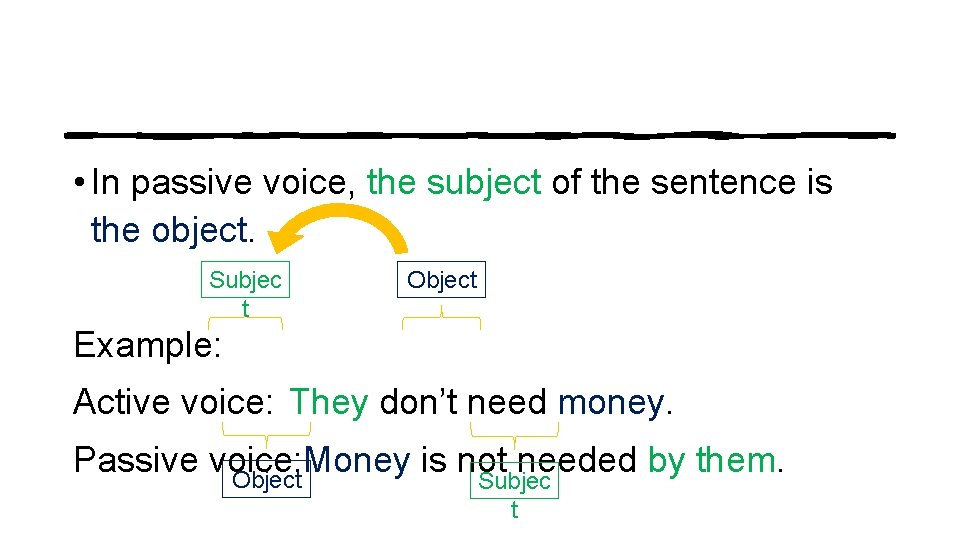
• In passive voice, the subject of the sentence is the object. Subjec t Object Example: Active voice: They don’t need money. Passive voice: Money is not needed by them. Object Subjec t
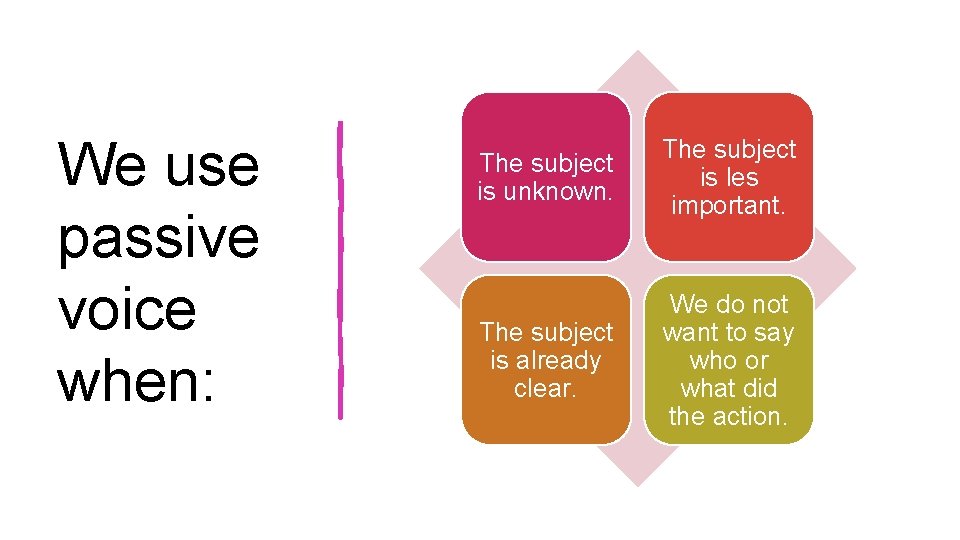
We use passive voice when: The subject is unknown. The subject is les important. The subject is already clear. We do not want to say who or what did the action.
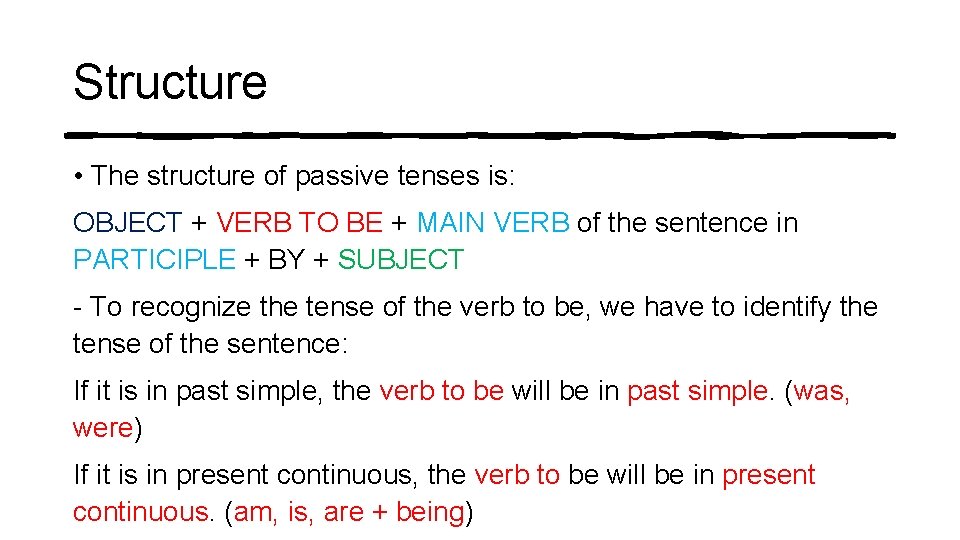
Structure • The structure of passive tenses is: OBJECT + VERB TO BE + MAIN VERB of the sentence in PARTICIPLE + BY + SUBJECT - To recognize the tense of the verb to be, we have to identify the tense of the sentence: If it is in past simple, the verb to be will be in past simple. (was, were) If it is in present continuous, the verb to be will be in present continuous. (am, is, are + being)
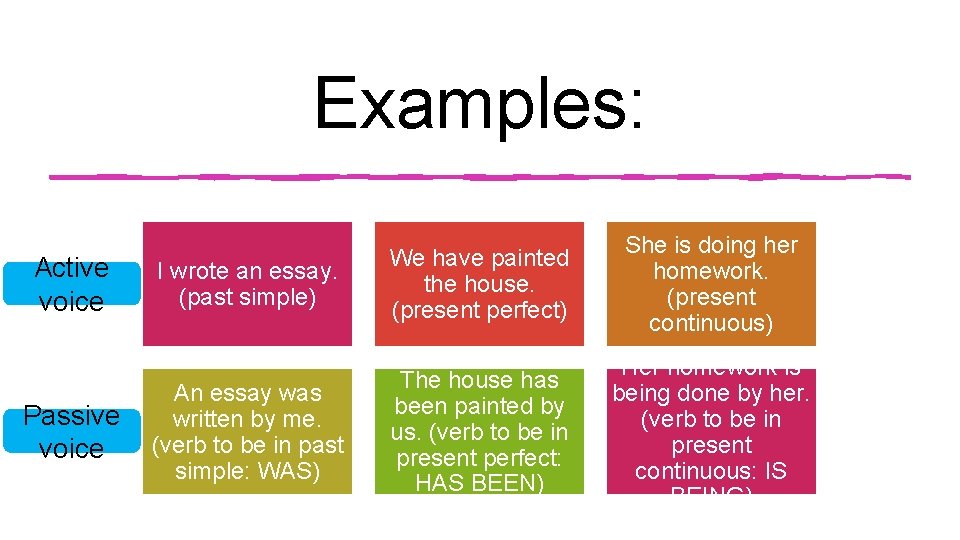
Examples: Active voice Passive voice I wrote an essay. (past simple) We have painted the house. (present perfect) She is doing her homework. (present continuous) An essay was written by me. (verb to be in past simple: WAS) The house has been painted by us. (verb to be in present perfect: HAS BEEN) Her homework is being done by her. (verb to be in present continuous: IS BEING)
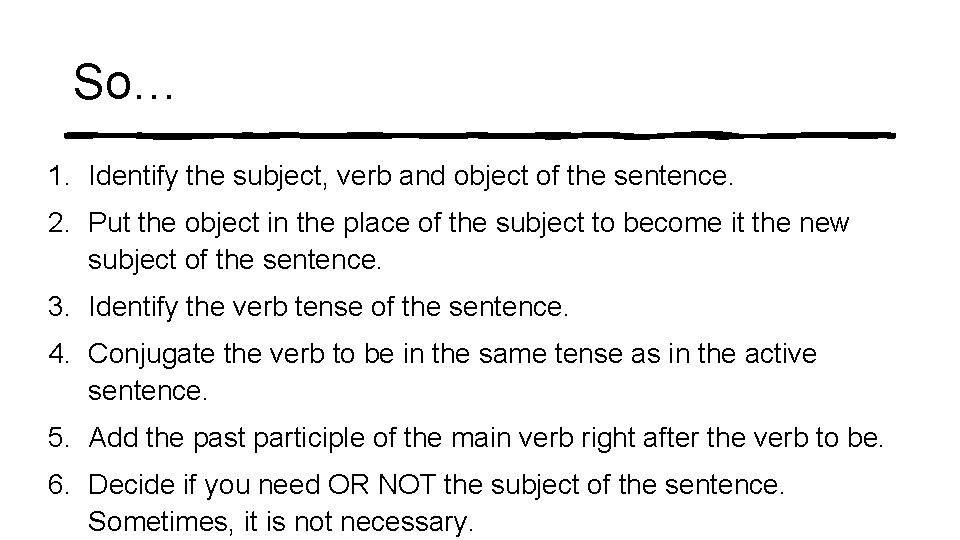
So… 1. Identify the subject, verb and object of the sentence. 2. Put the object in the place of the subject to become it the new subject of the sentence. 3. Identify the verb tense of the sentence. 4. Conjugate the verb to be in the same tense as in the active sentence. 5. Add the past participle of the main verb right after the verb to be. 6. Decide if you need OR NOT the subject of the sentence. Sometimes, it is not necessary.
- Slides: 10