
Cold Weather Concreting Design and Control of Concrete










- Slides: 40
Cold Weather Concreting Design and Control of Concrete Mixtures CHAPTER 20
Overview • • • Effect of Cold Weather Adjusting Concrete Mixtures Concreting Process Curing Maturity Concept
Cold Weather Concreting
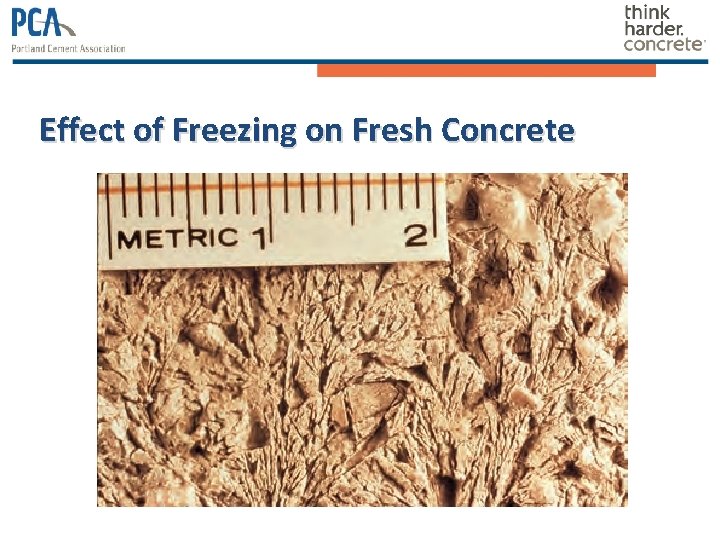
Effect of Freezing on Fresh Concrete
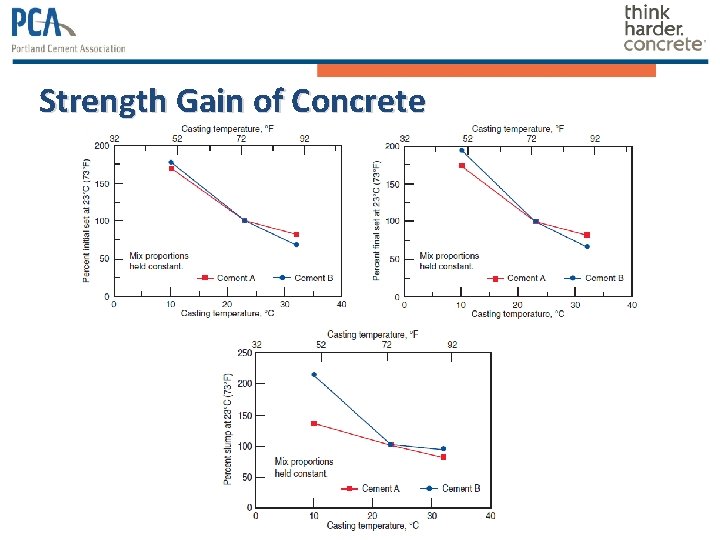
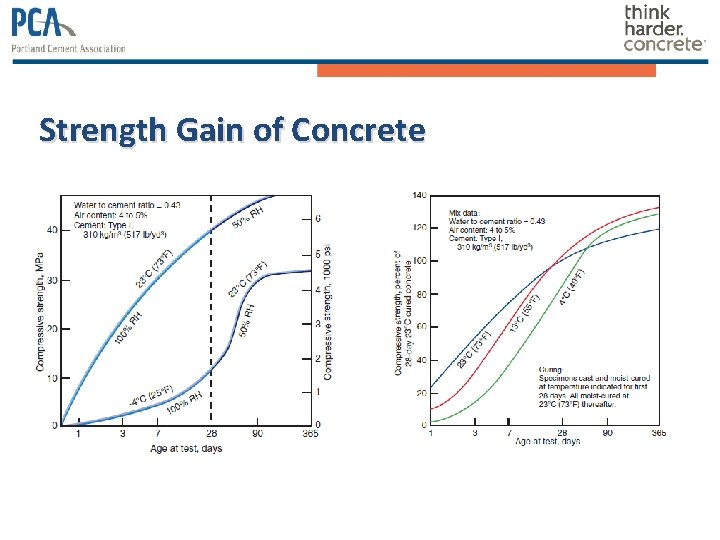
Strength Gain of Concrete
Strength Gain of Concrete
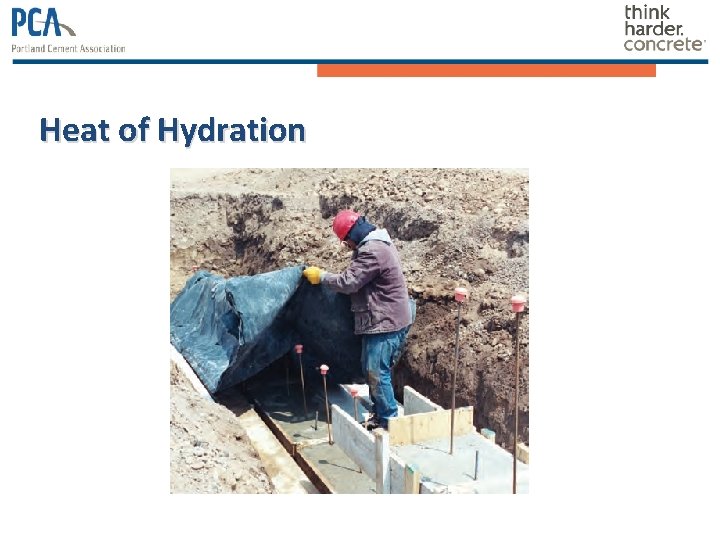
Heat of Hydration • Concrete generates heat during hardening as a result of the chemical reaction by which cement reacts with water to form a hard, stable paste • Dimensions of the concrete placement, ambient air temperature, initial concrete temperature, water-cement ratio, the composition, fineness, and amount of cementitious material all effect heat generation.
Heat of Hydration
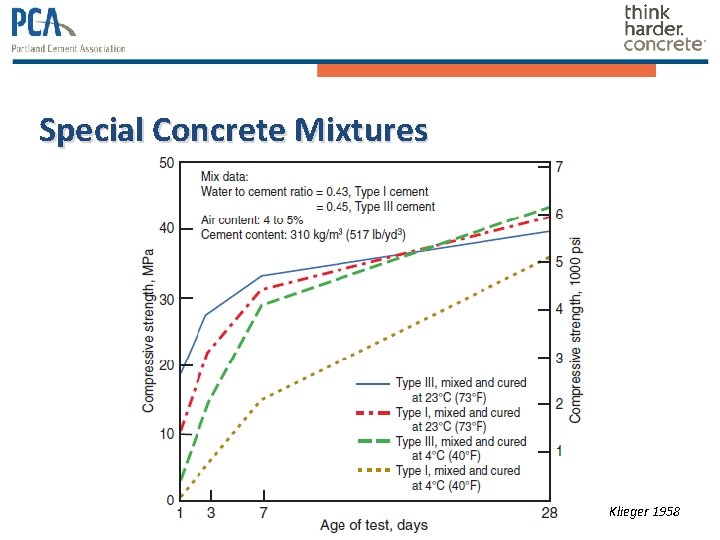
Special Concrete Mixtures High-early-strength concrete can be obtained by using one of a combination of the following: 1. Type III or HE high-early-strength cement 2. Additional portland cement 3. Set accelerating admixtures
Special Concrete Mixtures Klieger 1958
Special Concrete Mixtures
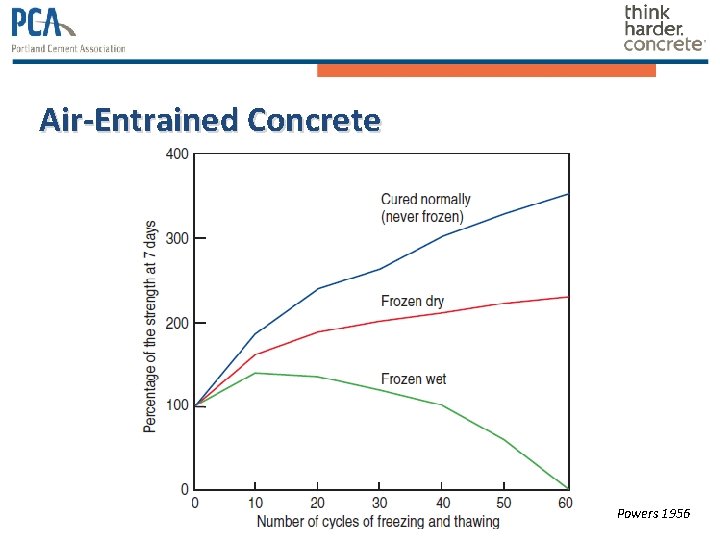
Air-Entrained Concrete Powers 1956
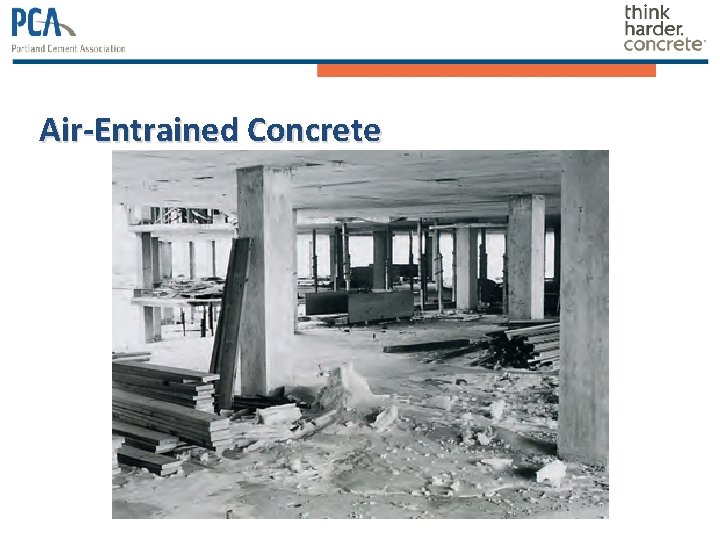
Air-Entrained Concrete
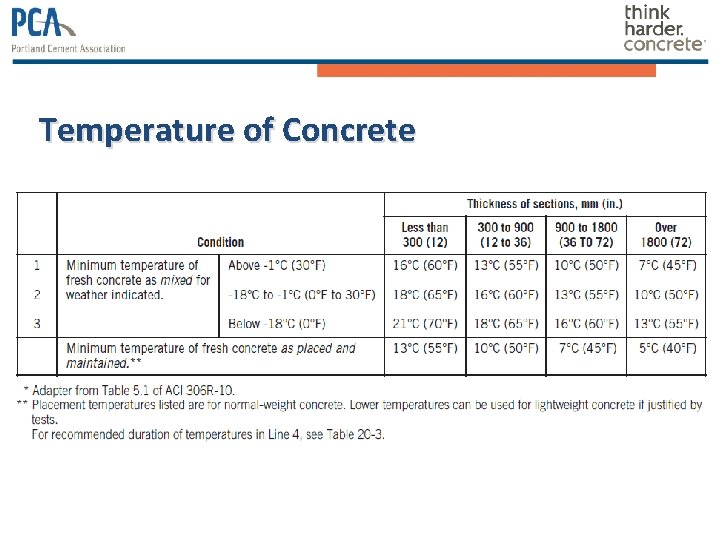
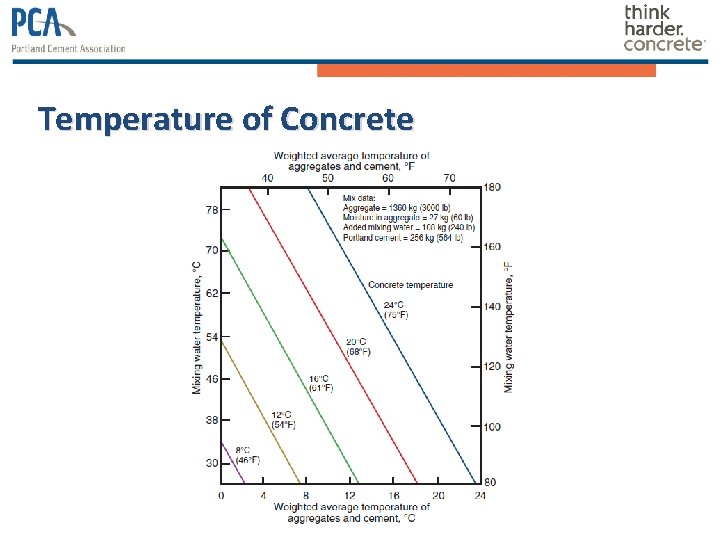
Temperature of Concrete
Aggregate Temperature • Frozen aggregates must be thawed to avoid aggregate pockets in the concrete after batching, mixing, and placing • Aggregates usually contain frozen lumps and ice when the temperature is below freezing
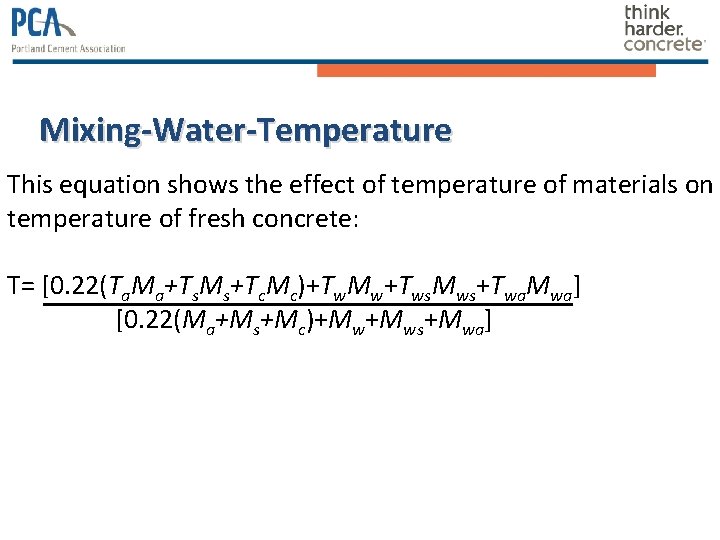
Mixing-Water-Temperature This equation shows the effect of temperature of materials on temperature of fresh concrete: T= [0. 22(Ta. Ma+Ts. Ms+Tc. Mc)+Tw. Mw+Tws. Mws+Twa. Mwa] [0. 22(Ma+Ms+Mc)+Mw+Mws+Mwa]
Temperature of Concrete
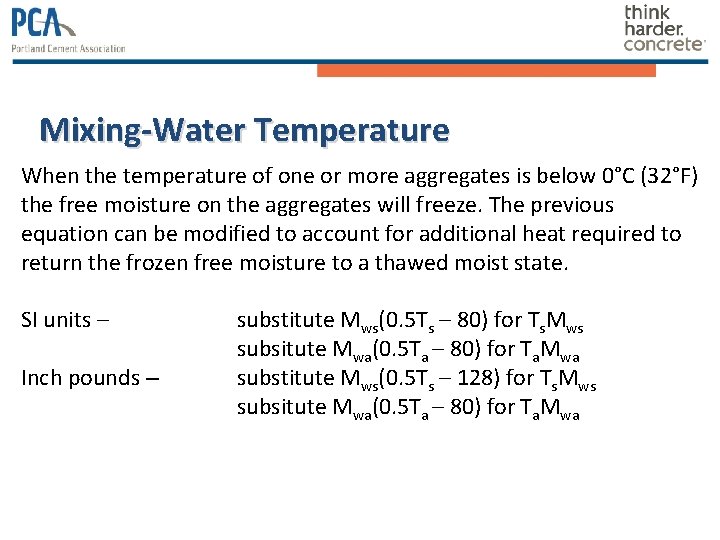
Mixing-Water Temperature When the temperature of one or more aggregates is below 0°C (32°F) the free moisture on the aggregates will freeze. The previous equation can be modified to account for additional heat required to return the frozen free moisture to a thawed moist state. SI units – Inch pounds – substitute Mws(0. 5 Ts – 80) for Ts. Mws subsitute Mwa(0. 5 Ta – 80) for Ta. Mwa substitute Mws(0. 5 Ts – 128) for Ts. Mws subsitute Mwa(0. 5 Ta – 80) for Ta. Mwa
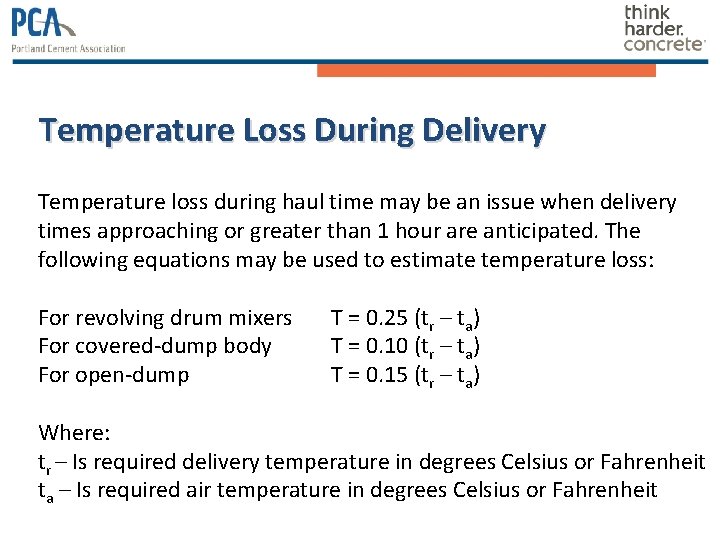
Temperature Loss During Delivery Temperature loss during haul time may be an issue when delivery times approaching or greater than 1 hour are anticipated. The following equations may be used to estimate temperature loss: For revolving drum mixers For covered-dump body For open-dump T = 0. 25 (tr – ta) T = 0. 10 (tr – ta) T = 0. 15 (tr – ta) Where: tr – Is required delivery temperature in degrees Celsius or Fahrenheit ta – Is required air temperature in degrees Celsius or Fahrenheit
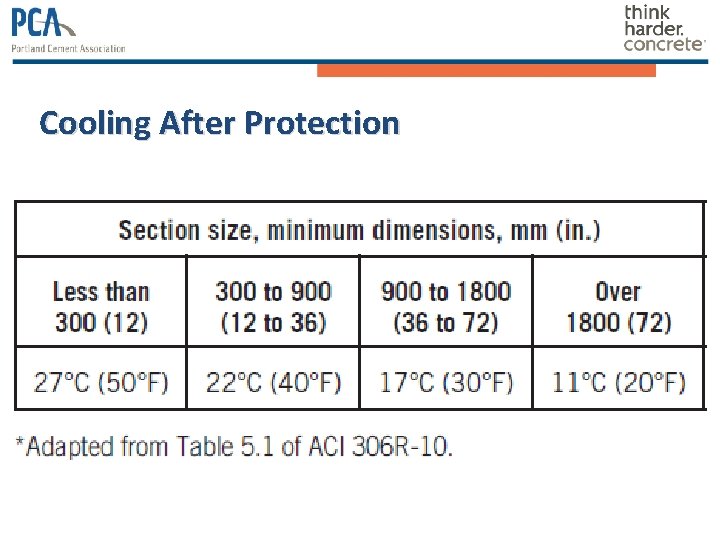
Cooling After Protection
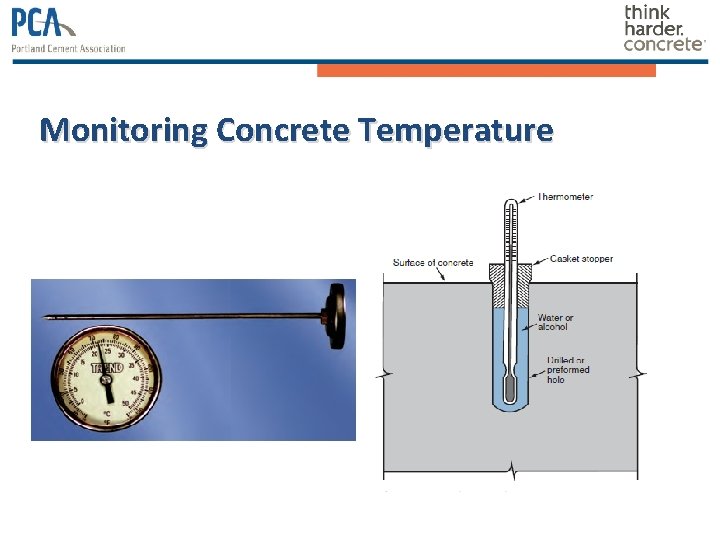
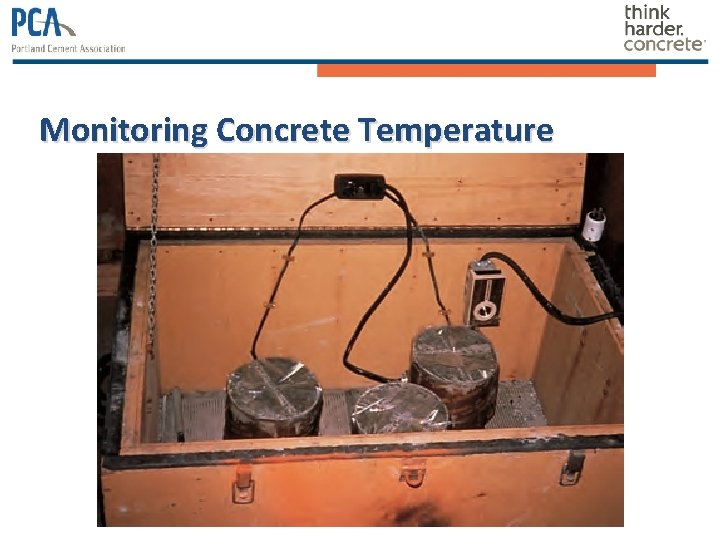
Monitoring Concrete Temperature
Monitoring Concrete Temperature
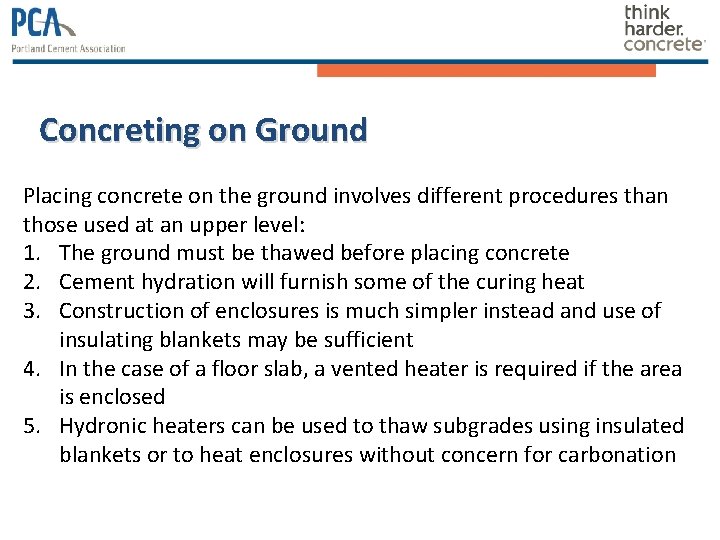
Concreting on Ground Placing concrete on the ground involves different procedures than those used at an upper level: 1. The ground must be thawed before placing concrete 2. Cement hydration will furnish some of the curing heat 3. Construction of enclosures is much simpler instead and use of insulating blankets may be sufficient 4. In the case of a floor slab, a vented heater is required if the area is enclosed 5. Hydronic heaters can be used to thaw subgrades using insulated blankets or to heat enclosures without concern for carbonation
Concreting on Ground When the subgrade is frozen to a depth of approximately 80 mm (3 inches), the surface region can be thawed by: 1. Steaming 2. Spreading a layer of hot sand, gravel, or other granular material where the grade elevations allow it 3. Removing and replacing with unfrozen fill 4. Covering the subgrade with insulation for a few days 5. Using hydronic heaters under insulated blankets
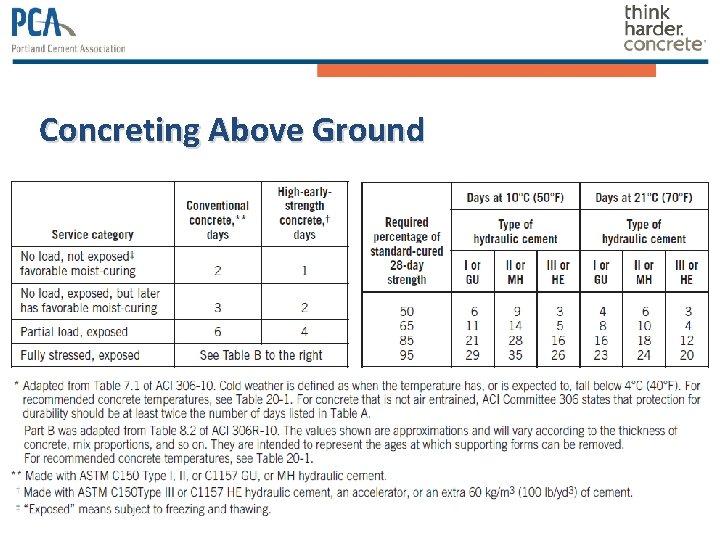
Concreting Above Ground
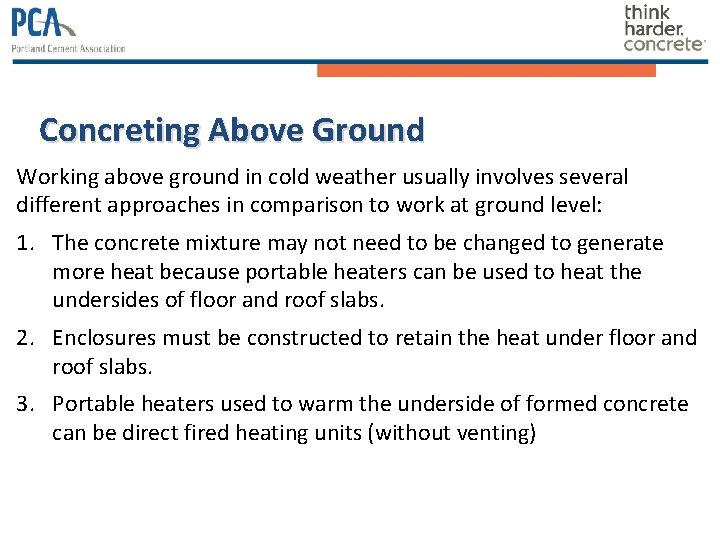
Concreting Above Ground Working above ground in cold weather usually involves several different approaches in comparison to work at ground level: 1. The concrete mixture may not need to be changed to generate more heat because portable heaters can be used to heat the undersides of floor and roof slabs. 2. Enclosures must be constructed to retain the heat under floor and roof slabs. 3. Portable heaters used to warm the underside of formed concrete can be direct fired heating units (without venting)
Enclosures
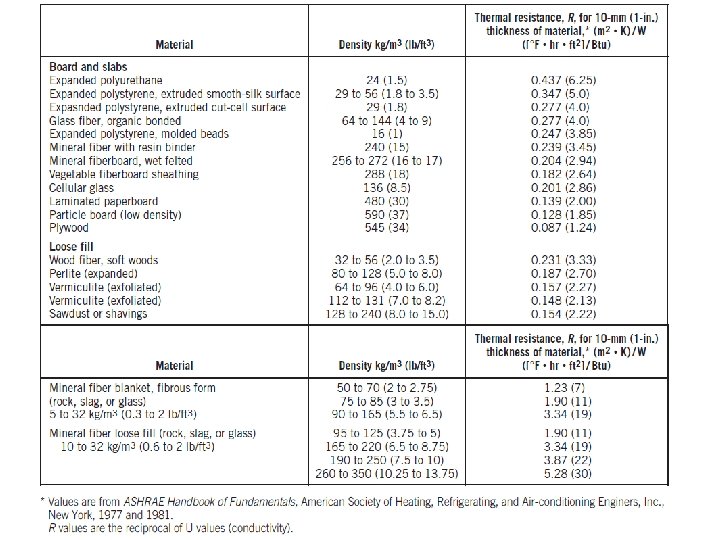
Insulating Material
Insulating Concrete Forms
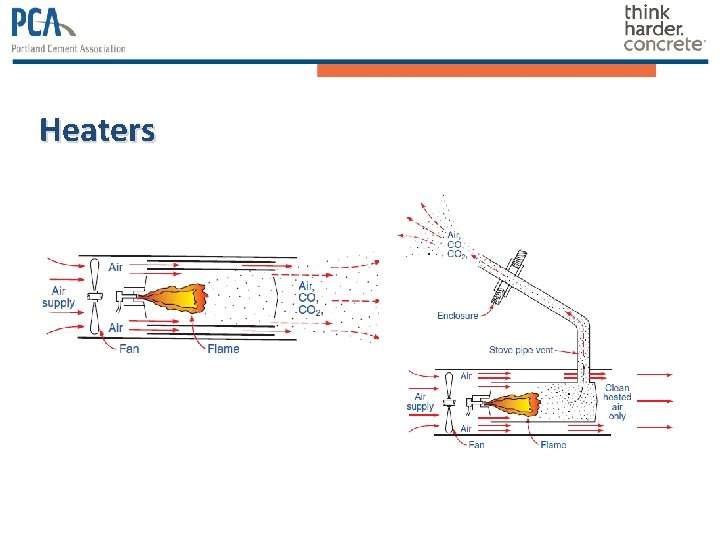
Heaters
Heaters
Hydronic Systems
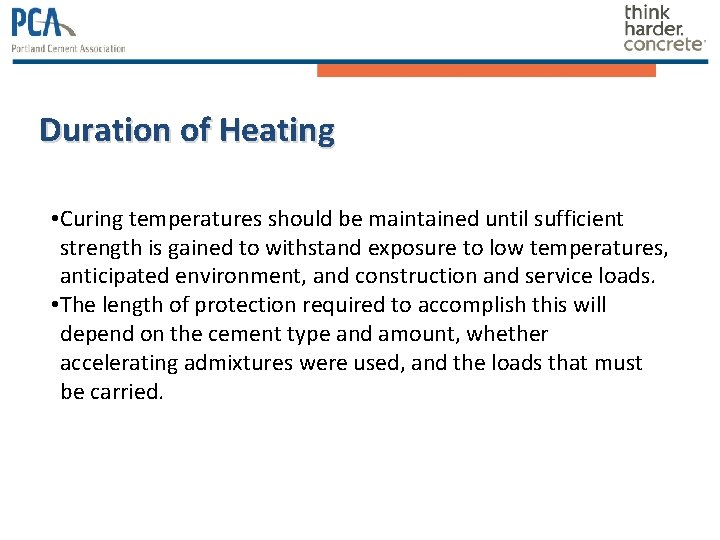
Duration of Heating • Curing temperatures should be maintained until sufficient strength is gained to withstand exposure to low temperatures, anticipated environment, and construction and service loads. • The length of protection required to accomplish this will depend on the cement type and amount, whether accelerating admixtures were used, and the loads that must be carried.
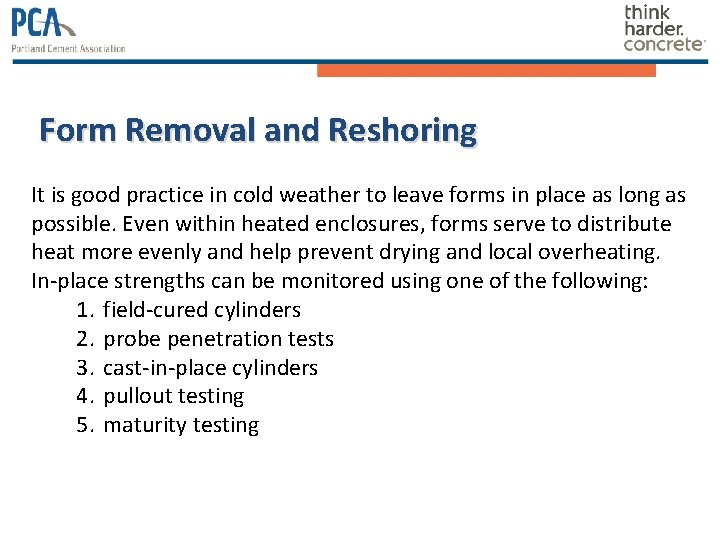
Form Removal and Reshoring It is good practice in cold weather to leave forms in place as long as possible. Even within heated enclosures, forms serve to distribute heat more evenly and help prevent drying and local overheating. In-place strengths can be monitored using one of the following: 1. field-cured cylinders 2. probe penetration tests 3. cast-in-place cylinders 4. pullout testing 5. maturity testing
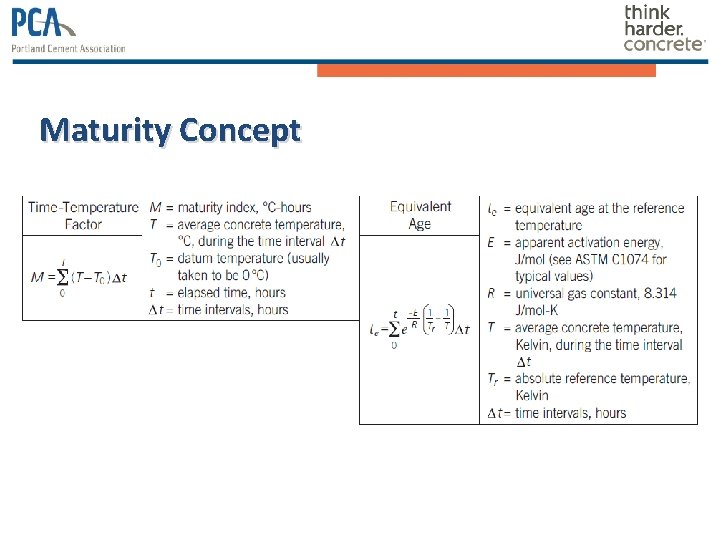
Maturity Concept
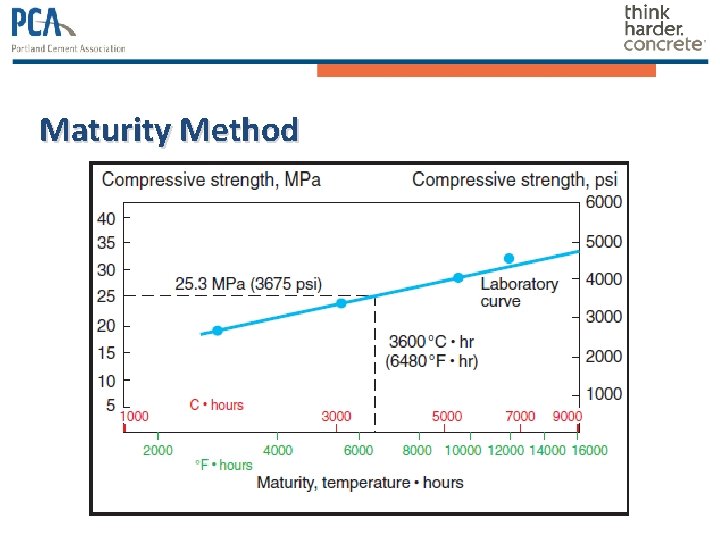
Maturity Method
Maturity Method
Questions ?