
Cold Water Immersion SAR Planning Arthur Allen U
- Slides: 32
Cold Water Immersion & SAR Planning • Arthur Allen • U. S. Coast Guard • Office of Search and Rescue • Groton, CT • 860 -441 -2747 • Arthur. A. Allen@uscg. mil
Outline 1. First, some Grim Statistics 2. Four Stages of Cold Water Immersion – – Cold Shock Cold Incapacitation Hypothermia Circum-Rescue Collapse
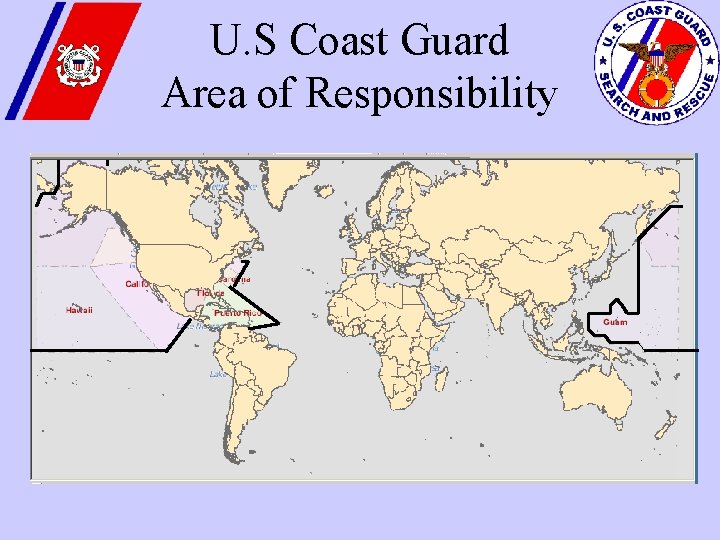
U. S Coast Guard Area of Responsibility
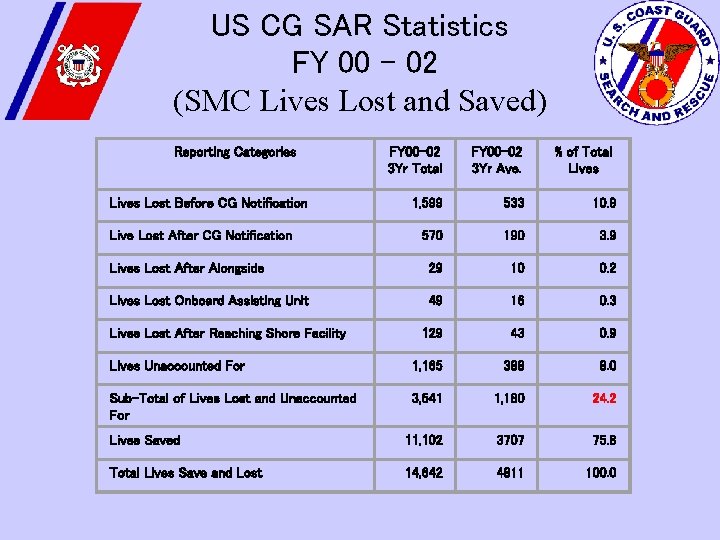
US CG SAR Statistics FY 00 – 02 (SMC Lives Lost and Saved) Reporting Categories FY 00 -02 3 Yr Total FY 00 -02 3 Yr Ave. 1, 599 533 10. 9 570 190 3. 9 Lives Lost After Alongside 29 10 0. 2 Lives Lost Onboard Assisting Unit 49 16 0. 3 129 43 0. 9 Lives Unaccounted For 1, 165 388 8. 0 Sub-Total of Lives Lost and Unaccounted For 3, 541 1, 180 24. 2 Lives Saved 11, 102 3707 75. 8 Total Lives Save and Lost 14, 642 4811 100. 0 Lives Lost Before CG Notification Live Lost After CG Notification Lives Lost After Reaching Shore Facility % of Total Lives
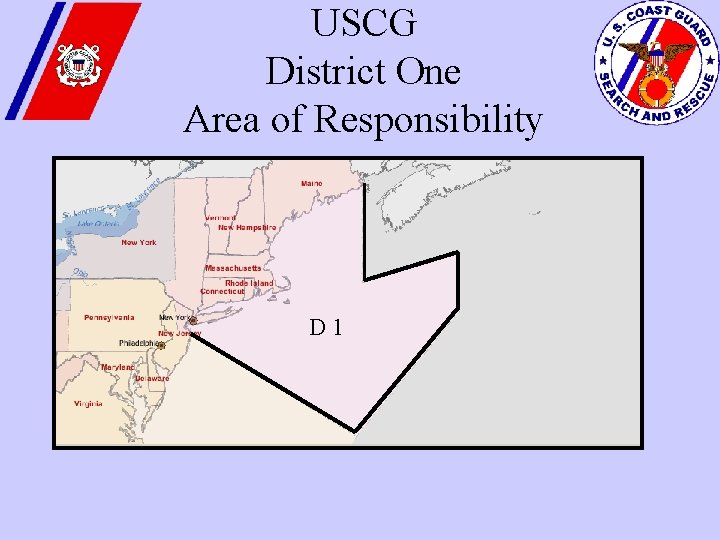
USCG District One Area of Responsibility D 1
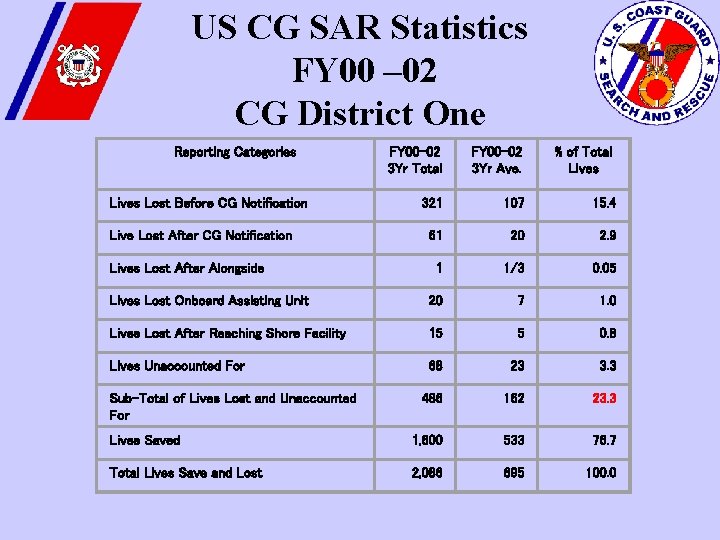
US CG SAR Statistics FY 00 – 02 CG District One Reporting Categories FY 00 -02 3 Yr Total FY 00 -02 3 Yr Ave. 321 107 15. 4 61 20 2. 9 1 1/3 0. 05 Lives Lost Onboard Assisting Unit 20 7 1. 0 Lives Lost After Reaching Shore Facility 15 5 0. 8 Lives Unaccounted For 68 23 3. 3 486 162 23. 3 Lives Saved 1, 600 533 76. 7 Total Lives Save and Lost 2, 086 695 100. 0 Lives Lost Before CG Notification Live Lost After CG Notification Lives Lost After Alongside Sub-Total of Lives Lost and Unaccounted For % of Total Lives
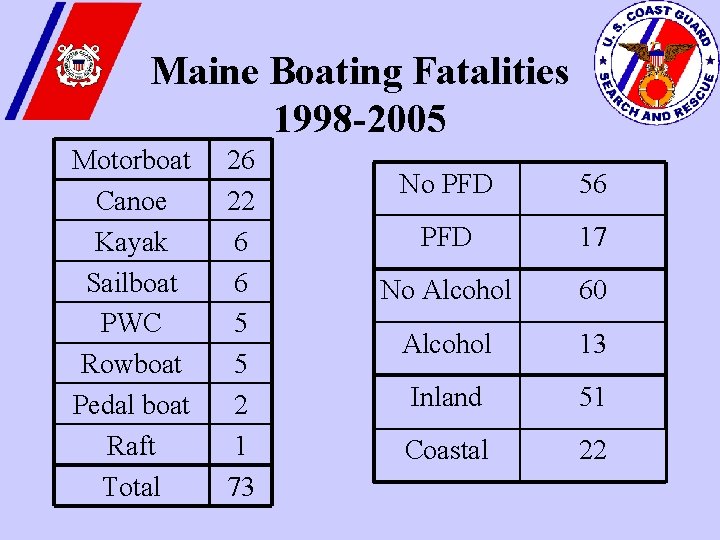
Maine Boating Fatalities 1998 -2005 Motorboat Canoe Kayak Sailboat PWC Rowboat Pedal boat Raft Total 26 22 6 6 5 5 2 1 73 No PFD 56 PFD 17 No Alcohol 60 Alcohol 13 Inland 51 Coastal 22
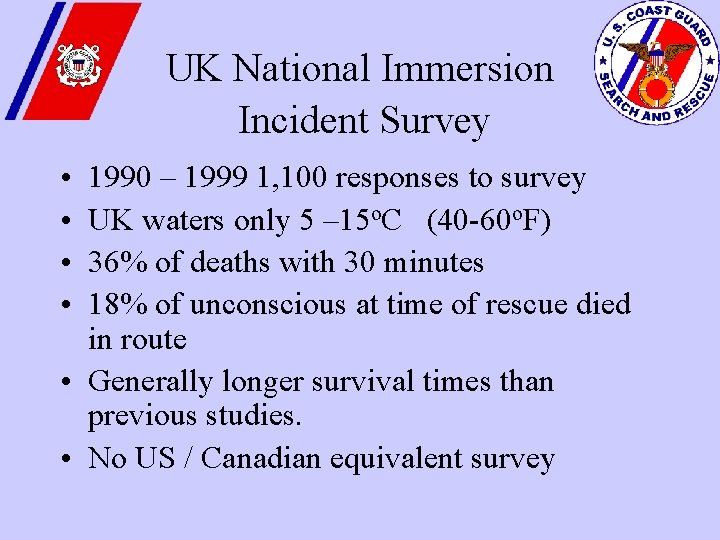
UK National Immersion Incident Survey • • 1990 – 1999 1, 100 responses to survey UK waters only 5 – 15 o. C (40 -60 o. F) 36% of deaths with 30 minutes 18% of unconscious at time of rescue died in route • Generally longer survival times than previous studies. • No US / Canadian equivalent survey
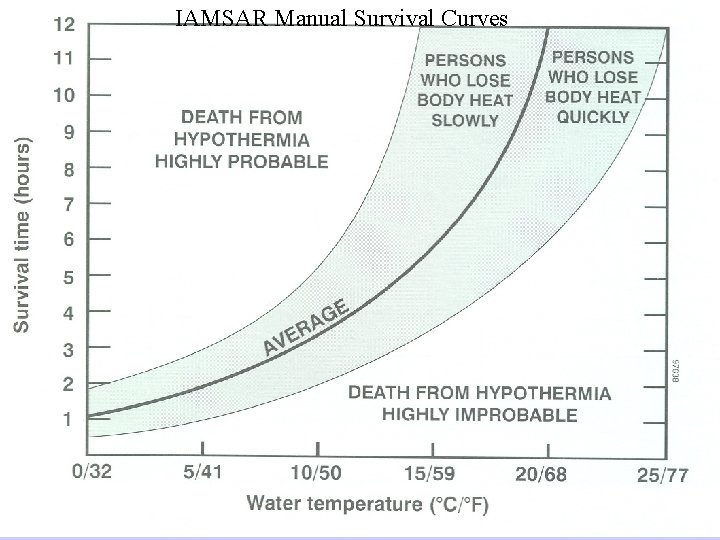
IAMSAR Manual Survival Curves
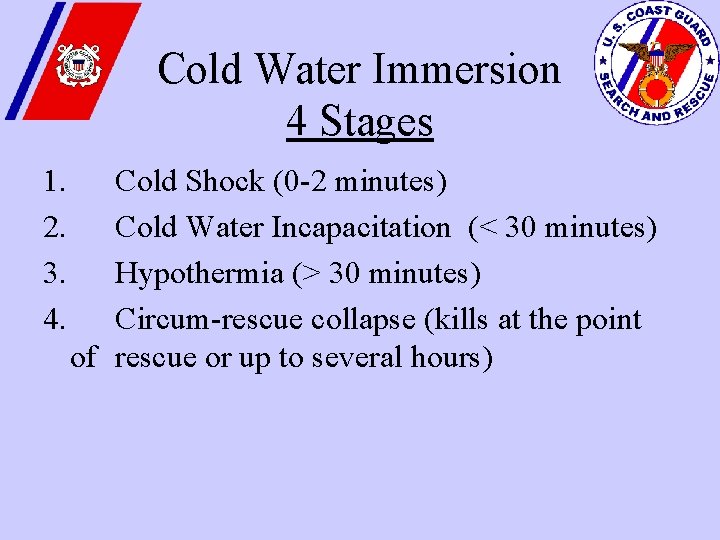
Cold Water Immersion 4 Stages 1. Cold Shock (0 -2 minutes) 2. Cold Water Incapacitation (< 30 minutes) 3. Hypothermia (> 30 minutes) 4. Circum-rescue collapse (kills at the point of rescue or up to several hours)
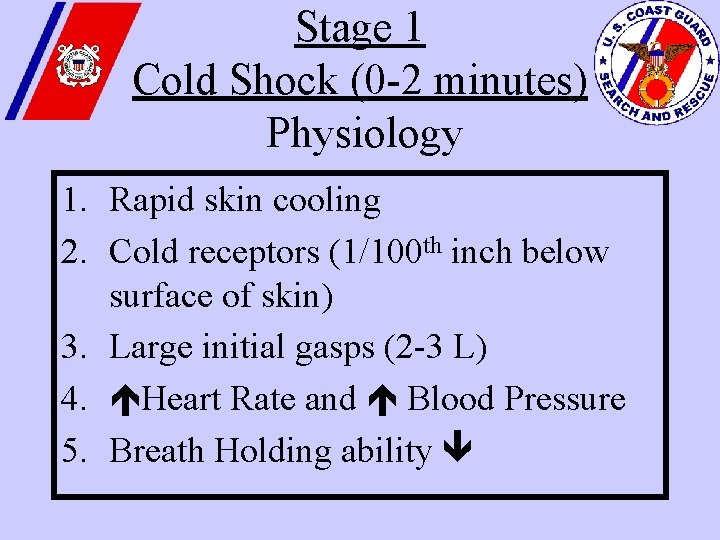
Stage 1 Cold Shock (0 -2 minutes) Physiology 1. Rapid skin cooling 2. Cold receptors (1/100 th inch below surface of skin) 3. Large initial gasps (2 -3 L) 4. Heart Rate and Blood Pressure 5. Breath Holding ability
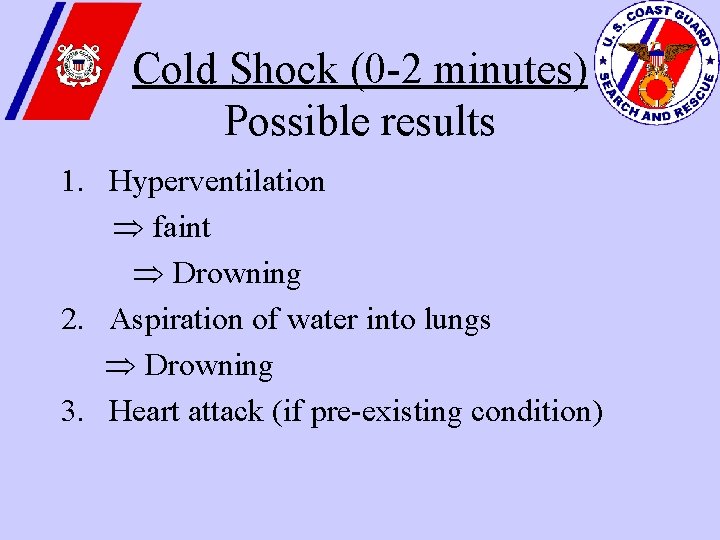
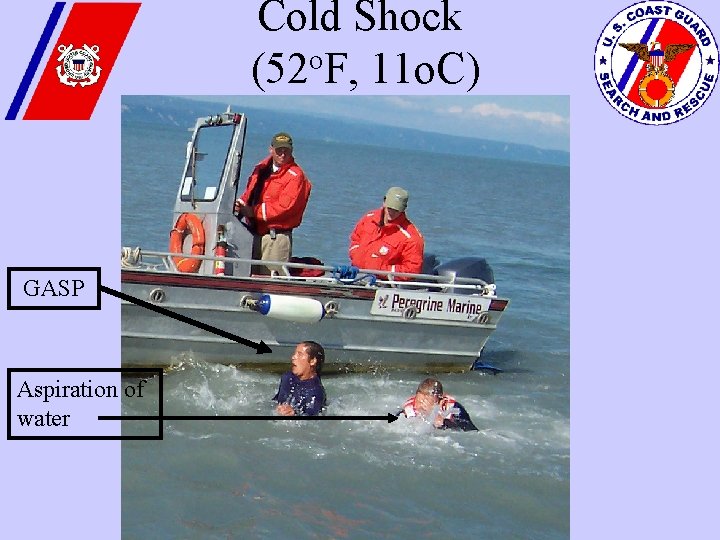
Cold Shock (0 -2 minutes) Possible results 1. Hyperventilation faint Drowning 2. Aspiration of water into lungs Drowning 3. Heart attack (if pre-existing condition)
Cold Shock (52 o. F, 11 o. C) GASP Aspiration of water
“Drowning is the process of experiencing respiratory impairment from submersion / immersion in liquid. ” 2002 World Congress on Drowning
Drowning Doesn’t take much! 1. Aspiration of water into the lungs 2. Lethal amounts 1. Sea water: 22 m. L/kg (0. 035 oz/lb) • 1. 5 L for 70 Kg or 1. 6 qt for 155 pounds 2. Fresh Water 44 m. L/kg (0. 070 oz/lb) • 3 L for 70 Kg or 3. 2 qt for 155 pounds 3. Treatment: O 2 & go to hospital
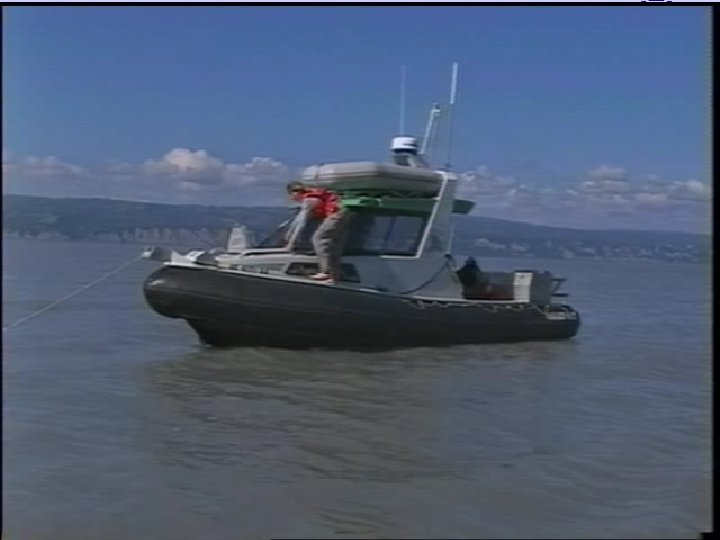
Cold Water Immersion Video 1. USCG, Canadian CG, U. Manitoba, AK of Boating Safety 2. Two film crews & safety crews 3. Homer, Alaska, August 2005 4. Collect video on Cold Water Immersion for various projects 5. Here is Cold Shock in 52 o. F water
Cold Water Immersion Video
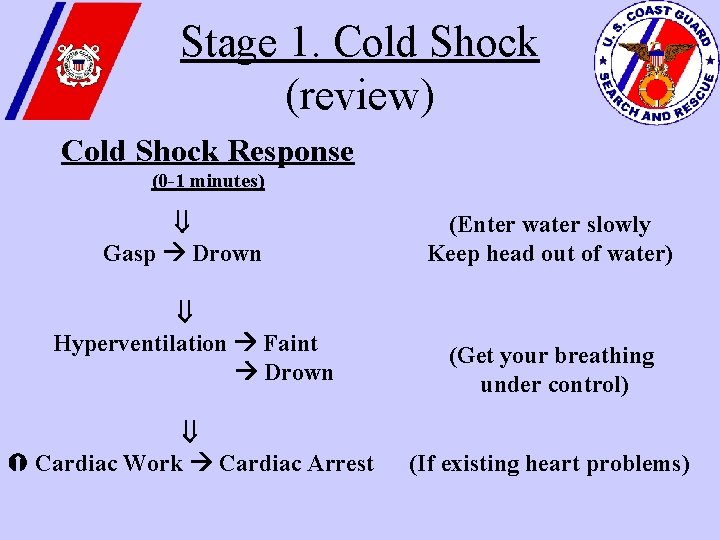
Stage 1. Cold Shock (review) Cold Shock Response (0 -1 minutes) Gasp Drown (Enter water slowly Keep head out of water) Hyperventilation Faint Drown (Get your breathing under control) Cardiac Work Cardiac Arrest (If existing heart problems)
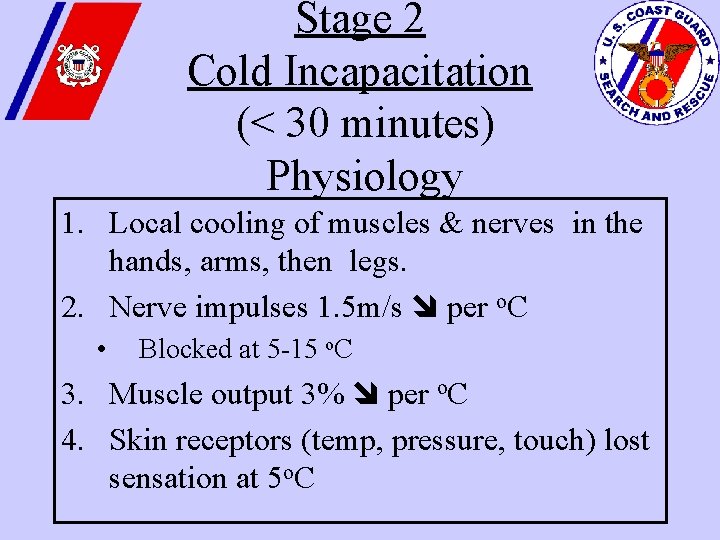
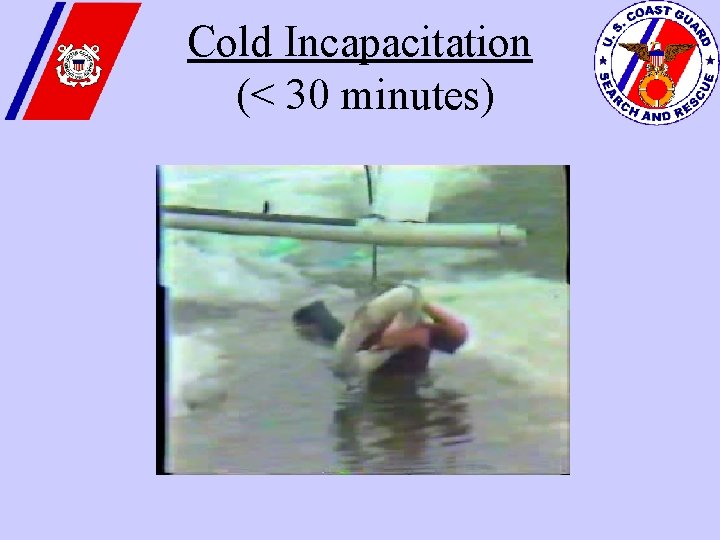
Stage 2 Cold Incapacitation (< 30 minutes) Physiology 1. Local cooling of muscles & nerves in the hands, arms, then legs. 2. Nerve impulses 1. 5 m/s per o. C • Blocked at 5 -15 o. C 3. Muscle output 3% per o. C 4. Skin receptors (temp, pressure, touch) lost sensation at 5 o. C
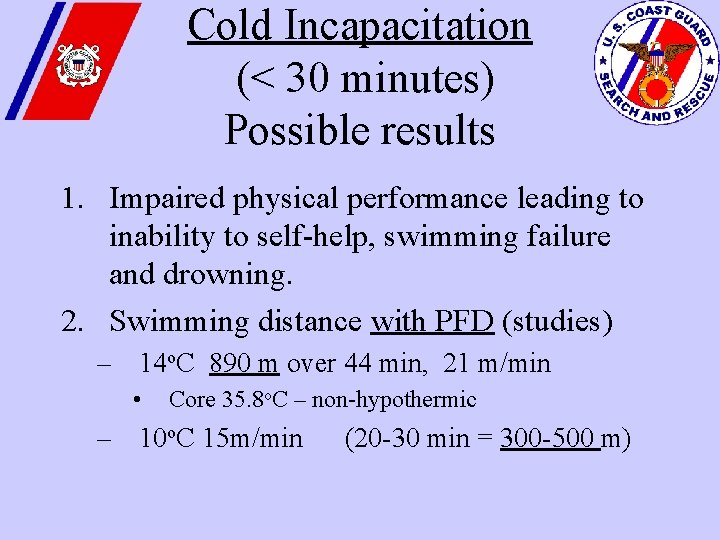
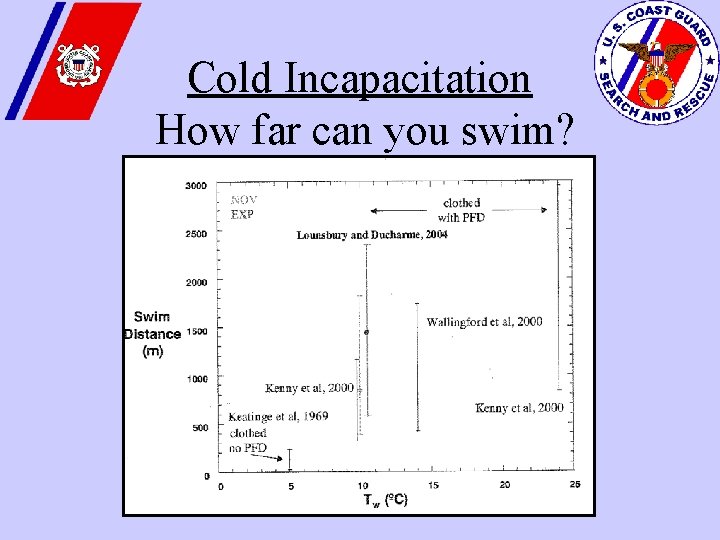
Cold Incapacitation (< 30 minutes) Possible results 1. Impaired physical performance leading to inability to self-help, swimming failure and drowning. 2. Swimming distance with PFD (studies) – 14 o. C 890 m over 44 min, 21 m/min • Core 35. 8 o. C – non-hypothermic – 10 o. C 15 m/min (20 -30 min = 300 -500 m)
Cold Incapacitation How far can you swim?
Cold Incapacitation (< 30 minutes)
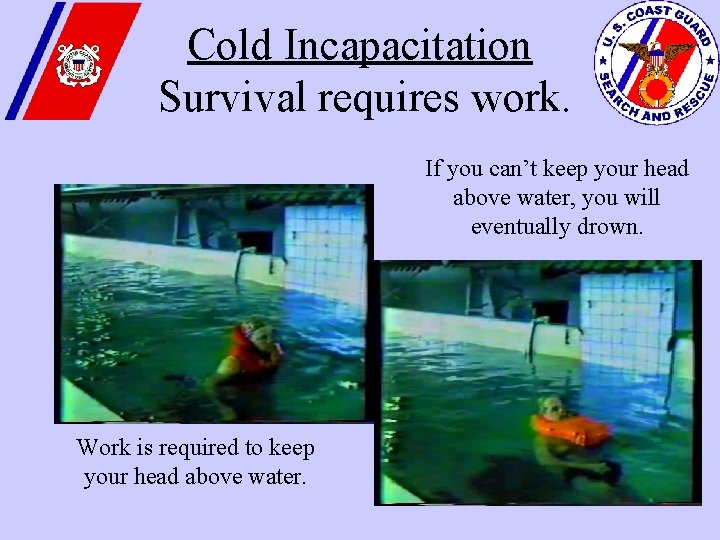
Cold Incapacitation Survival requires work. If you can’t keep your head above water, you will eventually drown. Work is required to keep your head above water.
Stage 2. Cold Incapacitation (Review) Local Cooling Decreases Performance Or Functional Disability (2 - 30 minutes) • If you can’t get out in 5 -15 minutes, you might not get out on your own power! • If so, prepare to survive. • Widen window of opportunity for rescue. • Thrashing around will - increase heat loss - cause exhaustion (Drowning)
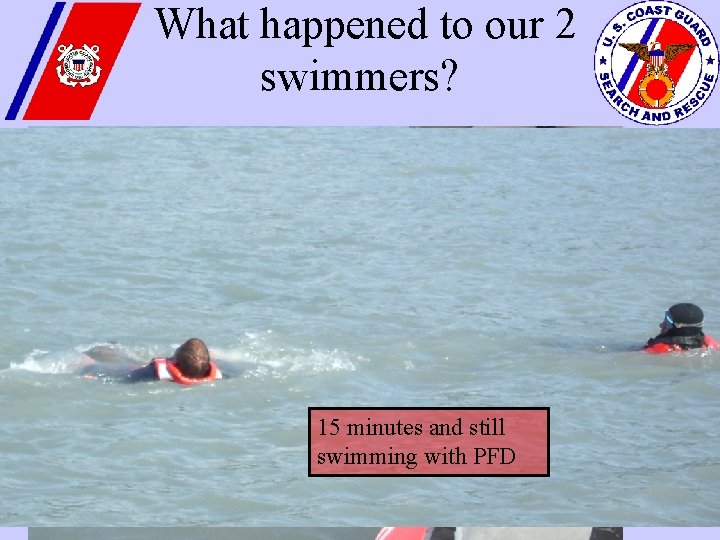
What happened to our 2 swimmers? 1 -4 minutes of Swimming 4: 20 Swimming Failure without 1 minute to recover from 15 minutes and still PFD / Rescued Cold Shock swimming with PFD Started swimming
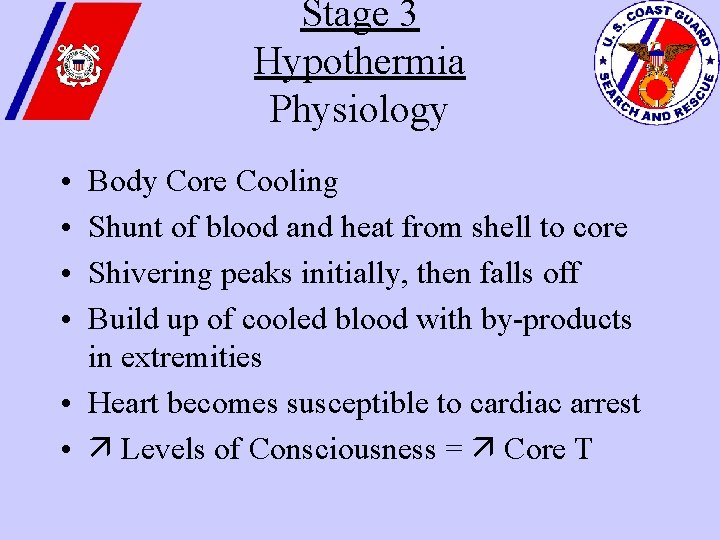
Stage 3 Hypothermia Physiology • • Body Core Cooling Shunt of blood and heat from shell to core Shivering peaks initially, then falls off Build up of cooled blood with by-products in extremities • Heart becomes susceptible to cardiac arrest • Levels of Consciousness = Core T
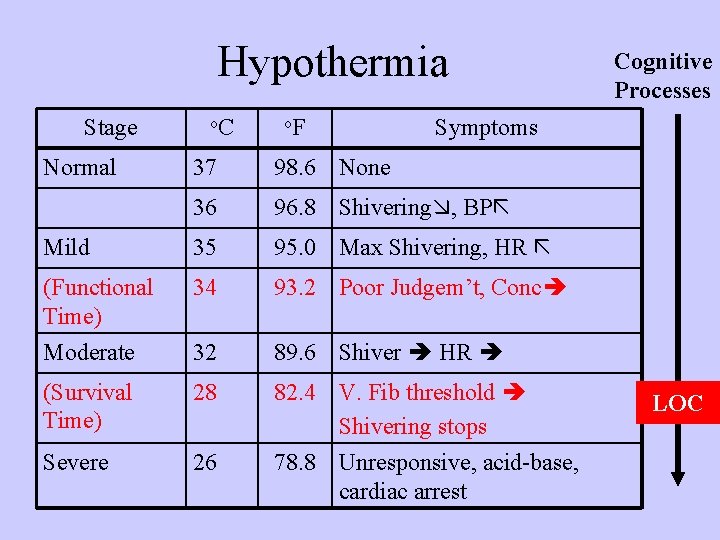
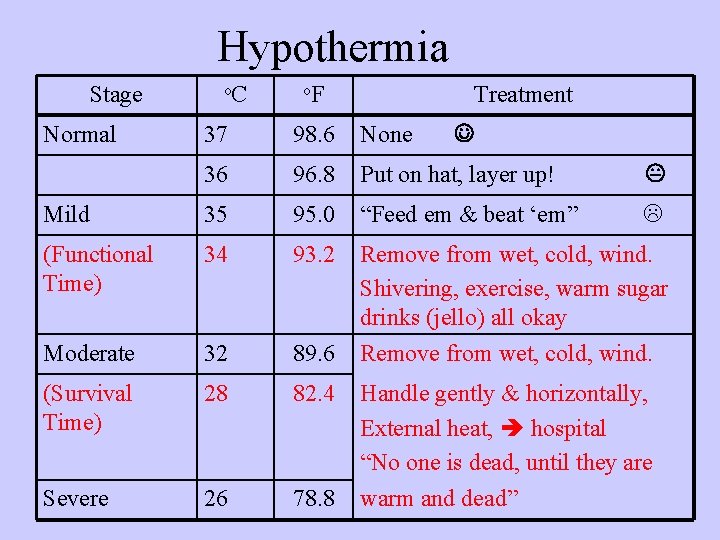
Hypothermia Stage Normal o. C o. F Cognitive Processes Symptoms 37 98. 6 None 36 96. 8 Shivering , BP Mild 35 95. 0 Max Shivering, HR (Functional Time) 34 93. 2 Poor Judgem’t, Conc Moderate 32 89. 6 Shiver HR (Survival Time) 28 82. 4 V. Fib threshold Shivering stops Severe 26 78. 8 Unresponsive, acid-base, cardiac arrest LOC
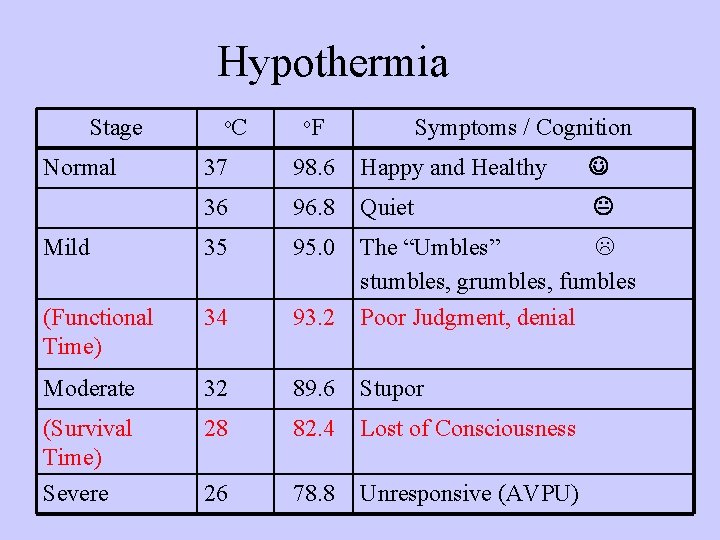
Hypothermia Stage Normal o. C o. F Symptoms / Cognition 37 98. 6 Happy and Healthy 36 96. 8 Quiet Mild 35 95. 0 (Functional Time) 34 93. 2 The “Umbles” stumbles, grumbles, fumbles Poor Judgment, denial Moderate 32 89. 6 Stupor (Survival Time) 28 82. 4 Lost of Consciousness Severe 26 78. 8 Unresponsive (AVPU)
Hypothermia Stage Normal o. C o. F Treatment 37 98. 6 None 36 96. 8 Put on hat, layer up! Mild 35 95. 0 “Feed em & beat ‘em” (Functional Time) 34 93. 2 Moderate 32 89. 6 Remove from wet, cold, wind. Shivering, exercise, warm sugar drinks (jello) all okay Remove from wet, cold, wind. (Survival Time) 28 82. 4 Severe 26 78. 8 Handle gently & horizontally, External heat, hospital “No one is dead, until they are warm and dead”
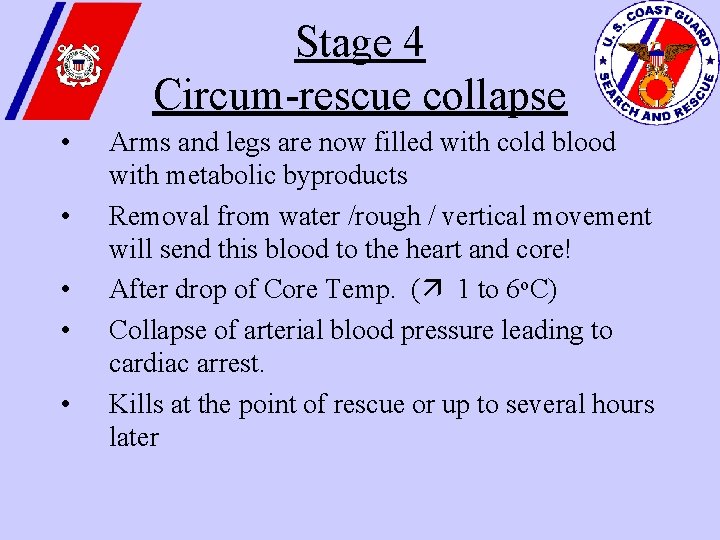
Stage 4 Circum-rescue collapse • • • Arms and legs are now filled with cold blood with metabolic byproducts Removal from water /rough / vertical movement will send this blood to the heart and core! After drop of Core Temp. ( 1 to 6 o. C) Collapse of arterial blood pressure leading to cardiac arrest. Kills at the point of rescue or up to several hours later
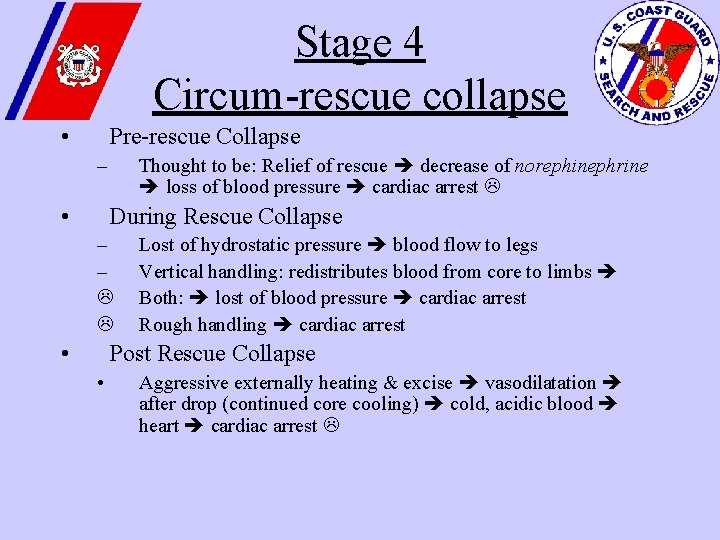
Stage 4 Circum-rescue collapse • Pre-rescue Collapse – • Thought to be: Relief of rescue decrease of norephinephrine loss of blood pressure cardiac arrest During Rescue Collapse – – • Lost of hydrostatic pressure blood flow to legs Vertical handling: redistributes blood from core to limbs Both: lost of blood pressure cardiac arrest Rough handling cardiac arrest Post Rescue Collapse • Aggressive externally heating & excise vasodilatation after drop (continued core cooling) cold, acidic blood heart cardiac arrest
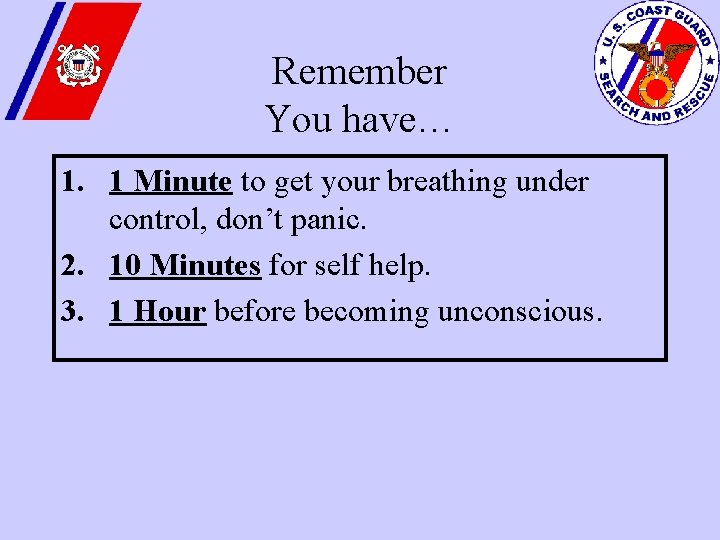
Remember You have… 1. 1 Minute to get your breathing under control, don’t panic. 2. 10 Minutes for self help. 3. 1 Hour before becoming unconscious.