
Cold War AP U S History Cold War
- Slides: 42
Cold War AP U. S. History
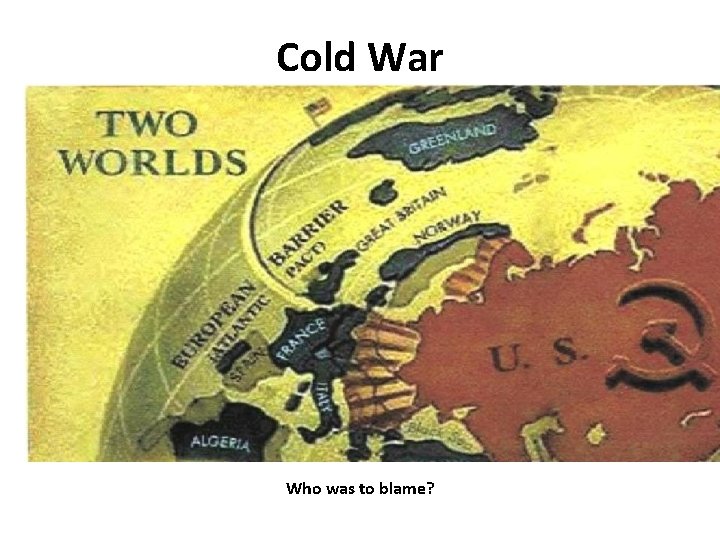
Cold War Who was to blame?
American Presidents • • • Harry S. Truman- (1945 -1953) Dwight D. Eisenhower- (1953 -1961) John F. Kennedy- (1961 - 1963) Lynden B. Johnson- (1963 -1969) Richard Nixon (1969 -1974)
Cold War (4: 17)
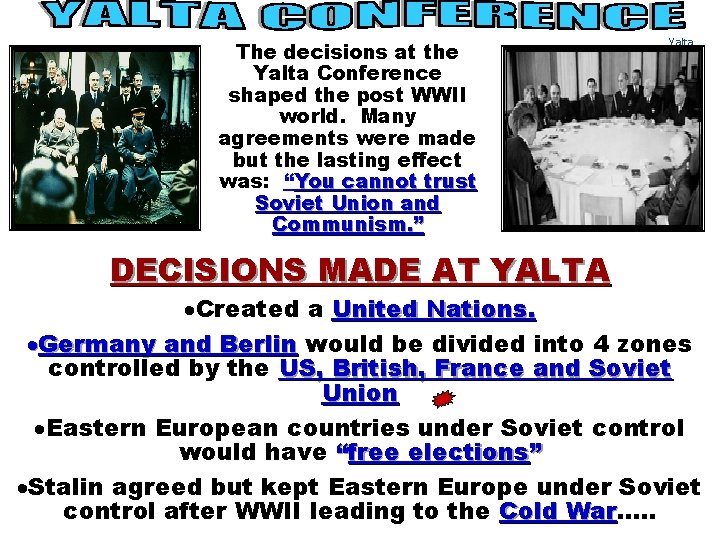
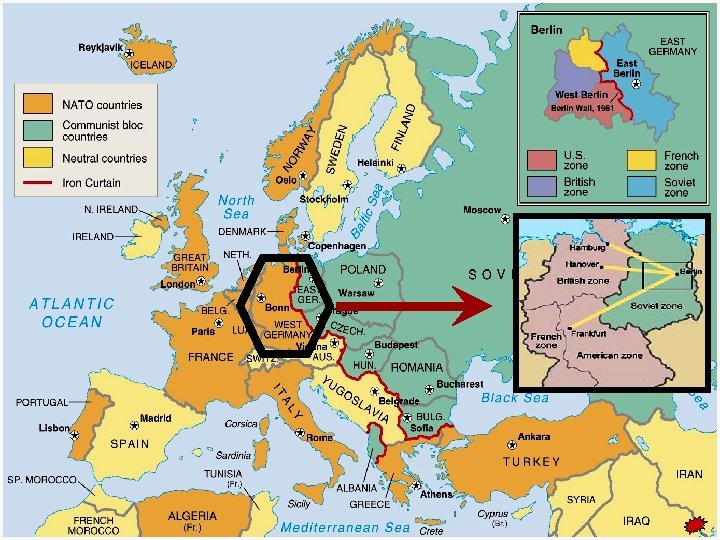
The decisions at the Yalta Conference shaped the post WWII world. Many agreements were made but the lasting effect was: “You cannot trust Soviet Union and Communism. ” DECISIONS MADE AT YALTA Yalta ·Created a United Nations. ·Germany and Berlin would be divided into 4 zones controlled by the US, British, France and Soviet Union ·Eastern European countries under Soviet control would have “free elections” ·Stalin agreed but kept Eastern Europe under Soviet control after WWII leading to the Cold War…. . War
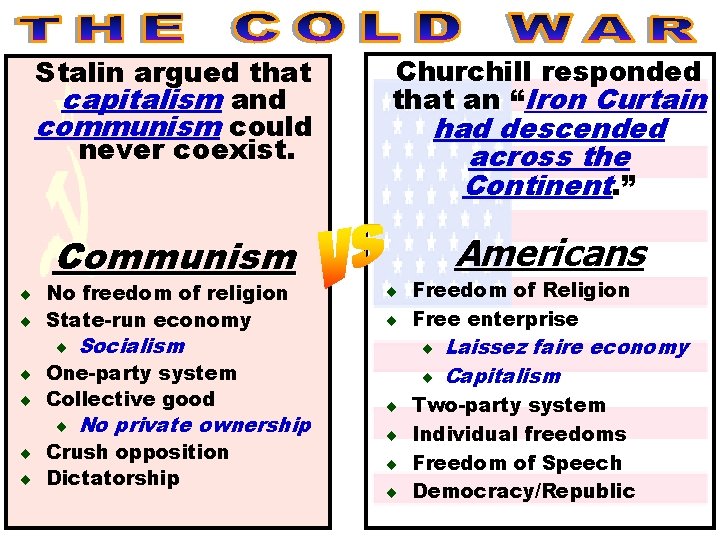
Stalin argued that capitalism and communism could never coexist. Churchill responded that an “Iron Curtain Communism Americans ¨ No freedom of religion ¨ State-run economy ¨ Socialism ¨ One-party system ¨ Collective good ¨ No private ownership ¨ Crush opposition ¨ Dictatorship had descended across the Continent. ” ¨ Freedom of Religion ¨ Free enterprise ¨ Laissez faire economy ¨ Capitalism ¨ Two-party system ¨ Individual freedoms ¨ Freedom of Speech ¨ Democracy/Republic
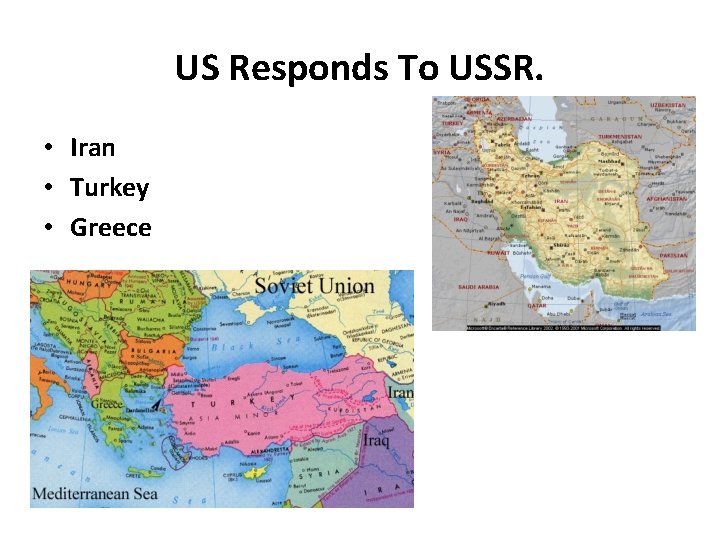
US Responds To USSR. • • • Iran Turkey Greece
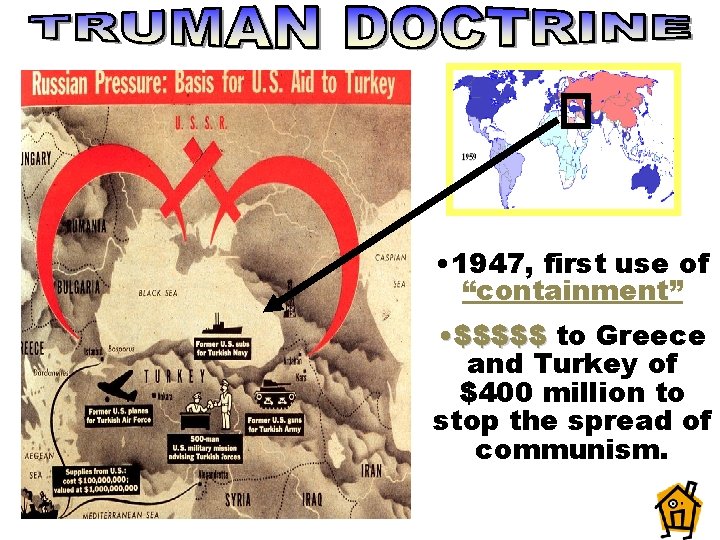
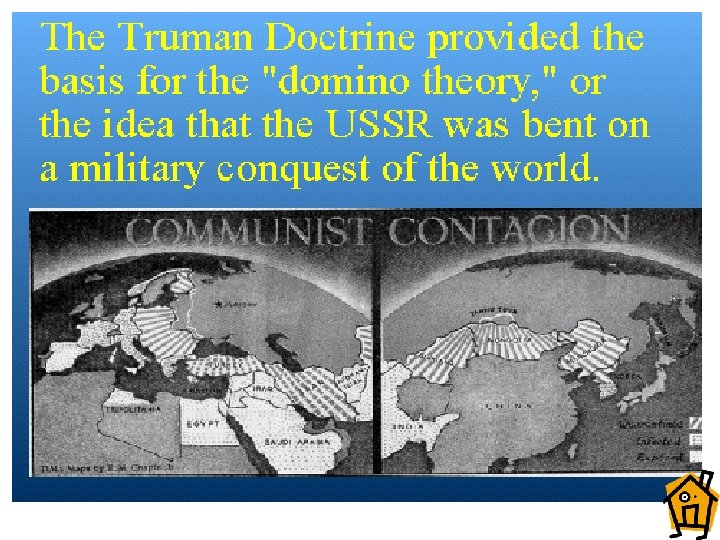
• 1947, first use of “containment” • $$$$$ to Greece and Turkey of $400 million to stop the spread of communism.
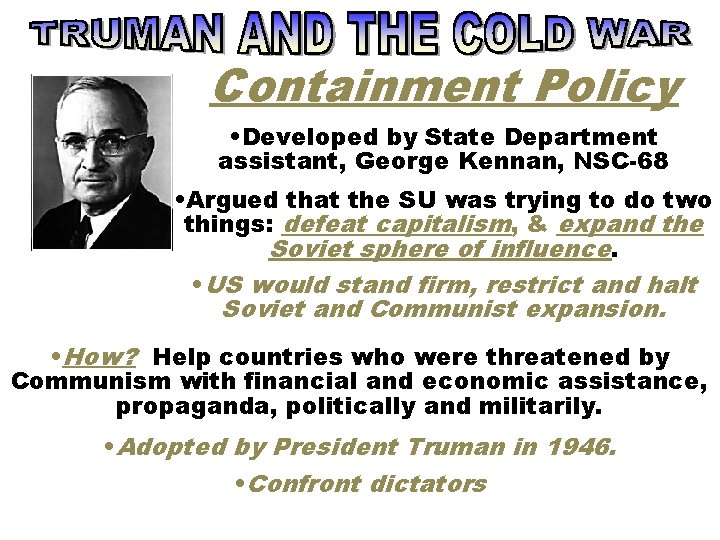
Containment Policy • Developed by State Department assistant, George Kennan, NSC-68 • Argued that the SU was trying to do two things: defeat capitalism, & expand the Soviet sphere of influence. • US would stand firm, restrict and halt Soviet and Communist expansion. • How? Help countries who were threatened by Communism with financial and economic assistance, propaganda, politically and militarily. • Adopted by President Truman in 1946. • Confront dictators
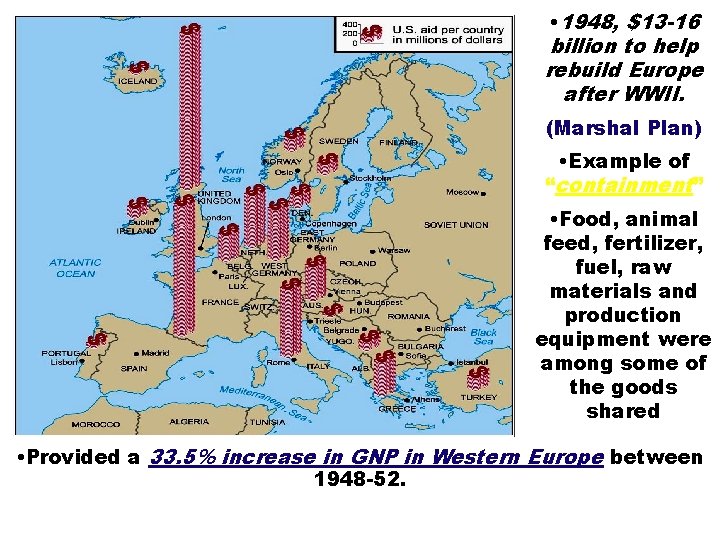
• 1948, $13 -16 billion to help rebuild Europe after WWII. (Marshal Plan) • Example of “containment” • Food, animal feed, fertilizer, fuel, raw materials and production equipment were among some of the goods shared • Provided a 33. 5% increase in GNP in Western Europe between 1948 -52.
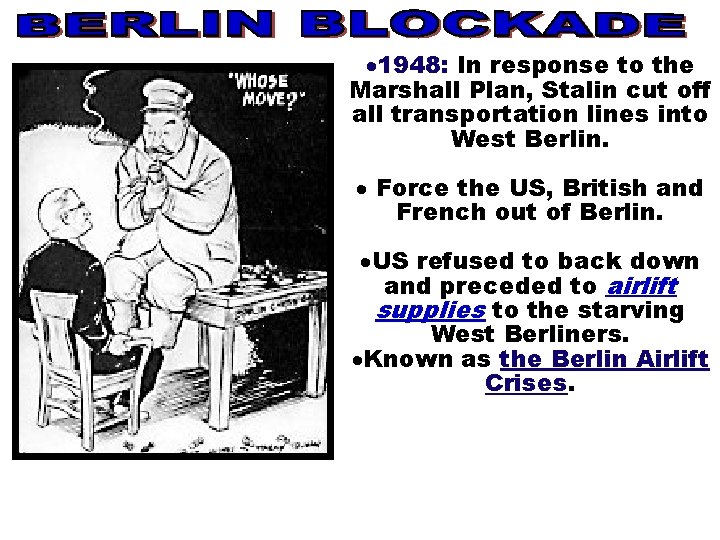
· 1948: In response to the Marshall Plan, Stalin cut off all transportation lines into West Berlin. · Force the US, British and French out of Berlin. ·US refused to back down and preceded to airlift supplies to the starving West Berliners. ·Known as the Berlin Airlift Crises.
Events of Soviet Tensions: • 1949: China & Atomic Bomb • 1950: North Korea invades S. Korea. • Stalin’s Death (1953) – Khrushchev (1956): “peaceful coexistence” • • Hungarian Revolt (1956) Suez Canal Crisis (1956 to 57) Sputnik (1957) Second Berlin Crisis (1958) – Khrushchev: “We will bury capitalism” • U-2 Incident (1960) • Cuban Missile Crises(1959)
1947 National Security Act üDepartment of Defense üNational Security Council (NSC) to advice the president on security matters üCentral Intelligence Agency (CIA) to coordinate the government’s foreign fact-gathering (spying? ). ü“Voice of America” a radio broadcast, began beaming in 1948 to the world proclaiming democracy. üCongress resurrected the military draft (Selective Service System)
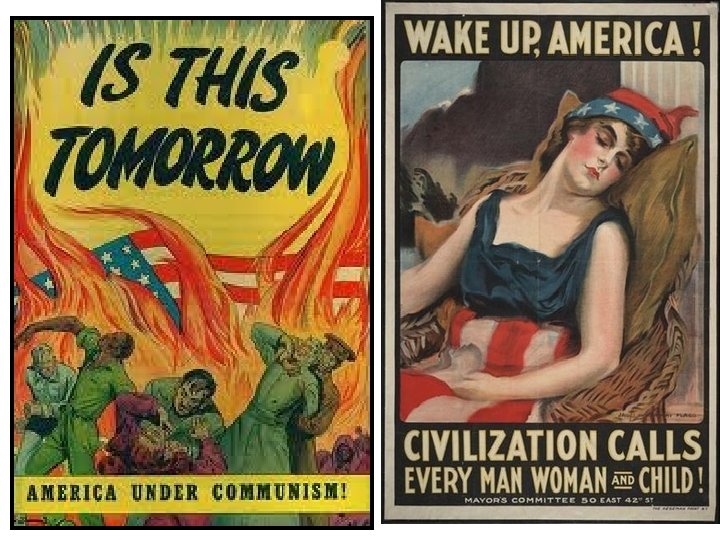
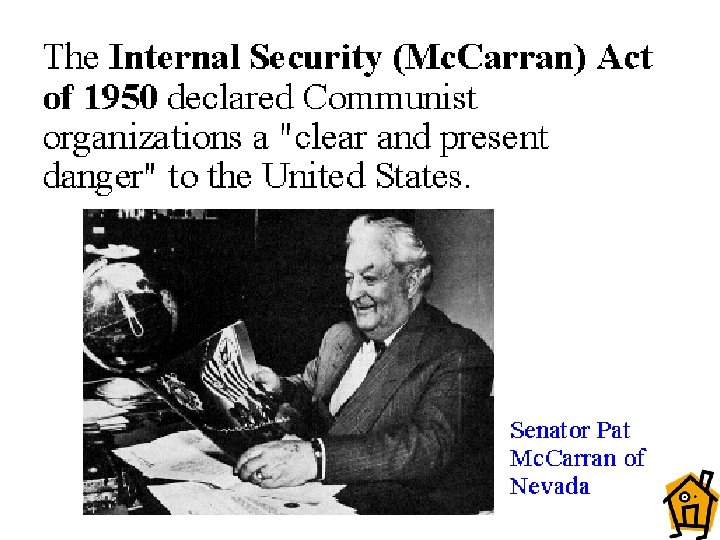
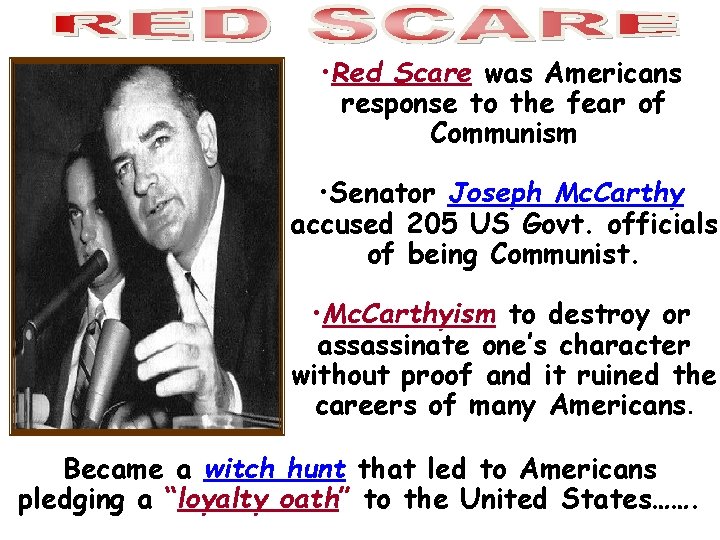
• Red Scare was Americans response to the fear of Communism • Senator Joseph Mc. Carthy accused 205 US Govt. officials of being Communist. • Mc. Carthyism to destroy or assassinate one’s character without proof and it ruined the careers of many Americans. Became a witch hunt that led to Americans pledging a “loyalty oath” oath to the United States…….
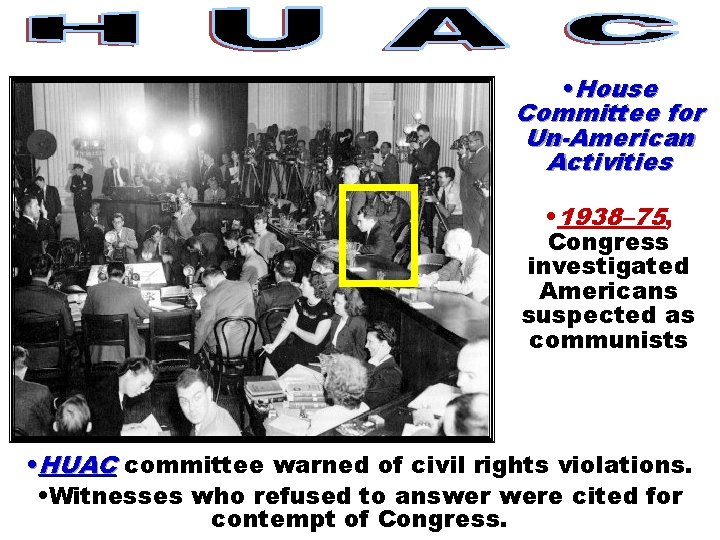
• House Committee for Un-American Activities • 1938– 75, Congress investigated Americans suspected as communists • HUAC committee warned of civil rights violations. • Witnesses who refused to answer were cited for contempt of Congress.
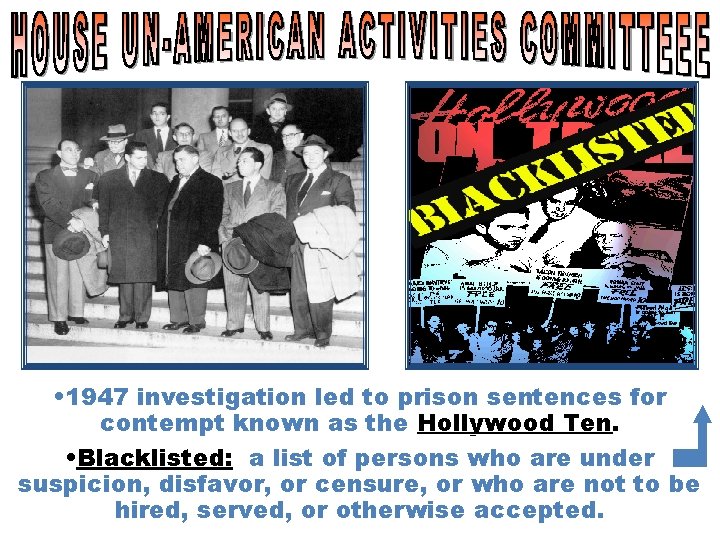
• 1947 investigation led to prison sentences for contempt known as the Hollywood Ten. • Blacklisted: a list of persons who are under suspicion, disfavor, or censure, or who are not to be hired, served, or otherwise accepted.
Bell Ringer • (2 min) Write the answer in your notes. – Should’ve America moved away from neutrality in foreign policies to prevent the spread of Communism? Explain – Did America create the growing threat of Soviet Union overcoming America’s democracy? Explain: • (2 min) find a partner and share your answer with them.
Today’s Objective: • SW take notes on the baby boom era and the rise of teen culture.
American Presidents • • • Harry S. Truman- (1945 -1953) Dwight D. Eisenhower- (1953 -1961) John F. Kennedy- (1961 - 1963) Lynden B. Johnson- (1963 -1969) Richard Nixon (1969 -1974)
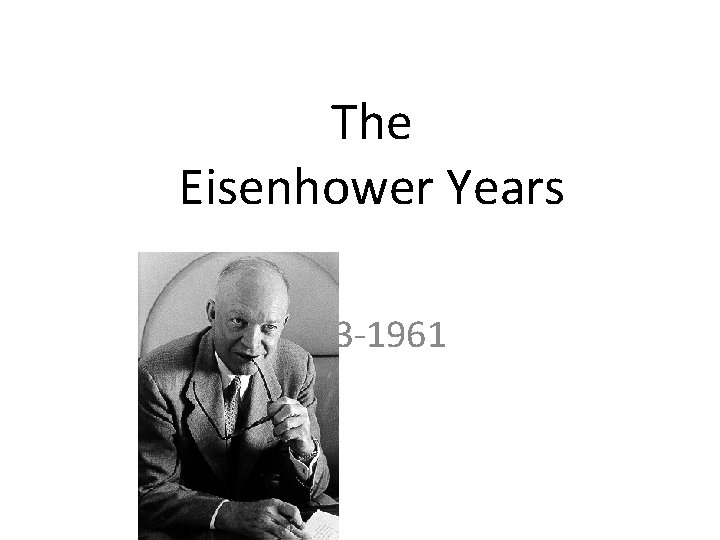
The Eisenhower Years 1953 -1961
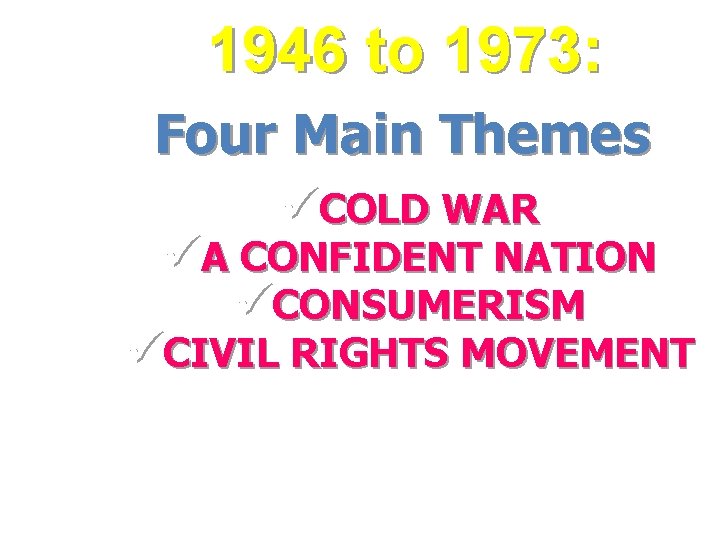
1946 to 1973: Four Main Themes üCOLD WAR üA CONFIDENT NATION üCONSUMERISM üCIVIL RIGHTS MOVEMENT
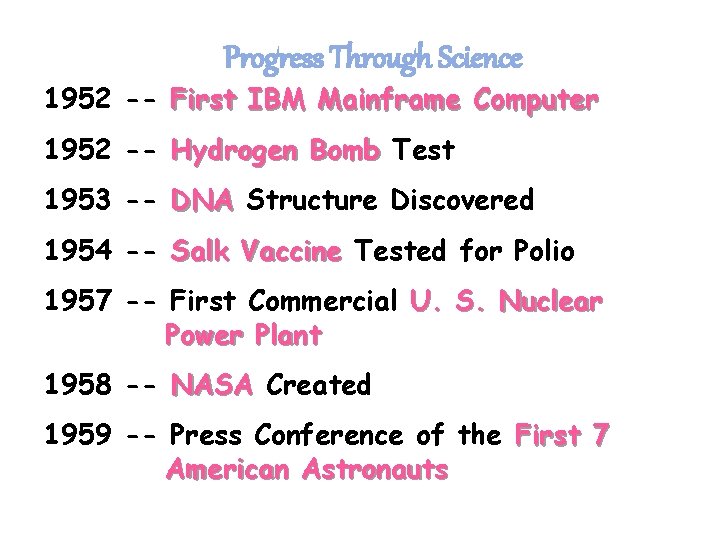
Progress Through Science 1952 -- First IBM Mainframe Computer 1952 -- Hydrogen Bomb Test 1953 -- DNA Structure Discovered 1954 -- Salk Vaccine Tested for Polio 1957 -- First Commercial U. S. Nuclear Power Plant 1958 -- NASA Created 1959 -- Press Conference of the First 7 American Astronauts
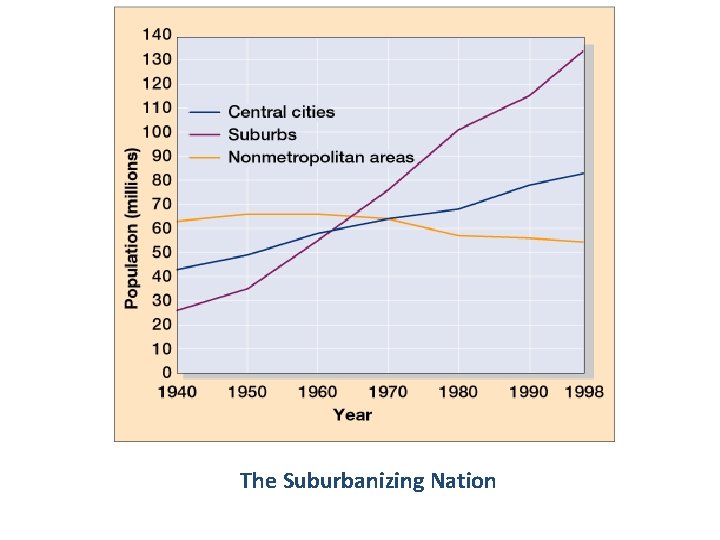
The Suburbanizing Nation
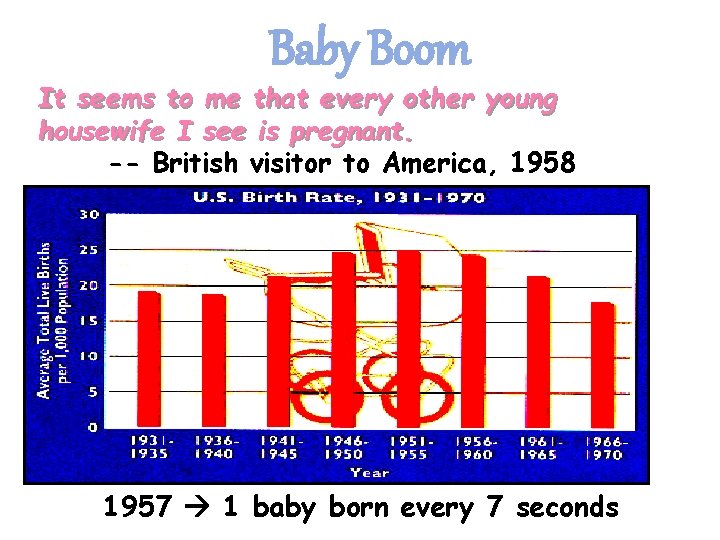
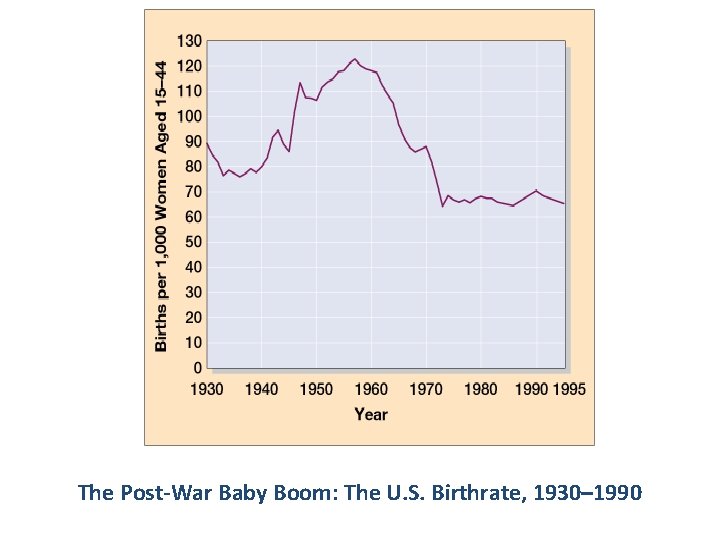
Baby Boom It seems to me that every other young housewife I see is pregnant. -- British visitor to America, 1958 1957 1 baby born every 7 seconds
The Post-War Baby Boom: The U. S. Birthrate, 1930– 1990
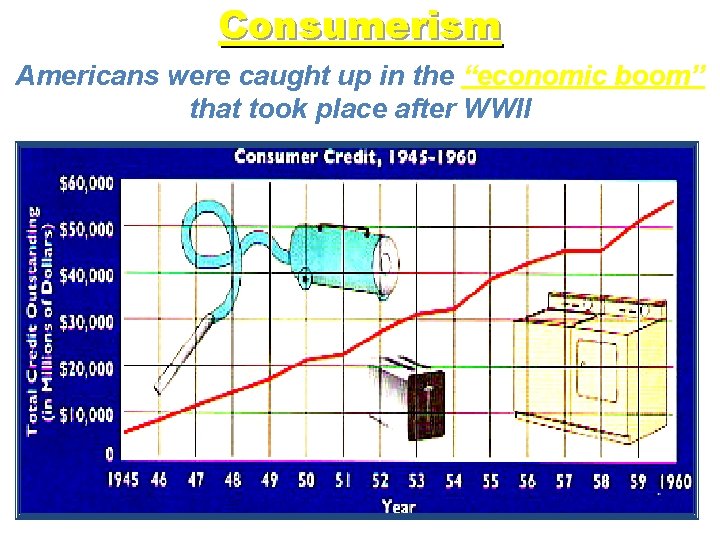
Consumerism Americans were caught up in the “economic boom” that took place after WWII
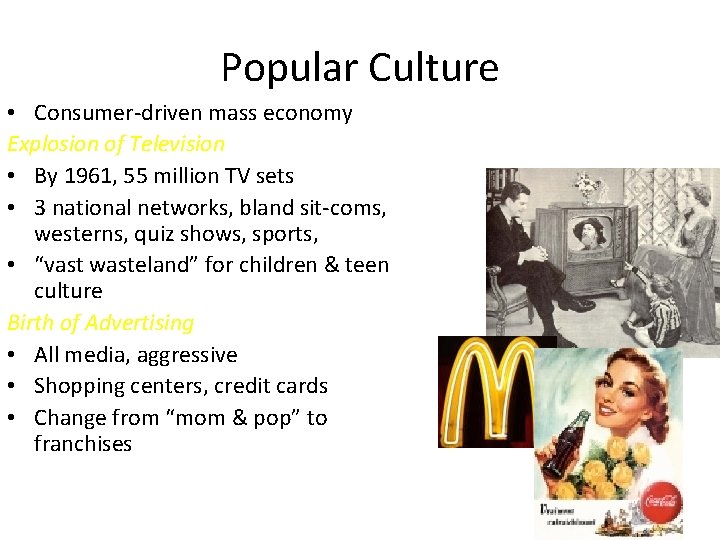
Popular Culture • Consumer-driven mass economy Explosion of Television • By 1961, 55 million TV sets • 3 national networks, bland sit-coms, westerns, quiz shows, sports, • “vast wasteland” for children & teen culture Birth of Advertising • All media, aggressive • Shopping centers, credit cards • Change from “mom & pop” to franchises
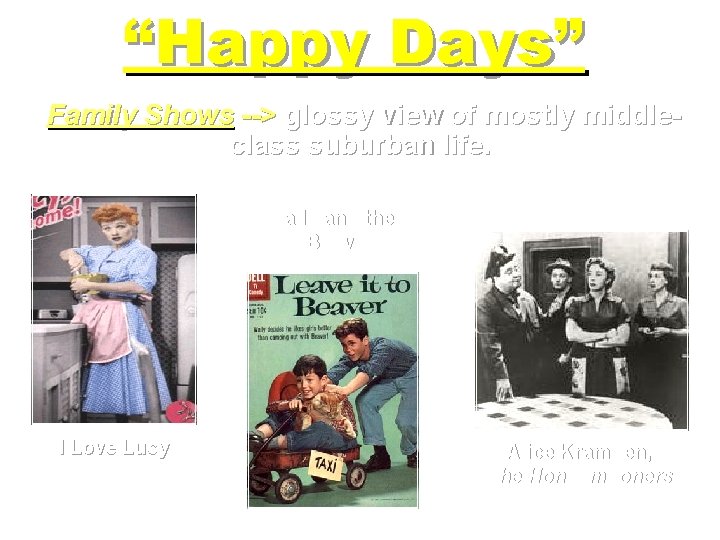
“Happy Days” Family Shows --> glossy view of mostly middleclass suburban life. Wally and the Beav I Love Lucy Alice Kramden, The Honeymooners
Video on the Birth of TV
Video questions: • How did the invention and increase of televisions change American culture? • What is the new form of American entertainment today (Other than T. V, )? How has it changed America?
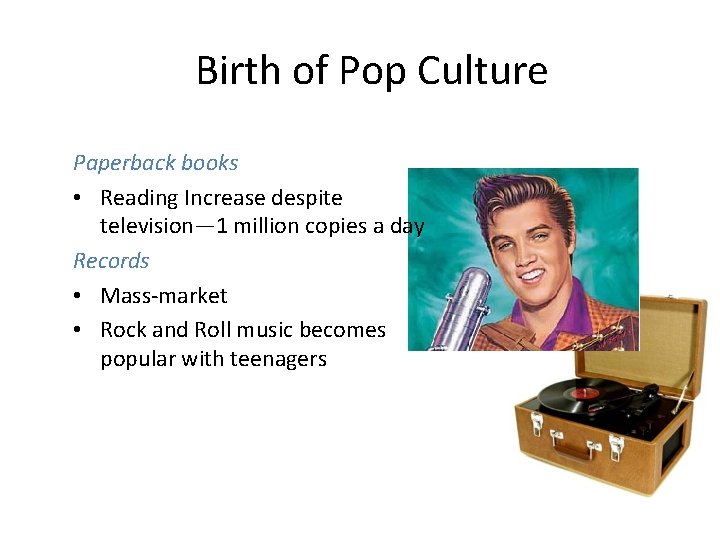
Birth of Pop Culture Paperback books • Reading Increase despite television— 1 million copies a day Records • Mass-market • Rock and Roll music becomes popular with teenagers
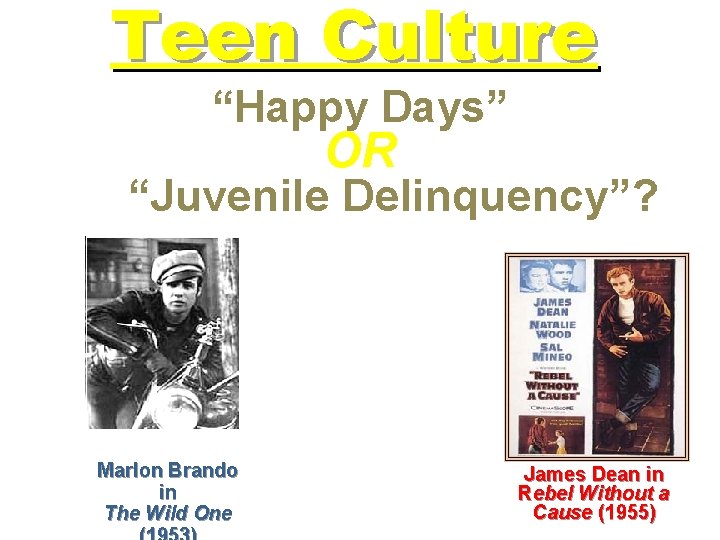
Teen Culture “Happy Days” OR “Juvenile Delinquency”? Marlon Brando in The Wild One James Dean in Rebel Without a Cause (1955)
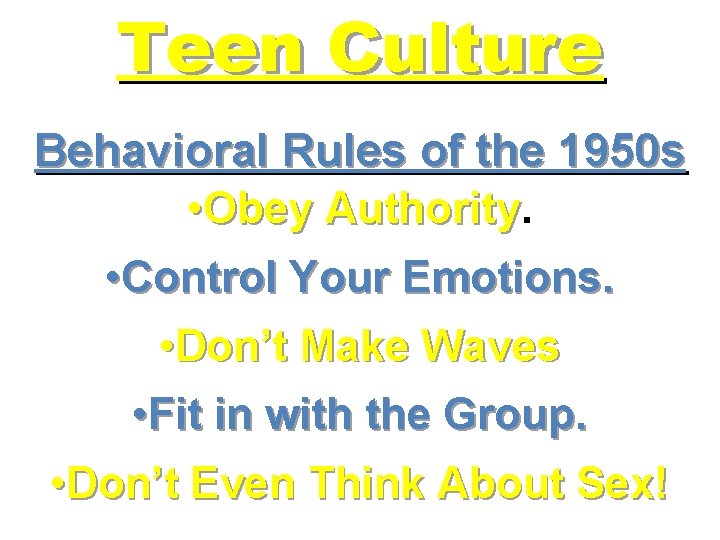
Teen Culture Behavioral Rules of the 1950 s • Obey Authority • Control Your Emotions. • Don’t Make Waves • Fit in with the Group. • Don’t Even Think About Sex!
Partner Activity: • What do you think the behavior expectation of the youth are today? – Create 3 – How are they different from the baby boom era? How are they similar? – Do you think the youth in the 50’s were worst off than the youth today? explain:
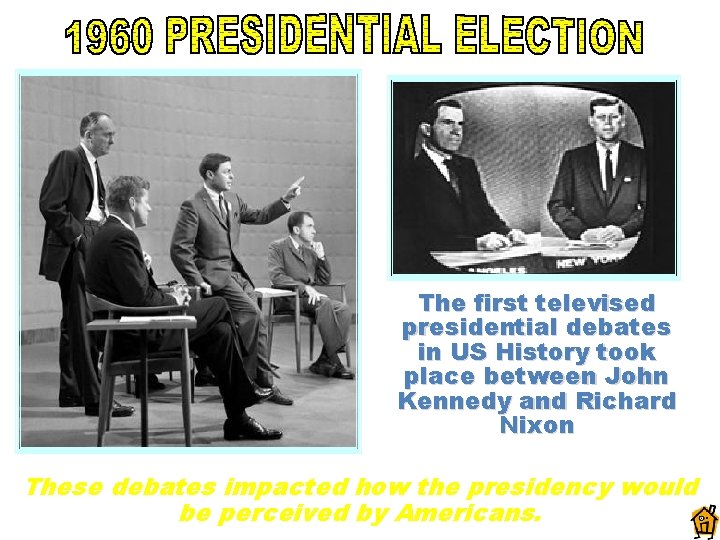
The first televised presidential debates in US History took place between John Kennedy and Richard Nixon These debates impacted how the presidency would be perceived by Americans.
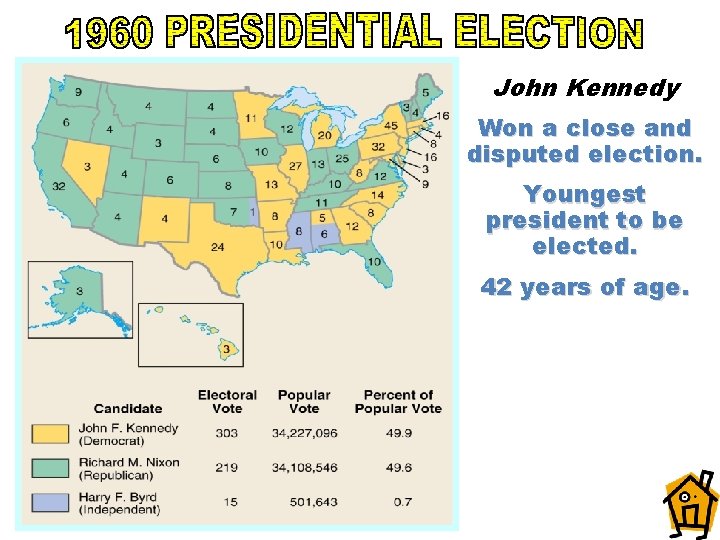
John Kennedy Won a close and disputed election. Youngest president to be elected. 42 years of age.
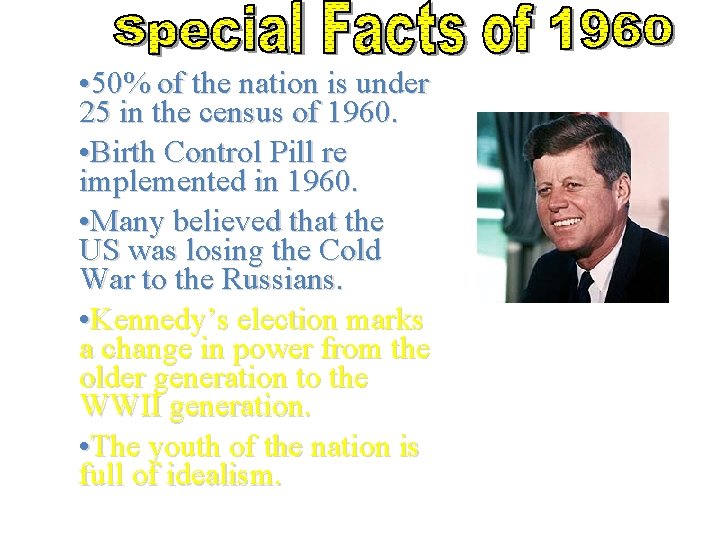
• 50% of the nation is under 25 in the census of 1960. • Birth Control Pill re implemented in 1960. • Many believed that the US was losing the Cold War to the Russians. • Kennedy’s election marks a change in power from the older generation to the WWII generation. • The youth of the nation is full of idealism.
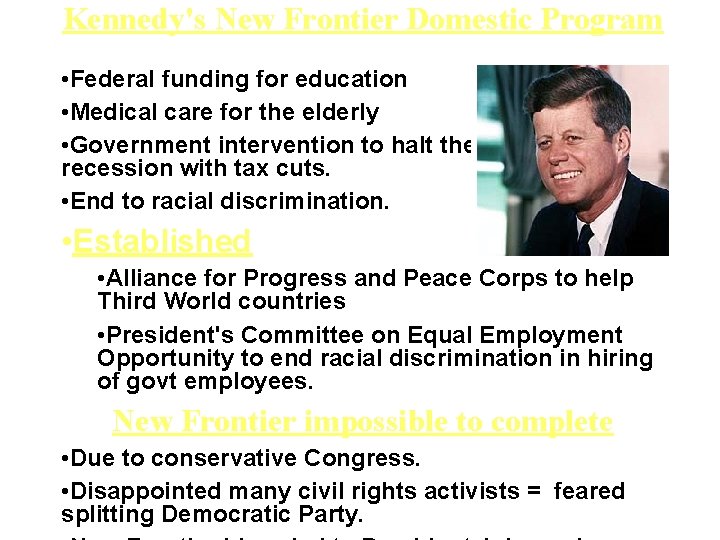
Kennedy's New Frontier Domestic Program • Federal funding for education • Medical care for the elderly • Government intervention to halt the recession with tax cuts. • End to racial discrimination. • Established • Alliance for Progress and Peace Corps to help Third World countries • President's Committee on Equal Employment Opportunity to end racial discrimination in hiring of govt employees. New Frontier impossible to complete • Due to conservative Congress. • Disappointed many civil rights activists = feared splitting Democratic Party.