
COLD INJURIES DESCRIPTION TREATMENT AND PREVENTION Presenters Name
- Slides: 44
COLD INJURIES: DESCRIPTION, TREATMENT AND PREVENTION Presenter’s Name Presenter’s Command Local Contact Information
Introduction Prevention of cold injuries is a Command Individual Responsibility ALL COLD WEATHER INJURIES ARE PREVENTABLE!!!
Outline l Susceptibility Factors l Cold Weather Injuries – description – treatment – prevention l Conclusion
Regulation of Body’s Temp l Body’s heat production l Heat loss – metabolism – convection – exercise – conduction – shivering – radiation – respiration – evaporation
Typical Victim of a Cold Weather Injury l Male l E-4 or below l Approximately 20 years old l From a warm climate l Less than 18 months time in service l Uses tobacco, alcohol or medications l Neglects proper foot care
Susceptibility Factors l l l l Previous cold weather injury Inadequate nutrition Alcohol, caffeine, nicotine Dehydration Overactivity Underactivity Long exposure to the cold l l l l l Sick or injured Acclimatization Ethnic/geographic origin Wind, cold, rain Age Discipline and morale Physical stamina Inadequate training Poor clothing and equip
Types of Cold Injuries Hypothermia l Frostbite l Chilblains l Immersion/Trench Foot l l l Dehydration Constipation Sunburn Snow Blindness Carbon Monoxide Poisoning
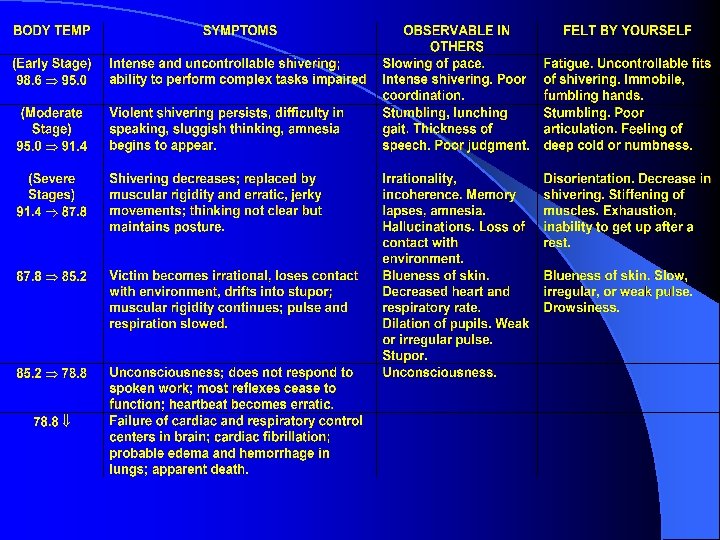
Hypothermia MEDICAL EMERGENCY; life threatening condition l Severe body heat loss-body temp falls below 95 o. F l Occurs when: l – conditions are windy, clothing is wet, and/or the individual is inactive – extended water exposure or immersion l 1 hour or less when water temp is below 45 o. F l prolonged exposure in slightly cool water (e. g. 60 o. F) l thunderstorms, hail, rain and accompanying winds
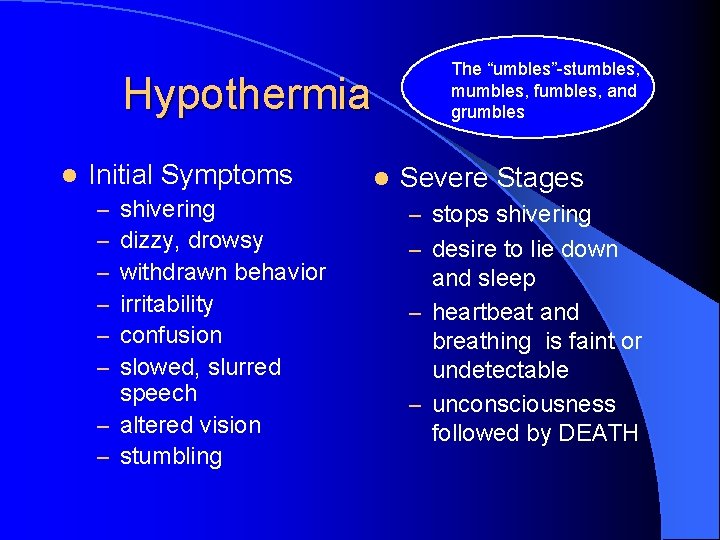
Hypothermia l Initial Symptoms shivering dizzy, drowsy withdrawn behavior irritability confusion slowed, slurred speech – altered vision – stumbling – – – l The “umbles”-stumbles, mumbles, fumbles, and grumbles Severe Stages – stops shivering – desire to lie down and sleep – heartbeat and breathing is faint or undetectable – unconsciousness followed by DEATH
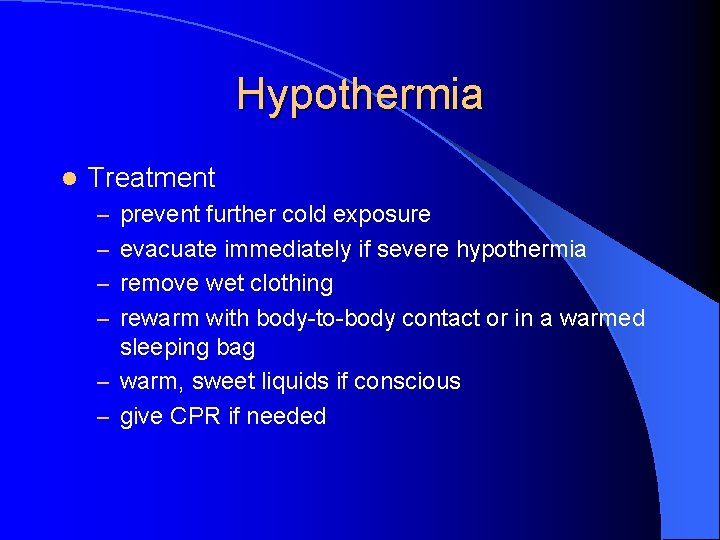
Hypothermia l Treatment – prevent further cold exposure – evacuate immediately if severe hypothermia – remove wet clothing – rewarm with body-to-body contact or in a warmed sleeping bag – warm, sweet liquids if conscious – give CPR if needed
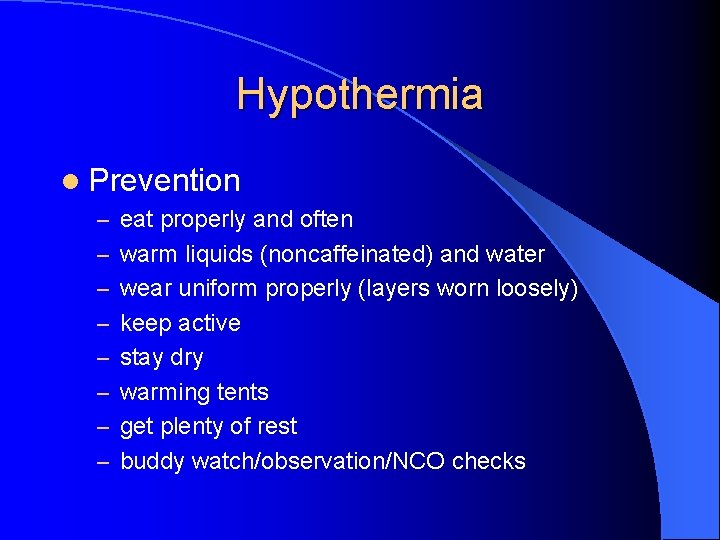
Hypothermia l Prevention – eat properly and often – warm liquids (noncaffeinated) and water – wear uniform properly (layers worn loosely) – keep active – stay dry – warming tents – get plenty of rest – buddy watch/observation/NCO checks
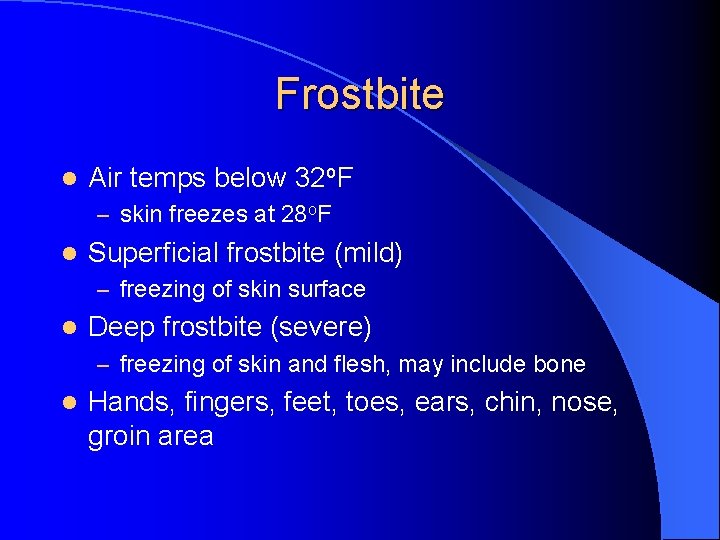
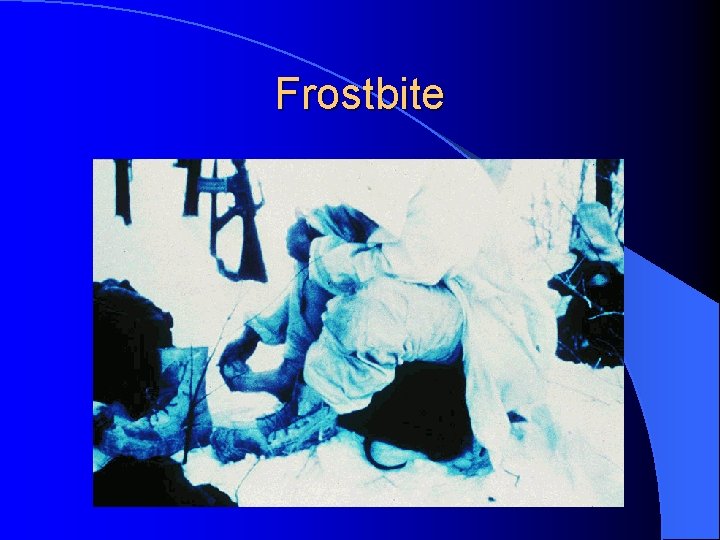
Frostbite l Air temps below 32 o. F – skin freezes at 28 o. F l Superficial frostbite (mild) – freezing of skin surface l Deep frostbite (severe) – freezing of skin and flesh, may include bone l Hands, fingers, feet, toes, ears, chin, nose, groin area
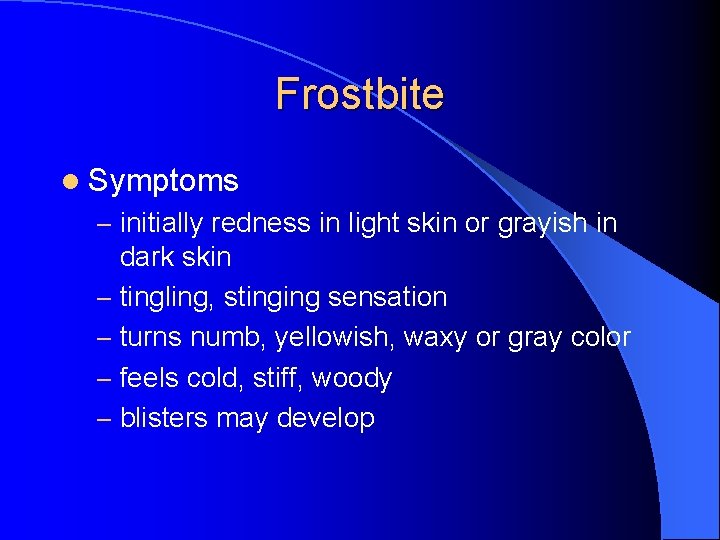
Frostbite l Symptoms – initially redness in light skin or grayish in dark skin – tingling, stinging sensation – turns numb, yellowish, waxy or gray color – feels cold, stiff, woody – blisters may develop
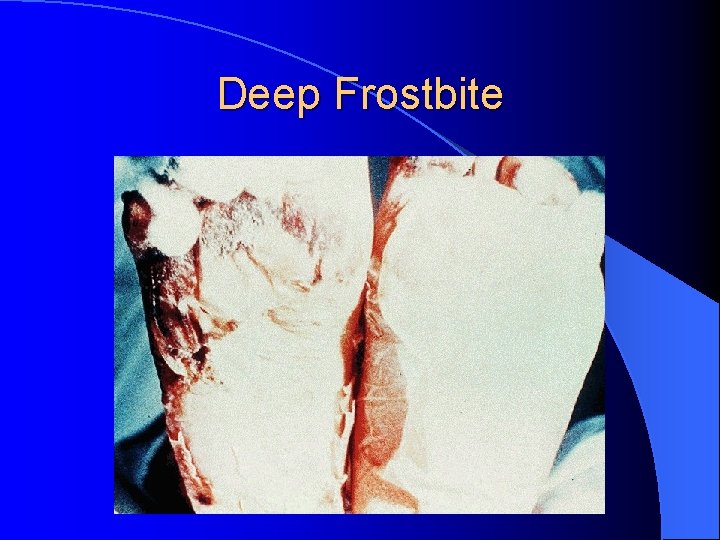
Deep Frostbite
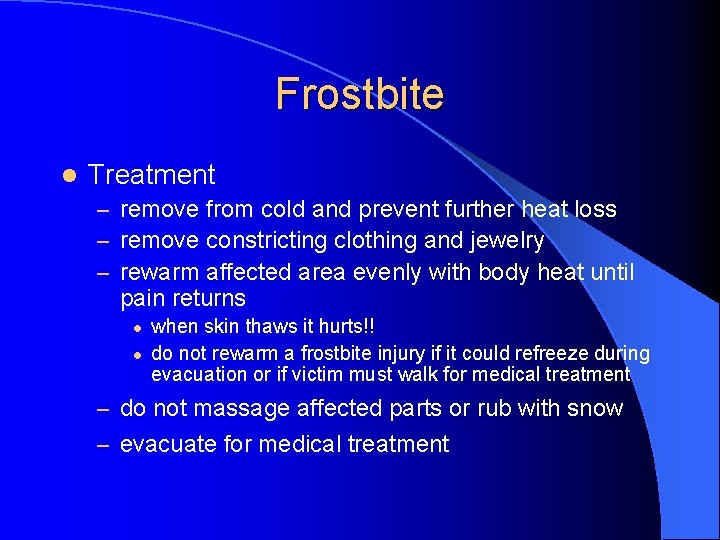
Frostbite l Treatment – remove from cold and prevent further heat loss – remove constricting clothing and jewelry – rewarm affected area evenly with body heat until pain returns l l when skin thaws it hurts!! do not rewarm a frostbite injury if it could refreeze during evacuation or if victim must walk for medical treatment – do not massage affected parts or rub with snow – evacuate for medical treatment
Frostbite
Frostbite l Prevention – wear uniform properly – – (layers and loosely) keep socks and clothing dry (use poly pro/thermax liner socks and foot powder/ change insoles also) protect yourself from wind drink hot fluids and eat often keep active – insulate yourself from the – – ground (sleeping pad/tree branches etc…) “Buddy System” warm with body heat caution skin contact with super-cooled metals or fuel seek medical aid for all suspected cases
Chilblains l l l Nonfreezing cold injury Cold, wet conditions (between 32 -60 o. F, high humidity) Repeated, prolonged exposure of bare skin Can develop in only a few hours Ears, nose, cheeks, fingers, and toes
Chilblains l Symptoms: – initially pale and colorless – worsens to achy, prickly sensation then numbness – red, swollen, hot, itchy, tender skin upon rewarming – blistering in severe cases
Chilblains l Treatment – prevent further exposure – wash, dry gently – rewarm (apply body heat) – don’t massage or rub – dry sterile dressing – seek medical aid
Chilblains l Prevention – keep dry and warm – cover exposed skin – wear uniform properly – use the “Buddy System”
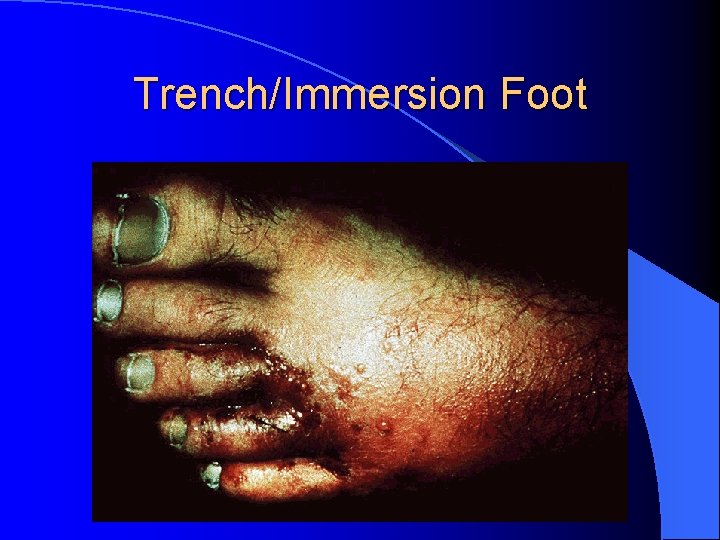
Trench/Immersion Foot l Potentially crippling, nonfreezing injury (temps from 50 o. F-32 o. F) l Prolonged exposure of skin to moisture (12 or more hours, days) l High risk during wet weather, in wet areas, or sweat accumulated in boots or gloves
Trench/Immersion Foot l Symptoms – initially appears wet, soggy, white, shriveled – sensations of pins and needles, tingling, – – numbness, and then pain skin discoloration-red, bluish, or black becomes cold, swollen, and waxy appearance may develop blisters, open weeping or bleeding in extreme cases, flesh dies
Trench/Immersion Foot
Trench/Immersion Foot l Treatment – prevent further exposure – dry carefully – DO NOT break blisters, apply lotions, massage, expose to heat, or allow to walk on injury – rewarm with body heat – clean and wrap loosely – elevate feet to reduce swelling – evacuate for medical treatment
Trench/Immersion Foot l Prevention – keep feet dry – change socks at least every 8 hours or whenever wet and apply foot powder – bring extra boots to field – no blousing bands – report all suspected cases to leadership
Dehydration l. A loss of body fluids to the point of slowing or preventing normal body functions l Increases chance of becoming a cold weather casualty, esp hypothermia l Can lead to heat cramps or heat exhaustion
Dehydration l Symptoms dark urine headache dizziness, nausea weakness dry mouth, tongue, throat, lips – lack of appetite – stomach cramps or vomiting – – – irritability – decreased amount of – – urine being produced mental sluggishness increased or rapid heartbeat lethargic unconsciousness
Dehydration l Treatment – drink WATER or other warm liquids – avoid caffeinated liquids (sodas, coffee, tea) – do not eat snow – rest
Dehydration l Prevention – drink minimum of 3 canteens of water daily for inactivity and 5 -6 quarts for activity – monitor urine color – do not wait until you are thirsty – drink hot liquids for warmth (non-caffeine)
Constipation l Infrequent or difficult passage of solid human waste l Symptoms – loss of appetite – headache – cramping – painful defecation
Constipation l Treatment l Prevention – water consumption – drink 4 -6 quarts – medical treatment water daily – available latrine facilities protected from the elements – eating properly, esp high fiber foods such as fruits, vegetables, whole grain breads may be necessary
Sunburn Burning of the skin due to overexposure to the sun and UV light l Contributing factors l – fair skin, light hair – exposed skin – reflective qualities of the snow – high altitudes l Symptoms – redness of skin, slight swelling (1 st deg) – prolonged exposure (2 nd deg) l l pain and blistering chills, fever, headache
Sunburn l Treatment l Prevention – soothing skin creams – cover exposed skin in mild cases – in severe cases, seek medical attention – aspirin for pain with clothing – sunscreen, lip balm – limit exposure of skin to the environment
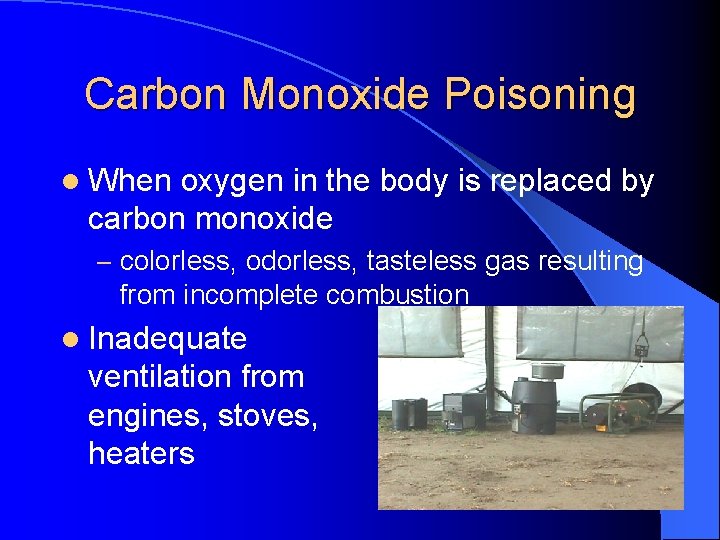
Carbon Monoxide Poisoning l When oxygen in the body is replaced by carbon monoxide – colorless, odorless, tasteless gas resulting from incomplete combustion l Inadequate ventilation from engines, stoves, heaters
Carbon Monoxide Poisoning l Symptoms – headache – nausea – dizziness – bright red lips, – weakness eyelids – drowsiness – unconsciousness – possibly death – excessive yawning – ringing in ears – confusion
Carbon Monoxide Poisoning l Treatment – move to fresh air immediately – seek medical aid promptly – provide mouth-to-mouth resuscitation if victim is not breathing
Carbon Monoxide Poisoning l Prevention – ensure proper ventilation – don’t use unvented heaters or engines – ensure heaters are regularly serviced – turn heaters off when not needed (during sleep) – never sleep in vehicle with engine running – never wrap poncho around vehicle exhaust to collect heat
Snow Blindness l Inflammation and l Symptoms sensitivity of the – gritty feeling in eyes caused by – redness and tearing ultraviolet rays of the – eye movement will cause pain sun reflected by the snow or ice – headache
Snow Blindness l Treatment – remove from sunlight – blindfold both eyes or cover with cool, wet bandages – seek medical attention – recovery may take 23 days l Prevention – eye protection l l dark, UV protective glasses field expedient-cut narrow slits in MRE cardboard and tie around head – do not wait for discomfort to begin
Conclusion l Dress properly l Drink plenty of fluids l Eat right l Keep in shape l Get plenty of rest l Minimize periods of inactivity l Maintain a positive attitude
Reference Materials l l l l Center for Army Lessons Learned Newsletter No. 97 -5 Winning in the Winter Technical Note No. 92 -2 Sustaining Health and Performance in the Cold: Environmental Medicine Guidance for Cold-Weather Operations TC 21 -3 Soldier’s Handbook for Individual Operations and Survival in Cold-Weather Areas FM 31 -70 Basic Cold Weather Manual FM 21 -10 Field Hygiene and Sanitation FM 21 -11 First Aid for Soldiers TB MED 81 Cold Injury FD Pam 40 -5 Win in the Heat and Cold: Climatic Injury Prevention Guide
QUESTIONS?