
Cohort Study Cohort Study The objective of a

Cohort Study
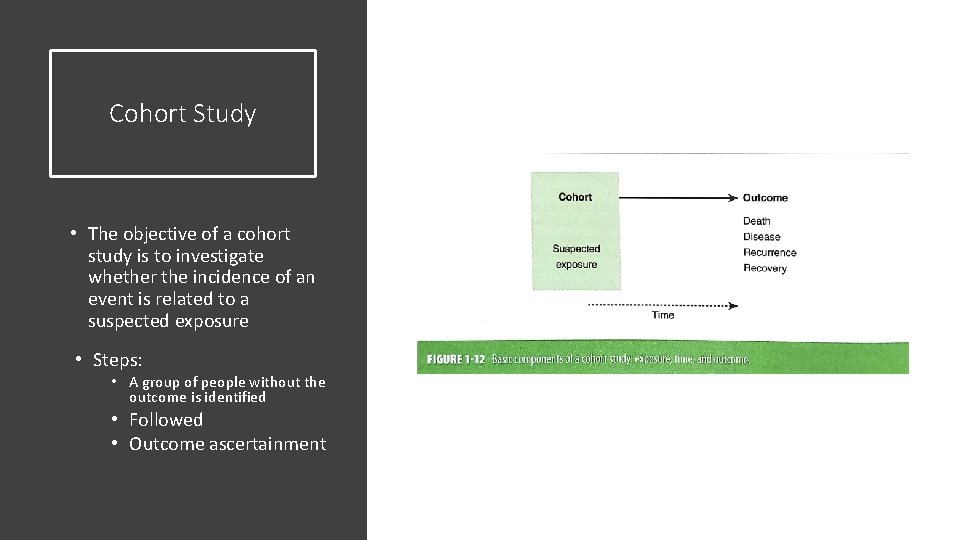
Cohort Study • The objective of a cohort study is to investigate whether the incidence of an event is related to a suspected exposure • Steps: • A group of people without the outcome is identified • Followed • Outcome ascertainment
Cohort Study • Q: When the event of interest is a newly developed disease, what we should do with the prevalent cases?
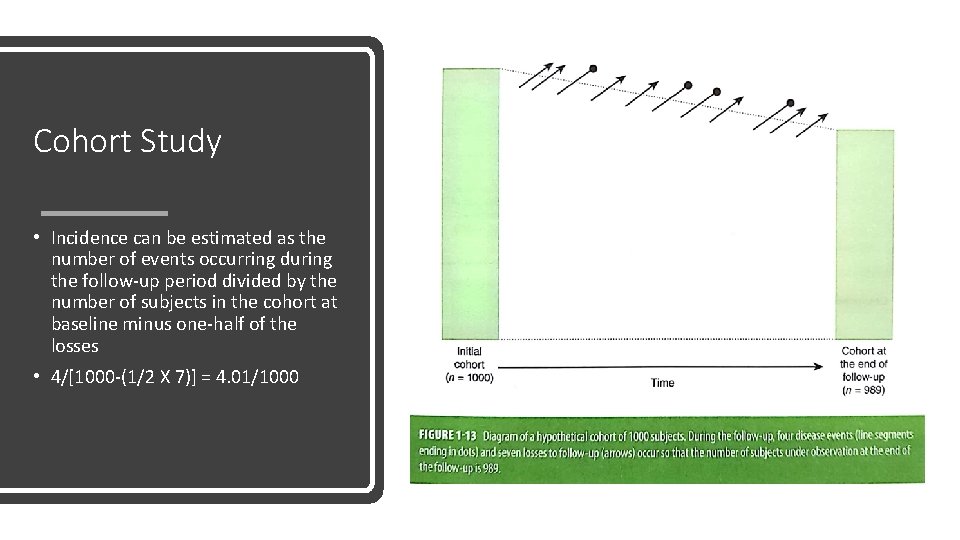
Cohort Study • Incidence can be estimated as the number of events occurring during the follow-up period divided by the number of subjects in the cohort at baseline minus one-half of the losses • 4/[1000 -(1/2 X 7)] = 4. 01/1000
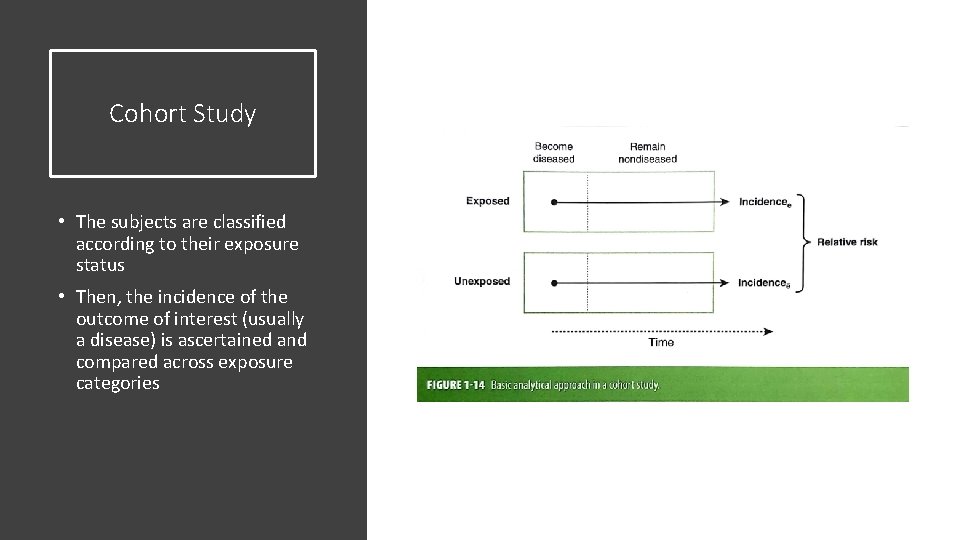
Cohort Study • The subjects are classified according to their exposure status • Then, the incidence of the outcome of interest (usually a disease) is ascertained and compared across exposure categories

Cohort Study • Example: • Calculate the incidence of disease in exposed • Calculate the incidence of disease in unexposed • Calculate the relative risk (risk ratio)
• An important assumption for the calculation of incidence in a cohort study is that individuals who are lost to follow-up are similar to those who remain under observation
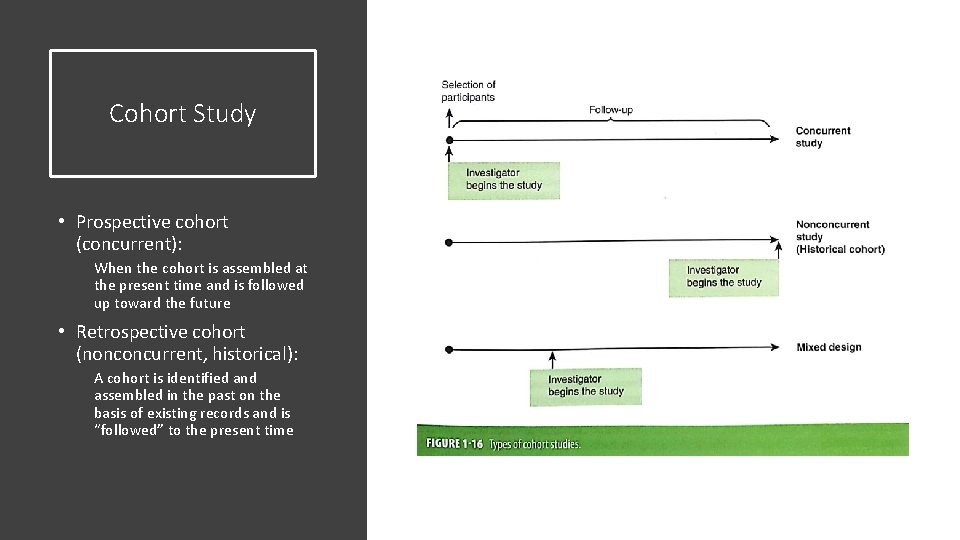
Cohort Study • Prospective cohort (concurrent): When the cohort is assembled at the present time and is followed up toward the future • Retrospective cohort (nonconcurrent, historical): A cohort is identified and assembled in the past on the basis of existing records and is “followed” to the present time
Strengths • Is of a particular value when the exposure is rare • Can examine multiple effects of a single exposure • Can elucidate temporal relationship between exposure and disease • If prospective, minimizes bias inn the ascertainment of exposure • Allows direct measurement of incidence of disease in the exposed and nonexposed groups
Limitations • Is inefficient of the evaluation of rare diseases • If prospective, can be extremely expensive and time consuming • If retrospective, requires the availability of adequate records • Validity of the results can e seriously affected by losses to follow-up
- Slides: 10