
Cohesion Coherence Cohesion is structural Coherence is related
- Slides: 10
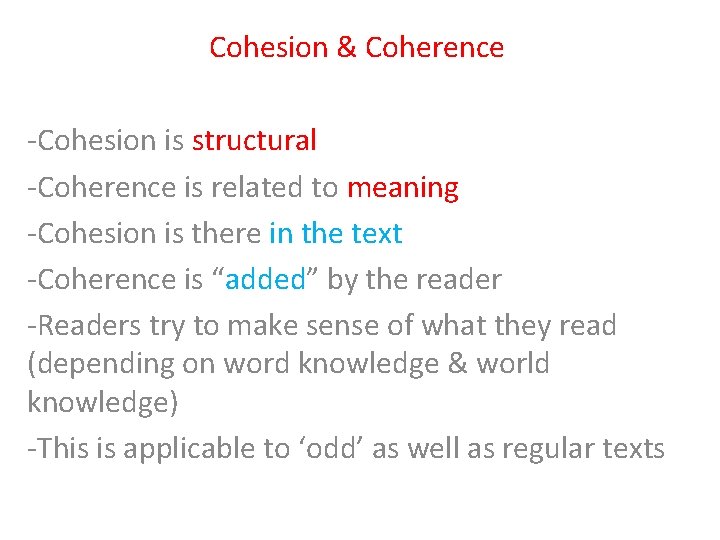
Cohesion & Coherence -Cohesion is structural -Coherence is related to meaning -Cohesion is there in the text -Coherence is “added” by the reader -Readers try to make sense of what they read (depending on word knowledge & world knowledge) -This is applicable to ‘odd’ as well as regular texts
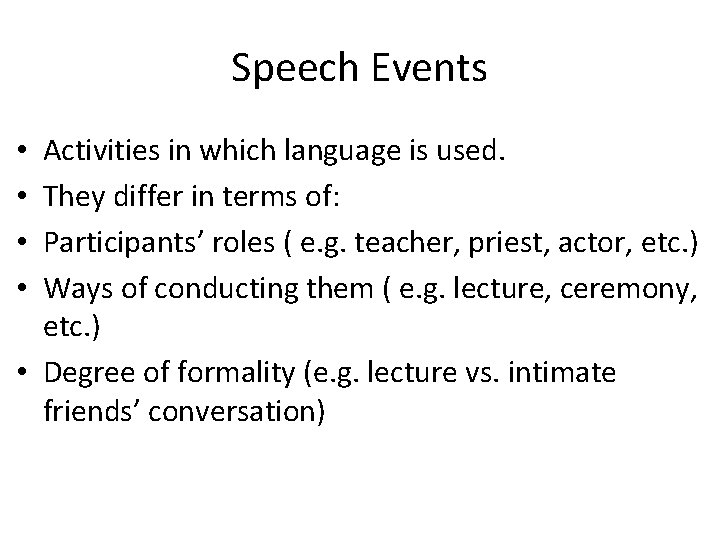
Speech Events Activities in which language is used. They differ in terms of: Participants’ roles ( e. g. teacher, priest, actor, etc. ) Ways of conducting them ( e. g. lecture, ceremony, etc. ) • Degree of formality (e. g. lecture vs. intimate friends’ conversation) • •
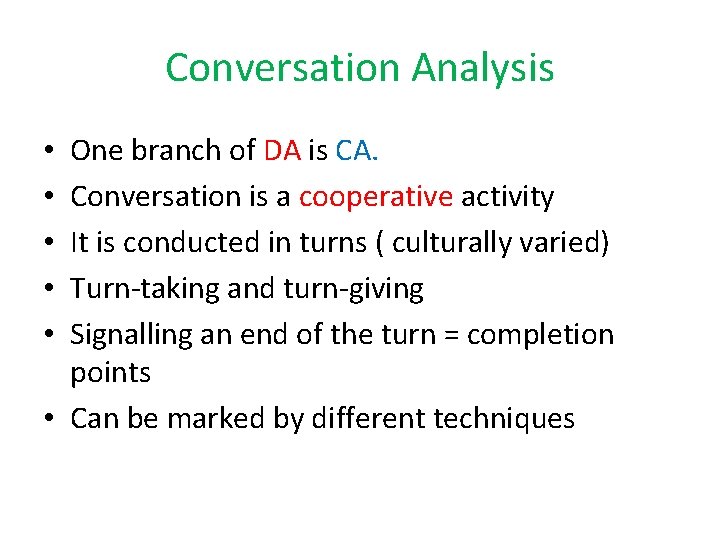
Conversation Analysis One branch of DA is CA. Conversation is a cooperative activity It is conducted in turns ( culturally varied) Turn-taking and turn-giving Signalling an end of the turn = completion points • Can be marked by different techniques • • •
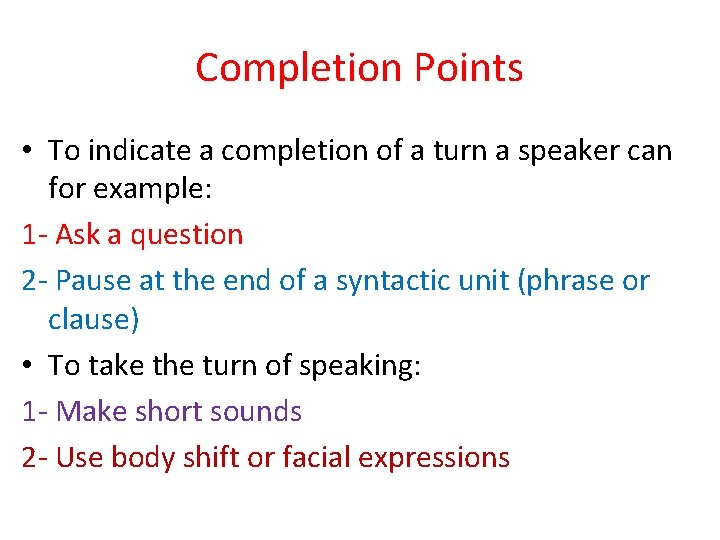
Completion Points • To indicate a completion of a turn a speaker can for example: 1 - Ask a question 2 - Pause at the end of a syntactic unit (phrase or clause) • To take the turn of speaking: 1 - Make short sounds 2 - Use body shift or facial expressions
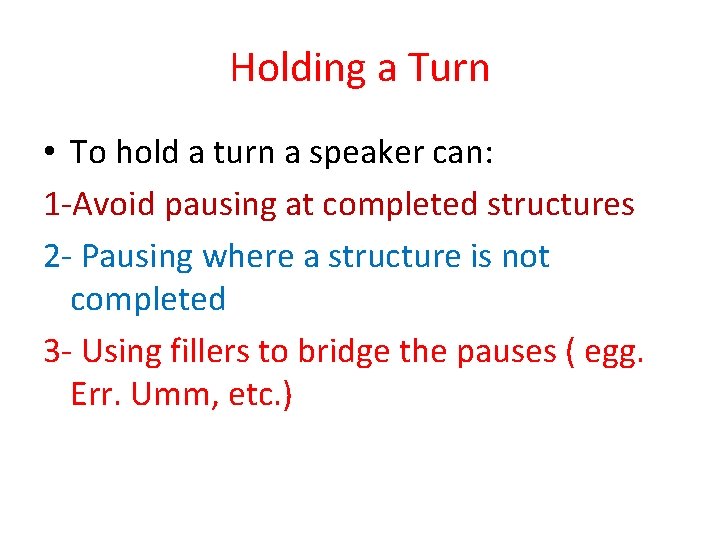
Holding a Turn • To hold a turn a speaker can: 1 -Avoid pausing at completed structures 2 - Pausing where a structure is not completed 3 - Using fillers to bridge the pauses ( egg. Err. Umm, etc. )
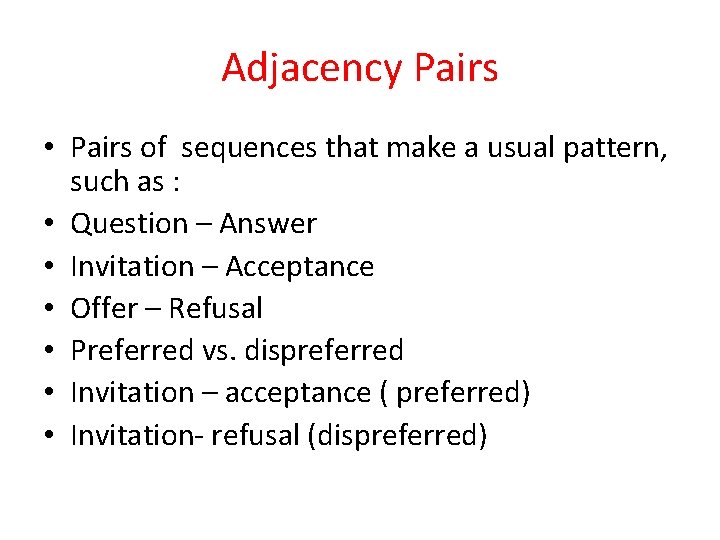
Adjacency Pairs • Pairs of sequences that make a usual pattern, such as : • Question – Answer • Invitation – Acceptance • Offer – Refusal • Preferred vs. dispreferred • Invitation – acceptance ( preferred) • Invitation- refusal (dispreferred)
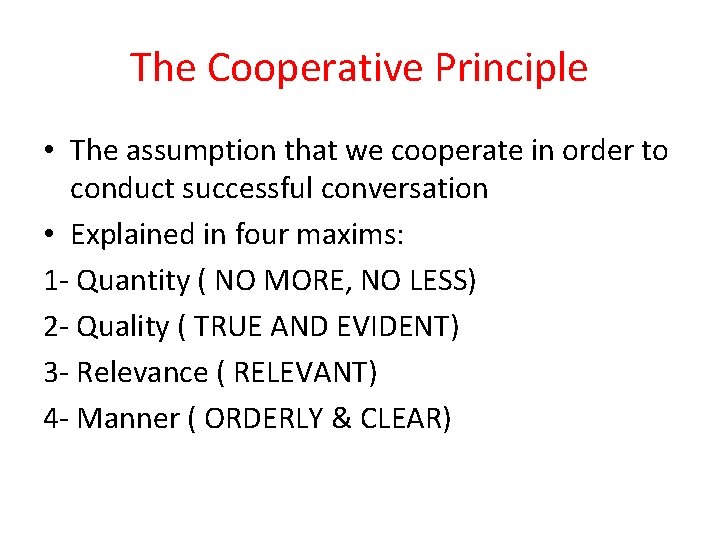
The Cooperative Principle • The assumption that we cooperate in order to conduct successful conversation • Explained in four maxims: 1 - Quantity ( NO MORE, NO LESS) 2 - Quality ( TRUE AND EVIDENT) 3 - Relevance ( RELEVANT) 4 - Manner ( ORDERLY & CLEAR)
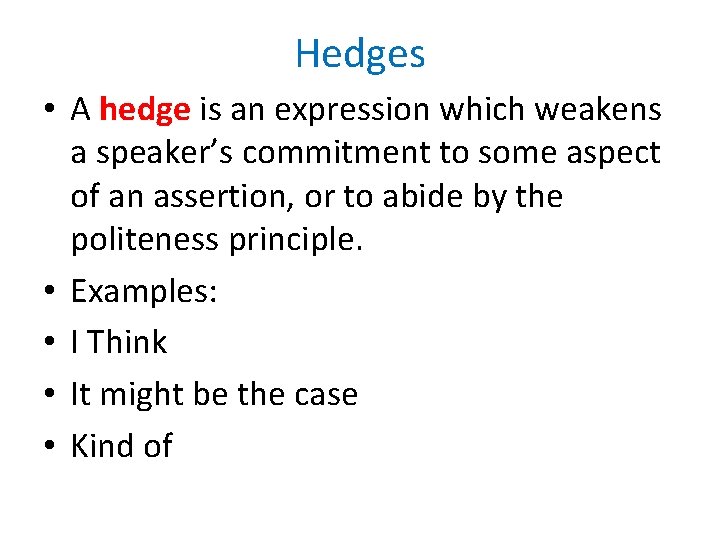
Hedges • A hedge is an expression which weakens a speaker’s commitment to some aspect of an assertion, or to abide by the politeness principle. • Examples: • I Think • It might be the case • Kind of
Implicature A meaning that is implied rather than stated. E. G. Will you come? I am busy. = I will not come Background Knowledge We can understand each other depending on our background knowledge in addition to knowledge of language. • Back ground Knowledge = Schemas & Scripts • • •
• Schema = A memory image of outer world things; part of the schema of a restaurant are: waiter, menu, tables, food, etc. Scripts are sequences of conducting an event Think of a wedding ceremony, for example. An exam, for e. g. , follows a certain procedure. Entering a hall; being given answer sheets; question sheets, reading questions, thinking, writing answers, handing in your answer sheet, etc.