
Cognitive Social Learning and CAPS George Kelly n
- Slides: 14
Cognitive, Social Learning and CAPS
George Kelly n Personal Constructs n Constructive Alternativism Convenience n n Heirarchy of constructs
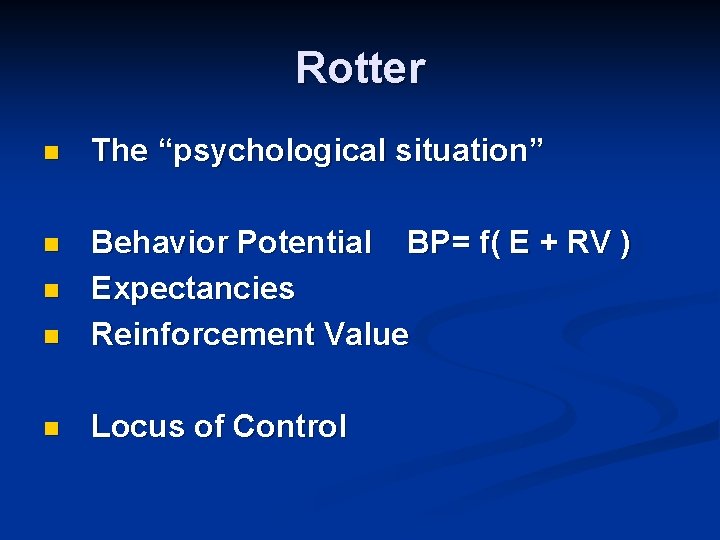
Rotter n The “psychological situation” n n Behavior Potential BP= f( E + RV ) Expectancies Reinforcement Value n Locus of Control n
Bandura n Observational learning n Self-regulation Self-efficacy Reciprocal interactionism n n
Self-regulation Reinforcement has no direct effects (cognitively mediated or even vicarious) Self-reinforcement is as important as external (internalized standards and processes of reward and punishment) ***Self-regulation overcomes stimulus control
Self-efficacy 2 types of expectancies Outcome expectancy Self-efficacy n SE determines: behavior to be performed amount of effort expended persistence in the face of adversity, etc. n
Reciprocal interactionism or Reciprocal Determinism selecting environments n creating environments n transforming environments n
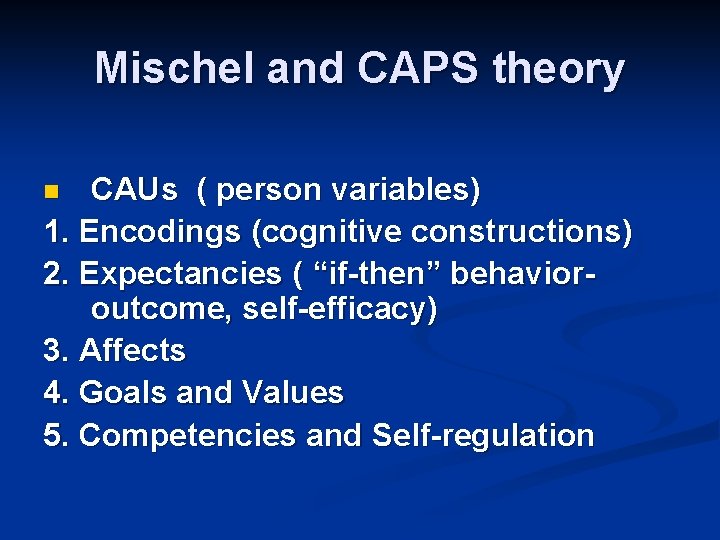
Mischel and CAPS theory n basic principles, concepts, assumptions: focus on P X S interaction n include and integrate Cognitive, Emotional, Motivational, Biological & Environmental factors n
Mischel and CAPS theory CAUs ( person variables) 1. Encodings (cognitive constructions) 2. Expectancies ( “if-then” behavioroutcome, self-efficacy) 3. Affects 4. Goals and Values 5. Competencies and Self-regulation n
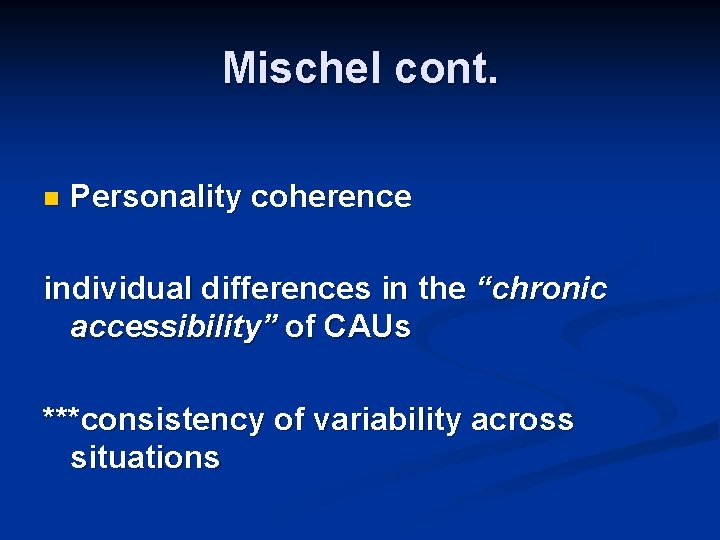
Mischel cont. n Personality coherence individual differences in the “chronic accessibility” of CAUs ***consistency of variability across situations
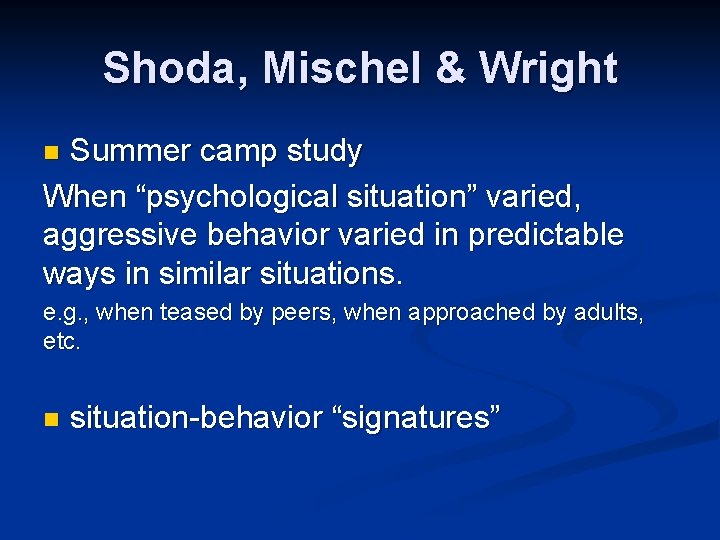
Shoda, Mischel & Wright Summer camp study When “psychological situation” varied, aggressive behavior varied in predictable ways in similar situations. n e. g. , when teased by peers, when approached by adults, etc. n situation-behavior “signatures”
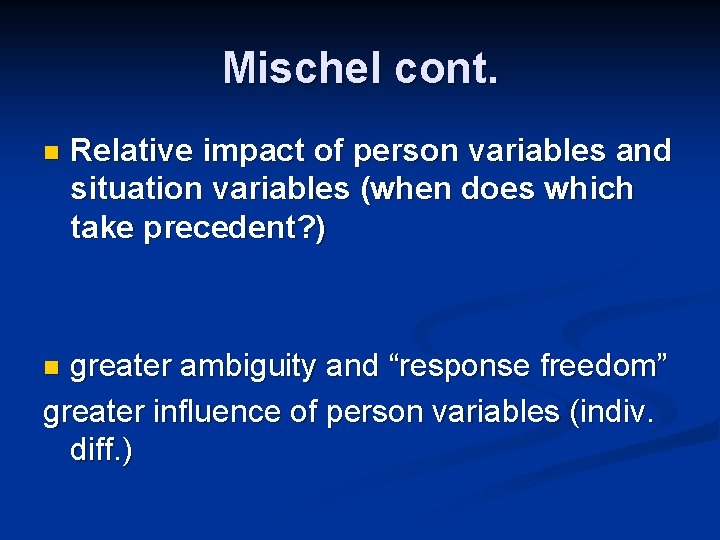
Mischel cont. n Relative impact of person variables and situation variables (when does which take precedent? ) greater ambiguity and “response freedom” greater influence of person variables (indiv. diff. ) n
The self n n I & me Self-schemas (Markus, etc. ) readily accessible schema Multiple selves: (Markus, Higgins, etc. ) Self-discrepancies (Higgins: Actual, Ideal, Ought)
Causal Attributions Learned Helplessness n Pessimism and Optimism n Optimists are healthier, happier, and live longer