
Cognitive Science Introduction Overview Aims and learning outcomes

- Slides: 25
Cognitive Science Introduction
Overview • Aims and learning outcomes • Assessment • Programme • Cognitive science is interdisciplinary • Cognitive science uses formal models Beware • This strategy might not succeed (!) • Fashion can influence the perception of research
Aims • To introduce interdisciplinary approaches to the study of higher cognitive processes • To familiarise you with computational and other formal modelling • To illustrate the application of modelling to cognitive processes
Learning outcomes • To gain direct experience of computational and other formal modelling techniques. • To integrate material across areas within psychology and across traditional subject disciplines. • To compare and critically evaluate formal techniques in relation to empirical findings. • To tackle key theoretical problems in cognitive science, particularly problems linked by theme of common sense reasoning.
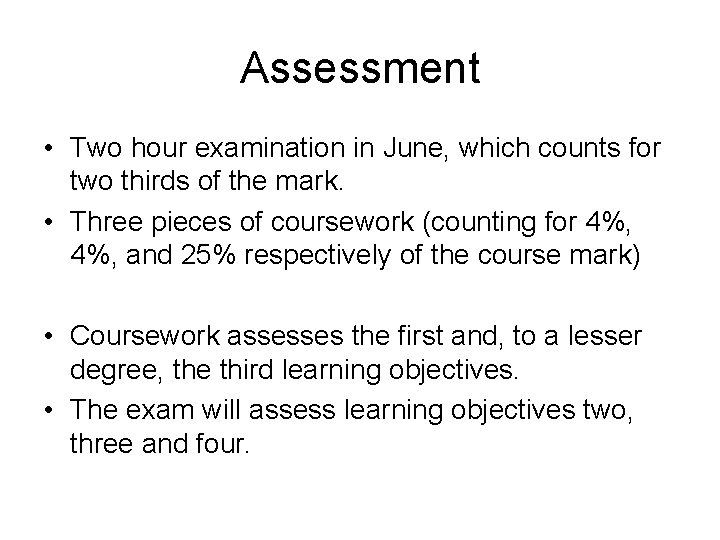
Assessment • Two hour examination in June, which counts for two thirds of the mark. • Three pieces of coursework (counting for 4%, and 25% respectively of the course mark) • Coursework assesses the first and, to a lesser degree, the third learning objectives. • The exam will assess learning objectives two, three and four.
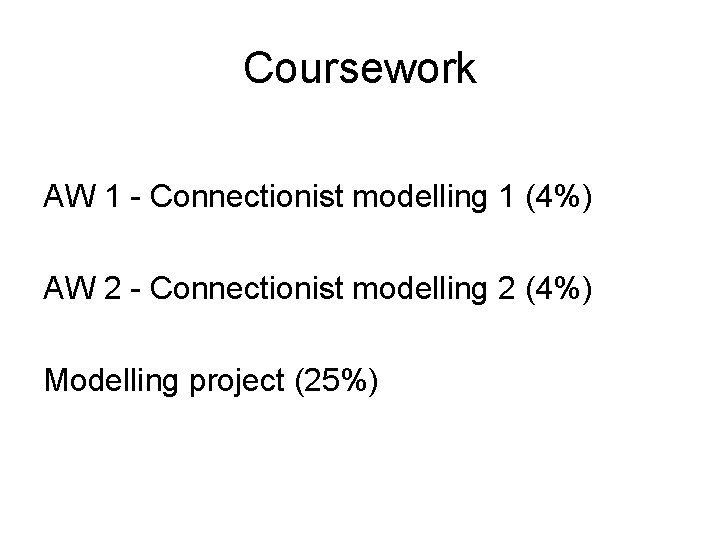
Coursework AW 1 - Connectionist modelling 1 (4%) AW 2 - Connectionist modelling 2 (4%) Modelling project (25%)
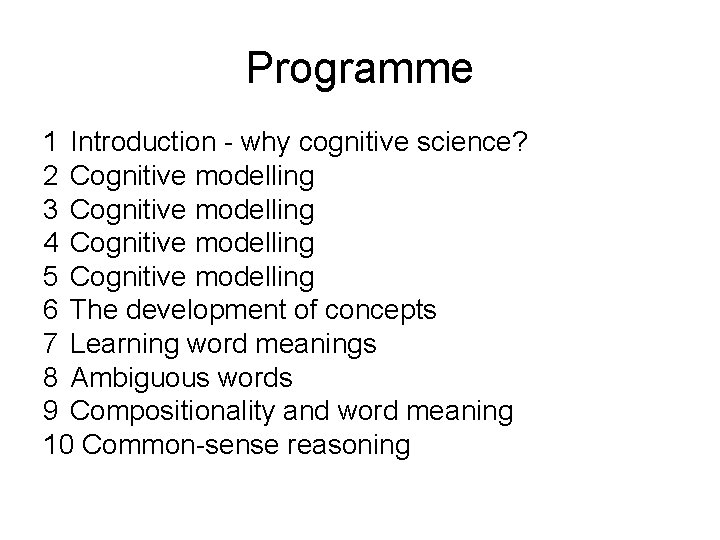
Programme 1 Introduction - why cognitive science? 2 Cognitive modelling 3 Cognitive modelling 4 Cognitive modelling 5 Cognitive modelling 6 The development of concepts 7 Learning word meanings 8 Ambiguous words 9 Compositionality and word meaning 10 Common-sense reasoning
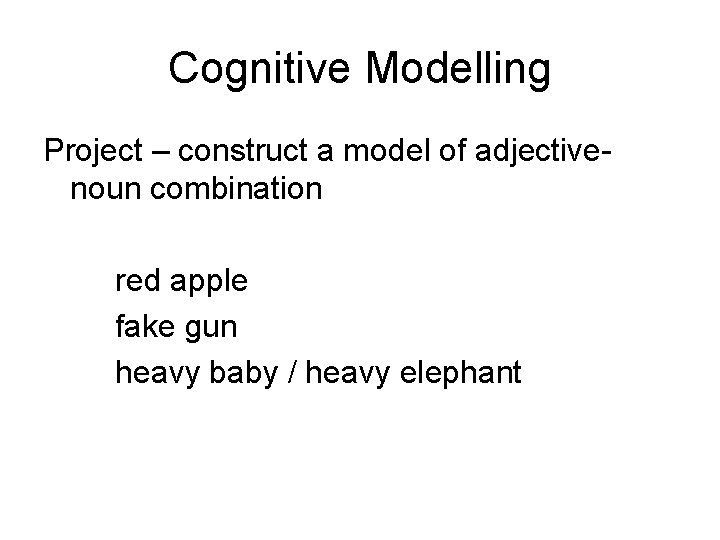
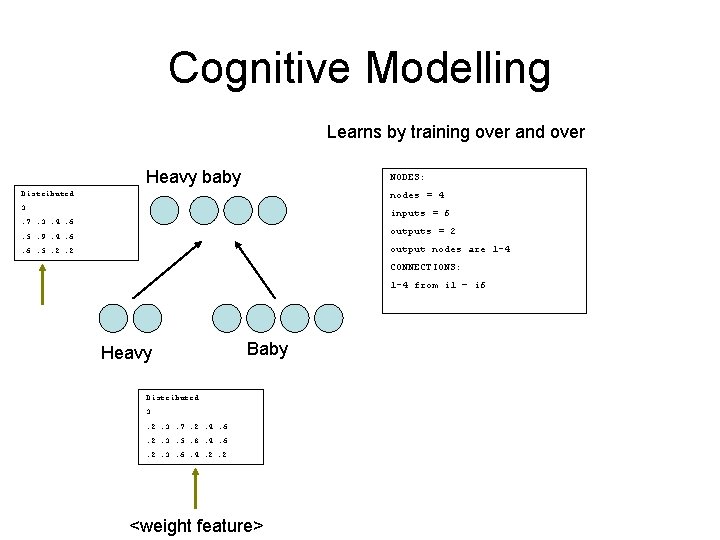
Cognitive Modelling Project – construct a model of adjectivenoun combination red apple fake gun heavy baby / heavy elephant
Cognitive Modelling Learns by training over and over Heavy baby NODES: Distributed nodes = 4 3 inputs = 6 . 7. 3. 4. 6. 5. 9. 4. 6 outputs = 2 . 6. 5. 2. 2 output nodes are 1 -4 CONNECTIONS: 1 -4 from i 1 – i 6 Heavy Baby Distributed 3. 2. 3. 7. 2. 4. 6. 2. 3. 5. 8. 4. 6. 2. 3. 6. 4. 2. 2 <weight feature>
The development of concepts What do we mean concept? Why is concept learning tricky to understand? Connectionist nets as a simple model of concept learning Some features of natural concept learning that make the picture less simple e. g. Role of existing background knowledge
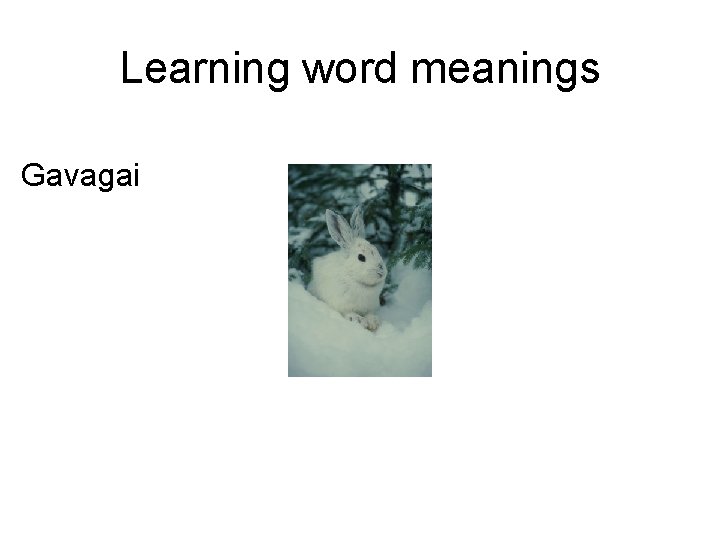
Learning word meanings Gavagai
Ambiguity and vagueness Complex links between words and concepts Bank Newspaper To paint
Combining concepts Compositionality is key to language red apple, red brick, red mist Watergate, blood gate, Stargate
Commonsense reasoning Which information is relevant to drawing a conclusion? Which facts are affected by an event? • Yale shooting problem • Property inheritance Tweety is a bird. So, Tweety can fly?
A little history – the Cognitive Revolution Skinner (1957) Children learn words (language) through operant conditioning - stimulus controls response Chomsky's (1959) review of Verbal Behavior (link on course web pages) "Dutch" - what stimulus? proliferate "stimuli” but role of attention etc. mind 'Creativity' of language compositionality
Technical concepts of Skinner's behaviorism (stimulus, reinforcement, operant etc. ) were used non-technically in "Verbal Behavior“ Eg. the artist is reinforced by the effects his work may have on others … but the artist's (often) not there when these effects occur. It's not like reinforcement in a Skinner box.
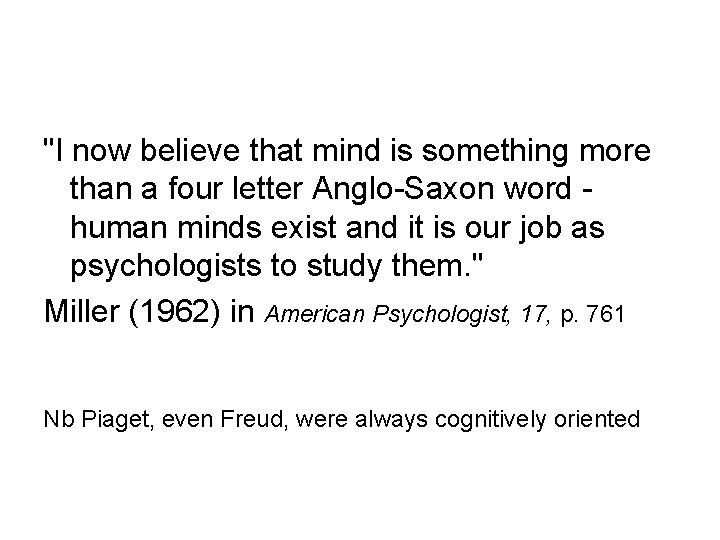
"I now believe that mind is something more than a four letter Anglo-Saxon word human minds exist and it is our job as psychologists to study them. " Miller (1962) in American Psychologist, 17, p. 761 Nb Piaget, even Freud, were always cognitively oriented
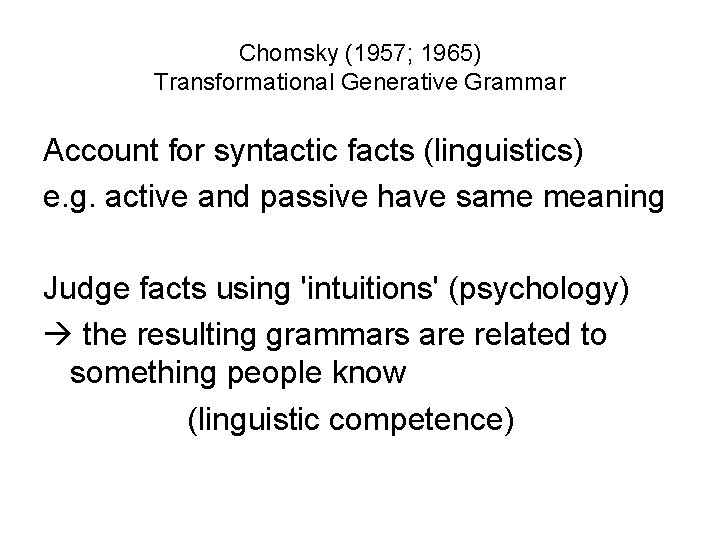
Chomsky (1957; 1965) Transformational Generative Grammar Account for syntactic facts (linguistics) e. g. active and passive have same meaning Judge facts using 'intuitions' (psychology) the resulting grammars are related to something people know (linguistic competence)
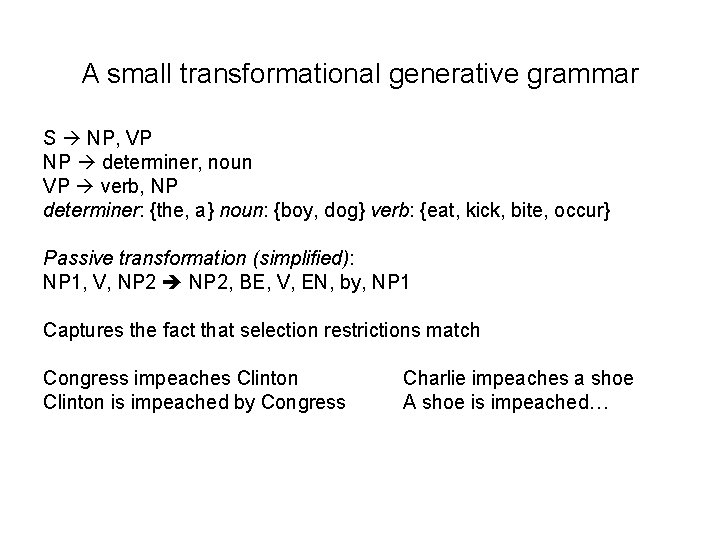
A small transformational generative grammar S NP, VP NP determiner, noun VP verb, NP determiner: {the, a} noun: {boy, dog} verb: {eat, kick, bite, occur} Passive transformation (simplified): NP 1, V, NP 2, BE, V, EN, by, NP 1 Captures the fact that selection restrictions match Congress impeaches Clinton is impeached by Congress Charlie impeaches a shoe A shoe is impeached…
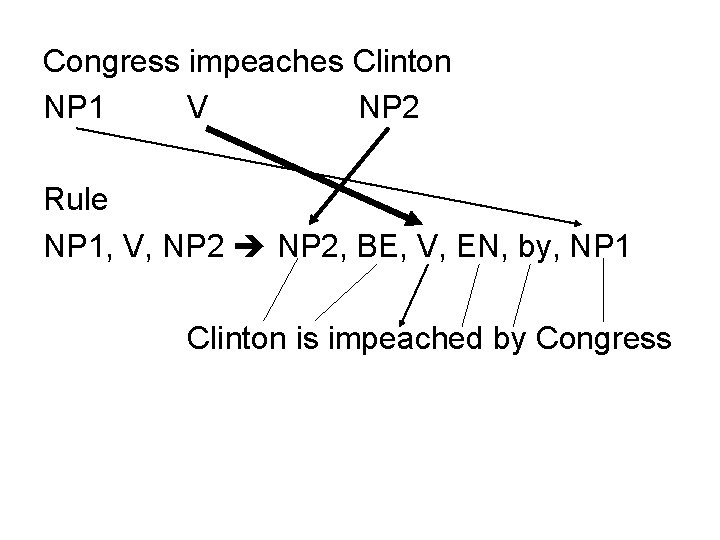
Congress impeaches Clinton NP 1 V NP 2 Rule NP 1, V, NP 2, BE, V, EN, by, NP 1 Clinton is impeached by Congress
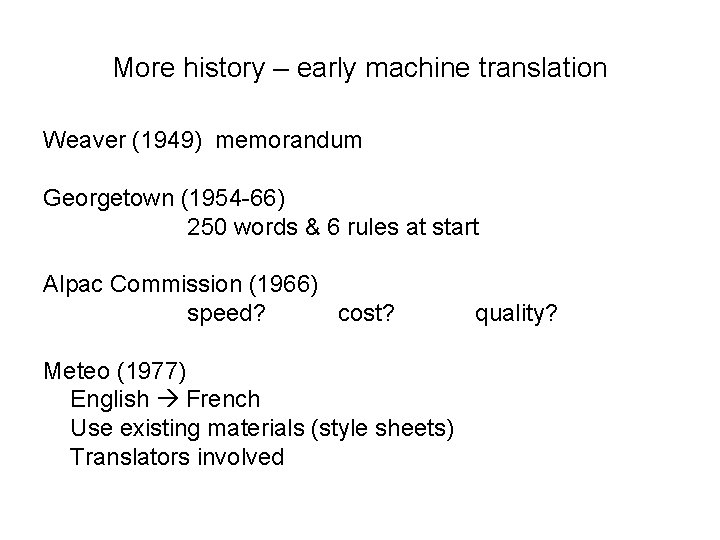
More history – early machine translation Weaver (1949) memorandum Georgetown (1954 -66) 250 words & 6 rules at start Alpac Commission (1966) speed? cost? Meteo (1977) English French Use existing materials (style sheets) Translators involved quality?
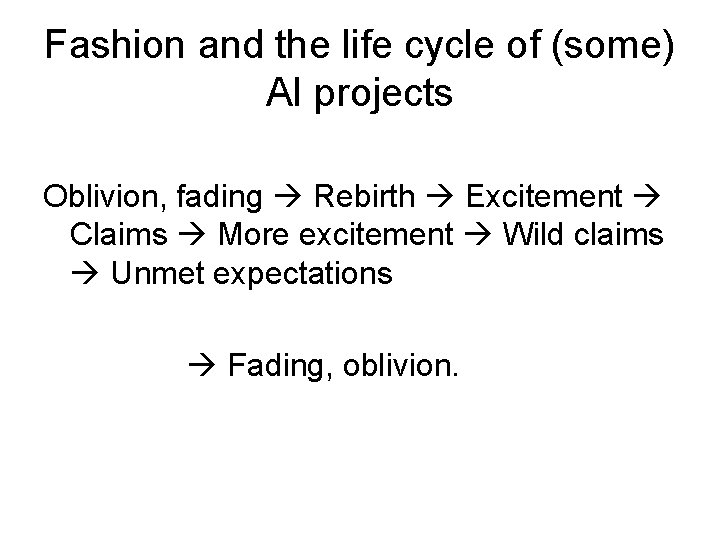
Fashion and the life cycle of (some) AI projects Oblivion, fading Rebirth Excitement Claims More excitement Wild claims Unmet expectations Fading, oblivion.
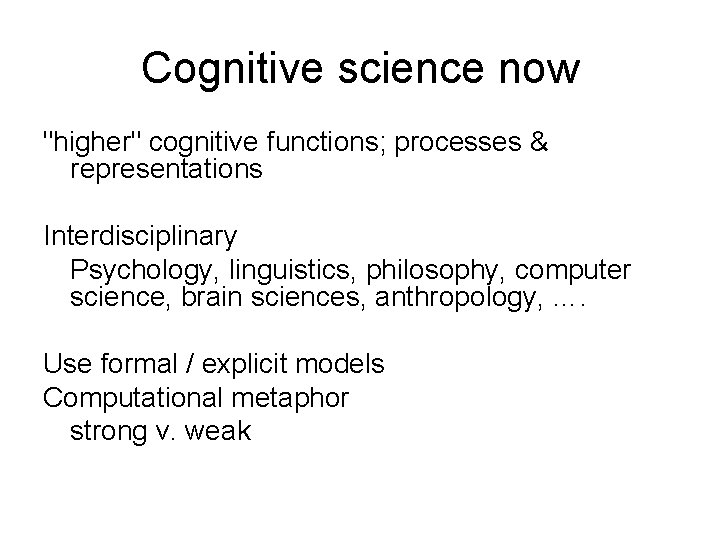
Cognitive science now "higher" cognitive functions; processes & representations Interdisciplinary Psychology, linguistics, philosophy, computer science, brain sciences, anthropology, …. Use formal / explicit models Computational metaphor strong v. weak
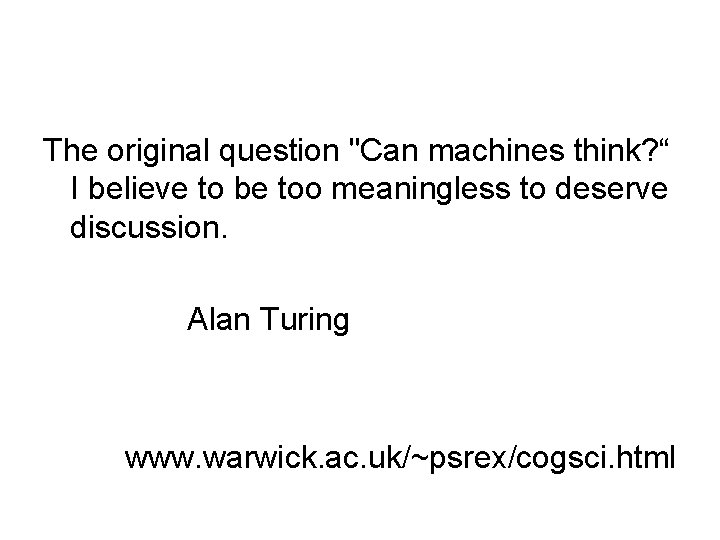
The original question "Can machines think? “ I believe to be too meaningless to deserve discussion. Alan Turing www. warwick. ac. uk/~psrex/cogsci. html
The end