
Cognitive Mapping Social Studies 9 Unit 2 Geographic
- Slides: 6
Cognitive Mapping Social Studies 9 Unit 2: Geographic Influences (Human Geography and Behavioral Geography)
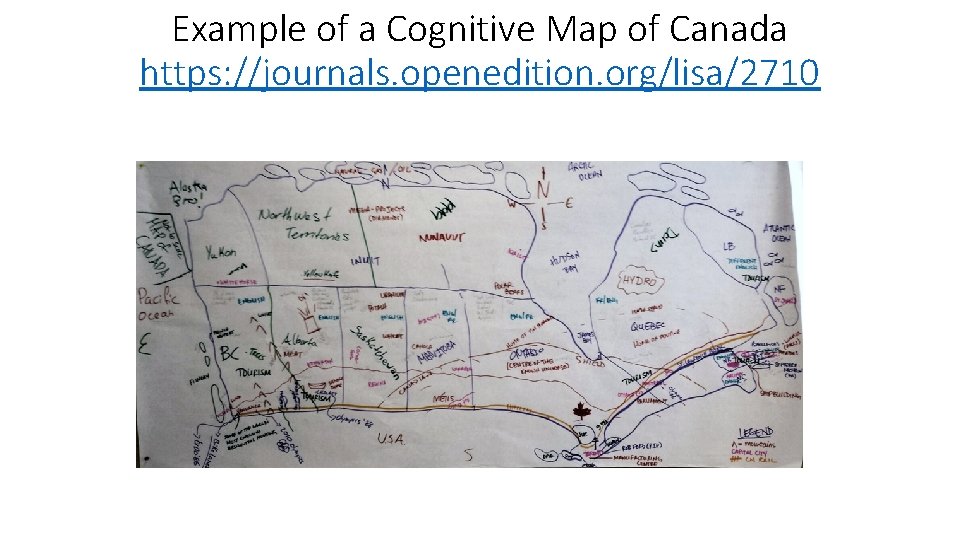
Creating a Cognitive Map of Canada A mental representation of one's physical environment. • Provinces, territories and capitals/cities/town, etc. • Major Bodies of Water, rivers, lakes, etc. • Landscape or Landmasses • Landmarks • Personal: trips, home, school, recreational, family/friends, sports, etc. • Important features or Elements • Labels
Share with a Partner Guiding Questions. • what each of your maps says about your perceptions of Canada? • • Common or different Size and shape? Common landmarks? Provinces? Cities? Landscape
Everyone Guiding Questions • What's not on the map? What does that indicate? • What does your map say about your understanding of the geography of Canada? • What does the maps say about the relationship with geography and Canadian Identity? • Do we use these in our everyday lives? • How would a geographer use Cognitive maps?
Purpose of Cognitive Maps • Cognitive maps tell a personas point of view, perceptions, biases and influences of a geographic area. • Cognitive maps can be a window into someone’s spatial knowledge that is embedded in their memory and helps geographers understand human’s perception of space, shape, distance and time. • The understanding of cognitive mapping and how humans view and move through their environment is important because it can give vital information such as how “readable” an area is and how people view their community.
Example of a Cognitive Map of Canada https: //journals. openedition. org/lisa/2710